
Australia’s largest multi-trades hub is open for business with more than 3,000 carpentry, plumbing, and electrotechnology students learning the latest industry skills at TAFE NSW Meadowbank.
Premier Dominic Perrottet officially opened the new $157 million state-of-the-art facility which will revolutionise vocational education and training and create a pipeline of skilled and job-ready workers.
“This facility will bolster local training options and support the growing demand for construction trades, which will help grow the economy and secure a brighter future for NSW families,” Mr Perrottet said.
“The new custom built Hub will enable TAFE NSW to train an additional 1,000 apprentices for in-demand jobs each year at Meadowbank, in a modern, state-of-the-art learning environment.”
Minister for Skills and Training Alister Henskens said the Multi-Trades Hub is a game changer for TAFE NSW and forms part of the broader Meadowbank Education and Employment Precinct.
“The NSW Government’s record budget for TAFE NSW is delivering more opportunities than ever before to help people get the skills they need for the jobs they want, and this world-class facility is training students for future jobs and connecting them with local industries,” Mr Henskens said.
“We have had a 20 per cent increase in women undertaking an apprenticeship or traineeship in the last year, with an 8 per cent increase overall.
“The 12,000 square-metre facility features dedicated plumbing pits and a large-scale, flexible space to accommodate the construction of full-scale buildings for use in carpentry and electrotechnology training.”
Member for Ryde Victor Dominello said the Multi-Trades Hub has been delivered as part of the new TAFE NSW Institute of Applied Technology (IAT) at Meadowbank, which will be a cutting edge training facility focusing on digital technology.
“Ryde is being transformed into an education and employment powerhouse, and this new training space will help attract, retain and upskill local workers, which is a fantastic win for our community,” Mr Dominello said.
“The completion of the revolutionary new IAT early next year will complement the Multi-Trades Hub, and create one of the state’s leading TAFE NSW training facilities.”
For more information on courses available at TAFE NSW, visit www.tafensw.edu.au.
Author: admin
$11.5 million boost for regional active transport
The Camden Haven will soon have access to a stunning, coastal shared path spanning 11 kilometres as part of an $11.5 million funding boost to regional walking and cycling projects across the state.
Minister for Infrastructure, Cities and Active Transport Rob Stokes said 67 new active transport projects across regional NSW would be funded as part of the State Government’s $110 million Get NSW Active program.
“From Port Macquarie to Parramatta, Bathurst to Byron Bay, we have a strong pipeline of active transport projects to get communities across NSW walking and cycling more,” Mr Stokes said.
“This investment will help councils deliver vital local projects, so we don’t have footpaths that lead to nowhere, bike lanes that end abruptly, and public spaces that are inaccessible to the elderly, disabled or parents pushing prams.”
Member for Port Macquarie Leslie Williams said the NSW Government had provided more than $3.1 million in funding towards active transport projects in Port Macquarie and the Camden Haven.
“A $2.9 million grant will help deliver another link in the long-awaited 11 kilometre continuous shared path between the North Haven breakwall and Pilot Beach,” Mrs Williams said.
“The Beach to Beach Riverwalk is a great budget friendly way for families to get out and about and is a major drawcard to the area, boosting visitor spending in our cafes and shops.
“A further $200,000 will fund the design of new and extended footpaths to make getting around our community easier and safer.”
Key projects funded across regional NSW under Tranche 1 and 2 of the Get NSW Active program include:
- Design of Wagga Wagga’s Active Travel Plan Stage 3, including a 15.2 kilometre shared path and pedestrian bridge over the Murrumbidgee River.
- Construction of a 440 metre missing link in the Victoria Park Shared Path, from Victoria Park High School to the Tamworth Regional Astronomy Centre.
- Design of an accessible pathway to the Byron Bay Lighthouse for pedestrians or people with prams, wheelchairs, mobility scooters and bicycles.
- Construction of a 220 metre footpath extension on Barton Avenue, Lithgow to connect residents to public transport links.
- Design of an 8.9 kilometre shared path connecting Cessnock to Abermain
- The construction of a pathway connection along Edinburgh Drive, Taree that will link the Ingenia Gardens Retirement Village to the Taree CBD.
Get NSW Active received 474 applications from councils across the state with the first two of four tranches allocating $40 million in funding for 67 regional projects and 55 metropolitan projects across the Six Cities.
Successful projects in tranches 3 and 4 will be announced in the coming months.
A full list of the successful regional applicants is available here.
$30 million flood recovery fund to rebuild community infrastructure
Applications open today for a $30 million recovery package which supports repair works for arts and culture, sports and Aboriginal-owned community infrastructure damaged in the February-March flood event.
The eligible Local Government Areas are Ballina, Byron, Clarence Valley, Hawkesbury, Kyogle, Lismore, Richmond Valley and Tweed.
Minister for Emergency Management, Senator the Hon Murray Watt, said the majority of the works are being funded as part of the jointly-funded $150 million Community Local Infrastructure Recovery Package (CLIRP) announced in April.
“Community arts and cultural facilities and Aboriginal Keeping Places across New South Wales are a vital part of our cultural fabric. They are also an important part of our economy, supporting thousands of jobs across New South Wales,” Minister Watt said.
The New South Wales Government has separately committed an additional $12 million for the repair of sporting fields and facilities in the eight worst affected local government areas (LGAs) to get people in those communities back to their favourite sport or recreational activities.
Minister for Enterprise, Investment and Trade and Minister for Sport Alister Henskens said these funds will ensure vital infrastructure will be rebuilt.
“Many of the places our communities rely on were hit hard by the devastating floods, rendering them unsafe or unusable, and this funding is intended to provide support to help those communities to rebuild their local infrastructure,” Mr Henskens said.
Minister for Aboriginal Affairs and the Arts Ben Franklin said the funding is another important step towards helping flood-affected communities, including the State’s much-needed local arts and cultural industries and Local Aboriginal Land Councils, to get back on their feet.
“This continued commitment by the Australian and New South Wales governments recognises the importance of cultural infrastructure to the vitality of our communities and the wellbeing of those that live within them,” Mr Franklin said.
Minister for Emergency Services and Resilience and Minister for Flood Recovery Steph Cooke said rebuilding community infrastructure is an important part of the recovery process.
“Repairing community infrastructure not only boosts local economies and jobs, it helps residents get back to a sense of normality, which is one of the most important parts of the flood recovery process,” Ms Cooke said.
The package includes:
- Up to $12 million in grants for councils ranging from $15,000 to $500,000 for community sport infrastructure projects;
- Up to $12 million in grants for eligible arts and cultural organisations, councils and regional arts development organisations ranging from $5,000 to $500,000; and
- $6 million for repairs to community infrastructure in the most impacted Local Aboriginal Land Councils (LALCs), including $3.45 million in grants to support further repairs and rebuilds for LALCs and Aboriginal organisations.
More information on the funding streams and guidelines is available on the Office of Sport, Create NSW and Aboriginal Affairs NSW websites.
Greens condemn Labor’s failure to save Murujuga songlines
Environment Minister Tanya Plibersek has failed to save the Murujuga songlines, in allowing the Perdaman fertiliser plant to continue development on the Burrup Peninsula despite Traditional Owners’ application for World Heritage listing of the site.
Gunnai Gunditjmara DjabWurrung Senator Lidia Thorpe, the Greens spokesperson for First Nations said:
“This is a clear violation of free, prior and informed consent as it is defined in the United Nations Declaration on the Rights of Indigenous People (UNDRIP).
“The UNDRIP states that, ‘States shall consult and cooperate in good faith with the Indigenous peoples concerned through their own representative institutions in order to obtain their free, prior and informed consent before adopting and implementing legislative or administrative measures that may affect them.’
“First Nations people in this Country are a part of the oldest living culture in the world. Our representative institutions are tens of thousands of years older than Land Councils. The colonial project has been trying to control whose voice gets heard from First Nations communities since colonisation.
“When Traditional Owners are saying that there is no consent to destroy their heritage, this Government needs to listen.” Said Thorpe.
Yamatji-Noongar Senator Dorinda Cox, the Greens spokesperson for Resources said:
“The movement of that rock art will be it’s destruction. This is Juukan 2.0. We cannot continue to allow projects to go ahead that wreck the climate and destroy cultural heritage.
“The UNDRIP is an important instrument, both at a global level and within Australia. It protects free, informed, prior consent. What we’re seeing happen across this country is manufactured consent.
“Happening right now in Darwin and on the Tiwi Islands, is a landmark court hearing is will determine what constitutes consultation with Traditional Owners about the environmental, cultural, social and spiritual impacts of mining projects.
“Murujuga and the Burrup Peninsula are due for World Heritage listing next year, we need this fast-tracked to protect the ancestral rock art, stories and turtle dreaming, unique to the area.
“I’ve spoken directly with mining companies, urging them to sit with Traditional Owner groups. I’ve sat with First Nations women in Murujuga at the exact site where Perdaman propose to build their fertiliser plant, on top of one of the oldest women’s law grounds in the world.” Said Cox.
Local suburban business precincts to benefit from activations and beautification
$150,000 is being shared amongst 10 successful projects aimed at activating key suburban business precincts in Hamilton, New Lambton and Wallsend, including an innovative self-guided op shop trail, vertical “smart” gardens installed on shopfront facades, and a series of community-based art initiatives.
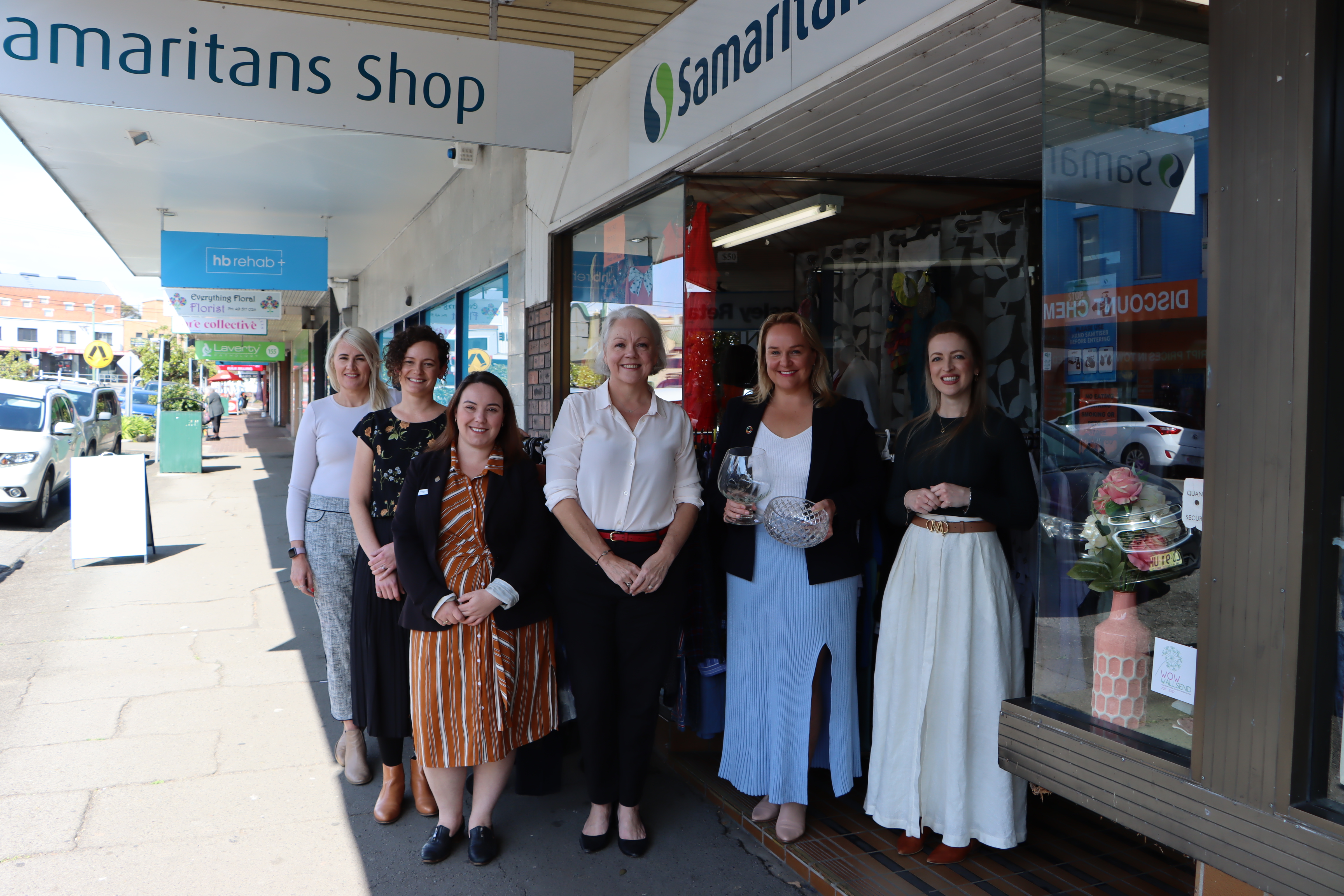
Newcastle Lord Mayor Nuatali Nelmes said the Special Business Rate (SBR) program was integral in bringing people back to business precincts across the city following the impacts felt in recent years from the pandemic.
“Our latest suburban SBR round is set to see beautification in New Lambton, a fringe festival on Beaumont Street, and a fantastic initiative that supports sustainability by promoting shopping at Wallsend’s eclectic op-shops among other great local projects”, Cr Nelmes said.
“We’ll see some exciting new activations like the Curious Legends Halloween celebration Wallsend Frights which will activate Nelson Street with live performance and interactive activities, while New Lambton Library is set to receive a stunning new mural delivered by Up & Up, drawing inspiration from the ideas of the local community”.
Bianca Bartlett, co-founder of the Purple Card Project, said SBR suburban funding will help bring her Op Shop Trail concept to life by tapping into an increased interest in slow fashion and shopping sustainably.
“With SBR funding, in collaboration with the Wallsend Town Business Association, we are developing a self-guided digital trail map that shines a spotlight on Nelson Street’s unique and diverse mix of op-op shops and cafes all in one convenient location,” Ms Bartlett said.
“The trail concept is designed to encourage visitors to spend time and money in the precinct on weekends, when op-shops are usually closed, starting with coffee at a local café, visiting all five op shops brimming with unique wares, and concluding with lunch.”
Wallsend’s business precinct is also set to benefit this Halloween with Curious Legends awarded SBR funding to run Wallsend Frights: a two-day program of family-friendly events on Nelson Street featuring live roving performances, costume-making challenges, installations, interactive activities, and workshops.
More information about the program and funding opportunities can be found at newcastle.nsw.gov.au/special-business-rates.
Successful suburban SBR projects include:
HAMILTON
- Newcastle Fringe Festival, March 2023
The project will build on the Fringe Festival’s existing presence on Beaumont Street by expanding the number of shows with more family-friendly events and micro-performances in local businesses. - Beautiful Beaumont Doors
Six local female artists will beautify and transform six graffitied doorways in between shops along Beaumont Street. - Herb Urban – Thriving Gardens
The project involves the installation of standalone smart gardening systems, fixed to shopfront facades throughout Hamilton, connecting Newcastle with greenery throughout the suburbs and City Centre.
NEW LAMBTON
- New Lambton Library Community Mural
The community mural project will be delivered by Up & Up Inspirations design on the exterior wall of New Lambton Library. The mural design will incorporate the ideas of the people who live, work and play in New Lambton. - Herb Urban – Thriving Gardens
The project involves the installation of standalone smart gardening systems, fixed to shopfront facades throughout New Lambton, connecting Newcastle with greenery throughout the suburbs and City Centre.
WALLSEND
- Wallsend Op Shop Trail to Revitalise Nelson Street
In collaboration with Wallsend Town Business Association, Samaritans, and the other four Op Shops on Nelson Street, the Wallsend Op Shop Trail is designed to encourage visitors to Wallsend on weekends. - And Then, They Were No Longer Invisible
This is a photo-storytelling project that shines a spotlight on seniors in our communities. The project will include community workshops, local business engagement and a community art installation in the Wallsend Business Precinct that encourages social cohesion and visitation to the area. - Banner Art
This project will involve local primary schools in the painting of images on 20×20 cm boards. 240 images will be chosen to be enlarged onto 80×200 cm banners for the proposed public banner sites in Wallsend business precinct. - Wallsend Frights
Curious Legends will produce two days of Halloween-themed activations such as roving performances and costume-making challenges to draw foot traffic to the Wallsend business precinct. The program will culminate with a family event with installations, performances, interactive activities and workshops with community groups and Wallsend businesses. - Public Mural
Play State Studio will deliver a mural in a main street of Wallsend with three local mural artists.
Weather warning for Newcastle’s coastline
A coastal weather event with hazardous surf, heavy rain and strong wind is forecast for this evening and through Wednesday.
City of Newcastle is monitoring its facilities and assets along the coastline including areas in Stockton and the Southern Beaches which may be further impacted by coastal erosion.
Following this weather event, and when safe, City of Newcastle will inspect all beaches and undertake any repairs required.
To stay up to date on weather warnings visit the Bureau of Meteorology at www.bom.gov.au and for information about any emergencies visit the State Emergency Service at www.ses.nsw.gov.au or phone 13 25 00.
Ordinary Council Meeting Tuesday 23 August 2022
Following is a summary of resolutions from the Ordinary Council meeting of Tuesday 23 August 2022. NB: it is not a full record of resolutions.
Lord Mayoral Minutes
State Election Priorities
A Lord Mayoral Minute (LMM) was unanimously supported that noted the New South Wales State Election is to take place on Saturday, 25th March 2023, and supported the projects and policies listed within the City of Newcastle Advocacy document as election priorities for the benefit of the Newcastle community.
The LMM also acknowledged that City of Newcastle’s (CN) funding priorities have remained consistent, with CN advocating for funding to deliver these projects across multiple election and budget cycles, and their identification in various external stakeholder strategies.
Ordinary business
Tabling of Register of Disclosures of Interest
Council noted the tabling of the Register of Disclosures of Interest for the period 1 May to 31 July 2022 by the Chief Executive Officer, in accordance with the codes of conduct for Councillors and Staff.
Adoption of Council Policies
Council voted to adopt three Council policies: Effective Communication between Councillors and Staff Policy; Art Gallery Acquisitions and De-Accessioning Policy; and Social Media Policy.
Endorsement of motions for submission to the 2022 Local Government NSW Conference
Council voted to endorse 13 motions for submission to the 2022 LGNSW Annual Conference, which will be held from 23 to 25 October.
Adoption of Newcastle Development Control Plan 2012 Section 6.03 Wickham
Council unanimously voted to adopt the Newcastle Development Control Plan 2012 Section 6.03 Wickham.
Variation to Development Standards – 2nd quarter 2022
Council received the report on approved development variations between 1 April 2022 and 30 June 2022 in accordance with the Department of Planning and Environment’s concurrence to vary development standards in the Newcastle Local Environmental Plan 2012.
Authorisation for signing of the Financial Statements for the year ended 30 June 2022
Council voted to authorise the signing of City of Newcastle’s Statements by Councillors and Management as required for the Financial Statements for the year ended 30 June 2022.
Darby Street, Cooks Hill – Adoption of the trial Traffic Calming Infrastructure Concept Plan
Council voted to adopt a six-month trial of traffic calming infrastructure on Darby Street, Cooks Hill from October 2022 until March 2023.
Executive monthly performance report
Council received the executive monthly performance report for July 2022.
Write-off of sundry debt
Council agreed to write-off a balance of sundry debt consistent with City of Newcastle’s Debt Management Guidelines and in accordance with the provisions of clause 213 of the Local Government (General) Regulation, 2005.
Notices of Motion
Delivering Regional level playgrounds
Council unanimously supported a notice to motion that noted CN’s success and commitment to delivering new and upgraded high level playgrounds throughout the Newcastle LGA. CN’s adopted 2022/23 Budget has allocated $1 million for the commencement of the construction of the District level playground at Gregson Park in Hamilton, in line with the adopted Gregson Park Masterplan 2021.
Using recycled plastic products in City of Newcastle projects
Council unanimously supported a notice of motion that acknowledged ‘Plastic Free July’ and CN’s longstanding commitment to sustainability initiatives. Council will investigate opportunities to incorporate recycled plastic products in CN projects, where appropriate.
Youth Mock Council
Council unanimously supported a notice to motion that congratulated the Newcastle Youth Council on the Youth Mock Council held in July 2022. The motion noted that the Youth Mock Council developed and adopted several motions and requests a report to be provided to councillors by the relevant council officers assessing the viability, cost, and merits of each proposal, if they were to be adopted as policy of the Council.
Council also supported reiterating its commitment to the Youth Council and that Council members of the Youth Council review their delivery, including its processes, forward agenda, and the role of the Youth Council/Youth Mock Council in the delivery of Civics education.
Reinvestigating the Wallsend-Mayfield Arterial Road project
An alternate notice of motion was supported by Council that does not support reinvestigating the Wallsend-Mayfield Arterial Road project which was abandoned by the NSW Government 41 years ago. Council supported requesting a report back to Council on the public and private property that would need to be acquired, and the potentials costs (environmental, social and heritage) of delivering this proposal.
Availability and affordability of flood insurance for residents and businesses in low lying areas
Council supported an amended notice of motion noting that a review of City of Newcastle’s flood studies are underway, with the Draft Flood Study for the eastern half of the LGA scheduled to be placed on public exhibition in early 2023. Council will write to the Insurance Council of Australia to request it participate in a public information session in 2023 when the draft flood study is placed on public exhibition.
Community engagement plan for Newcastle 500 contract extension
Council supported an amended notice of motion to delegate authority to the CEO to enter necessary agreements to facilitate the March 2023 Newcastle 500, including a Services Deed. All modifications to the existing Deed and Agreements to enable the March 2023 event are to be communicated to Council and published on CN’s website.
Council also supported CN’s total expenditure for the Newcastle 500 event does not exceed the current budget of $1.6 million, which is consistent with previous events.
Future liveability and amenity of Wickham enhanced
The future liveability, public domain and amenity of Wickham are at the centre of updates to the Newcastle Development Control Plan (DCP) adopted by the elected Council at tonight’s Ordinary Council Meeting.
Following a four-week public exhibition period, additional planning controls consistent with the Wickham Masterplan have been added to the DCP (Section 6.03 Wickham), including requirements for all developments in Wickham to upgrade their public domain frontages to CN’s specifications.
Deputy Lord Mayor Declan Clausen said the amendments respond to community feedback to achieve a shared vision for the precinct’s urban renewal.
“This is welcome news for residents and the community of Wickham who have advocated for Wickham’s urban renewal with a clear vision from the start,” Cr Clausen said.
“Creating community infrastructure with upgraded footpaths and better-connected green spaces as part of all developments, to CN specifications, will maintain Wickham’s inner-city suburban character and protect the Village Hub atmosphere.
“The updates to the DCP are consistent with Wickham Masterplan, and Newcastle 2040: Community Strategic Plan for a liveable Newcastle with enriched neighbourhoods and places of enjoyment.”
Along with the adopted DCP relating to Wickham, CN is currently preparing a comprehensive public domain plan for Wickham. The plan will increase amenity and safety in the area and include traffic, transport and road configuration changes in line with the Wickham Masterplan.
Community engagement is scheduled to commence toward the end of 2022.
City of Newcastle Manager Regulatory, Planning and Assessment Michelle Bisson said CN is committed to delivering good planning outcomes for Wickham residents and the community.
“Wickham’s identity is continuing to evolve and take shape as it transitions from a semi-industrial suburban area into a thriving urban neighbourhood that supports the revitalisation of Newcastle’s West End,” Ms Bisson said.
“It is great to see CN’s shared vision with the community progressing and we look forward to the next stage in the planning pathway.
“Further community input into the public domain plan for Wickham will ensure we meet future growth associated with the precinct.”
Drones the new eye in the sky for firefighters
Fire and Rescue NSW (FRNSW) crews across the State are being trained to use state-of-the-art drone technology to assist in firefighting operations and other emergencies.
Minister for Emergency Services and Resilience and Minister for Flood Recovery Steph Cooke said the Remotely Piloted Aircraft Systems (RPAS) are being rolled out as part of a $5.4 million investment by the NSW Government.
“These drones are being deployed to 25 regional areas, giving FRNSW crews an eye in the sky to help them better fight fires and keep our communities safe,” Ms Cooke said.
“The drones are connected to FRNSW’s wireless and satellite communication networks, allowing images to be viewed and analysed in real time at the scene of an emergency which helps firefighters make quicker decisions and act faster.”
The RPAS are equipped with thermal imaging cameras and laser technology that can detect variable heat temperatures, identify people or animals under threat in a fire zone and measure the size of an area impacted by fire.
FRNSW Bushfire and Aviation Unit Commander Scott Donohoe said the drones can be activated at an emergency scene within minutes.
“The drones are stored in our vehicles and ready for immediate use, providing FRNSW commanders with aerial images that can help determine the safest and most effective places to position fire trucks and crews,” Superintendent Donohoe said.
“We are planning to have around 200 firefighters trained to pilot the drones. The available training over several tiers includes sessions on night flying, situational awareness, ‘live’ streaming, rapid mapping, aerial incendiary use and 3D panoramic skills.”
The drones can be used to assess bush fire risk, assist in hazard reduction operations and find people missing in dense bushland.
The drones have already been deployed to the Northern Rivers region to assess flood-damaged infrastructure, identify hazardous materials and find leftover debris.
Upgrades to sports grounds deliver female-friendly facilities
The NSW Government will invest $25 million in a ground-breaking female sport facility program that aims to get more women and girls playing sport.
NSW Treasurer Matt Kean said the Community Female Friendly Sport Facilities and Lighting Upgrade Grants Program will see community sports facilities across NSW transformed into safer and more inclusive venues for females.
“This program will deliver female-friendly change rooms, amenities and lighting upgrades at grounds across the state to enable more women and girls to get involved in sport,” Mr Kean said.
“This is really important to us – that’s why the NSW Government committed $16.5 billion in the Budget over 10 years to supporting opportunities for women and children.”
Minister for Women Bronnie Taylor said the program was a game changer for women’s sport in NSW.
“Women’s sport is going from strength to strength across our state and this program will provide safer, more inclusive community sports facilities that our female athletes need and deserve,” Mrs Taylor said.
“I am proud to be part of a government that is removing barriers and inspiring more women and young girls to get involved in sport.”
Minister for Sport Alister Henskens said women’s sport is growing in popularity and this investment in community infrastructure and facilities will accelerate the number of girls and women playing sport.
“The recent Commonwealth Games highlighted the depth of talent in women’s sport. The upcoming FIBA Women’s Basketball World Cup will see Sydney host the world’s best players in September and inspire the next generation of female athletes,” Mr Henskens said.
“By investing in our sport communities to help boost female participation, we will ensure any young girl or woman who wants to lace up a boot, pick up a ball or run around a track, will do so in a supportive environment.”
The Community Female Friendly Sport Facilities and Lighting Upgrades Grant Program will open in late 2022. Government and sporting organisations can register their interest in the program at: https://comms.sport.nsw.gov.au/female-friendly-sport-facilities-and-lighting-upgrades-ryi