
New report reveals staggering future $442 billion cost of Alzheimer’s disease

A new report from the University of Canberra’s National Centre for Social and Economic Modelling (NATSEM) reveals the staggering future economic cost of Alzheimer’s disease, and its impact on Australia’s workforce, patients, families and communities.1

The report, The Economic and Societal Cost of Alzheimer’s Disease in Australia, 2021-2041, commissioned by Biogen Australia and New Zealand, builds on NATSEM and Dementia Australia’s Economic Cost of Dementia in Australia 2016-2056 Report released in 2017 and projects a 20-year $442 billion impact of Alzheimer’s disease to the Australian economy.1

Lead author Emeritus Professor Laurie Brown from NATSEM said the number of people aged 50 and over with diagnosed Alzheimer’s disease is expected to increase by 73% from 153,888 in 2021 to 266,114 by 2041. This increase will lead to an annual cost of $26.6 billion, including direct costs (aged care, hospital and out of hospital services) of $9.8 billion and indirect costs (informal care, lost productivity, and income support) of $16.8 billion by 2041.1

“The modelling paints a significant challenge to government, health and aged care systems into the future,” said Professor Brown. “The numbers also provide insight into the ripple effect on families and the community as they struggle to care for people living with the disease.”

Under current care, the number of people in Residential Aged Care Facilities with dementia due to Alzheimer’s disease is expected to increase by more than 72 per cent over the next 20 years, with the numbers increasing from 42,478 persons in 2021 to 73,172 in 2041.1

“This is a huge challenge for an aged care system already under pressure. It will see financial impacts of formal residential and community aged care rising by almost $3.6 billion annually and requiring a paid workforce of 18,652 in 2041 to support those living with Alzheimer’s disease in the community alone, up from 10,752 in 2021,” said Professor Brown.

Associate Professor Michael Woodward AM, geriatrician and Head of Aged Care Research, Austin Health said importantly the report also provides an opportunity to quantify the societal costs outside the health system.

“The impact I see on carers and the community each day is often the most challenging to quantify. However, with an expected additional 80,000+ people with Alzheimer’s disease in the community by 2041 compared with today we can’t afford not to consider this impact in any future approach,” Associate Professor Woodward said.

The report also investigated the potential impact of a disease modifying therapy on the numbers.1 Disease-modifying therapies target the pathogenic pathway of Alzheimer’s disease to delay the onset or progression of dementia.2 The modelling indicates there is an opportunity to reduce the burden on aged care over the 20 years by $7.9 billion, the cost of residential care by $7.0 billion and formal care in the community by $880 million. With fewer people having moderate or severe AD dementia, the cost of informal care is also reduced by $4.3 billion – giving a total savings of $12.2 billion.1

“While the modelling suggests that the introduction of a disease modifying therapy has the potential to lessen the future impact of Alzheimer’s disease, it is only part of the solution,” said Associate Professor Woodward.

“The findings in this report attest to the importance of developing and implementing a system and society-wide approach, in alignment with the anticipated national dementia strategy to ensure we can provide the best possible clinical outcomes and quality of life in the future. We do not have time to delay,” Associate Professor Woodward continued.

This data reinforces the findings from the recent White Paper on the Future of Alzheimer’s disease in Australia that revealed the need for urgent collaboration and action in the healthcare system to manage the growing impact of the disease.
US LOGISTICS VISIT REINFORCES COMMITMENT TO AUSMIN 2021 OUTCOMES

A United States delegation, led by U.S. Indo-Pacific Command’s Director for Logistics and Engineering, Brigadier General Jered Helwig, will visit bases and facilities in Australia to progress the Australian-U.S. Ministerial Consultations (AUSMIN) 2021 commitments.

Indo-Pacific Command’s senior logistician will meet with key Australian Defence counterparts to discuss the establishment of cooperative logistics, sustainment, and maintenance enterprises.

Brigadier Jason Walk, Acting Commander Joint Logistics Command, is sponsoring the delegation and welcomed the opportunity to start progressing the AUSMIN 2021 outcomes.

“Aligning Australian and U.S understanding of the Northern Australian environment and the Defence logistics enterprise capabilities is central to achieving an effective AUSMIN outcome,” Brigadier Walk said.

“The visit will focus on logistics opportunities and challenges in our Northern Region, our networks and infrastructure, and interoperability enhancement.”

Brigadier General Helwig said the visit was a great opportunity to connect and discuss cooperative logistics, sustainment, and maintenance, a key outcome from AUSMIN Consultations in September 2021.

“The Indo-Pacific Region is the priority theatre for the United States and working alongside Australia is critically important in this long-term partnership to achieve our collective goals of maintaining peace and stability in the Region,” Brigadier General Helwig said.

“Our network of allies and partners is our greatest strategic asset and central to our goals to ensure a free, open, inclusive, and resilient Indo-Pacific,” Brigadier Helwig said.

The Joint Statement on AUSMIN 2021 endorsed a range of enhanced force posture cooperation activities to enhance maritime, air and land support to promote a secure and stable Indo-Pacific region.

The full statement can be accessed here

https://www.dfat.gov.au/geo/united-states-of-america/ausmin/joint-statement-australia-us-ministerial-consultations-ausmin-2021

The visit will comply with all the relevant state and territory COVID-19 rules and regulations.

RFS boss dragging the chain on volunteer vaccination: PSA

Rural Fire Service Commissioner Robert Rogers is yet to require COVID-19 vaccinations for volunteers, despite a mandate for salaried RFS officers and all other NSW volunteers.

The Public Service Association said members who are employed by RFS as well workers with firefighting duties in National Parks and Wildlife Services and the State Forest Corporation have consistently raised concerns about the vaccination status of RFS volunteers.

“RFS is the only remaining emergency service that hasn’t mandated vaccinations for its volunteers – there is no reason for this other than an apparent lack of leadership from RFS Commissioner Rob Rogers,” said PSA assistant secretary Troy Wright. “The majority of those who give their time to RFS, either paid or voluntarily, want to see their colleagues vaccinated – RFS needs to stop dragging the chain on this.

“Vollies and members are saying they don’t necessarily want to jump in a truck or chopper with someone who has chosen not to get vaccinated. In an emergency there is no time to quickly swab your nose for rapid test – the only practical solution is a vaccine mandate for everyone in the emergency services.”

The union has been seeking an urgent meeting with Minister for Emergency Services and Resilience Stephanie Cooke for the past two weeks.

“RFS volunteers do vital work and vaccine mandates are in effect across the rest of NSW’s volunteer sector – so why is RFS Commissioner Rogers dragging the chain on this? Why does Minister Cooke keep letting him kick the can down the road?”

The union said while NSW had escaped serious bushfires so far this season it was still possible. RFS volunteers also join search and rescue efforts, respond to traffic accidents, and support other emergency efforts.

“Do we really want to risk turning a natural disaster into a super spreading event? If the Commissioner is concerned about losing volunteers he needs to stop hiding under the covers and front up so we can all work on promoting vaccination.”

NSW 17U team for 2022 National Champs named

Netball NSW is delighted to announce the athletes who have been selected for the 2022 NSW 17U Team which will contest the National Netball Championships later this year.

The final list of 12 players was selected after a rigorous selection process which brough the best of metro and regional talent together.

The squad will begin their campaign this weekend in preparation for the Nationals in Hobart in April.

“Head Coach Amber Cross and her players and support staff are looking forward to driving growth, cohesiveness and Waratah pride within this team of talented and determined athletes,” Margaret Hamley of Netball NSW said.

The team will benefit from the experience of three athletes returning from the 2021 campaign with Eugenie Little, Freddie Schneideman and Tumut local Grace Whyte selected again. All three are in the QBE Swifts Academy – which underpins the NSW Swifts – and they also play for the Manly Warringah Sapphires in the Origin Energy Premier League.

Talented shooter Monika O’Tai is in GIANTS Academy and will play for UTS Sparks in Premier League, while Hunter pair Hope White and Brooke Rooney play Premier League for the Central Coast Heart and Panthers respectively.

Eliza McKenzie is a proud Eastwood Ryde junior and will represent ERNA Hawks in Premier League while Nicola Barge, Nevaeh Matenga, Isabella Degei, Jayla Dicker (along with White) are all bottom-age athletes with big futures ahead.

Barge (Stingrays), Degei (GWS Fury) and Dicker (Panthers) will also play in Premier League and Matenga (Liverpool City) will foster her growth in the DOOLEYS Metro League competition.

Midcourt player Laicy Costigan will train with her local Hastings Valley team as they prepare for the HART Regional League competition and will travel the eight-hour return trip each week for State Team training.

In 2022 Netball NSW has also selected a 17U Train-On Squad. The squad of 15 athletes will train each Sunday for the next 11 weeks with a focus of individual growth and maximising readiness to progress on the Netball NSW Pathway.

Each of these athletes will have the opportunity to be a part of the Metro Emerging, Regional Emerging or Indigenous All Stars teams in a competition planned for later in 2022.

2022 NSW 17U Team

Brooke Rooney (Newcastle)
Eliza McKenzie (Eastwood Ryde)
Eugenie Little (Manly Warringah)
Frederika Schneideman (Randwick)
Grace Whyte (Manly Warringah/Tumut)
Hope White (Newcastle)
Isabella Degei (Penrith District)
Jayla Dicker (Penrith District)
Laicy Costigan (Hastings Valley)
Monika ‘Otai (St George District)
Nevaeh Matenga (Liverpool City)
Nicola Barge (Sutherland Shire)
2022 NSW 17/U Train-On Squad

Angelina Ballas (Baulkham Hills Shire)
Ashley Vasquez (Camden)
Ava Moller (Wagga Wagga)
Charlie Hawkins (Randwick)
Charlee Belcher (Baulkham Hills Shire/Newcastle)
Ellie Hart (Campbelltown District)
Hinemoa Boylan (Campbelltown District)
Katarina Sincek (Penrith District)
Laura Ashwin (Baulkham Hills Shire)
Maraea Paea (Wyong District)
Mia Blackett (Coffs Harbour)
Nicola Gastelaars (St George District)
Sara Kent (St George District)
Tahlia Robertson (Sutherland Shire)
Yasmeen Janschek (Randwick)

Greens call for cross-party commitment to end culture of sexual violence and harassment

The Greens have called on all parties to pledge an end to Australia’s culture of sexual violence, harassment and predatory behavior by committing to the three asks outlined by Grace Tame and Brittany Higgins in their joint address to the National Press Club today.

Greens deputy leader and spokesperson on women Senator Larissa Waters said:

“Anyone who watched Grace Tame and Brittany Higgins at the Press Club today would have been been under no illusion about what needs to be done to end Australia’s culture of sexual violence, harassment and abuse.

“They asked for three things from this parliament: to take abuse in all its forms seriously, to invest in prevention education, and for structural change. These are things that women have been demanding for years, and we call on all parties to commit to making this happen.

“The Greens have already made that commitment. We’ve pledged to deliver the $1 billion a year that the women’s safety sector says it needs to fully fund frontline services, and we’ve announced that we’ll spend $477 million to support the four-year rollout of Our Watch’s Respectful Relationships education in all public schools.

“A billion dollars a year is a tiny price to pay to ensure the safety of Australian women at work, at home and in public. This government spend 10 times that on subsidies to tax-dodging fossil fuel companies!

“The government must also get on with implementing the remaining recommendations of the Respect@Work report, most critically the positive duty on employers to ensure a safe workplace, and enact all 28 recommendations of Set the Standard, to reform the toxic culture in parliament and parliamentary workplaces.

“Everyone deserves to be free from harassment, bullying and sexual assault. It’s just a tragedy that it’s taken the sacrifices and public re-traumatisation of brave women like Grace Tame and Brittany Higgins to wake many people up.

“The Morrison Government knows what needs to be done. Let’s get cracking.”

Greens secure inquiry into political interference in ARC grants

The Senate has given its support to a motion of Greens Senator Mehreen Faruqi to refer her private members’ bill Australian Research Council Amendment (Ensuring Research Independence) Bill 2018 to a Senate Inquiry.

Senator Faruqi, Greens spokesperson for Education, said:

“I’m very pleased that the Senate has agreed to this inquiry.

“There is no place for political interference in research funding and my bill would ensure that grants are allocated through the established rigorous processes, not ministerial intervention.

“I’m really looking forward to hearing from universities and researchers on this critical issue. Frankly, for too long, their voices have been ignored.

“Liberal Ministers have vetoed seventeen peer-reviewed grants in just the last four years. The government is out of control and the madness has to end.”

The inquiry has been referred to the Senate’s Education and Employment Legislation Committee. More information will be made available in the coming days.

More than 80 per cent of eligible aged care residents receive boosters

Senior Australians in residential aged care are leading the national uptake of boosters, with 80.56 per cent of those eligible for their third vaccine shot now having received it.

In-reach booster clinics have reached all 2541 facilities across Australia, with the program completed ahead of the original schedule as the Morrison Government responded to the updated advice on the timing of boosters by ATAGI.

The booster vaccination rate for aged care residents is well ahead of the national community figure of 55.43 per cent.

Minister for Health and Aged Care, Greg Hunt, said it is an excellent response from residents and encouraged those who may not have been eligible or originally declined a booster, to roll up their sleeves.

“We want to continue to provide increased protection for senior Australians and are returning to residential aged care facilities to provide another opportunity for both residents and workers to get their booster dose,” Minister Hunt said.

“While all facilities have now had a booster clinic, 19 per cent of eligible residents have not yet received their booster dose, and 10 per cent of all residents are yet to complete their first and second doses. This is a concern.”

“We are committed to supporting our senior Australians and those who care for them in aged care facilities to get protected through vaccination.”

Residential aged care facilities are responsible for ensuring the safety and protection of residents through access and support to COVID-19 vaccination.

This includes proactively arranging for residents to access a booster dose of a COVID-19 vaccine as quickly and safely as possible if they have not yet received a booster.

Minister for Senior Australians and Aged Care Services, Richard Colbeck said is critical for residents and workers at each residential aged care service to be strongly encouraged and supported to receive their COVID-19 booster dose.

“All residential aged care providers not actively arranging booster doses for remaining eligible residents must do so as soon as possible,” Minister Colbeck said.

The options available for booster doses, and first or second doses as required, include primary care providers, including visiting GPs and pharmacists, self-vaccination clinics or Commonwealth return clinics.

To support on-site self-vaccination clinics for residents and workers, the Commonwealth today opened a Request for Tender for residential aged care providers, recognising the capability and capacity of many aged care providers to conduct safe and efficient vaccination programs.

Self-vaccination clinics also enable residential aged care providers to offer flexibility to residents and workers, without having to schedule clinics with an external vaccine provider.

Facility management can register now for a Commonwealth return booster clinic where at least 10 per cent of residents at the facility require a COVID-19 vaccine dose (first, second or third/booster) and that this equates to 10 or more residents.

Facilities which do not meet this threshold are encouraged to engage with primary care providers in the first instance to deliver required boosters. Where this is not possible, the Commonwealth will offer an in-reach booster clinic.

All returning clinics will offer booster doses to all eligible residents and workers.

Those facilities requiring a first, second, or third dose for people who are severely immunocompromised, can also receive these doses at the return booster clinics.

Dedicated worker vaccination hubs are also coming online, with those states and territories that have now mandated booster vaccinations for residential aged care being a priority.

Workers can also access a priority booster appointment through existing state and territory vaccination clinics, GPs and community pharmacists.

Newcastle’s newest residents bring a $25 million opportunity

New local jobs have already been created through the attraction of 30 entrepreneurs to Newcastle as part of an Australian-first economic stimulus program initiated by City of Newcastle.

The New Move program, which was adapted from the hugely successful US Tulsa Remote initiative, has seen 30 bright minds relocate to Newcastle, attracting new skills and talent to the region, whilst also raising long-term awareness of the city’s diverse economic opportunities.

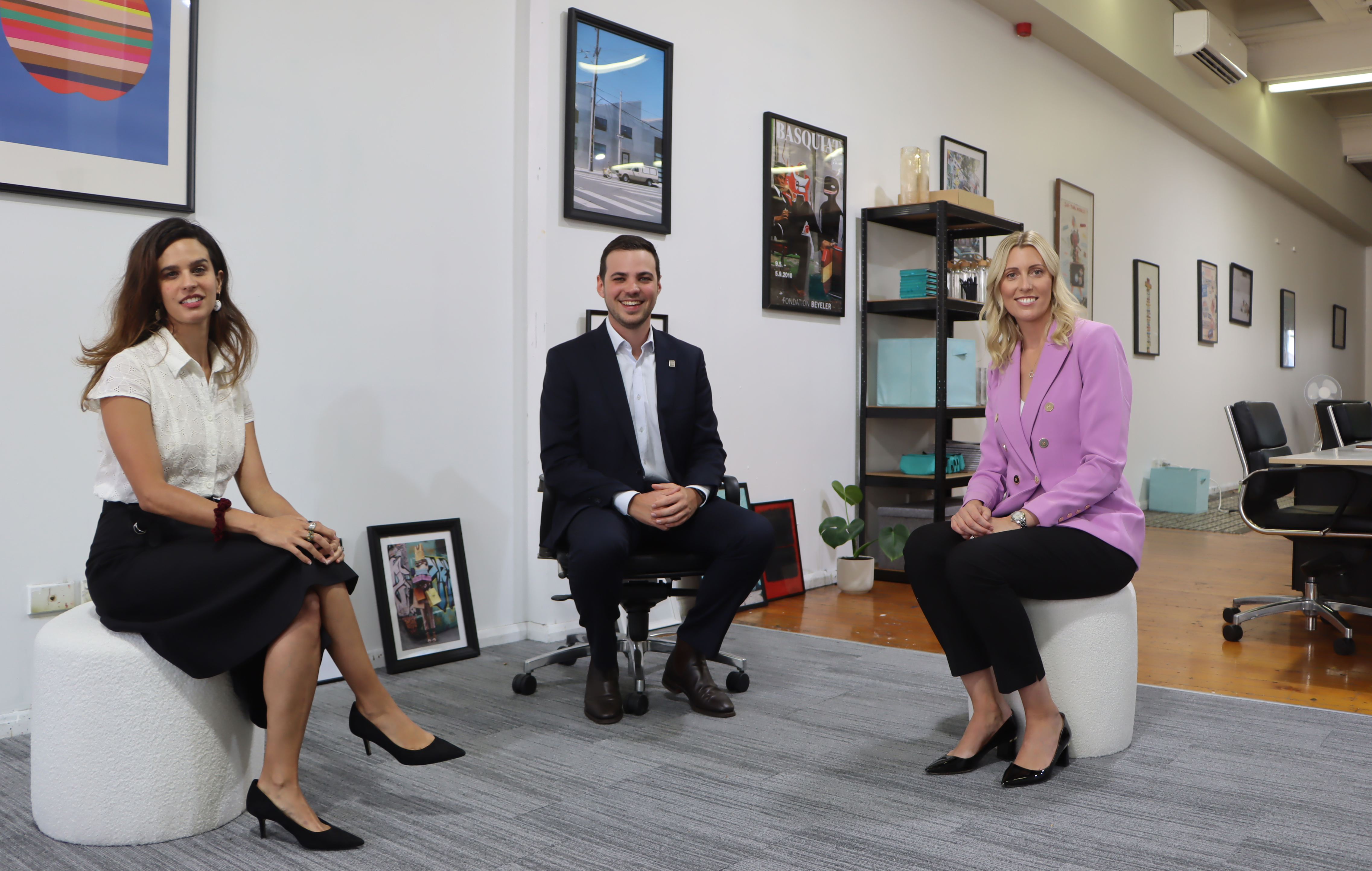
Image-caption-L-R-Co-founder-Art-Thinking-Maria-Jose-Sanchez-Varela-Barajas-Deputy-Lord-Mayor-Declan-Clausen-pepperit-owner-Nicole-Shelley.jpg

Deputy Lord Mayor Declan Clausen said the attraction of skilled professionals under the New Move program has tangible benefits for the city.

“Newcastle’s position as an economic hub is driven by innovation and skills. By attracting new talent to the city, New Move is boosting Newcastle’s economy and creating new local jobs,” said Cr Clausen.

“The positive impacts of the relocation of 30 New Move grant recipients have already been felt and REMPLAN economic modelling has shown that the program will create up to 75 new local jobs and up to $25 million in additional local economic output.”

New Move grant recipient Nicole Shelley was born in Newcastle and returned to her hometown after 14 years in Sydney to expand her marketing agency, pepperit.

New Move is an initiative of Newcastle’s Economic Development Strategy, adopted unanimously by the elected Council in May 2021, and complements programs targeted at Novocastrians including the City’s popular New Skills program which helping to address industry specific skills gaps.

“Although I have lived away from Newcastle since 2007, I’ve witnessed the transformation the city has undergone to become a hub of innovation and creativity, which is one of the reasons I was attracted to move back,” Mrs Shelley said.

“Since moving to Newcastle, I have opened a local pepperit office, employed three locals in full-time positions and our business is currently supporting two internships for University of Newcastle students, with plans to grow our team to eight within 12 months.

“I look forward to continuing to give back to the local community and am eager to play a part in the ongoing transformation of this amazing city.”

Newcastle’s newest residents have relocated from across the globe and throughout Australia, with some moving from Sydney and Melbourne, as well as expatriates returning to Australia for the New Move program from Hong Kong and The Netherlands.

Co-founder of Art Thinking Maria José Sanchez-Varela Barajas made the move from Mexico and has already helped bring festivals and ideas to Newcastle.

“I love the way that culture and heritage are embraced throughout global destinations like Singapore, Dubai and Barcelona, to create a unique vibrancy through art, science and innovation and I see the same potential in Newcastle, which is why I made the move here, ” said Ms Sanchez-Varela Barajas.

“For me, Newcastle has the perfect combination of creativity, a great location, art, innovation and entrepreneurship to thrive within and I’m keen to play my role in driving innovation and new ideas forward.”

Cr Clausen said New Move recipients have committed to becoming ambassadors for our city through event attendance, mentoring, volunteering and knowledge sharing to develop local skills and create further economic opportunities.

“Research has demonstrated that talent attraction has a higher marginal rate of return than business attraction, which is why the New Move program will prove beneficial to our local economy,” Cr Clausen said.

New Move participants will be provided access to co-working spaces and networking events to build business and community connections.

Sport clubs to be champions of mental wellbeing

The NSW Government is calling on sporting organisations to step up and serve some ace ideas for delivering mental health and wellbeing activities as part of a $2.8 million Mental Health Sports program.
 
Minister for Mental Health Bronnie Taylor said clubs can apply for grants of up to $150,000 from now until 6 March 2022 for activities that provide mental health, resilience and wellbeing benefits to individuals and groups across the State.
 
“As part of our COVID-19 mental health recovery package, we’re looking to our sporting clubs to inspire people to make their mental health and wellbeing a top priority in 2022,” Mrs Taylor said.
 
“These grants are intended to take conversations about mental health out of the clinic and into the clubhouse. We want people talking about how they’re going emotionally and mentally in a setting they are comfortable with.
 
“As well as being a fun recreational activity, exercise in almost any form can act as a stress reliever. Being active can boost your feel-good endorphins, distract from daily worries and is a great way to meet new friends or catch up with old ones, making it a fantastic remedy for maintaining a healthy mind and lifestyle.”
 
All NSW-based sports bodies are encouraged to apply, with the aim of ensuring a spread of funding and projects across the State. Grants will be available to clubs supporting both general populations and the following priority populations:

  • Aboriginal people
  • Culturally and linguistically diverse people
  • LGBTIQ+ people
  • People with coexisting mental health, alcohol or other drug issues.

 
Minister for Sport Stuart Ayres said the program builds on the success of the $1.1 million Mental Health Sport Fund in 2019-20.
 
“After a very tough two years we want to see people kicking goals both on and off the field and these sporting grants are a great way to do just that,” Mr Ayres said.
 
“Sporting clubs and associations are at the heart of local communities, helping to forge strong community ties and a strong sense of place. It makes sense they’re our partners in getting the mental health of NSW back on track.”
 
The $2.8 million NSW Mental Health Sports Fund is part of the $130 million COVID-19 mental health recovery package announced in October 2021.
 
To start your application, please visit: https://bit.ly/34HgU1f

New transport precinct set to help reinvigorate CBD

The NSW Government will deliver Sydney Metro’s Hunter Street development in a first-of-its-kind model, which is set to revitalise a critical area to Sydney’s CBD.
 
The Government today launched an industry registration process to deliver the new Hunter Street Station and the jobs, economic and tourism precinct around this new Sydney CBD metro station.
 
The new Hunter Street Station will be located in the heart Sydney’s business district and become a transport hub with connections to George Street, light rail, train services at Wynyard, Sydney Metro West and the Sydney Metro City and Southwest station at Martin Place.
 
Premier Dominic Perrottet said the Government is calling on the private sector to be involved in bringing this new precinct to life, inviting businesses to be a part of shaping the future of this part of the CBD.
 
“Sydney Metro Stations will change the way people live and commute, bringing people home faster and bringing prosperity to local businesses,” Mr Perrottet said.
 
“There’s an opportunity in Hunter Street to integrate transport with a new city precinct, weaving it into the fabric of the city. It’s part of our long-term vision to revitalise the CBD and bring Sydney roaring back to life after the challenges of the pandemic.
 
“Transport, foot traffic, the right mix of businesses and public spaces are what makes cities flourish, by having a vision for how we integrate these elements we’ll help shape the Sydney of the future.”
 
The new station is expected to have the busiest city-bound platform across the entire Sydney rail network in the morning peak, taking pressure off Wynyard and Town Hall.
 
Minister for Transport and Veterans David Elliott said the Government is eager to work with industry partners on this once in a century infrastructure investment, which will link new communities to rail services, slash travel times across the network and support employment growth.
 
“Hunter Street Station will revitalise Sydney’s northern CBD and become a gateway to jobs, business and tourism and a catalyst for economic recovery,” Mr Elliott said.
 
“This station will be one of the jewels in the crown of the city-shaping Sydney Metro West project – that’s why it’s so important economic, community and place-making outcomes will be put at the forefront of the new station’s design and delivery.”
 
“It will take customers around 20 minutes to get from Parramatta to Hunter Street on this new rail infrastructure project and they’ll be getting off the train to an integrated, world-class transport hub that will transform this part of the CBD.”
 
Sydney Metro Chief Executive Peter Regan said the Hunter Street Precinct Development Partner Model will ensure the best precinct and value for money outcomes given the project’s significant interest.
 
“Bidders for Hunter Street Station will have to show how they will improve the local area and create a precinct and a sense of place, not just a station,” Mr Regan said.
 
Sydney Metro is calling for the ideas and input of key industry players to help create a world-class transport hub, including the underground station, the buildings and the spaces above it.