
HELPING LIFELINE HELP MORE AUSTRALIANS

The Morrison Government is investing an additional $52.3 million in funding for Lifeline Australia over four years from July 2022, in recognition of the critical support the service provides to Australians.

Combined with an extension of the annual funding of $15.5 million announced in the 2018-19 Budget, this takes the Morrison Government’s support for Lifeline’s core crisis service to $114.2 million over the next four years.

The new funding will help Lifeline to meet the growing level of demand for their support services, maintain and improve infrastructure and responsiveness, as well as investing in innovation in crisis response, surge capacity and models of care.

Prime Minister Scott Morrison said the additional $52.3 million in funding for Lifeline Australia would ensure millions more Australians would receive the help that they need, when they need it.

“We are boosting our support once again to ensure that Lifeline can continue to be one of Australia’s most trusted, greatest supporters both now and in the future,” the Prime Minister said.

“This funding means that next year Lifeline will be able to take an extra 176,000 calls or texts from Australians, or an extra 3,900 every day. By 2026, this will grow to an extra one million calls or texts from Australians every year.

“The critical role that Lifeline plays has never been more evident than in these recent years. When COVID had many Australians feeling like they were alone, Lifeline was there. When bushfires or floods left many feeling helpless, Lifeline was there. Or, when any given day had many feeling like life was tough, Lifeline was there.

“Lifeline is lifesaving, and that’s why our investment is so important.”

Minister for Health and Aged Care Greg Hunt said Lifeline had and continues to support Australians as we emerge from the COVID-19 pandemic.

“Lifeline is Australia’s largest provider of suicide prevention services, which has been supporting Australians experiencing emotional distress for almost 60 years,” Minister Hunt said.

“Any member of the community can pick up the phone, send a text or go online and receive assistance from Lifeline. Their support has helped to save lives and to protect lives.

“The COVID-19 pandemic has seen more Australians reach out for help and our Government has provided more than $18 million in supplementary and emergency funding to the charity since 2019, to ensure they support as many Australians as possible.

“This has ensured more Australians get the crucial help they need.”

Assistant Minister to the Prime Minister for Mental Health and Suicide Prevention David Coleman said the increased funding would help Lifeline continue to support more and more Australians in crisis.

“Right now, Lifeline is helping more Australians than ever, with daily calls to Lifeline averaging over 3,100 per day since the beginning of the year,” Assistant Minister Coleman said.

“Lifeline’s 13 11 14 crisis support service is available 24/7. Australians can speak to a trained crisis supporter any time of the day or night.

“We offer our gratitude to Lifeline’s hardworking volunteers and staff, who have provided so much to the Australian community.”

The Morrison Government continues to invest in improving mental health outcomes for all Australians, investing a historic $2.3 billion in the National Mental Health and Suicide Prevention Plan through the 2021-22 Budget to deliver significant reform of the mental health system and ensure that all Australians have access to high quality, person-centred care as we emerge from the COVID-19 pandemic.

To date, health portfolio expenditure in mental health and suicide prevention services and supports in 2021-22 is at a record high of $6.5 billion.

Woman dies in alleged DV-related stabbing – Mayfield

A woman has died and a man is in custody following an alleged domestic violence-related stabbing at Newcastle overnight.

Officers attached to Newcastle City Police District were called to a home unit on Crebert Street, Mayfield, about 10.40pm (Friday 25 March 2022), responding to reports a man had broken into the unit.

Police arrived to find a 21-year-old woman critically injured lying outside her home. Police and NSW Ambulance paramedics rendered assistance but the woman died at the scene. She had suffered a number of stab wounds.

A 22-year-old man was arrested at the scene and is currently in police custody.

A crime scene was established and is being examined by specialist officers.

Inquiries are continuing.

Green boost for budding hemp industry

Hemp has to be one of the most misunderstood plants on this planet. Despite it having multiple uses over thousands of years – including food, construction, fuels and fibre – the rise of drug culture and prohibition on cannabis has seen industry growth stymied. This is despite the cannabis plant used to grow it typically containing less than one percent THC.

The global hemp market is forecast to grow from $3.5 billion to $26.6 billion by 2025, presenting significant opportunities for Australian farmers and job creation. However Australia remains an international laggard in this field.

Tasmania already produces around 80% of the nation’s hemp crop, making a boost for hemp a boost for Tasmanian jobs. The Greens will supercharge the growth of the hemp industry by investing $20 million to support partners and research. 

Greens spokesperson for agriculture, Senator Peter Whish-Wilson said: 

“Hemp has been widely vilified, shunned and prohibited despite the cannabis plant used to grow it typically containing less than one percent THC.

“While science has helped reclaim hemp’s true versatility in many parts of the world, Australia has been slow to accept the facts and grasp its potential. 

“It wasn’t until 2017 that Australia legalised hemp for food, overturning a prohibition that had existed since 1937. However unfortunately the industry has yet to benefit from the research and development funding enjoyed by other agricultural industries.

“The Commonwealth funds at least $12.65 million each year directly to the established cotton industry. Whereas the fledgling hemp industry has received $500,000 per annum over the last five years. 

“More government work is needed to enhance innovation and grow the hemp industry and there’s no better place for this work to be focused than in lutruwita/Tasmania.

“Tassie already produces around 80% of the nation’s hemp crop making a boost for hemp a boost for Tasmanian jobs.

“In the balance of power after the next election the Greens will push to supercharge the growth of the hemp industry by investing $20 million into supporting hemp industry partners and research. We are also remain ready to work with all levels of Government to remove existing regulatory barriers to hemp production.”  

Winter COVID-19 dose recommended for Australians at higher risk

Australians considered most at risk of severe illness will be able to receive a fourth COVID-19 vaccine heading into winter following advice accepted by the Australian Government from leading immunisation experts.

The Australian Technical Advisory Group on Immunisation (ATAGI) has reviewed available evidence and recommends an additional dose be given to people at higher risk of severe illness from COVID-19 from four months after their initial booster dose.

ATAGI recommends that adults aged 65 years and older, Aboriginal and Torres Strait Islander people over the age of 50, residents of aged care and disability care facilities, and people aged 16 years and older who are severely immunocompromised receive a winter dose to maximise their protection against severe illness.

Similar to other respiratory viruses such as the flu, it is likely an increase in COVID-19 cases will be seen over winter. Although COVID-19 is prevalent year-round, the cold weather can make it easier for viruses to infect our bodies.

A booster is your best protection against the most severe impacts of COVID and may provide protection against long COVID.

For this reason, the Australians considered most at risk should ideally receive their winter COVID-19 dose before winter. This new dose can be provided at the same time as the annual flu vaccine if it has been at least four months since an individual received their last booster.

Australians are encouraged to make sure their COVID-19 vaccinations are up to date, ensuring they have received two primary doses, as well as a booster. Even if you have had COVID-19, it is important to maximise your protection from severe illness and have a booster.

ATAGI will continue to review available evidence on the epidemiology of COVID-19, the potential impact of the emergence of new variants, and will update its advice if required.

To book a COVID-19 vaccine or booster, please use the COVID-19 Clinic Finder.

For more information and to read the ATAGI advice visit www.health.gov.au.

$100 million for influenza vaccines to protect Australians this winter

The Morrison Government is investing more than $100 million for seasonal influenza vaccines to protect Australians most at risk this winter. 

Our approach to managing influenza and COVID-19 over the winter months will focus on minimising health impacts, while protecting those most at risk of severe illness.

The Morrison Government has secured vaccines to cover all vulnerable people eligible for a government-funded vaccine through the National Immunisation Program (NIP). This amounts to around 9.5 million doses for Australians.

Those eligible for a government-funded flu vaccine include:

  • adults 65 years and over
  • children under five
  • pregnant women
  • Aboriginal and Torres Strait Islander people
  • people with certain medical conditions.

The National Immunisation Program offers a specific, enhanced influenza vaccine to protect people 65 years and over.

In addition to vaccines available for those most at risk through the NIP, private market vaccines will also be available.

Influenza vaccination is particularly important this year. With the easing of international and domestic public health measures arising from the COVID-19 global pandemic, a resurgence of influenza is expected in 2022.

The best protection this winter is to receive an influenza vaccine and be fully vaccinated against COVID-19, including any recommended booster doses.

Government funded influenza vaccines will become available from 4 April through a range of providers including GPs, community health clinics and eligible pharmacies subject to local supply arrangement in states and territories. 

I encourage everyone to start to book their appointments from mid-April to ensure you have the best protection at the peak of the season which is usually between June and September.

The medical advice from the Australian Technical Advisory Group on Immunisation is that it is safe to have the influenza and COVID-19 vaccines at the same visit.

If you haven’t received your COVID-19 booster when it’s your time to get your influenza vaccination, check with your healthcare provider to see if they can administer both vaccines at the same visit.

Help stop the flu in 2022. For more information visit www.health.gov.au/immunisation 

RFDS and Federal Government to enter into record 10-year partnership

The Morrison Joyce Government and the Royal Flying Doctor Service (RFDS) will enter into a record 10-year strategic partnership, worth nearly $1 billion, to provide more certainty for regional, rural and remote patients who rely on the critical aeromedical service.

Federal Regional Health Minister and former regional doctor, Dr David Gillespie said this historic partnership will provide long-term security to enable this iconic Australian rural and remote service to plan better into the future.

“Until today, agreements between the Royal Flying Doctor Service and the Federal Government have been four-year agreements. This new 10-year strategic partnership recognises the vital role that the RFDS plays in the lives of Australians and gives the RFDS much more certainty to plan for the future and continue to deliver aeromedical retrievals, primary health care and dental and mental health outreach clinics to rural and remote patients,” Dr Gillespie said.

“To support the partnership, the Morrison Joyce Government is committing additional funding of more than $80 million over the next 10 years, taking support for the RFDS to nearly $1 billion over 10 years from 2022-23.

“This builds on the Morrison Joyce Government’s commitment to the RFDS of $327 million since 2018-19 which has enabled the RFDS to undertake thousands of aeromedical evacuations, primary health clinics, dental outreach and multidisciplinary mental health outreach services to some of Australia’s most remote citizens.”

An iconic and uniquely Australian service, the RFDS has protected the health and wellbeing of people in rural and remote parts of the country since the 1930s.

RFDS delivers essential health care in regional, rural and remote communities right across the country.

“At the height of the COVID-19 pandemic, doctors, nurses, pilots and support staff at the RFDS demonstrated their capability and capacity to the entire nation, delivering more than 75,000 vaccinations and flying in vaccines and PPE to some of the most far-flung areas to protect communities,” Dr Gillespie said.

“It was during those times that city people around Australia learnt what country people have always known, that being that the RFDS is such a trusted part of the regional, rural and remote health workforce.

“Our new formal agreement will give the RFDS certainty and allow it to offer more flexible services that are responsive to local patient’s needs.

“Expanded and continued support for the RFDS means better overall health management and preventive health care is available for rural, remote and very remote patients. 

“The Morrison Joyce Government is delivering the most comprehensive investment in rural health of any modern era government, and this announcement today is just another way we are supporting the health of country patients.”

The new funding agreement will begin from 1 July 2022, and it is expected the Ten-Year Strategic Agreement will be in place soon after.

Australia’s biosecurity emergency pandemic measures to end

Following medical advice, the Biosecurity Emergency Determination relating to COVID-19 for Australia will not be renewed when it lapses on April 17.

I am taking this decision now so as to provide forward guidance based on the advice of the Professor Paul Kelly, the Commonwealth Chief Medical Officer.

The emergency period was a crucial early decision in Australia’s pandemic response. It has saved tens of thousands of lives as Australia avoided some of the worst outcomes from the early spread of the virus and now has one of the highest vaccination rates in the world.

As Australia moves towards living with COVID-19, the following emergency measures will also lapse:

  • negative pre-departure tests for travellers entering Australia.
  • restrictions on the entry of cruise vessels into and within Australian territory – announced on 15 March – will lapse on 17 April 2022.
  • price gouging rules on rapid antigen tests – supply is strong and to date, more than 509 million RATs have arrived in Australia. The ACCC will still closely monitor the supply of RATS to ensure price gouging does not occur.

International travellers into and out of Australia will still be required to provide proof of double vaccination against COVID-19. Travellers will also still be required to wear a mask while on international flights based on medical advice. These measures will be implemented under the non-emergency provisions in the Biosecurity Act. The requirements for maritime arrivals will also be aligned with those on airlines, as part of the safety protocols for the resumption of cruising.

The Morrison Government has taken strong action over the course of the pandemic to protect Australians. Shutting the international borders early was a tough but decisive action, which enabled Australia to manage the pandemic and minimise the loss of life.

We thank Australians for their resilience, their cooperation, and their understanding in following the medical advice which has kept us safe. 

The past two years have been challenging, but we have shown the best of Australia – people caring for each other, working from home, home schooling, and importantly being vaccinated.

The COVID-19 and Influenza Winter Plan will ensure our health system is prepared, and despite an increase in the past week of cases due to the Omicron variant, hospital admissions and ICU cases have not had the same increase. This is a promising sign.

Through the pandemic, the Biosecurity Act has been used for:

  • managing Australia’s inbound and outbound travellers (from March 2020 to April 2022), including through pausing international arrivals from high-risk countries (May and December 2021) and determining information and declaration requirements for travellers (throughout the pandemic)
  • prohibiting the operation of retail stores at international airports to prevent the spread of COVID-19 from travellers who had not yet completed quarantine into the general community (March 2020 – November 2021)
  • mitigating the spread of COVID-19 in remote Indigenous communities and vulnerable neighbouring countries (throughout the pandemic as required),
  • ensuring the accessibility and affordability of personal protective equipment (March 2020 – February 2021); and
  • implementing enhanced business as usual arrangements such as targeted ill traveller screening processes, communications and pre-arrival reporting requirements for vessels (throughout the pandemic).

Labor’s Regional First Home Buyer Support Scheme

Labor today announced the next part of our plan to tackle the housing crisis – the Regional First Home Buyer Support Scheme.

The Scheme will help 10,000 Australian families a year in regional areas to buy their first home. 

This triples the number of places that Australians living in regional areas received last year under the current First Home Loan Deposit Scheme.

It is harder to buy a house today than ever before. 

Last year, housing prices in our capital cities rose by 21 per cent. 

In the regions they jumped by 26 per cent. 

In many parts of regional areas, the cost of buying a house increased by even more:

  • 47.1 per cent in Wamberal on the Central Coast of New South Wales.
  • 45.2 per cent in Terrigal on the Central Coast of New South Wales.
  • 35.7 per cent in Kiama on the South Coast of New South Wales.
  • 34.5 per cent in Torquay, Victoria.
  • 33.3 per cent in Cessnock in the Hunter region of New South Wales.
  • 40.3 per cent in Launceston, Tasmania.
  • 30.4 per cent in Burnie, Tasmania.

Last week, Infrastructure Australia released a report that confirmed housing has been identified as the biggest infrastructure problem across regional Australia.

With house prices having skyrocketed and a sharp drop in affordability, regional first home buyers need and deserve their own dedicated scheme to support them to buy a home. 

Labor’s Regional First Home Buyer Support Scheme will be reserved for Australians that have lived in that region for more than 12 months.

The Government’s own review of the National Housing Finance and Investment Corporation called for the First Home Loan Deposit Scheme to be expanded in the regions last year.

Labor’s Regional First Home Buyer Support Scheme will help first home buyers get into a house sooner with a deposit of just five per cent without the need to pay Lenders Mortgage Insurance, saving up to $32,000. Government will provide a guarantee of up to 15 per cent of the value of the property purchased. 

The eligible regions under Labor’s Regional First Home Buyer Support Scheme, local price caps and mortgage insurance savings are:


From Gosford to Gippsland to Gatton, from Broome to Burnie, this scheme is reserved for regional Australians.

An Albanese Labor Government will also improve the operation of the current scheme by reviewing and updating the price caps on a six-monthly basis and improving the process of reallocating unused guarantees. 

Remedial work at Stockton Beach following recent weather events

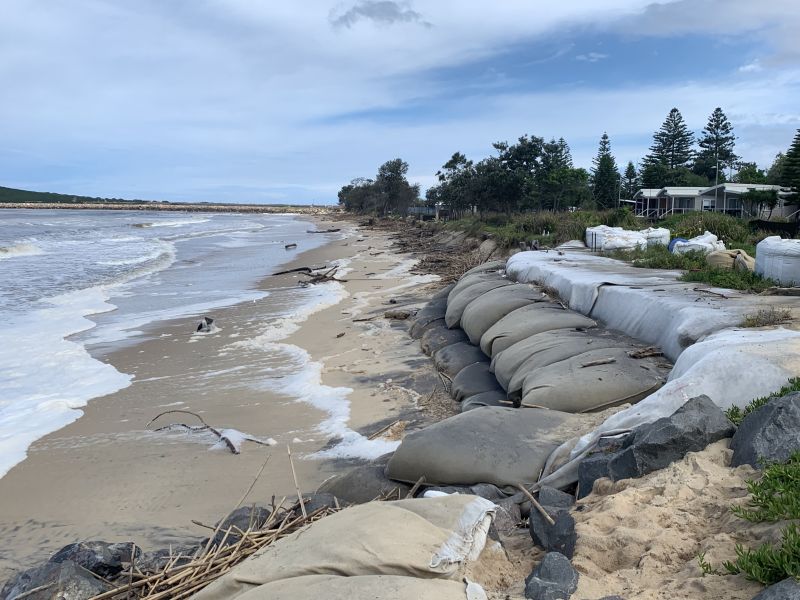
After two significant weather events impacted Stockton Beach in recent weeks, City of Newcastle is implementing a program of remedial work to address safety issues that forced the closure of several beach accessways and to manage debris that washed onto Stockton Beach.

The accessway alongside beachside café, Lexie’s, will be repaired as a priority. The work on the Lexie’s Café accessway will require a temporary closure of the carpark and the informal outdoor dining area at Lexie’s on Tuesday 29 March.

Stockton Beach following significant weather events in early March 2022

The recent large seas exposed historical building waste along the Dalby Oval section of the coast, which will also be managed as part of this program of work. The accessway at Dalby Oval will be repaired so it can be reopened to the public after work at this location is complete. This work will also allow work crews access onto the beach to manage the debris on the beach adjacent to the Stockton Beach Holiday Park.

Scheduled beach scraping in front of the Stockton Beach Holiday Park was unable to take place in early March due to the impact of the two east coast low weather events. Beach scraping is scheduled again for late April as suitable tide windows allow.

Temporary fencing and a work compound, for the contractor undertaking this work will be established at Dalby Oval by late March, weather permitting. It is expected that this remedial work program will require two weeks to complete.

City of Newcastle reminds the community to follow safety warnings and to adhere to any accessway closures or hazard notices that impact use of the beach while this work is completed.

Precinct Plan for Aerotropolis announced

The Western Sydney Aerotropolis is set for take-off after the NSW Government today released the final Precinct Plan which will support more than 100,000 jobs and 11,400 new homes.
 
Minister for Planning and Minister for Homes Anthony Roberts said the finalised plans give the community, investors and developers the certainty they need to plan for the future.
 
“The final Precinct Plan will enable the development process to begin in the Aerotropolis, and kick start the benefits and opportunities that a new international airport will bring to Western Sydney,” Mr Roberts said.
 
“The finalisation of the plan for the initial precincts lays the foundation for the transformation of 6,500 hectares of land, with new homes, jobs and open spaces, supported by the right infrastructure.”
 
The package released today includes finalised plans for the Aerotropolis Core, Badgerys Creek, Northern Gateway, Agribusiness and Wianamata-South Creek precincts following extensive consultation.
 
Mr Roberts said developer contributions under the special infrastructure contribution framework will fund up to $1.1 billion in infrastructure like roads, public transport, health facilities and schools, to support the new city.
 
“The Aerotropolis will be our newest, thriving commercial city to rival the world’s greatest, that’s why we took time to get the planning right, setting us up for success over the decades to come, ” he said.
 
“We’ve listened to the community and the Independent Community Commissioner, and finalised these plans in line with their feedback.”
 
Minister for Western Sydney Stuart Ayres said the feedback from the community has created a better balanced Aerotropolis plan, that will create more jobs closer to where people live.
 
“This is a once-in-a generation opportunity to deliver a thriving new city for Western Sydney,” Mr Ayres said.
 
“Infrastructure investment in the airport, roads and the new Metro will make the Aerotropolis one of the best-connected areas in the country, making the Western Parkland City the best place to live, work and invest in for generations to come.
 
“The revised Open Space Network will ensure more than 95 per cent of homes in the future Aerotropolis are located within 400 metres, or five minutes walk of open space.”
 
For more information and to view the final plans visit:
https://www.planning.nsw.gov.au/aerotropolis