Labor to Boost Rural and Regional Paramedics

A Minns Labor Government will begin the long task of repair and structural reform of the delivery of health care services across New South Wales, beginning with a boost to rural and regional paramedics.
 

The first phase is a $150 million commitment to fund an additional 500 paramedics in Labor’s first term, to ease the burden of chronic paramedic shortages and the unprecedented strain on our rural and regional health system.  
 

This new workforce will be spread across areas with the most need – to be determined following significant consultation with health care professionals.
 

Labor in government will also be working to progressively upskill new and existing paramedics to intensive care and extended care paramedics – meaning they can deliver more life-saving and compassionate care 24 hours a day, and ease pressure on our hospitals.
 

For the last decade under the NSW Liberals and Nationals, health care in the regions has been in a state of crisis.
 

A landmark parliamentary inquiry, which Labor fought to establish, shone a light on a decade of mismanagement, leading to significant gaps in service delivery and a dire shortage of clinicians and healthcare professionals across our regions.

The lack of access to highly skilled paramedics and slower ambulance response times was an issue that was raised consistently in the inquiry. It found that rural and regional NSW was underserved by paramedics of all levels, and in particular there were entrenched policy barriers that prevented Intensive Care and Extended Care Paramedics working in rural and regional NSW.
 

Ambulance response times have been trending down in NSW for a decade. The latest data from the Bureau of Health Information (BHI) for the April to June 2022 quarter found that patients waited longer even for an ambulance, than any time since reporting started.
 

For the highest priority life threatening callouts, only 57.6 per cent meet the clinical benchmark – down from 72.6 per cent 12 years ago.
 

Sadly, the issue is worse outside our cities. In the most recent quarter, 58.9 per cent of callouts reached the 10-minute benchmark in metro areas, but only 54.7 per cent in rural areas.
 

Right now, NSW has the second-worst ambulance response times in Australia.  We also have the second-fewest number of paramedics per person, well below the national average, and substantially behind states like Victoria and Queensland. 
 

As a result, our paramedic-attended heart attack survival rates are the second worst in the country, at only 43.6 per cent (compared to over 58 per cent in Victoria and Queensland).
 

NSW Labor will also seek bipartisan support for an in-principle agreement to the outcomes of the NSW Government’s taskforce that has been established to look at professional recognition for paramedics across the state.
 

Professional recognition for paramedics will formally acknowledge the change in education, training and skills required of paramedics over the years.
 

Professional paramedics will offer significantly enhanced scope of emergency health care across NSW, and help to ease pressure on emergency departments.
 

This follows an announcement recognising paramedic practitioners in Victoria, and is modelled on the United Kingdom, where paramedics attend more complex callouts, can give more medications, and use more advanced equipment than they currently do.
 

NSW Labor looks forward to the findings of the taskforce, and will look to implement the findings in government.
 

This commitment is the first of many required steps to repair the New South Wales health system – in crisis after a decade of mismanagement and underinvestment.
 

NSW Labor Leader Chris Minns said:

The New South Wales system cannot cope with another four years of Band-Aid solutions.”
 

“We need long term, structural repair and this announcement from Labor today is only the beginning.”
 

“I want to thank the hardworking paramedics, especially those in the regions who go to work every day and do the very best they can in difficult circumstances.
 

“I’m interested in finding long term solutions to the health crisis in New South Wales. It’s not an easy task but I am determined to do it.


 NSW Shadow Minister for Health Ryan Park said:

“Our ambulance services, but particularly those in rural and regional areas are in desperate need of an injection of resources to fix the mess, and the shortages crippling our health network.
 

“It’s like going to work with one hand tied behind your back.
 

“This Government has had 12 years – and they’ve failed to address chronic issues in our health system. This has meant chronic shortages and an overstretched and overwhelmed ambulance network across the state.”
 

“A Minns Labor Government will begin the task of repairing that”.
CESSNOCK COUNCIL FINED FOR WATER POLLUTION INCIDENT

NSW Environment Protection Authority (EPA) Director, David Gathercole said council operates the dam to collect and treat dirty water at the premises.

“EPA officers observed contaminated water in the dam at a level that was far too high,” Mr Gathercole said.

“The equipment used to measure dam levels appeared to be installed incorrectly, giving a false indication that dam levels were lower.

“Officers also found that council had allegedly failed to physically check the water levels leading to contaminated water discharging through the dam spillway.

“These breaches run the risk of creating large-scale pollution events which can be destructive on both the environment and community.

“Every licence holder has a duty to understand its obligations and keep equipment in good condition.”A $15,000 Penalty Infringement Notice (PIN) is the largest fine the EPA can issue under its legislation.

People can report concerns regarding water pollution incidents to the EPA on 131 555. Calls made to the Environment Line are directed to EPA officers in the field so they can target those areas of most concern to the community.

Penalty notices are one of the tools the EPA uses to achieve the best environmental or human health outcomes. Our regulatory approach includes a wide variety of options. Find out more about them here https://www.epa.nsw.gov.au/about-us/publications-and-reports/regulatory-strategy.

Additional humanitarian assistance in response to Pakistan floods

Australia will provide a further $3 million in immediate humanitarian assistance in response to the devastating flooding in Pakistan.

The water, now covering over one-third of the country, is expected to take months to subside. This is having enormous and ongoing impacts on crops, food security and livelihoods.

Pakistan estimates that as many as 1.7 million houses have been lost, as well as one-third of their cotton crop.

The Australian Government’s deepest sympathies are with the families and communities that have been, and continue to be, greatly affected.

Australia’s support will be delivered through the World Food Program to address emergency food and livelihoods needs, including for women and children who remain disproportionately affected.

This will bring Australia’s total humanitarian response to the floods to $5 million. 

It’s time to care for those who work and care

Today Parliament will begin hearing evidence from industry and community groups about juggling work and care responsibilities.

The Select Committee on Work and Care will be Chaired by Senator Barbara Pocock.

Senator Pocock not only is an expert in working life, but has also lived the reality of being a carer for her children, parents, and now as a grandparent.

Senator Barbara Pocock will be joined by six Senators from across the political spectrum to begin this wide-ranging inquiry, which will make recommendations about how to better help the working carers of our future.

The Inquiry has received over 100 submissions so far. It will hold hearings across Australia.

Senator Barbara Pocock said:

“I’ve been a working carer for most of the last 33 years. I know first hand the challenges and the joys that it can bring.

“Working carers make up a huge proportion of the Australian workforce. In 2022, 2 million Australians provided unpaid assistance to others with a disability, long-term health condition or due to old age (ABS, 2022). Many others are working parents.

“Research tells us that combining care responsibilities with paid work results in unexpected time pressure and a complex juggle which can affect our health, earnings, relationships, productivity, and the way we work.

“We provide care work out of love, but it is time to acknowledge the impact it has on lifetime earnings and gender equality

“This inquiry will point to ways to ease the pressure on working carers. I am expecting recommendations about quality, affordable childcare and respite care, flexibility at work and improved paid parental, sick and holiday leave.

Alison Brook, CEO of Carers Australia said:

“We are pleased with this opportunity to appear before the Senate on this important Inquiry, and are hoping to explore the three pillars we believe are needed to effectively support Australia’s 2.65 million unpaid carers to continue their care responsibilities and also participate in the paid workforce.

“These are carer-inclusive workplaces, including the need for carers leave in Australia to be brought in-line with other OECD countries, the need for increased substitute care options such as respite care, and reform related to the Carer Payment”

First look at final stage of East End revitalisation

City of Newcastle, together with Iris Capital, have unveiled the winning designs of an architectural design competition to complete the $880 million redevelopment of its award winning East End development.

A three-member independent competition jury unanimously selected the architectural design submitted by SJB, Durbach Block Jaggers and Curious Practice for stage three and four of Iris Capital’s development of 3 Morgan Street and 22 Newcomen Street.

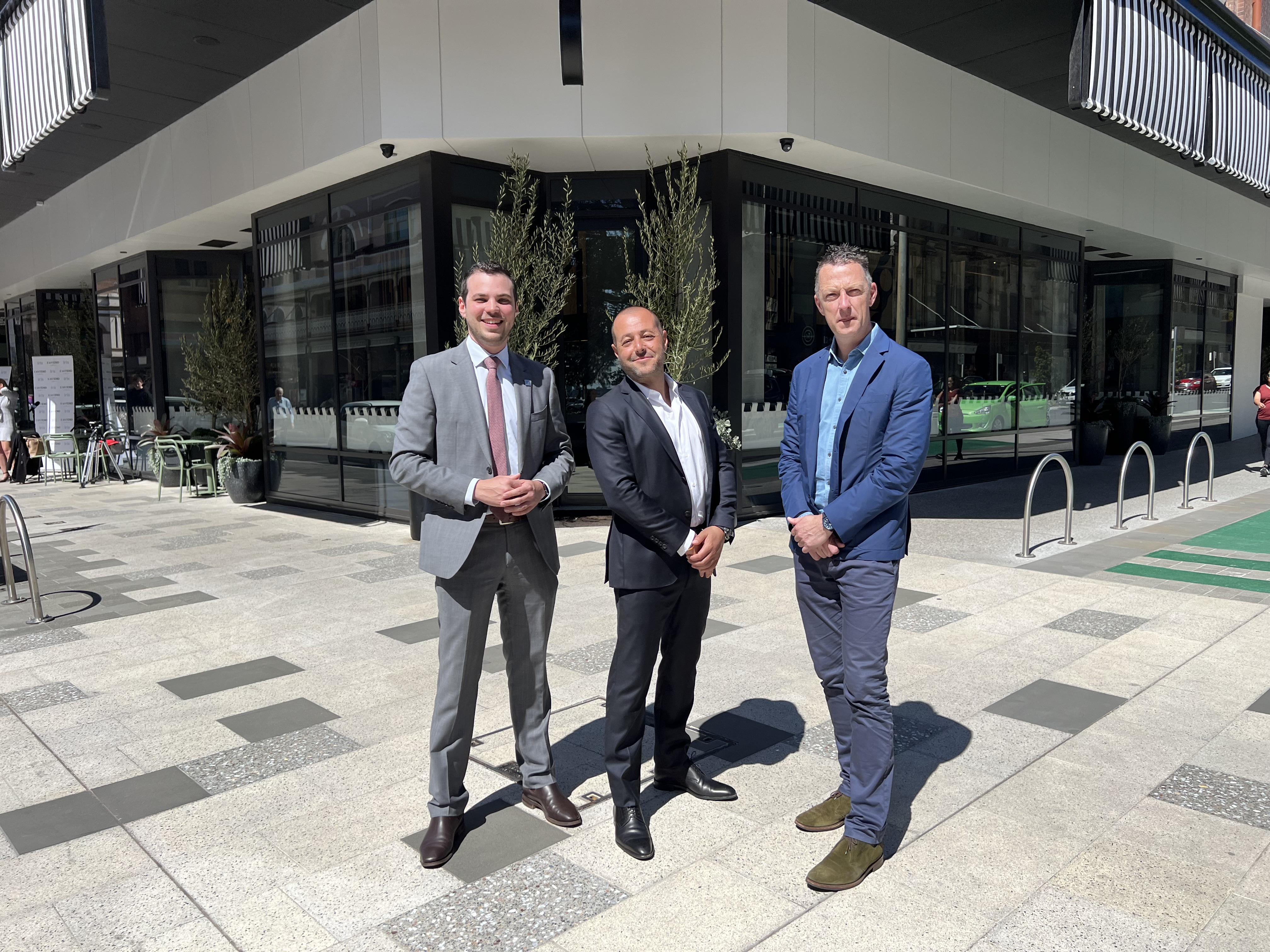
Deputy Lord Mayor Declan Clausen, Iris Capital CEO Sam Arnaout, and SJB director Adam Haddow.

The winning design features 235 dwellings across five buildings, as well as 1,731 square metres of retail floorspace and approximately 300 parking spaces, with an estimated overall construction cost in excess of $150 million.

Strong design elements supported by the jury include a Market Square public space concept and perimeter colonnade, multiple public viewing corridors to the harbour, integration of green spaces, and a distinct character for each building.

Lord Mayor Nuatali Nelmes congratulated SJB, Durbach Block Jaggers and Curious Practice on their stand-out design and commended Iris Capital for their ongoing commitment to the revitalisation of Newcastle’s East End.

“Newcastle’s East End is transforming before our eyes, with architectural design excellence bringing the history and heritage of this harbour precinct into the modern era,” Cr Nelmes said.

Deputy Lord Mayor Declan Clausen said the city was a step closer to seeing the complete vision for the East End precinct come to life.

“The architectural design competition presented an exciting opportunity to bring together a shared vision between City of Newcastle and Iris Capital to complete the final stages of the city’s revitalised East End including the vision for a public corridor to connect the Harbour to Cathedral Park,” Cr Clausen said.

“The East End will become a landmark urban precinct for the enjoyment of residents and visitors for generations to come.”

The architectural design competition was run by an independent jury process under the governance of City of Newcastle and the NSW Government Architect’s Office. It was administered by consultants Urbis on behalf of Iris Capital.

Render-East-End-final-stage.jpg

Iris Capital’s CEO Sam Arnaout complemented the competition process and expressed his gratitude at the high quality of design that all the architects displayed.

“This is a critically important and significant development for the city, that will bring to life across Iris’ land, a long-held vision to connect Newcastle Harbour to Cathedral Park,” Mr Arnaout said.

“The winning design has unquestionably delivered on its purpose to achieve design excellence and has maintained the Christ Church Cathedral as the city’s prominent landmark structure with a family of beautiful buildings that follow the topography and mesh with the built form of the hill.

“Like stage one, which has been embraced by the community and is critically acclaimed, the final stages will be similarly recognisable though the adaptation of designs that draw inspiration from existing Newcastle architecture and retention of key heritage buildings.

“The competition has been the catalyst that will enable Iris Capital to deliver a truly world-class amenity through an efficient design that future residents will be proud to call home.”

SJB director Adam Haddow said the SJB team are over the moon to once again collaborate with Durbach Block Jaggers and Curious Practice to deliver the final stage of this once-in-a-lifetime project.

“SJB has been investigating this unique precinct in Newcastle since 2013, having worked on the original masterplan as architect and collaborator for the East End’s stage one development,” Mr Haddow said.

“Our vision for the East End is rooted in a fine grain response that reimagines the retail offering and pedestrian activity of Hunter Street. The new public Market Square has great potential to connect into Council land creating the link with Christ Church Cathedral and Newcastle Harbour – to become the centre of the East End.

“We truly hope that this new connection will enable Indigenous planting to thrive along the north-facing slope of the East End, once again cradling the silhouette of the Cathedral in a green skirt when seen from the harbour.

“We love the city and people of Newcastle. With the support of Sam Arnout and Iris Capital, and in collaboration with City of Newcastle, we’re confident that as a design team will be able to renew this part of the East End for the entire community to be proud of.”

A development application for the site will be lodged by Iris Capital by the end of this year.

Render-East-End-final-stage_2.jpg

$100 million to help primary producers recover from floods

Primary producers affected by the February-March flooding event in New South Wales this year can now access additional funding of up to $100,000 thanks to a jointly funded program developed by the Commonwealth and NSW governments.

The $100 million Critical Producer Grant Program will provide primary producers hardest hit by floods with support to restore production systems and rebuild essential infrastructure to a standard that will better withstand future disasters.

Federal Minister for Emergency Management Senator the Hon Murray Watt said the Australian and New South Wales Governments remain committed to the recovery of flood-affected primary producers.

“We recognise that the farmers and individual families who put food and fibre on our plates have been significantly impacted by these immense flood events,” Minister Watt said.

“These grants will help play an important role in supporting those in the sector who are trying to rebuild and continue producing after overwhelming losses.

“We will continue to work with and listen to all levels of government to provide support where and when it’s needed over the time it takes to recover.”

NSW Minister for Agriculture Dugald Saunders said the grants will help primary producers in the key agriculture, horticulture, forestry and aquaculture industries get their businesses back on track.

“This package is part of more than $3.5 billion committed by both governments to help communities and industries recover from the devastation of repeated flooding events over the past year,” Mr Saunders said.

“The grants will provide the direct and much-needed assistance many primary producers need to recover, so they can get on with producing the vital products that Australia and the rest of the world relies on.

“Our state’s agriculture, horticulture, forestry and aquaculture industries have played an essential role in building a strong and thriving economy, and we are committed to keeping our farmers and key regional industries in business.”

Funding is available to primary producers for:

  • Dairy – up to $100,000;
  • Extensive livestock, broadacre cropping, turf production and perennial tree crops – up to $75,000;
  • Apiary, poultry and pork – up to $50,000;
  • Aquaculture, commercial fishers and other horticulture such as berries, vegetables, vine crops, cut flowers and nurseries – up to $30,000, and
  • Private native forests and timber plantations – up to $10,000.

The Department of Regional NSW has comprehensively reviewed the impacts from the floods and consulted with industry to ensure this funding meets the unique recovery needs of each of the impacted sectors.

Applications for the Critical Producer Grant program are now open. For more information and to apply, visit: nsw.gov.au/criticalproducergrant  

The Critical Producer Grant Program is designed to complement existing flood-recovery measures for individuals and businesses in disaster-declared regions, many of which are co-funded by the Australian and NSW governments under the Disaster Recovery Funding Arrangements. 

Further funding for projects to honour veterans

Communities from across the State are encouraged to recognise and support their local veterans through the $100,000 Anzac Community Grants Program.
 
Minister for Transport, Veterans and Western Sydney David Elliott today announced an increase to funding available to local community groups to apply for a grant, worth up to $3,000.
 
“The NSW Government has increased funding available to honour former and current serving personnel. I encourage anyone who is interested in the service and sacrifice of veterans in New South Wales to apply for an Anzac Community Grant,” Mr Elliott said.
 
“We’re looking for projects that honour and support our veterans and those who currently serve, and that broaden our understanding of their military efforts and peacekeeping contributions. This is an opportunity to get projects off the ground, at a local community level across the entire State.”
 
Applications are open to individuals and not-for-profit organisations, including local government authorities, ex-service and non-government organisations and educational institutions.
 
Grants cover four categories: local community historical research and education; preservation or display of war memorabilia; public commemorative events; and support to members of the NSW veteran community.
 
Minister Elliott said the program, which delivered more than 50 projects across the State last year, helps address key concerns for veterans including wellbeing, education and recognition already highlighted in the NSW Government’s submission to the Royal Commission into Defence and Veteran Suicide.
 
“We are committed to supporting the more than 1,200 veterans that transition into NSW communities from the Defence Force every year, and to honour their service,” Mr Elliott added.
 
Details on how to apply for the Anzac Community Grants Program can be found here. The grant round closes at 5pm on 11 November 2022.

Third teenager charged following skatepark assault – Charlestown

A third teenager has been charged over the alleged assault of a teenager in the state’s Hunter region last week.

On Thursday 8 September 2022, officers from Lake Macquarie Police District commenced an investigation after receiving information regarding a serious assault at a skatepark in Charlestown.

Police were told a 14-year-old male was allegedly assaulted by a group of males, causing him serious facial injuries. The teenager underwent treatment at John Hunter Hospital and has since been discharged.

Following inquiries, two males, aged 14 and 12, were arrested and charged respectively by detectives on Friday (9 September 2022) and Saturday (10 September 2022). They were both refused bail and now remain before the courts.

Investigators arrested a 16-year-old boy at Belmont Police Station about 9am yesterday (Thursday 15 September 2022).

He was charged with assault with intent to rob in company cause grievous bodily harm and granted bail to appear before a children’s court on Monday 10 October 2022.

Destructive ‘Burrup Hub’ finally under investigation

Save Our Songlines, a grassroots campaign led by Murujuga Traditional Custodians, remains vigilant in its fight to protect their sacred rock art and song lines from the ‘Burrup Hub’, which includes Woodside’s Scarborough gas project and Perdaman’s urea plant.

Federal Environment Minister, Tanya Plibersek, has bowed to pressure from the campaign and granted a full assessment of the impact of all industry in the Burrup Peninsula on cultural heritage, under Section 10 of the Aboriginal & Torres Strait Islander Heritage Protection Act (ATSIHPA).

Although welcome news, the Minister’s denial of a Section 9 application from the group last month, means work can commence as scheduled and the movement of the rock art will take place while the Section 10 assessment is being completed.

Yamatji-Noongar Senator Dorinda Cox, the Greens spokesperson for resources said:

“If Labor wants to meet their climate targets, they can’t allow the Burrup Hub to continue producing some of the dirtiest LNG in the world to fire the Perdaman plant.

“The North West Gas Shelf, and now Perdaman, will make their huge profits off the back of destroying First Nations’ cultural heritage while setting off a climate bomb that will cause irreversible damage to the environment.

“This Labor government can not talk about recognition, they are silencing the voices of traditional owners and ramping up another Juukan Caves. When Traditional Owners say no, governments need to listen. None of this work has ever received free, prior informed consent and this is why our grassroots organisations need to find legal assistance to make them listen.

“Murujuga National Park is due to bid for World Heritage listing in February next year, we need this fast-tracked to protect it from destruction. Murujuga contains the world’s largest collection of rock art, one of the oldest women’s law grounds in the world, as well as the Seven Sisters dreaming song-line linking stories across Australia and the world.

“We cannot continue to allow projects to go ahead that wreck the climate and destroy cultural heritage. We need investment in cleaner, greener renewable energy sources now, and for this Government to stand on the right side of history and protect Australia’s First Peoples stories and sacred places.”

Refugee kids kicking goals thanks to increased grants and sponsorships program

Refugee children will be supported to play sport and feel welcome throughout the community after receiving a share of City of Newcastle (CN)’s almost $1 million grants and sponsorships funding.

CN’s funding, which includes community support, infrastructure grants, economic development and events sponsorship and partnerships, has increased tenfold since 2014 in response to growing needs in the community and the success of sponsorships driving city activity.

Initiatives ranging from a learn to swim program for refugee women, an Indigenous and disability sports clinic, through to workshops teaching Auslan to the community using popular songs are just some of the programs to be delivered under CN’s community support grant funding.

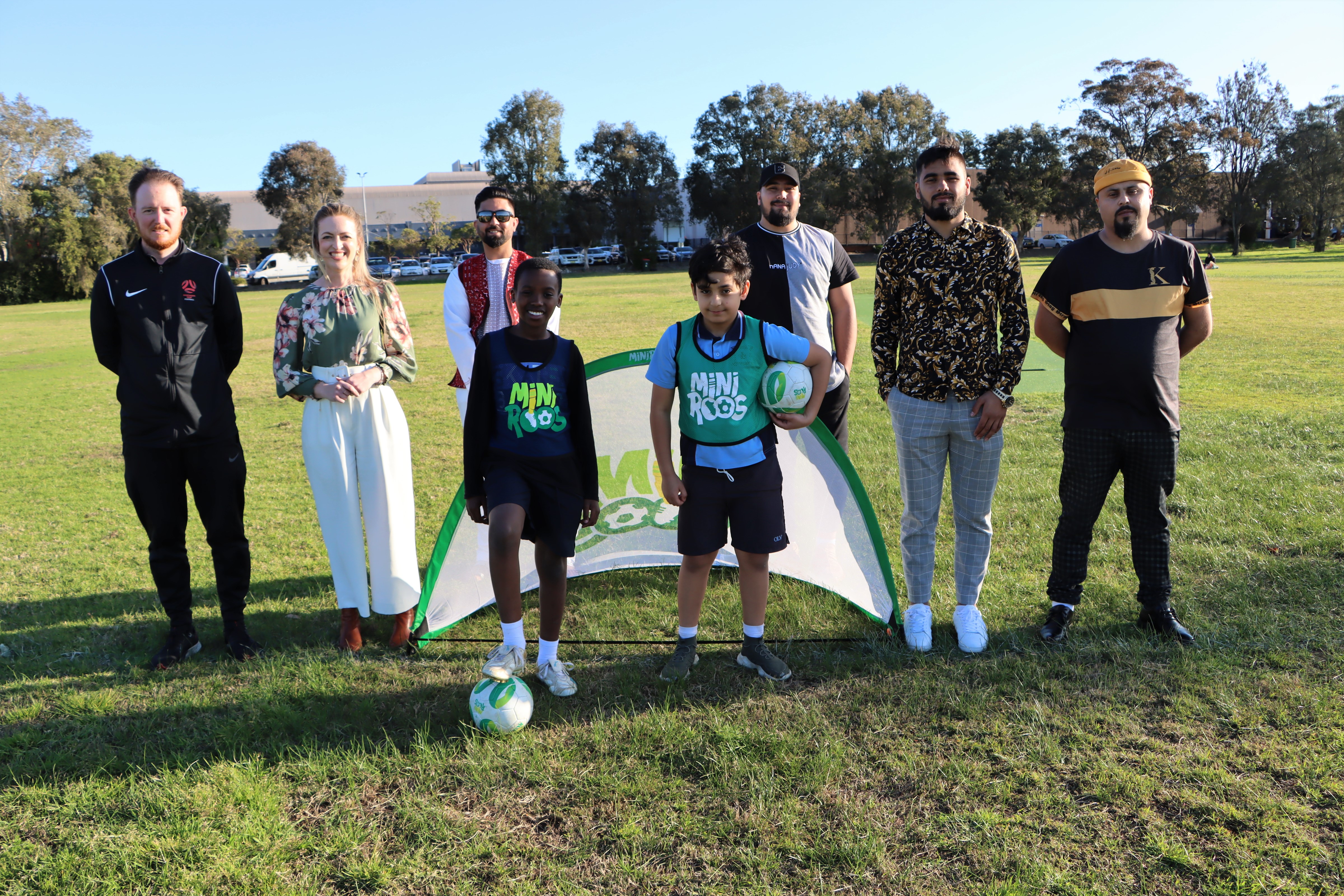
Budding footballers Mohamed Dia, 11 and Daniel Zanganeh, 9 (front) with Joseph Wright from Northern NSW Football, Newcastle Councillor Dr Elizabeth Adamczyk, and representatives from the Afghan Association of Hunter Mohammad Nasir, Sajad Ahmad, Jawid Ahmad and Fardin Rahmani.
Lord Mayor Nuatali Nelmes said community grants and sponsorship funding is vital to enhancing community wellbeing and contributing to our city being a great place to live, work, play, visit and invest.

“Whether its funding for a program to help refugees engage with the community or an event to bring thousands of people to the city centre, City of Newcastle’s grants and sponsorships program is helping build a more liveable and inclusive community,” Cr Nelmes said.

“We have significantly boosted grant and sponsorship funding to support the needs of our ever-changing community from almost $130,000 in 2014 to almost $1 million in 2022, representing a tenfold increase.

“Our funding program is targeted to help provide opportunities for locals to reach their full potential, take an active part in our community and live in a more vibrant city.”

Ward 4 Councillor Dr Elizabeth Adamczyk, who joined Northern NSW Football, the Treasurer of the Afghan Association of the Hunter and refugee families to help launch the refugee football initiative, said social inclusion, recreation participation and economic development were at the heart of CN’s grants and sponsorships program.

“Through the City’s financial assistance, we are seeing a wide range of wonderfully inclusive and progressive initiatives aimed at supporting our culturally and linguistically diverse (CALD) communities right across Newcastle, with a strong focus on our western suburbs,” Cr Adamczyk said.

“I’m also thrilled to see such a wide-breadth of local sporting facilities receive funding to support facility upgrades while local businesses at Shortland and Stockton are set for a refresh to their shopfronts through the Façade Improvement Scheme initiative.”

Among the community support grant initiatives to have been allocated funding in this round are a multicultural inclusion program delivered by Northern NSW Football for local refugee students and a sports program run by the Afghan Association of the Hunter for newly arrived Afghan refugees.

“Newcastle has a large number of newly arrived refugee youth and football is a universal language that unites people,” Northern NSW Football Legacy Development Officer Joseph Wright said.

“Thanks to this grant funding, Northern NSW Football will be able to provide player, coach and referee scholarships to children from refugee backgrounds to help them continue their football journey and integrate into the community.”

Forugh Dorani from the Afghan Association of Hunter Incorporated said their sports program and the football program delivered by Northern NSW Football will help Afghan refugees feel welcome and supported across Newcastle.

“Sports programs provide a wonderful opportunity for Afghan refugees that have newly arrived in Newcastle to connect with others in the community through a game that they love,” Mr Dorani said.