Australia’s worst kept secret: Government rules out a federal ICAC

The Greens say the PM’s admission that he has no interest in legislating an effective federal corruption watchdog is the final nail in the coffin of an historically terrible government.

Greens deputy leader and spokesperson on democracy Senator Larissa Waters said:

“This is the worst kept secret in Australia. We all know that the Morrison Government doesn’t really want a federal integrity body, and by revealing yesterday that he had no plans to amend the weak model he’s proposed he’s effectively admitted that no watchdog will happen if his government wins a fourth term.

“And who’s fault is it that literally no one thinks his model is worth a damn? Why everyone else’s of course!

“Morrison claims that his proposed body is ‘well thought through’, but it’s a sham that simply provides protection for dodgy parliamentarians – much like his entire prime ministership.

“My bill for a strong, independent and retrospective National Integrity Commission, that would be able to investigate anonymous tip-offs and hold public hearings, passed the Senate in 2019.

“The PM continually blocked this legislation from coming on for a vote in the House because he knows it’s effective and he knows that it would put half his cabinet under scrutiny.

“This man is not fit to lead. With Greens in balance of power after the election we can kick out this historically awful government and push the next government to establish a real ICAC with teeth.”

More Help for Families in the Hunter, Less Pressure on Hospitals

An Albanese Labor Government will fund a Medicare Urgent Care Clinic near Cessnock Hospital so local families will get the bulk billed urgent medical care they need. 

Hunter families are already struggling to access emergency care and are under pressure from rising out of pocket costs which only contribute to the strain on household budgets. Under the Liberals, out of pocket costs to see a GP in Hunter have gone up by 29 per cent.

Only Dan Repacholi and Labor have a plan to expand GP emergency care access in the Hunter by delivering a Medicare Urgent Care Clinic in Cessnock. 

The Cessnock Medicare Urgent Care Clinic will take pressure off the Cessnock Hospital Emergency Department by providing an alternative option for Hunter families needing urgent care from a doctor or nurse. The Clinic will treat sprains and broken bones, cuts, wounds, insect bites, minor ear and eye problems and minor burns. 
 
Care will be bulk billed, meaning families won’t be left out of pocket for having a loved one attended to, just as if they had gone to the Cessnock Hospital Emergency Department. 
 
It will be open seven days a week from at least 8 am to 10 pm – the time when the majority of non-life-threatening injuries occur. 
 
Medicare Urgent Care Clinics will relieve pressure on hospitals and free up dedicated nurses and doctors at hospital emergency departments so they can focus on providing care for serious and life-threatening presentations. 
 
The Cessnock Medicare Urgent Care Clinic will be tailored to meet the needs of the local community.

Medicare Urgent Care Clinics will be located across Australia – in every State and Territory. 
 
Labor will invest over $135 million over four years to establish a trial of 50 Medicare Urgent Care Clinics. 


Anthony Albanese said:  

“Labor’s Medicare Urgent Care Clinics will mean more families will get top quality care from a nurse or a doctor without having to wait in a hospital emergency department. 
 
“These clinics are a key part of Labor’s plan to strengthen Medicare by making it easier to see a doctor.

“Medicare Urgent Care Clinics will take the pressure off emergency departments, so they can concentrate on saving lives.”


Mark Butler said: 

“Medicare Urgent Care Centres are a practical, tangible example of Labor’s commitment to strengthen Medicare and make it easier for families to access care.

“Medicare is the bedrock of our health system and by using it to help take the pressure off hospital emergency departments we make can the whole system stronger.” 
 

Dan Repacholi said:

“It’s great to see Labor make investments to take pressure off the Cessnock Hospital. 

“After years of cuts to healthcare under both the state and federal Liberals, the only way to finally see the investment in health that we need in the Hunter is to vote for an Albanese Labor Government.”

More Help for Families, Less Pressure on Hospitals

Under Labor, families will get the bulk billed urgent medical care they need, without having to wait hours at over-burdened hospital emergency departments.  
 
An Albanese Labor Government will fund Medicare Urgent Care Clinics to be based at GP surgeries and Community Health Centres in at least 50 locations across Australia. 
 
Medicare Urgent Care Clinics will take the pressure off hospital emergency departments by providing an alternative option for families needing urgent care from a doctor or nurse. They will treat sprains and broken bones, stitches and glue for cuts, wound care, insect bites, minor ear and eye problems and minor burns. 
 
Care will be bulk billed, meaning families won’t be out-of-pocket for having a loved one attended to, just like if they’d gone to a public hospital. 
 
They’ll be open seven days a week from at least 8am to 10pm – the time when the majority of non-life-threatening injuries occur. 
 
Medicare Urgent Care Clinics will relieve pressure on hospitals, and free up dedicated nurses and doctors at hospital emergency departments so they can focus on providing care for serious and life-threating presentations. 
 
Medicare Urgent Care Clinics build on a successful model of care adopted internationally, most prominently in New Zealand where they have been credited with delivering the lowest rate of emergency department attendance per capita in the developed world.
 
Each clinic will differ in size and structure, to meet the needs of the local community.
 
Medicare Urgent Care Clinics will be located across Australia – in every State and Territory. 
 
Labor will invest over $135 million across four years to establish a trial of 50 Medicare Urgent Care Clinics. 
 

Anthony Albanese said:  

“Labor’s Medicare Urgent Care Clinics will mean more families will get top quality care from a nurse or a doctor without having to wait in a hospital emergency department. 
 
“These clinics are a key part of Labor’s plan to strengthen Medicare by making it easier to see a doctor.
 
“Medicare Urgent Care Clinics will take the pressure off emergency departments, so they can concentrate on saving lives.”
 

Mark Butler said:  

“Medicare Urgent Care Centres are a practical, tangible example of Labor’s commitment to strengthen Medicare and make it easier for families to access care.
 
“Medicare is the bedrock of our health system and by using it to help take the pressure off hospital emergency departments we make can the whole system stronger.” 

Labor Cares for Our Nurses

An Albanese Labor Government will extend health and wellbeing support for our nurses across the country with a new National Nurse and Midwife Health Service.

Nurses have been the heroes of this pandemic. They have been dealing with the COVID crisis for more than two years – they are stressed, burned out and leaving the profession. 

They deserve our help. 

The new National Nurse and Midwife Health Service will provide nurses and midwives with a range of personalised and professional support services to help them manage burnout and stress.

This will build on the successful Nursing and Midwifery Health Program already available in Victoria, which has been inundated with calls from nurses struggling with wellbeing during the pandemic.

As restrictions ease around the country, there is no end in sight for our nurses. Many of them are close to breaking point – one survey of 7,800 Australian healthcare workers found 40 per cent had symptoms of post-traumatic stress disorder. It is estimated that one in five frontline workers, including nurses, are considering quitting their job because of the pandemic.

Australia is already facing dire nursing shortages – we can’t afford to lose any more due to unnecessary burn-out.

Labor will ensure these heroes of the pandemic get the help they need, when they need it most.

The program will be open to enrolled and registered nurses, midwives and students. Labor will commit up to $23 million to the National Nurse and Midwife Health Service to keep nurses in the job, and keep them caring for Australians.

Libs Plan for Australian Forestry Jobs

The Morrison Government’s plan for a stronger economy will help secure the forestry industry’s 73,000 jobs with a $219.5 million package that invests in new technologies to expand the sector.

Prime Minister Scott Morrison said as the country tackled building material shortages and uncertainty around global supply chains, the jobs and skills in Australia’s forestry industry in regional areas were critical to a stronger future.

The Prime Minister said under the Liberals and Nationals, the Government would never support shutdowns of native forestry and would work with state government to create permanent timber production areas.

“Global demand for wood products is set to quadruple by 2050 so this investment in the jobs and future of the forestry industry is critical,” the Prime Minister said.

“The pressures on the building industry and the uncertain international trade situation has made it clear that local wood products and local skills are critical. Just ask any tradie who has been trying to get wood products.

“We can turbocharge this $23 billion industry with the right skills development and the right cutting edge research that our plan delivers.

“Only the Liberals and Nationals have a plan to secure and grow Australia’s forestry industry as we build a stronger economy and a stronger future.”

The Morrison Government’s plan for forestry includes:

  • $100 million to establish an Australia-wide National Institute for Forest Products Innovation, including a central host hub located in Launceston and up to five regionally-located Centres of Excellence across Australia
  • $6.6 million to extend funding for the 11 Regional Forestry Hubs that help local industry and business connect with cutting edge research
  • $112.9 million in grants to accelerate adoption of new wood processing technologies in Australia’s manufacturing and processing businesses that will maximise log recovery, process smaller diameter logs and create new and innovative wood products

That plan builds on recent Budget measures including:

  • $86.2 million in a new Plantation Establishment Program to help reduce the upfront costs of establishing new plantations and get more trees in the ground in key regions around the country
  • $4.4 million to strengthen Australia’s illegal logging system and stop illegal timber imports from undercutting Australian producers

Assistant Minister for Forestry and Fisheries and Senator for Tasmania Jonno Duniam said the National Institute for Forest Products Innovation would be centred at the heart of Australia’s forestry industry in northern Tasmania.

“We want to increase our self-reliance when it comes to wood supply and that means more job opportunities, more research and more manufacturing processing right here in Australia,” Assistant Minister Duniam said.

“Instead of importing products from overseas, we want to grow the trees here, process them here and add value to them right here in Australia.

“These investments mean helping our businesses and workers develop new timber products for buildings, turning wood waste into useful materials, and replacing plastics with wood-based bioplastics.

“Our forestry workers and industry are key to successful regional communities around the country and our plan helps deliver a stronger economy for their future.

“On our watch we’ve set up programs to make plantation expansion easier, we’ve invested $40 million to help the sector recover from the Black Summer bushfires, we’ve committed to planting 1 billion trees, and we’ve beefed up our moves to stop illegal timber imports from undercutting Australian producers.

“Australia’s forests aren’t just the basis of a critical industry supporting 73,000 jobs. They also store around 22 billion tonnes of carbon. Our investments are good for jobs and good for the climate.

“Anthony Albanese and the Labor Party have been silent while the Victorian and WA Labor Governments shut down native forestry.

“No matter what they tell you at this election, their actions speak louder than words and they’ll sell out regional communities at the first opportunity.”

Supporting domestic refiners to supply better quality fuel

Australia’s local refineries will receive support from the Morrison Government for major infrastructure upgrades to strengthen local production and supply better-quality fuels.

Through the Refinery Upgrades Program, the Morrison Government is providing $250 million to Australia’s domestic refiners, the Ampol refinery in Lytton, Brisbane and the Viva Energy refinery in Geelong, Victoria.

These two $125 million grants will be matched by both refineries and will allow them to begin major construction works to upgrade their facilities. This will bring more than $500 million of public and private sector investment into these local communities.

Prime Minister Scott Morrison said the Government’s investments would secure fuel production and supply for Australia in the face of global uncertainty.

“COVID-19, the Russian war in Ukraine and trade restrictions have disrupted global supply chains and Australia is not immune,” the Prime Minister said.

“Oil refineries literally fuel a stronger economy and these investments will help keep our truckies, miners, defence force and farmers moving across Australia.

“Our plan for a stronger future locks in Australia’s refining capabilities and will ensure upgrades are made to improve the quality of our fuel.

“These investments also protect the 1,250 existing refinery jobs and support the creation of around 500 more construction jobs across Lytton in Brisbane and Geelong.

“Cutting the fuel tax and this fuel security package put Australian motorists and businesses first. Our support for local refineries ensures we have the local capabilities to produce fuel even in the most challenging of times to keep our economy running.”

This funding is part of the Government’s comprehensive fuel security package announced in the 2021-22 Budget, which has locked in both the refineries operations into the future.

Strong supply chains underpin Australia’s economic security and Australia’s living standards.

The Government is focused on securing essential supply chains with our $2.5 billion Modern Manufacturing Initiative, including key investments through our Supply Chain Resilience Initiative.

Last year we secured production of Adblue at Gibson Island in Brisbane – an essential input to keep trucking fleets operating. This followed China’s sudden decision to suspend urea exports, from which we make AdBlue.

The grants will enable the local production of ultra-low sulfur petrol products in Australia and allow the Government to bring forward the introduction of a new standard from 2027 to 2024.

Minister for Industry, Energy and Emissions Reduction Angus Taylor said the grants would not only support our local refining capability and safeguard fuel security, but also provide health benefits for Australians.

“Bringing forward the roll-out of ultra-low sulfur fuel from 2027 to 2024 will deliver significant health benefits for Australians through improved air quality. This is estimated to result in $1.02 billion in avoided health costs,” Minister Taylor said.

“These grants are the next step in the Morrison Government delivering on our commitment to support Australian domestic refiners to keep producing local fuel for Australian motorists.

“As well as enabling the production of better quality fuels, our landmark refinery production payments continue to provide taxpayers with lower than budgeted payments, with both refineries not needing any support in the second quarter.

“We will continue to ensure Australian families and local industry can access the quality fuel they need, when they need it through our fuel security package.”

The Department of Industry, Science, Energy and Resources has further confirmed that Ampol and Viva Energy will not need to receive any payment for the second period of the Fuel Security Services Payment because the refineries were doing well. This follows on from quarter one, where only Viva Energy received payment, totalling $12.45 million.

The Refinery Upgrade Program is a key part of the Government’s comprehensive fuel security package, announced in the 2020-21 Budget, to secure Australia’s long-term fuel supply by ensuring our sovereign refining capability meets our needs during an emergency and into the future.

These grants will cover up to 50 per cent of total eligible project expenditure up to the maximum grant of $125 million. Projects are expected to be completed before the end of 2024.

This is in addition to the Morrison Government’s action to halve the fuel excise for six months to ease pressures at the petrol pump and cost of living concerns for Australian motorists.

Further support for NSW flood zones

The Morrison and Perrottet Governments have agreed on a further recovery package for people and communities affected by the recent flooding disasters.

The package builds on nearly $3 billion already committed by the Commonwealth and NSW Governments to support recovery efforts, including nearly $1.4 billion that the Commonwealth has already paid direct to people in affected areas.

This package includes:

  • $312.5 million for a Stage 1 Regional Roads and Transport Recovery Package to rebuild the road networks, particularly in the Northern Rivers. Funding will be provided under Disaster Recovery Funding Arrangements (DRFA) Category B and, where needed, Category D. This initial stage of works addresses the most immediate needs with both governments committing to future regional road and transport recovery, investment and repair
  • $168 million for the Land and Housing Corporation to deliver urgent social housing solutions and replace social housing lost during the floods. NSW will fund new infrastructure, while the Commonwealth will co-fund the cost to repair damage to existing social housing
  • $70 million for Aboriginal housing solutions for communities such as Cabbage Tree Island. The cost is to be shared with the Commonwealth
  • $100 million for the repair and reconstruction of community, arts and cultural infrastructure such as libraries, youth and senior citizens facilities, playing fields and courts, playgrounds and parks (including amenities restoration and equipment replacement), with the Commonwealth supporting the funding (50:50) for community-owned assets through the Disaster Recovery Funding Arrangements Category D
  • $50 million funded 50:50 for the repair and reconstruction of Aboriginal community infrastructure and access needs owned by Local Aboriginal Land Councils
  • $64 million for the urgent repair and restoration of key wetlands and riverbank sites and landscapes where there is a threat to public safety and infrastructure
  • $36 million for urgent works required to assess and repair flood levees across northern NSW, with costs to be shared 50:50 through Disaster Recovery Funding Arrangements Category D
  • The Commonwealth will also contribute $56.25 million for the NSW Back Home program to support damaged dwellings within the seven Northern Rivers LGAs and the Hawkesbury LGA.

Under DRFA, the Commonwealth and states share costs 50:50 for relief and recovery programs falling under Categories A, C and generally D. For Category B, the amount of reimbursement depends on the State’s total spend and can increase up to a 75 per cent Commonwealth contribution.

Both governments agree that these works will commence as quickly as possible to give communities support and certainty as they work through the recovery from the disaster.

Though full details of some elements of this package are yet to be settled, final costs for each level of government will be finalised in due course.

Prime Minister Scott Morrison said his Government was committed to the long-term recovery of flood-affected communities.

“These are strong communities with huge hearts and we’ll have their backs on the journey to recovery,” the Prime Minister said.

“With $1.4 billion already out the door from my Government and in the pockets of residents and businesses, these further commitments will help set up the longer-term recovery and future resilience of communities in northern NSW and western Sydney.

“I also look forward to working with all state and territory governments to establish clear and transparent reporting processes so that anyone affected by disasters in the future can see how much assistance is flowing into the pockets of families and businesses from the various levels of government.”

NSW Premier Dominic Perrottet said the extra assistance was the next step in the rebuilding and recovery efforts being rolled out to communities devastated by the floods.

“This isn’t the start and it won’t be the end of the assistance our governments are delivering for the clean-up, recovery and future reconstruction of these communities,” the Premier said.

“Communities across NSW have been hit hard by these extraordinary events and as we move from the emergency response and disaster relief efforts to the recovery and resilience priorities we will work closely with local community groups, businesses and councils to ensure nobody is left behind.”

Deputy Prime Minister and Minister for Infrastructure, Transport and Regional Development Barnaby Joyce said the investments to restore local roads and infrastructure was just the beginning.

“Going to the flood-devastated areas has such an overwhelming effect on you and we must work together to get people in these areas back on their feet, back in their homes and the vital infrastructure they rely on repaired as quickly as possible,” the Deputy Prime Minister said.

“We are ensuring funding flows to projects that will help these communities recover and build back stronger.”

NSW Deputy Premier and Minister for Regional NSW Paul Toole said the latest round of funding would support the hardest-hit communities as they moved from recovery into reconstruction.

“This latest support highlights the ongoing efforts to help these communities get back on their feet, and we‘ll continue to throw everything at helping them bounce back stronger than ever in the weeks, months and years ahead,” Deputy Premier Toole said.

“This package will put more roofs over heads, restore the road network to keep people better connected, and roll out targeted and practical support to some of our most vulnerable communities.”

Minister for Emergency Management and National Recovery and Resilience Bridget McKenzie said this next package of assistance highlighted that both the Federal and NSW Governments were focused on getting the right outcomes for flood-affected communities.

“Our Governments are getting on with the job of supporting people who need it,” Minister McKenzie said.

“This next phase of recovery and resilience assistance isn’t just about helping rebuild the bricks and mortar of businesses, community halls or the roads and highways that have been damaged, it’s also about backing the courage and hope in those communities.”

NSW Minister for Emergency Services and Resilience and Minister for Flood Recovery Steph Cooke said as flood waters had receded and debris removed, the priorities for the rebuild had become clear.

“Both federal and state agencies are on the ground every day and embedded with communities in the Northern Rivers region to understand where our resources can help and what is needed to tackle the difficulties communities are facing,” Minister Cooke said.

“The additional support being announced today will provide secure shelter for thousands of flood-affected people.

“Rebuilding a community is also about restoring the places where people come together, which is why we are funding the replacement of sporting grounds, galleries and other community hubs.”

This further support is in addition to $3 billion in support already announced from the Commonwealth and NSW Governments, including:

  • An additional two disaster payments for the catastrophe zones, automatically paid for those who have already claimed and received the Australian Government Disaster Recovery Payment, at the current rate of $1,000 per adult and $400 per child
  • $285 million Temporary Housing Support package
  • $75,000 primary producers and the $50,000 small business and not-for-profit grants extended to all disaster declared LGAs
  • $150 million Primary Industries Support Package
  • $6.5 million for Community Recovery Officer
  • $35 million for Rural Landholder Grants
  • $150 million Northern Rivers Support Package for businesses
  • $142 million Property Assessment and Demolition Program
  • $1 million grants to impacted councils to assist with their immediate social, built, economic and environmental needs
  • $350 million to assist with the clean-up and removal of flood and storm-related damage, debris and green waste
  • $10 million to support the mental health of school-aged children in the Northern Rivers region affected by the recent flood event under the Resilient Kids program
  • $800,000 to extend the Regional Small Business Support Program to include small businesses impacted by the recent flood event in NSW and QLD for two RFCS regions, with a six-month extension until 31 December 2022, as well as free and independent case-managed financial counselling through the Rural Financial Counselling Service
  • $5.4 million to boost existing legal assistance services operating within affected communities
  • $25 million for emergency relief, food relief and financial counselling services
  • About $6.9 million in support payments of $10,000 to assist early childhood education and care (ECEC) services affected by the floods where they have been closed for more than seven days. More severely impacted services will also be able to apply for Community Child Care Fund Special Circumstances grants
  • $7 million to expand the Commonwealth’s business recovery and resilience service, Strengthening Business, into at least 30 of the most flood affected regions of northern NSW and south-eastern Queensland
  • $31.2 million to deliver immediate and longer term local mental health support services for individuals, families, and communities impacted by the disaster and to support communities to recover and build resilience across the flood affected communities
  • $4.7 million to ensure the immediate continuity of primary health care services for flood-impacted Australians.

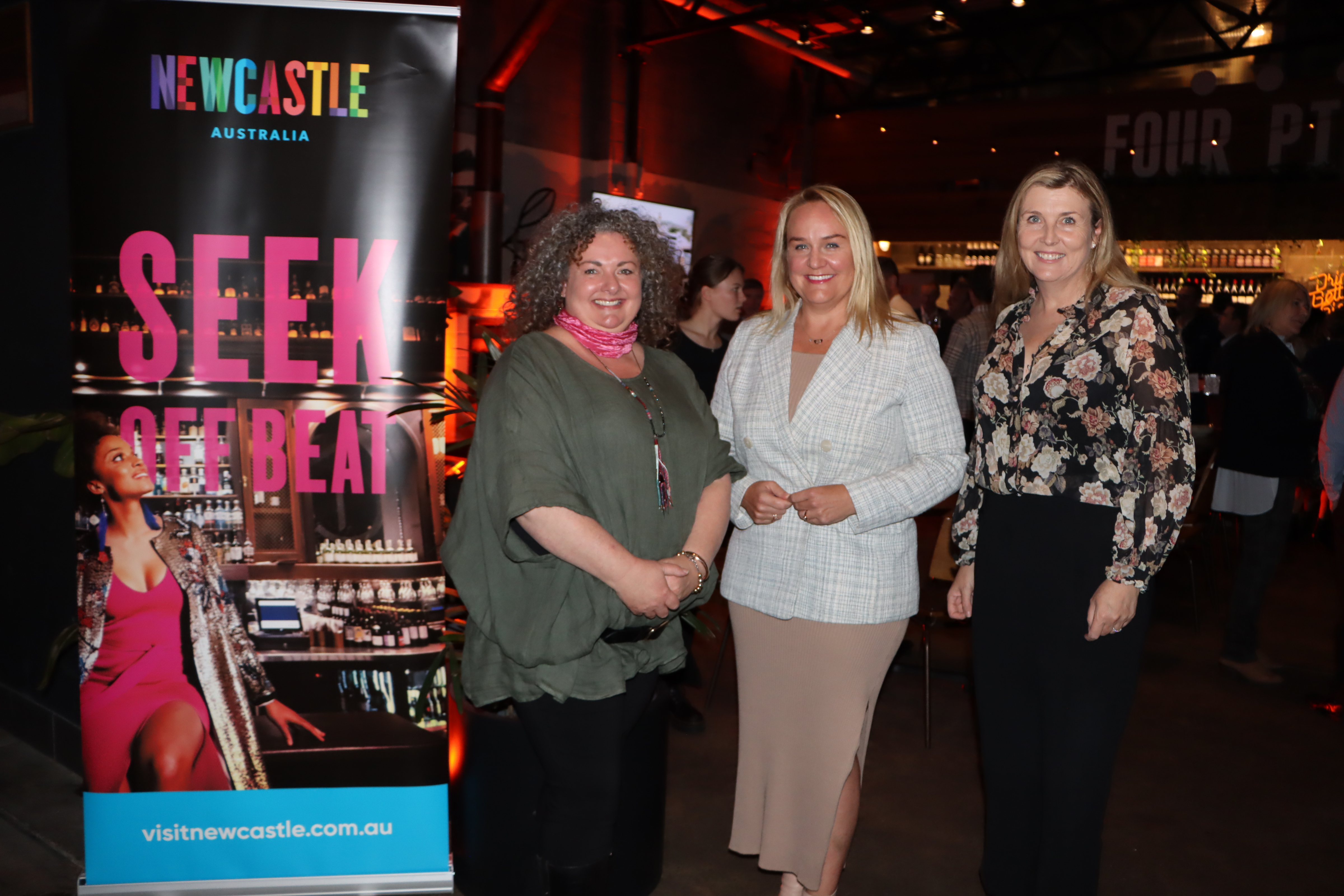
Newcastle’s CBD set to come ‘alive’ with $500,000 injection into vibrant program of free events

More than 40 free night-time events will be delivered across Newcastle’s city centre between 29 April – 21 May, to encourage the community to experience the cultural, retail and hospitality heart of the city.

Coordinated by City of Newcastle under the banner, ‘Autumn Alive’, the eclectic mix of events has received funding support of more than $500,000 from the NSW Government’s CBDs Revitalisation Program, in response to the impact of the pandemic on the hospitality, event and arts and culture sectors.

Councillor-Duncan-with-performers-musicians-and-small-business-representatives-at-the-Autumn-Alive-program-launch.JPG
Autumn Alive will kick off at Pacific Park on April 29 with electronic music, DJs, food trucks, a silent disco and performances by Curious Legends and Catapult Dance Artists. New interactive lightbox installations will be unveiled on the night, displaying iconic artworks from Newcastle Art Gallery’s collection.

The month-long program also features an outdoor cinema experience at Museum Park, alfresco dining at Civic Theatre, pop-up drag bar at Newcastle Library, night-time walking trails to highlight the city’s restaurants, venues and boutique retailers, culminating with a final night street party on Laman Street.

Lord Mayor Nuatali Nelmes said the Autumn Alive program will provide a much-needed economic boost to small businesses and the city’s arts and cultural sector.

“City of Newcastle is committed to delivering and supporting community programs and events like Autumn Alive, as they are critical to our city’s post-pandemic recovery,” Cr Nelmes said.

“Newcastle’s city centre is our cultural heart, and a thriving CBD is the key to attracting people to help stimulate the economy.

“City of Newcastle is delivering a jam-packed program of free events and activations that will cater to everyone, thanks to $500,000 in funding from Investment NSW.”

Minister for Enterprise, Investment, and Trade Stuart Ayres said Newcastle has transformed significantly during the past two decades and is now home to cutting-edge industry and has amazing cultural offers with fantastic liveability.

“Initiatives like this one in Newcastle send a clear message that our CBDs are buzzing and back to business,” Mr Ayres said.

“We are doing all we can through our $50 million CBDs Revitalisation Program to encourage and entice people back into our CBDs, as this will help create jobs, drive our economy and showcase NSW as a vibrant place to live, work and visit.”

Newcastle Councillor and Community and Culture Advisory Committee Chair Carol Duncan said the Autumn Alive program has wide appeal and shines a spotlight on the city’s cultural venues and local businesses.

“The Autumn Alive program has reinvented the way we use our city’s cultural facilities and venues. It’s wonderful to see a venue like Newcastle Library remain open at night and transform into a drag bar featuring local performers like Timberlina & Foxxe Faux,” Cr Duncan said.

“I’d encourage Novocastrians to explore the city centre this May to rediscover Newcastle at night in support of small business and the arts and cultural sector.”

Visit whatson.newcastle.nsw.gov.au/Autumn-Alive for event details, dates and times.

Autumn Alive program highlights:

Launch night at Pacific Park
Friday 29 April

Autumn Alive will kick off at Pacific Park with electronic music, DJs, food trucks, a silent disco and a performance by Curious Legends and Catapult Dance Artists. New interactive lightbox installations will be unveiled on the night, displaying iconic artworks from Newcastle Art Gallery’s collection.

Library After Dark
Thursday and Friday nights, 5-9pm

Newcastle Libraries and Newcastle Art Gallery present Library After Dark – an eclectic series of evening pop-up events. There will be Crime Canapes & Cocktails with Barry Maitland in conversation with Jamie Lewis, The Library is Open drag bar featuring Timberlina and Foxxe Faux, and a Bad Art Party featuring local artists Jen Denzin & Joanne Back.

Bad Art Party
Thursday 19 May 2022, 5-9pm

Bad Art Party is a social art event filled with kitschy craft-making and is a fun celebration of the underrated art forms taking the world by storm. Leave your art skills at the door and see what you can come up with in our artist-led workshop with local artists Jen Denzin and Joanne Back. Bookings are essential and for adults-only.

Night-time Walking Trails
Friday and Saturday nights throughout May

City of Newcastle has partnered with our city’s restaurants, galleries, bars and boutique retailers during Autumn Alive to bring to you curated Night-time Walking Trails. Download the City of Newcastle App to discover the hidden, and not so hidden gems of our city.

Pacific Nights
Saturday and Sunday nights throughout May

Produced by Newcastle’s best emerging programmers enjoy live music, spoken word, dance and interactive lighting in Pacific Park each Saturday and Sunday night throughout Autumn Alive. Bring a picnic rug, pick up a takeaway meal from one of our local business partners and celebrate the emerging creative scene.

Movies at Museum Park
Thursday and Friday nights, 6-9pm

Newcastle Museum will celebrate their latest exhibition, Alice’s Wonderland – A Most Curious Adventure, airing classic Disney movies under the stars in Museum Park. Bring a picnic blanket, grab some popcorn, ice-cream, or enjoy a drink from the bar whilst watching Disney favourites. Newcastle Museum will stay open late during Autumn Alive for guests to explore after dark.

East End Party
Saturday, 7 May 2022

The newest part of Newcastle’s CBD is open for business and this is your opportunity to check it out in style. Local businesses invite you to taste and see all that the new East End Stage 1 has to offer with boutique wine tasting, dumplings, an alfresco art exhibition, stringed musicians, contemporary dance and operatic vocals.

Closing Night: Laman Street Party
Saturday, 21 May 2022

Come along to Autumn Alive’s final night party on Laman Street with live music, dance, an art installation by Newcastle Art Gallery, local food stalls and more. Follow City of Newcastle’s social channels for the headline act announcement!

Treasurer announces 2022-23 NSW Budget date

Treasurer Matt Kean has announced the 2022-23 NSW Budget will be handed down on Tuesday, 21 June 2022.

Mr Kean said he looked forward to delivering his first Budget which comes as the NSW economy continues to rebound from challenges such as COVID-19 and recent floods.

“We know the past two years have been hard for the people of NSW and the Omicron wave brought new, unexpected challenges,” Mr Kean said.

“But NSW has shown its resilience: unemployment is at a record low of 3.7 per cent, consumer spending is growing strongly, and business confidence is well above its decade average.

“It’s now time to look ahead. The Budget will lay out our plans for the next 12 months and beyond to support NSW families and build a better future.”

Mr Kean said the NSW Government had to date committed over $2 billion towards the 2022 flood recovery.

“We also committed more than $46 billion towards health, economic and social support measures since the pandemic began, including our $2.8 billion Economic Recovery Strategy,” Mr Kean said.

“Our $110.4 billion infrastructure program has helped drive our recovery and kept people in jobs and we are committed to supporting business and the community as we deliver for the people of NSW.”

Boost for Vacation Care services

As the Autumn school holidays get underway, more than 60 Vacation Care services across NSW are receiving up to $30,000 each to help them provide quality programs and better access for vulnerable students.

The NSW Government’s $2 million Vacation Care Grants Program has awarded 61 services between $2,000 and $30,000 to assist in delivering quality vacation care programs and increased flexibility for parents during the holiday.

Minister for Education and Early Learning Sarah Mitchell said that the projects funded will provide students with affordable and exciting holiday activities.

“Through this funding kids will get the chance to take part in STEM (science, technology, engineering and mathematics) modules, team sports, outdoor films using inflatable screens, and song writing and music recording workshops during the holidays.

“The program is also supporting vulnerable children to access vacation care activities that cater for their specific needs, such as sensory tents and calming tools for children with special needs, subsidised excursions for children from low-income families, family open days for isolated students, and specific training for vacation care staff to deliver specialist programs.

“The Vacation Care Grants Program is an important initiative that is making sure local school communities have access to high quality, inclusive vacation care.”