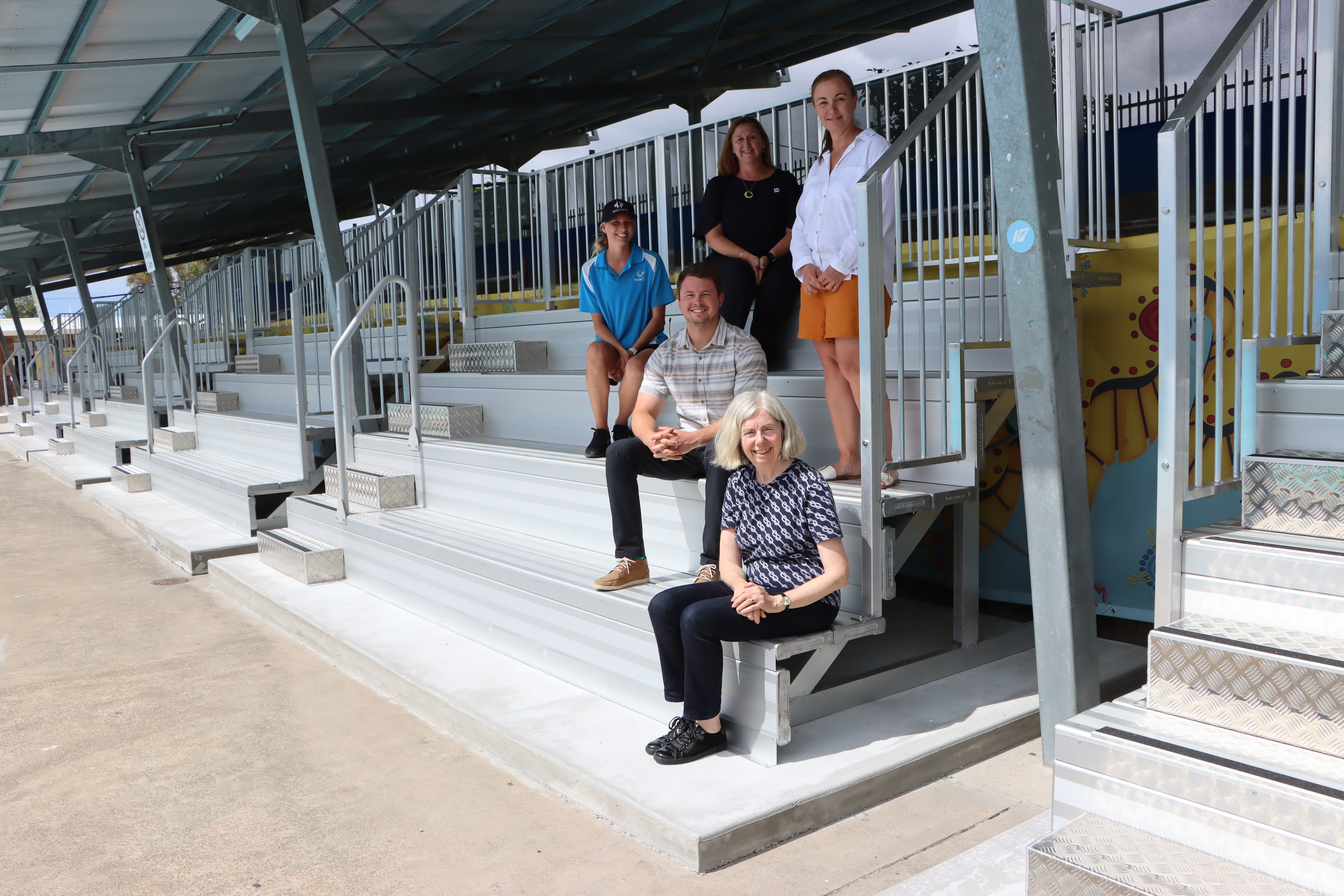
Thousands of hospitality businesses will have an extra four months to pay their annual liquor licence fees.
Minister for Hospitality and Racing Kevin Anderson said it was important the NSW Government offer this assistance to up to 18,600 hospitality businesses which were hit hard by the pandemic.
“We recognise that COVID-19 has had a significant impact on thousands of our State’s pubs, clubs, restaurants, bars and other hospitality businesses,” Mr Anderson said.
“The extension is applicable to all liquor licensees, so we encourage businesses to take the extra time to pay if they feel it will help their bottom line.”
Mr Anderson said invoices for the annual liquor licence fees will be issued as usual this month, with the due date postponed from 30 May to 30 September.
“We want to put businesses and workers first so they can continue to be the lifeblood for local communities across the state,” Mr Anderson said.
Australian Hotels Association NSW CEO John Whelan said this extension is good news for the hospitality industry.
“Hotels have been doing it tough for more than two years now – even when hotel doors finally opened across the state, the restrictions meant venues were operating at half capacity or less until just a couple of months ago.
“Hotels in the recent flood-affected areas are now also dealing with many additional challenges as they struggle to get back on their feet. We thank the NSW Government for its support,” Mr Whelan said.
Mr Anderson said annual fees were automatically waived for most liquor licences at the start of the pandemic in 2020.
Eligible venues are still able to apply for fee waivers on financial hardship grounds.
To apply, visit: www.liquorandgaming.nsw.gov.au/operating-a-business/liquor-licences/liquor-licence-fees/annual-liquor-licence-fees/fee-waiver-application
Author: admin
$350M Modular housing package for flood-affected communities
The NSW Government has announced a $350 million investment in temporary modular housing to give people displaced by floods a place to call home while they rebuild their lives.
Discussions are underway with local councils across Tweed, Byron, Ballina, Richmond Valley and Lismore Local Government Areas to identify suitable sites for the homes, with preparatory works due to start on the first location in the next week.
Premier Dominic Perrottet said the NSW Government was working hand in hand with Councils and communities to deliver the housing solutions.
“There’s no doubt that housing is the most pressing challenge for the thousands of people impacted by these floods,” Mr Perrottet said.
“We’re committed to delivering safe and secure housing to all flood impacted communities and this $350 million in funding will help get lives back on track, allowing people to move out of emergency accommodation and into more appropriate housing.”
The delivery of up to 2000 temporary modular homes to approved sites across the hardest hit regions comes in addition to the NSW Governnment’s funding to assist around 25,000 households through rental support, Disaster relief programs and the Back Home program.
The first confirmed location will be in Wollongbar, in partnership with Ballina Shire Council, with more sites expected to follow in coming days and weeks. It will be in the grounds of the Wollongbar Sports Fields, and will initially include around 25 temporary accommodation pods with capacity to house up to 100 people. The Pods come in various configurations which can accommodate one to four people and will be co-located with supporting infrastructure and amenities.
Site readiness and installation works are expected to take approximately four weeks, with community housing providers providing long term site management.
“These modular homes are going to make a real difference for individuals and families as they begin the difficult process of rebuilding, recovering, and healing over coming weeks and months,” Mr Perrottet said.
Minister for Emergency Services and Resilience and Minister for Flood Recovery Steph Cooke said the NSW Government was focused on ensuring affected communities had access to a range of support options to meet their needs throughout the recovery.
“Across government and the emergency services, we are on the ground in flood-affected communities listening to locals and working to ensure they get what they need to bounce back as quickly as possible,” Ms Cooke said.
“In addition to these modular homes, there are a range of other temporary housing options in place including motorhomes, accommodation in recreation camps, and 16-weeks rental support.
“We will continue to put every possible resource into identifying more opportunities to provide communities with a safe place to live while they rebuild.”
Minister for Planning and Minister for Homes Anthony Roberts said regulatory changes had been made to allow temporary accommodation, both private and government, to be set up more quickly without development consent.
“We’ve cut through the red tape to make it easier for the establishment of temporary homes, including caravans and self-contained vehicles, for up to two years without council approval,” Mr Roberts said.
“This was a successful measure after the Black Summer bushfires and we have now extended it ensure flood-affected communities have access to the same provisions to help them in their recovery.”
Flood affected community members seeking housing support are urged to contact Service NSW on 13 77 88, visit nsw.gov.au/floods or speak to recovery centre staff.
World first trial powers jobs and buses in Western Sydney
The rollout of zero emission buses across NSW is being supported by a world first, locally developed technology trial in Western Sydney.
The technology, made in partnership with Transport for NSW, bus operator Busways, Australian software and advisory company Evenergi and Western Sydney energy distributor Endeavour Energy, is designed to optimise the charging of electric buses and reduce strain on the power grid.
Minister for Transport and Veterans David Elliott said the transition to electric buses is powering jobs in industries across NSW.
“These modern electric buses require innovative solutions for managing charging and that is being developed right here in NSW,” Mr Elliott said.
“This smart charging technology will improve the management of our zero emission buses, reduce pressure on the power grid and is a tech solution that could shape up to be an exciting export from NSW to the world.
“The NSW Government’s commitment to transition our fleet of over 8,000 buses to zero emission technology is supporting local jobs in tech, manufacturing and construction, as well as delivering buses that are better for the environment, offer a smoother ride and are quieter on our roads.”
The system will future proof the Penrith bus depot to be capable of powering an entirely electric fleet and uses sophisticated software tools and real-time energy monitoring to connect the depot to the wider distribution network, communicating directly with the energy provider’s assets.
Minister for Western Sydney Stuart Ayres said Penrith is not only the first area to benefit from this technology but was also the first to order and receive locally made zero emission buses.
“The Penrith bus depot is operating the first six electric buses that were also made right here in Western Sydney, at the Custom Denning factory in St Marys,” Mr Ayres said.
“The bus depot is also committing to a significant upgrade to house their first set of zero emission buses, which is supporting even more jobs in Penrith.”
You can find out more about the zero emission bus strategy and roll out here: https://www.transport.nsw.gov.au/projects/current-projects/zero-emission-buses
For the nation: 330,000 online memorials unlock the individual stories of our First World War ANZACs
The individual wartime journeys of over 330,000 Australian men and women who volunteered to serve overseas in the First World War are revealed for the first time in an ambitious family history project launched today.
Australian War Stories by Memories enables descendants to search for a loved one at australianwarstories.memories.com.au and receive a free online memorial of their wartime journey: from enlistment, to training, embarkation and beyond.
The memorials are delivered via a link sent free-of-charge by email and mobile text. They can be shared among extended family and posted to social media.
An estimated 5 million Australians have a relative who served overseas during the First World War. Many more will wish to honour a local ANZAC hero by registering their details to receive and share an online memorial.
Australian War Stories is a collaboration between leading family memorial platform memories.com.au and media services company Mediality.
Memories CEO Tom Ainsworth said: “The heart of Australian War Stories is the commemoration of this extraordinary generation and the creation of a permanent memorial for each of them.”
“Every descendant of a First World War veteran can now very easily open the window on that special part of their family history.”
Each memorial contains historically-accurate details of the veterans’ enlistment, embarkation and military unit.
Mediality CEO Bruce Davidson said the core tenet in creating the 330,000 stories was respect for the legacy of the First ANZACs.
“It is, quite rightly, a revered part of our nation’s history and with that comes a responsibility in telling the stories of these men and women,” Mr Davidson said.
“We have drawn on official military records and histories to anchor these stories in fact. This is a critical foundation of Australian War Stories .
“We then bring the individual stories to life in a way which I believe will be a revelation to descendants and, indeed, all Australians.”
Australian War Stories has been launched in the lead up to Anzac Day, which after two years of Covid-imposed restrictions, will resume most of its traditions.
“Anzac Day is a time when many families pause to reflect on the service and sacrifice of their loved ones, and the Anzac spirit of mateship, courage and resilience.” Mr Ainsworth said.
“The Australian War Stories memorials add a new dimension for the nation to honour our veterans.”
It’s Time to Resurrect Active Outdoor Adventures – The Scouting Effect.
Scouting gives young Australians an alternative to traditional weekend sport
After two years of Covid-19 lockdowns, online learning, and disruptions to organised outdoor activities, Scouts NSW says it is time to resurrect outdoor adventures for the mental and physical benefits of young people.
“The non-competitive, but structured, active, self-directed style of experiences and adventures engaged in by Scouts offers a fantastic addition or alternative to traditional weekend sport,” said Neville Tomkins OAM JP, Chief Commissioner Scouts NSW. “Scouts can improve a young person’s team-building and technical skills, and outdoor fitness levels, with a range of interactive adventure experiences unlike any other.”
Such outdoor experiences have been sorely missed over the past year, with Covid-19 lockdowns and their restrictions on family and student routines impacting all young people. With this in mind, Scouts NSW is confident Scouts would have responded resiliently to the challenges they faced on the back of The Scouting Effect Report.
The Scouting Effect’s Resilience Survey, completed just prior to Covid-19, provides compelling evidence that young people aged 8-18 participating in Scouts stand out significantly when compared to their non–Scouting peers. Scouts demonstrated higher levels of life satisfaction and fared better across all three components of resilience (Connected, Protected, Respected) and their corresponding nine reporting domains. These domains include Positive Relationships, Healthy Mind and Body, Understanding Self, Positive Identify, and Positive Contribution.
Resilient Youth Australia defines ‘resilience’ as the ability to draw upon the strengths within yourself and around you to flexibly respond to life while remaining true to yourself and creating positive relationships with others.
“Through the Resilience Survey we now have concrete proof that participating in Scouting gives young Australians the unique tools to thrive and take on all that life has to offer including the inevitable challenges,” Neville said. “These findings show why Scouts is a fantastic organisation to join, and one where all young people can excel and achieve their best.”
With a focus on outdoor adventures that includes activities like abseiling, white water rafting and camping, Scouts empowers young people to make decisions, take the lead and learn by doing. “We give them a safe space where they can work with others to plan and embark on their own adventures, indoors and out,” Neville added. “By building resilience in young people, we are empowering them to be able to learn from their mistakes and to understand that failing is okay – it’s an integral part of the learning journey. It’s about knowing their strengths and calling on them when needed.”
Natasha Ball, a member of 1st Ermington Venturer Scouts, located in south west Sydney, joined Scouts as a Joey Scout seven years ago feels that Scouting definitely assisted her in bouncing back from disruptions to her schedule. “I had a heavy plate of commitments, and when lockdown struck, the constant stability of even online Venturers grounded me,” said Natasha. “As well, Scouting kept me moving due to skills I attribute to my participation in Scouts.”
Joshua Tang, a Venturer Scout and member of 1st Castle Hill Scout group missed out on some activities in 2021 due to Covid-19 and the HSC, but the strong social connections from Scouts helped him through. “I felt that being part of the Scouting movement adequately prepared me for school and extracurricular activities, as it made me have to adapt my schedule and be fluid with how I planned things.”
“Apart from offering the ultimate fun, Scouts also offers fantastic value for money,” said Neville Tomkins OAM JP, Chief Commissioner Scouts NSW. “Scout Groups either own or have access to a large range of camping and adventure equipment such as tents, ropes, canoes and cooking gear. Fees, which include personal accident insurance, can be off-set by the NSW Government’s Active Kids rebate*, which contribute to making Scouts NSW a fantastic, active, and cost-effective activity.”
Scouts NSW programs have resumed in full since the removal of most Covid-19 restrictions. Those new to Scouts can express their interest online, or if they have already visited a local Scout group and met the leaders and other scouts, can complete the online form. For more information or to sign-up, volunteer, or join visit: https://joinscouts.com.au/
The Scouting Effect. Key Findings:
- Self-Esteem: 81.8 per cent of Scouts report to be more likely to feel good about themselves than non-Scouts (70 per cent)
- Positivity: 78.8 per cent of Scouts report to be more likely to hold more hope for a positive future than non- Scouts (69.4 per cent)
- Anxiety: 73.7 per cent of Scouts report to be less likely to be anxious than non-Scouts (67%)
- Community Engagement: 58.8 per cent of Scouts feel like they make a positive contribution to their community than non-Scouts (43.4%)
Keeping our borders safe and supporting Australian industry
The Morrison Government is investing $124 million in two new Evolved Cape Class patrol boats from Austal in WA to continue its commitment to keeping our borders secure and supporting Australian defence industry and jobs.
This additional acquisition will support the continued employment opportunities for around 400 direct jobs and a further 150 jobs across small and medium businesses in Austal’s supply chain, already established under the previous six Evolved Cape Class patrol boats. The new boats bring the total investment in industry for the Evolved Cape Class patrol boats to more than $440 million.
Prime Minister Scott Morrison said the Coalition Government’s plan for a strong economy would strengthen WA’s shipbuilding workforce and support the work of the Navy and Australian Border Force (ABF).
“This investment doesn’t just help secure our borders, it secures hundreds of shipbuilding jobs in Western Australia,” the Prime Minister said.
“Keeping our borders safe is a key priority for my Government, and the acquisition of two more Evolved Cape Class patrol boats will boost the capability of Navy’s patrol force to ensure it is available where and when needed.
“My Government’s record on keeping borders safe, supporting naval capability, and growing our defence industry is in stark contrast to Labor who never commissioned a new naval vessel, oversaw a border security failure, slashed defence spending to the lowest levels since before the Second World War and saw thousands of job losses in our defence industry.
“More shipbuilding work means a strong economy, and a stronger future for this important industry and our Navy and Australian Border Force.”
Minister for Defence Peter Dutton said the acquisition would build our Navy capability and help secure our borders.
“These additional patrol boats will strengthen Navy’s contribution to the nation’s fisheries protection, immigration, customs and drug law enforcement operations,” Minister Dutton said.
“The improved design increases the quality of life for the ship’s company, manages obsolescence and increases the use of Australian supplied equipment.
“These extra boats will also enable Navy to transfer two of its Cape Class patrol boats to the ABF – further strengthening our border defences.
“The Evolved Cape class patrol boats will reduce the risk in Navy’s transition from the ageing Armidale class patrol boat fleet to the new, more capable Arafura class offshore patrol vessels.”
Minister for Defence Industry Melissa Price said the acquisition added to the Government’s continuous naval shipbuilding program and ongoing commitment to developing the defence industry in Western Australia.
“This is a great shot in the arm for our shipbuilding skills and jobs pipeline with at least 68 per cent of the contract value being invested in Australian industry,” Minister Price said.
“Australia has some of the best shipbuilders in the world, and right here in WA, Austal are leading the way with the Evolved Cape Class patrol boats.
“This project is in addition to our planned investment of up to $30 billion in dozens of new vessels for our Navy that will be built in WA over the coming decades, supporting 2,000 WA jobs and hundreds of WA businesses in the supply chain.
“WA’s defence industry is at the centre of our plan to develop our sovereign capability so we can build at home what we need to defend our home.”
The two additional vessels are scheduled to be delivered by late 2023, with all eight to be operational by early 2024.
Helping aspiring homeowners realise their dream
Tens of thousands more Australians will be able to buy a house with the Morrison Government’s new property price caps for the successful Home Guarantee Scheme.
Increasing the price caps for homes available under the Scheme means more people have more options when purchasing a home, and the new caps help accommodate larger families under the Family Home Guarantee.
Prime Minster Scott Morrison said the Home Guarantee Scheme had already helped 60,000 Australians on the path to home ownership.
“We’re building a stronger future for Australians by making home ownership easier by making more properties eligible for the Scheme and expanding it to 50,000 places each year,” the Prime Minister said.
“People are cutting years off the time they’d need to save a deposit for a home because of this program. Now even more Australians can get into a home sooner.
“Saving to buy a house has always been hard work and we know as prices have increased it’s been getting harder.
“That’s why these higher price caps will help more people realise their dreams and lock in a stronger future for themselves.”
The adjusted price caps take into account the 50,000 place per year expansion of the Home Guarantee Scheme, particularly in regional areas where the new Regional Home Guarantee is open to non-first homebuyers.
Assistant Treasurer and Minister for Housing Michael Sukkar said that the adjusted price caps would help guarantee more Australians can achieve the dream of owning their own home.
“As a Government we fundamentally believe in the aspiration of home ownership, with people being able to build a place of their own and invest in their future. We know the importance home ownership brings, which is why we are expanding our extraordinarily successful Home Guarantee Scheme,” Minister Sukkar said.
“We acknowledge how hard it can be to buy a new home or re-enter the housing market and that saving a deposit is the hardest part of getting into home ownership. By adjusting the price caps for the Home Guarantee Scheme, we are ensuring Australians have more options when buying a home.
“Because 41% of scheme-backed loans are ahead of their pay back schedule, we are confident these adjusted price caps strike the right balance.
“60,000 Australians have already been supported into home ownership under the Home Guarantee Scheme, with the Morrison Government’s housing policies helping more than 300,000 Australians with the purchase of a home. With our support, first homebuyers reached their highest levels in 12 years.”
In particular, the new price caps for regional areas will ensure that the supply of new builds in regional Australia is supported, helping ease supply constraints that are being felt outside of the major cities. The adjusted caps will also assist in accommodating larger families under the Family Home Guarantee
As announced in the Budget, under the expanded Home Guarantee Scheme the Government will make available:
- 35,000 guarantees each year, up from the current 10,000, from 1 July 2022 under the First Home Guarantee, to support eligible first homebuyers to purchase a new or existing home with a deposit as low as five per cent;
- 10,000 guarantees each year from 1 October 2022 to 30 June 2025 under a new Regional Home Guarantee, to support eligible homebuyers, including non-first home buyers and permanent residents, to purchase or construct a new home in regional areas;
- 5,000 guarantees each year from 1 July 2022 to 30 June 2025 to expand the Family Home Guarantee announced in last year’s budget. Australia’s first ever specifically targeted single parent family housing scheme supports eligible single parents with children to buy their first home or to re-enter the housing market with a deposit of as little as two per cent.
| Home Guarantee Scheme | ||||
| 2021-2022 FY | 2022-2023 FY | |||
| Area | Capital city and regional centre | Rest of state | Capital city and regional centre | Rest of state |
| NSW | $800,000 | $600,000 | $900,000 | $750,000 |
| VIC | $700,000 | $500,000 | $800,000 | $650,000 |
| QLD | $600,000 | $450,000 | $700,000 | $550,000 |
| WA | $500,000 | $400,000 | $600,000 | $450,000 |
| SA | $500,000 | $350,000 | $600,000 | $450,000 |
| TAS | $500,000 | $400,000 | $600,000 | $450,000 |
| ACT | $500,000 | $750,000 | ||
| NT | $500,000 | $600,000 | ||
| Jervis Bay Territory and Norfolk Island | $550,000 | $550,000 | ||
| Christmas Island and Cocos (Keeling) Islands | $400,000 | $400,000 |
The capital city price thresholds apply to regional centres with a population over 250,000, recognising that dwellings in regional centres can be more expensive than other regional areas. Regional centres include: Newcastle and Lake Macquarie; Illawarra (Wollongong); Geelong; Gold Coast and Sunshine Coast.
To participate, borrowers will still have to meet the usual loan and repayment assessments from their financial institutions. This ensures that home buyers are protected against entering into a loan arrangement that could result in substantial hardship.
The new price caps will come into effect on 1 July 2022. Information on how to apply, eligibility requirements and the participating panel of lenders is available on the NHFIC website.
80th anniversary of bilateral relations with the Netherlands
As Australia and the Netherlands mark 80 years since the establishment of full diplomatic relations, we can reflect with pride on the warm friendship we share.
From the Duyfken’s exploration of the north coast of Australia in 1606, to the contribution made by generations of the thousands of men and women of Dutch heritage to this country, Australia and the Netherlands share enduring bonds of friendship and family.
Our historic defence ties, forged on the battlefields and in the skies of the Second World War, were strengthened most recently by our military partnership in Afghanistan. Today, we stand united in support of the rules-based international order, our defence of human rights and the rule of law.
As we continue to pursue truth, justice and accountability for the downing of MH17, we also stand together in supporting Ukraine as it defends its sovereignty and territorial integrity.
Australia values our cooperation with the Netherlands in supporting our neighbours in the Indo-Pacific, to ensure a region that is open, stable and resilient.
The strong trade relationship between Australia and the Netherlands is the foundation for our collaboration in other areas, such as the green economy and cyber security. Through our growing engagement with global fora, we will cooperate to advance our mutual economic prosperity and stability.
For 80 years, Australia and the Netherlands have worked in unison to build and enhance our strong bilateral relationship. I am proud of what we have achieved in the name of friendship and cooperation, and I look forward to the many opportunities that lie ahead.
Red Cross flood appeal update
Australian Red Cross has distributed funds to more than 30,000 people affected by floods in south east Queensland and northern New South Wales (as of 9am Monday 18 April).
This represents:
· 33,939 financial assistance grants of $500 to households to help with basic needs for people whose primary place of residence was affected by the floods and who are experiencing financial hardship as a result.
· 21 bereavement grants of $20,000 to senior next-of-kin of people who died as a direct result of the floods, to help with funeral and related expenses
Red Cross Acting Director of Australian Programs Garry Page said all grants were going to people in Federal Government designated disaster areas.
“We have distributed $17.4 million so far. With thousands of applications yet to be processed, we are approaching the point at which funds available will be fully subscribed. When this occurs, we will stop accepting new applications so we don’t have people applying for grants that aren’t available,” he said.
“These grants are a result of extraordinary support for our March telethon hosted by broadcasters Nine, Seven and Ten, which raised more than $26 million. This financial assistance is a gift from the Australian people, and 100 per cent of the funds raised from the Telethon will go on cash grants.”
Mr Page said a team of 60 people had been processing tens of thousands of grant applications, working seven days a week, including over Easter, to process grants as quickly as possible.
About 50,000 applications are still being processed, although some will not be eligible due to being duplicates, incomplete, from areas that are not disaster-declared, or for other reasons.
“Our message to people affected by the floods is to apply as soon as you can. Applications will be processed in the order they are submitted,” Mr Page said.
“If you have already applied, then there’s no need to do anything unless you are asked for more information. Applications with all the required documentation are being processed faster. Assessing duplicate and incomplete applications is a longer process.
“This cash assistance is one part of our broader recovery support, and we will continue to assist communities in the months and years to come.
“Red Cross thanks networks Nine, Seven and Ten and each and every person and organisation who donated to the telethon or to our appeal (Qld and NSW Floods Appeal | Australian Red Cross). Donations have provided financial support for tens of thousands of people who really need help at a very challenging time in their lives.”
Up-to-date information on grant allocations is available at the Cash Assistance dashboard at www.redcross.org.au/cashassistance.
Polystyrene tops marine plastic ahead of national ban
More polystyrene is being collected from the nation’s largest waterways than any other type of plastic, supporting a national government push to phase out its use in consumer products by the end of the year, according to new research from Conservation Volunteers Australia released today.
CVA CEO Phil Harrison revealed over a quarter-of-a-million pieces of litter – about 80 per cent of it plastics –had been removed from eight key river systems flowing into the Great Southern Reef, which stretches from Brisbane to Perth, by over 3,000 everyday Australians since CVA launched its #SeaToSource program in partnership with the Federal Government 18 months ago.
Mr Harrison said polystyrene led the Top 10 litter items collected along with plastic food wrap, while cigarette butts also featured highly, despite national smoking rates halving in the past two decades. In contrast, plastic utensils and bags came in at #9 and #10 respectively, suggesting bans were starting to have a positive impact.
Mr Harrison encouraged everyday Australians, businesses and politicians to sign up ahead of the #SeaToSource National Day of Action this Saturday (April 23 2022) by visiting the CVA website, or going straight to conservationvolunteers.com.au/preparing-for-flood-recovery/ , with events in every state capital.
“It’s critical for the nation’s environmental and economic recovery that Australia’s world-famous riverbanks, bays and beaches are “dressed for success”, particularly following the floods and border closures,” he said.
“Australia ranks number one in the world for its coastal, nature and wildlife tourism and, with global borders reopening after two years, it is doubly critical for environmental and economic recovery we all lend a hand.
“Once small plastics like polystyrene enter the water, they’re both a major threat to wildlife and food chains, and near on impossible to remove, which is why we need as many Australians to lend a hand as we can.
“Many people also don’t realise cigarette butts are considered plastic waste, not paper, and therefore don’t breakdown, ensuring they remain a major threat to marine wildlife health so long as Australians continue smoking. This once again demonstrates the clear intersection between a healthy planet and healthy people.
“It’s also important everyday Australians aren’t left to clean up the mess alone. Particularly given the major role business and industry can play in preventing plastic waste entering our waterways in the first place.
“Many of the nation’s business leaders have proactively got behind the national government push to phase out consumer polystyrene plastics by the end of 2022 and we encouraged more of them to do more.
“Whether you can lend a couple of hours or a couple of days, there will be nature volunteering experiences to suit everyday Australians, every day.”
In March 2021, the Federal Government released its National Plastics Plan, declaring it would take the fight against plastic waste to a new level, from plastic free beaches, to ending the confusion over household collection systems, declaring war on cigarette butts and putting an end to polystyrene consumer packaging.
The Plan includes an action for government to work with industry to phase out certain polystyrene plastics, such as those used in consumer packaging (July 2022) and food and beverage containers (December 2022).
Federal Assistant Minister for Waste Reduction and Environmental Management Trevor Evans also encouraged Australians to sign up ahead of CVA’s #SeaToSource National Day of Action on Saturday (April 23 2022), saying small plastics and litter being washed out to sea were particularly threatening marine habitats, and the wildlife and humans relying on them for food.
Assistant Minister Evans said marine waste collected was being collated locally and mapped nationally through CVA’s current partnership with the Commonwealth Scientific and Industrial Research Organisation (CSIRO).
“Prior to the floods, the CSIRO found marine litter was around 75% plastic, with 99% of sea birds ingesting plastic by 2050, while others predict ocean plastic outweighing fish by 2050,” Mr Evans said.
“That’s why the Morrison Government committed $5 million in partnership with Conservation Volunteers Australia to tackle marine plastic head on.
“Our partnership with CVA has seen over 250,000 pieces of plastic and litter already removed the past two years. To put that in context, the CSIRO found it takes as few as 14 pieces of plastic to kill a sea turtle.
“Now think how many wheelie bins and other household plastic and waste washed out into our waterways from the floods and it’s important we act now to minimise the damage. The same goes for the wildlife displaced and habitats damaged by the floods.”
Mr Harrison said a flood of ongoing volunteers was also needed to help blitz recover and repair waterways – and the wildlife habitats relying on them – from Brisbane down to Sydney following the recent rain deluge.
“Over 12,000 Australians signed up to help nature recover post the 2019-20 Black Summer Bushfires and we would love to see a similar flood of support.”
Conservation Volunteers Australia’s #SeaToSource program has removed over 250,000 pieces of plastic from riverbanks, bays, and beaches since 2020 thanks to about 3000 volunteers turning out, while CVA’s national nature recovery and resilience portal saw 12,000+ Australians sign up following the 2019-20 Black Summer Bushfires. Both are partnerships with the Federal Government for $5m and $2.5m respectively.
SeaToSource targets eight major river catchments across Australia, including the Parramatta and Georges (NSW), Brisbane (QLD), Werribee (VIC), Torrens (SA), Swan (WA), Derwent and Tamar (TAS).
CVA’s volunteer portal takes registrations from the public and matches them with CVA projects, councils and other local environment and wildlife groups requiring assistance with nature recovery and resilience efforts.
CVA National Day of Action Events (Saturday April 23 2022)
Date
Capital City
Time
Location
April 23 2022
Sydney
10am (morning)
1pm (afternoon)
Cook Park, Ramsgate Beach
April 23 2022
Melbourne
10am
St Kilda Marina Reserve
April 23 2022
Adelaide
10am
Ozone Beach, Henley Reserve
April 23 2022
Perth
8:30am
Leighton Beach
April 23 2022
Brisbane
8:30am
10:45am (workshop)
Wynnum Foreshore
April 23 2022
Hobart
9am
Bellerive Beach
Registration (conservationvolunteers.com.au)
Top 10 litter items identified in 8 of the nation’s largest waterway catchments flowing out into the Great South Reef by Conservation Volunteers Australia crews since September 2020 up to the recent floods.
Categories
Total
%
1.
POLYSTYRENE (D4)
35,028
14%
2.
UNKNOWN/OTHER HARD (H10)
32,145
13%
3.
UNKNOWN/OTHER SOFT (S6)
29,405
12%
4.
FOOD WRAPPER/LABEL (S2)
24,651
10%
5.
CIGARETTE/BUTT (P1)
17,069
7%
6.
BOTTLE CAP/LID (H4)
12,536
5%
7.
PAPER/CARDBOARD (P2)
9,341
4%
8.
UNKNOWN/OTHER GLASS (G4)
6,985
3%
9.
UTENSIL/PLATE/BOWL (H6)
5,352
2%
10.
THIN FILM CARRY BAG (S1)
4,253
2%
Total
ALL PLASTIC & LITTER PIECES
251,474
100%