
South Head protected for future generations

Liberal candidate for Vaucluse, Kellie Sloane, welcomed the Perrottet Government’s listing of South Head added on the State Heritage Register.

Ms Sloane said the listing recognises one of the city’s most spectacular natural wonders, and ensures that it will be protected for future generations.

“We are privileged to live in one of the most beautiful parts of the world, and I am a vocal champion of protecting the unique natural character of this community,” Ms Sloane said. “This listing shows the great job that the Perrottet Government is doing to preserve our heritage, and is just one example of why I am proud to be running to be a part of the Perrottet team.”

Minister for Heritage James Griffin said heritage listing South Head will ensure future generations can experience and learn about a place that helped shape NSW.

“With its soaring sandstone cliffs, much loved beaches and green open spaces, South Head is one of the most outstandingly beautiful parts of Sydney,” Mr Griffin said.

“Listing the South Head Cultural Landscape on the State Heritage Register acknowledges the diverse and important stories of this place, which deserve recognition because they helped shape NSW as we know it today.

“South Head has strong historical and archaeological links to the Birrabirragal people, with evidence of Aboriginal occupation into the middle of the 19th century, including at Camp Cove, which is known to have been the home to Cora Gooseberry, a significant Aboriginal leader.

“The site tells us stories of thousands of years of continuous Aboriginal occupation, first contact encounters between British and Aboriginal people, Sydney’s history as a working harbour, and South Head’s role in its defence during periods of war.”

The State Heritage Listing includes the South Head precincts of Sydney Harbour National Park, Hornby Lighthouse, Camp Cove Beach and the rock shelf that surrounds them.

Much of South Head has been a national park since 1977, and the site is a popular recreational area for locals and visitors to Sydney.

Member for Vaucluse Gabrielle Upton said after years of working with the community towards this historic outcome, South Head is now protected forever.

“This has been a long journey and worth every bit of effort together with my community. South Head is a place of unique and international cultural, environmental and historical significance. It holds a special place in our hearts for its exceptional natural beauty with deep ties to our local and indigenous history,” Ms Upton said.

“As the heritage gateway to Sydney Harbour, South Head marked the entrance to Port Jackson for ships and served as a landmark for early European settlers’ arrival into the Harbour. Prior to that, it was an important place for Aboriginal people, including for fishing, art and other rituals.”

“The exceptionally high number of public submissions received in support of the heritage listing shows the importance of South Head and its value to the people of NSW.

“I am so proud we will soon be finalising the National Parks and Wildlife Service South Head Masterplan. The Masterplan will give more opportunities to enhance cultural and natural attributes and improve accessibility and amenity for locals and visitors alike.”

South Head is home to historically and technically significant buildings and ruins that illustrate the themes of maritime safety, defence and water policing.

These include Hornby Lighthouse, the extensive network of fortifications and defence structures at Inner South Head and Lady Bay, and the archaeological remains of important water policing structures.

Listing on the State Heritage Register provides legal recognition that an item or place is of State heritage significance and that the community wants to keep it for future generations.

For more information, visit the Heritage NSW website.
BOOST FOR NORTH QUEENSLAND RENEWABLE HYDROGEN HUB

The Albanese Government is turbocharging Australia’s green hydrogen industry, with a $70 million investment to support the development of a hydrogen hub in Townsville.

The Government will today release guidelines for the competitive Townsville Region Hydrogen Hub program, which will deliver $70 million towards projects that accelerate the development of a hydrogen industry in North Queensland

With matched funding, the region will see a $140 million investment in renewable hydrogen for our own use or to supply the rest of the world as fuel, energy generation and storage, or as a chemical feedstock. 

The Townsville Hydrogen Hub will create regional jobs, support Australia’s transition to a clean energy economy, and encourage decarbonisation in hard-to-abate sectors, such as industrial processing and transport. 

The region’s port facilities, workforce capacity, and proximity to Asian trading partners make it an ideal location for a green hydrogen hub.

The Government’s investment in hydrogen hubs is now more than $525 million, including the $454 million Regional Hydrogen Hubs program for projects in places like Gladstone, the Hunter Valley, the Pilbara, Port Bonython and Bell Bay.

The Government is also investing $89.5 million to help the transport sector make the switch to hydrogen, including through hydrogen refuelling stations along Australia’s busiest freight routes.

By 2050, Australia’s hydrogen industry could generate $50 billion in additional GDP and create over 16,000 jobs, as well as an additional 13,000 jobs from the construction of renewable energy infrastructure to power the production of green hydrogen.

Producers, consumers, and potential exporters of hydrogen across industrial, transport, export and energy markets are eligible to apply for the Townsville Region Hydrogen Hub program. Guidelines are available at: https://business.gov.au/grants-and-programs/regional-hydrogen-hubs-townsville-region

Grants from $30 million to $70 million will be available under an open and competitive application process when applications open in March 2023.

Applicants will be assessed in two stages, with an initial open competitive process. This will be followed by a formal application process for shortlisted applicants.

The Department of Climate Change, Energy, the Environment and Water will provide an information session for potential applicants in the coming months.

Please register your interest at hydrogenprograms@industry.gov.au.

Hon Anthony Albanese MP, Prime Minister of Australia said:

“This is an important development for Australia and North Queensland. Australia is already one of the largest exporters of energy in the world; a thriving hydrogen industry here in North Queensland will be critical for us to become a renewable energy superpower as well.

“The hub will help secure jobs and economic growth in Queensland, delivering on one of our key commitments, and could also pave the way for exports to our valued trading partners in Japan, South Korea and across Asia.”

Hon Chris Bowen MP, Minister for Climate Change and Energy said:

“Green hydrogen will play a crucial role in Australia’s clean energy transformation and create jobs for technicians, tradespeople and engineers, as well as significant opportunities in related businesses and service industries.

“It is important that we support hard-to-abate sectors, including heavy industry and transport, to reduce their emissions and achieve net zero by 2050.

“These regional hubs will give our green hydrogen industry an early-stage springboard to scale, which will help to promote further growth and investment in clean technology.”

SANTOS’ SPONSORSHIP OF TOUR DOWN UNDER IS UNWELCOME

One of South Australia’s biggest tourism and sporting events, the Tour Down Under, begins today.

Santos, a major fossil fuel company and carbon emitter in the Asia-Pacific region, has been the naming rights sponsor of Australia’s premier cycling event since 2010.

Greens spokesperson for Resources and Tourism, Yamatji-Noongar woman, Senator Dorinda Cox said:

“The Tour Down Under is an internationally-regarded, much-loved event that showcases the natural beauty of South Australia and draws tourists to the state, like the cycling grand tours of Europe. I call on Events South Australia to look for alternative sponsorship arrangements that better align with the protection of that natural environment.

“Santos is a huge contributor to climate change, yet its sponsorship of important events like the Tour Down Under goes unchallenged.

“Holding the long-standing naming rights sponsorship of the Tour Down Under demonstrates how fossil fuel companies use the soft power of sport to greenwash their operations and climate action credentials.

“Saying no to new coal and gas projects and expansions, also means saying no to the invasive, greenwashing sponsorship deals that fossil fuel companies covet.

“Last year, we saw athletes and supporters from cricket, netball and Aussie Rules football speak out against sponsorship deals with fossil fuel companies that don’t align with their values. 

“Tennis Australia ended its partnership with Santos with years left on their deal after bushfires and poor air quality impacted the Australian Open. This proactive climate-first approach was welcomed by the broader community.

“Transitioning away from coal and gas sponsorship is not impossible, as the move away from tobacco sponsorship shows. It’s time that we apply that same commonsense to fossil fuel companies sponsoring sporting, cultural and tourism events.”

Playground program breathes new life into the city’s recreational spaces

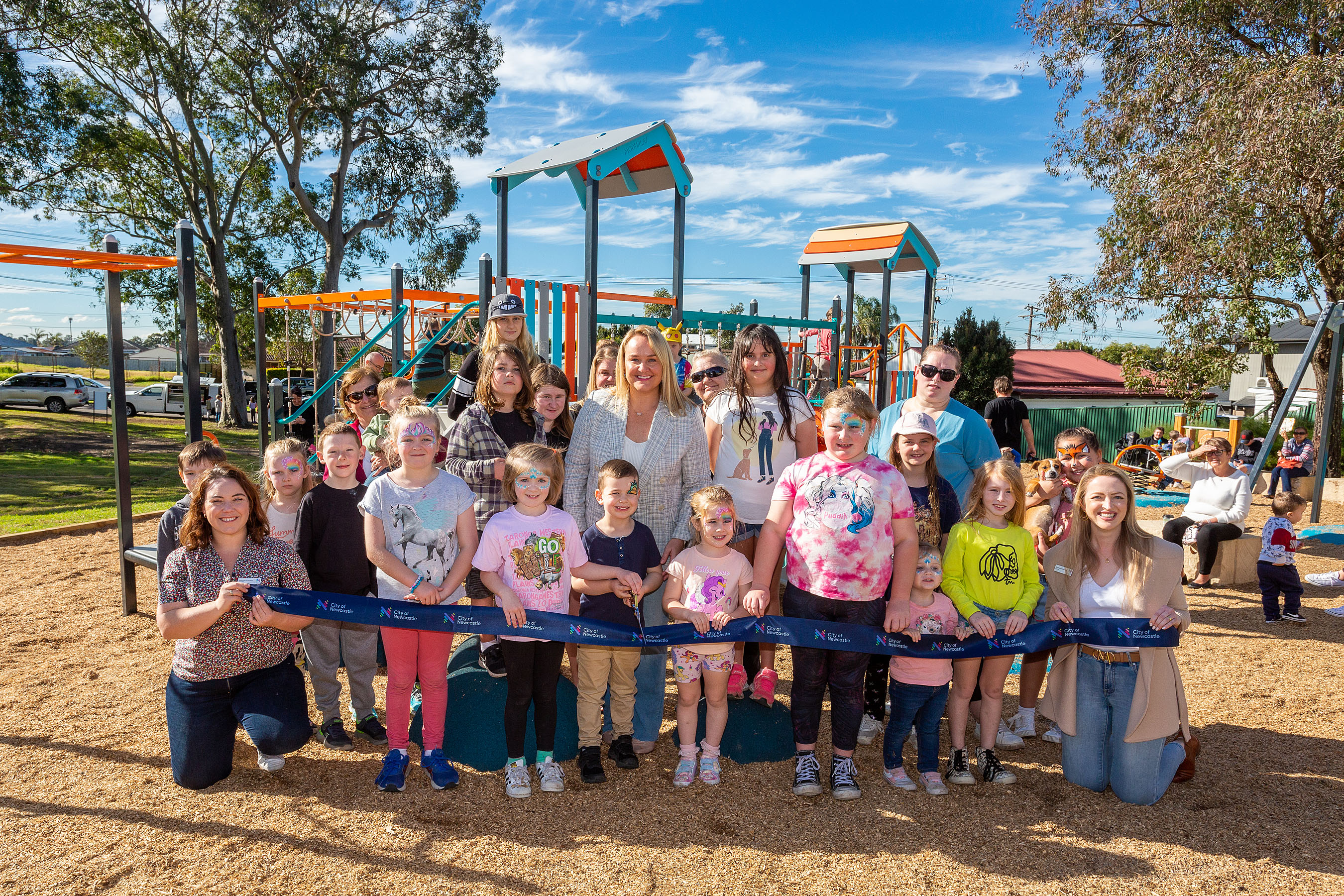
Young people will soon be swinging, sliding and climbing around five local playgrounds as City of Newcastle (CN) embarks on a $750,000 replacement program in 2023.

The program is set to include a makeover of Beresfield’s Vera Wilson Park, Loch Ness Drive Park in Fletcher, Harold Myers Park in Birmingham Gardens, Avon Street Reserve in Mayfield, and Waratah Park.

Lord-Mayor-Nuatali-Nelmes-opening-a-new-playground-in-Tarro-with-the-community-in-2022.jpg

Upgraded equipment will cater for a range of ages, with swings, challenging climbing components, slides and multi-play units – as well as a new stairway at Fletcher and a mini trampoline at Waratah – among the new play attractions.

Lord Mayor Nuatali Nelmes said up to five of Newcastle’s 134 local playgrounds are replaced each year under a commitment to delivering improved recreational opportunities for families across the local government area.

“We know how much our community values open spaces and playgrounds, which is why City of Newcastle is investing $750,000 to upgrade five local playgrounds this year,” Cr Nelmes said.

“The city’s playgrounds provide children and families with the opportunity to spend more time outdoors and engage in an active and healthy lifestyle.”

City of Newcastle has invested more than $9.5 million in playground projects during the past five years, including the construction of an inclusive playground at Stevenson Park in Mayfield, Stockton Active Hub, and the adventure playground at Richley Reserve.

The Wallsend community also celebrated the recent completion of the $2 million Wallsend Active Hub. Its delivery caps off more than $7.7 million worth of investment by City of Newcastle into four District-level playgrounds across the area during the past five years.

In addition to these planned playground renewals, CN will be constructing a new inclusive playspace and waterpark for the Harbour Foreshore Precinct in Newcastle’s East End as part of the implementation of the Harbour Foreshore Masterplan.

The playspace will include a junior and toddler space based around themes of the beach, as well as a splash pad with interactive water play, tugboats, Awabakal canoes, and water mazes. There will also be a large swing set based on maritime navigation, flying foxes, and purpose-built shade structures.

Visit newcastle.nsw.gov.au/works to stay up to date with progress on playgrounds and other projects in your area.

Drone lasers to pinpoint bush fire threats

State-of-the-art colourised laser technology has been added to Fire and Rescue NSW’s (FRNSW) fleet of drones, giving firefighters the ability to more accurately identify bush fire threats.

Minister for Emergency Services and Resilience Steph Cooke said the Light Detection and Ranging (LiDAR) sensors will help firefighters to better manage fuel loads by mapping bushland density.

“This state-of-the-art technology gives our firefighters a greater understanding of the bush so during a fire they can better protect properties, and during a hazard reduction operation they can more effectively target areas with higher fuel loads,” Ms Cooke said.

“Having lasers fitted to drones in Fire and Rescue NSW’s $5.4 million fleet will give firefighters greater capability to keep our communities safer and stronger throughout this period of increased fire danger.”

The LiDAR sensors produce precise, three-dimensional point data fully integrated with colourised red, green and blue high-resolution imagery.

During a hazard reduction operation, laser imagery collected before and after the burn will allow firefighters to accurately determine how much bushland has been treated.

FRNSW Deputy Commissioner Megan Stiffler said LiDAR sensors can also be used during a flood recovery operation, helping clean-up crews target their efforts.

“The LiDAR sensors use eye-safe lasers to measure the volume of flood debris and gives FRNSW a better visual of the product so we can determine what it is. That information takes a lot of the guesswork out of flood recovery operations, leading to a faster and more efficient clean-up,” Deputy Commissioner Stiffler said.

“This technology, which can work in any light conditions, day or night, is a real game-changer for Fire and Rescue NSW and significantly increases our aerial firefighting capabilities.”

More than $20 million of emergency funding fast tracked to support flood impacted communities

The NSW Liberal and Nationals Government is fast-tracking advanced payments of more than $20 million in emergency funding for councils in the north and south of the state to urgently carry out work to restore access to flood-impacted areas.  

Minister for Regional Transport and Roads Sam Farraway said the advanced funding would help 17 Local Government Areas impacted by the devastating flood event in October and November 2022 as they recover.

“The NSW Liberal and Nationals Government is committed to ensuring measures are taken to help communities prepare for, respond to and recover from natural disasters,” Mr Farraway said.   

“Our top priority is getting our communities who have been impacted by flooding on track to recovery as quickly as possible.

“By putting emergency funding into the bank accounts of our councils faster councils can get on with the job of repairing and rebuilding damaged road and transport infrastructure sooner.

“This new support is on top of more than $60 million in emergency funding already provided to councils devastated by severe weather across the Central West and North Coast last year.  

“It’s evident more now than ever that we need to build our infrastructure back to be more resilient against mother nature, which is why the NSW Liberal and Nationals Government pushed for the $312.5 million Betterment Program for councils in the Northern Rivers.

“This new, first of its kind, natural disaster funding program allows councils to build back their road and transport infrastructure to withstand extreme weather events, it’s the way of the future and will help our great state to come back stronger after a natural disaster.”

More opportunities for women in sport

More women and girls will get involved in sport as part of a NSW Government program which aims to boost participation and create more opportunities, both on and off the field.

Minister for Sport Alister Henskens said the Her Sport Her Way program supports State Sporting Organisations to deliver new initiatives that turbocharge female sporting participation.

“This program is all about increasing female participation in sport, whether that’s on the field or in administration, coaching or volunteer roles,” Mr Henskens said.

“Since the inception of this program four years ago, the number of women and girls playing sport has evolved and diversified, and by investing in grassroots programs and initiatives across NSW, we will continue to secure a brighter future for women in sport.”

The program has provided $2.45 million towards projects since 2019, with the latest $625,000 round funding 26 projects across 16 sports.

Successful projects include an initiative to develop netball coaching talent through to participation programs for water polo and karting. 

Minister for Women Bronnie Taylor said the NSW Government is today also opening nominations for the 2022-23 Her Sport Her Way Awards.

“Women make such an incredible contribution to sporting clubs and communities right across NSW, both on and off the field,” Mrs Taylor said.

“The Her Sport Her Way Awards recognise the achievements of women in driving powerful change and leaving a legacy for the way women’s sport is played in NSW.”

The Her Sport Her Way Awards feature five categories – Young Achiever, Local Champion, Outstanding Organisation, Trailblazer and Overall Champion.

Applications for the Awards close on 28 February 2023. For more information on the Her Sport Her Way program and Awards, visit www.sport.nsw.gov.au/hersportherway.

Ryde Hospital taking shape

Liberal candidate for Ryde, Jordan Lane, welcomed the latest major milestone of the $479 million Ryde Hospital Redevelopment that will deliver outstanding health facilities for the community.

Mr Lane said the unveiling of the latest designs and upcoming commencement of early works will give Ryde access to innovative, outstanding healthcare.

“As someone who was born at this very hospital, in Denistone House, I am genuinely excited about how this investment from our Government will deliver the great health services for our community, while also preserving its unique heritage.”

Premier Dominic Perrottet said the designs released today showcase the major expansion and upgrade of the facility which will support the health needs of the Ryde community.

“We are completely transforming Ryde Hospital into a state-of-the-art health facility with new and enhanced health services,” Mr Perrottet said.

“This $479 million redevelopment will significantly improve access to healthcare for the local community, ensuring more people can get quality care close to home.”

Minister for Health Brad Hazzard said the redevelopment will future-proof healthcare in the region.

“The start of early works on site is a significant milestone for the $479 million Ryde Hospital redevelopment,” Mr Hazzard said.

“Once complete, the Ryde Hospital redevelopment will deliver a new and expanded emergency department and intensive care unit, new theatres, new purpose-built ambulatory care centre, new paediatric short stay unit and expanded medical imaging.”

Member for Ryde Victor Dominello said he was delighted to share the new designs with the community.

“These designs follow a significant amount of engagement with the local community, clinicians and key healthcare stakeholders as well as feedback from staff and consumers,” Mr Dominello said.

“The feedback has informed key design considerations such as heritage, the environment and green space to create a welcoming environment for patients, staff, and visitors.”

The $479 million redevelopment will include:

  • A new and expanded emergency department;
  • A new and expanded medical imaging department;
  • A new and expanded intensive care unit;
  • New operating theatres;
  • More adult overnight inpatient beds;
  • A new purpose-built ambulatory care centre;
  • A new paediatric short stay unit;
  • Improved landscaping, urban spaces and car parking.

Central to the design is connections with existing onsite heritage buildings such as Denistone House and The Stables, and the Blue Gum High Forest, as well as green spaces to create a welcoming environment for patients, staff and visitors.

In response to feedback from the local community and key agencies, changes have been made to the carpark plans to include a new multi-storey car park off Denistone Road and ground-level parking off Ryedale Road. The updated plans are expected to be placed on public exhibition in the coming weeks.

A final State Significant Development Application (SSDA) will be submitted in mid-2023, seeking approval for the final design and main construction works for the redevelopment.

HPAC has been appointed the early works contractor for the redevelopment and will commence works in the coming weeks, with main works expected to begin in late 2023.

The early works will include internal refurbishment to prepare for the first phase of the redevelopment, demolition of three buildings at the rear of the site, partial demolition of ground level carparking and general site preparation earthworks.

The project is part of the NSW Government’s record $11.9 billion investment in health infrastructure to 2025-26, including the $265 million Hornsby Ku-ring-gai Hospital redevelopment and the Adolescent and Young Adult Hospice in Manly.

For more information about the redevelopment including the latest designs visit: www.rydehospitalredevelopment.health.nsw.gov.au

Local school commitments delivered

Federal Member for Newcastle, Sharon Claydon, today announced that funding for three local schools under the Schools Upgrade Fund has been delivered by the Albanese Labor Government.

Successful projects in the Newcastle electorate under the Targeted Round are:

  • Belair Public School will receive $31,150 for playground upgrades
  • Heaton Public School will receive $50,000 to upgrade the creative play space
  • Mayfield West Demonstration School will receive $50,000 for air conditioning and air ventilation.

Ms Claydon said the funding for these commitments has now been confirmed and will be provided to the schools in coming weeks.

“We committed to funding for these important school upgrades – and we’ve delivered,” Ms Claydon said.

“This is terrific news for these schools – especially for their students.

“It means better equipment and facilities to help them learn and play in a top-class environment.

“I’m so proud of our local schools and students. Everyone has had a tough couple of years and this funding is part of our efforts to help them bounce back.”

The funding is part of the $270 million Schools Upgrade Fund which is being rolled-out by the Albanese Labor Government to boost school infrastructure for students, especially to combat the impacts of the pandemic.

Ms Claydon also encouraged local schools to apply for funding for projects under the open grant round.   

“The open grant round is worth $32 million and will be invested in things like new laptops and iPads, classroom upgrades and outdoor learning areas,” Ms Claydon said.

“I encourage all schools in Newcastle to apply.”

Funding will go to schools most in need towards small-scale projects worth up to $25,000 to create healthier and safer learning environments and help students get back on track after disruptions caused by COVID.

For more information on how to apply visit: www.education.gov.au/schools-upgrade-fund

THE KIMBERLEY NEEDS ALL FUNDING SUPPORTS TO BUILD BACK STRONGER

This week, Prime Minister Anthony Albanese toured the flood ravaged Kimberley region with the Minister for Emergency Management, Senator Murray Watt, and Western Australian Premier Mark McGowan announcing funding for impacted families and individuals.

Upon seeing the extent of the damage and destruction, Prime Minister Albanese committed the Commonwealth Government to providing whatever support the Western Australian Government requires to rebuild and recover as quickly as possible from the unprecedented flooding event.

WA Greens Senator and Yamatji-Noongar woman, Dorinda Cox said:

“There’s a huge amount of work ahead to rebuild the lives and livelihoods of the communities in the Kimberley. We must guarantee that those families who lost everything do not suffer extended periods of displacement and are able to return home and be on Country as soon as it’s safe to do so.

“The individuals, families, organisations and businesses of Broome, Derby, Fitzroy Crossing and the smaller communities along the Martuwarra, must be provided all the same support and funding opportunities that other flood affected Australian communities have received.

“The Disaster Recovery Allowance of up to 13 weeks of income support is currently available to those who are eligible, but the one-off, means-tested, Disaster Recovery Payment of $1000 per adult and $400 per child remains outstanding as the Commonwealth waits for data to be released by the WA Department Fire and Emergency Services before these much needed payments can be activated. Why are these families who have lost everything and are in crisis still waiting?

“Past recovery efforts in our cyclone-prone regional areas have been slow and have unduly impacted struggling communities. With the support of the Commonwealth, the McGowan Government can capitalise on the joint Commonwealth-State Disaster Recovery Funding Arrangements, to ensure an effective, long-term recovery in the Kimberley.

“Immediate support for families and small businesses is important, but the region relies heavily on the $2 billion dollar tourism industry, and we need to start planning for its recovery now as well.

“Following two tourist seasons of border closures, Broome and the Kimberley are going to need significant sector-specific stimulus funding to ensure international and domestic tourists return to the region as soon as possible.

“This flood is unprecedented in scale, but it won’t be the region’s last natural disaster. We need a policy framework that addresses climate change adaptation and mitigates loss and damage for regional and remote communities.

“The Albanese Government is committed to supporting our Pacific neighbours on the existential issue of loss and damage associated with the catastrophic effects of climate change. Now it must demonstrate that commitment to the First Peoples of the Kimberley who are impacted by a worsening climate.

“The Australian Government took a leadership role in the final days of negotiation at the COP27 in Egypt, when delegates were struggling to agree on how to fund and support poor and vulnerable nations to adapt to climate change. Now, they need to come good and start funding impacted communities in their own backyard to do the same.”