Prime Minister Anthony Albanese will welcome Prime Minister of Papua New Guinea the Honourable James Marape MP to Australia on Sunday 25 September for a Guest of Government visit.
Prime Minister Marape and Prime Minister Albanese will attend the Prime Minister’s XIII Rugby League matches on Sunday evening at Brisbane’s Suncorp Stadium.
Rugby league has formed a key part of the relationship between Papua New Guinea and Australia for decades.
The first PM’s XIII was played in 2005 at Lloyd Robson Oval, Port Moresby, with the match to return to PNG next year.
This event is an opportunity to celebrate our shared passion for sport and culture as we support our respective men’s and women’s teams.
Prime Minister Albanese said:
“Australia’s relationship with Papua New Guinea is special and unique; we hold common history, values, and an enduring bond as neighbours, partners and friends.
“We also share a vision of what we want to achieve together—a more prosperous, unified and secure region.
“As our nearest neighbour, we will continue to work closely with Papua New Guinea to deepen cooperation across all areas including sports, economic recovery, infrastructure, security and climate resilience.
“I am honoured to welcome Prime Minister Marape to Australia.”
In September 2021, the leaders of Australia, the United Kingdom, and the United States announced AUKUS, an enhanced trilateral security partnership. The need for this partnership is as clear today as it was a year ago. We stand together to support an international order that respects human rights, the rule of law, and the peaceful resolution of disputes free from coercion. AUKUS is a central element in our efforts to achieve these aims.
Over the last 12 months, we have made significant progress towards Australia acquiring conventionally armed, nuclear-powered submarines. We are steadfast in our commitment to Australia acquiring this capability at the earliest possible date.
As leaders, we remain committed to ensuring the highest level of nuclear safety, security, and stewardship in this endeavour. Australia does not seek and will not acquire nuclear weapons. The United States and United Kingdom are fully committed to establishing an approach to sharing naval nuclear propulsion technology with Australia that meets the highest non-proliferation standard. We welcome International Atomic Energy Agency Director General Grossi’s report to the September IAEA Board of Governors meeting on this issue, in which the Director General reported his satisfaction with our engagement. The international community can be confident that our nations will continue to work transparently with the IAEA towards an approach that will strengthen the non-proliferation regime.
Through AUKUS, we have also made significant strides in our trilateral cooperation on advanced capability initiatives: hypersonics and counter-hypersonics, electronic warfare capabilities, cyber, artificial intelligence and autonomy, quantum technologies, and additional undersea capabilities. To support further progress on these initiatives, we continue to promote greater information and technology sharing, foster deeper integration of our industrial bases and supply chains, and accelerate our defence innovation enterprises. As our work progresses on these and other critical defence and security capabilities, we will seek opportunities to engage allies and close partners.
Australia, the United Kingdom, and the United States have a proud history of working together, along with other allies and partners, to protect our shared values and uphold the rules based international order. Today, as we mark the one-year anniversary of AUKUS, we reaffirm our commitment to that critical endeavour and to peace and security in the Indo-Pacific.
Australia will contribute $266 million over three years to the seventh replenishment of the Global Fund to Fight AIDS, Tuberculosis and Malaria.
Due to the devastating impacts of the COVID-19 pandemic, progress in the fight against HIV/AIDS, tuberculosis (TB) and malaria has gone backwards for the first time in two decades.
In the Indo-Pacific, TB poses particular challenges and in some regions, drug resistance is growing.
HIV/AIDS is an ongoing burden on key populations and malaria remains a serious health challenge, disproportionately affecting children.
Australia’s record investment will support the Global Fund’s efforts to end HIV/AIDS, TB and malaria by 2030, including in the Indo-Pacific region.
Australia will continue to provide direct support to the countries of the Pacific and Southeast Asia on all aspects of infectious disease prevention, treatment and control.
Australia’s contribution to the Global Fund was announced at a replenishment conference in New York on 21 September 2022.
This new commitment represents a ten per cent increase on Australia’s previous contribution.
Australia provides more than $600 million in health-related Official Development Assistance each year, excluding extraordinary assistance for COVID-19 responses.
A mesmerising mass dance performance at Civic Theatre will provide a spectacular start to City of Newcastle’s flagship cultural festival when New Annual officially kicks off today.
Promising 10 days of unforgettable performances across the city centre from 23 September until 2 October, New Annual will allow locals and visitors to discover a different side of Newcastle through an immersive program of dance, music, theatre, visual arts and Indigenous workshops.
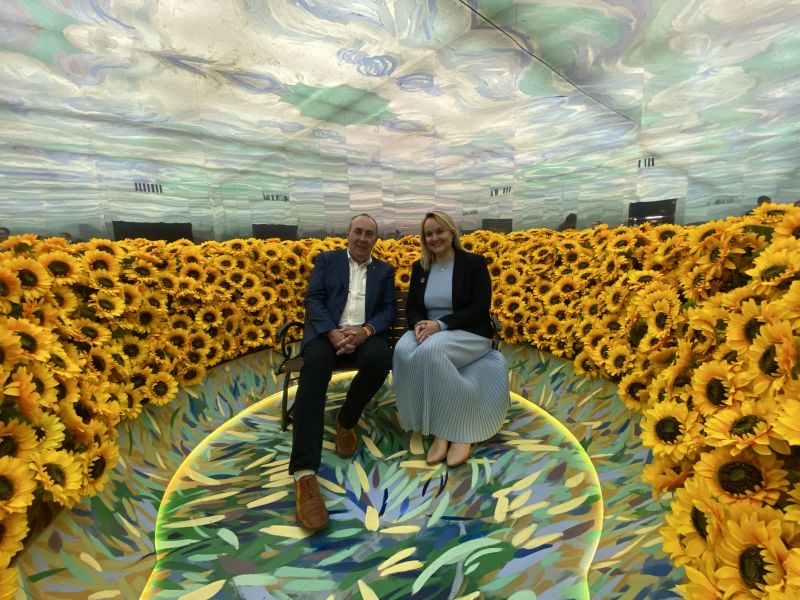
As part of the New Annual festival, City of Newcastle has also brought the multi-sensory experience of Van Gogh Alive to Newcastle’s premier major events space, Foreshore Park. As a major installation, Van Gogh Alive will extend beyond the New Annual festival, running to 23 October 2022.
Newcastle Lord Mayor Nuatali Nelmes said she was thrilled to see 12 months of preparation come to fruition today ahead of a packed schedule of events.
“Months of planning and hard work have culminated in a dynamic event that has broad appeal, attracting new audiences to the wealth of talent that exists within our thriving arts and cultural scene while also providing a platform for national artists to showcase their work in the city,” Cr Nelmes said.
“There is so much to see and do throughout the city during the 10-day festival period, including a busy program at the purpose-built Civic Park Stage, which acts as the festival hub for the duration of the event and will showcase everything from art-making workshops and dance performances to the National Young Writers Festival and Future Innovators Summit.
“The Civic Theatre will also play host to a myriad of shows throughout the festival, including the incredible spectacle of COLOSSUS, which makes its Newcastle debut tonight and features a cast of 50 dancers performing as one in a hypnotic display created by internationally renowned Australian choreographer Stephanie Lake.
“As with our inaugural New Annual, this year’s festival has a strong First Nations program that reflects our rich Indigenous heritage, with the Pavilion of Sand installation providing a base for indigenous cultural expression in Wheeler Place while the landmark musical showcase This Land celebrates the sound, soul, and spirit of the many nations in this country through an incredible line-up of First Nations artists curated by Jacob Ridgeway.
“With its mix of free, ticketed and family-friendly events, New Annual will allow everyone to experience the fun, festival atmosphere of our flagship event and I can’t wait to see everything it has in store for us.”
With the Civic precinct at its heart, New Annual will extend across the city to bring a diverse range of locations to life, including iconic sites such as Fort Scratchley, Civic Theatre and The Station, which will become temporary film sets as part of RADIAL, a collaboration between Civic Theatre, Tantrum Youth Arts’ Accelerate Ensemble and the internationally acclaimed Back to Back Theatre.
New Annual will also provide plenty of opportunities for the community to get involved in the action, including workshops by family-friendly favourites Curious Legends that invite festival-goers of all ages to help create a large-scale giant illuminated puppet, culminating in a community celebration on the last day of the festival.
Cr Nelmes said New Annual would provide an important economic boost across the arts, hospitality, and tourism sectors, while also celebrating and showcasing our creative city and was made possible with the support of presenting partners University of Newcastle and Hunter and Central Coast Development Corporation, major partner Newcastle Airport and supporting partners Crystalbrook Kingsley, Foghorn Brewery, Equip Multimedia, Holiday Inn Express & Suites Newcastle and Newcastle Transport.
To check out the full New Annual program, purchase tickets or keep up-to-date with the latest information including wet weather cancellations, visit www.newannual.com
The NSW Government is doubling family and domestic violence leave provisions for all NSW public sector workers with staff able to access 20 days of paid leave per calendar year from 1 January 2023.
The same paid leave provisions will also be provided to casual employees, while access to existing carers leave will be also extended to all employees providing support to a family or household member who is a victim-survivor of domestic violence.
The enhanced arrangements will apply across the NSW public sector and were developed after discussion with unions, Government employers and family and domestic violence policy experts.
Minister for Women’s Safety and the Prevention of Domestic and Sexual Violence Natalie Ward said the increase of family and domestic violence leave was a key priority of the Perrottet Government.
“As the largest employer in NSW, it is our Government’s responsibility to provide workers with the support and security to take time away from work to take the necessary steps to find safety for themselves and their family,” Mrs Ward said.
“That is why we have made this commitment to double the amount of paid family and domestic violence leave available to all public sector employees from 10 to 20 days, to give our workers greater support at a time when they need it most.
“Everyone has the right to be safe both at home and in the workplace, which is why we have made addressing the issue of women’s safety and the prevention of domestic and family violence a priority with record funding to increase support across the sector.”
Minister for Employee Relations Damien Tudehope said the new leave provisions build on other family and safety oriented measures the NSW Government had already put in place for all public sector workers.
“NSW was the first Australian jurisdiction to include specific provisions for family and domestic violence leave in enterprise agreements and awards for its public sector employees and once again we will be leading the way with comprehensive leave provisions to support victim-survivors seeking safety and care,” Mr Tudehope said.
“This new leave provison is the latest in a raft of improvements our government has put in place to improve work environments for NSW public sector workers and sets the standard for other jurisdictions and the private sector to follow.
“Already our Government has enacted nation-leading measures to ensure families, women and children are front of mind in the public sector, including new parental leave policies, and leave in the event of a miscarriage.
Leave is available to NSW Government employees who give birth to a pre-term child (prior to 37 weeks). The parent with the caring responsibility is entitled to paid special pre-term parental leave from the date of birth of the child (or children from a multiple birth) up to the end of 36 weeks.
In the 2022-23 NSW Budget, the NSW Government announced new paid parental leave arrangements for public sector workers in which there will be no distinction between ‘primary’ or ‘secondary’ carer, with both parents entitled to 14 weeks of paid parental leave and an additional 2 weeks leave where leave is more equally shared between parents.
As part of the Budget, the NSW Government also announced five days of paid fertility treatment leave for public sector workers.
The improved family and domestic violence leave entitlement builds on the NSW Government’s record $687 million investment in 2021/22 for a range of for Women’s Safety initiatives, as well as a further $100 million in the 2022/23 Budget.
The NSW Domestic Violence Line is available 24 hours a day, 7 days a week on 1800 656 463 to explain services and support available. The 1800RESPECT online chat service is available as an alternative to calling. Information about other services and support is available on the Department of Communities and Justice website.
More plastic will be recycled and turned into new products in NSW thanks to $9 million funding to support businesses transform their operations and access the latest plastic recycling technology.
Minister for the Environment James Griffin said the new Circular Plastics Program, part of the Circular Materials Fund, is all about boosting the circular economy for plastics in NSW.
“This program is a game changer for our State because it means we’ll be reducing the amount of plastic going to landfill, and turning it into a valuable resource instead,” Mr Griffin said.
“At the moment, NSW produces about 800,000 tonnes of plastic waste every year, and about 10 per cent is recycled. That figure should be much higher and I want to see plastic being repurposed and reused as many times as possible, rather than ending up in landfill or the environment.
“Through this $9 million program, we’re giving eligible businesses the support they need to recycle and reuse more plastic when making new products.
“This is business and government working together to create a cleaner future, and generate new market demand and value for recycled plastic.”
The Circular Plastics Program is part of the NSW Government’s target to triple the plastics recycling rate by 2030 and will be delivered by the NSW Environment Protection Authority.
The matched funding will support small and medium businesses that may otherwise be challenged by initial capital costs involved in creating circularity in their business.
The program is part of the NSW Government’s $356 million Waste and Sustainable Materials Strategy 2041, and the NSW Plastics Action Plan.
The red and yellow is back on NSW beaches with more than 20,000 surf life saving volunteers ready to welcome beachgoers as the official patrol season begins.
Premier Dominic Perrottet joined Minister for Emergency Services and Resilience Steph Cooke, Surf Life Saving NSW (SLSNSW) President George Shales and volunteer lifesavers at Bondi Beach today to raise the red and yellow flags for the first time this season.
“The raising of the flags is a significant occasion for the people of NSW because it means we can get back out after a cold winter and safely enjoy all the beautiful coastline our great State has to offer,” Mr Perrottet said.
“Please listen to the advice of our Surf Life Saving experts, don’t take unnecessary risks and always swim between the red and yellow flags to make sure you and your family enjoy the water safely.”
Ms Cooke said $1 million worth of SLSNSW jet skis and support operations vehicles will be rolled out across the State to better support the work of volunteers.
“The addition of 11 jet skis and 11 fully kitted out support vehicles will further enhance the ability of our lifesavers to respond to emergencies in the water and help people when they get into trouble,” Ms Cooke said.
“Our lifesavers from the 129 clubs up and down the NSW coastline are looking forward to being on patrol every weekend and public holiday between now and Anzac Day in April.”
Mr Shales said despite a third consecutive La Nina being declared, large crowds are expected at beaches throughout spring and summer.
“We had a very wet year last season but beachgoers need to remain vigilant after a record 55 lives were lost in the 12 months to June 2022,” Mr Shales said.
“We’re ready to help if you get into trouble but we need to work together to keep our beaches and coastal waterways safe for all to enjoy.”
Patrolled beach locations, patrol times and live weather updates are available on the BeachSafe app or website.
Powerhouse Ultimo is set to become an immersive education and professional hub for creatives thanks to a $10 million investment by Foundation University Partner the University of Technology Sydney.
Minister for the Arts Ben Franklin said the partnership will complement the NSW Government’s investment into the renewal of Powerhouse Ultimo, and establish Ultimo as a leading creative industries precinct.
“The partnership provides an incredible boost to the NSW creative industries sector in the heart of a thriving precinct anchored by the landmark Powerhouse Ultimo renewal,” Mr Franklin said.
“It will support NSW creatives across all stages of their career and dramatically expand the profile of Australian design and fashion on the national and global stage.”
Minister for Skills and Training Alister Henskens said the partnership speaks to the University’s reputation for practice-oriented education.
“This investment by UTS will generate incredible vocational opportunities for NSW local and regional students and emerging practitioners to develop lasting industry connections and skills that will serve them at the cutting edge of the global creative industries,” Mr Henskens said.
UTS Vice-Chancellor and President Professor Andrew Parfitt said the partnership will deliver world class immersive creative industry experiences for UTS students as well as students right across NSW.
“The potential to share facilities and generate collaborations between students, researchers, museum staff and creative industries residents will elevate the creative industry output of NSW,” Professor Parfitt said.
Powerhouse Chief Executive Lisa Havilah said the partnership offers a platform to activate the revitalised Ultimo precinct, through the delivery of major events, festivals and industry programs.
“The collaboration will elevate Powerhouse Ultimo’s renewed focus on fashion and design by connecting the museum with researchers and industry professionals at the forefront of design innovation. Together, Powerhouse and UTS will create a world-class Creative Industries Precinct in the heart of the CBD. We thank UTS for their visionary investment into the future of Powerhouse Ultimo,” Ms Havilah said.
A woman has been charged with domestic violence offences after a man was allegedly stabbed with scissors at a unit in the state’s south yesterday.
Police have been told a 50-year-old man and 32-year-old woman – who are known to each other – were arguing in unit on George Street, Deniliquin, about 12.30pm yesterday (Thursday 22 September 2022), when the woman allegedly stabbed the man in the face with a pair of scissors.
The man was treated at Deniliquin Hospital and has since been released.
Officers attached to Murray River Police District initiated inquiries and, about 30 minutes later, arrested a woman at the George Street unit.
She was taken to Deniliquin Police Station where she was charged with reckless wounding (domestic violence).
The Deniliquin woman was granted bail to appear in Albury Local Court on Tuesday 11 October 2022.
The Australian Government is seeking public expressions of interest from individuals to be considered for the Ambassador for First Nations People.
The Government is delivering on its commitment to implement the Uluru Statement from the Heart in full, and embed Indigenous perspectives, experiences and interests into our foreign policy.
Australia’s foreign policy should reflect our modern diversity and the rich heritage of First Nations people.
The Ambassador will head an Office of First Nations Engagement within the Department of Foreign Affairs and Trade to listen to and work in genuine partnership with Aboriginal and Torres Strait Islander peoples.
This is the first time an Ambassador position has been open to a public expression of interest, enabling qualified and interested individuals to apply.
Further information on the expression of interest process for the Ambassador for First Nations People is available at First Nations EOI.
Minister for Foreign Affairs, Senator the Hon Penny Wong said:
“The Ambassador for First Nations People will lead work to embed Indigenous perspectives, experiences and interests into our foreign policy, including to help grow First Nations’ trade and investment.
“The Ambassador will also lead Australia’s engagement to progress First Nations rights globally.
“This role will enhance our engagement in the Indo-Pacific region by fostering cooperation on shared interests.”
Minister for Indigenous Australians, the Hon Linda Burney MP said:
“Appointing an Ambassador for First Nations People is an opportunity to ensure the unique perspectives of Aboriginal and Torres Strait Islander peoples are included in our international engagements.
“An Ambassador for First Nations people will be supported to engage with likeminded countries to share our commitment to the Uluru Statement from the Heart and experiences of treaty and truth telling processes”
Senator Patrick Dodson said:
“This is the first time Australia will have a dedicated level of First Nations representation to inform the way we engage with the world.”