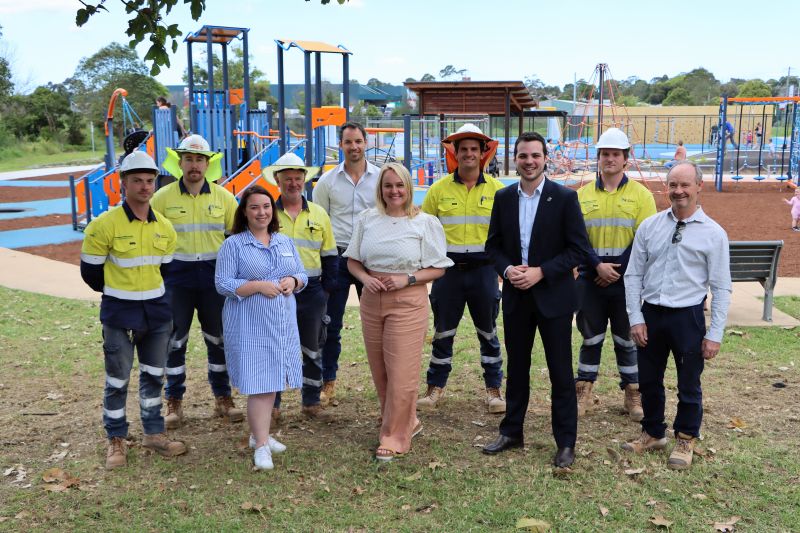
Australia’s first gas-to-grid project kicks off

An Australian first trial has commenced at Sydney Water’s Malabar Wastewater Resource Recovery Plant, which will see renewable biomethane support the energy demands of up to 13,000 homes.

Minister for Lands and Water Kevin Anderson said the commencement of these works at Sydney Water’s Malabar facility is an exciting and significant milestone that will deliver reliable and cleaner gas to Sydneysiders and help to reduce the carbon footprint of households.

“The Wastewater Resource Recovery Facility will create approximately 95,000 gigajoules of biomethane, from organic material in wastewater, to supply gas to around 6,300 homes by the end of the year, with the capacity to double production by 2030,” Mr Anderson said.

“This five year pilot will put gas directly into the supply network and will also help industries across NSW meet their net-zero emissions targets, with the facility able to turn waste material into a new clean energy source.”

Sydney Water’s General Manager of Asset Lifecycle Paul Plowman said this first of its kind biomethane project, is expected to remove 5,000 tonnes of carbon emissions each year – the equivalent of almost 2,000 cars off the road.

“As Greater Sydney grows and the volume through our network increases, innovation-based partnerships will be crucial to unlocking the potential of wastewater to help power Greater Sydney”, Mr Plowman said.

The $16 million project is a joint partnership between the Federal Government’s Australian Renewable Energy Agency (ARENA), that is providing a $5.9 million grant, the NSW Government, Sydney Water and energy infrastructure company, Jemena.

The project is due to be completed by the end of this year and will see the first renewable gas products supplied to the network soon after.  

People with disability urged to get booster

With a new wave of COVID-19 cases continuing to increase across the state, people with disability are encouraged to get the latest COVID-19 vaccine booster dose.
 
Minister for Families and Communities and Minister for Disability Services Natasha Maclaren-Jones said people with disability can be more vulnerable to the harmful effects of COVID-19.
 
“Protecting people with disability is vital as they can be at greater risk of developing serious illness if they become infected,” Mrs Maclaren-Jones said.
 
“Vaccination is readily available at GPs and pharmacies and we are urging everyone to book in without delay.”
 
COVID-19 booster doses are recommended for anyone 16 years and older who had their last dose of a primary course at least three months ago.
 
The COVID-19 vaccine can be taken at the same time as the influenza vaccine, which people with disability are also being urged to take.
 
While the free flu vaccination program in NSW ends on 17 July 2022, those considered to be at higher risk of severe illness from influenza remain eligible for a FREE flu vaccine beyond this date, under the National Immunisation program. This includes:

  • Aboriginal and Torres Strait Islander people from six months of age
  • Children from six months to under five years of age
  • People with serious health conditions (including severe asthma, diabetes, cancer, immune disorders, obesity, kidney, heart, lung or liver disease)
  • Pregnant women
  • People aged 65 and over.

 
The NSW Government is also providing up to 7.9 million rapid antigen tests (RATs) to people with disability and other vulnerable community members with the program recently expanded to 31 October 2022.
 
To find your nearest vaccination clinic, visit nsw.gov.au.

Delivering the renewable Hume Hydrogen Highway

The NSW Government is driving down emissions and boosting jobs and industry, co-delivering Australia’s first renewable hydrogen highway on the east coast with the Victorian Government.

NSW Treasurer and Minister for Energy Matt Kean said applications are now open for $20 million in grant funding to support the design and delivery of renewable hydrogen trucking along Australia’s busiest freight corridor.

“This initiative aims to show the potential of renewable hydrogen for heavy vehicles with the goal of transitioning the freight sector to zero emissions energy sources,” Mr Kean said.

“The Hume Hydrogen Highway will create new jobs and attract investment to NSW and Victoria. It’s expected to drive uptake of renewable hydrogen in the heavy transport sector.”

The NSW and Victorian Governments have each invested $10 million in grant funding for the Hume Hydrogen Highway, a joint grant initiative to support the development of at least four refuelling stations along the highway and approximately 25 hydrogen-powered trucks.

Transport is one of Australia’s largest sources of greenhouse gas emissions.

Renewable hydrogen shows strong potential to be cost competitive with diesel for trucks.

Victoria’s Minister for Energy and Minister for Environment and Climate Action Lily D’Ambrosio said transport accounts for 25 per cent of Victoria’s total carbon footprint.

“Australia’s busiest corridor is the perfect place to kickstart the transition to a zero-emission freight sector,” Ms D’Ambrosio said.

“The renewable hydrogen highway will create new jobs, drive investment across the east coast and is a landmark step towards meeting Victoria’s target to halve emissions by 2030 as we work towards net-zero by 2050.”

Mr Kean said the Hume Hydrogen Highway is the first initiative of a statewide hydrogen refuelling network.
“What we’re looking for is strong industry collaboration between refuelling station operators, fleet operators, truck manufacturers, major freight customers, and other entities which will be vital to the success of the initiative,” Mr Kean said.

The Victorian, NSW and Queensland Governments will collaborate on the development of the renewable hydrogen highway by 2026, focusing on the Hume Highway, the Pacific Highway and the Newell Highway.

Grant applications close 21 October 2022. The successful applicant must enter into a joint funding agreement with both Governments.

$20 million boost for Aboriginal Justice initiatives

The NSW Government has today announced an additional $20 million investment over four years in justice initiatives to help reduce the over-representation of Aboriginal people in the criminal justice system.
 
Attorney General Mark Speakman said the package involves significant expansions of the Youth Koori Court, Circle Sentencing in the Local Court, and the Justice Reinvestment program.
 
“The NSW Government is committed to working closely and collaboratively with Aboriginal communities to address disproportionate rates of Aboriginal incarceration,” Mr Speakman said.
 
Minister for Aboriginal Affairs Ben Franklin said investing in these programs will enhance the NSW Government’s commitment to the National Agreement on Closing the Gap.
 
“Investing in these programs aims to meet targets within the Closing the Gap agreement, including reducing the over-representation of Aboriginal and Torres Strait Islander adults and young people in the criminal justice system,” Mr Franklin said.
 
The NSW Government is today committing:

  • $5.8 million to expand the Youth Koori Court to the Children’s Court at Dubbo and to provide more funding for Aboriginal Legal Services, Legal Aid NSW and a specialist Children’s Magistrate to oversee the Youth Koori Courts including at Surry Hills and Parramatta.
  • $4.2 million to expand the Circle Sentencing program from 12 to 20 high-priority Local Court locations.
  • $9.8 million for new Justice Reinvestment pilots, which aim to divert people away from the criminal justice system by investing in evidence-based community-led initiatives that address the underlying causes of crime, with a focus on Aboriginal people. A Justice Reinvestment pilot is presently operating in Bourke.

 
Minister for Aboriginal Affairs Ben Franklin said: “The National Agreement provides us with the framework to empower and support Aboriginal communities across the State to create fundamental change and achieve meaningful, permanent outcomes.”
 
Mr Speakman said as part of the funding package the Circle Sentencing program will be expanded to include Local Courts at Penrith, Campbelltown, Wollongong, Broken Hill, Wagga Wagga, Batemans Bay, Waverley and the Sydney Downing Centre.
 
Circle Sentencing is an alternative sentencing method in which a Local Court Magistrate works with Aboriginal Elders, victims, respected members of the community and the offender’s family to determine an appropriate sentence.
 
“In the 20 years since the program was first piloted in Nowra, more than 1,450 Circle Sentencing sittings have been held,” Mr Speakman said.
 
This approach has been found to reduce rates of imprisonment and reoffending compared with traditional sentencing methods.”
 
Uncle John Bolt, a proud Bundjalung man who has been involved as an Elder in the Circle Sentencing Program for 20 years, said: “I’m honoured to be part of this program, and over the past 20 years it’s been really strong and positive, giving our community the opportunity to see our young people get a better start in life and stop being incarcerated.”
This funding package complements other new NSW Government initiatives already underway, such as the Walama List pilot that started in the District Court on 31 January, 2022.
 
The NSW Government is also investing $27.9 million over four years to expand the NSW Drug Court to Dubbo.
 
Plans are also underway to expand the Aboriginal List in the Drug Court already operating at Parramatta to Dubbo and Sydney.
 
Specialist roles attached to the Drug Court will enhance the provision of culturally safe and responsive support for Aboriginal participants going through the Drug Court.

Major tunnelling excavation complete on Rozelle Interchange

Construction on the Rozelle Interchange has entered the final stage with confirmation today that major tunneling excavation on the world-class project is now complete.
 
Premier Dominic Perrottet said the NSW Government is delivering on its vision of state-changing transport infrastructure for motorists that is more reliable and better connected. 
 
“This government is committed to transforming our state’s transport infrastructure for this generation and the next with our almost $77 billion investment over the next four years,” Mr Perrottet said.
 
“Rozelle Interchange will become a critical link in our Sydney road network, connecting drivers not only to the M4-M5 Link Tunnels, but to the City West Link, the Western Distributor and the future Western Harbour Tunnel. 
 
“This milestone represents a major piece of the jigsaw coming together as we move another step closer to a better-connected Sydney, one with safer and less congested roads meaning motorists will ultimately have more time to do the things they want to do.”
 
Minister for Metropolitan Roads Natalie Ward says the Rozelle Interchange will transform travel for motorists across Sydney.
 
“Rozelle Interchange is the final and signature component of the WestConnex project, which will ease congestion on the road network and provide Sydney motorists quicker and safer trips,” Mrs Ward said.
 
“Once completed WestConnex will cut travel time from Western Sydney to the CBD by up to 20 minutes with 100,000 vehicles expected to travel through the interchange every day.”
 
The Rozelle Interchange project includes Western Harbour Tunnel enabling work, and completing the M4-M5 Link tunnels.
 
The Rozelle Interchange project will now move into the final fit out and then commissioning stage for the tunnel, as it gets ready to open to motorists in late 2023. 

Specialist squads muscled up as part of Police numbers boost

A significant boost to specialist police units to target organised crime, domestic violence and terrorism will form part of 550 new positions in the NSW Police Force this financial year.

The final allocation of positions delivers on the State Government’s $583 million commitment for 1500 extra police positions over four years.
 
Deputy Premier and Minister for Police Paul Toole said the commitment represented the biggest increase in police numbers across the State in more than 30 years.
 
“We’re boosting every area and aspect of the NSW Police Force – including our general duties police, domestic violence specialist investigators, police prosecutors, counter terrorism police and organised crime squads,” Mr Toole said.
 
“These extra positions mean more proactive policing, more foot patrols, more visibility of police in high-risk areas, more support for victims, and more time to investigate crime.
 
“An effective police force requires the support and resources to stay ahead of the game and disrupt crimes before they occur.”

Commissioner Karen Webb said the new positions would make a significant impact across the Police Force, improving community safety. 

“Our population as a state is continually growing, and with that comes greater responsibility as a police service,” Commissioner Webb said.

“These allocations have been carefully considered to ensure we boost numbers in areas that need it the most.
“It is crucial to have resources in the right areas to prevent and respond to crime and see those matters through the court process.”

The new positions will see various specialist units and commands bolstered with extra resources. These include:

  • State Crime Command – 41, with 30 positions for the Raptor Squad and 11 positions for the Organised Crime Squad to help tackle gangland and high level organised crime;
  • Police Prosecutions – 35, including 20 training positions to achieve conviction outcomes;
  • Counter Terrorism and Special Tactics – 19, with nine positions for the Rescue and Bomb Disposal Unit and 10 positions for the Tactical Operations Group;
  • High Risk Domestic Violence Team – 15 to proactively target and investigate high risk domestic violence offenders;
  • Rural Crime Investigators – 10 additional investigators to investigate stock and equipment theft on farms.

The pool of general duties police officers will also be boosted across metro, regional and rural locations.

BUSHFIRE SURVIVORS CALL FOR URGENT ACTION ON STATE OF THE ENVIRONMENT 

Bushfire Survivors for Climate Action (BSCA) today welcomes the release of the State of the Environment report, and calls on the government to act urgently to cut emissions and keep our regional communities safe.

Australians are facing an increasingly high bushfire-risk environment that is driven by climate change. Bureau of Meteorology data shows there are 10 times more extreme fire danger days than there were in the 1960s.

BSCA president Jo Dodds said the report underscored the importance of making deep emissions cuts this decade.

“Our regional towns deserve safety and security,” Ms Dodds said. “We need to stop burning coal, gas and oil to reduce the risk of bushfires and other extreme weather events.

“I know too well what it’s like to experience the effects of a climate change-fuelled emergency, and call on our leaders to invest in solutions to reduce emissions – we know this will help keep our regional communities safe while also supporting their economic growth.”

City of Newcastle optimises kerbside collection schedule to accommodate housing growth

Household bin collections are set to change for some properties across Newcastle to enhance service and processing efficiency at the kerbside.

The revised schedules will take effect from Monday 1 August, with about 20% of households experiencing a switch in the week their recycling and garden organics bins are collected. Two thousand Rankin Park and Wallsend residences will also be assigned a new service day.

City Wide Services Director Alissa Jones said the updated schedules will allow City of Newcastle to provide an optimised collection system that caters for the ongoing population growth being experienced across the city and particularly in the western suburbs.

“City of Newcastle is committed to meeting the needs of our city’s growing population, which has increased by around 14 per cent during the past decade and is forecast to pass 200,000 residents by 2041,” Ms Jones said.

“Amending our waste collection routes now will provide better outcomes for our existing customers while also future-proofing the efficiency and reliability of our kerbside service as waste needs continue to grow across the city and especially in our western suburbs, with an additional 4,000 homes anticipated in Fletcher, Minmi, Elermore Vale and Rankin Park alone by 2041.

“Changing service weeks, and in some cases service days, will allow for a more even spread of kerbside bins that require emptying throughout the week. This will help our collection crews provide a more reliable and punctual service to all residents across Newcastle.”

The revised collection routes have been modelled on the current and future waste needs across the city as well as customer feedback regarding service and processing efficiency to provide a more resilient and robust service for all residents.

The changes will apply to properties in parts of Adamstown, Beresfield, Blackhill, Elermore Vale, Hamilton East, Hamilton South, Jesmond, Maryland, Mayfield, Mayfield West, Merewether, New Lambton, New Lambton Heights, North Lambton, Rankin Park, Tarro and Wallsend.

Affected households will receive a letter this fortnight explaining the changes and their new collection schedules.

Residents can also look up their address on the City of Newcastle website at newcastle.nsw.gov.au/collection-days to find out if and how the changes apply to them.

Households retaining their existing collection schedule may notice a change in the time of day their bins are serviced, therefore it remains important that all residents have their bins on the kerb by 5am on collection day.

Premier’s mission to give NSW a head-start with key regional trading partners

Premier Dominic Perrottet will lead a trade mission to Japan, India and Korea, with a packed agenda that firms up new agreements, reboots our visitor economy and international education sectors, and drives investment in priority growth sectors like clean energy production, where NSW aspires to be a global leader.

The trade mission takes advantage of NSW’s economic resilience through the COVID-19 pandemic to give the state a head-start in attracting new investment as international markets reopen.

“The pandemic has slowed global trade relations, but NSW is open for business and we have pressing trade and investment opportunities with key regional partners,” Mr Perrottet said.

“This trade mission will reaffirm critical international relationships and progress important agreements, to give our state a critical advantage in attracting investment in future growth sectors, including advanced manufacturing and green hydrogen production.

“These are the economic opportunities that will create high quality jobs for current and future generations, but only if we seize the moment and secure international investment right now as global trade starts to fire up again.”

The mission will take place from July 21-29, taking in Japan (Tokyo and Hiroshima), South Korea (Seoul) and India (Mumbai and Bengaluru). This will be the first overseas visit for Mr Perrottet in his capacity as the state’s leader, and the first overseas visit for a NSW Premier since the pandemic forced international border closures.

Mr Perrottet will be joined by Minister for Enterprise, Investment and Trade, Minister for Tourism and Sport, and Minister for Western Sydney Stuart Ayres for the Indian leg of the visit.

Mr Ayres will lead a new annual trade delegation of government officials and industry representatives to bring NSW businesses to India to promote NSW exports and grow business partnerships.

“NSW has a strong economic and cultural relationship with India. We are home to the largest Indian population in Australia, India is our third-largest source of international students and is our fastest growing tourism market with Indian visitors spending an estimated $444 million in 2019,” Mr Ayres said.

“With the signing of an historic new trade agreement earlier this year, a new direct airline service between Sydney and Southern India, the return of international students and increased investment, NSW is poised to make the most of the immense opportunities between our two nations.”

Boost for after hours care sites in NSW public schools

NSW students and families will have better access to before and after school care than ever before with 44 new hubs to be rolled out in schools across the state over the next 12 months.
 
Minister for Education and Early Learning Sarah Mitchell said the purpose-built sites known as “hubs” were part of the NSW Government’s $40 million commitment to create more out of school hours care (OSHC) places.
 
“We’ve delivered 47 hubs already and will roll out more than 90 in total around the state, providing facilities for up to 4,800 students,” Ms Mitchell said.
 
“Every hub includes a play space, offices, toilets and kitchens, allowing students to enjoy a safe and fun environment, whilst providing parents with the flexibility they need.
 
“The NSW Government is focused on supporting working families and helping to cut waiting times in areas of high demand with 19,420 additional before and after school care places created since 2019.”
 
Ten of the latest hubs have been temporarily redistributed to the North Coast to assist with flood recovery and provide accommodation for dislocated OSHC and preschool services.
 
The NSW Government is investing $8.6 billion in school infrastructure over the next four years, continuing its program to deliver 160 new and upgraded schools to support communities across NSW. This builds on the more than $9.1 billion invested in projects delivered since 2017, a program of $17.7 billion in public education infrastructure.
 
Schools with completed OSHC Hubs:
 

  1. Anna Bay Public School
  2. Austral Public School
  3. Bathurst Public School
  4. Baulkham Hills North Public School
  5. Beaumont Hills Public School
  6. Bletchington Public School
  7. Brighton Le Sands Public School
  8. Burwood Public School
  9. Calare Public School
  10. Camden Public School
  11. Carlingford Public School
  12. Crestwood Public School
  13. Cronulla Public School
  14. Eglinton Public School
  15. Epping Public School
  16. Ettalong Public School
  17. Faulconbridge Public School
  18. Glendore Public School
  19. Gulgong Public School
  20. Gymea North Public School
  21. Haberfield Public School
  22. Heathcote Public School
  23. Hinchinbrook Public School
  24. Jasper Road Public School
  25. Jerrabomberra Public School
  26. Kariong Public School
  27. Kellyville Ridge Public School
  28. Kelso Public School
  29. Macarthur Girls High School
  30. Madang Avenue Public School
  31. Mawarra Public School
  32. Molong Central School
  33. Murray Farm Public School
  34. Newbridge Heights Public School
  35. Newington Public School
  36. Northbridge Public School
  37. Northmead Public School
  38. Quakers Hill East Public School
  39. Ringrose Public School
  40. Rosemeadow Public School
  41. St Andrews Public School
  42. Tamworth South Public School
  43. The Oaks Public School
  44. Thornton Public School
  45. Valentine Public School
  46. Wellington Public School
  47. Winston Heights Public School