Australia advances responsible action in space

The Australian Government commits to never conduct destructive, direct-ascent anti‑satellite missile testing, consistent with our role as a responsible actor in space.

When carried out, these tests generate large amounts of debris that remain in space for years; threatening satellites and other space objects, and risking the long-term sustainability of human activity in space.

The use of these missiles to destroy space objects is reckless, irresponsible and poses threats to space assets of all nations.

Australia joins the United States, United Kingdom, Canada, New Zealand, Japan, Germany and the Republic of Korea in making this commitment toward a safer, more stable and peaceful space domain.

Space touches every aspect of our lives – from international communications networks, to the global economy and military and defence capabilities.

Australia has actively participated in the United Nations Open Ended Working Group on reducing space threats through norms, rules and principles of responsible behaviours.

We call on all nations to make this commitment as a transparency and confidence building measure.

Deputy Prime Minister and Minister for Defence, Hon Richard Marles MP said:

“Destructive testing of direct-ascent anti-satellite missiles threatens the security of vital systems in space, which Australia and other nations depend on every day. With this pledge, the Government is demonstrating Australia’s commitment to act responsibly to protect our national security interests.”

Minister for Foreign Affairs, Senator the Hon Penny Wong said:

“The global community must work together to build a common understanding on rules and norms that can guide how states behave in outer space. This commitment to responsible behaviour, helps build a meaningful framework that contributes to the security, safety and sustainability of outer space.”

Minister for Industry and Science, Hon Ed Husic MP said:

“Space technologies support critical services that improve national wellbeing and economic prosperity. This commitment is a responsible step to help ensure space assets are protected for the benefit of all Australians.”

Industrial Relations bill must put workers and carers first

New industrial relations laws must work for women and carers and lift the wages of the low paid, the Greens say, as the government introduces their industrial relations bill to the House. The Greens vote will be essential for the bill to pass through the Senate.

Evidence from months of hearings and over 100 submissions before the Select Committee on Work and Care showed that 5 million people are currently trying to balance work with caring responsibilities. 

Senator Barbara Pocock, Greens Spokesperson for Employment, and chair of the Select committee into Work and Care, said that the damning evidence showed that reform was urgently needed.

Leader of the Australian Greens, Adam Bandt MP said:
“The Greens have said for a long time that the industrial relations system in this country is broken. Pressure on workers has been growing for too long, wages have been too low, and people haven’t been able to bargain for better pay and conditions,” Mr Bandt said.

“Labor needs the support of the Greens to pass this bill. 

“The Greens want industrial relations laws that work for women, work for carers and lift the wages of the lowest paid. That’s what we’ll be looking for as we work our way through this bill.

“For years the Greens have brought bills to Parliament to give people enforceable rights to flexible working arrangements. We need to make sure that people are able to balance work and caring responsibilities. We want to make sure the new bill delivers on a longstanding Greens call.”

Greens Spokesperson on Employment, Senator Barbara Pocock said:
“It’s time we caught up with the real lives of Australia’s 5 million working carers, women and men. Our industrial relations system is broken, but we can fix it,” Senator Pocock said.

“We need to move from the Hunger Games to roster justice, and decent work. That means adequate notice of shift changes, negotiation, minimum hours. 

“Our major supermarkets can predict the kinds and quantities of apples they will buy tomorrow, but apparently can’t tell their workers what shifts they’re working. 

“Being unable to plan your life or see your kids is hugely stressful. Many workers withdraw from the labour market because it’s impossible to juggle taking care of the kids and keep working.

“Australian workers, especially women, have waited decades for flexibility that actually works for them. They’ve waited for justice in their rosters, rosters and predictability of their working time.

“I have spent decades in my professional career researching the right to request and roster justice. The research case for change is inarguable. It’s time for major reform. 

West Australia left to foot the bill for fossil fuels

West Australian energy prices are rising and everyday people are paying the price. 

Fossil fuel companies are making windfall profits but instead of taxing them appropriately, governments are giving them handouts to export our resources.

Research shows that when adjusted for inflation. Fossil fuel exporters are paying less Petroleum Resource Rent Tax (PRRT) than they were 15 years ago.

Greens spokesperson for resources, Yamatji-Noongar Woman Senator Dorinda Cox said:

“The wholesale price of electricity in Western Australia has risen by 44% in the last year due to our reliance on underperforming dirty fossil fuels. Our lack of investment in green renewables has left us susceptible to price hikes despite our domestic reserves. 

“West Australia currently gets more revenue from car registrations than the multi-billion dollar gas industry. The Petroleum Resource Rent Tax (PRRT) is not fit for purpose, we cannot continue to give these corporations handouts and leave West Australians to foot the bill.

“Labor knows renewable energy is the cheapest form of power. Federal and state governments should be focused on investing in cleaner, greener renewable energy sources to drive energy prices down.”

Delivering quality early learning services to NSW parents

Applications are now open for Early Childhood Education and Care (ECEC) services across NSW who are looking to improve their facilities and education offerings to support NSW children.  

The NSW Government is investing $21 million through the revamped Quality and Participation Grants to support eligible early childhood education services improve learning environments, increase community outreach and meet costs associated with implementing recent reforms. 

Minister for Education and Early Learning Sarah Mitchell said the NSW Government is committed to giving every child the best start in life by providing them with quality early childhood education. 

“These grants provide services with up to $15,000 to purchase equipment, undertake outdoor renovations and improve learning resources and materials,” Ms Mitchell said.  

“The Quality and Participation Grants help services increase access and participation for vulnerable children, and improve learning environments to lift the experiences of all children.  

“We know how beneficial a quality early childhood education is, and we are supporting  services to provide the best environments for our preschoolers to grow and learn in. ” 

Applications for the Quality and Participation Grants are open now and close on 14 November 2022. 

More information, including further eligibility criteria, can be found at: https://education.nsw.gov.au/early-childhood-education/operating-an-early-childhood-education-service/grants-and-funded-programs/quality-and-participation-grants-program

WestInvest funds new performing arts centre and community hubs in Wollondilly

Wollondilly residents will benefit from a state-of-the-art performing arts centre, a range of new community hubs, better local traffic connections and sports facilities as part of the $5 billion WestInvest Fund.
 
Premier Dominic Perrottet, Treasurer Matt Kean, Minister for Western Sydney David Elliott and Minister for Local Government Wendy Tuckerman today announced more than $21 million in WestInvest funding to Wollondilly Shire Council for nine transformational projects:

  • $5.2 million for the Dudley Chesham Masterplan 1st Stage project to deliver a multiuse community facility to replace the existing sportsground complex
  • $3.5 million towards the $22.3 million Wollondilly Community Cultural and Civic Precinct Performing Arts Centre project for an enhanced auditorium fit out
  • $3.5 million for the Thirlmere Hall Refurbishment project to transform the non-operational Thirlmere Hall into a new community hall
  • $2.7 million for the Footpath and Shared Path Program to upgrade multiple paths across six communities to create safer and more accessible links
  • $1.8 million for the Appin Park Community Space project to transform an existing single use facility into a multifunctional space
  • $1.7 million for the Renew and Upgrade Oakdale Hall project to deliver a new accessible community facility
  • $1.4 million for the Warragamba Netball Courts project for four new netball courts in the Waterboard Oval sporting precinct
  • $1 million for the Railside Ave Main Street Upgrade in Bargo project to design and construct a roadside parking and travel rest location
  • $500,000 for The Oaks Hall project to refurbish the existing facility to deliver an important community hub.

 
Wollondilly Shire Council is contributing $18.8 million towards the Wollondilly Community Cultural and Civic Precinct Performing Arts Centre project.
 
Mr Perrottet said the Wollondilly Community Cultural and Civic Precinct Performing Arts Centre, which is on track to begin construction in January, will attract artists, performers and art lovers to the area.
 
“WestInvest funding will go towards an enhanced fit-out of the auditorium contained within the performing arts centre,” Mr Perrottet said.
 
Mr Kean said the centre will receive upgraded kitchen facilities and retractable theatre seating to enable the auditorium to be reconfigured for a wide range of activities.
 
“This beautiful, architecturally-designed building will cater to the local creative community, attracting professional theatre productions, school performance recitals, gala and charity dinners and large scale conferences,” Mr Kean said.
 
Mr Elliott said WestInvest would fund five new and upgraded community hubs, providing a place for people to gather.
 
“The community hub is the heart of small communities and these projects will allow the tight-knit local communities in Wollondilly to gather for social occasions and events,” Mr Elliott said.
 
Mrs Tuckerman said the footpath and shared path program will also fund multiple paths across six communities to ensure these connections are safer and more accessible.
 
“This project, combined with the Railside Avenue Main Street Upgrade project in Bargo, will deliver important local traffic improvements in the area,” Mrs Tuckerman said.
 
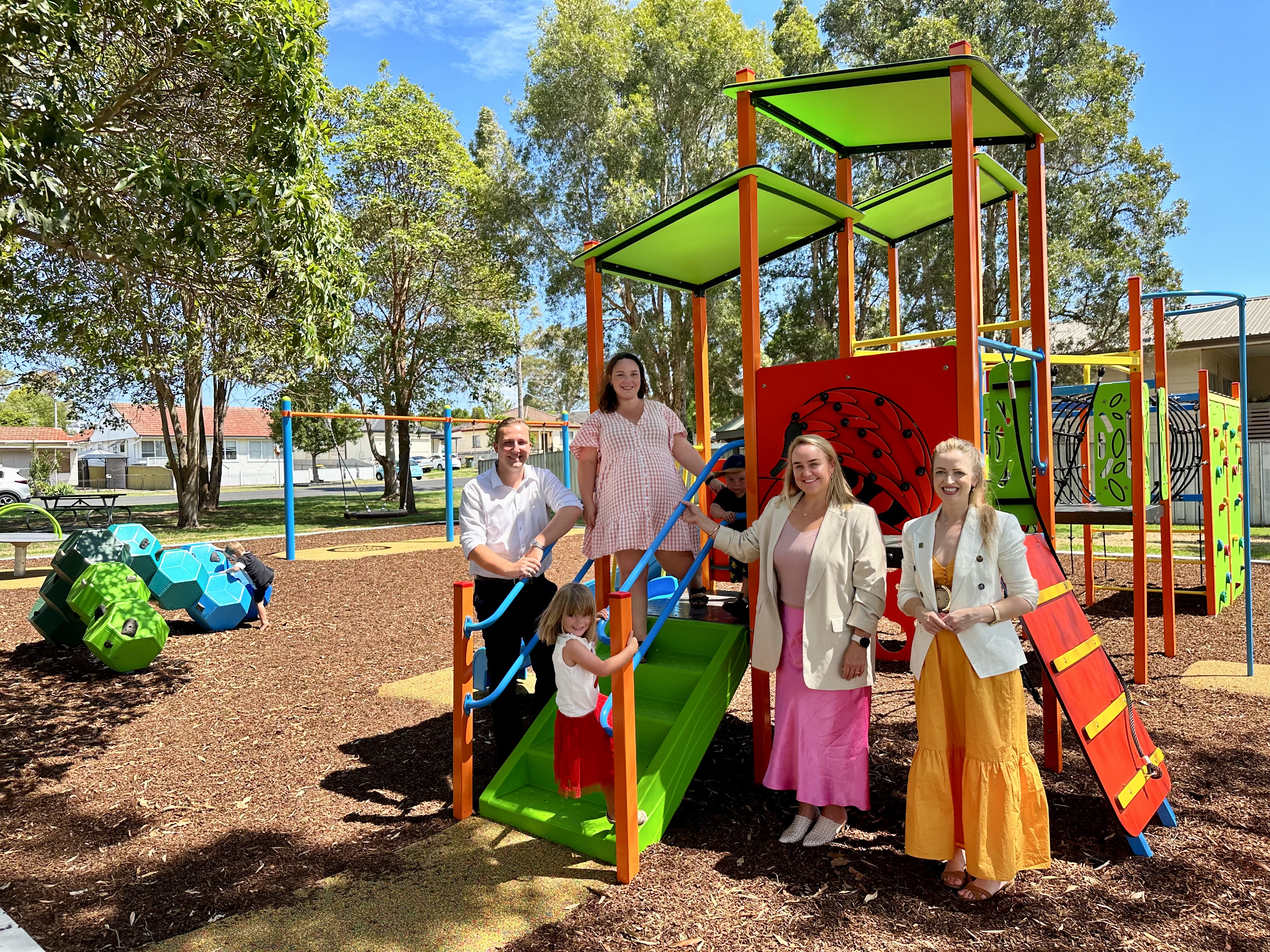
Member for Wollondilly Nathaniel Smith said the WestInvest Fund will totally transform Wollondilly through investment in open spaces, sporting venues, community halls and performance centres.
 
“The NSW Liberal Nationals Government is making Wollondilly a better place to live,” Mr Smith said.
 
Wollondilly Mayor Matt Gould said thanks to the WestInvest funding, the council can undertake important projects that will enhance Wollondilly’s historic townships and villages.
 
“This significant investment will help strengthen our communities through upgrading community halls, renewing community facilities and constructing key connecting footpaths,” Cr Gould said.
 
“This is exactly what our community needs to help increase its sense of connection and encourage positive health and wellbeing.”
 
As part of the WestInvest Fund, $2 billion was reserved for priority Community Projects. This included $400 million for 15 Local Government Areas (LGAs) in West and South West Sydney, with each local council eligible for between $20 million and $35 million, depending on population size. Announcements on other LGAs will be made soon.
 
The $5 billion WestInvest program was made possible by the Government’s successful WestConnex asset recycling strategy. A further $1.6 billion from the $2 billion Community Project Grants is available to local community groups. A total of $3 billion is also set aside to deliver transformational projects that will benefit local communities, led by NSW Government agencies.
 
To find out more about WestInvest visit www.nsw.gov.au/grants-and-funding/westinvest

Landmark investment strategy launched to turbocharge regional NSW

The NSW Government will turbocharge economic activity in the regions, with a new strategy targeting attraction of $1 billion in private sector investment and the creation of 15,000 high-value jobs over the next five years.

Deputy Premier and Minister for Regional NSW Paul Toole, who was at the Wagga Wagga Special Activation Precinct today, said there has never been a better time to invest in regional NSW.

“We’ve laid the foundations with more than $12 billion of investment in the infrastructure our regions needed to grow – and now we’re ready to hit turbocharge,” Mr Toole said.

“Our Regional Investment Attraction Strategy is aimed at harnessing the full value of the regions’ potential and making them the location of choice for private sector investment.

“The regions are already home to big businesses from around the world and small businesses that are world leading. We want to continue building on that with initiatives like our Special Activation Precincts and Renewable Energy Zones which are encouraging more businesses to look to the bush to create jobs for the future.”

Mr Toole said the five-year strategy is underpinned by the $145 million Regional Investment Activation Program that includes $110 million in grant funding, currently open, to support businesses and investors looking to expand or set up in regional NSW.

“The sky’s the limit – and we want to co-invest with businesses from across Australia and around the world to set up and deliver game-changing projects in regional NSW,” Mr Toole said.

“This will support new and emerging industries where regional NSW has a competitive edge and put our communities in the box seat for the future.”

The Regional Investment Attraction Strategy 2022-2027 and grant program will prioritise investment to accelerate growth in priority precincts and engine industries such as manufacturing, clean energy, circular economy, defence and agri-food.

Grant applications are now open at www.nsw.gov.au/RIAF. Stream 1 Expressions of Interest close 14 November 2022.

For a copy of the Regional NSW Investment Attraction Strategy 2022-2027, visit www.nsw.gov.au/investregionalnsw.

A new world-class hospital for Albury-Wodonga

The New South Wales and Victorian Governments are joining forces to deliver world-class health facilities for people in and around Albury-Wodonga, partnering to deliver a $558 million redevelopment of the Albury Base Hospital. 

Stages 1 to 3 of this major project will provide a massive boost to patient care – improving services and making it easier for locals to get the care they need in one location.

NSW and Victoria will each invest $225 million, adding to $108 million already invested by the New South Wales and Commonwealth Governments towards the $558 million project.

The redevelopment will include a new Clinical Services Building to be built at the existing Albury campus, bringing all services together at a state-of-the-art site, expanding the range and complexity of services offered to provide the best care for people who live on the border.

It will deliver critically important health care, including an intensive care unit, maternity services and paediatric services – providing the best and most modern hospital for the community.

The site will include a new helipad with direct access to the ICU and the emergency department, neonatal care and new operating theatres for more surgery, as well as a new 32-bed mental health ward to replace the Nolan House Mental Health Unit and the expansion of outpatient and specialist spaces for treatments such as dialysis.

The major investment will also help the hospital become a regional health hub with the ability to attract and train skilled and specialised medical, nursing, allied health and support staff.

Part of the first stage of the project includes building a new multi-level carpark on an adjacent site, allowing the new Clinical Services Building to be constructed on the site of the current carpark.

Currently hospital services in Albury-Wodonga are split across two campuses, with some services – such as anaesthetics – duplicated at both sites, while others require patients to travel back and forth between campuses to get the care they need.

This investment will mean local families can now get the care they need, all in the one location.

The existing Albury Base Hospital will continue to operate throughout construction. Once the hospital services currently being delivered at the Wodonga campus have been transferred to the Albury Base Hospital.

The NSW and Victorian Governments will work with the community and Albury-Wodonga Health to redevelop the Wodonga campus into a facility that will meet the needs of the community.

Construction on the new hospital is expected to commence in 2024 and be completed by 2027, with the works creating more than 1,000 jobs – boosting employment opportunities for border locals. Both governments will work closely with Albury Wodonga Health to ensure full services continue to operate at the existing hospital during construction.

Earlier this year, construction started on the new emergency department and short stay unit at Albury Wodonga Health’s Albury campus – which includes 42 treatment spaces, a specialised resuscitation hub, paediatric treatment area, acute treatment area, and multiple triage rooms with their own accompanying waiting rooms.

There’s a threatened species crisis – yet no money in the Budget for native forests and habitat restoration

Australian Greens Spokesperson for Forests, Janet Rice, has lashed out at the Labor Government for failing to budget to protect native forests and their threatened animals, birds and plants.

$224 million has been allocated as part of the Labor Government’s Threatened Species Action Plan but it fails to protect native forests. 

Senator Rice said: 

“According to a parliamentary budget office costing, it will take $24.4 billion over the next decade to restore wildlife habitat and protect threatened species. $224 million is an insult. 

“In this Budget Labor has made their priorities on climate and the environment very clear, giving over $40billion in fossil fuel subsidies and not a cent to native forests and their threatened animals, birds and plants. 

“As long as the government continues to approve new coal and gas projects and support native forest logging, their zero extinction target remains a farce. 

“Species like the critically endangered wollert or leadbeaters possum and the endangered greater glider lost so much of their habitat in the black summer fires and their forest homes are still being destroyed by logging.

“If Labor were serious about saving threatened species, they would end native forest logging and meaningfully invest in environmental restoration and recovery plans.” 

Labor’s private school cash splash a Morrison throwback

Labor’s budget has failed the public schools test, committing even more to private schools than the Morrison Government pledged in its March budget, the Greens say.

The Albanese Government has promised private schools $70.2 billion over the forward estimates, $1.7 billion more than Scott Morrison guaranteed in his pre-election budget. The private school sector will now receive an even greater share of Commonwealth funding under Labor than it would have under the Coalition.

Greens spokesperson on schools, Queensland Senator Penny Allman-Payne, will today move a disallowance motion to block an increase in the size of the Capital Grants Program, a Commonwealth capital works fund exclusively available to private schools.

Greens spokesperson on schools, Senator Penny Allman-Payne said:

“This is a schools budget the Liberal Party would have been proud of.

“As a proportion of total funding, private school funding is actually growing, moving public schools even further away from reaching 100% of the minimum Schooling Resource Standard.

“This budget indicates that the Albanese Government is either ignorant of growing school inequality, or it just doesn’t care. A stronger commitment to public school funding would have helped Labor tackle the cost of living crisis, teacher shortages and declining student performance.

“While elite schools are building extra boat sheds and plunge pools for their headmasters, public schools in my own region of Central Queensland, and across the country, are struggling to attract and retain teachers and meet the needs of their students.

“Labor had an opportunity to undo a decade of conservative damage to the education system by winding back government support for the private sector and investing in the public system. Instead we got the kind of budget you’d expect from Scott Morrison.

“With negotiations on the next National Schools Reform Agreement beginning soon the Greens will be pushing to ensure that all public schools receive at least 100% of their Schooling Resource Standard by the end of the agreement, and we’ll continue to fight for public money for public schools.”

Budget provides $9000 a year for the wealthy and does nothing to raise the rate of income support

Australian Greens Social Services spokesperson Senator Janet Rice has condemned Labor’s decision to give tax cuts to the wealthy while one third of Australian households are struggling to put food on the table. 

Senator Rice said: 

“Poverty is a political choice and Labor has chosen to give tax cuts to the wealthy instead of raising the rate of income support payments above the poverty line.

“While one third of Australian households are struggling to put food on the table and the cost of living continues to escalate, Labor is providing $9000 a year for the wealthy and doing nothing to raise the rate of income support.

“Last week at the first hearing of the Senate inquiry into the extent and nature of poverty, multiple community organisations and advocacy groups called for a permanent raise in the rate of income support.  

“The Labor Government has ignored these calls and in doing so has left millions of Australians having to choose between paying the rent, essential medicines or eating three meals a day.

“The Greens are calling on Labor to introduce a guaranteed liveable income which would see all income support payment rates raised above the poverty line to at least $88 a day, mutual obligations abolished and the removal of unfair restrictions on who can access payments, to ensure everyone has enough to cover their basic needs.”