PLIBERSEK APPROVES 3 COAL MINES IN 2 MONTHS

Minister Plibersek has approved 3 coal mines in the last 2 months.

Greens spokesperson for the Environment Senator Sarah Hanson-Young said:

“3 coal mine approvals in the last 2 months show our environment laws are broken.

“Minister Plibersek should stop approving new coal mines and start working with the Greens to put a climate trigger in our environment laws.

“The Ensham coal mine will add 100 million tonnes of pollution and wreck critical koala and greater glider habitat, hurting native wildlife.

“Australians didn’t vote for this, but Labor are captured by donations from the coal and gas industry.

“Minister Plibersek can’t do her job properly until we get a climate trigger to stop new coal and gas in its tracks.”

FEDERAL GOVERNMENT MUST STOP TASMANIA’S ASSAULT ON ENVIRONMENT

The Greens have condemned Forestry Tasmania’s move to expand its environmental vandalism to a further 1000 hectares of native forest for logging, including in the precious takayna/Tarkine.

The Greens have called on the Albanese Government to put an end to this needless destruction and ban all native forest logging nationwide.

Greens spokesperson for Forests, Senator Janet Rice said:

“We are in the midst of a global extinction and climate crisis; there’s no excuse for this assault on the environment to be allowed anywhere in Australia. 

“While community activists had a big win today in securing important protections for parts of Tasmania, only a total ban on native forest logging will protect our precious forests and save our wildlife.

“It’s clear from Tasmania’s announcement today that the Albanese Government can’t keep burying their heads in the sand. The Federal Government must finally listen to state Labor governments, scientists, and the vast majority of Australians who want our environment protected for future generations.

“Logging makes the climate crisis worse. The Labor Government need to stop prioritising corporate profits and industry lobbies over people and the environment. 

“We need a permanent, national ban on native forest logging, and a just transition plan for forestry workers.”

Greens Senator for Tasmania, Senator Nick McKim said:

“This is a fantastic result for a very special part of Tasmania that should never have been on the chopping block in the first place.

“However Forestry Tasmania’s destructive focus has now shifted to other forests equally as deserving of protection.

“Community campaigners should be proud of their efforts in saving this magnificent ecosystem.

“Logging native forests is a crime against nature and climate, and Tasmania needs to follow Victoria’s lead and end this toxic, loss-making industry.”

Greens spokesperson for the Environment, Senator Hanson-Young said:

“The Federal Government has promised to introduce new environment laws by the end of year. The test for Labor is whether they actually stop logging in order to protect our native forests and the wildlife that call them home.

“Expanding destruction of native forests goes directly against what is needed to protect our wildlife from extinction. This is why the Greens will move to make a ban on native forest logging national and permanent in our Federal environment laws.

LABOR NEEDS TO ENSURE THE RBA STAYS PAUSED ON INTEREST RATES

Greens’ Economic Justice spokesperson Senator Nick McKim has responded to the RBA’s decision to keep rates on hold today.

“The RBA’s decision to keep rates on hold is welcome, but recent history shows there remains a risk that they will go up again soon.”

“Labor needs to act to make sure the RBA does not raise rates again in the near term.”

“Unnecessary rate rises have already inflicted immense pain on those who can least afford it because Labor has failed to act.”

“Mortgage and renters have been smashed by record rate rises and will remain nervous that there are more to come.”

“And the risk of recession due to previous rate rises remains real.”

“Real wages continue to go backwards and the prospect of a wage-price spiral remains a fantasy.

“And it’s the lowest paid and least secure workers who are set to be among the 140,000 who will lose their jobs as interest rate rises start to bite.”

“Meanwhile, corporate CEOs are getting a 15% pay increase for increasing prices which is actually fuelling inflation.

“But Labor is failing to use the fiscal and regulatory levers it has to make people’s lives better.”

“Anthony Albanese and Jim Chalmers were elected to ensure no one was left behind.”

“Their failure to either rein in the RBA or start doing any of the heavy lifting makes them complicit.”

“If Australia is smashed into a recession, it will be Labor’s recession.”

“Their passive acceptance of the neoliberal ideology that is driving the RBA is a betrayal of their roots.”

“A real Labor government would be taxing corporate super profits and the super wealthy, bringing in price caps on things like rents and electricity, and making childcare and dental health free to help reduce the cost of living for those struggling to get by.”

City embarks on record year of road investments

Night works are soon to wrap up on the resurfacing of one of Newcastle’s most well-known streets as City of Newcastle (CN) invests more than $14.7 million into a record year of road improvements.

Recent road upgrades have transformed Hamilton’s Beaumont Street as part of CN’s ongoing investment into upgrading essential community infrastructure, which will see $7.5 million spent on road resurfacing during the next 12 months.

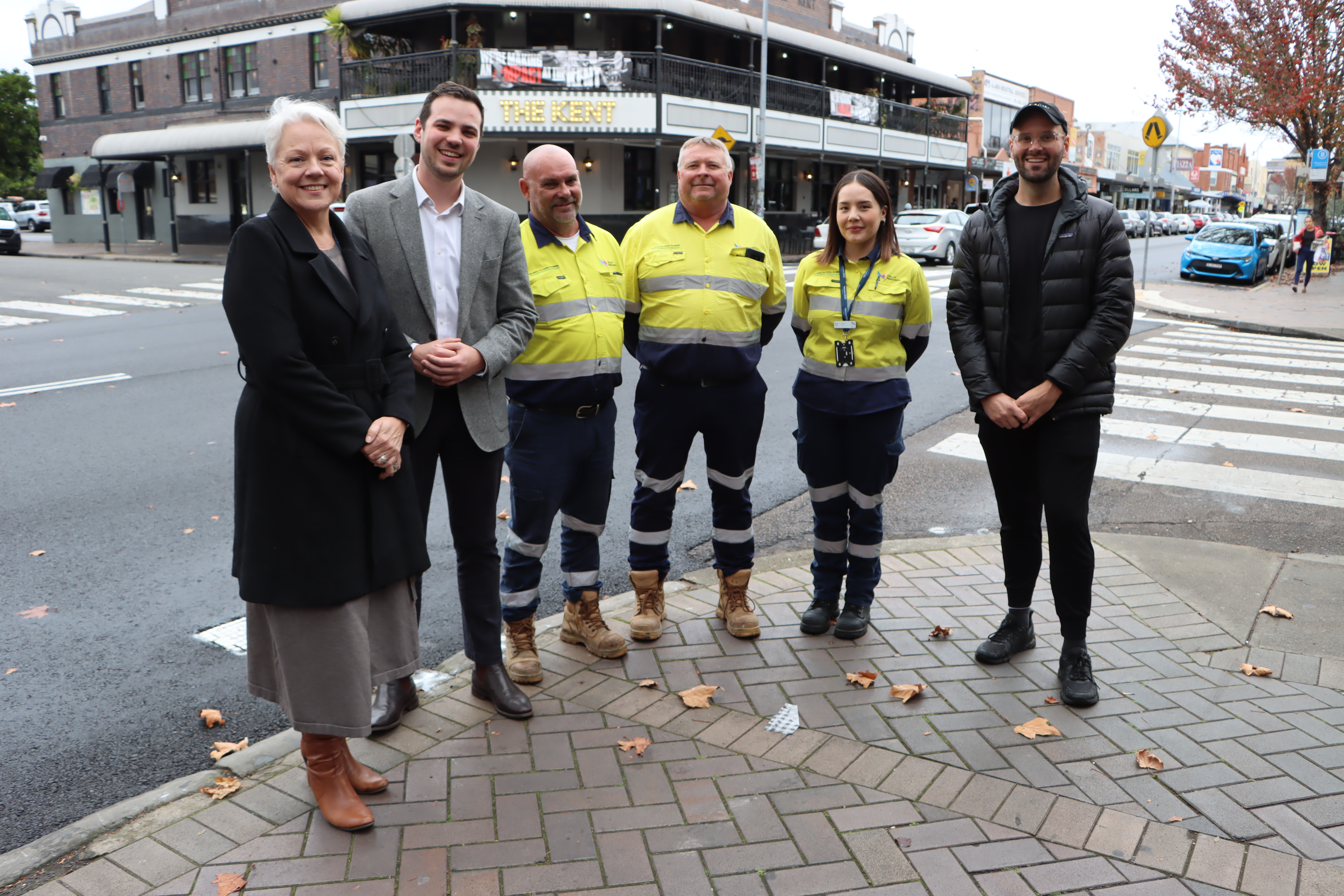
(L-R): Councillor Carol Duncan, Deputy Lord Mayor Declan Clausen, CN Civil Works Contracts Supervisor's Bruce Pemberton and Geoff Blomfield, CN Operations Manager Bianca Field-Vo and Hamilton BIA chair Reece Hignall.
A further $7.2 million will be invested into road rehabilitation projects over the next twelve months, as part of City of Newcastle’s $54 million investment in road upgrades over the past five Budgets.

Deputy Lord Mayor Declan Clausen said CN had increased its annual road upgrade expenditure by more than 170 per cent since 2019/20 as it continues to deliver vital road rehabilitation projects and improvements across the Local Government Area.

“During the 2023/24 financial year, we will invest more than $14.7 million into our city’s road network for resurfacing and rehabilitation projects, as part of CN’s largest annual capital works program to date,” Cr Clausen said.

“CN’s investment in capital works has been growing over the past five years as we continue to balance infrastructure renewal with revitalisation projects to meet our community’s expectations that come with sustained growth.”

Among the projects completed during the 2022/23 financial year were Croudace Road, Elermore Vale and Maryland Drive, Maryland and most recently the resurfacing of Beaumont Street in Hamilton.

Councillor Carol Duncan praised the efforts of City of Newcastle’s nightwork teams for successfully resurfacing one of Newcastle’s busiest suburban streets.

“The resurfacing of Beaumont Street, between Donald and Denison Street, has been no easy feat. As Hamilton’s popular main street, it sees a high volume of cars and pedestrians every day,” Cr Duncan said.

“The work has been carried out on Monday and Tuesday nights, while the rest of us were tucked up in bed. This has resulted in minimal disruption to drivers and local businesses. This outcome is a credit to CN’s civil works team who have worked through the night to make this happen.”

Local business owner and Hamilton Business Improvement Association (BIA) Chair Reece Hignall welcomed the road improvements made to Beaumont Street.

“Beaumont Street is now an even more attractive place to eat, drink and shop, with this work enhancing the safety and appeals of this precinct to visitors,” Mr Hignall said.

“The BIA met with CN and together worked collaboratively to ensure minimal disruption to our many small businesses here in Hamilton.”

Upcoming major road resurfacing and rehabilitation projects to commence in 2023/24 include Hope Street Wallsend, Lambton Road New Lambton, Fern Street Islington and Memorial Drive The Hill.

40th anniversary of Aboriginal Land Rights

The NSW Government is working to approve more Aboriginal land claims to support social, cultural, and economic benefits for Aboriginal communities.


The celebration of NAIDOC Week this week follows last month’s 40th anniversary of the commencement of the Aboriginal Land Rights Act 1983.

Since Monday 10 June 1983, a total of 4396 land claims have been granted or partly granted by Crown Lands, and 168,438 hectares of land has been returned to Aboriginal land councils.

So far in 2022/23, Crown Lands has assessed 596 land claims with 403 granted in whole or in part, and 3932 hectares of land returned to 56 different Aboriginal land councils. Some recently approved land claims have included:

  • 2 blocks of land covering 209.2 hectares at Miandetta will be returned to Nyngan Local Aboriginal Land Council
  • 88.5 hectares of bushland, formerly part of Kingsgate Mines, bordering the Yarrow River will be returned to Glen Innes Local Aboriginal Land Council
  • 3 blocks of land with a combined size of 6.47 hectares around Narromine will be returned to Narromine Local Aboriginal Land Council
  • 1082 square metres of land adjoining Hay Courthouse including an unoccupied 3-bedroom former residence returned to Hay Local Aboriginal Land Council.

Minister for Aboriginal Affairs and Treaty David Harris:

“The NSW Aboriginal Land Council and Local Aboriginal Land Councils have a right to lodge land claims under the Aboriginal Land Rights Act 1983, which are assessed to statutory criteria to determine if the land is lawfully used or occupied or needed for an essential public purpose.

“If the land is not occupied or needed the claim can be granted, which supports the social, cultural, and economic wellbeing of Aboriginal communities.”

Minister for Lands and Property Steve Kamper:

“These land claims have delivered fantastic results to local communities across the state, as land is not just a physical asset but also deeply connected to cultural identity and spiritual beliefs.

“Crown Lands is working closely with the NSW Aboriginal Land Council and Local Aboriginal Land Councils to deliver tangible outcomes for Aboriginal communities and peoples.”

Relaxed liquor licence conditions for some Newcastle venues

Relaxed liquor licence conditions will continue for 15 of the Newcastle licensed venues that participated in a trial examining options for boosting the city’s nightlife.


The relaxed conditions include the removal of 1am and 1:30am lockout restrictions and the easing of restrictions on the types of drinks that may be served.

The Newcastle area has been subject to more stringent trading conditions than those typically found elsewhere in NSW.

Stage One of the Newcastle Liquor Licence Trial started in October 2020 and looked at the effect of eased licensing conditions in some low-risk venues such as small bars and restaurants, while Stage Two kicked off in October 2021 and evaluated the effectiveness of more relaxed rules in hotels, general bars and public entertainment establishments, involving 21 venues.

After carefully considering the findings of the trial, the Independent Liquor and Gaming Authority (ILGA) decided that participating venues could apply to have their liquor licence conditions relaxed permanently.

Because the results were not uniform, all proposals submitted to ILGA were considered on a case-by-case basis, with a strong focus on compliance, safety and avoiding any unacceptable risks to the community.

Some of the venues applied for relaxed conditions to be removed from their licences permanently but were not fully approved. During the trial, most participating venues indicated that the relaxed licensing conditions positively impacted their patronage, business turnover and employment opportunities.

Minister for the Arts, Minister for Music and the Night-time Economy, and Minister for Jobs and Tourism John Graham said:

“The Newcastle area is home to an incredible collection of venues, artists and nightlife businesses that make it such a vibrant place after dark.  It is good to see those evidence-based changes that will allow Newcastle to remain vibrant and safe later into the night.”

Minister for Gaming and Racing David Harris said:

“Relaxing the licence conditions for some venues supports the evolution of Newcastle’s nightlife into a safe, vibrant, fun and creative environment.

“Newcastle has undergone significant change and we must change with it, to continue the cultural and economic revitalisation of the region.

“The trial has shown that venues that improve patron safety and take action to reduce alcohol-related violence can have their licence conditions relaxed and contribute to a thriving, safe, inclusive night-time economy for everyone.”

Member for Newcastle Tim Crakanthorp said:

“Newcastle has changed significantly since 2008 and taking a one size fits all approach to liquor laws in the city was outdated approach.

“I am pleased to see venues with a good compliance history that promote patron safety are being rewarded with the eased conditions from the trial applied to their licenses. This will further help grow the night-time economy in Newcastle.”

Iconic South Coast Island Nature Reserve dual named in recognition of cultural significance

The NSW Government has officially given Montague Island Nature Reserve a dual Aboriginal name, in honour of the cultural significance of the island to the Yuin people.


Barunguba Montague Island Nature Reserve, off Narooma on the NSW south coast, is valued as a significant ceremonial area and resource gathering place.

In addition to its Aboriginal cultural values and state-listed European lighthouse heritage, the nature reserve protects several seabird species including the endangered Gould’s petrel, one of the largest little penguin colonies in NSW, and Australian and New Zealand fur seals.

The island is recognised in the international Union for Conservation of Nature (IUCN) Green List of Protected Areas, for its excellence in protected area management. Visitors can experience the island’s wildlife by day trip or staying in historic lighthouse accommodation.

The process of renaming Barunguba Montague Island Nature Reserve was initiated by the Aboriginal traditional owners to recognise the cultural heritage of the site.

Yuin Elder Uncle Bunja Smith said:

“From Mother mountain Gulaga, came the two sons. Najanuka and Barunguba. We know this because it is in our stories and our songs.

“As an Aboriginal Man and a Yuin Elder, I am filled with emotion to be standing here today with the ministers and our local member, to hear the word “Barunguba” sounded out as it should be!

“I know this will delight all our Elders and Tribes people past, present and emerging.

“I pray that the spirit of this scared place touches the hearts of the wider south coast community and all visitors who may come. May we always say yes to reconciliation, as it always was and always will be Aboriginal land, Walawanni.”

NSW Environment Minister Penny Sharpe said:

“I am delighted to be in this stunning location to officially announce the dual name of Barunguba Montague Island Nature Reserve.

“The cultural significance of Barunguba has been passed down by ancestors to the traditional Yuin custodians of the Far South Coast and I acknowledge the effort of the traditional owners in leading this name change.

“The Aboriginal name will sit alongside the non-Aboriginal name and I look forward to seeing Barunguba Montague Island Nature Reserve become widely and commonly used.”

Funding boost for multicultural cancer care as breast cancer screening rates reach all-time high

More than $500,000 has been awarded to help boost cancer screening rates among multicultural communities, as a record number of women in NSW accessed free breast screening.


More than 37,000 women had mammograms at BreastScreen NSW clinics throughout the month of May – the highest number of women ever screened for breast cancer in a single month in BreastScreen’s history.

Meanwhile, more than 371,000 women had a mammogram during the 2022-23 financial year – the highest number of women ever screened in a single year since BreastScreen NSW began operating in 1991.

Mammogram bookings were also at an all-time high during May, with more than 42,000 eligible women making an appointment at one of BreastScreen NSW’s more than 250 clinics and mobiles sites in NSW.

It is a significant rebound from the record low screening rates seen in 2020 and 2021, as the health system responded to the worst of the COVID-19 pandemic.

Crucially, peak numbers of Aboriginal and culturally and linguistically diverse (CALD) women were also screened for breast cancer throughout May.

Encouraging Indigenous and CALD women to participate in cancer screening is a key priority, as screening rates for breast, bowel and cervical cancer are lower in these at-risk communities.

To further improve cancer screening and outcomes in CALD communities, the Cancer Institute NSW has today awarded more than $500,000 to deliver 20 cancer control programs in areas such as Liverpool, Far West NSW, the Illawarra and Newcastle.

Acting Premier Prue Car said:

“Around 1 in 7 women will develop breast cancer but we know early detection saves lives.”

“We continued to see high numbers of women being screened throughout June and I encourage all eligible women to keep the momentum going and not wait until it’s too late.”

“If you’re over 50 and haven’t had a mammogram since June 2021 – don’t wait for a letter in the mail.”

“Pick up the phone or go online to book in your breast screen – it could save your life.”

NSW Health Minister Ryan Park said:

“We know mammograms are the most effective way to detect breast cancer early.”

“So it’s really encouraging to see so many women return to BreastScreen NSW after the disruptions caused by the COVID-19 pandemic.”

“Record numbers of women from metro, regional and remote NSW had a breast screen in May, which is an increase of nearly 15% compared with the same period in 2019.

“NSW has one of the highest survival rates for most cancers, and that’s due in part to programs like BreastScreen.”

Minister for Industrial Relations Sophie Cotsis said:

“I was diagnosed with breast cancer in 2018 and, as a survivor, I welcome the government’s funding commitment for multicultural communities.”

“A mammogram can detect cancer when it’s smaller than a grain of rice – well before you would notice or feel any change in your breasts.”

“Detecting cancer early means treatment can be started early – when it’s going to be the most effective.”

Member for Liverpool Charishma Kaliyanda said:

“We know our multicultural communities, such as those in Liverpool, often face significant barriers in accessing cancer screening and care.”

“NSW is a global leader in cancer care but people from culturally and linguistically diverse communities are often at higher risk of cancer and are less likely to use cancer screening services due to barriers in accessing and engaging in services.”

“I want all women to know breast cancer screening is safe, discreet and free for women aged between 50 and 74.”

Chief Cancer Officer for NSW and CEO of Cancer Institute NSW Professor Tracey O’Brien said:

“Multicultural communities face significant barriers accessing cancer screening services and care, often due to language barriers, poor health literacy, trauma, and cultural stigma and beliefs.”

“Cancer remains the leading cause of death in Australia and by working together with CALD communities, we hope to truly understand and break down barriers to care, to ensure all people have equitable cancer outcomes.”

“With more than 275 languages spoken in NSW, we recognise that a one size fits all approach won’t work.”

“These grants will support local community groups and health services to roll out targeted initiatives that will help arm people with multilingual information to reduce their cancer risk, in a way that is aligned with their cultural beliefs.”

Chair of the Board of Settlement Council of Australia and CEO of Community Migrant Resource Centre, Melissa Monteiro said:

“As one of the 20 grant recipients, this funding will go a long way towards creating awareness and improving cancer outcomes for CALD communities.”

“While cultural diversity enriches our community, it can present challenges in the delivery of cancer-related healthcare.”

“We are thrilled to be able to use this grant to deliver a series of interactive education sessions in Mandarin and Hindi, that will focus on the important role healthy living and screening plays in preventing bowel cancer.”  

South Eastern Sydney Local Health District (LHD) recorded the highest number of breast screens throughout May, followed by Hunter New England LHD, Northern Sydney LHD and Central Coast LHD.

In NSW, around 30% of people were born overseas, with 1 in 4 people speaking a language other than English at home – higher than any other state or territory. 

Visit Cancer Institute NSWlaunch more information on breast, bowel and cervical cancer screening.

$300 million invested in local suppliers for new Sydney Fish Market

The NSW Government has awarded more than $300 million or 98% of project contracts to date to local suppliers as construction of the new Sydney Fish Market continues to ramp up.


Among the local suppliers are Rozelle’s SMC Marine, Traino/Hanson Australia in Blackwattle Bay, and Active Steel from St Marys.

These companies are each playing a pivotal role in building the innovative new Sydney Fish Market.

There has been major progress on the project, with a massive concrete pour underway at the site’s cofferdam, laying the foundation for the watertight basement level – a unique feature of the building’s design.

This ambitious undertaking requires about 34,000 cubic metres of concrete, equivalent to nearly 14 Olympic swimming pools.

A highly specialised and sustainable concrete mix is being used, prioritising the reduction of CO2 emissions and ensuring long-term durability.

Hundreds of marine piles installed by SMC Marine and the concrete base will provide the foundations for the iconic new fish market, which is on track for construction to be completed by the end of next year.

https://nswdigitalchannels.zendesk.com/agent/tickets/21911Active Steel is supplying steel reinforcement for the concrete slabs using a 70% recycled steel product sourced in Australia. Due to the basement being surrounded by seawater, the concrete slabs require a high amount of reinforcement steel compared to above water sites.

The new Sydney Fish Market is key to the transformation of Blackwattle Bay, delivering a waterfront promenade, more than 6000sqm of public space, and improving pedestrian and cycling links.

In a major boost for the economy, building the new Sydney Fish Market creates more than 700 jobs during construction and supports 700 jobs once complete. 

For more information visit Infrastructure NSWlaunch.

NSW Minister for Lands and Property Steve Kamper said:

“The NSW Government is proud to be involved in a project that combines cutting-edge design with a commitment to the environment and the local economy. We recognise the vital role that local businesses play in driving economic growth, and we are proud to announce to date more than $300 million has been awarded to local suppliers for the new Sydney Fish Market.

“By investing in local suppliers, we are enabling our business owners to thrive, innovate, and contribute to the growth of NSW. This investment will have a lasting impact on the local economy, as well as the wider community.

“The new Sydney Fish Market will provide a platform for local businesses to thrive, attracting international visitors and supporting the growth of our tourism and food sectors.”

David Ghannoum, Regional Managing Director – NSW and ACT of Multiplex, said:

“Multiplex recognises the value of working with local suppliers and supporting the local economy.

“We are committed to fostering strong partnerships with businesses in our community, as it not only bolsters the local economy, but it also promotes collaboration and sustainability.

“Multiplex’s investment in the local economy is creating employment opportunities, fosters resilience, and contributes to the overall growth and prosperity of the wider community.”

Broken Promises, Wrong Priorities and Infrastructure Cuts – the next 100 days of Labor

Premier Chris Minns celebrated 100 days in office by foreshadowing that ‘a range of infrastructure projects will be put on ice’.

Minns told the ABC “we’ve already identified a range of infrastructure projects that we don’t believe are a priority right now.”

Acting Leader of the Opposition Natalie Ward said the Premier must come clean and be honest with the people of NSW.

“It’s a simple question that the Premier should answer – what projects are you cutting?” Ms Ward asked. 

“For 100 days we’ve seen broken promises and wrong priorities, and now we’re seeing cuts to infrastructure. This is a Government that doesn’t have a plan to keep our state moving.”

“When the Premier talks about priorities we know that he can’t be trusted to do what’s best for our State, prioritising unions ahead of families. Cutting vital infrastructure projects is in Labor’s DNA, they just can’t help themselves, and the result is more congestion, fewer jobs and less productivity.”

“Labor can’t be trusted to build the infrastructure our state needs, having already said it would cancel the Great Western Highway Tunnel and the Westmead to the Aerotropolis, and Bankstown to Glenfield Metro Lines.”

“The Premier needs to demonstrate leadership and tell us what projects are being cut today, not in three months time.” 

Labor’s plan to cut vital infrastructure projects is in stark contrast to the record of the previous Coalition Government that delivered bold infrastructure projects like WestConnex, NorthConnex, Sydney Metro, scores of new schools, hospitals, arts and cultural projects – investments in communities totalling billions of dollars.

To find out more about Labor’s broken promises and wrong priorities you can visit www.laborsbrokenpromises.com.au