No matter where we visit, you have told us that when someone you love is injured or sick, you want them to have the very best healthcare as soon as possible and close to home.
But right now, our healthcare system is in crisis.
We need more than band-aid solutions. We need a Fresh Start Plan for better healthcare.
A Minns Labor Government will make it easier for renters to have a pet in New South Wales, by introducing a new fairer and more streamlined application process.
Currently, a property owner is able to decline a renter’s request for a pet for no specific reason and is under no timeframe to consider a request.
Almost two thirds of Australian households have a pet today. At the same time, around one third of New South Wales residents live in rented properties – that is more than 2 million people.
Under Labor, rules for renters with pets will be fairer. Renters will be able to complete a simple pet request form, with owners required to make a decision within 21 days. If property owners choose to refuse a request, they will have to provide a reason to the renter.
This does not guarantee renters will be able to have a pet, but it will make it easier to apply to have one. If the owner fails to respond, the pet request will automatically be approved.
NSW Labor will also establish a list of prescribed reasons for refusal, similar to those operating in Queensland, to be determined by NSW Labor’s recently announced Rental Commissioner.
Refusing to allow pets as a blanket rule restricts a renters’ ability to find appropriate and affordable housing. Renters compete for a limited number of pet friendly properties, making many of them unaffordable or difficult to acquire.
A lack of pet-friendly rentals can also be a major barrier for people experiencing and trying to leave domestic violence situations.
This can lead to pets being given up to shelters or abandoned – the RSPCA had more than 27,000 animals in its care over Christmas, citing rental restrictions as a key reason behind the influx.
This policy will work in tandem with NSW Labor’s already announced rental commitments which will deliver fairer rental rules for renters and owners by providing more certainty as well as flexibility in leasing arrangements.
A NSW Labor Government would legislate an end to the practice of rent bidding, to curb the spiralling cost of tenancy.
Secret rent bidding encourages renters to continually out-bid each other on price to secure a home, driving up the costs of rent. It has to stop.
The Government has had 12 years to act on this dodgy practice that is already outlawed in other states, but they have sidelined and ignored renters.
Labor’s plan will mean that all rental transactions will be open and transparent. If renters want to offer more than the listed price, this is disclosed to all applicants who then have the chance to match the offer.
A man has died following a two-vehicle crash in the state’s Hunter region yesterday.
About 2.20pm (Wednesday 22 March 2023), emergency services were called to the Glenwood Drive and Poynton Place at Thornton, near Maitland, following reports of a crash.
On arrival, officers from Port Stephens-Hunter Police District found a motorcyclist and a blue Mitsubishi wagon had collided.
The male rider died at the scene. He is yet to be formally identified but is believed to be aged 38.
The driver of the vehicle – a 70-year-old woman – was uninjured. She was arrested and taken to Maitland Hospital for mandatory testing and released pending further inquiries.
A crime scene was established and examined by specialist police from the Crash Investigation Unit, and an investigation into the circumstances surrounding the crash is underway.
A report will be prepared for the information of the Coroner.
Following a ACOSS/UNSW report released today highlighting the inadequacy of Australia’s social security system and the depth of poverty for people on income support, the Greens are again calling on Labor to raise Jobseeker and all pensions above the poverty line to $88 a day in May’s budget.
Senator Janet Rice, Greens social services spokesperson and Chair of the Community Affairs References Committee’s inquiry into poverty said:
“Today’s findings are more evidence for what is already beyond clear: Australia’s social security system is not fit-for-purpose.
“With 1 in 8 Australians living in poverty, the Labor Government can’t keep burying their heads in the sand and continue to ignore the millions of renters, single parents, students, women, and people with a disability all doing it tough.
“Young people are once again being hit hardest, with households on Youth Allowance being in the deepest poverty at almost $400 a week below the poverty line.
“When students are living in poverty, they aren’t able to focus on their studies or prosper at uni. The stress of not knowing how you’ll feed yourself or pay your rent can be overwhelming, and many are forced to drop out.
“The Labor Government is robbing young people of their future.
“When one in five renters, and the majority of people on Jobseeker and Parenting Payments are living in poverty, the government cannot keep pretending social security payments are adequate.
“The Labor Government has found $368 billion to spend on nuclear submarines and $254 billion in Stage 3 tax cuts for the rich, but nothing for people struggling to pay rent and put food on the table. Labor need a reality check.
“Labor say they’re on the side of struggling Australians – it’s time they show it, and use that money to make life a bit easier for people doing it tough.
“Instead of spending over $600 billion on nuclear submarines and tax cuts for billionaires, we should raise all social security payments above the poverty line to $88 a day, get dental and mental health into Medicare, and build enough public homes to clear the waitlist.
“Poverty is a policy choice. Labor should choose wisely.
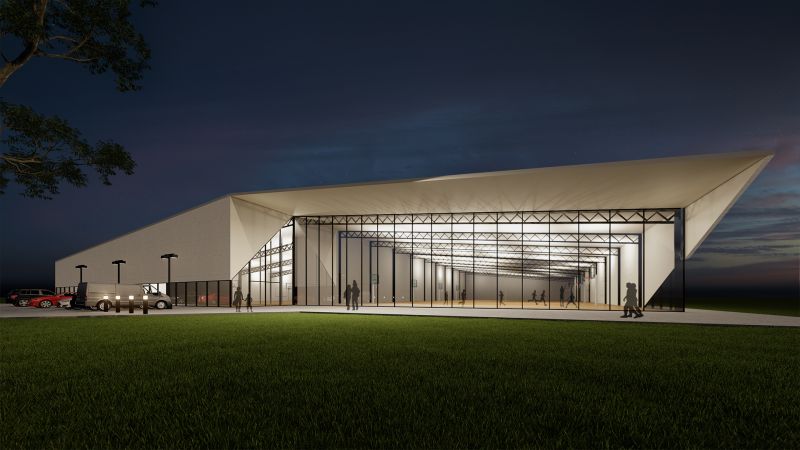
Newcastle Basketball, City of Newcastle and the State Member for Lake Macquarie Greg Piper have today announced a new $30 million basketball stadium will be built in Newcastle.
The NSW Government will fund the construction of the regional level, indoor basketball facility in Newcastle after committing an additional $5 million to a previous $25 million commitment for what was then intended to be a new stadium on Hillsborough Road, Charlestown.
The new facility will be built on a Crown Land site managed by City of Newcastle opposite McDonald Jones Stadium in Broadmeadow. The 12-court stadium will be built in two stages; stage one seeing the construction of up to eight courts, and stage two including a show court for 2,000 spectators.
Independent Lake Macquarie MP Greg Piper, who secured the additional funding commitment from the NSW Government, said the facility will be a major boost for basketball in the region.
“I’m really glad the Government has agreed to this extra funding and I’m hopeful that Labor will match it,” Mr Piper said.
“It’s a shame the stadium couldn’t be built on the originally-intended site in Lake Macquarie, but this still gives us a first-class regional facility which can be accessed by everyone from Morisset to Port Stephens.
“We all know that construction costs have soared by more than 20% in recent years, so this additional money will make sure we get the regional facility we deserve rather than a scaled-back version of the original.
“It will not only cater for our next generation of basketball stars but also major events and sports tourism, so I’m very pleased to have got the $30m required to build this fantastic regional facility.”
Newcastle Basketball President Kristi Faber said the new stadium will be one of the largest in Australia and will serve its massive catchment of Newcastle, Port Stephens and Lake Macquarie.
“This is a great result for Newcastle basketball. We would like to thank the State member for Lake Macquarie, Mr Greg Piper, for his ongoing support of this project,” Ms Faber said.
“The only thing preventing further growth is our existing stadium beside Broadmeadow Train Station, which is 53 years old and just too small to cater for player demand.
“Because we currently utilise six courts, with only two of these being full size, registrations for all our competitions and programs typically fill within a week. This means we are turning children away literally every week of the year.
“This funding allows elite and amateur basketball to remain in Newcastle, which is the geographical centre of our catchment. The new site on Turton Road has great public transport links, and ample accommodation and hospitality venues to support national tournaments that will now come to Newcastle.”
Newcastle Lord Mayor Nuatali Nelmes said the proposed development immediately across from Broadmeadow sports and entertainment precinct would deliver vital new sporting infrastructure for the community.
“For more than half a century Newcastle has been the physical and spiritual home of basketball in this region, with a proud tradition of developing players who have gone on to represent the sport at the highest level,” Cr Nelmes said.
“Today Newcastle Basketball’s ability to meet the demand for the sport in the region has been constrained by the ageing stadium at Broadmeadow, which is no longer fit for purpose as local basketball booms in popularity.
“It will also provide a facility that allows Newcastle to finally have a team in the Women’s National Basketball League.
“Newcastle will have a venue capable of not only hosting a professional women’s team, but also state and national basketball tournaments, which will increase tourism and deliver positive economic benefits for local businesses.”
The Crown Land site is home to Wallarah and Blackley Ovals, is owned by the NSW Government and is managed by City of Newcastle.
Acting Executive Director Creative and Community Services Lynn Duffy said City of Newcastle was preparing a precinct plan for the surrounding sportsgrounds including Arthur Edden Oval, Ford Oval, Kentish Oval and Harker Oval, to ensure ongoing and equitable access to and best utilisation of sporting facilities.
“City of Newcastle will work closely with the sporting groups and other stakeholders who currently use Wallarah and Blackley Ovals to see local training and club games continue with minimal disruption,” Ms Duffy said.
The catchment of Newcastle Basketball includes the state electorates of Lake Macquarie, Swansea, Newcastle, Charlestown, Wallsend and Port Stephens.
The new Stadium was originally proposed to be built on Hillsborough Road, Charlestown but was refused by the Hunter and Central Coast Regional Planning Panel in May last year on multiple grounds.
A re-elected Perrottet Liberal Government will invest $300,000 over the next four years into the running of the much loved Ferragosto Italian street festival.
Minister for Multiculturalism Mark Coure said in its next term of government, the NSW Liberals and Nationals will support the running of the annual event, which is a major draw card for everyone.
“We believe in helping our state’s diverse communities be proud of who they are, and one of the ways we do that is by helping them celebrate their culture with everyone,” Mr Coure said.
“We are committing to support to this major street festival by providing $75,000 a year for four years to do just that.”
This commitment continues the NSW Liberal’s commitment to celebrating Ferragosto, which saw $75,000 invested a year over the last four years.
Liberal candidate for Drummoyne Stephanie Di Pasqua said the Italian community is an vibrant part of the state’s multicultural society.
“The Italian community has been a cherished and important part of our state for generations,” Ms Di Pasqua said.
“Ferragosto is a vibrant street festival that gives the Italian community a chance to showcase the very best of their culture, and invite everyone in to experience it.
“This commitment will be a great investment into the festival and help it achieve new heights.”
More than 2300 first home buyers have opted in to the NSW Liberal and Nationals Government’s First Home Buyer Choice in the first two months of the initiative, saving a collective $89 million.
Under the Liberals and Nationals:
· Eligible first home buyers can ditch stamp duty in exchange for a small annual fee on properties up to $1.5 million;
· Home owners who choose to pay a small annual fee on their first home, will also be able to opt in to the annual fee on future property purchases, until they choose to pay stamp duty;
· Victim-survivors of domestic and family violence can also access first home buyer support and interest-free rental bond loans.
Premier Dominic Perrottet said First Home Buyer Choice was already helping thousands of families get the keys to their first home sooner.
“Under the Liberals and Nationals, young people now have choice and they have embraced it, with 2,330 first home buyers opting to ditch stamp duty in favour of the small annual fee,” Mr Perrottet said.
“This game-changing policy is making it easier for first home buyers, many of whom are families, to reach the dream of home ownership sooner.
“Backing first home buyers is only possible because of the Liberal and Nationals long-term economic plan to keep our state moving forward.”
Treasurer Matt Kean said that a re-elected Liberal and Nationals Government would expand the First Home Buyer Choice to give home buyers that choice for life.
“We want to ensure that first home buyers who opted into the small annual fee on their first home, or received a stamp duty exemption or concession, are able to have the choice on their future homes as well,” Mr Kean said.
“This will mean those families who move can pay tens of thousands of dollars less tax over their lifetime, unlike Labor’s policy which will bill them for a large upfront stamp duty every time they move.”
Minister for Women’s Safety and the Prevention of Domestic and Sexual Violence Natalie Ward said that as part of the Liberal and Nationals expansion of its home buyer support, victim-survivors of domestic and family violence would be eligible for stamp duty relief currently reserved for first home buyers.
“We know that housing security is one of the most important concerns victim-survivors have as they move on from unsafe relationships and manage their personal financial security,” Mrs Ward said.
“We will ensure support is there for victim-survivors of domestic and family violence so they can look to enter the property market, secure a home and safeguard their long-term financial security.”
Labor has pledged to scrap all support for buyers of properties above $1 million and will only offer concessional stamp duty rates to buyers of properties from $800,000 to $1 million.
A re-elected Liberal Government will commit $15 million to expanding Tallawong Metro Commuter Car Park making catching public transport even easier and more convenient for commuters in Sydney’s north-west.
Liberal candidate for Riverstone, Mohit Kumar, said major upgrade works to construct additional levels to the existing Tallawong multi-storey commuter car park will deliver commuters access to new car parking spaces, including additional accessible spaces.
“A commitment to expand the Tallawong Metro Commuter Car Park will ensure that more commuters will be able to take advantage of the Liberal and Nationals Government extension of the Metro line from Tallawong to St Marys and onto Sydney’s new airport. This expansion will support thousands of jobs, additional housing and access to services across the region,” Mr Kumar said
“To ensure people can catch public transport quickly and safely there will be access to hundreds of parking spaces in close proximity to this major metro station. We are future-proofing the transport needs of our city.”
Mr Kumar said an expanded commuter carpark at Tallawong station will ensure the community has a more convenient and seamless journey.
“This announcement is a win for our community particularly in middle and outer metropolitan areas, it will give locals ease of access to the extension of the Metro service to the new airport,” he said.
“Key benefits of the upgrade works include extension of the lifts, stairs and internal ramps to the new upper levels, additional accessible parking spaces, Park&Ride boom gates and provision for future electric vehicle charging spaces.”
Other features include rooftop solar panels as well as CCTV, lighting and wayfinding for improved safety and security.
The NSW Liberal Government has also committed more than $350 million over the next four years to see the delivery of more car parking spaces across Greater Sydney.