Labor believes everyone should have access to affordable, reliable and sustainable transport – whether that be road, rail, bus, light rail, bike or emerging platforms.
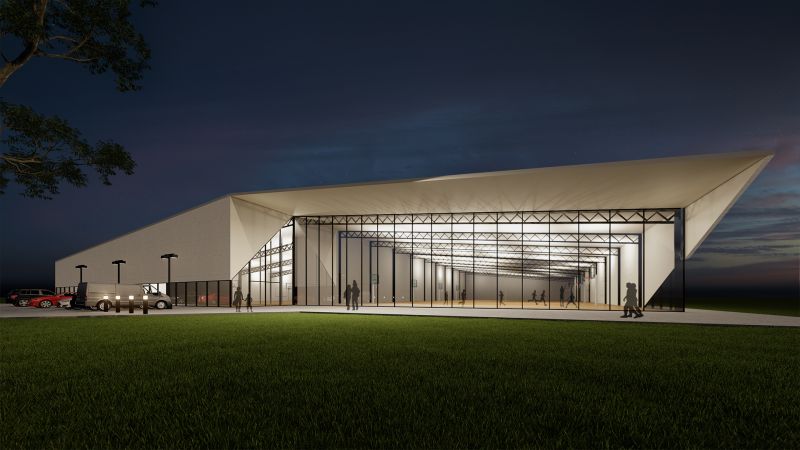
Newcastle Basketball, City of Newcastle and the State Member for Lake Macquarie Greg Piper have today announced a new $30 million basketball stadium will be built in Newcastle.
The NSW Government will fund the construction of the regional level, indoor basketball facility in Newcastle after committing an additional $5 million to a previous $25 million commitment for what was then intended to be a new stadium on Hillsborough Road, Charlestown.
The new facility will be built on a Crown Land site managed by City of Newcastle opposite McDonald Jones Stadium in Broadmeadow. The 12-court stadium will be built in two stages; stage one seeing the construction of up to eight courts, and stage two including a show court for 2,000 spectators.
Independent Lake Macquarie MP Greg Piper, who secured the additional funding commitment from the NSW Government, said the facility will be a major boost for basketball in the region.
“I’m really glad the Government has agreed to this extra funding and I’m hopeful that Labor will match it,” Mr Piper said.
“It’s a shame the stadium couldn’t be built on the originally-intended site in Lake Macquarie, but this still gives us a first-class regional facility which can be accessed by everyone from Morisset to Port Stephens.
“We all know that construction costs have soared by more than 20% in recent years, so this additional money will make sure we get the regional facility we deserve rather than a scaled-back version of the original.
“It will not only cater for our next generation of basketball stars but also major events and sports tourism, so I’m very pleased to have got the $30m required to build this fantastic regional facility.”
Newcastle Basketball President Kristi Faber said the new stadium will be one of the largest in Australia and will serve its massive catchment of Newcastle, Port Stephens and Lake Macquarie.
“This is a great result for Newcastle basketball. We would like to thank the State member for Lake Macquarie, Mr Greg Piper, for his ongoing support of this project,” Ms Faber said.
“The only thing preventing further growth is our existing stadium beside Broadmeadow Train Station, which is 53 years old and just too small to cater for player demand.
“Because we currently utilise six courts, with only two of these being full size, registrations for all our competitions and programs typically fill within a week. This means we are turning children away literally every week of the year.
“This funding allows elite and amateur basketball to remain in Newcastle, which is the geographical centre of our catchment. The new site on Turton Road has great public transport links, and ample accommodation and hospitality venues to support national tournaments that will now come to Newcastle.”
Newcastle Lord Mayor Nuatali Nelmes said the proposed development immediately across from Broadmeadow sports and entertainment precinct would deliver vital new sporting infrastructure for the community.
“For more than half a century Newcastle has been the physical and spiritual home of basketball in this region, with a proud tradition of developing players who have gone on to represent the sport at the highest level,” Cr Nelmes said.
“Today Newcastle Basketball’s ability to meet the demand for the sport in the region has been constrained by the ageing stadium at Broadmeadow, which is no longer fit for purpose as local basketball booms in popularity.
“It will also provide a facility that allows Newcastle to finally have a team in the Women’s National Basketball League.
“Newcastle will have a venue capable of not only hosting a professional women’s team, but also state and national basketball tournaments, which will increase tourism and deliver positive economic benefits for local businesses.”
The Crown Land site is home to Wallarah and Blackley Ovals, is owned by the NSW Government and is managed by City of Newcastle.
Acting Executive Director Creative and Community Services Lynn Duffy said City of Newcastle was preparing a precinct plan for the surrounding sportsgrounds including Arthur Edden Oval, Ford Oval, Kentish Oval and Harker Oval, to ensure ongoing and equitable access to and best utilisation of sporting facilities.
“City of Newcastle will work closely with the sporting groups and other stakeholders who currently use Wallarah and Blackley Ovals to see local training and club games continue with minimal disruption,” Ms Duffy said.
The catchment of Newcastle Basketball includes the state electorates of Lake Macquarie, Swansea, Newcastle, Charlestown, Wallsend and Port Stephens.
The new Stadium was originally proposed to be built on Hillsborough Road, Charlestown but was refused by the Hunter and Central Coast Regional Planning Panel in May last year on multiple grounds.
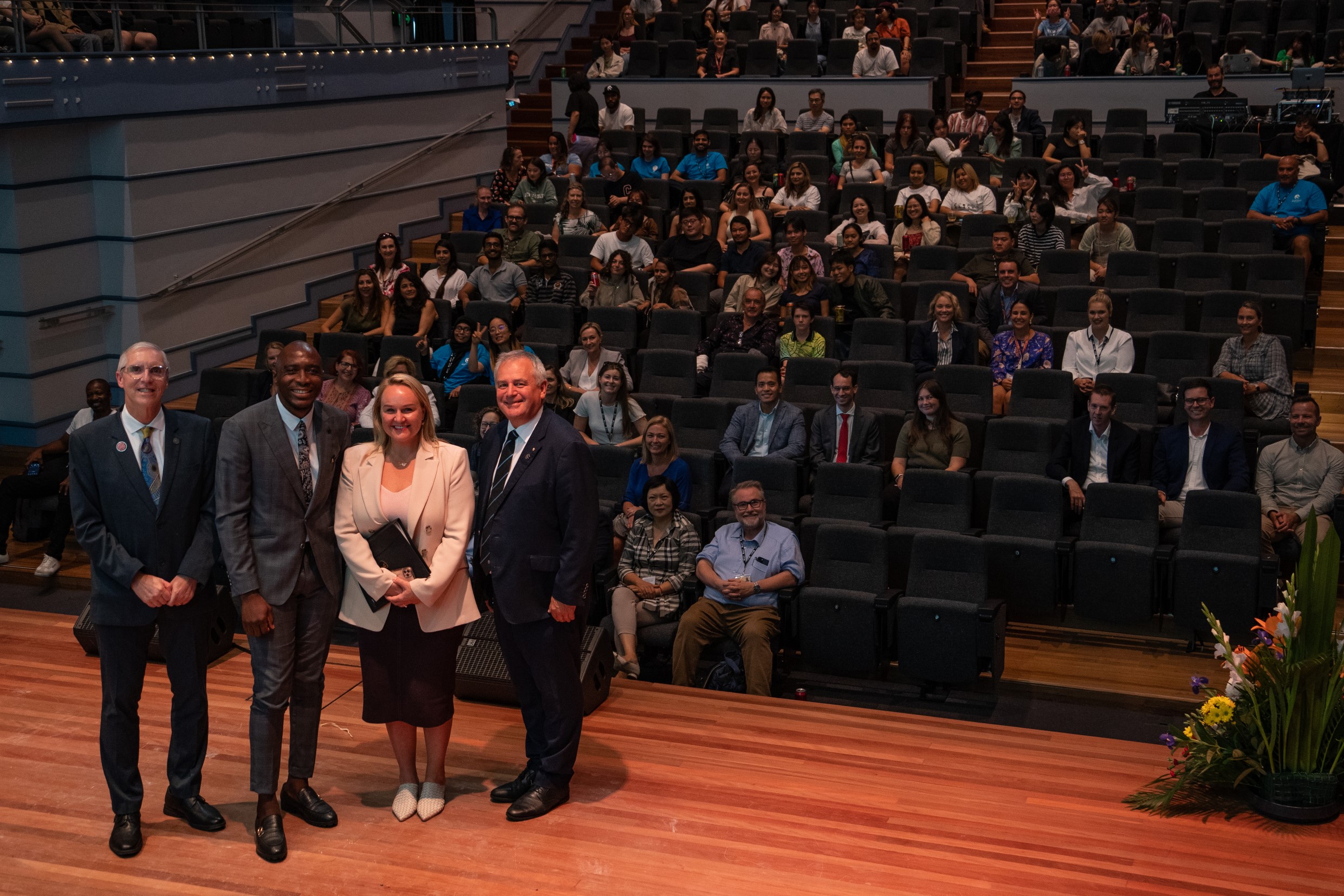
More than 1,200 newly arrived international students and their families were officially welcomed to the city by the Lord Mayor today and equipped with resources, services and programs to orientate them with everything Newcastle has to offer.
The Lord Mayor announced a new International Student Ambassador initiative developed by the University of Newcastle (UoN) and supported by City of Newcastle (CN) to help cultivate a culture of belonging for all international students living and studying in Newcastle.
Lord Mayor Nuatali Nelmes said international students enhanced Newcastle’s global reputation in education and were an asset to the city’s cultural fabric.
“City of Newcastle is partnering with University of Newcastle to help forge meaningful relationships with international students and set up the foundations for a life-long network of cultural exchange and collaboration,” Cr Nelmes said.
“We welcome international students’ skills, knowledge, diversity of experience and cultural expression that actively contributes to the economic opportunities and the richness of our city.
“Investing in people and enabling them to grow is one of the best ways that local government can drive the local economy, and we aim to double international student arrivals by 2030, as outlined in CN’s Economic Development Strategy.
“The Strategy is built on addressing skills gaps in collaboration with the University of Newcastle, TAFE, and secondary schools. Students are presented with opportunities to grow their skills and acquire the knowledge needed to participate in emerging economic opportunities that will come as the city and region transitions to renewable energy technology, biomedical innovation and aerospace manufacturing.”
University of Newcastle Vice-Chancellor Professor Alex Zelinsky said international students were an important part of campus life.
“We’re delighted to be welcoming our international students to the city and our campuses. The pandemic made it difficult with online and remote learning. We missed all of our students, but we’re so pleased to have them back,” Professor Zelinsky said.
“This year, we have welcomed our University’s largest cohort of commencing international students ever. They have helped bring our campuses to life with activity and have contributed to the culture and diversity of our communities.
“We are working with City of Newcastle to ensure that international students experience the best our city can offer. Our new International Student Ambassador roles initiative is one of the ways we’re helping to ensure students get the opportunities to build meaningful connections and succeed in our region.”
At today’s event, students were given the opportunity to showcase their creativity and talent through a collaborative artwork piece titled ‘All cultures weave’, providing a vivid representation of the rich cultural tapestry they bring to the city. The collaborative weaving artwork activity speaks to all cultures and will be installed within University of Newcastle’s NUSpace building.
Expressions of interest for the new International Student Ambassador roles will open mid-2023 for members of the Newcastle community who have a deep understanding of the benefits and challenges facing international students.
Visit MoveToNewcastle webpage for free resources, services and will shortly include more information about the International Student Ambassador Program.
Liberal candidates for Gosford, Terrigal and The Entrance welcome the announcement that a re-elected Perrottet Liberal Government will provide commuters with a yearly saving of up to $480 by cutting the weekly Opal cap by 20 per cent, putting more money back in the pockets of hardworking families.
Under the plan, the weekly adult cap will be cut from $50 to $40, while the cap for concession holders will be cut from $25 to $20.
Liberal candidate for The Entrance, Nathan Bracken, said this is a direct saving for all commuters – putting money back into the pockets of the people of the Central Coast.
“Locals of The Entrance electorate are among those that stand to make real savings and it’s all thanks to the Perrottet Liberal Government’s long term economic plan that will keep NSW moving forward.” Mr Bracken said.
Liberal candidate for Gosford, Dee Bocking, said this will deliver more than a thousand dollars’ worth of savings to some families who rely on public transport for their daily commute.
“Only a Perrottet Liberal Government will cut the cost of travel for the people of Gosford and across NSW thanks to our long-term economic plan to keep NSW moving forward.” Ms Bocking said.
Member for Terrigal, Adam Crouch, said for the average commuter who hits the cap every week and works 11 months of the year, this could provide up to $480 in transport cost relief.
“This weekly travel discount is yet another commitment a re-elected Perrottet Liberal Government will deliver to help ease cost of living pressures for families.” Mr Crouch said.
Premier Dominic Perrottet said this would make a big difference to family budgets, putting more money back in their pockets for other weekly essentials.
“We recognise there are significant household budget pressures right now and that is why we will deliver significant cost relief for commuters,” Mr Perrottet said.
“We will slash the weekly caps on public transport fares by 20 per cent, putting more money back in the pockets of hard working families.
“Commuters will be able to travel across the entire transport network – on our ferries, trains, metro, buses and light rail services – as many times as they like without paying more than $40 a week, while students and concession holders will only pay $20 a week.
Minister for Transport, Veterans and Western Sydney David Elliott said if re-elected a Liberal Government would introduce the discount from May this year.
“The weekly savings on public transport fares will put cash back in the pockets of everyone who uses public transport regularly – for a family of two adults and 2 kids, this could mean an annual saving of nearly $1,400 a year in the household budget,” Mr Elliott said.
“The reduced cap means Adult Opal card commuters will save $10 a week or $480 a year (based on 48 weeks of travel).
“The Child/Youth and Concession weekly Opal cap will also be reduced from the current $25 cap to $20 – a saving of $5 a week or $200 a year (based on 40 weeks travel for school/tertiary education).”
The weekly travel caps would be in place on all trains, metros, buses, light rail and ferries from 1 May 2023 to 30 June 2024 and would apply when you travel with an Opal card or credit card, debit card or linked device on public transport in the Opal network.
This weekly travel discount is in addition to $7 billion already delivered in cost of living measures including more than 70 rebates, like our $250 energy rebate, toll relief program, small business rebate, our active kids and creative kids vouchers, regional seniors travel card, first lap swim vouchers, solar for low income households program and more.
A re-elected Liberal and Nationals Government will immediately deliver on a range of key priorities in the first 100 days of government to support families through uncertain economic times and keep NSW moving forward.
Premier Dominic Perrottet said a re-elected Liberal and Nationals Government would not waste a minute putting its plan for NSW into action.
“My number one priority will be to continue to provide families the support they need, including slashing $250 off every household power bill and cutting the weekly Opal cap by 20 per cent,” Mr Perrottet said.
“I will also charge my team with getting straight to work delivering expanded health services at pharmacies, expanding our First Home Buyer Choice policy, and with setting up the Kids Future Fund accounts.
“We will continue to drive the major infrastructure projects that are transforming our state, including kicking off the first stage of work on the new Western Sydney Metro lines which will connect our city like never before.
“With uncertain economic times ahead, only the Liberal and Nationals long-term economic plan will keep NSW moving and provide certainty and security to families across the state.”
Deputy Premier and Minister for Regional NSW Paul Toole said the NSW Liberal and Nationals plan would tackle cost of living pressures now and lay the foundations for a brighter future for families and businesses long-term.
“Our plan puts people first, prioritising help with household bills now and rolling out landmark reforms that create opportunities for the future – from help studying for your first career to buying your first home.”
Key Priorities for the first 100 days:
· Open expressions of interest for our NSW Kids Future Fund on Service NSW, and work with TCorp to finalise the design of the account.
· Make the $250 energy bill rebate available for all households that undertake a comparison of their current energy deal.
· Direct Transport for NSW to reduce the Opal cap by 20 per cent, effective 1 May.
· Introduce and pass legislation in Parliament to:
o Expand the First Home Buyer Choice program, giving eligible homeowners the opportunity to continue paying an annual fee instead of stamp duty for future home purchases.
o Allow domestic and family violence victim-survivors to have their first home owner status reinstated.
o Increase community involvement in planning decisions.
o Legislate the right to one-year of free preschool for all children.
o Ban offshore mining and exploration in NSW waters.
· Appoint a new Supply Chain Commissioner and hold the first industry roundtable, with a focus on regulatory barriers.
· Roll out a trial in pharmacies across the state for the diagnosis and treatment of UTIs and the renewal of contraceptive pill scripts.
· Make the $1,000 Small Business Fees and Charges rebate available through Service NSW.
· Continue planning works for the construction of new preschools on school sites across NSW.
· Establish the cashless gaming transition taskforce – including industry and harm minimisation experts – to lead the implementation of our plan for cashless gaming.
· Commence the procurement process for the business cases for the four new Sydney Metro lines to ensure Western Sydney has the infrastructure needed for a growing population.
· Commence industry and stakeholder consultation on our ‘reasonable grounds eviction’ policy, standard three and five year lease agreements and design of the rental bond rollover scheme.
· Open applications for the expanded Farm Innovation Fund from July 1 to help farmers invest in innovation and infrastructure to futureproof their operations.
· Go-live of our website reporting on the delivery of election commitments.
Women and girls across Western Sydney will have access to more inclusive football facilities, with the Liberal and Nationals Government committing $10 million to the Western Sydney Wanderers to build a state-of-the-art Community Indoor Centre.
Member for Penrith, Stuart Ayres, said this funding by the Perrottet Liberals will not only provide more opportunities for people to play football, but will generate a local sports facility infrastructure boom, creating hundreds of jobs and delivering an economic boost for local community.
Candidate for Badgerys Creek, Tanya Davies, said this is a great win for the local community and another example of the Perrottet Liberal Government investing in and enhancing our sporting facilities.
Liberal candidate for Londonderry, Samantha Talakola, welcomed the announcement saying investments like this in community sport infrastructure are only possible because of the Perrottet Liberal Government’s long-term economic plan to keep our state moving forward, and this project will create an incredible football facility here in Western Sydney.
Minister for Sport Alister Henskens said the Wanderers new multipurpose facility for women, powerchair and futsal players, as well as other indoor sports, at Wanderers Football Park in Rooty Hill would open its doors to nearly 100,000 visitors a year.
“The Western Sydney Wanderers have always shown strong ties with their local community and this commitment will help create a modern and diverse sporting facility that will be used for generations to come,” Mr Henskens said.
The Wanderers Community Indoor Centre would support the development of women’s football and provide a new home for the Wanderers Futsal leagues and Wanderers Powerchair, as well as first-class sporting and community hub.
Western Sydney Wanderers Chief Executive Officer Scott Hudson said the football club has a proud history of representing the people of the region and a new indoor centre would be a welcome addition to their Rooty Hill headquarters.
“Western Sydney Wanderers are driven by our local community, and this investment from the NSW Liberal and Nationals Government will help us to provide a facility that our women and girls, powerchair and futsal programs can call home. It will also allow us to open up our world-class facility to more people in Western Sydney than ever before,” Mr Hudson said.
Since 2017, the NSW Liberal and Nationals Government has invested more than $2 billion in grassroots sport infrastructure and programs.
Women and girls playing Aussie Rules across the Inner West will have access to more inclusive facilities at St Luke’s Oval in Concord with a re-elected Perrottet Liberal Team committing $500,000 to upgrade amenities at the popular sportsground.
Liberal candidate for Drummoyne Stephanie Di Pasqua welcomed the announcement saying this important funding would ensure St Luke’s Oval meets the needs of locals, sports clubs and visitors.
“Drummoyne has a rich sporting history so it’s vital that we continue to work together on ways to achieve greater access for young girls and women playing sport in the local community,” Ms Di Pasqua said.
Premier Dominic Perrottet said if re-elected the NSW Liberal Team would make St Luke’s Oval a premier destination for Aussie Rules in the Inner West.
“This is about creating a modern and fit-for-purpose facility that removes barriers, and encourages even more women and girls to play the sports they love,” Mr Perrottet said.
“This investment is another example of the work we’re doing to boost grassroots community sport and it’s only possible because of the Liberal and Nationals Government’s long-term economic plan to keep our state moving forward.”
Minister for Sport Alister Henskens said since 2017, the NSW Liberal and Nationals Government has invested more than $2 billion in grassroots sport infrastructure and programs.
“Under Labor, grassroots sport will be starved of investment, and it will be our booming women’s sport sector that will be the hardest hit,” Mr Henskens said.
“Labor have already signaled they’ll cut funding out of community sport, which should be a major concern for all local sporting clubs and organisations.”
Canada Bay Cannons and Drummoyne Power Junior AFL President Milan Serovich said the NSW Liberal and Nationals Government’s funding commitment would make a big difference to footy players across the Inner West.
“Improved facilities for our footy clubs and players at St Luke’s Oval will go a long way in the local community and we look forward to working with all the partners to bring this project to life,” Mr Serovich said.
The sportsground is currently undertaking a surface redevelopment, following a $939,000 investment from the NSW Liberal and Nationals Government in 2019.
St Luke’s Oval is home to three local Aussie Rules teams, the Concord Giants, Drummoyne Power and Canada Bay Cannons, as well as Concord Briars Cricket Club and Little Athletics.
The Albanese Government is taking the next steps on the path to constitutional recognition through a Voice by introducing the Constitution Alteration Bill into the Parliament.
Cabinet has listened to the Referendum Working Group. The question the Parliament will now consider to be put to the Australian people at the 2023 referendum will be:
“A Proposed Law: to alter the Constitution to recognise the First Peoples of Australia by establishing an Aboriginal and Torres Strait Islander Voice.
Do you approve this proposed alteration?”
This is a simple question, a matter from the heart.
Recognising Aboriginal and Torres Strait Islander Australians in our Constitution is the best chance this country has had to address the injustices of the past and move Australia forward for everyone, and the best way to do this is to give people a voice.
For 122 years our nation’s founding document has failed to recognise Aboriginal and Torres Strait Islander Australians, and their more than 65,000 years of continuous connection to this vast land.
In order to update our Constitution we need to hold a referendum where every Australian will get to have a say on the proposed change.
This referendum will give Australians the chance to write a new chapter into our Constitution:
“Chapter IX Recognition of Aboriginal and Torres Strait Islander Peoples
129 Aboriginal and Torres Strait Islander Voice
In recognition of Aboriginal and Torres Strait Islander peoples as the First Peoples of Australia:
There shall be a body, to be called the Aboriginal and Torres Strait Islander Voice;
The Aboriginal and Torres Strait Islander Voice may make representations to the Parliament and the Executive Government of the Commonwealth on matters relating to Aboriginal and Torres Strait Islander peoples;
The Parliament shall, subject to this Constitution, have power to make laws with respect to matters relating to the Aboriginal and Torres Strait Islander Voice, including its composition, functions, powers and procedures.”
This follows months of listening to the community and comprehensive consultation with the Referendum Working Group made up of Indigenous representatives, and assisted by some of the best legal minds in the country through the Constitutional Expert Group.
These proposed amendments are constitutionally sound, and represent the best chance of a successful referendum.
Today the Referendum Working Group will also release further design principles for a Voice to Parliament.
The Government will introduce the Constitution Alteration Bill next week and we hope to pass the legislation through the Parliament by the end of June, with the referendum to be held between October and December this year.
Constitutional recognition through Voice is an idea that came from the people, and this will be a decision made by the people, not politicians.
QPrime Minister Anthony Albanese said:
“This referendum is an historic democratic opportunity for a unifying Australian moment.”
“Every Australian will have the chance to vote for recognition and consultation. Recognition of the extraordinary privilege we have to share this continent with the world’s oldest continuous culture and stronger consultation with Aboriginal and Torres Strait Islander people, meaning better decisions and better results as we work to close the gap.”
the Minister for Indigenous Australians, Linda Burney said:
“If not now, when? We have been talking about recognising Aboriginal and Torres Strait Islander Australians in our founding document for decades – now we have the chance to do it.”
“Let’s seize this moment, let’s take Australia forward, for everyone.”
the Attorney-General, Mark Dreyfus said:
“The proposed constitutional amendment is legally sound.”
“We have received advice from a diverse range of constitutional experts including Professor Anne Twomey, Professor George Williams, former High Court Justice Kenneth Hayne, Prof Megan Davis and their advice was clear: the Voice will be empowered to make representations to the Parliament and the Executive Government about matters relating to Aboriginal and Torres Strait Islander peoples. It will not have a veto or grant special rights.”
Assistant Minister Malarndirri McCarthy said:
“These sensible constitutional amendments get the balance right. They give voice to the aspirations of Aboriginal and Torres Strait Islander peoples right across the country.”
Special Envoy, Senator Patrick Dodson said:
“Constitutional recognition through Voice is about giving our people and our communities a say in the policies that affect us.”
“The 2023 referendum is the best chance we’ve ever had to create structural change that will deliver better outcomes for First Nations peoples.”
“A Voice to Parliament, enshrined in our Constitution, will mean that our people are listened to and heard on the issues that affect us.”
“The Voice will be a fearless source of advice and accountability, and it will make a practical difference.”
Australia should follow the lead of New Zealand and Canada and ban foreign ownership of residential property to help fix the growing national housing crisis.
One Nation leader Senator Pauline Hanson said Australia also needed to reduce immigration to sustainable levels to help make more housing available to Australian families.
“Many countries don’t allow foreign ownership of land or housing, but it’s open slather for foreign investors in Australia’s overheated residential property market,” Senator Hanson said. “Housing is in extremely short supply with many thousands of Australians now struggling to buy or rent a home, but from 2023 the government will bring in 213,000 immigrants per year – more than the entire population of Hobart.
“We’re struggling – and failing – to secure accommodation for people already living in Australia but the government is only adding to the problem with these huge numbers.”
Senator Hanson said AMP’s chief economist Shane Oliver last year warned increased immigration would drive house prices 5% higher and rents 7% higher in 2023.
“A 2018 housing affordability study by the Grattan Institute estimated that 450-550 new homes were needed in Australia for every 1000 new immigrants,” she said. “That means more than 100,000 new homes will need to be built every year just to accommodate new immigrants at a time when we can’t even keep up with the housing needs of those already here.
“This same study said that unless state governments reform their planning systems – and there is no indication they will – the Commonwealth should ‘consider tapping the brake on Australia’s migrant intake’.
“One Nation puts Australia and Australians first. We want to reduce immigration to no more than 100,000 per year to reduce demand for housing, and ban foreign ownership of residential property (both new and established housing) to increase the supply of housing – foreign owners would be given a 12-month grace period to sell Australian residential property. New Zealand banned foreign ownership in 2018 and Canada recently introduced a two-year ban as well.
“National Cabinet was formed to address the COVID-19 pandemic but we face a new crisis now – housing availability and affordability – which will require coordination and leadership from the Commonwealth, states and territories.
“I’ll be pushing for the National Cabinet to return to the table and develop a comprehensive response to our housing crisis, with planning reform and stamp duty reform at the state level and restrictions on foreign ownership implemented at the Federal level.
“And until we’ve regained the capacity to secure accommodation and housing for Australians living in Australia, we must reduce immigration. Let’s catch our breath, focus on meeting the needs of people already living here, and then have a serious and sensible debate on whether or not we really want or need a big Australia.
“I’m very confident most Australians are not in favour of a big Australia, and it’s about time the major parties recognised this and put in place an immigration policy which reflects what the electorate wants.”
Organised Crime Squad detectives have arrested two men and seized a kilogram of methylamphetamine and more than $40,000 in Newcastle.
Earlier this year, detectives from the State Crime Command’s Organised Crime Squad established Strike Force Eurack to investigate the alleged manufacture and supply of prohibited drugs, predominately methylamphetamine, in the Hunter region.
Following extensive inquiries, strike force detectives arrested two 30-year-old men in a carpark at Hunter Street, Newcastle, about 1.10pm yesterday (Wednesday 22 March 2023).
During a subsequent search of their vehicle, officers located and seized about 1kg of methylamphetamine and $37,500 cash. A hidden compartment was located, with two mobile phones and a further $4,000 in cash seized.
The vehicle – a Honda Accord – was also seized, with all items to undergo further forensic examination.
Both men were taken to Newcastle Police Station and charged with supply large commercial quantity prohibited drug and deal with property proceeds of crime.
Police will allege the men travelled between Sydney and Newcastle to transport the prohibited drugs to the Hunter region.
They were both refused bail to appear at Newcastle Local Court today (Thursday 23 March 2023), where they were formally bail refused to reappear at the same court on Wednesday 24 May 2023.
Investigations under Strike Force Eurack are ongoing.