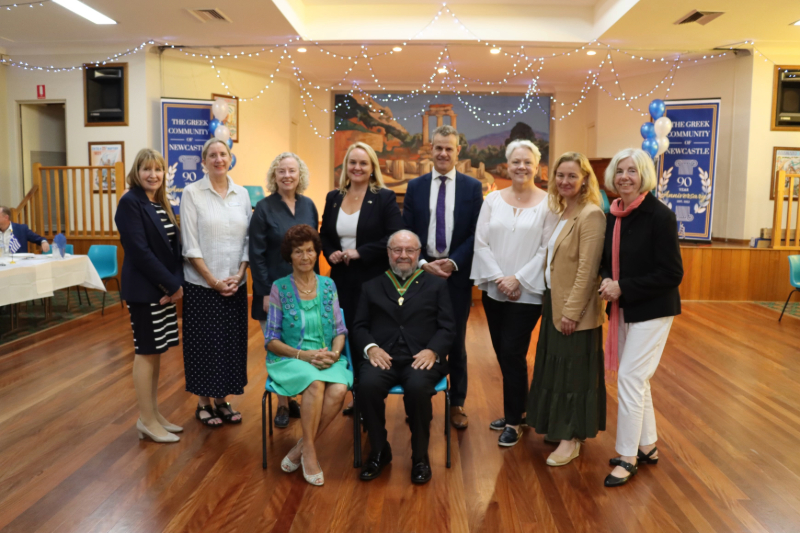
City of Newcastle leading the way with faster DA approvals

An award-winning initiative designed by City of Newcastle (CN) that is slashing development application (DA) processing times could be rolled out across the state.

CN’s innovative Accelerated Development Application pathway fast tracked more than 15 per cent of the city’s $1.5 billion development pipeline during the 2022/23 financial year, helping to reduce the number of undetermined DAs by 35 per cent since 2017.

In the month of July, more than a third of all applications determined by CN were fast tracked through the Accelerated DA pathway with an average processing time of just seven days, reducing CN’s overall processing times by 20 per cent to an average of 33 days.

Newcastle Deputy Lord Mayor Declan Clausen said CN’s industry-leading Accelerated DA pathway is attracting widespread attention.

“Newcastle’s Accelerated DA pathway continues to reduce waiting times for residents and builders,” Cr Clausen said.

“We are seeing low-risk developments such as demolition, signage, and smaller ancillary development, processed in just seven days, which is a remarkable achievement.

“By streamlining lower risk development, staff time can be focused on more complex and challenging proposals.”

“Newcastle is being recognised amongst residents and builders for its streamlined development assessment pathway which further positions our city as an attractive place to build.”

CN’s Planning and Environment Executive Director Michelle Bisson celebrated the team’s significant achievements.

“CN’s Planning and Environment team should be congratulated for their commitment to improving the planning process and enhancing the customer experience, while ensuring a merit-based assessment that doesn’t compromise urban design excellence,” Ms Bisson said.

“The Accelerated DA pathway has significantly changed the way DAs are managed for the city, by enabling residents and businesses to actualise their development goals sooner and support developers to progress their projects to provide desperately needed housing for our growing population.

“We look forward to making further improvements to the process which will lead to even more positive outcomes for the community.”

Wollongong the first city centre in NSW to roll out e-scooters

There will be a new way to get around Wollongong from the end of this month, with locals able to jump on a shared Neuron e-scooter, as part of a trial which is expected to run for 12 months.

The trial will begin on Friday 29 September and will allow riders 16 years and older to hop on an e-scooter on eligible roads and shared paths around the city.

The scooters are limited to a maximum of 20km/h on bicycle paths, or roads with a speed limit up to 50 km/h. For any shared paths that accommodate pedestrians, bicycles, prams and dog-walkers, a speed limit of 10km/h is in place. E-scooters are not permitted for use on footpaths.

Geofencing technology will also control where e-scooters are ridden and parked, and how fast they can travel in certain areas.

Currently, only e-scooters provided through a shared scheme are permitted for use in approved trial areas, privately owned e-scooters cannot be used in public areas. 

Riders will be able to unlock and use e-scooters by downloading Neuron’s app.

Find out more about the trial in Wollongonglaunch.

The e-scooter trial in Armidale also kicked off this week on Thursday the 7th of September.

Transport Minister Jo Haylen said: 

“E-scooters will offer an exciting new and sustainable way to get out and explore Wollongong and I look forward to finally kicking off a trial in the middle of one of our state’s major city centres.

“Transport for NSW and Wollongong Council have worked closely to ensure this trial will be safe, a useful new form of transport and importantly, will be a lot of fun!

“To stay safe while taking part in this trial, wear a helmet, follow the speed limits and don’t drink and ride – and we’ll have technology in place to make sure you follow those rules.”

Illawarra and South Coast Minister Ryan Park said: 

“Wollongong boasts an amazing array of shared paths around the CBD and along the coast. It is already a great place to get out and walk or bike ride and adding an extra option that is easy and sustainable will be a great addition for locals and tourists to explore our city.

“With this new mode of transport hitting pavements, we want to remind everyone to keep an extra eye out for e-scooters, check your blind spot regularly and leave a minimum distance of 1 metre when passing someone riding an e-scooter.”

Member for Wollongong Paul Scully said: 

“Wollongong is the best city in the world to ride a bike, so it’s the perfect place to trial e-scooters.

“Until now, e-scooters have only been trialled in parks and regional towns, Wollongong will be the first city in NSW to trial them as part of a real micro-mobility transport solution. You’ll be able to take one to work, to the beach or anywhere else within the trial zone.

Lord Mayor Gordon Bradbery AM said:

“Wollongong City Council is proud of the significant investment it has made in facilitating access right across the city to alternative transport options to cars.

“The introduction of E-scooters to the mix will provide people with another choice when it comes to leaving the car at home, and getting from A to B, and also a way for people to explore the city whether they’re tourists, or just enjoying their local area on an E-scooter.

“What is particularly exciting about this trial is that it isn’t just CBD focussed so you’ll be able to hire an E-scooter in Fairy Meadow and ride to Sandon Point and on the return trip wrap up in the CBD.

“It is a trial and community feedback will be key as the rollout progresses. We appreciate the introduction of E-scooters will be an adjustment to our transport network and we will be working closely with Transport for NSW and Neuron to ensure information about how and where to ride safely is made available to everyone.’’

Neuron Mobility, General Manager Jayden Bryant said: 

“We are delighted to have been chosen by Wollongong City Council to provide our e-scooters as part of the trial and thank them for their trust and support. E-scooters are really well suited to Wollongong and they will be a great way for locals as well as tourists to travel in a safe, convenient and environmentally-friendly way.

“Elsewhere in Australia, e-scooters are significantly reducing congestion and emissions while also helping to boost the local economy. Safety is our top priority, it dictates our e-scooter design and also the way we operate them. Our e-scooters are packed with a range of cutting-edge safety features and we know from experience in other cities that riders really appreciate this.”

Urgent call to help care for state’s most vulnerable children

The NSW Government is asking the community to consider fostering a child and help care for the state’s most vulnerable children.

During Foster and Kinship Care Week, the Government is highlighting the 15,000 children and young people in NSW in the child protection system, and the dire need for community action.

Without additional community support, more vulnerable children will end up in hotels and motels.

Foster care numbers plummeted under the former government, putting more pressure on a system that is already breaking at the seams; including a $280 million budget shortfall left by the former government, which risks vulnerable children being returned to unsafe situations.

Each year, 600 new foster carers are needed in NSW to take care of children who can’t live safely at home. Carers can be family members or foster carers, and come from a diverse range of backgrounds and all walks of life.

All carers receive training, support and an allowance to help them throughout their care journey.

Foster and Kinship Care Week provides an opportunity to thank the thousands of current foster and kinship carers across NSW who provide nurturing and stable homes for children and young people.

Dedicated carers:

  • provide a safe, nurturing and secure home
  • assist with children’s education, health, wellbeing and connection to culture
  • create a homely environment, with birthday celebrations, sport and school drop offs.

To learn more about becoming a foster carer visit myforeverfamily.org.aulaunch.

Minister for Families and Communities, and Minister for Disability Inclusion, Kate Washington, said:

“There are amazing foster and kinship carers right across NSW, but we desperately need more.”

“Right now, there are vulnerable children who don’t have a safe place to call home.”

“This week is the perfect time to think about changing a child’s life by becoming an emergency, respite or longer term foster carer.”

CEO of Adopt Change operating My Forever Family NSW, Renée Carter said:

“We are honoured to be celebrating the incredible carer families in NSW who step up and provide safe, nurturing homes for children. Carers play a crucial role in providing security and warmth to a child when they are at their most vulnerable.”

“During Foster and Kinship Care Week celebrations, we’d love to see more community members who are considering becoming a carer to reach out and take the next steps. There are different types of foster care to suit your availability. You could be the special carer to make a difference in a child’s life through providing the stability that comes from having a safe place to sleep, space to play and support to learn.”

Historic $3 billion investment for Western Sydney hospitals

The NSW Government is investing a landmark $3 billion in the NSW Budget for new and upgraded hospitals across greater Western Sydney, one of the largest investments in Western Sydney health infrastructure in recent memory.

The 2023-24 NSW Budget includes an additional $400 million to build the $700 million Rouse Hill Hospital – the first brand new adult public hospital to be built in Western Sydney in more than 40 years.

The new Rouse Hill Hospital will include an emergency department, maternity services, ambulatory and outpatient care and medical imaging services.

The NSW Government has an ambitious agenda to rebuild essential services, including healthcare, that communities across greater Western Sydney rely on. 

That’s why the Budget also includes:

  • $550 million for Fairfield Hospital, in its first major redevelopment since it opened in 1989.
  • $350 million for Canterbury Hospital, in its first major redevelopment since 1998.
  • $1.3 billion to build the Bankstown-Lidcombe Hospital on a new site, the first major investment since the two hospitals merged in 1997.
  • $120 million for additional beds at Blacktown and Mt Druitt Hospitals.

Together, these landmark investments will deliver on the NSW Government’s pledge for 600 new hospital beds across greater Western Sydney. 

Hospitals across greater Western Sydney have been left overwhelmed and underfunded after 12 years of neglect by the Liberals and Nationals, including not permanently funding 1,112 nurses and midwives currently working in NSW hospitals.

Data from the Bureau of Health Information (BHI) shows almost 53,000 patients presented to emergency departments across the Western Sydney Local Health District in the April to June quarter, 2023.

The data also reveals these patients are facing long wait times in emergency departments, with just 42 percent of patients starting their treatment on time.

Addressing these challenges has been made more difficult by the state of the budget we inherited, with record debt, $90 billion worth of privatised assets and $7 billion in unfunded promises.

We can’t undo 12 years of Liberal and National neglect of our health system overnight – it will take time.

But we are undertaking a comprehensive suite of reforms to rebuild our health system.

These historic investments in new and upgraded hospitals in greater Western Sydney are possible because the NSW Government is making responsible decisions to repair the budget and reprioritise spending on essential services.

The NSW Government is setting out a long-term plan to repair the budget so we can deliver essential healthcare services for families across greater Western Sydney, reduce waiting times and improving access to timely, high-quality healthcare.

NSW Premier Chris Minns said:

“We were elected with a clear mandate to rebuild essential services and invest in our frontline workers.

“Our healthcare system has been under incredible pressure in recent years. Chronic underinvestment by the former Government didn’t help.

“The thousands of people moving into these growth areas every year deserve world class healthcare – which my government will deliver.

Minister for Western Sydney Prue Car said: 

“Western Sydney is the engine room for the state’s growth so it deserves a proportionate rate of investment in services. 

“After many years of false promises, this historic level of investment by the Minns Labor Government delivers what the community has been crying out for. 

“I’m proud to be part of a government that is delivering on such a scale for the region.”

Health Minister Ryan Park said:

“Families living across greater Western Sydney have a right to timely, equitable healthcare and they should have confidence in their local hospitals.”

“That’s why we’re committed to delivering the essential services our community deserves and expects all while building the healthcare infrastructure to meet the need of these growing communities into the future.

“This is all part of our ambitious and comprehensive plan to invest in the state’s healthcare system and support and increase our frontline healthcare workforce.”

Better salary packaging for healthcare workers

The NSW Government’s first Budget will make good on its election commitment to deliver better salary packaging for tens of thousands of healthcare workers in NSW.

Better salary packaging is critical to recruiting, retaining, and sustaining our health workforce, as it allows employees to decrease the amount of tax payable on their income.

Under current salary packaging arrangements, the resulting tax savings are split equally between health workers and NSW Health.

Changes announced by the NSW Government, will see HSU award workers’ share of these tax savings increase to 70 per cent.

More than 50,000 healthcare workers will benefit from these changes across NSW including in rural and regional NSW, including allied health, health and security assistants, administration staff, cooks, patient transport staff, paramedics, sterilisation technicians, tech assistants and telephonists.

For example, a cleaner earning $54,483 per year will see an increase in their after-tax take-home pay of $753.36 per year or $14.99 per week.

The Government is working to achieve 100% during it’s the first term of Government and will be identifying funding and next stages after the September Budget.

These changes build on the NSW Government’s abolition of the wages cap for frontline workers, delivering the largest pay increase for the workforce in over a decade.

We can make these important changes to support frontline workers because the NSW Government is making the difficult but responsible decisions with spending.

NSW faces rampant inflation, rising interest rates and the largest debt in the state’s history, but we are committed to ensuring that the state is prepared to get on top of these challenges.

It’s why the NSW government is setting out a long-term plan to gradually repair the budget in a sustainable way, to reprioritise spending to where it is needed most, and to rebuild the essential services that we all rely on.

And we will do it without privatising essential public assets or imposing an unfair cap on the wages of our essential service workers.

Premier of NSW Chris Minns said:

“This is an important announcement for the 50,000 health care workers who are set to benefit.

“We need to recruit and retain health staff. Removing the wages cap and improving the salary packaging arrangements for our health workers will go some way to addressing that.

“There’s more to do – I want to ensure the people of NSW have the essential services they rely on.”

Minister for Health Ryan Park said:

“Today’s announcement will help boost recruitment and retention of our health workforce.

“When we back our health workers, the improved health outcomes will follow.”

Treasurer Daniel Mookhey said:

“We are committed to making better choices in this Budget, so that we can focus on the programs that make people’s lives better.  That includes as a priority, rebuilding essential services.

“Putting hundreds of dollars back into the pockets of healthcare workers is the first step in a suite of plans to recruit, retrain and reward essential staff.”

Minister for Industrial Relations Sophie Cotsis said:

“Today’s announcement is about improving workforce conditions for health workers.

“This is in addition to delivering the largest pay increase for our health workers in over a decade.”

Minns Labor government invests $3.5 billion to tackle school infrastructure backlog for Western Sydney 

The Minns Labor government will invest a record $3.5 billion over 4 years to deliver a massive pipeline of more than 60 new and upgraded public schools in Sydney’s rapidly growing western suburbs.

Labor’s investment in Western Sydney schools is $500 million higher than the former Liberal National government’s budget for the area.

The funding injection will ensure there are quality public schools for the city’s growing communities into the future.

The capital unlocked in this budget will fund the following new schools:

  • new primary school near Sydney Olympic Park
  • new high school for Wentworth Point
  • new high school for Melrose Park
  • new primary school for Gables
  • new primary school for Melonba
  • new high school for Melonba
  • new primary school for Nirimba Fields
  • new primary school for Tallawong
  • new high school for Schofields and Tallawong
  • new high school for Jordan Springs
  • new primary school for Gregory Hills
  • new high school for Gledswood Hills and Gregory Hills
  • new high school for Leppington and Denham Court
  • new high school for Edmondson Park
  • new primary school for Liverpool (Gulyangarri Public School).

The Minns Labor government will also upgrade schools to deliver new facilities and address overcrowding.

Suburbs where schools will be upgraded include Austral, Cecil Hills, Condell Park, Dundas, Eagle Vale, Kingswood, Leppington, Northmead and The Ponds.

The delivery of these new and upgraded schools represents a key election commitment from the Minns Labor Government, which came to power with a mandate to fix the school infrastructure backlog in Sydney’s growth areas.

As part of its plan, the Minns government remains committed to building 9 schools promised but not started under the Liberal National government’s WestInvest scheme. 

The government is due to hand down the findings of its Enrolment Growth Audit later this year, which will ensure education is factored into future planning for the city and address the former government’s failures to provide local public schools in expanding suburban areas.

These essential infrastructure builds and upgrades can be funded because the Minns Labor government is making the difficult but responsible decisions with spending.

The Minns Labor government is setting out a long-term plan to gradually repair the budget in a sustainable way, to reprioritise spending to where it is needed most, and to rebuild the essential services that we all rely on.

And it will be done without privatising essential public assets or imposing an unfair cap on the wages of our essential service workers.

Premier Chris Minns said:

“Thousands of families moved into suburbs like Schofields, Tallawong, Nirimba Fields and The Ponds on the promise of local schools for their children, but the former government never delivered them.

“We were elected with a mandate to rebuild essential services – and there is nothing more essential than the education of the next generation of children.

“We are a government with a clear focus – managing our finances responsibly so we can provide support when you need it most and improve the essential services that we all rely on, now and into the future.”

Deputy Premier and Minister for Education Prue Car said:

“For years, Western Sydney’s rapidly growing communities have been crying out for more public schools for young families, but the previous Liberal National government chose to leave them behind.

“This Labor government understands how important it is for all young families to have access to a local public school, where children can get a high quality, education without a lengthy commute or expensive fees.

“We are not only building the schools that families need – we are ensuring those schools are properly staffed with qualified teachers who are appropriately paid, working to undo the former government’s erosion of pay and conditions that left NSW in a teacher shortage crisis.

“The Minns Labor government is making the careful and necessary decisions to address the holes left in the budget by the Liberals and ensure we fund the essential services people rely on. We are focusing on what people need most, and that’s essential services like high quality local schools.”

Willow Grove

The NSW Minns Labor Government will not proceed with a costly rebuild of Willow Grove in Parramatta, following comments from Heritage experts that a rebuild would be an act of “fake heritage”.

The former Liberal Government demolished Willow Grove in late 2021, with the promise of rebuilding the heritage mansion at an alternative site.

It has now been revealed the former Liberal Government never allocated funds for the reconstruction.

The former government never resolved an alternative site.

Moving forward the Minns Labor Government has outlined three priorities to address the Parramatta community cultural and heritage needs:

  1. Supporting the new Powerhouse Museum at Parramatta to appropriately engage with the heritage of their site.
  2. Working with local community to consider the options to secure the Roxy Theatre for future generations. This includes developing a comprehensive Final Business Case for reactivating the venue.
  3. Seek advice from the heritage and local community stakeholders the best way for the materials from Willow Grove to be used.

Minister for the Arts, John Graham said:

“It was a tragedy that Willow Grove was demolished, particularly against the community’s strong wishes to preserve it. However now that it’s been pulled down, it’s a terrible idea to try to rebuild it.

“More than that, the former government did not allocate funds or find a site for reconstruction, despite their promises that Willow Grove would be rebuilt.

“Given the heritage and broader community are strongly telling us that attempting to rebuild the beloved Willow Grove would be a bad use of taxpayer money – that it would be a “fake heritage” – and that there’s no money to do so, today we are drawing a line under this sorry saga. Willow Grove will not be rebuilt.

“The government will focus on heritage sites in Parramatta – such as the Roxy Theatre.

“Willow Grove had historical significance as a key site of female and First Nations history in the area, as well as an important site in the history of nursing and midwifery in NSW. Innovative and creative solutions should be found to honour those histories.

Background:

  • Willow Grove was built between 1870 and 1880 and formerly sat at 34 Phillip Street, Parramatta. It was deconstructed to make way for the Powerhouse Parramatta, currently under construction and due to open in 2025.
  • Community groups had long opposed the deconstruction of Willow Grove.
  • In November 2021, the Willow Grove Community Reference Group was formed to work in partnership with community and stakeholder groups on the relocation and use of Willow Grove.
  • April 2022, the National Trust withdrew from the Willow Grove Community Reference Group, citing concerns that the mansion could not be authentically reconstructed.
  • Prior to deconstruction, the condition of Willow Grove was extensively recorded by Create NSW. Willow Grove was carefully catalogued, dismantled and all building elements safely placed into secure storage. The collection includes items of local heritage importance, including the slate roofing, windows, the front door, timber framing and stairs, the front fence and over 90 per cent of the original bricks.
  • The Powerhouse Museum Parramatta has developed a heritage interpretation plan of the site.  This plan includes the development of collaborative projects with First Nations communities. In relation to Willow Grove the following interpretation work will be delivered;
  • Sandstone– reinstatement of sandstone flooring from an original Willow Grove outhouse will be installed in the flooring of the undercroft. The sandstone flooring will be complemented by interpretive text panels outlining the history of the site including Willow Grove and its associated buildings.
  • Object Stories– archaeological relics (bottles, plates, teapots) excavated in the area surrounding Willow Grove will be accessioned into the Powerhouse collection. Displays of these objects will be utilised in Powerhouse programming and they will be digitised on the Powerhouse website along with further information on their origins
  • Mixed Use– Powerhouse will publish a book on the history of the Powerhouse Parramatta site. The book will tell the story of the site, its development and the people who inhabited it. This will include Willow Grove- its construction, uses and changes that occurred over time.  A series of oral histories will be recorded that will form an ongoing living archive that will be accessible online and through the Powerhouse Research Library.

School’s out on Labor’s infrastructure plan

The Minns Labor Government is once again claiming credit for the Coalition’s work, after it announced it will build ‘new’ schools in Western Sydney.
 
Opposition Leader Mark Speakman said Labor is reaping the rewards of the groundwork put in place by the Liberals and Nationals, with several of the schools already in the development stage.
 
“Most of these projects were only made possible by the planning and funding set aside by the former Government, but the Government is yet again trying to claim ideas that aren’t theirs,” Mr Speakman said.” 
 
“By the Government’s own admission, $3 billion of today’s announcement is from the last Budget delivered by the Liberals and Nationals. Proof of this includes the fact that construction began in 2022 for the new high school at Wentworth Point and work started at Gulyangarri Primary School in Liverpool before Labor was elected.”
 
“During our time in Government, the Liberals and Nationals delivered $9.1b in new and upgraded schools since 2017, with an additional $8.6b in the pipeline for future projects, so that is more than $17.7 billion worth of school infrastructure across the state.” 
 
In the Coalition’s 2022-23 Budget, money was allocated for the following schools in various stages of delivery:

  • New high school for Wentworth Point
  • New primary school for Gables
  • New primary school for Melonba
  • New high school for Melonba
  • New primary school for Nirimba Fields
  • New primary school for Tallawong
  • New primary school for Gregory Hills
  • New high school for Edmondson Park
  • New primary school for Liverpool (Gulyangarri Public)

 
Shadow Education Minister Sarah Mitchell said today’s announcement lacks detail and transparency.
 
“To say we didn’t invest in school infrastructure is another blatant Labor lie, especially considering only $500m of their announcement is supposedly ‘new’ money”, Ms Mitchell said.
 
“The Government hasn’t said if this is new money or a redirection of existing funds in the Budget. The Government needs to be up front with families about what other projects might be on the chopping block and what other parts of the state will miss out to pay for any new commitments in Western Sydney.”

Official: Labor Plunges Australia into Recession

There has been scant reporting of the fact that the Australian economy has plunged into a per capita recession by Labor incompetence, as revealed in the most recent economic set of figures released by the RBA.

per capita recession was summarised by one person on Senator Hanson’s X thread as: “This is an economic term where even if the economy grows slightly, its growth is overrun by inflation. So citizens buying power goes backward even if the economy grows.

While the aggregate economy showed a modest growth a closer examination reveals a more complex story, with per capita terms registering a concerning second consecutive decline of 0.3%.

Per Capita GDP Decline:

The ‘per capita’ metric provides a more accurate reflection of the economic well-being of individual Australians because it emphasises the importance of sustainable growth for all citizens.

Investment and Consumption Trends:

At the aggregate level, investment emerged as a significant contributor to economic growth, adding 0.5 percentage points. This was propelled by a massive 8.2% increase in public spending, while private investment also saw a very slow rate of 0.6%. Consumption, particularly household consumption, remained positive, albeit with a slight slowdown in growth (+0.1%).

Immigration’s Influence:

A noteworthy factor affecting Australia’s GDP growth is the Albanese Government’s unprecedented immigration program. The country saw a record net influx of 502,000 visa holders (excluding tourists) in the year leading up to July. Of these arrivals, student visas accounted for 297,000. This immigration surge has undoubtedly impacted the economic landscape, and not in a positive way!

Economic Challenges:

Despite the growth, it is evident that the economy’s pace is not rapid enough to absorb the influx of newcomers. Because of Labor’s gross and outrageous mass immigration program, the Prime Minister has undermined the whole Australian economy.

This situation has serious repercussions, leading to a squeeze on living standards, the division of the economic pie, and a shortage of rental homes and infrastructure.

Conclusion:

The ABS’s latest report on Australia’s economic performance underscores the complexity of the nation’s economic landscape. While aggregate figures may suggest growth, a deeper analysis reveals the importance of addressing per capita GDP declines, managing immigration dynamics, and ensuring that economic growth is inclusive and sustainable for all Australians. As the nation navigates these challenges, informed policy decisions and public discourse will play a crucial role in shaping the future of Australia’s economy.

NEW DELHI G20 LEADERS’ SUMMIT

Prime Minister Albanese joined world leaders in New Delhi this weekend for the G20 Leaders’ Summit to discuss collective responses to the world’s most pressing economic challenges.

G20 leaders discussed global measures to ease cost-of-living pressures, including free, fair and rules-based trade, enhancing supply chain resilience and shoring up food and energy security.

Australia’s attendance at the G20 Summit allows our country to work with the world’s major economies to shape solutions for our region and the world.

Climate change was high on the agenda, with Prime Minister Albanese advocating for collective action and outlining Australia’s plan to become a renewable energy superpower.

Australia also supported G20 work to deliver better, bigger and more accessible multilateral development banks to help developing countries, including in the Pacific, to pursue sustainable development and respond to climate change.

Discussion at the Summit highlighted the negative impact that Russia’s illegal invasion of Ukraine is having on the global economy, as well as its abhorrent toll on the people of Ukraine.

While at the Summit, the Prime Minister met bilaterally with some of Australia’s closest partners, including Indian Prime Minister Modi and Prime Minister Kishida of Japan.

Prime Minister Albanese and Prime Minister Kishida welcomed early progress under the Joint Declaration on Security Cooperation, including the recent entry into force of the Australia-Japan Reciprocal Access Agreement. This Agreement allows Australia and Japan to undertake more frequent defence training and exercises together, and with other partners, to make the region more secure.

Prime Minister Albanese and Prime Minister Kishida also discussed the importance of continued cooperation on our respective energy transition commitments.

During the Prime Minister’s Summit bilateral meetings he advocated for expedition in settling both the Australia-India CECA and Australia-EU FTA agreements as soon as possible to benefit Australian trade and economy.

The Prime Minister also attended a MIKTA Leaders’ Gathering with Mexico, Indonesia, the Republic of Korea and Türkiye, where leaders discussed how to enhance inter-regional cooperation and strengthen multilateralism to target global challenges.

Prime Minister Anthony Albanese said:

“I was honoured to join world leaders at the New Delhi G20 Leaders’ Summit this weekend, hosted by Prime Minister Modi.

“As we have seen, the global economic environment directly affects Australian households. That is why it’s crucial Australia contributes to global discussions on easing cost-of-living pressures.

“The G20 will continue to work together to drive global economic cooperation as we respond to shared challenges and navigate the global economy back to strong, sustainable and resilient growth.

“I thank Prime Minister Modi for India’s Presidency of the G20 this year,and look forward to working closely with President Lula da Silva as Brazil assumes the Presidency for 2024.”