GREENS CONDEMN ANTISEMITISM AND ISLAMOPHOBIA IN WAKE OF MIDDLE EAST ATTACKS

Leader of the Australian Greens Adam Bandt MP has condemned instances of hate and bigotry in Australia, and expressed concern over civilian deaths in Israel and Palestine.

There have been reports of an antisemitic attack in Melbourne overnight, while Australian supporters of Palestine have shared harrowing examples of Islamophobia online.

The Greens say that amid this painful time, antisemitism and Islamophobia are unacceptable.

Adam Bandt MP, Leader of the Australian Greens said:
“This is a painful time for the Jewish and Palestinian communities in Australia, who must be able to grieve the loss of loved ones and publicly express solidarity for those trying to stay safe back home, and antisemitic and Islamophobic attacks on Australia’s Jewish and Palestinian communities must stop,” Mr Bandt said.

“This war has brought pain and grief to so many, and there is no place to worsen that through hateful and violent racism and bigotry, including antisemitism and Islamophobia.

“There is no place for antisemitism or Islamophobia in the push to end the occupation of Palestine and build a lasting peace.

“I’m particularly concerned about reports of an antisemitic attack in Melbourne, the abhorrent Islamophobia expressed at supporters of Palestine, and the attempt of a small group to hijack a rally in support of Palestine, who the rally organisers have rightly condemned as ‘vile antisemitic attendees’. As we fight to end the occupation, the Greens oppose all forms of racism and discrimination in Australia and internationally.

“Amid reports of civilian deaths in Israel and Palestine, there must be an immediate ceasefire between the State of Israel and Hamas and an end to the occupation to ensure a lasting peace. The premeditated targeting of civilians by Hamas is a war crime, as is the bombing of Palestinian civilians by the State of Israel. All perpetrators of war crimes in this conflict must be held to account for their actions in accordance with international law. The Greens condemn the attacks and we condemn the occupation. 

“For there to be a lasting peace there must be an end to the State of Israel’s illegal occupation of the Palestinian territories.”

Confirmation of death of Australian woman in Israel

The Australian Government has received confirmation of the tragic death of Galit Carbone, an Australian citizen murdered in the attacks on Israel by terrorist group Hamas.

On behalf of the Government, I wish to convey my deepest condolences to the family and loved ones of Ms Carbone. The Department of Foreign Affairs and Trade is providing consular assistance to her family in Israel and in Australia.

Australia unequivocally condemns the attacks on Israel by Hamas. There is no excuse for the deliberate killing of innocent civilians.

The loss of life from these attacks has been devastating and unacceptable. Australia has called for the attacks to stop and for the immediate and unconditional release of all those taken hostage.

Our thoughts are with all those killed and injured in these attacks and all others affected. Australia continues to urge the protection of civilian lives at all times.

Humanitarian Assistance in response to Afghanistan earthquake

The Australian Government will provide $1 million to support the people of Afghanistan following the deadly earthquake which struck Herat Province.

The earthquake has exacerbated the dire humanitarian crisis in Afghanistan, where 29.2 million people are already in desperate need.

Australia’s assistance will be directed through the Afghanistan Humanitarian Fund (AHF), led by the UN Office for the Coordination of Humanitarian Affairs.

The AHF provides emergency shelter, health, food and protection for vulnerable people. No Australian funding will benefit or legitimise the Taliban regime.

Australia has already committed $50 million in 2023-24 to the ongoing crisis in Afghanistan.

Minister for Foreign Affairs, Senator the Hon Penny Wong said:

“We are deeply troubled by the loss of life and destruction in Afghanistan.

“Australia’s support will be delivered through independent agencies to provide basic needs such as shelter, food and medicine.

“Australia stands with the people of Afghanistan.”

Minister for International Development and the Pacific, The Hon Pat Conroy MP said:

“This earthquake has exacerbated the ongoing humanitarian crisis in Afghanistan, where almost 30 million people are already in desperate need.

“We are working closely with our humanitarian partners who have initiated relief efforts, deploying medical and trauma support to regional hospitals, as well as providing emergency shelter, supplies and food assistance to affected areas.”

the Assistant Minister for Foreign Affairs, the Hon Tim Watts (MP) said:

“Our thoughts are with the victims of this tragic earthquake, their families, and the rescue personnel.

“We urge the Taliban to respect, protect and fulfil the human rights of the people of Afghanistan, especially women and girls, ethnic and religious minorities.” 

Assisted-departure flights for Australians

Today we announce the Australian Government will begin the assisted-departure of Australians affected by the situation in Israel and Gaza.

On Monday, we directed the Department of Foreign Affairs and Trade to assess all options to assist Australians wanting to leave.

Australian Government assisted-departure flights will depart from Ben Gurion Airport starting Friday for Australians who do not already have plans to leave through commercial options.

These flights will be operated by Qantas free-of-charge.

We understand many Australians are experiencing difficulties with delays and cancellations of commercial flights departing Ben Gurion Airport near Tel Aviv.

Our immediate priority is to ensure the Australians who want to leave Israel are able to do so – but we are working on options for Australians who need onward support from London.

We will continue to monitor the situation closely and consider whether further assisted-departure flights are required.

Australians who want to leave Israel via Australia’s assisted-departure flights should register by calling the Australian Government’s 24-hour Consular Emergency Centre on +61 2 6261 3305 (from overseas) or 1300 555 135 (from within Australia).

Australians in Israel and Gaza who cannot reach Ben Gurion Airport, should contact the Consular Emergency Centre for assistance.

The Department of Foreign Affairs and Trade will continue to provide updates to registered Australians.

Food donation tax incentive to help Australians struggling with cost-of-living crisis

Mortgages, rents, power and grocery bills continue to soar under Labor.

In light of the challenging circumstances facing many Australian households, Senator Dean Smith is calling on Labor and the Australian Greens to support a Private Senator’s Bill that could alleviate some of these pressures.

The proposed Bill, which Senator Smith intends to introduce on behalf of the Coalition, would provide the food industry with a tax incentive to donate surplus food to Australians in need.

It gives effect to an initiative that has long been championed by Foodbank Australia and its supporters, aimed at providing urgent food relief to those at risk of going hungry.

Foodbank reports two million Australian households were unable to consistently put food on the table during the past year, while 38% of food insecure households are not receiving the formal food support they require.

The new Bill would feature a two-tiered tax incentive model that was developed by KPMG.

Small and medium businesses, including grocery shops and family farms, would be eligible for a 20% cash back on all costs associated with their food donations.

Larger operators would receive a 10% credit on their tax bill.

The tax deduction would not apply to individuals.

It follows the effective use of food donation tax incentives around the world, including the United States, France, Canada and the Netherlands.

In addition to promoting sustainability and supporting small and medium businesses, the Bill’s other major objective is to crack down on Australia’s alarming rates of food waste.

Foodbank reports that 7.6 million tonnes of food are being wasted by the nation each year – 70% of it able to eaten.

Senator Smith said the Bill’s introduction could not be timelier.

“This pointless wastage across Australia is happening as food stress becomes increasingly widespread, affecting more and more households and communities,” Senator Smith said.

“It makes absolute sense to introduce an incentive that tackles both these issues simultaneously – and one that it is both fast-acting and straightforward.

“This is a well-considered, much needed policy, a win for all concerned, and should be implemented as soon as possible.

“I call on the Albanese Government and the Australian Greens to help make that happen when the time comes.”

Foodbank Australia Chief Operating Officer Sarah Pennell said the incentive has the potential to provide the equivalent of 100 million meals a year.

“Because it is often cheaper to dump food than donate it, cost is a main reason why businesses fail to donate excess and imperfect stock to charity,” Ms Pennell said.

“The current tax system misses an opportunity to support businesses, like farms, to recover some of their costs of donating wholesome but unsellable food.

“Furthermore, a tax incentive is a cost-effective policy because the government only pays it when the food is donated.”

Safer cycleway connections for Hunter Street

Newcastle’s cycling network continues to grow, with City of Newcastle seeking community feedback on the second stage of the Hunter Street Trial Cycleway project.

The proposed cycleway between National Park Street and Ivy Street will run on both sides of Hunter Street, separated from other traffic.

Cr Elizabeth Adamczyk, President of the Newcastle Cycleways Movement Sam Reich, Cr Carol Duncan, Cr Charlotte McCabe, Cr Katrina Wark and Lord Mayor Nuatali Nelmes announce the start of community consultation into stage two of the Hunter Street cycleway.

The project follows successful completion of the Stage 1 Hunter Street trial cycleway between Worth Place and National Park Street in 2021.

Lord Mayor Nuatali Nelmes said this project is part of an ongoing effort to deliver safe, connected and convenient cycleways across the city.

“By prioritising our investment in cycleway infrastructure, we want to provide connections for people of all ages and abilities to ride along safely and confidently, giving everyone the choice to incorporate cycling into their lives,” Cr Nelmes said.

“We’re applying a human-centred approach to our planning that promotes sustainability and liveability. As a result, we are making a significant investment in new, safe cycleways with almost $5 million being allocated to cycleways projects under the 2023/24 capital works budget.”

Councillor Charlotte McCabe invited the community to embrace the opportunity to discover the joy of riding more in our beautiful city.

“As population growth puts pressure on our roads and streets, providing additional space for cars is not the answer, but re-evaluating how we use these spaces will help to support and enrich our daily lives and lead to a healthier, greener and more connected Newcastle,” Cr McCabe said.

Stage 2 of the trial cycleway proposes a reduction to one travel lane on each side of the road to improve pedestrian safety and allow for parking to be retained, new treatments at all intersections and at the rail bridge, and safe buffer zones with plastic separators.

Once linked with Stage 1, this 2km long dedicated lane for cyclists will connect commuters, residents and visitors from the suburbs of Islington and Tighes Hill into the city.

President of the Newcastle Cycleways Movement Sam Reich said the project aims to address the need for safer active transport networks.

“The Hunter Street Cycleway builds towards the current best practice approach by providing a safe separated bicycle lane in each direction, between the parked cars and the footpath,” Mr Reich said.

“Since the installation of the separated cycleway as part of stage one of this trial, we’ve seen an increase in the number of cyclists using Hunter Street.

“By connecting it to this second stage of the project, it will help encourage people in Mayfield, Islington, Hamilton and Wickham to take up bike riding for at least some of their short to medium trips into the city, thereby reducing traffic volumes and congestion and freeing up car parks whilst undertaking enjoyable exercise.”

City of Newcastle received $1.5 million from Transport for NSW under the NSW Government’s Get NSW Active Program to complete this important cycleway connection.

Community feedback on the proposed concept plans for Hunter Street Trial Cycleway Stage 2 is open until 5pm, Wednesday 8 November 2023. Visit newcastle.nsw.gov.au/yoursay, to complete the online survey.

To find out more information on City of Newcastle’s current and future cycleways projects visit newcastle.nsw.gov.au/cycleways

New DA withdrawal guidelines for councils to boost housing supply

The NSW Government is ramping up its efforts to have fewer development applications (DAs) withdrawn and to get more people into homes sooner by releasing new guidelines for councils.

Figures show 95% of DAs move through councils however, 9040 applications have been withdrawn since July 2021 averaging 70 withdrawals per council.

While some councils had no withdrawals, 15 councils had more than 200 withdrawals.

The new guidelines will help address the state’s housing shortfall and ensure the DA process is not delaying the pipeline of housing projects across NSW.

Under the guidelines councils will be required to accelerate DA assessment timeframes and not request unnecessary information or unnecessarily ask applicants to withdraw DA proposals.

The guidelines also require councils to direct adequate resources to their planning and assessment teams to fast-track DA assessments.

NSW will require approximately 900,000 additional homes by 2041.

National Housing Accord data indicates the state has a projected housing construction shortfall of 376,000 homes over 5 years.

The Minns Government will monitor the performance of councils in assessing development applications to ensure they are meeting expectations outlined in the new guidelines.

Minister for Planning and Public Spaces Paul Scully said:

“We want to support councils by providing guidelines that make it clearer about when it is appropriate to withdraw a DA and when it is not. 

“This clarity is needed to get more homes delivered and to clear what’s approved.”

Minister for Local Government Ron Hoenig said:

“It’s beyond belief that more than 9000 DAs have been withdrawn since July 2021 and it’s definitely not acceptable in the middle of a housing crisis.

“I’m concerned there may be instances of councils asking applicants to withdraw applications rather than assessing them, in a bid to reduce their DA processing timeframes.

“Council staff should make every effort to resolve issues before asking applicants to withdraw DAs, which can ultimately lead to less housing stock.

“We need to increase our housing supply in NSW, and we need to act now to speed up the DA process.

“Councils have a critical role in the planning process and we need them to work with us to get more people into homes sooner across our state.”

Minister for Housing Rose Jackson said:

“The only way we’re going to get people off the housing waitlist is by getting them into homes. We need to do everything we can to expedite the delivery of more housing.

“These reforms are a strong step in the right direction to help build a reliable supply of social and affordable housing in NSW.”

For more information visit the Department of Planning and Environmentlaunch.

Record NSW Landcare Enabling Program underway

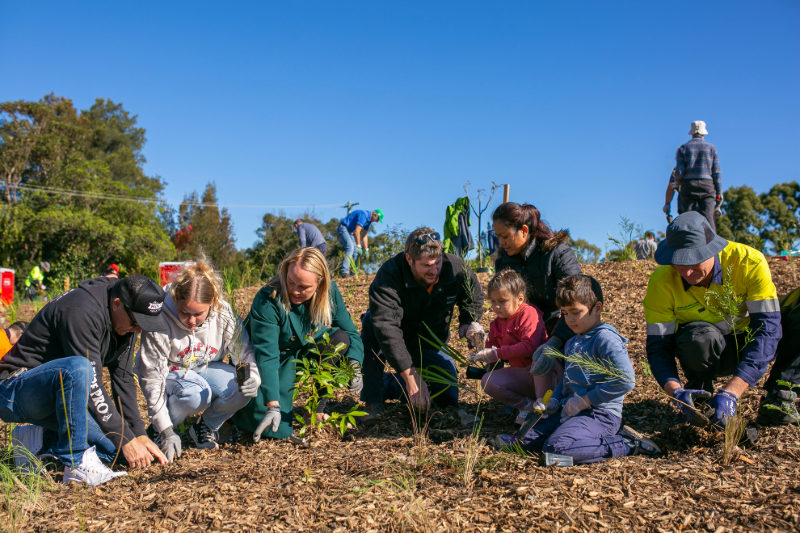
The NSW Government is delivering on a major election commitment, launching the first phase of the $59 million NSW Landcare Enabling Program. 

The first phase of the program will activate $33 million in funding to employ up to 83 full-time equivalent local and regional Landcare coordinators and support staff across NSW.

Local and regional coordinators play a key role in the program including:

  • supporting and facilitating the delivery of on-ground projects that care for the local natural environment and agricultural systems
  • strengthening the capacity of Landcarers by further developing their knowledge and skills
  • ensuring effective collaboration and partnerships between Landcare groups, Local Land Services, other government agencies and Landcare NSW
  • leveraging funding opportunities to maximise socio-environmental outcomes 

This funding also includes up to $5000 for each local and regional coordinator role to undertake professional development over the course of the 4-year program. 

For the first time, support staff roles have also been included in the program to provide additional support with administrative tasks, allowing coordinators to focus on the delivery of on-ground projects.

Coordinator and support roles will be available in all 11 Local Land Services regions and can be subject to part time or job-sharing arrangements, where the need is demonstrated. 

Funding to host coordinators and support roles will be awarded through a targeted competitive grant process administered by Local Land Services.

Funding will be available to incorporated Landcare NSW groups and regions to host a coordinator, or coordinators and newly created support roles. 

Applications will open on Monday 9 October and close on Friday 3 November at 11:59pm. 

Visit the NSW Landcare Enabling Program 2023-2027: Local and Regional Coordinators for program guidelines, including detailed role descriptions.  

Landcare NSW and Local Land Services have worked closely with land carers to ensure this program meets the needs of Landcare and regional communities.

Minister for Agriculture Tara Moriarty said:

“As a government, we understand the importance and the positive impact Landcare has across the country and throughout NSW.    

“Our record investment in the program has paved the way for 83 full-time equivalent local and regional Landcare coordinator and support staff positions, which under the former program were only part-time roles. 

“This boost will give coordinators more time to focus on what matters most and will result in improved facilitation and delivery of on-ground projects that care for our environment and improve agricultural productivity. 

“We have also heard that regions need additional support with administrative tasks to ensure coordinators can focus on the delivery of on-ground projects, which is why we’ve created a support role for each region in this program.

“This new workforce will enable improved facilitation and delivery of on-ground projects and meet the growing needs of local and regional communities across NSW.

“Importantly, we recognise the challenges of recruiting in regional areas, so we have built flexibility into these roles allowing for part-time positions and job sharing where the need is demonstrated.” 

Landcare NSW Chair Stephanie Cameron said:

“Landcare is needed now more than ever. The Landcare movement across NSW provides essential support services and harnesses the efforts of our dedicated volunteers to ensure our environment and communities are more resilient to extreme climate events and to protect our precious biodiversity while supporting sustainable agriculture.

“A supported Landcare community returns at least $4 for every $1 invested. This funding will go to local jobs that support rural and regional communities. 

“The investment will include supporting leadership development heading into the next generation and the employment of 83 community leaders to help combat the increasing skills gap expected to occur over the coming decade in rural and regional NSW.”

New campaign shines a spotlight on safe drinking this summer

The NSW Government is urging people to Think Safe to Drink Safe this summer as part of its commitment to supporting a safe and vibrant hospitality industry across NSW.

The Think Safe to Drink Safe campaign aims to educate both patrons and venue staff on positive drinking behaviours, as well as provide tips to mitigate potential risks to personal safety.

Minister for Gaming and Racing David Harris said he was particularly concerned by data from the NSW Bureau of Crime Statistics and Research which found NSW Police recorded 220 food or drink spiking incidents between July 2022 and June 2023 – an increase of 20% on the previous year.

“This campaign is crucial for raising awareness of drink spiking, which is at its highest rate in NSW for 5 years,” Mr Harris said.

“Drink spiking is a serious criminal offence and I encourage anyone who experiences or witnesses this behaviour to report it to NSW Police.

“The NSW Government is committed to supporting efforts that help venues keep their patrons safe, as well as educate patrons themselves on what to be alert for.”

The education campaign features information and tips for both venues and patrons across posters, a fact sheet, coasters, social media tiles and key messages.

“I invite all venues to roll out the Think Safe to Drink Safe creative assets and content to help educate their staff and patrons about how to protect themselves and their friends,” Mr Harris added.

“I am pleased to see the campaign receiving tremendous support from industry representatives and police at yesterday’s Liquor Accord Forum held in Darling Harbour.

“By working together, we can ensure everyone has an enjoyable and safe summer season in our great venues across NSW.”

Liquor Accords are made up of liquor licensees, community members, businesses, local councils, police, government departments and other community groups. These groups work together to develop strategies tackling alcohol-related issues, anti-social behaviour, and violence in local areas.

Tuesday’s Liquor Accord Forum allowed opportunities for collaboration ahead of the summer party season and showcased a range of initiatives including the Think Safe to Drink Safe campaign.

The free Think Safe to Drink Safe toolkit is available at Liquor and Gaming NSWlaunch.

Think Safe to Drink Safe tips include:

  • Don’t accept drinks from others. Always buy your own and watch it get made. Never leave your drink unattended and avoid batch drinks like punches that may have unknown ingredients and alcohol content.
  • Pace yourself. Count your drinks, try a low-alcohol alternative, or have a ‘spacer’ of water between alcoholic drinks. Don’t let people continually top up your drink, as it’s hard to keep track of your alcohol consumption and be aware that different drinks have different strengths. Set a timer on your phone to help you pace your drinks.
  • Avoid shouts, drinking games or shots. Drink at your own pace, you don’t have to join in every round and consider buying a non-alcoholic drink when it’s your turn. Don’t be pressured into drinking more than you want or intend to.
  • Eat before or while you are drinking. If you have a full stomach, alcohol will be absorbed more slowly. Avoid salty snacks, as these make you drink more.
  • Stay busy. If you have something to do, you tend to drink less, so have a game of pool or hit the dance floor.
  • Trust your feelings and instincts. If you feel unsafe, uncomfortable, or worried for any reason, try to get somewhere safe and find someone you trust who can help you, like a friend, bar staff, security or police. You won’t get in trouble.
  • Have a ‘plan B’. Plans change quickly, ensure you have multiple options to get home safely. Remember you may still be over the limit the next morning.
  • Always tell your mates where you’re going. Let someone know which venue you’re drinking at. If you go to another location, particularly with someone you don’t know well, send the address to a trusted friend. If you decide to go home early, leave the group or even just go to the bathroom, let your mates know.
  • Keep an eye on your mates! If you are going out in a group, plan to arrive together and leave together. Never leave a friend who’s been drinking on their own. If you’re at a party, check in with them during the night to see how they’re doing. If something doesn’t look right, let a friend know you are uncomfortable or worried about their safety.
  • Sometimes sticking together isn’t enough, you need to recognise when you might need to call for help.
  • Consent and boundaries. Alcohol can lower your inhibitions. Be aware of this and set boundaries for yourself before going out. Remember if someone seems drunk, they probably can’t consent. Instead, trade numbers.
  • Drink spiking. Many drugs and alcohol used to spike drinks are tasteless. If there’s a change in your drink’s flavour or if it tastes or smells stronger than what you were expecting, get rid of it and let a trusted person know. Know the signs and symptoms of drink spiking: feeling dizzy, faint, ill, sleepy, incoherent, confused or drunk even though you’ve consumed a small amount of alcohol. If you experience these, let someone know. If you see a friend experiencing these symptoms, check in and stay with them until they recover. Call TripleZero (000) in an emergency.

Heads down, pens up, as 70,000 HSC students start final exams

Close to 70,000 HSC students are putting pen to paper as the start of the 2023 HSC written exams officially kicks off with English Paper 1.

Having completed 50% of their course mark throughout the year, the next 18 days of HSC exams are the opportunity for students to demonstrate all they have learned, bringing together their 13 years of schooling.

When the exams come to an end on Friday 3 November, some 68,689 Year 12 HSC students will have sat more than 400,000 unique exam sessions.

 Some 124 exams are scheduled over the next 3 and a half weeks, with papers written by more than 300 exam developers, concluding with the Food Technology course exam.

All students will receive their HSC results and ATAR on Thursday 14 December.

The Minns Labor Government has made a record investment in the state’s education system at the NSW Budget, including investing to give the state’s 95,000 teachers a historic pay rise.

$3.5 billion will also go to building and upgrading Western Sydney schools, and $1.4 billion will go to building and upgrading schools in the state’s regions.

$45 million will also be spent on boosting the NSW Education Standards Authority’s cyber, information security and technology program, enhancing the agency’s security.

The Premier, Deputy Premier and Member for Heffron will wish students well at a media event in the Heffron electorate on Wednesday.

Students can visit the Stay Healthy HSC hublaunch for advice and resources on taking care of their wellbeing during exams.

The written exam timetable can be found on the NSW Education Standards Authority (NESA) website, along with the 2023 HSC Enrolment Snapshotlaunch.

NSW Premier Chris Minns said:

“Today is an important day for our HSC students.

“To everyone sitting their exams, I wish you all the very best.

“All of NSW is behind you as you enter this exam period.

“Do your best – that is all anyone can ask of you.”

Deputy Premier and Minister for Education and Early Learning Prue Car said:

“This is a big moment for our senior school students and one they have spent months, even years, preparing for.

“My message to the HSC Class of 2023 is to trust in your abilities, reflect on all that you have learnt, and enter every exam room with confidence and determination.

“Balance your exam and study schedule with regular downtime, connect with friends and loved ones and get plenty of sleep.

“I would especially like to thank the parents and teachers who have supported our HSC students to reach this milestone. They have inspired, educated and nurtured a love for learning in their children and students.”

NSW Education Standards Authority (NESA) Chief Executive Officer Paul Martin said:

“The HSC is a major operation and one that relies on the support of schools, teachers and exam staff. Over the next 18 days we will have completed 400,000 exams.

“Thank you to the school communities, including NSW principals, teachers and school staff who have supported HSC students throughout the year and today as they commence their written exams.

“Parents, families and caregivers – to think 13 years of primary and high school is coming to an end.

“Congratulations to the families who have supported their young people through their education careers. This is an exciting day for many.”