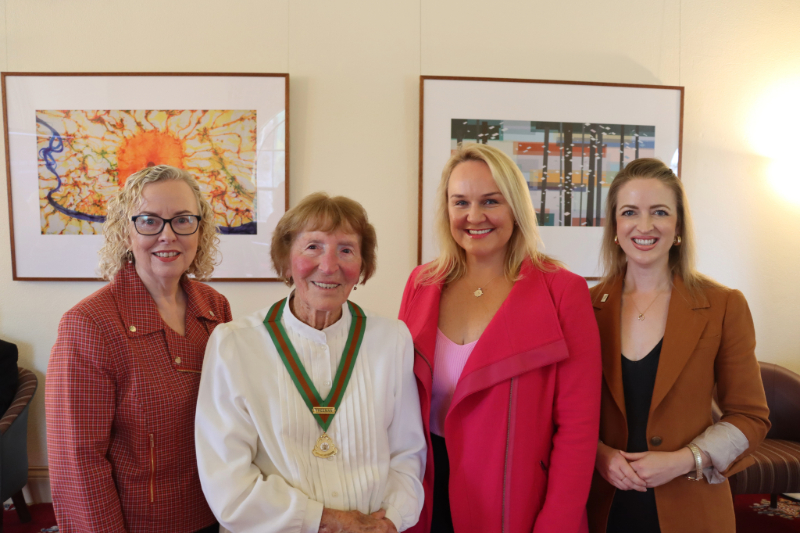
Triple-A credit rating reaffirmed by Moody’s

Global ratings agency Moody’s has affirmed NSW’s triple-A credit rating with a stable outlook, following the Minns Government’s 2023-24 plan to stabilise the State’s finances.

The State’s fiscal position had weakened in recent years but the Government’s Comprehensive Expenditure Review identified $13 billion in budget improvements, revenue and reprioritisation measures to help stabilise the fiscal position.

These funds will be reinvested into essential services to help keep the State’s overall expenses at a manageable level. As a result, the 2023-24 NSW Budget projects an improved surplus of $844 million in 2024-25.

The Government has also taken steps to reduce the impact of the NSW Generations Fund and Transport Asset Holding Entity on the State’s balance sheet, with gross debt projected to be $173.4 billion by June 2026, which is $14.8 billion below the 2023 Pre-election Budget Update.

Net debt is now projected to peak at 12.6 per cent of GSP by June 2027, around 1.4 percentage points lower than at the 2023 Pre-election Budget Update.

Treasurer Daniel Mookhey said:

“The Minns Government has begun the task of repairing the budget, reducing debt and rebuilding our essential services, as well as supporting families and providing targeted cost-of-living relief.

“We are still in the early stages of setting NSW’s finances on a sustainable footing. We look forward to continuing this work in the next budget.”

True impact of teacher shortages in NSW public schools revealed: nearly 10,000 lessons without a teacher each day

Students in almost 10,000 lessons every day are being left without adequate instruction in disruptive class arrangements, due to a 42% shortfall in the number of casual teachers available to teach classes, a new survey by the NSW Department of Education has found.

Public schools across NSW have been left short on average 3000 casual teachers every day – nearly half of what is required to meet the state’s educational demand – after 12 years under the former Liberal National government, which denied there was a problem and refused to collect data on it.

In the state’s primary schools, 40% of the lessons unable to be covered by a casual teacher resulted in merged or collapsed classes. In high schools, students in nearly 30% of uncovered classes were left to their own devices with minimal supervision.

The numbers were significantly worse in parts of Sydney’s west and south-west, rural and remote areas and at schools for specific purposes – but the issue was widespread with almost 90% of schools across the state reporting a shortfall in casual teachers on a given day.

The survey is the first of its kind to gather data on the true extent and impact of the teacher shortage faced by NSW public schools. It provides damning evidence of the gravity of the issue inherited by the Minns Labor government.

On average, NSW’s casual teacher shortage looks like:

  • A daily shortfall of more than 3000 teachers, or 42% of what is required to fill classes.
  • More than 9800 lessons without a teacher across the state every day.
  • 87% of NSW public schools impacted by a shortage of casual teachers each day.
  • Worse at schools in the metropolitan south and west (47%), rural north (47%), rural south and west (59%), Connected Communities (72%) and at schools for specific purposes (68%).
  • 40% of primary school lessons requiring alternative supervision arrangements covered by merging/collapsing classes.
  • 28% of high school lessons without a teacher covered by minimal supervision.

The survey also reveals how the severe shortfall in casual teachers results in a domino effect – including cancellation of library lessons, programs providing additional support to those most in need and time set aside for professional development.  

The Minns Labor government is delivering on its promise to listen to teachers and parents and take action to turn around the teacher shortage crisis that has been failing NSW public school students for years. 

Since being elected in March, the Minns Labor government has taken steps to reduce teacher workload, delivering teachers their largest pay rise in a generation, and making more than 16,000 teachers and support staff on temporary engagements permanent.

A number of other programs and recruitment initiatives are in place or under development to attract more teachers to areas where they are particularly in demand.

NSW Deputy Premier and Minister for Education and Early Learning Prue Car said:

“We already knew from listening to teachers and parents that NSW has been facing a teacher shortage crisis leaving huge numbers of students without quality teaching every single day – but the former government told teachers it was a ‘lie’ they had made up.

“This survey lays bare the extent of the crisis that the former Liberal National government denied and ignored while they claimed teachers weren’t working hard enough to get a pay rise.

“Even to this day the former government is in denial about their legacy. The Minns Labor government was elected on a mandate to fix this mess and we are addressing it head on.

“It is vital for a child’s education that they have a qualified teacher in front of them for every lesson, and that is what we’re working towards.”

FIFTH ANNIVERSARY OF THE NATIONAL APOLOGY TO VICTIMS AND SURVIVORS OF INSTITUTIONAL CHILD SEXUAL ABUSE

Sunday 22 October 2023 marked the fifth anniversary of the National Apology to Victims and Survivors of Institutional Child Sexual Abuse.

The National Apology was delivered in response to a five-year Royal Commission into Institutional Responses to Child Sexual Abuse initiated by former Prime Minister, the Honourable Julia Gillard AC.

More than 17,000 victims and survivors bravely came forward in response to the Royal Commission and nearly 8,000 victims and survivors recounted their horrendous abuse in private sessions.

The apology that followed honoured the courage of victims, survivors and advocates who spoke out to expose abuse in institutions, often at great personal cost, by having to re-live the trauma.

Their courage also paved the way for ongoing initiatives that seek to prevent and respond to all forms of child sexual abuse and provide support to victims and survivors.

The Australian Government continues to prioritise implementing recommendations of the Royal Commission, and supporting initiatives that stemmed from this inquiry, which included the establishment of the:

  1. Australian Centre to Counter Child Exploitation
  2. National Office for Child Safety
  3. National Strategy to Prevent and Respond to Child Sexual Abuse
  4. National Redress Scheme
  5. National Centre for Action on Child Sexual Abuse.

Since the Redress Scheme was established in 2018, over $1 billion dollars in redress payments has been paid to survivors. There are more than 600 non-government organisations now participating in the Scheme, covering more than 71,000 sites such as churches, schools, homes, charities, and community groups, across Australia.

Prime Minister Albanese said:

“Five years ago, the Government apologised on behalf of Australians for the appalling institutional abuse experienced by children and young people, and our failure to protect them.

“We acknowledge the 5th anniversary of the apology and reaffirm the Government’s commitment to establish a world in which our children and young people are safe, and victims and survivors receive the support they deserve.

“The Royal Commission broke the silence surrounding institutional child sexual abuse and the National Apology marked the end of one era and the beginning of a more hopeful one.”

the Attorney-General Mark Dreyfus said:

“This year also marks the fifth year of the National Office for Child Safety, and two years since the launch of the National Strategy to Prevent and Respond to Child Sexual Abuse 2021-2030.

“The National Office oversees implementation of the National Strategy across Commonwealth, state and territory governments, to prevent and respond to child sexual abuse, and support and empower victims and survivors.

“The Government is increasing awareness of child sexual abuse and taking steps to introduce practical initiatives that support the community to respond to child sexual abuse.

“This work includes launching a national awareness raising campaign to help all Australians understand child sexual abuse is preventable, and we all have a role to play”.

Federal Minister for Social Services Amanda Rishworth said:

“Our focus remains on the wellbeing of survivors and ensuring they have access to redress for the harm and trauma they endured, through the National Redress Scheme.
“We cannot take away the pain of survivors, but we are committed to supporting them and working to repair our communities. There is still much work to be done.

“There have been over 30,000 applications to the Scheme from some of the most vulnerable members of our community, which shows the widespread and enduring impact institutional child sexual abuse has had on our nation.
“The Government is also supporting the National Centre for Action on Child Sexual Abuse, fulfilling the recommendation of the Royal Commission to prevent child sexual abuse, by creating a viable evidence base and providing essential training to workers to identify child sexual abuse in settings where it may occur.”

***If you or someone you know needs assistance, contact the National Redress Scheme on 1800 737 377 or visit the National Redress Scheme website***

***For 24/7 support you can call Lifeline on 13 11 14; 1800RESPECT; or 13YARN (13 92 76) for Aboriginal or Torres Strait Islander crisis support.
Blue Knot Foundation supports anyone affected by complex trauma, and is available Monday-Sunday 9am-5pm AEDT***

MICROSOFT INVESTMENT IN AUSTRALIAN INNOVATION

Prime Minister Anthony Albanese has announced that Microsoft will make an additional $5 billion investment in Australia, helping our nation become a world-leading digital economy by significantly investing in skills and training to help equip a new generation of Australians for the jobs and opportunities of the future. 

This Microsoft investment will enable expansion of its Australian hyperscale cloud computing and artificial intelligence infrastructure over the next two years. This will grow its local data centre footprint from 20 to 29 sites in Sydney, Canberra and Melbourne.

This will position Australia as a global leader in cloud computing, with demand expected to almost double by 2026. 

A new Microsoft Data Centre Academy will open in 2024 in NSW in partnership with TAFE NSW, focusing on building applied data centre skills. 

The academy will provide alternative employment pathways into Australia’s tech sector, with a focus on under-represented groups including women and Indigenous Australians. The new data centres will use low-carbon materials during construction as well renewable energy. 

Microsoft has committed to support programs to train an additional 300,000 Australians through its global skills program. These programs are designed to help Australians gain the skills and capabilities to thrive in the digital economy.

Microsoft will also collaborate with the Australian Signals Directorate (ASD) on the Microsoft-ASD Cyber Shield to harden Australia from cyber threats to individuals, businesses and governments.

The Microsoft-ASD Cyber Shield will improve joint capability to identify, prevent and respond to cyber threats, which are growing in both frequency and severity. It will be one of the first steps that we are taking as part of the 2023-2030 Cyber-Security Strategy, to become a world-leading cyber secure and resilient nation by 2030.

The Prime Minister welcomed the landmark investment while in the United States, with science and technology a focus of the official visit. 

Prime Minister Anthony Albanese said:

“This is a major investment in the skills and workers of the future, which will help Australia to strengthen our position as a world-leading economy.

“A priority for my Government is to ensure all Australians benefit from economic growth. This means that we need to provide the skills to enable Australians to succeed in the jobs of the future.

“A strong economy requires protection from cyber threats. I welcome Microsoft’s collaboration with the Australian Signals Directorate to enhance cybersecurity for households and business.”

the Minister for Industry and Science, Ed Husic said: 

“This is a big deal for our tech sector.

“Australia is one of the world’s most advanced users of cloud technologies and this investment will keep us at the forefront.

“This significant investment from Microsoft recognises the Albanese Government’s focus on supporting and growing our tech sector, including our target of 1.2 million tech jobs by 2030.”

SHARON CLAYDON LAUNCHES 2023 PHOTO COMPETITION

For the third year running, Federal Member for Newcastle Sharon Claydon has today launched the 2023 Newcastle Photography Competition, calling on all photographers, whether amateur, hobbyist, or professional, to capture the essence of Newcastle on camera.

“The winning photograph will be showcased on my annual Christmas card that will be sent to every household in the city as well as businesses and community groups in our area and dignitaries such as Members of Parliament, Ambassadors, the Prime Minister, and the Governor-General.” Ms Claydon said.   

“The winner will also receive a $150 voucher to spend at MacLean’s Booksellers or any one of the dozens of creative, independent and locally owned Makers and Traders Newcastle businesses. And $50 vouchers will go to three runners up!”

Ms Claydon said the photo must be taken in the electorate of Newcastle by a Novocastrian.

“I’ll be keeping my eye out for iconic images that capture the essence of Newcastle – our people, our landmarks and natural beauty, our sense of humour, daily life, or festive cheer.”

“The photo can be taken on any sort of camera, smartphone or drone, but it must have been taken in 2023” Ms Claydon said.

“You’ll need to get in quick because entries close in a few short weeks on Friday 10 November 2023.”

“After the success of previous years, I really look forward to seeing this year’s entries”.

“This competition is always a highlight, it really showcases the creativity and unique vision of Novocastrians”

For more information or to upload your photo visit: https://woobox.com/5suqjf

Delivering a historic expansion of Paid Parental Leave

The Albanese Labor Government is keeping its commitment to improve the lives of Australian families with the introduction of the Paid Parental Leave Amendment (More Support for Working Families) Bill 2023.

The Bill finalises settings for the Government’s significant expansion of Paid Parental Leave announced in the October 2022-23 Budget, increasing the scheme to 26 weeks by July 2026.

With this Bill, the Government is committing to providing each parent four weeks of reserved leave from July 2026 when the full scheme is implemented which will encourage shared care and send a strong signal that both parents play a role in caring for their children.

This Bill also introduces concurrent leave – meaning that from 2026 both parents can take four weeks of leave at the same time if they choose to, providing flexibility to families in how they arrange their care.

These changes reflect the additional advice on PPL sought by government from the Women’s Economic Equality Taskforce and represent the largest investment in Paid Parental Leave since the scheme was introduced in 2011.

It delivers more support for working families, improves outcomes for children and advances gender equality.

The Bill follows changes commencing 1 July 2023 to make the scheme more accessible, flexible and gender equitable. These important structural changes laid a strong foundation for our expansion to 26 weeks. 

Minister for Women Katy Gallagher said that through the Jobs and Skills Summit and the Employment White Paper, the Government had heard loud and clear that support for families to balance care is critical to ensuring women’s long term economic equality.

“We know that good women’s policy is also good economic policy, and this investment will promote parenting as an equal partnership while boosting the economy,” Minister Gallagher said.

“This is all about making sure that every family has more choice and better support.”

Minister for Social Services Amanda Rishworth said the changes to the scheme better address the needs of working Australian families and provides greater security as they adjust to life with a newborn or adopted child.

“The roughly 180,000 families who receive Paid Parental Leave each year will benefit from a more generous scheme that supports maternal health and wellbeing, encourages dads and partners to take leave, and gives families flexibility to choose how they share care,” Minister Rishworth said.

“Not only will this help families to better balance work and care, but it will also support participation and productivity over the longer term, providing a dividend for the Australian economy.

“These changes will provide better security and choice for families. They strike the right balance between supporting our working families, encouraging greater gender equality, and supporting greater workforce participation.” 

Pending its passage through Parliament, two additional weeks of payment will be added each year from 1 July 2024, increasing the overall length of the Paid Parental Leave scheme by six weeks by July 2026.

The Bill increases the number of weeks reserved for each parent to four weeks in order to encourage sharing of care and household responsibilities.

The Bill also increases the number of weeks parents are able to take at the same time, increasing flexibility for families and supporting both parents to take time off work together after a birth.

The Government’s changes will benefit over 180,000 families each year, at a cost of $1.2 billion from 2022-23 to 2026-27.

More information on the changes to the Paid Parental Leave scheme can be found on the Department of Social Services website.

Help your community – New Hunter Environment Advisory Group

The NSW Environment Protection Authority (EPA) is on the lookout for passionate local environmental champions to join the new Hunter Environment Advisory Group. 

EPA Acting Director of Operations Claire Miles said the group brings together and replaces the Upper Hunter Air Quality Advisory Committee and Newcastle Community Consultative Committee for the Environment and will play a crucial role in influencing and contributing to the future of the Hunter. 

“We are evolving these two groups to broaden the scope and increase collaboration across the Hunter and Newcastle areas. This responds to feedback from both of the groups previous members,” Ms Miles said.   

“We are looking for people who want to step up to guide environmental policies and initiatives towards sustainable development. 

“We know the people of Newcastle and the Hunter are passionate about their environment in a region where industry, natural wonders and vibrant communities coexist. 

 “The Hunter Environment Advisory Group will advise the EPA on existing, new and emerging environmental matters such as air quality, the operation of the air quality monitoring networks, local industry, general environmental matters and provide expertise to guide education and communication. 

“We are seeking applications from people who are linked into their community and can represent their community or local industries and be willing to share updates from the EPA back to the community.  

“This is your chance to collaborate with like-minded individuals and experts, influence decisions that shape the region’s environmental future, advocate for sustainable practices and conservation efforts, and participate in valuable discussions and projects,” Ms Miles said. 

Expression of interest for nominations are open from 20 October – 20 November. 

For more information come along to a drop-in session on Wednesday 25 October, 5-7pm at Stan Thiess Centre, Hill St, Muswellbrook where you can learn about the new Hunter Environment Advisory Group and the EPA’s current Bust the Dust campaign in the Hunter. 

More info on nominating for the Hunter Environment Advisory Group: Nominate for the Hunter Environment Advisory Group (nsw.gov.au)

Wear orange this Saffron Day in memory of young organ donor

NSW communities are being encouraged to wear orange on Sunday 22 October 2023 and register to become an organ and tissue donor.

22 October is Saffron Day, a day to honour the life of Western Sydney boy Deyaan Udani who became an organ donor in 2016 at age 7.

When Deyan tragically passed away on a family holiday to India, his parents Rupesh and Mili made the decision to donate his organs, making him the youngest organ donor in India.

Shortly before the holiday, Deyaan and his older sister, Naisha, had learned about organ and tissue donation at school, and had informed their parents that they wanted to be organ donors to help others.

Deyaan’s parents’ decision to donate his organs meant four lives were saved. Rupesh Udani, Deyaans father, said Saffron Day was a fitting way to remember his brave son.

“Deyaan was a lively, fun-loving boy who always wanted to help others,” Mr Udani said.

In order to honour Deyaan’s life, and to encourage others to register their intent to be a donor, we came up with the idea of Saffron Day.

“Saffron has a lot of significance for us. Orange was not only Deyaan’s favourite colour, but orange also represents sacrifice, courage and strength.”

Health Minister Ryan Park said Saffron Day is the perfect time to consider becoming an organ and tissue donor.

“Organ donation saves lives and increasing awareness and consent is critical to lifting our donation rate,” Mr Park said.

“We encourage NSW residents to jump online and pledge to give the gift of life to those in need. 

“You can make a real difference to the many Australians waiting for transplants by registering to become an organ and tissue donor, and importantly, telling your family of your decision.

“Only about two per cent of people who die in hospital will be eligible to donate their organs. However, many more people have the potential to become tissue donors.”

Organ and tissue donation saves and transforms lives. One organ donor can save the lives of as many as seven people and many more can be helped through tissue and eye donation.

A total of 54,769 NSW residents registered as organ and tissue donors in 2022, bringing the total number registered to 2,670,875 – about 42 per cent of the NSW population, above the national average of 36 per cent.

319 NSW residents received an organ transplant last year, and 122 NSW residents became organ donors.

With around 1,800 people on Australian transplant waiting lists at any one time, and a further 14,000 people on dialysis who may need a kidney transplant, you can make a real difference in the lives of others by registering as a donor on the Australian Organ Donor Register and then telling your family.

It doesn’t matter your medical history, your lifestyle or how old you are – you can still register as an organ and tissue donor.

You can register to be a donor through the Donatelife websitelaunch or through myGOV or the Express Plus Medicare app.

If you are already registered, talk to your friends and family. Tell them you want to be a donor. Encourage them to register too.

Greg Inglis’ Goanna Academy shining a spotlight on mental health in Bathurst

Led by founder and rugby league legend Greg Inglis, the Goanna Academy and Western NSW Local Health District (WNSWLHD) will shine a spotlight on mental health at a free community workshop in Bathurst, to help people connect with local support services.

People across Bathurst are encouraged to attend the mental health workshop, which is being hosted by the District’s local Community Mental Health Team at 11am at the Kelso Community Hub on Tuesday, 24 October.

The workshop builds on the weekly Mawang Yarning Circle held at the Kelso Community Hub in recent months.

The Goanna Academy, aims to improve mental health outcomes across Australia and particularly in regional men, youth and Aboriginal and Torres Strait Islander people, and founder Greg Inglis will share his personal journey and battles with mental illness to inspire others to seek help.

The Goanna Academy workshop is free and does not require registration. A barbecue lunch will be provided, followed by rugby league-based activities at 1pm and a meet and greet at 2pm.

For mental health advice or to be connected to specialist mental health services, call the Mental Health Line on 1800 011 511. In an emergency, call Triple Zero (000) or go to your nearest Emergency Department.

Minister for Mental Health, Rose Jackson said:

“This event is a great opportunity for the community to connect, particularly during Mental Health Month. Not just to connect with a Rugby League and mental health champion like Greg Inglis, but also with one another and health professionals.

“Hearing from others with lived experience can be extremely reassuring for people who are considering reaching out for mental health support, but it’s also incredibly important they know where they can receive that support in their local community.

“I’m thrilled this event will bring together the community and mental health services and I hope the Goanna Academy’s visit will help more people feel comfortable enough to connect with our local teams on the ground.”

Founder of the Goanna Academy Greg Inglis said:

“I hope my story can help people in the community feel more confident and comfortable reaching out for support, particularly people in the Aboriginal and Torres Strait Islander community.

“We’ve all been through some pretty tough times recently and looking after our mental health is more important than ever. I say from experience suffering in silence won’t help.

“Support is always there and hopefully people might be able to take something from what I’ve learned over the years to help them take that next step and get themselves some help.

“Being able to get back out to Bathurst during Mental Health Month will be pretty special, so I’m really looking forward to it.”

WNSWLHD Mental Health’s Drug and Alcohol Bathurst and Region Hub Manager Josh Spicer said:

“We’re excited for Greg and the Goanna Academy’s visit and we’re very grateful to the Orange Aboriginal Medical Service and the Wambuul Life Connection Network, who have supported the workshop from the start.

“The workshop will be a safe space where people can also share their stories if they are comfortable doing so, but I would encourage anyone who might like to just listen to come along too, we’d love to connect with as many people as possible.

“I’m sure many people in Bathurst already feel a connection through rugby league, but physical activity is also a huge benefit to people’s mental health.”

Doubling down on desalination

The NSW Government is rounding out National Water Week by beginning investigations to double the capacity of Sydney’s Desalination plant, to bolster future drought resilience and ensure we have the infrastructure to support housing and population growth.

Currently 85% of Sydney’s water supply is dependent on rainfall so this project is a crucial step towards diversifying the city’s water sources to make we’re better placed to weather future droughts.

The investigations will determine if expanding the desalination plant at Kurnell to add another 90 billion litres a year to the network is the best and most cost-effective option.

Currently, the plant produces up to 15% of the city’s water, delivering up to 250ML a day, but upgrading the infrastructure would enable 30%, pumping out 500ML a day.

Expanding the desalination plant is a key initiative of the Greater Sydney Water Strategy which identified the need to invest in non-rain dependent alternatives.

Work on the first stage of planning will get underway shortly and be finalised in 2024.

Minister for Water Rose Jackson said:

“This is about safeguarding Sydney’s water future so it can continue to meet demands in a changing climate.

“We’re kicking housing expansion in Greater Sydney into high gear and to ensure this growth is sustainable we must also expand vital water infrastructure.

“In a drought, Warragamba Dam can go from full to empty in five years, so it is crucial that we actively explore options to expand our water sources which will take pressure off Sydney’s dams.

“Melbourne and Adelaide have already turned to desalination plants for nearly half their water use so it is high time we joined their ranks and move forward with boosting our supply options so we’re better placed for future dry periods.

“As part of our commitment to a greener future, any upgrade to the plant will be 100 per cent powered by renewable energy, providing a sustainable and secure solution.”

Sydney Water Managing Director, Roch Cheroux said:

“Sydney Water is preparing for the future by exploring all options as part of the Greater Sydney Water Strategy, including increased production of water supplied by the desalination plant.

“We can no longer rely on rainfall alone, so this investment allows us greater flexibility to diversify our water sources to meet Greater Sydney’s future demands.

“We have also released our first ever long-term investment plan which addresses the challenges facing Greater Sydney such as significant population growth, climate change and our own ageing infrastructure.”