
More than 55,000 visits to Urgent Care Services

Patients across NSW have benefited from more than 55,000 visits to Urgent Care Services since the NSW Government rollout began in mid-2023, easing pressure on busy public hospital emergency departments.

To 30 April, 2024, patients visited GP-led Urgent Care Services on 10,628 occasions while Local Health District-led urgent care services, such as geriatric outreach services and virtualKIDS, were visited on 44,555 occasions.

The NSW Government has delivered 16 Urgent Care Services since July 2023, bridging the gap between primary and emergency care, ensuring that patients have fast access to the urgent care they need without having to turn to a busy emergency department.

The results come as Minister for Health Ryan Park will today officially open the Gregory Hills Urgent Care Service and said it is making a significant contribution to the local community, with 580 visits since the service commenced on 6 February 2024.

The Gregory Hills UCS makes a total of three urgent care services funded by the NSW Government in the south western Sydney region; the Campbelltown Medicare Urgent Care Clinic co-funded by the NSW and Australian Governments takes this total to four.

Gregory Hills UCS is open seven days a week from 8am to 8pm and is equipped and staffed to treat a range of illnesses and injuries that are not life-threatening.

To access the service, patients should call Healthdirect on 1800 022 222. A registered nurse will assess the patient’s condition and guide them to the care they need. This could include booking an appointment at the service on the patient’s behalf, referring them to another service such as virtualKIDS, or, where required, escalating their care to NSW Ambulance or advising the patient to attend an Emergency Department.

Patients needing language support can call TIS National on 131 450 and ask for Healthdirect.

The Gregory Hills Urgent Care Service has been delivered in partnership with South Western Sydney Primary Health Network (SWSPHN).

NSW Health has partnered with Primary Health Networks to deliver additional Urgent Care Services right across the state, in an effort to ease pressure on busy hospital EDs and ensure the people of NSW receive the most appropriate care.

The NSW Government has committed $124 million over two years to deliver 25 Urgent Care Services in NSW by mid-2025. It is also supported by funding from the Commonwealth Government.

Health Minister Ryan Park said:

“Urgent Care Services like this one in Gregory Hills is an example of how the NSW Government is embracing new and innovative ways to relieve pressure on our emergency departments by diverting tens of thousands of unnecessary presentations.

“We don’t want to see people and their loved ones waiting around emergency departments for lengthy periods of time – it’s not good for them, our staff, or other patients.

“Having access to services like these within our communities means more patients can receive care for their urgent health issues in a community setting, without a stressful trip to hospital.”

Member for Camden Sally Quinnell said:

“Care at the Gregory Hills Urgent Care Service is provided by general practitioners and nurses and is free for Medicare card holders and community-based asylum seekers.

“This service has been an important addition to the community as it’s working to ease pressure on our local emergency departments, which are among the busiest in the state.”

Member for Leppington Nathan Hagarty said:

“I’m so pleased hundreds of patients have already been able to access more appropriate, timely care as a result of this new Urgent Care Service.

“This service is about increasing access to healthcare, meaning families are able to get advice and treatment, all without having to step foot in a busy public hospital ED.”

SWSPHN Chief Executive Officer, Dr Keith McDonald said:

“If your GP is closed or you can’t get an appointment, and your condition cannot wait until you can see your regular GP, you can call Healthdirect for advice on accessing appropriate care.

“Urgent Care Services can treat minor illnesses like gastrointestinal illness or urinary tract infections; minor injuries like closed fractures or simple lacerations; and procedures like suturing, drainage of abscesses and basic fracture management.”
Recognising regional, rural and remote women for volunteer work

Women in regional, rural and remote areas are being publicly recognised on the Hidden Treasures Honour Roll for the important volunteer work they do in their local communities.

The NSW Government is focused on delivering a range of targeted initiatives aimed at supporting and promoting volunteering to enrich the lives of volunteers, strengthen local communities and benefit NSW. 

Hidden Treasures is a NSW Government initiative created to recognise and elevate the invaluable volunteer efforts of women across regional, rural and remote NSW communities.

91 women will be recognised at the ‘Thank you NSW Volunteers’ event in Wagga Wagga today, hosted by the NSW Rural Women’s Network. The event is being held as part of National Volunteer Week 20 to 26 May to celebrate the important role that volunteers play in building vibrant communities across NSW.

Coordinated by the NSW Rural Women’s Network, the Hidden Treasures Honour Roll calls for nominations throughout the year from individuals and groups, charity organisations, and local members of parliament.

More than 1200 women have been commended on the Honour Roll since 2010.

Nominations for the 2024 Honour Roll are now open. To nominate a woman as a Hidden Treasure and read the 2023 Hidden Treasures digital booklet, visit the Hidden Treasures Honor Roll page

Minister for Regional NSW Tara Moriarty said:

“In regional and rural NSW, women’s dedication to volunteering is remarkable, whether it’s on the frontline with the RFS, on the fields of the local sports team, saving lives with their local surf lifesaving club or providing friendship and support to those in need week in week out.

“These remarkable women see something that needs to be done and they get out and do it.”

“The work of women volunteering and leading volunteers in regional NSW is a key reason why our regional communities thrive and flourish.”

Minister for Women Jodie Harrison said:

“In regional, rural and remote towns, we know women can wear many hats and play many important roles in their communities. So the contribution women make through their volunteer efforts in their tight-knit communities is truly invaluable.

“The Hidden Treasures program as it is a wonderful way to celebrate and commend women for their selfless dedication and passion in bringing their local community together, for uplifting society and for moving industry.

“By recognising these inspirational women, we want to continue to encourage more local regional, rural and remote women to take their future in their own hands to support and advance their community.”

CEO of the Centre for Volunteering Gemma Rygate said:

“Volunteers are an essential part of every community in NSW, from major cities to regional towns. In 2023, 4.3 million people volunteered, with a social and economic benefit of $178 billion to the state economy. These numbers show the importance of volunteering in NSW and highlight how volunteering helps build stronger, more cohesive communities.

“Recognition and celebration of the work that volunteers do is essential and National Volunteer Week is the perfect time to celebrate volunteering. While volunteers are not paid for their work, we know that volunteering is not free and is in fact becoming increasingly costly. The vital work of volunteers in NSW deserves celebration and support from all of community.”

NSW Regional Woman of the Year Teresa Mitchell said:

“Women bring compassion to everything they do. We see the gaps and we have the courage to stand up and make a difference.

“Regardless of where a woman volunteering lives, you can be guaranteed that she is adding value by sharing her skills, time and energy. I have the greatest respect for the women out there making a difference in their communities, and there are many of them.”

Libs: Households and Businesses of NSW foot the bill for Labor’s energy failure

The NSW Opposition wants reliable and affordable energy for households and businesses across our state.
 
Today’s ‘deal’ does not guarantee energy reliability or more affordable electricity for households and businesses.
 
The need now to extend the Eraring coal power station is due to Labor’s neglect and mismanagement of the Electricity Infrastructure Roadmap, which will cost the NSW taxpayer up to $450 million over the coming years and doesn’t even guarantee a solution to forecasted reliability risks.

The Minns Labor Government has created uncertainty for would-be investors in new capacity and now the people of NSW face more expensive and less reliable energy.
 
Over a year ago the Minns Labor Government called for a review of the Roadmap and they have been plagued by inaction ever since. They haven’t finalised planning guidelines and, as a result, the energy industry and consumers have been left in limbo.
 
An update from the Australian Energy Market Operator (AEMO) earlier this week highlighted the risks to reliability from Labor’s failed approach to energy, including delays in delivering transmission infrastructure and battery storage projects such as the Orana battery and the Waratah Super Battery.
 
Responsibility sits with Premier Chris Minns and he should apologise for his Government’s mismanagement.

No mention was made of the costs of energy being driven up by privitisation by liberal governments.

New battery strategy to make more batteries here

The Albanese Government has today released the nation’s first National Battery Strategy, supporting a Future Made in Australia and shoring up our economic resilience and security.

The global demand for batteries is set to quadruple by 2030 as the world transitions to net zero, and our Strategy maps a path for Australia to take advantage of this growth to build a thriving battery industry.

It identifies four high-value strategic opportunities:

  • Stationary storage – building Energy Storage Systems to firm renewable power generation in the national grid and for communities, businesses and homes.
  • Provide battery active materials to the world by upgrading raw minerals into processed battery components to strengthen battery supply chains.
  • Leveraging our world-leading know-how to build safer and more secure batteries connected to the grid.
  • Building batteries for our transport manufacturing industry, including heavy vehicle manufacturing.

Funding for the Strategy was included in last week’s Budget:

  • $523.2 million for the Battery Breakthrough Initiative, administered by ARENA, to promote the development of battery manufacturing capabilities through production incentives targeted at the highest value opportunities in the supply chain.
  • $20.3 million for Building Future Battery Capabilities to incentivise cutting edge battery research, including support for:
    • Future Battery Industries Cooperative Research Centre to map Australian battery capability and value chains, drive battery innovation and scale-up and deliver best practice guidelines and standards for the battery industry.
    • Powering Australia Industry Growth Centre to develop workforce skills and training.

The Budget also includes $1.7 billion for a new Future Made in Australia Innovation Fund, administered by ARENA, to accelerate deployment of innovative technologies and facilities through support for innovation, commercialisation, pilot and demonstration projects in priority sectors including clean energy manufacturing such as batteries.

The Strategy is designed to harness our world leading-expertise in battery technology, lean into our natural advantage with critical minerals and support a Future Made in Australia.

It shows how Australia can help diversify global battery supply chains by working collaboratively with key trading partners – to help shore up our economic resilience in our national interest.

It also outlines a joined-up approach for industry and government to work together to supercharge our battery manufacturing and help make Australia a renewable energy superpower.

It builds on a range of existing Government initiatives to help Australian businesses grow and compete, including the Industry Growth Program, Solar Sunshot, the National Reconstruction Fund and the Critical Minerals Facility.

More information on the National Battery Strategy is available here: National Battery Strategy

Prime Minister Anthony Albanese:

“We want to make more things here and with global demand for batteries set to quadruple by 2030, Australia must be a player in this field.

“Batteries are a critical ingredient in Australia’s clean energy mix. Together with renewable energy, green hydrogen, and critical minerals, we will meet Australia’s emission reduction targets and create a strong clean energy manufacturing industry.” 

Minister for Industry and Science Ed Husic:

“Australia is a pioneer of battery tech, yet for too long we’ve sent our ideas offshore and lost the good jobs they create.

“A strong battery industry can supercharge our path to net zero and create a Future Made in Australia.

“Australia is moving beyond a ‘dig and ship’ economy to become a renewable energy superpower.

“It’s inexcusable that we supply half the global supply of lithium but produce less than one percent of the world’s processed battery components.

“The global clean energy transition is happening – and we’ve got a once-in-a-lifetime opportunity for Australia to create more well-paid, secure jobs.”

Bangladesh-Australia Ministerial Dialogue, Dhaka

  1. Bangladesh’s Hon’ble Foreign Minister Dr. Hasan Mahmud, MP and Australia’s Minister for Foreign Affairs Senator the Hon Penny Wong held their first ministerial dialogue on Tuesday, 21 May 2024 in Dhaka.
  2. The Ministers noted the warm bilateral relationship founded on more than fifty years of diplomatic relations and deepening friendship between our peoples. They recognised that high-level visits at the political level can help take the relationship to further new heights.
  3. The Ministers recalled the constructive, positive bilateral discussions held at the Indian Ocean Conference in Perth in February 2024, following those during the Indian Ocean Conference in Dhaka in 2023. They noted ongoing collaboration and cooperation in regional and multilateral fora, including the Indian Ocean Rim Association and at the United Nations.
  4. The Ministers appreciated the growing strategic depth and dimensions of the bilateral relations. They noted the commonalities between Bangladesh’s Indo-Pacific Outlook, the Indian Ocean Rim Association’s Indo-Pacific Outlook and the ASEAN Outlook on the Indo- Pacific. They reaffirmed their shared vision and desire to work towards a region that is peaceful, stable, prosperous, inclusive and free from intimidation, interference and coercion.
  5. The Ministers acknowledged the importance of building regional health security, promoting demographic resilience, enhancing multi-modal connectivity, and strengthening clean energy supply chains. The Ministers agreed on the importance of promoting open channels of communication and confidence-building measures to reduce the risk of conflict in the region.
  6. The Ministers reaffirmed their support for sovereignty and territorial integrity in the Indo- Pacific, democratic values, human rights, freedom of navigation and overflight, and the peaceful resolution of disputes. Australia and Bangladesh are committed to working together to find practical solutions to shared contemporary challenges, including maritime security threats, climate change, cybercrimes and countering trafficking in persons.
  7. The Ministers discussed developments in the Indo-Pacific and Middle East. The Ministers reiterated their shared concern about the dire humanitarian situation in Gaza, which has been exacerbated following the 7 October attacks, calling for an immediate humanitarian ceasefire and reaffirming support for a two-state solution.
  8. The Ministers also expressed serious concern over the ongoing war in Ukraine and its repercussions around the world. They reiterated the call for a peace process through dialogue and diplomacy with respect for the sovereignty and territorial integrity of Ukraine within its internationally recognised borders and in accordance with the principles of the UN Charter.
  9. The Ministers expressed their deep concern at the deteriorating conflict situation in Myanmar and its effect on regional security and stability, calling for scaling up of efforts by ASEAN and other key regional actors.
  10. The Ministers affirmed their intention to enhance cooperation on deepening two-way trade and economic ties as Bangladesh progresses towards graduation from UN LDC status, with Australia committing to maintain tariff-free, quota-free access to its market to support Bangladesh’s smooth transition. The Bangladesh Minister provided assurances that necessary support would be given to Australian investors, including in thrust sectors like agro-processing, ICT and logistics.
  11. The Ministers noted Australia’s ongoing funding for multilateral development banks to support Bangladesh’s efforts to address its priority structural reforms that would bolster development and economic growth. The Ministers stressed the need for strengthening the international financial architecture.
  12. Noting the importance of enhanced connectivity to increase regional economic integration and growth, the Ministers discussed Australian technical support in partnership with the World Bank and International Finance Corporation to connectivity measures via the South Asia Regional Infrastructure Connectivity programme. The Ministers agreed to work further on bilateral air connectivity and cable connectivity resilience.
  13. The Ministers acknowledged the importance of skills development and training to foster inclusive economic growth, with Australia announcing AUD 3 million in support for delivery of technical and vocational training for Bangladesh’s youth. The Bangladesh Minister expressed interest in enhancing cooperation with Australia in the fields of research and innovation. The Ministers affirmed Australia’s long-standing commitment to building capacity in Bangladesh, with over 3,000 Bangladeshis having completed studies under the Australia Awards Scholarships and Fellowship Programme since 1982. Working with the UNDP, Australia has provided technical assistance and policy support towards developing a strategy for inclusive social security system.
  14. Australia and Bangladesh reaffirmed the vital importance of gender equality and women’s empowerment in all fields, notably across education, government and parliamentary representation. Australia reaffirmed its support for investments to promote women’s economic empowerment. Recognising gender equality as a shared priority with opportunities for regional leadership, the Ministers agreed to work bilaterally and multilaterally to combat all forms of discrimination and violence against women and girls.
  15. The Ministers agreed on the importance of enhanced cooperation on climate change, including funding of vital climate adaptation and mitigation measures. Australia emphasised its partnership with Bangladesh to support agricultural production and adaptation research, including through the work of the Australian Centre for International Agricultural Research. They discussed enhancing cooperation on capacity building for accessing international climate financing. Bangladesh welcomed the forthcoming visit by Australia’s Ambassador for Climate Change, and offered to share some of its locally-led adaptation solutions with the Pacific Island countries, including through trilateral engagement with Australia.
  16. Australia acknowledged the generosity of the Bangladesh government and people in hosting the forcibly displaced Rohingyas from Myanmar, and Bangladesh acknowledged the sustained humanitarian contribution of the Australian Government to support the Rohingyas and host communities in Bangladesh, with both Ministers underlining the importance of working towards the Rohingyas’ safe and dignified repatriation to Myanmar.
  17. The Ministers confirmed their commitment to enhancing maritime and oceans capabilities as a critical means to protecting our marine environment and promoting sovereignty and the rule of law. The Ministers agreed to strengthen cooperation to combat people’s smuggling and transnational crimes across the region, including through prioritising cooperation between their coast guards. Ministers agreed to support regional and international efforts towards combatting transnational organised crimes in the Indo-Pacific through both normative and practical actions.
  18. As founding members of the Bali Process on People Smuggling, Trafficking in Persons and Related Transnational Crime, Australia and Bangladesh expressed concern about the loss of life and exploitation of vulnerable people such as the Rohingyas, including women and children, at the hands of transnational criminal networks. The Australian Minister noted that the Commander of Australia’s Maritime Border Command will visit Bangladesh to further discuss these issues. The Ministers agreed on the importance of safe migration pathways in our region to curb irregular and unsafe migration patterns.
  19. Noting the growth in the Bangladesh diaspora in Australia and the contributions made by our two peoples to deepening the bilateral relationship, the Ministers affirmed the importance of preservation and promotion of arts and culture, and committed to signing a Memorandum of Understanding on Cooperation in Arts and Culture.

Disability Community Rejects Labor’s NDIS Bill

We’re set for round two of disabled people vs. Labor’s changes to the NDIS. 

Today, Wednesday 22nd May 2024, the Australian Senate will hold its second public hearing into the proposed National Disability Insurance Scheme Amendment Bill 2024. 

Day one of hearings saw witnesses condemn the Bill and implore Senators to recommend it not pass in its current form. 

The legislation, which proposes the most significant changes to the NDIS since it commenced over a decade ago, was developed behind closed doors with representatives from disability organisations required to sign non-disclosure agreements. 

On day one of the inquiry, the committee heard directly from disabled people. Their concerns with the bill, include: 

  • “This [bill] will do nothing in achieving good outcomes, this will do nothing in protecting human rights. This will kill thousands upon thousands upon thousands of people.”
     
  • “This bill is the most dangerous piece of legislation since the changes to the DSP and Robodebt”
     
  • “This bill enables the NDIA to force me out of my home if I need eight hours of support or more. I will be forced to choose between living with my wife and my vital support needs.”
     
  • “[Disability] varies so greatly that you cannot possibly put a black-and-white mechanism, [a] computer algorithm, in place – much less one that is beyond being able to be challenged by a participant.”
     
  • “Fundamentally, this bill ceases to be fit for purpose, because it does not understand what it seeks to achieve unless all it seeks to achieve is to save a bunch of money at the cost of very many lives.”

Senator Steele-John, Australian Greens Spokesperson for Disability Rights and Services.  

“Day one of the hearings demonstrated that the disability community are seeing right through Labor’s spin. We can see the true intent of this Bill: to cut funding to disabled people and give politicians the power to kick tens of thousands off the scheme with the stroke of a pen.

“To pass this bill as it is now would be the end of the NDIS, and risks thousands upon thousands of disabled people experiencing harm and living a more difficult life. 

“This NDIS bill lacks any compassion for what will happen to disabled people who get kicked off the NDIS. It’s going to put extra pressure on families and put the thousands of people employed within the disability sector in uncertainty.

“This bill robs disabled people of the power to choose the supports they need to live a good life, and puts that power into the hands of politicians who have no idea what it’s like to be disabled. 

“This bill and Labor’s budget cuts threaten to undo all of the progress that disabled people and our families have made because of the NDIS.“

GREENS CALL FOR AUSTRALIA TO SUPPORT A PEACEFUL AND JUST RESOLUTION IN NEW CALEDONIA

Senator Jordon Steele-John, Australian Greens Spokesperson for Foreign Affairs and Peace: 

“The ongoing violence, and the French authorities’ response, in New Caledonia is deeply concerning.

“The Australian Government must respond to the calls of local organisations to support neutral mediation between all parties, supported by the UN and Pacific Leaders. It is paramount that a peaceful resolution is reached. 

“With New Caledonia listed as a colonised territory with the United Nations, the path to peace must prioritise the self-determination of the Indigenous Kanak people and must ensure that all people in New Caledonia can live in peace.

“Additionally, the Greens are calling on the Federal Government to continue their efforts to ensure all citizens, permanent residents and immediate family members, including those outside of Noumea, are supported to return to Australia.”

TERRITORY LABOR LOWERS MINING ROYALTIES

Suki Dorras-Walker:

“While the Territory Government struggles to find the money to fund much needed domestic violence and homelessness services, it’s implementing a new scheme which lowers the royalty rate for new mines and therefore the revenue of the Territory Government.”

“This new mining royalties scheme reveals that we don’t have a budget deficit problem, we have a problem with a Territory Government that is unwilling to make its corporate mates pay their fair share when extracting our public resources. 

“These resources belong to Territorians and we should be getting bang for our buck.”

“While the current reduction in royalties does not apply to existing mines, it leaves the door open for them to adopt the same model. That’s a major threat to the Territory’s revenue.  Given a large proportion of royalties come from mining on Aboriginal Land, there is reason to believe this could disproportionately affect First Nations Territorians.”

“Territorians are feeling the cost of living squeeze. But, once again, the mining industry gets exactly what they want – more profit at the expense of Territorians.”

“We’ve just had a budget where the NT Government is emphasising revenue created in the Territory and cutting essential services. It makes no sense to change the rules so that mines pay less royalties for our public resources instead of more – it’s a rip off.”

“Unlike the CLP and Territory Labor, the NT Greens do not take donations from mining corporations looking to buy influence. So we will always be advocating for the best deal for Territorians, not big corporations.”

Two years of Anthony Albanese’s economic vandalism is killing Australian small business

After two years of the Albanese Government, it is clear that Labor’s economic vandalism is killing Australian businesses with builders, manufactures and small businesses bearing the brunt. Australian businesses are going to the wall because Anthony Albanese lied about his plan to deliver cheaper power prices and that he would ‘rebuild Australian manufacturing’.

Labor has delivered an insolvency crisis across the Australian economy. According to the official Australian insolvency statistics for April, released by ASIC, insolvencies across construction have already exceeded the annual figure for 2022-23 and manufacturing insolvencies are set to exceed the 2022-23 figures by the end of May. This underscores an increasing rate of insolvencies across the Australian economy, which was already three times higher than the same period, just two years ago under the Coalition.

Businesses are going bust under Labor and it will only get worse. According to CreditorWatch’s Business Risk Index released yesterday, one in 13 Australian hospitality businesses are facing failure in the next 12 months. This is attributed to the sector’s exposure to discretionary spending of consumers “which has dried up as cost-of-living pressures mount.” As CreditorWatch notes, hospitality businesses such as restaurants have been hit hard by cost pressures, with higher than ever power prices and cost of ingredients combining with weaker consumer spending. This report indicates that Western Sydney and South-East Queensland are the regions with the highest risk of business failures.

CreditorWatch has also found that business to business (B2B) payment defaults have hit a record high and are up 69.4 per cent year-on-year, as businesses struggle to pay their invoices. Their analysis shows a strong correlation between B2B payment defaults and business failure indicating there will be a continued and increasing trend in businesses going bust over the coming year.

Anthony Albanese’s energy crisis is killing Australian small businesses. According to Research commissioned by Energy Consumers Australia and the Council of Small Business Organisations Australia (COSBOA), released today, energy hardship and financial strain is hitting small business harder than COVID-19. One in five small businesses are struggling to pay their energy bills on time and nearly half of small businesses are concerned about their ability to pay future energy bills. More than one in three small to medium-sized enterprises have experienced energy hardship during the past 12 months and rising energy costs are the number one factor which has ­impacted businesses’ financial situation in the last 12 months.

In the face of a deteriorating economy, COSBOA was absolutely right to label the Federal Budget a, “missed opportunity to back small business”.

As small businesses struggle to pay their power bills which have risen by thousands and thousands of dollars, Labor’s response has been to give them $325, spread quarterly. The sector has rightly indicated this “won’t even touch the sides”.

As Australian manufactures fail in great numbers, Labor have committed an additional $22.7 billion for their Future Made in Australia proposal including $13.7 billion of corporate welfare, while their existing $15 billion National Reconstruction Fund is yet to spend a single cent.

Deputy Leader of the Opposition and Shadow Minister for Industry, Skills and Training and Small and Family Business, Sussan Ley, said Labor’s failure to deliver real economic leadership had taken Australia in the wrong direction and it is only the Coalition, under the leadership of Peter Dutton, that has a proper plan to get Australian back on track.

“Because of Anthony Albanese’s bad calls, Australian businesses are in their worst position since the Global Financial Crisis, with payment defaults the worst on record and Australian households hurting.

“After two years in government, Anthony Albanese’s record is clear: weak leadership on the economy, weak leadership on national security, and a refusal to take responsibility for the dire situation facing Australians and their small businesses.

“Anthony Albanese and Jim Chalmers love to talk up the jobs they claim to have ‘created’ – well, if they want to take credit for employment outcomes, then they also have to take responsibility for these skyrocketing insolvencies.”

Community input needed to make Newcastle a more walkable city

City of Newcastle is inviting Novocastrians to share their thoughts on the safety and accessibility of pedestrian crossings to help guide future installations and upgrades across the city.

Residents will provide feedback on the different types of crossings, as well as recently completed raised pedestrian crossings in suburbs including New Lambton, Waratah, Birmingham Gardens, Broadmeadow, and Merewether.

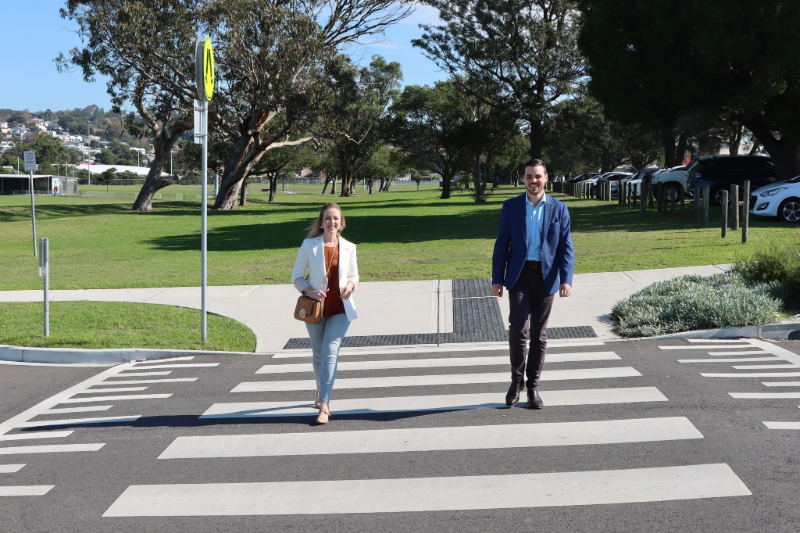
Cr Adamczyk and Deputy Lord Mayor Declan Clausen use the pedestrian crossing at New LambtonCr Adamczyk and Deputy Lord Mayor Declan Clausen use the pedestrian crossing at New LambtonDeputy Lord Mayor Declan Clausen said encouraging more people to walk is important for the wellbeing of our community and the liveability of our city.

“We’re preparing a more strategic approach to how we plan and deliver pedestrian crossings across Newcastle by addressing barriers to walking,” Cr Clausen said.

“With a better understanding of how different crossing types improve the experience of pedestrians, we’ll be able to implement appropriate crossings that prioritise safety and accessibility.

“We want to ensure our pedestrian crossings reflect the diversity of our community and cater to the needs of all Novocastrians including older residents, people with mobility or vision impairments, parents with prams, school children and tourists.”

Councillor Elizabeth Adamczyk, Chair of the Walking and Mobility Working Party said the survey would help shed light on community experiences and perceptions of the safety benefits of different pedestrian crossing types.

“Community feedback will help to improve safety and accessibility of walking in our city,” Cr Adamczyk said.

“By reducing the barriers related to crossing the road, we aim to improve safe continuous pathways of travel and enhance the experience for pedestrians of all mobilities and abilities.”

To take part in the survey visit newcastle.nsw.gov.au/yoursay

Feedback closes at 5pm on 10 June 2024.