
Text alerts among new measures to help train commuters

The NSW Government is rolling out new initiatives and technology to help give passengers a more user-friendly experience at train stations across Greater Sydney.

Following the initial Rail Review in Maylaunch, Sydney Trains has accelerated a 5-point plan to ensure passengers have simple, real-time information to help them travel on the rail network.

The plan includes:

  • Launching Geotargeted Broadcast SMS alerts during significant network incidents, providing real-time updates via text messages to a large number of nearby people, similar to localised text messages used by NSW Police.
  • New smart screens at key locations to help passengers connect across all public transport services.
  • More customer experience team members deployed to help passengers when and where they need it most.
  • Better informed frontline staff by streamlining information from the Rail Operations Centre, ensuring station and train announcements are faster, more accurate and in real-time.
  • An awareness campaign to help passengers understand the lesser-known journey planning tools available to them on the Opal Travel App.

The Geotargeted Broadcast SMS platform will be used by Transport for NSW for the first time to send alerts about an incident or service disruption to hundreds of thousands of nearby passengers and others in the area.

More than 45 new smart screens are being rolled out at 21 busy transport hubs including Central, Circular Quay, Strathfield, Lidcombe and Blacktown thanks to an initial $5 million investment. The digital screens display live information for all modes of nearby transport, providing greater connectivity and alternative options.

In addition to improved technology, additional face-to-face support will be available when it’s needed most, with new Customer Experience Team Members recruited to assist during major events and disruption.

Transport Minister Jo Haylen said:

“We’re acting on another key recommendation from the initial Sydney Trains Review.

“By staying on top of the maintenance backlog, we’ll reduce the number of potential rail disruption on our network. But no matter how well maintained our railway is, disruptions will still occur from time to time, so we’re working hard to make life a bit easier for passengers when those issues arise.

“When there’s rail disruption, we know one of the most frustrating things for commuters is not having information on-hand to help them make decisions about the best alternative, or when services will be back up and running.

“For the first time ever in NSW, we’ll be able to text up to thousands of phones at once, providing instant access to vital information relating to transport network disruptions.

“Passengers deserve the best possible journeys, and improving the way we communicate with them is a big part of that. We want people to be able to get where they need to go in the most efficient and informed way.

“Not only are we embracing new technology including real-time data, we’re also bringing on more of our wonderful frontline staff to assist passengers during times of disruption.”

Sydney Trains Chief Executive Matt Longland said:

“Upgrading stations with modern technology such as multi-modal smart screens is an important step to help passengers feel more confident with their travel plans and connect with other modes of transport.

“Training frontline staff to provide accurate, real-time customer communications during times of disruption will support our passengers when they need it most.

“Our staff are the cornerstone of our rail network. By equipping them with the necessary tools, we can ensure passengers are kept informed and have a seamless travel experience.”
Congratulations to the 2024 NSW Australians of the Year

The 2024 Australians of the Year for NSW have been announced at a ceremony at Sydney’s Museum of Contemporary Art (MCA) last night, with the NSW Premier commending the recipients for extraordinary contributions to our state. 

Premier Chris Minns congratulated melanoma treatment pioneers, Professors Richard Scolyer AO and Georgina Long AO, the 2024 NSW Australians of the Year; and NSW’s 3 other inspirational recipients in the categories of NSW Senior Australian; Young Australian; and Local Hero. 
 
The NSW finalists represent the very best of our state – their efforts have saved lives, supported families and vulnerable groups, and contributed to providing medical research which has played an essential part in providing world-class healthcare to NSW residents. 
 
NSW Premier Chris Minns said:
 
“These finalists represent the very best of what it means to be Australian. They are inspiring individuals who are devoted to helping others. Their pursuit of excellence is helping to transform NSW for the better – leading to big changes in medicine, science and community wellbeing. 
 
“Behind every nomination is a legacy of service by one person, and an expression of gratitude by another. That so many people have taken the time to nominate their fellow citizens reflects the passion, civic spirit, and gratitude of the people of NSW.
 
“The Australian of the Year Awards isn’t only about recognition – winning an award opens a new and exciting chapter for our recipients.  
 
“Award recipients will receive a platform to lead some of our most important conversations facing our communities. As well as being a great honour, this is their chance to take their message to a wider audience. 
 
“On behalf of the people of NSW, I offer my sincerest congratulations to all the finalists and to the 4 category recipients. I applaud your efforts at making our state stronger, healthier and more inclusive.”
 
The 2024 NSW Australians of the Year
 
The NSW Australians of the Year are melanoma treatment pioneers, Professor Richard Scolyer AO and Professor Georgina Long AO. Less than a decade ago, advanced melanoma was fatal – but thanks to Richard and Georgina’s immunotherapy approach, which activates a patient’s own immune system, it has become a curable disease. The co-medical directors of Melanoma Institute Australia are sought-after media commentators and advocates for sun-safe behaviour and melanoma prevention. In June, when Richard, 56, was diagnosed with incurable grade-4 brain cancer, he and Georgina, 52, developed a series of world-first treatments based on their melanoma breakthroughs. Richard became the world’s first brain cancer patient to have pre-surgery combination immunotherapy. By undertaking an experimental treatment with risk of shortening his life, he has advanced the understanding of brain cancer and is benefiting future patients.
 
Aged 79, the NSW Senior Australian of the Year, John Ward, has devoted his life to providing outstanding medical care for disadvantaged people and ageing Australians – often at personal cost and with little recognition. As Director of the Prison Medical Service, he provided care to inmates – despite few resources – and advocated for prison reform to protect this vulnerable group. Focusing on geriatric medicine and aged care since the mid-1980s, he advocates for older Australians and the importance of social determinants of health such as social connection, exercise and accessible environments. His integrated, collaborative approach to dementia care for patients and their carers has made the NSW Hunter region a leader in this field. John also co-founded the Hunter Ageing Alliance, which calls for governments, businesses and organisations to better focus on older people’s needs. The organisation has 8 programs in planning or implementation stage to create age-friendly communities, tackle elder abuse and end social isolation of older people.
 
Researcher and founder of Bheem Health, Nikhil Autar is the NSW Young Australian of the Year. Diagnosed with leukaemia at 17, Nikhil has undergone chemotherapy, bone marrow transplants, open-heart surgery and survives a life-threatening chronic illness. As a cancer survivor who understands the importance of access for people with disability, Nikhil created Knia Maps – ‘Know In Advance Maps’ – which has plotted accessibility at major Sydney hospitals, universities, public venues and transport, plus hundreds of small businesses. Nikhil, now 30, also founded Bheem Health, a social enterprise that provides low-cost medical devices for sick and vulnerable people. His first device, BheemUP, allows any bed to convert into a hospital bed. He’s now developing BheemSense, the world’s first sensor mat that tracks sleep phases and helps minimise pressure sores. The medical student has raised almost $500,000 in grant funding and conducted cancer research. A blogger, disability advocate and motivational speaker, Nikhil’s diverse and inclusive hiring practices have given migrants, people with disabilities and student engineers their first jobs.
 
Angus Olsen, childhood cancer illustrator and author is the NSW Local Hero. Angus’s daughter, Jane, was 2 when she was diagnosed with an aggressive form of cancer. While he sat at Jane’s bedside during her weeks of chemotherapy and surgery, Angus began drawing about her procedures to make sense of it. The former Disney artist now creates artworks and books in simple language to help children better understand their cancer treatment. He’s produced more than 20 books, which have been translated into 24 languages. His books and artworks have been accessed by people in 102 countries. In 2020, Angus also made a series of comics that illustrated the similarities between lockdown and what children with cancer face all the time. Angus has teamed with several charities to create resources and raise funds for childhood cancer research. The 44-year-old makes no profit from his illustrations. Every one of his images can be accessed free from his website, I Draw Childhood Cancerlaunch, and social media pages.
 
NSW’s recipients will join those from other states and territories for the national awards ceremony in Canberra on Thursday, 25 January 2024. 
 
Get more information on the Australian of the Year Awardslaunch website.

New regional Aboriginal fishing businesses helping to Close the Gap

Three Aboriginal community-owned businesses have been selected to participate in the Aboriginal Fisheries Business Development Program, led by the NSW Government, which will support selected participants to build their new businesses in the commercial fisheries sector.

Selected participants and businesses include:

  • a commercial fishing enterprise to be developed with the Yaegl Traditional Owners Aboriginal Corporation on the North Coast
  • a Walbunja Aboriginal Fishing Cooperative to be developed with Joonga Land and Water Aboriginal Corporation on the South Coast
  • a recirculated aquaculture and aquaponics enterprise to be developed with the Wonnarua Nation Aboriginal Corporation in the Upper Hunter region.

A state-wide expression of interest process saw 16 Aboriginal-community owned fisheries business proposals from across NSW apply for participation in the Aboriginal Fisheries Business Development Program. 

The program is run by NSW Department of Primary Industries (DPI) and Department of Regional NSW, together with key program partners including the Aboriginal Fishing Advisory Council, NSW Aboriginal Land Council, the Department of Aboriginal Affairs, Fisheries Research and Development Corporation and Indigenous Land and Sea Corporation.

It aims to support the development of new, economically viable commercial fishing, aquaculture, seafood processing or tourism related businesses that are owned and managed by Aboriginal community organisations/entities or Aboriginal community owned and run businesses in NSW.

The 3 successful applicants will now join the program partners and be mentored and supported to progress through the program to build their feasibility assessments, business proposal and business case.

This collaborative program will also be used to develop case studies that could easily be replicated across the state and other jurisdictions to develop other successful Aboriginal community owned and operated fisheries businesses in other areas.

Get more information on the Aboriginal Fisheries Business Development Programlaunch.

Minister for Agriculture and Regional NSW, Tara Moriarty, said:

“Once the 3 business plans and business cases are developed, the program partners will work to leverage investment in the 3 new businesses across both the public and private sector.  

“The program is part of the NSW Government’s response to the Closing the Gap national targets, aiming to increase Aboriginal and Torres Strait Islander people’s legal rights or interests in the sea.

“Aboriginal communities maintain a distinctive cultural, spiritual, physical and economic relationship with their land and waters, and we continue to work towards increasing their participation in commercial fisheries businesses so that economic and social benefits flow back to their communities.

“Successful applicants needed to be an Aboriginal community-owned entity or business and were required to explain how the social and economic benefits of their proposed business would flow back to their communities.”

Minister for Aboriginal Affairs and Treaty David Harris said:

“Closing the Gap is a top priority for the NSW Government.

“We acknowledge that to close the gap, Aboriginal people must determine, drive, and own the desired outcomes, alongside government.

“More than ever, Aboriginal people are seeking to achieve economic independence through business creation.

“This great initiative will see a new wave of Aboriginal businesses springing up on our coastline.”

New religious vilification laws commence today

A new law that prohibits vilification on the grounds of religious belief, affiliation or activity comes into effect today.

The Anti-Discrimination Amendment (Religious Vilification) Act 2023 amends the Anti-Discrimination Act 1977 to make it unlawful to, by a public act, incite hatred towards, serious contempt for, or severe ridicule of, a person or group of persons, because of their religious belief, affiliation or activity.

A ‘public act’ includes any form of public communication or conduct, verbal and non-verbal.

The amendments in the Act are modelled on existing provisions that make vilification unlawful on the grounds of race, homosexuality, transgender status and HIV/AIDS status.

The new law will also protect people who do not hold a religious belief or affiliation, or who do not engage in religious activity.

A complaint of religious vilification may be made to Anti-Discrimination NSW, which will seek to resolve it by conciliation.

In certain circumstances, a complaint may also be referred to the NSW Civil and Administrative Tribunal (NCAT) for determination. This would allow the President of the Anti-Discrimination Board to accept, investigate and attempt to conciliate complaints, as well as refer the complaint to NCAT for determination. If a complaint is substantiated, NCAT may make a range of orders, including for an apology or for damages of up to $100,000.

The Government consulted closely on the proposed amendments with a broad range of stakeholder groups, including religious faith and religious advocacy organisations and community advocacy organisations, legal stakeholders and NSW Government agencies.

Premier of New South Wales Chris Minns said:

“The NSW Government supports a peaceful, multicultural society in NSW.

“There cannot be room for hatred which sows the seeds of mistrust and intolerance. We cannot tolerate religious vilification. This would threaten the thriving, tolerant, multi-religious and multi-ethnic heart of NSW.

“We must all champion community harmony and togetherness, and choose peace and solidarity over hatred and division.

“The commencement of these amendments to the Anti-Discrimination Act fulfils an important election promise.”

Attorney General Michael Daley said:

“No one, and no group of people, should have to encounter hatred, serious contempt or severe ridicule because of their religious belief, affiliation or activity.

“The make-up of our society has changed since the Anti-Discrimination Act 1977 became law and we have enacted legislation that reflects and protects our modern society.

“We welcome people to NSW from all over the world. The harmony we enjoy and for which we have worked so hard is worth protecting. These amendments support our deep commitment to a strong and cohesive NSW.”

Minister for Multiculturalism Steve Kamper said:

“The message is simple. Those who would vilify others because of their religion should know that it is unacceptable.

“This much-needed legislation will provide our faith communities with similar protections provided to members of diverse and multicultural communities.

“NSW is the most successful multicultural and multifaith state in the world. We are united by our respect for each other and our commitment to tolerance and understanding.”

Wild Dog Fence fast tracked

The NSW Government has expedited the delivery process for the NSW Border Wild Dog Fence, with ‘boots on the ground’ expected before the end of the year.

The project will provide a 32 kilometre extension to the NSW Border Wild Dog Fence, closing the existing gap with the South Australian dog fence.

Following announcement of this project in 2019, the former Coalition Government repeatedly failed to deliver this vital infrastructure.

The NSW Government has allocated budget for the delivery of this fence and with additional resources being made available to expedite the administrative process, ensuring that construction will commence this year.

The dog fence is an important tool in the fight against wild dogs, other pest animals and biosecurity threats facing producers and local communities in Western NSW.

This action is the latest in the NSW Government’s commitment to biosecurity, which has included the establishment of the state’s first Biosecurity Commissioner and $13 million in funding to combat feral pigs.

Minister for Agriculture, Minister for Regional NSW, Minister for Western NSW Tara Moriarty said:

“The NSW Government is committed to supporting our agricultural sector in Western NSW and championing biosecurity.

“We know the threat wild dogs pose to agricultural and native livestock, which is why we have taken urgent action to ensure this vital project is delivered.

“After four years of mismanagement by the Nationals and former Government, the Minns NSW Government is committed to getting this fence done.”

Communities and industry to have their say as NSW accelerates renewable energy transition

The NSW Government is getting the state’s energy transition back on track by releasing new draft guidelines to accelerate the planning approval and construction of wind, solar and transmission infrastructure.

Feedback is being sought on draft guidelineslaunch which are designed to promote faster decisions, provide certainty to investors and industry, and improve transparency for communities.

The draft guidelines provide clarity on how noise, visual and other community impacts should be evaluated and managed through the development assessment process.

They also propose new benefit-sharing arrangements through planning agreements with councils across NSW. Renewable energy projects are expected to deliver more than $400 million to support local government initiatives over the next 25 years.

This is in addition to the hundreds of millions of dollars available under the NSW Government’s Community and Employment Benefit Program in Renewable Energy Zones.

The draft guidelines are aligned with recommendations made by the Electricity Supply and Reliability Check Up and the NSW Agriculture Commissioner’s report on renewable energy generation and agriculture.

A range of draft tools to help landholders considering hosting renewable energy development are also on public exhibition.

Development of large-scale solar and wind energy projects are critical to delivering a secure and affordable supply of electricity and achieving NSW’s Net Zero targets.

All stakeholders including industry, councils and residents are encouraged to have their say on the draft guidelines before Friday, 15 December 2023.

The Department of Planning and Environment will review submissions and finalise the proposed guidelines in early 2024.

Have your say on the Energy policy frameworklaunch  

Minister for Energy Penny Sharpe said:

“We want communities and industry to provide feedback so we can crack-on with delivering the renewable energy NSW needs.

“The draft guidelines are critical to delivering renewable energy and reducing greenhouse gas emissions. 

“The guidelines also suggest how communities can benefit from the transition. Community feedback is essential and we look forward to it.”

Minister for Planning and Public Spaces Paul Scully said:

“It’s vital that the planning system adapts and evolves so we can deliver the energy generation and transmission infrastructure our state needs into the future.

“These proposed new guidelines will support faster decisions and clearer rules that will increase certainty for the industry and communities.”

Deepening crisis: Rental Affordability Index reveals rental calamity for people on low incomes in regional NSW 

The annual National Shelter-SGS Economics & Planning Rental Affordability Index reveals regional NSW housing is less affordable now than at any point in the last decade, challenging the perception that regional NSW is a safe haven for low- and middle-income households.

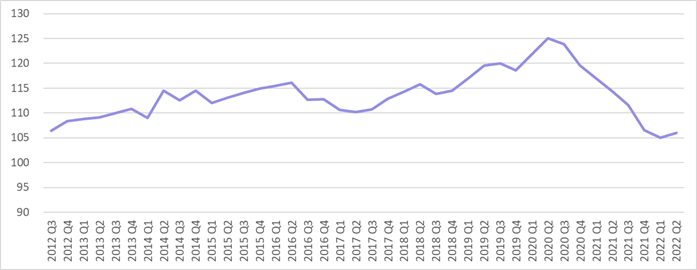
Rental Affordability Index, Regional NSW

John Engeler, CEO Shelter NSW, said: “For too long, the regions have been viewed with misty eyes as an affordable option for Sydneysiders to retreat to when rents got too high in the city. This is not the case, not for newcomers and certainly not for locals living on local industry wages. Since the pandemic, a growing proportion of renters are forced to dedicate more than 30% of their income to rent in the regions. This is not a sustainable situation, it’s a social emergency.”

Unaffordability is hurting the economy too. “Unaffordability has spread from employment centres. Households have to live further away from where the jobs are to access affordable rents, and businesses are struggling to find workers”, according to Ellen Witte, Principal at SGS Economics & Planning.

The Report notes that the average rental household in regional NSW has a gross annual income of $84,651 per annum. If renting at the median rate, that household faces paying 29 percent of its total income to rent. This means regional NSW has a Rental Affordability Index score of 102, putting it right on the verge of being deemed ‘unaffordable’. 

This represents a 7 percent decline in affordability in the past three years, disproportionately hurting those on the lowest incomes pushed into housing stress to afford a roof over their heads. For a single person relying on JobSeeker, the average regional NSW rental is now ‘extremely unaffordable’, comprising 71% of income. 

TRENDS – REGIONAL NSW (JUNE 2022)

2012201320142015201620172018201920202021
2022

2023
109 112 116 114 116 112 116 118 122 114 106 102

While parts of the State still offer acceptable to very affordable rents these areas tend to be far-flung, with limited access to services and relatively lower rental stock. Regional centres like Bathurst, Maitland, Wagga Wagga, and effectively the entire coastline including the entirety of Illawarra-Shoalhaven, all offer at best, moderately unaffordable rents at the median level. 

“This downward spiral has now reached the point where very few affordable long-term rentals are on offer.” according to Ellen Witte, Principal at SGS Economics & Planning. “We need to attack this problem from multiple angles. This means rapidly expanding social and affordable housing, rethinking how we use tax subsidies, and strengthening renters’ rights.”

Household typeIndicative gross annual incomeRAI scoreRent as a share of income Relative unaffordability category
Single person on Jobseeker$22,1004371%Extremely unaffordable 
Single part-time worker parent on benefits $44,8006249%Severely unaffordable 
Single pensioner$36,7007143%Severely unaffordable 
Pensioner couple$54,3008038%Severely unaffordable 
Student sharehouse$84,8009631%Unaffordable
Hospitality worker$62,80011825%Moderately unaffordable 
Single income couple with children$104,50012125%Acceptable 
Minimum wage couple$91,80012624%Acceptable 
Single full-time working parent$104,50014720%Acceptable 
Dual income couple with children$209,00024212%Very affordable 

EDITOR’S NOTE: The Rental Affordability Index scores areas based on median rental prices and average income of rental households within the capital city or rest of state area’. A score of 100 indicates households spend 30 percent of income on rent, the critical threshold level for housing stress. A lower score is worse. 

A score of 50 or less indicates extremely unaffordable rents, 51-80 indicates severely unaffordable rents, 81-100 indicates unaffordable rents, 101-120 indicates moderately unaffordable rents, 121-150 indicates acceptable rents, 150 or more indicates affordable rents.

Appointment of Ambassadors, High Commissioners and Consul-General

Today I am pleased to announce the appointment of seven highly qualified individuals to lead Australia’s posts in Iraq, Kenya, the Lao People’s Democratic Republic, Los Angeles, the Federal Republic of Nigeria, Niue and the United Arab Emirates.

Our diplomats are the driver of Australia’s engagement with the world. They build influence and prosecute Australia’s national interests abroad.

I am pleased that these individuals will take up the following positions:

  1. Mr Glenn Miles as Australia’s next Ambassador to the Republic of Iraq.
  2. Ms Jenny Da Rin as Australia’s next High Commissioner to the Republic of Kenya.
  3. Ms Megan Jones as Australia’s next Ambassador to the Lao People’s Democratic Republic.
  4. Ms Tanya Bennett as Australia’s next Consul-General in Los Angeles.
  5. Ms Leilani Bin-Juda PSM as Australia’s next High Commissioner to the Federal Republic of Nigeria.
  6. Ms Katy Stuart as Australia’s next High Commissioner to Niue.
  7. Mr Ridwaan Jadwat as Australia’s next Ambassador to the United Arab Emirates.

I thank the outgoing heads of mission and consuls-general for their contributions to advancing Australia’s interests.

GREENS CALL ON THE SOUTH AUSTRALIAN GOVERNMENT TO URGENTLY SUBSIDISE PROVEN SHARK DETERRENT DEVICES

The Greens call on all levels of government, especially the South Australian Government, to do more to help ocean goers reduce the risk of rare, but potentially dangerous encounters with great white sharks this summer by following the lead of the Western Australian Government in subsidising the rollout of personal shark deterrent devices. 

The call comes ahead of White Sharks Global, an international conference held in Port Lincoln this week. White shark experts from around the globe will gather to discuss issues such as white shark conservation, research on population numbers, and how to measure and reduce the risks of human and white shark encounters. 

Greens Senator Peter Whish-Wilson – who chaired a landmark 2017 Senate inquiry into mitigating the risks of shark bites in Australia – will today be a keynote speaker at the timely conference. 

Greens spokesperson for healthy oceans, Senator Whish-Wilson said:

“The recent spate of white shark encounters in South Australia, and the risk of further rare but tragic and traumatic encounters this summer, will inevitably lead to populist un-scientific calls to cull and reduce white shark populations.

“In response to the tragic death of surfer Tod Gendle at Streaky Bay the South Australian Premier recently stated there isn’t much a government can do to help prevent such tragedies, but this is wrong. 

“The Senate inquiry into shark mitigation and deterrent measures recommended all states follow the lead of the Western Australian government and subsidise scientifically tested and proven shark mitigation devices, but so far no other state has taken this easy-to-implement measure. 

“So far the WA government has subsidised more than 4000 personal shark deterrent devices for ocean goers, in an attempt to see them more widely adopted by surfers, divers and swimmers.

“There are many simple options to reduce risks at our popular beaches and surf spots and I urge Premier Malinauskas to listen to the advice of experts and roll out these measures. 

“The ocean is not a risk free environment, and while there are no guarantees any public safety measure will be 100% effective, such measures can significantly reduce the risk of human-shark encounters. 

“Scientific research and tests on some personal shark deterrent devices have shown that they can reduce the risk of white and other shark species encounters by more than 60%.

“But it shouldn’t just be up to the states, the Federal Government also has a significant role in coordinating, standardising and driving national investment in research and adoption of emerging shark risk mitigation measures to protect ocean goers. 

“Safety in our oceans and the protection of vulnerable species, such as white sharks, aren’t binary options, both are possible and can be done much more effectively.” 

Remembrance Day

On the 11th of November 1918, after four years of the greatest tragedy ever visited upon humanity, the sound of guns ceased.

Many had predicted or hoped that the Great War would be ‘the war to end all wars’.

It was not to be the case.

For just over two decades later, the sound of guns resumed even louder.

The horrors of a new world war were to be visited upon a new generation.

And, just like their forebears, they answered the call to serve and shoulder arms.

Ralph Graham Davidson was one such man; one such great Australian.

He was born in the small Queensland agricultural town of Warwick – about 160 kilometres south-west of Brisbane.

Ralph attended the nearby state school in Karara.

The studious young Ralph won a scholarship to attend Warwick’s Scots College.

And no sooner had he passed his public examination than the 16-year-old found himself working as a clerk at the local Commonwealth Bank.

His manager, Mr Thomas, described Ralph as ‘a lad of splendid character’.

Splendid he was indeed.

For only five years later in 1940, as war engulfed the world, Ralph enlisted in the Australian Imperial Force.

Corporal Davidson saw action in Syria in 1941.

And in 1942, he found himself in Papua as part of a crucial Allied campaign.

The Imperial Japanese forces had been defeated during the Battle of the Coral Sea and denied the opportunity to take Port Moresby via a naval assault.

And so, they turned their attention to taking the city via land across the Owen Stanley Range.

Standing in their way were the dogged Australian forces who knew that if Port Moresby fell, it would be a strategic base from which the Imperial Japanese forces could isolate, or indeed attack Australia.

From July to November of 1942, the two sides engaged in jungle battles along and around the Kokoda Trail.

Corporal Davidson and his band of brothers from the 2/25th Australian Infantry Battalion joined the fray in September.

The intense close-quarter fighting was vicious with frequent hand-to-hand combat.

The Official Histories noted that ‘bush warfare in difficult mountains demanded physical endurance and courage of the highest order.’

Despite exhaustion, the Anzacs didn’t just delay the Imperial Japanese advance, they put their enemy on the back foot.

Come November, the Australians moved on the Japanese defensive positions, in and around the village of Gorari.

The battle raged for seven days as the Australians endeavoured to outflank the tenacious Japanese.

Bayonet thrusts, volleys of bullets and exploding grenades turned forest clearings into ‘grim killing grounds’.

But the Australians prevailed. And the Battle of Gorari became the last major engagement on the Kokoda Trail.

Thanks to those who fought and died in Papua, the Imperial Japanese forces were again denied the prize of Port Moresby.

Indeed, in Papua, Australians helped turn the tide of the war.

Corporal Ralph Davidson was one such Australian.

But the 23-year-old man was not to return home.

Among 132 other Australians, he was killed during the Battle of Gorari.

He fell on the 11th day of the 11th month.

He fell on Remembrance Day.

In the Warwick Daily News, Ralph’s family said that he would be ‘Imperishably enshrined in the hearts of those who loved him.’

On Remembrance Day, may the weight of the collective deeds of all Australians who have served in wars, conflicts and peacekeeping operations throughout our history be imperishably enshrined in our hearts.

May the sacrifice of so many in war forever reside in our national consciousness so we never become cavalier about our duty to preserve peace.

Lest we forget.