EMISSIONS UP AS LABOR APPROVES NEW COAL AND GAS

With official emissions data revealing today that emissions under Labor have risen 3.6 million tonnes this year, the Greens have said that Labor’s talk of climate action is gaslighting when they continue to open new coal and gas projects.

The Government has also confirmed that they will refuse to back the Climate Change Authority’s recommendation to reduce gas demand through phasing out new and existing gas connections, while instead focusing the government’s energy on building new gas fields.

Additionally, they have refused to fully support net-zero based Fuel Efficiency Standards as recommended by the Climate Change Authority, leaving Australia at risk of becoming the dumping ground for old and dirty ICE vehicles.

Leader of the Australian Greens, Adam Bandt MP, has called for Labor to stop opening up new coal and gas. Gas is as dirty as coal, and the federal government must play a role in ensuring households don’t get stuck on the expensive and polluting fuel source.

Adam Bandt MP, Leader of the Australian Greens said:

“Climate pollution is rising under Labor and they’re still approving new coal and gas mines,” Mr Bandt said.

“Labor must stop gaslighting the public. Opening new coal and gas isn’t climate action. 

“By opening new gas fields and refusing to help phase out gas in homes, Labor is trying to prop up the gas industry by trapping customers on the expensive, polluting energy source. 

“Labor isn’t even going to meet its unscientific 43% emissions reduction target, which will see Australia blitz past 2 degrees of warming and see our country’s agriculture pushed to the brink.

“There are ten coal and gas projects on Tanya Plibersek’s desk that will create ten times more pollution than what the government’s weak 2030 targets will save.”

New partnership to help fight HIV

The Albanese Government is investing up to $12 million in a new partnership that will support local communities and governments in Southeast Asia and the Pacific to improve HIV testing and treatment, reduce stigma and discrimination, and lower transmission.

Australia will work with the Joint United Nations Programme on HIV/AIDS (UNAIDS) and Health Equity Matters to deliver this new initiative, which aims to accelerate access to new HIV prevention and treatment solutions, through community-led responses.

HIV responses which are specifically crafted for and implemented by communities, are key to addressing stigma and discrimination, and reaching all those who need help.

From prevention to treatment, addressing stigma and discrimination is critical. HIV is a virus that affects all parts of the community, women and girls accounted for almost half of all new HIV infections in 2022. Therefore, community-led responses are an effective way of reaching all people who need assistance.

This is part of the Australian Government’s five-year $620 million Partnerships for a Healthy Region initiative, and is in addition to Australia’s ongoing support to UNAIDS and the Global Fund to Fight AIDS, Tuberculosis and Malaria.

World AIDS Day, on 1 December, is a time to reflect on the remarkable progress made in the fight against HIV, and the work required to end the HIV epidemic and support those living with HIV.

Minister for Foreign Affairs, Senator the Hon Penny Wong said:

“Globally we have made remarkable progress in the fight against HIV – but there is still more to be done.

“It is critical that Australia supports communities in our region to end the HIV epidemic, including through sharing our own knowledge and experience.”

Minister for International Development and the Pacific, the Hon Pat Conroy MP said:

“This new partnership will support locally led solutions to the HIV epidemic in our region – enabling affected communities to lead the response.

“We are building genuine partnerships across our region to reduce HIV transmission and support those living with HIV.”

CEO, Health Equity Matters, Adjunct Professor Darryl O’Donnell said:

“The most effective way to treat and prevent HIV is to empower the people who most feel its impact.

“We endorse the Government’s resolve to fight stigma and expand access to prevention, treatment and testing.”

Regional Director, UNAIDS Asia Pacific and Eastern Europe Central Asia regions, Eamonn Murphy said:

“UNAIDS values Australia’s long-standing partnership globally and in the Indo-Pacific region, and particularly its commitment to community leadership.

“By supporting expanded access to HIV prevention and treatment while reducing stigma and discrimination, we can accelerate progress toward ending AIDS as a public health threat.”

Five-year investment secures long-term future for flagship New Annual festival

City of Newcastle (CN) has reaffirmed its support for the region’s creative arts industry, locking in a five-year commitment for the New Annual festival and opening expressions of interest for local artists.

Councillors voted at last night’s Council meeting to expand the festival from a year-by-year event to one guaranteed to continue as the city’s flagship art and culture event until at least 2028.

This will enable strategic long-term planning for the ongoing growth of New Annual, which attracted around 95,000 visitors and involved more than 1,500 visiting and local artists and performers during its first three years.

Catapult Dance Choreographic Hub performed their new dance production, Rhapsody, as part of New Annual 2023 after being selected in the Made New program.

Newcastle Lord Mayor Nuatali Nelmes said New Annual will continue to develop as a significant cultural tourism attraction for Newcastle.

“Our vision is to see New Annual elevate Newcastle’s reputation as a creative hub on the national and international stage,” Cr Nelmes said.

“A five-year commitment provides the platform for securing high-profile collaborations, attracting renowned artists, and achieving national recognition.

“New Annual’s significance extends beyond its support for the arts by strengthening our position as a cultural tourism destination, which in turn generates an economic boost for local businesses through longer stays and increased visitor spending.”

CN is also calling for applications for New Annual’s ‘Made New’ program, which provides an opportunity for local artists and those with a connection to Newcastle to become part of future festival programs.

Chair of CN’s Community and Culture Advisory Committee Cr Carol Duncan said New Annual would continue to play an important role in celebrating the depth of talent in Newcastle’s cultural and arts sector.

“City of Newcastle is committed to supporting local artists and organisations through flagship events such as New Annual, which provide a high-profile platform to showcase their talents alongside leading national and internationally-renowned practitioners,” Cr Duncan said.

“Local artists and performers accounted for more than 60 per cent of this year’s programming, including the recipients of our ‘Made New’ program, who were supported by City of Newcastle to deliver sold-out productions across the 10-day festival.

“This included a stunning new dance production performed by Catapult Dance Choreographic Hub, an AI-driven interactive theatre experience by The Parallel Effect and the hilarious debut of Newcastle-based play, Spewy, by Novocastrian-born playwright Ang Collins.

“I look forward to seeing the performances produced under the next round of Made New funding, which will form part of the wider programming of local performers at New Annual.”

Local artists working across interdisciplinary art forms, visual arts, dance, theatre, music, and multimedia are encouraged to submit an expression of interest before 5pm on 14 January, 2024.

The selected projects or works will be presented as part of New Annual 2024, which will be held from 27 September – 6 October, 2024, or New Annual 2025, which is scheduled for 26 September – 5 October, 2025. This flexibility is designed to support those with large-scale projects that may benefit from an extended development period.

To keep up-to-date with the latest news or submit an expression of interest for Made New, visit www.newannual.com

Hamilton’s green heart prepares for reimagined playspace

City of Newcastle will invest more than $3 million into a new inclusive playspace at Hamilton’s historic Gregson Park, with construction set to kick off early next year.

Councillors voted Tuesday night to accept the tender for the project, which will include a variety of traditional play equipment, as well as a range of accessible and nature-based play options, with traditional Indigenous elements, including a yarning circle to encourage knowledge sharing and a bush tucker garden to enrich learning of native edible plants.

Additional shade, a water feature, formal and informal seating, and footbridges will also feature, complemented by an upgraded, accessible amenities building and new covered picnic area, with construction expected to be completed in late 2024.

Lord Mayor Nuatali Nelmes and Cr Duncan at Gregson Park

Newcastle Lord Mayor Nuatali Nelmes welcomed the next step in the delivering this important project for Hamilton residents and the community.

“City of Newcastle is committed to delivering quality playgrounds and green spaces across Newcastle for locals and visitors to enjoy,” Cr Nelmes said.

“We know our community values Gregson Park’s rich Indigenous history and what it offers as a diverse recreational space.

“Construction of this playspace in the new year signifies an important milestone in delivering our shared vision for Gregson Park, and was identified as a high priority action as part of the adopted Masterplan for the much-loved park.

“We’ve undertaken extensive community engagement in preparing the Gregson Park Masterplan 2021, with feedback incorporated into the final design for the playspace and upgraded amenities, along with consultation with First Nations Australians to appropriately capture Indigenous elements in the design.”

Councillor Carol Duncan, who is also the Chair of the Community and Culture Advisory Committee, said she looked forward to the project progressing.

“Gregson Park is a well-loved destination for Hamilton residents and the wider Newcastle community, offering a tranquil green space, just a short stroll from bustling Beaumont Street,” Cr Duncan said.

“The enhanced inclusive elements of the new playspace and upgraded amenities will ensure Gregson Park is made even more accessible for the future generation’s enjoyment of the space.

“I’m excited to see more members of our community interacting with this space in years to come.”

Newcastle Art Gallery expansion reaches new heights

The expansion of the Newcastle Art Gallery will reach new heights today with the installation of a 33 metre high hammerhead tower crane on site.

The crane will facilitate the next stage of the long-awaited Art Gallery Expansion project, which will more than double the size of the Gallery, modernising the facility into a fitting home for City of Newcastle’s nationally significant $126 million collection.

Newcastle Art Gallery Foundation Chair Suzie Galwey, Lord Mayor Nuatali Nelmes and Councillor Carol Duncan with representatives from City of Newcastle and Hansen Yuncken at the Newcastle Art Gallery site for the arrival and installation of the tower crane.Newcastle Lord Mayor Nuatali Nelmes was pleased to see the main construction works progressing, bringing the community another step closer to a world class space for education and enjoyment of the arts.

“Due to its smaller size, the Gallery has only ever had the capacity to display around one percent of its amazing collection at any one time,” Cr Nelmes said.

“The expanded Gallery will mean we can welcome many more people into the space and give our collection the home it deserves.

“The newly installed crane is a welcome albeit temporary addition to our city’s skyline, and I am really pleased to see the construction activity forging ahead.”

Once completed, the expansion project will deliver multiple exhibition spaces with the ground floor galleries dedicated to permanent collection display, a café, retail shop, multi-purpose program space, and a secure international standard loading dock.

The crane’s arrival followed the presentation on Tuesday of a $1.3 million cheque for the expansion to City of Newcastle from the Newcastle Art Gallery Foundation. The milestone payment is drawn from the Art Gallery Redevelopment Fund, which consists of funds raised by the community over many years and held in trust by the Foundation on behalf of the City of Newcastle since 2013.

Foundation Chair Suzie Galwey said the Foundation had so far secured philanthropic donations and pledges totalling $12 million for the expansion project, with a further $1 million being sought to achieve its $13 million fundraising goal.

“This cheque represents two decades of community passion, advocacy and fundraising for a world class gallery for Newcastle and the Hunter,” Ms Galwey said.

“It’s wonderful to celebrate this milestone payment alongside such exciting progress in the construction works and we look forward to seeing the expanded building continue to take shape.”

To celebrate the arrival of the crane, City of Newcastle is collaborating with Head Contractor Hansen Yuncken and a range of early learning providers in a family-friendly ‘Name the Crane’ colouring competition.

Newcastle Art Gallery Director Lauretta Morton OAM said the fun competition would help spark interest in both the arts and construction amongst Newcastle’s youngest students.

“The Gallery has long partnered with schools and pre-schools in the area to foster connections and creativity, so this seemed like a lovely way to continue this legacy while our programming has moved off-site,” Ms Morton said.

Results of the competition, including the reveal of the crane’s name, will be announced early next year.

The Newcastle Art Gallery expansion project is supported by $5 million from the Australian Government under the Regional Recovery Partnerships and $5 million from the New South Wales Government under the Regional Recovery Package, as well as $12 million from the Newcastle Art Gallery Foundation made possible through the Valerie and John Ryan bequest, Margaret Olley Trust, and community fundraising over many years. A further $1 million is currently being sought through the Foundation’s public fundraising campaign.

The Regional Recovery Partnerships initiative seeks to broker connections between all levels of government to increase information flow, share technical expertise and strengthen regional development outcomes.

Iconic Lismore ice cream factory reopens

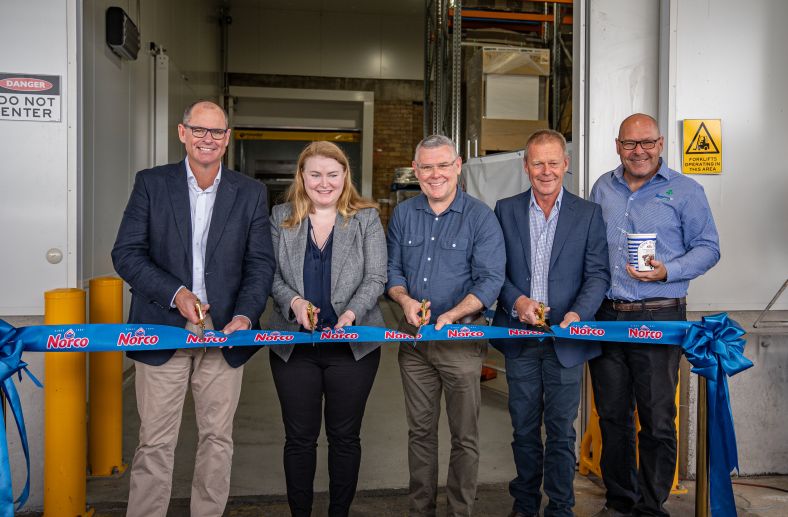
Northern Rivers flood recovery has hit a significant milestone today, with the reopening of the Norco ice cream factory in Lismore.Norco ice cream factory reopening

The factory, one of the biggest employers in the Northern Rivers, was forced to close after suffering major damage in the February-March 2022 floods.

Today it’s back in business, with 130 local employees now back at work, and more hires to be made over the coming months.

The Lismore factory produces approximately 42 million litres of ice cream per year.

The Albanese and NSW Governments collectively contributed nearly $55 million to the reopening efforts, to protect local jobs, boost resilience and re-establish factory operations.

This includes $34.7 million jointly funded through the Anchor Business Support Grant Program, which supported six key local businesses to retain staff and rebuild.

The funding has supported Norco to rebuild with a flood-proof design and technologies that have equipped the site to defend a 15.0M flood – higher than the 2022 levels:

  • Positioning expensive specialised equipment like switch boards 15 metres above ground.
  • Installing quick release capabilities to items such as pumps so they can be moved easily.
  • Installing two mezzanines to allow staff to lift pallets of equipment greater than 15 metres high.
  • Installing nib walls to protect equipment that cannot be moved.
  • Installing additional sumps and pumps within the flood barriers to deal with any water leaks.
  • Implementing a four-stage flood management plan that is reviewed and practised regularly to ensure best practice and safe evacuation procedures.
  • Installing infrastructure to detect unprecedented disaster events, such as fires.

These measures mean the factory will be able to open its doors within days or weeks rather than months or years following another flooding event.

Federal Minister for Emergency Management Murray Watt said:

“This is an exciting day – Norco is one of the region’s biggest employers, and seeing the doors reopen is a big boost for the community.

“The Albanese Government invested $20 million directly, and close to $35 million jointly with the NSW Government to help secure the future of Norco’s Northern Rivers operations, because of the important role it holds in the region.

“A major priority for the Albanese Government was to ensure that as much of the workforce as possible were retained, so it’s great to hear that 130 workers will be back today.

“Many have been working with the Lismore City Council and groups like Resilience Lismore to support local community recovery work while the factory was being rebuilt.

“Our Government was pleased to work with the NSW Government and all of the recipients of Anchor Business Support grants to help rebuild local facilities.

“The improvements will minimise the damage of future flooding and support those businesses to bounce back faster, providing more consistent employment for their workers.”

Minister for Regional NSW Tara Moriarty said:

“The reopening of Norco ice cream factory marks a huge milestone in the flood recovery efforts for the Northern Rivers.

“As one of the biggest employers in the region, we know how important it is to invest in projects that deliver resilient infrastructure so people can stay in jobs and the economy can thrive.

“Our shared goal with the 100 per cent Australian dairy farmer owned Norco, is that after any future flooding event this investment in the rebuilt Norco ice cream factory has ensured the business will be able to get back into action quicker.”

Assistant Minister Senator Jenny McAllister said:

“Today is an important milestone for the Northern Rivers.

“The Norco factory brings workers, farmers, businesses, and the community together, and the Albanese Government is committed to building back smarter and stronger.

“The factory has been fitted with flood mitigation measures like higher switch boards and quick release mechanisms to future proof the factory against floods higher than the 2022 level.”

NSW Parliamentary Secretary for Disaster Recovery Janelle Saffin said:

“The reopening of the Norco ice cream factory is a massive day for the people here in the Northern Rivers.

“Not only is it important for the employees to get back to work but it’s also crucial for local dairy farmers and small businesses who rely on the factory.

“The ice cream factory is one of the longest standing large businesses in the region, and with the new flood mitigations measures in place we want to ensure that it continues to stay that way.”

Norco Chief Executive Officer Michael Hampson said:

“We understand just how important the factory is to our workforce and the Lismore community and will remain future-focused on continuing to create opportunities for the region, maintaining a strong focus on innovation, jobs creation and investment in people, to create exciting career development pathways from right here in Lismore.

“I’d also like to express my sincere gratitude to both the Australian and NSW Governments who facilitated the Anchor Business Support Program, and delivered the funding which has enabled us to rebuild in a way that has modernised our operations and introduce product innovations and technology that will help cement the Northern Rivers of NSW and its thriving ‘food belt’ as a food innovation, centre of excellence.”

The Anchor Business Support Grant Program supported nearly 1400 local full-time jobs in the Northern Rivers, through six successful recipients:

  • Norco Co-operative Limited 
  • Manildra Harwood Sugars (Sunshine Sugar)
  • Social Futures,
  • McKinlay Enterprises (North Coast Petroleum)
  • Williams Group Australia
  • Multitask Human Resource Foundation.

The $59.3 million program was funded by a $44.3 million commitment from the Commonwealth Government, with $15 million co-funding from the NSW Government.

NSW leads the way in tackling digital skills shortage

The NSW Government is joining leaders across government, the digital industry, and education and training providers to address the projected shortage of 85,000 digital workers in NSW by 2030.

Today, the Minister for Skills, TAFE, and Tertiary Education, Steve Whan, officially launched the NSW Digital Skills and Workforce Compact at NSW Parliament House.

This collaborative effort involves the participation of 37 compact partners, spanning across the highest levels of industry. Combined, compact partners have a reach of 1.7 million students and represent over 340,000 digital workers in NSW.

The compact will promote digital careers across the state to students, parents, and advisors, advancing tech careers in traditionally underrepresented groups such as women, First Nations people, and those residing in regional and remote areas.

The partnership will support industry in developing and implementing new employment pathways, giving new workers on-the-job training experiences to start a long-term career in the digital industry. 

The digital compact aspires to achieve the following milestones:

  • Transform the perception of digital careers, enhancing diversity in the sector, fostering welcoming and productive workspaces.
  • Collaborate with industry partners to expand and enhance new pathway programs for tech roles, including traineeships and work experiences.
  • Extend the reach of mentoring and networking programs to engage a more diverse audience.
  • Provide increased opportunities for the people of NSW to reskill or upskill in tech-related roles.
  • Establish a collaborative platform with universities, TAFE, school curriculum providers, and industry experts to create a Digital Education Forum dedicated to enhancing tech education and industry partnerships.
  • This collaborative effort marks a significant step forward in addressing the digital skills gap in NSW, ensuring a robust and inclusive digital workforce for the future.

For more information visit the NSW Digital Skills and Workforce Compact.

Minister for Skills, TAFE and Tertiary Education, Steve Whan said:

“It’s terrific to sign this landmark agreement as the NSW Government unites with industry and education leaders to proactively tackle the looming digital skills shortage.

“This partnership is a testament to our commitment to shaping a digitally empowered future for NSW and together, we’re laying the foundation for a resilient and inclusive digital workforce for the future.

“The NSW Digital Compact represents a significant opportunity for government to work with industry to change people’s idea of ‘tech,’ expanding the inclusivity of the sector.

“We’re not just bridging the skills gap; we’re building pathways for thousands of students, parents, and advisors to explore and embrace tech careers.”

Chair of the NSW Skills Board and CEO of Microsoft ANZ, Steven Worrall, said:

“Research commissioned by the NSW Skills Board shows that NSW is projecting a shortfall of 85k digital workers by 2030.

“We need to increase opportunities for more people to come into these roles as existing pathways won’t meet this demand. The compact is crucial to meeting the 85,000 shortfall and ensuring we create a sector that reflects the diversity of NSW. Compact partners intend to achieve 20% of new hires coming from alternative pathways by 2030.

“We believe the compact will help to provide a pipeline of diverse talent to fill these high paying, secure jobs that are being created in NSW’s digital sector.”

The NSW Digital Compact Partners are: the NSW Government, Accenture, ACFIPS, ACS, AIIA, Akkodis, ANZ, AWS, Business NSW, Commonwealth Bank, Future Skills Organisation, the Institute of Applied Technology Digital, ITECA, Linkedin, Microsoft, NAB; Salesforce, Seek, TAFE NSW, Tech Council of Australia, Telstra, Westpac Group, Woolworths Group and all NSW/ACT universities.

Alarming rates of sunburn in children and young people

Parents and carers are being urged to protect their children from the sun, with an alarming number of children and young people being treated in emergency departments for sunburn.

Health Minister Ryan Park acknowledged more needs to be done to reduce the incidence of skin cancer joining NSW Chief Cancer Officer Professor Tracey O’Brien and Member for Coogee Dr Marjorie O’Neill to launch the NSW Skin Cancer Prevention Strategy 2023 to 2030 at the Prince of Wales Hospital.

“It is pretty shocking to hear more than 800 people presented last financial year to our state’s emergency departments with sunburn, with the majority children and young people,” Mr Park said.

“Melanoma is the deadliest form of skin cancer, and by the end of the year, we anticipate close to 6000 people in NSW will be diagnosed with this devastating cancer.

“Sun damage and skin cancers are highly preventable, and we’re encouraging the community to do really simple things like seeking shade when outdoors, wearing sunscreen, putting on a hat, sunglasses and protective clothing to safeguard themselves.

“Even mild exposure to the sun can lead to damage and I’m confident our latest Skin Cancer Prevention Strategy will help build on decades of skin cancer prevention work in NSW and save more lives.”

Two in 3 Australians will be treated for skin cancer during their lifetime, with 95% of melanoma and 99% of non-melanoma skin cancers caused by overexposure to UV radiation from the sun.

NSW Chief Cancer Officer and CEO of Cancer Institute NSW, Professor Tracey O’Brien, says high sun exposure in the first 10 years of life more than doubles a person’s risk of developing melanoma skin cancer.

“Australia has one of the highest skin cancer rates in the world and protecting our skin from the sun from a very young age, and into adulthood, is key to reducing our risk of skin cancer,” Prof. O’Brien said.

“When people think of skin cancer risk, they often think of a day at the beach, but in NSW, UV radiation levels are high 10 months of the year which is why its vital people protect their skin all year round, even on cool and cloudy days.

“This new strategy is about working across government and community to ensure people are empowered and supported to protect their skin when at school, work and enjoying the outdoors.” 

As a child who spent most of her time outdoors enjoying nippers and netball, Kate Thomas received a devastating melanoma skin cancer diagnosis at the age of 27.

“When I was told I had skin cancer, I couldn’t believe it and my mind automatically went to the worst possible scenario. It was incredibly frightening,” Ms Thomas said.

“I wish I could go back in time and tell my young self to do things differently, to listen to my mum when she kept reminding me to cover up. My diagnosis completely changed my outlook on sun safety and I hope to encourage young people to take skin cancer seriously, and not make the same mistakes I made.”

Member for Coogee Marjorie O’Neill said all UV exposure from the sun is causing damage to our skin and increasing our skin cancer risk.

“We’re fortunate to live in a sun-drenched country which is why remembering to use sun protection needs to be instinctive when we step outside, and not just when we’re at the beach,” Dr O’Neill said.

“Whenever we go for a walk, are at the park or are hanging the washing we need to protect our skin and teach our kids to the do the same.”

The NSW Skin Cancer Prevention Strategy 2023 to 2030 was developed by the Cancer Institute NSW in partnership with 20 organisations and experts across health, education, industry, sport and recreation, and 600 community members.

The strategy focuses on the importance of embedding skin cancer prevention strategies across the public, private and community sector; improving access to quality shade at work, school, play and public spaces; and increasing the adoption of sun protection behaviours.

Read the NSW Skin Cancer Strategy 2023 to 2030launch

Sunburn statistics:

  • In the last 10 years (July 2013 to June 2023), close to 5000 people have presented to an emergency department for treatment of sunburn with the highest rates seen in people aged 5 to 24 years.
  • In the 2022-2023 financial year, 818 people required care in an NSW emergency department for sunburn.
  • This is a 28% increase when compared to the previous financial year (640).
  • In the 2022-2023 financial year, the highest rates of sunburn related emergency department presentations were in Hunter New England (184), followed by South Western Sydney (105), Western NSW (91), Northern NSW (67) and Western Sydney (58).
  • Not all people with sunburn will present to an emergency department.
  • These statistics are just the tip of the iceberg.
  • The high rates in children and young people are concerning as high sun exposure in the first 10 years of life more than doubles their risk of developing melanoma skin cancer.

More than $46 million builds back more resilient Aboriginal-owned assets

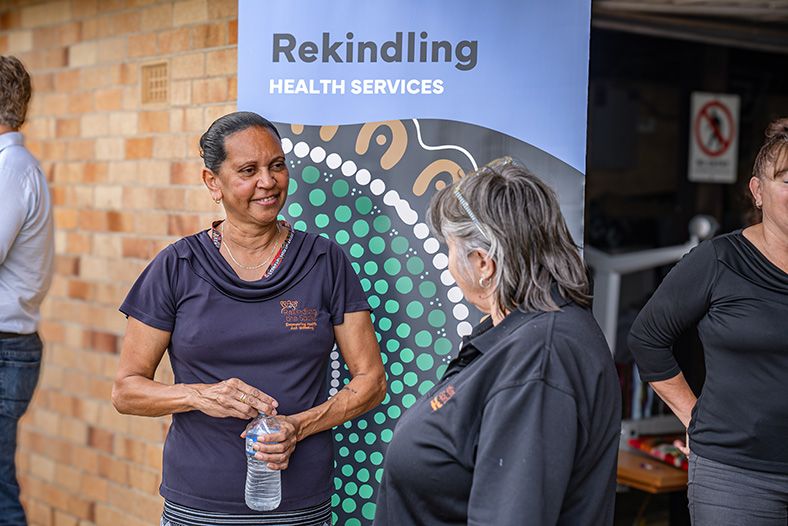
Nearly 30 programs will share in $46.3 million to repair, restore and improve First Nations-owned social and cultural assets, directly damaged by floods in flood-impacted regions across New South Wales, through funding from the Albanese and Minns Governments.Two women talking in front of a "Rekindling health services" banner, wearing "Rekindle the Spirit" t-shirts in Lismore at the announcement of funding through the Aboriginal-owned Assets Program.

The Aboriginal-owned Assets Program was open to 19 of the most flood-affected Local Government Areas, impacted in the February and June floods last year, through the Commonwealth-State Disaster Recovery Funding Arrangements (DRFA).

The program will enable Local Aboriginal Land Councils (LALCs), Aboriginal Corporations and Aboriginal and Torres Strait Islander community organisations to undertake repair, restoration and betterment of community infrastructure.

The 27 projects being funded include the restoration of Aboriginal-owned community centres and service buildings, playgrounds and recreation areas, and the rebuilding of access roads and walkways to areas of cultural significance directly damaged by floods, including:

  • More than $6.9 million will fund two Rekindling the Spirit projects in the Lismore Local Government Area (LGA). These projects will support the restoration of damaged facilities, which provide critical social support, health support and counselling services. These two projects will deliver new facilities at the existing Lismore site and repair and provide additional infrastructure to an existing facility which was destroyed in the floods, allowing services to return to full capacity.
  • More than $1.7 million to Tweed Byron LALC to restore the flood damaged “Walk on Water Track” in Tweed Shire LGA, providing access to cultural sites where schools and community groups often attend education activities.
  • Almost $1.3 million to Tricketts Arch Aboriginal Corporation will reinstate safe vehicle access to the significant cultural site, Tricketts Arch, in the Oberon LGA, which includes a riverbank area, camping sites, a yarning circle and activity areas. Tricketts are committed to protecting the biodiversity of the land as well as its cultural and geodiversity.

The full list of successful projects is available here: www.nsw.gov.au/aboriginalownedassetsprogramlaunch

Assets will be rebuilt to withstand future natural disasters, as well as improve accessibility and inclusion for community members.

The Albanese and Minns Governments are continuing to help the long-term recovery of disaster-impacted Aboriginal communities and assisting them towards greater flood resilience, while also delivering positive economic and social outcomes.

Federal Minister for Emergency Management Murray Watt said:

“By improving the resilience of these assets, we can reduce the hardship experienced by First Nations communities during and after a disaster event, as well as decrease the cost of recovery in the future.

“We know these facilities are real hubs for the community – they bring people together while fulfilling cultural obligations and supporting self-determination.”

Minister for Regional NSW Tara Moriarty said:

“The Aboriginal-owned Assets Program is unlike anything the NSW Government has delivered before, providing targeted disaster assistance directly to Aboriginal-led or managed organisations for community infrastructure repairs.

“Working directly in partnership with Aboriginal people to develop an assistance program that directly addresses the recovery priorities of those communities most impacted is our commitment.

“Recovery is a long process and support will continue to ensure that no one in is left behind, particularly our most vulnerable.”

Minister for Aboriginal Affairs and Treaty David Harris said:

“This funding will bring welcome relief to communities who have been impacted and traumatised by the unprecedented flood events.

“It is great to see both levels of government working together to change the way we deal with natural disasters across NSW by planning to be better prepared and less exposed for future events.

“This significant investment will provide funding for the repair, restoration and betterment of Aboriginal owned and managed assets which will bring people together to sustain culture, support self-determination, and improve social connectedness and healing.

“This will help to make real changes for the community where it’s most needed.”

Minister for Emergency Services Jihad Dib said:

“We’ve seen first-hand how flood recovery efforts are progressing and it’s critical that we continue to support communities who have borne the brunt of the 2022 floods.

“This investment in cultural, social and recreational infrastructure will help bring people together and create a sense of belonging, identity, and community, once the work is complete.”

NSW takes action: Labor’s Climate Change Bill passes parliament with broad support

The Minns Labor government’s landmark Climate Change (Net Zero Future) Bill has passed both houses of parliament with multi-party support, paving the way for serious action to secure a sustainable future for the people, economy and environment of NSW.

The Bill legislates ambitious emissions reduction targets and sets up a strong and independent Net Zero Commission to keep this government and future governments on track to Net Zero by 2050.

The effects of climate change are already apparent from the severity of extreme weather events which pose a risk to our health, environment and economy. This Bill is essential to NSW playing its part to minimise harm, while building resilience and maximising opportunities from new technologies and industries.

The Climate Change (Net Zero Future) Act will:

  • require NSW to reduce greenhouse gas emissions to 50% by 2030 compared to 2005 levels.
  • require NSW to reduce greenhouse gas emissions by 70% by 2035 compared to 2005 levels.
  • require NSW to achieve Net Zero emissions by 2050.
  • establish an independent Net Zero Commission to monitor, review, report on and advise on progress towards these targets.
  • establish guiding principles to address climate change.
  • commit to NSW becoming more resilient to climate change.

This legislation will act as the platform and driver for action across the whole of government. It builds on progress which has already seen NSW achieve an 18% reduction on 2005 levels of greenhouse gas emissions, by going beyond aspirational targets and enshrining them in law.

It provides for the targets to be ratcheted up over time, in line with community expectations. It commits the Premier and Minister for Climate Change to meeting the net zero target, demonstrating the government’s commitment to serious action on climate change.

It will also provide business and industry with energy and investment certainty, and create new jobs while bolstering Australian manufacturing in the energy sector.

After passing both houses of parliament, the Climate Change (Net Zero Future) Bill will soon be signed into law by the NSW Governor.

Minister for Climate Change, Energy and the Environment Penny Sharpe said:

“NSW Labor has followed through on its commitment to the people of NSW to take serious action on climate change and keep this government and future governments accountable for delivering on emissions reduction targets.

“This Bill provides the framework for NSW to embark on the essential journey to net zero emissions and better resilience to climate change.

“Climate change is an environmental challenge, but also poses an economic opportunity. This Bill provides certainty for industry, business, investors and all sectors of the NSW economy, and shows them they are not alone in responding to this challenge.

“I welcome the discussion and multi-party support that has led to the passage of this Bill and look forward to accelerating the transition to renewable energy that will deliver cleaner and more affordable energy to households and businesses.

“The passage of this Bill shows Labor can build consensus on what is right for NSW and deliver on its key election promises, despite holding minority government.”