$28 million in funding to support people with disability

On World Down Syndrome Day, the NSW Labor Government has announced $28 million in funding to ensure ongoing support and advocacy for people with disability.

Funding for the Disability Advocacy Futures Program (DAFP) will continue for a further 2 years to ensure approximately 1.4 million people with disability can access NSW Government funded services.

The DAFP provides funding to support people with disability navigate local services on a 1-to-1 basis, to fund organisations working towards long-term social change, and to fund policy advocacy groups run by, or on behalf of, people with disability.

The DAFP commenced in 2022 following a recommendation from the NSW Ageing and Disability Commission’s Review into Disability Advocacy Funding in NSW.

The program focuses on all people with disability in NSW who need support to access NSW Government funded services, regardless of whether they are participants of the National Disability Insurance Scheme.

In addition, the DAFP also provides 1-off funding grants for special projects and sector development.

Find out more information about the DAFP

Minister for Disability Inclusion, Kate Washington said:

“Almost 1 in 5 people in NSW lives with a disability but only a small proportion of them are supported under the National Disability Insurance Scheme.

“The DAFP provides crucial support and representation for all people with disability to ensure they can access the services they need to reach their full potential.

“The extension of the DAFP will ensure ongoing support for the sector to drive better outcomes for people with disability through effective and inclusive advocacy.”

CEO of Down Syndrome NSW, Emily Caska said:

“We warmly welcome this much needed investment in advocacy for a further 2-year period, with advocacy organisations forming such an essential part of the ecosystem of trusted and independent supports for people with disability.

“The DAFP to date has had a significant impact on our community, ensuring that people with disability, their parents and siblings are informed, confident and connected.

“This in turn contributes greatly to our overarching aim of ensuring that people with disability are valued and active citizens within their thriving, vibrant and diverse communities across NSW.”

First platypus translocation in NSW results in breeding success

Scientists and researchers have discovered a juvenile platypus in the Royal National Park, less than a year after 10 platypuses were returned to the park where they had been locally extinct for more than 50 years.

The female was captured during a survey to assess the health of the translocated platypuses and confirm potential offspring.

Over 3 nights, researchers from UNSW Sydney, Taronga Conservation Society Australia and WWF Australia, with the support of NSW National Parks and Wildlife, laid nets in ‘hot spots’ along the waterways of the Royal National Park. They were placed in areas where monitoring had indicated regular activity.

The little platypus is in excellent condition, weighed in at 850 grams and is estimated to be about 6 months old. Her age aligns with the end of the platypus breeding season and means she would have only just emerged from her burrow. She will be named by the local Indigenous community.

Before she was returned to the river, researchers assessed her body condition, took several samples and fitted her with a microchip for future identification.

During the surveys, researchers also captured an adult female platypus named Delphi in the same area, who was also in good condition. Genetic analysis will confirm the juvenile’s parents, providing valuable insights into the breeding patterns and genetic health of the population.

Ongoing monitoring and tracking have confirmed all 10 of the original platypuses are still active, with a couple recently venturing beyond the detection range. The research team has not ruled out the possibility of more juveniles in the area.

The waterways in the Royal National Park have been extensively monitored, with results indicating habitat, food availability and water quality is suitable for supporting healthy populations of platypuses.

The breeding success is a significant milestone for the program and testament to the health of the park. Further reintroductions are planned over the coming years.

The return of platypus to the Royal National Park was the first translocation program for platypus in NSW and aimed to re-establish a self-sustaining and genetically diverse platypus population. The platypuses were sourced from across NSW to ensure genetic diversity and taken to Taronga Zoo’s purpose-built platypus refuge before being released into the park.

Minister for Climate Change and the Environment Penny Sharpe said:

“This is a wonderful discovery by our dedicated scientists and researchers, who have spent their nights patiently monitoring the Hacking River for signs these platypuses have survived in their new home.

“Not only are they surviving, but the discovery of a juvenile platypus shows they are thriving, which means the Royal National Park is in great shape. Invasive species are being dealt with and water quality is good.

“We have a biodiversity crisis in NSW. We can’t run away from that. We need to protect all the different species living within this unique landscape. Programs like this show it is possible to bring animals back from the brink, and what we learn here will be applied across NSW in the future.

“This gives me great hope that our collaborations are working; that we can protect what’s left and restore what has been damaged. Thank you and congratulations to UNSW Sydney, Taronga Conservation Society Australia, WWF Australia and NSW National Parks and Wildlife.”

UNSW conservation scientist and project lead Dr Gilad Bino said:

“Finding the juvenile platypus is a clear sign the reintroduced population is not just surviving but thriving, adapting well to their environment, and contributing to the genetic diversity and resilience of this iconic species.

“The success of this reintroduction underscores the vital role that targeted conservation actions, such as translocations, rescues, and reintroductions, play in the preservation of the platypus across its range.”

Taronga Conservation Society Australia Conservation Officer Dr Phoebe Meagher said:

“The platypus is such an iconic and enchanting animal, but sadly is being hit from all sides – from climate change, droughts, bushfires and floods, through to habitat fragmentation and pollution.

“Being able to refine and learn from conservation translocations so we can step in and assist vulnerable populations in times of need is absolutely critical.

“To have such success in the first-ever translocation of platypus in NSW fills me with hope for the future of this species.”

WWF-Australia Rewilding Program Manager Rob Brewster said:

“Proof of successful breeding is about much more than the happy news of discovering a healthy juvenile platypus.

“This whole project embodies what ‘rewilding’ is. The community coming together and saying that we don’t accept species and ecosystem decline. That we can return those vital missing elements that make our world so interesting to us all.”

Australian-made armoured vehicles to be exported to Germany

The Albanese Government has entered the single largest defence export agreement in our nation’s history, to supply Australian-made armoured vehicles to Germany.

Under the agreement, more than 100 Boxer Heavy Weapon Carrier vehicles will be built by Rheinmetall at its Military Vehicle Centre of Excellence in Redbank, Queensland and exported for use by the German Army.

This agreement, now passed through the German parliament, follows Prime Minister Anthony Albanese witnessing the signing of the in-principle agreement between Germany and Australia during his visit to Berlin in July last year.

This is a significant milestone for Australia’s defence industry: worth over $1 billion to the Australian economy, boosting our sovereign defence industry and securing more than 600 direct jobs in Queensland alone, with even more through the supply chain.

Today’s announcement will see Australian defence industry at the forefront of delivering world-leading defence capability to our trusted security partner, Germany.

Prime Minister Anthony Albanese

“This significant announcement is worth over $1 billion to the Australian economy in the production and supply of these vehicles.

“The agreement will boost Australia’s sovereign defence industry, secure local jobs and contribute to Australia’s economic growth.

“This deal secures well-paid jobs in Queensland and across the country.”

Minister for Defence Richard Marles

I am pleased to announce the signing of the biggest defence export agreement in Australia’s history.

“The build and export of Boxer Heavy Weapon Carrier vehicles to the German Army highlights a strengthening of the relationship between our two countries.

“The Albanese Government is not only committed to bolstering our nation’s growing defence industry, technology and talent, but also supporting ongoing economic prosperity in the region.” 

Minister for Defence Industry Pat Conroy

“This announcement underscores the support and immense effort on the part of the Albanese Government in ensuring we have a robust defence industry.

“A strong defence industry is crucial to protecting Australians and their interests. This announcement is also a testament to the hardworking Australians employed in this critical industry.

“Today’s announcement means more than 600 Australians will secure and stable employment at Rheinmetall’s Military Vehicle Centre of Excellence in Queensland, along with many more throughout our defence industry across the nation.”

GREENS TO INTRODUCE DIVESTITURE LEGISLATION FOR POWER TO BREAK UP SUPERMARKETS

The Australian Greens will this week table a Bill in the Senate to introduce divestiture powers into Australian competition law.  

Greens Economic Justice Spokesperson Senator McKim

“The giant supermarket corporations have had it their way for far too long.”

“It’s time that the interests of people took precedence over the profits of corporations.” 

“We need to stop supermarket corporations ruthlessly using their market power to gouge prices while raking in billions of dollars in profits. 

“Giving our courts and competition regulators the power to smash the supermarket duopoly will help rein them in.” 

“This isn’t a controversial or radical proposition. The UK has this power, and the US has been using it for well over a century.”

“The competition agencies of Ireland, Italy and the Netherlands have all recently required the divestment of supermarket assets in order to increase local competition.” 

“The market domination of Coles and Woolworths gives them the power to crush farmers, squeeze out competition and shaft their customers.”

“Political donations from Coles and Woolworths have meant that successive governments have stood by and watched the supermarket duopoly dominate. It’s time to stand up.”

“This is not just about supermarkets. Australia has competition issues in many sectors of the economy.”

“RBA Governor Michelle Bullock agrees that some corporations are using a lack of competition and the cover of high inflation to hike prices above what would be required to meet increases in their input costs.” 

“The very existence of divestiture powers will mean that dominant supermarkets, banks or energy companies will think twice about pocketing higher margins and instead pass on savings to their customers.”

“The Greens will be seeking support for this bill across party lines – from the Government, to the Coalition and crossbench, because I have no doubt that most Australians support it.”

City of Newcastle creates striking new chapter in artistic legacy of iconic beach-side walkway

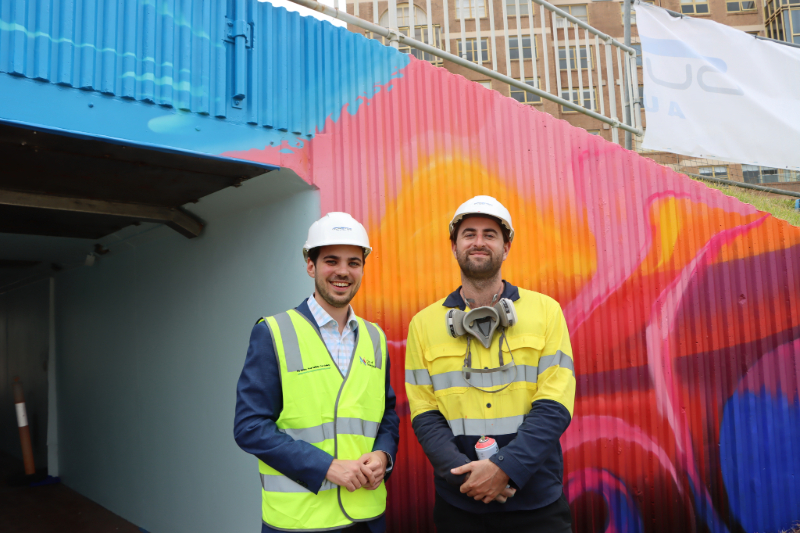
Internationally recognised graffiti artist Nickolas Stuart has dived deep into his love of the ocean to inspire a new mural set to transform the iconic pedestrian tunnel at Newcastle Beach.

The Newcastle artist, who is known as Olas One, began work on the large-scale painting today after being commissioned by City of Newcastle to create a new mural for the walkway under Shortland Esplanade.

Deputy Lord Mayor Declan Clausen and artist Nickolas Stuart at the mural.Cr Clausen with artist Nickolas Stuart at the Mural

Stuart will become the third artist to have made his mark on the site, which was originally painted by Birgitte Hansen in 1990 before being updated in 2011 by Trevor Dickinson.

Deputy Lord Mayor Declan Clausen said while tunnel repair works had unfortunately necessitated the removal of the former mural, the community was looking forward to the next chapter in the tunnel’s colourful history.  

“The subway tunnel under Shortland Esplanade provides an important link for pedestrians to safely and conveniently access one of our city’s most popular beaches,” Cr Clausen said.

“Since 1990, the tunnel has also provided a colourful insight into our coastal culture, from Birgitte ‘s depiction of beach scenes from the 1890s to the 1990s, to Trevor’s pop art-style landscape of the Newcastle coastline.

“Unfortunately, City of Newcastle had to undertake extensive repairs on the tunnel last year to ensure its structural integrity, which impacted sections of the mural. Subsequent vandalism at this site further damaged the mural, requiring us, after consulting with Trevor, to plan for its replacement.

“Rather than leave the iconic passageway blank, we took this as an opportunity to create a new chapter in its artistic legacy and are thrilled to have Nickolas Stuart on board to share his creative, ocean-inspired vision with our community.”

Stuart’s art is already a popular feature of Newcastle coastal landscape, having collaborated on the iconic Mark Richards mural at the Dixon Park Beach kiosk, and created the longest continuous mural in Newcastle on the Nobbys Beach breakwall boatsheds.

“It’s an incredible honour to be selected to paint such a significant spot in our city, a special place for myself and so many,” Stuart said.

“It’s been really nice taking time down at Newcastle Beach and harnessing the visual beauty into creative energy. It truly is a magical place and is constantly evolving with different colours and characteristics. 

“I have been very conscious about the palette and I can’t wait to create a sense of connecting the city to the surf.”

Fellow Newcastle-based artist Trevor Dickinson said he was proud to have his work adorn the walls of the subway for more than a decade but was looking forward to passing the baton onto Stuart to create a new vision for the site.

 “The Newcastle Beach tunnel was the second mural I ever painted, it was a cold winter in 2011 and felt like a huge undertaking for such a beginner,” Dickinson said. 

“But when it was finished, I loved seeing the response from people as they walked through, and I was proud of having my work on such a prominent location in town.

“I’m looking forward to seeing the new mural, and I hope the artist gets better weather!”

Pedestrians are asked to use the crossing on Shortland Esplanade for the duration of the works, with the mural expected to be completed in April.

NSW Government delivers improved combat sport safety

A major milestone, seven years in the making, to improve safety in the combat sports sector was achieved following the passing of the Combat Sports Amendment Bill 2024 in the NSW Parliament.

The Bill provides important safety reforms in the combat sports sector through improvements to the sports’ legislative framework and reduced red tape.

The Bill was prepared in response to recommendations from a review of the Combat Sports Act 2013 and Combat Sports Regulation 2014 by the Combat Sports Authority of NSW following the death of professional boxer David Browne in 2015 and the recommendations from the subsequent inquest by the Deputy State Coroner in 2017.

The Bill includes mandatory concussion and other serious head injury training for the sector, the introduction of attending medical practitioner accreditation and the mandatory suspension of a contest to conduct an assessment where a head injury is suspected to have occurred.

The Bill also includes the creation of a public register of registered persons to make the process of matching contests simpler for promoters and matchmakers.

These reforms will be progressively implemented over a 12-month period from 1 July 2024.

Minister for Sport Steve Kamper said:

“The NSW Government takes the health and safety of combat sports combatants seriously.

“In particular, we recognise the impact of concussion and other serious head injuries and want to ensure there are safeguards in place to protect combatants.

“This legislation will reduce the risk of concussion and other serious head injuries, it also modernises the regulation of combat sports, reducing red tape for promoters and combatants.

“I would also like to acknowledge the tragic circumstances which started this process, and I hope that by strengthening the laws we can ensure such a tragedy is never repeated.” 

School counsellor vacancies drop amid recruitment drive to support student wellbeing

The NSW Government is moving ahead with its election commitment to recruit an additional 250 (FTE) school counsellors, with 86 new school counsellors and psychologists starting work in NSW public schools at the beginning of this school year amid a 35% drop in vacancies since last year.

The improvement comes after the NSW Government abolished the wages cap and delivered a once-in-a-generation pay rise to school counsellors and psychologists last year, which saw starting salaries lift from $75,791 to $95,317.

At the beginning of Term 1, 2023, under the former Liberal National Government there were 92.8 FTE vacancies. Positively, as of Term 1, 2024 that number has dropped to 60 FTE vacancies.

A recruitment push will also commence in the coming weeks, further boosting the number of counsellors and psychologists in NSW schools to support the mental health and wellbeing of students and improve educational outcomes.

These highly skilled practitioners play a crucial role supporting children and young people to thrive and succeed in education, providing a free psychological counselling, assessment and intervention service in public schools.

School counsellors hold dual qualifications in teaching and postgraduate qualifications in psychology. School psychologists hold postgraduate qualifications in psychology.

Every NSW public school student has access to the School Counselling Service, which includes counsellors and psychologists registered as general psychologists with the Australian Health Practitioner Regulation Agency, at no cost to families.

The School Counselling Service has 1,253 FTE positions in the 2,000-strong student wellbeing workforce in NSW public schools, which also includes wellbeing nurses, student support officers, student wellbeing officers and school chaplains.

Deputy Premier and Minister for Education and Early Learning Prue Car said:

“NSW schools are now one of the largest employers of psychologists in NSW, providing invaluable, free support to students in their local public school.

“Our schools care deeply about the wellbeing of all our students and support students so they can reach their full educational potential.  

“The Minns Labor Government has given school counsellors and school psychologists significant pay rises this year to address the shortage, and in recognition of their unique skills and the valued contribution they provide to the mental health and wellbeing of NSW public school students.”

Nominations open for Local Land Services board elections

The NSW Government is committed to the ongoing management of biosecurity threats in the state. Management of pest animals and weeds while maintaining crop productivity is a core focus for Local Land Services board members.

This May, Local Land Services will hold an election in each of the 11 NSW regions to fill 34 paid local board member roles across the state.

This is an opportunity for Local Land Services ratepayers to put their hand up and participate so their local board reflects the needs of their unique region.

Local board members work closely with their communities to help identify and shape the wide range of services offered by the Local Land Services teams such as:

  • Providing best practice advice to manage pest animals and coordinating wide scale pest control activities, such as the Feral Pig Program 2023-24.
  • A network of district veterinarians who offer advice and services on livestock disease surveillance, animal emergency management and biosecurity.
  • Offering the latest information and guidance to improve agricultural productivity and support landholders through times of drought.
  • Managing and improving natural resources on-farm for a healthy environment.

Each local board has 3 positions available, except for Western where there are 4 available positions.

To nominate yourself or someone else as a candidate, read the Candidate Election Pack and submit a nomination on the Local Land Services website.

Candidate nominations close Sunday 14 April 2024.

To be eligible, you must be an individual who is 18+ years old and an occupier of a rateable holding under the Local Land Services Act 2013. The holding may consist of wholly or partly rateable land.

Agriculture Minister Tara Moriarty said:

“Local Land Services board members play a crucial role influencing the key services provided by the organisation so they best meet local needs.

“Local board members are a voice for their communities, helping shape local priorities and developing strong relationships with landholders and partners.

“It’s important to have a diverse range of members, views and perspectives on these boards so they can drive positive change.

“For Local Land Services ratepayers across NSW, this is a great opportunity to get involved and work with others from your community to ensure your local board truly reflects your needs.

Music to the ears: new recording and touring grants

Musicians and artists are set to receive a boost under the NSW Labor Government with the opening of grants focused on rebuilding the NSW touring circuit.

Sound NSW’s new Touring and Travel Fund and Recording and Promotion Grants will inject $3 million into the local contemporary music sector to deliver more new and original music, enable touring opportunities, and open doors for career-defining professional development.

With a focus on fostering growth and sustainability for the contemporary music industry, the programs support NSW artists to be globally competitive, develop industry networks and connect with new audiences locally and internationally.

Touring and Travel Fund

Designed to address the time-sensitive nature of venue availability and performance opportunities, Sound NSW’s $2 million Touring and Travel Fund offers quick response grants of up to $2500 per person for domestic activity and up to $7500 per person for international activity.

Applications for Sound NSW’s Touring and Travel Fund will be assessed on a quick-response basis against eligibility criteria.

Applications open on 20 March via nsw.gov.au/sound-nsw and close 20 May 2024.

Recording and Promotion Grants

Sound NSW’s $1 million Recording and Promotion Grants program will support NSW contemporary musicians to record and release new, original creative projects. NSW artists can apply for grants of:

  • up to $25,000 for short-form releases, such as a single or EP
  • up to $50,000 for long-form releases, such as an album
  • up to $25,000 matched funding for artists signed to a major label. 

Applications open 20 March and close 17 April 2024 at nsw.gov.au/sound-nsw

Minister for the Arts John Graham said:

“We are determined to rebuild the touring circuit, up and down the NSW coast, through our inland tours and suburbs. This fund will do just that.

“We’re delivering on our commitment to bring music back in NSW with this much-needed investment. These fast-response grants will support more new and original music from our musicians, enable tours across Australia and the world, and move NSW a step closer to being a global powerhouse for contemporary music.”

Head of Sound NSW Emily Collins said:

“Recording, releasing and performing new music is essential to the contemporary music industry and the growth and sustainability of artists’ careers, but the upfront costs are often greater than the income generated for many musicians.

“Sound NSW is excited to help bridge this gap by providing this vital funding, removing these prohibitive barriers and supporting NSW artists to do what they do best – making great music.”

Advice on weed control in winter crops for the 2024 season

The NSW Government continues to support our state’s primary producers through long-term and ongoing initiatives such as the development of the Weed Control in Winter Crops guide.

The latest information for growers is now available, supporting decision making for a profitable cropping season, in the free 2024 Weed Control in Winter Crops management guide published by the NSW Department of Primary Industries.

The guide has been published early to support growers planning for sowing their winter crops and the supporting herbicide program.

New content and resources include:

  • supporting data on adoption of optical spray technology, which has seen an increase in adoption over time
  • herbicide advice for weeds specifically to faba bean, lentil and vetch crops, with each crop becoming more popular in a winter cropping regime
  • a list of new products available to the industry is listed at the front of the guide, with their use patterns included in the relevant tables in the book.

The Weed Control in Winter Crops guide can be found online, from DPI offices or from the upcoming GRDC Grower Updates across the state.

Minister for Agriculture, Tara Moriarty said:

“The regular and reliable support provided by the Weed Control in Winter Crops management guide is available again, such as weed control methods, using herbicides successfully and reducing herbicide spray drift.

“Our growers expect publications such as this every year, which I am happy to support because more informed farmers mean more profitable farmers, and that’s great for our economy.”

NSW DPI Project Officer and Weed Control in Winter Crops author, Penny Heuston said:

“The Weed Control in Winter Crops guide is a vital resource that supports farmers to keep on top of weeds.

“Whilst a significant proportion of NSW is still experiencing drought conditions, many areas have seen widespread rainfall, helping start to set up a promising growing season.

“Planning ahead, including reviewing farm management plans using a range of information sources is critical for the cropping season this year.”