
Condolence motion – Victims of the Bondi Beach terror attack

Thank you Mr Speaker, I move that this House: Mourns for the innocent lives lost during the terrorist attack targeting the Jewish community at Bondi Beach on Sunday, 14, December 2025, and extends the deepest sympathies of members of this house to the family, friends and loved ones of the victims.

Conveys its utmost gratitude for the bravery shown by those who risked their lives in aiding the victims, including members of local Surf Life Saving clubs, front line responders such as the New South Wales Police, New South Wales ambulance, community groups such as the CSG Community Safety Group and members of the public.

Recognise the devastating impact this attack has had on the Jewish community in our state and our country.

Acknowledges the evil of antisemitism and violent Islamist extremism, and that words of hate can lead to actions of hatred with devastating consequences.

Rejects antisemitism unequivocally and hatred and intolerance in all its forms, and recognises that we have no place in our modern multicultural community for this behaviour.

Resolves to lead in the eradication of antisemitism in whatever form it appears, and commits to do all we can now to hasten the elimination of this hatred in our state, for Jewish communities today and across the generations to come.

And stands in solidarity with our state’s Jewish community and commits to supporting them through this process of healing.

Mr. Speaker, each night of Chanukah after the lighting of the Ma’oz Tzur candles, the Jewish people sing the Ma’oz Tzur, “My soul was sated with misery and my strength was spent with grief.”

Today, at the end of Chanukah, we’ve returned to this house of parliament to acknowledge in one unanimous voice that we too are spent with grief.

After an hour of terror and a week of sorrow, this morning, we remember 15 beautiful souls.

On Sunday, the 14th of December, victims of violent Jewish hate, but in the course of their lives, wonderful, generous, big hearted members of our community.

And it’s in that spirit that we mourn their death today, not by the evil that found them, but by the lives that they lived, the love that they gave, the good that they shared with us and the rest of the world.

Mr. Speaker, eight days ago, Sofia and Boris Gurman saw a black ISIS flag on the windscreen parked along Campbell parade at Bondi. Now they could have easily edged away, having seen the flag and put themselves in a position of safety.

They were walking away from the Chanukah festival. But they didn’t do that. And instead, and despite the obvious danger, they tried to, without being armed themselves, disarm the gunman, and in the struggle, they became the first victims of this terrible crime.

With my wife, Anna, we met their sole surviving son, Alex last week, who spoke of his deep sense of gratitude that the footage of their final moments was in fact, found so that he knew that they died heroes.

The family had said this act of bravery and selflessness reflects exactly who they were, people who instinctively chose to help, even at great personal risk. While nothing can lessen the pain of this loss, we feel immense pride in their courage and humanity.

On Friday morning, age 61 and 69 Sofia and Boris were buried together, and they were buried as husband and wife, according to the rabbi, Rabbi Ulman, it’s been years since he’d seen two coffins placed next to one another at a funeral.

Mr. Speaker, no one could fail to observe the courage and humanity displayed at Bondi Beach, often by grandfathers and grandmothers hopelessly outgunned, placed in an impossible situation.

But the more we’ve learned about these 15 people, the more we’ve come to understand the source of that bravery, the reason that they were going to stand in the breach and to protect people in their community and other strangers that they’d never met.

Because one of the many traits that’s united these people is that they were all active citizens. They were community people. They gave themselves to others.

People like Edith Brutman, a cherished leader in their committee against anti-discrimination. In the words of her loved ones, she met prejudice with principle, division, she met with service.

We mourn her deeply, but we ask that her life, not the senseless violence that took it, be what endures when we remember Edith.

We remember young Matilda painting her face at sunset, petting a baby lamb with her sister. She was called a ray of light to everyone who’d met her.

We remember Boris Tetleroyd, a gentleman and a musician who loved conversation, connection and helping others whenever he could find them.

We remember Marika Pogany, who was given the New South Wales Mensch award for hand delivering, get this, 12,000 kosher Meals on Wheels over, get this – 20 years of service to the community!

And I ask you, what kind of malevolence could motivate a person to murder, an 82-year-old Meals on Wheels volunteer, an elderly lady who loved her community and was looking for nothing but peace, the peace to celebrate her religion.

Mr. Speaker, we remember Tibor Weitzen, killed while shielding other people from gunfire, a kind and generous man in life, and we can say this now because we know it a hero in death.

So too, Reuven Morrison, who was seen running towards the gunman with a brick, nothing but a brick, against a whole bunch of guns hoping to protect his people.

As his daughter said, “If there was one way for him to go on this earth, if we had to let him go, it would be fighting a terrorist. There’s no other way. He could have been taken from us. He went down fighting, protecting the people that he loved most.”

He went down fighting.

Today, we remember Alex Kleytman, 87 years old, who survived the Holocaust in Europe before moving to Australia. He loved this country. He cherished the Australian way of life. He believed in freedom. He believed in democracy. He believed in its people. He believed in all of it, everything about Australia.

Because it’s not what he saw in Europe, the place where he left.

And it’s also beyond heartbreaking that he was killed after a long and often perilous life on the soil that he loved in the country that he called home, on a beach that he thought was safe.

Mr. Speaker, we remember Peter Meagher, a former cop, decades of service, decades of service, to the people of this state, then a local photographer and a legend at the Galloping Greens Randwick Rugby club.

And one of five boys. One of five boys. It seems as though the Meagher family knew pretty much every single person in the Maroubra Eastern Suburbs period, and went to Marcellin Randwick, an amazing family. They’re going to miss their big brother.

Adam Smyth, a sports lover, a father of four, forever irreplaceable to his wife and to his children.

Dan Elkayam, he was a French national who crossed the world for a better life in Australia, a life he had found before he was killed on Sunday at the age of just 27 years old. 27.

Tania Tretiak of Randwick attending Chanukah, with her family by the beach. She died at 68 years of age.

I know when you go through the lives that have been lost, the significant contributions that they’ve made to this state, the love that they put out in our community, that it’s very hard to divine any positive feelings that have come out of Sunday’s event.

It leaves you flat. It leaves you worried. For many in our community, it leaves them fearful.

But we can and we must, look at some of the uplifting parts of the last week by witnessing the strength and the grace of the Jewish community.

In some cases, it’s best exemplified by the rabbis of that community and of our city, our rabbis as well.

Not only have they been working to honour the dead, comfort the families, organise the burial of loved ones, they’ve also had to say goodbye to two of their own, Rabbi Yaakov Levitan and Rabbi Eli Schlanger.

Both were killed while performing religious duties in Bondi, the kind of service they routinely performed for the people of New South Wales.

Rabbi Eli Schlanger was a Corrections New South Wales pastor in our prisons, and the stories outside his funeral of him traveling hours and hours and hours to see inmates in far flung areas of the state and then working incredibly hard to see them released into his care, often into his personal care.

We’ve lost someone with a huge heart and deep empathy for people who are in a difficult, difficult time.

They were known by many. They were loved by many, including by other members of that rabbinical family, particularly Eli Feldman, who was a close friend of Rabbi Schlanger.

They were the two Elis. They studied together as young men, they both become rabbis, and Schlanger was like a brother to Feldman.

If Eli Feldman had responded to the murder of his friend with spite or even hatred, I think we probably all understand, in fact, that’s what many people are feeling today at the loss of so many wonderful people in our community in Australia.

But instead, that didn’t happen. On television, front of a large group of people, in front of everybody, he said, no matter the colour of your skin or what you believe, we are all created in God’s image.

Let us love each other. Let us care about each other.

As Australians, our instinct is to look after each other, to stand by your mate and not leave anyone behind. And when that instinct is tested, it reveals itself not in speeches or in Acts of Parliament, but often in brave, always selfless acts, sometimes spontaneous, but always courageous.

We’ve seen it from life savers running towards the danger in bare feet. I know an off-duty cop jumped out of the breakers at Bondi, made sure his two children were okay, then jumped the fence to help people in the line of fire.

We’ve seen it life savers running down Campbell Parade from the neighbouring surf club after they heard gunshots at Tamarama, running towards the gunfire.

We’ve seen it from members of the New South Wales Police, including two who were in a critical care after being shot in the front, running towards the violence.

And we’ve seen it in acts of quiet charity, in blood bank donations, private donations, and in urgent life and death acts of professional care.

And we should also mention the doctors, the nurses, we’ve said, the paramedics, those that work in our big public hospitals, who, at the drop of a hat, ran into work to receive the injured, the wounded and the dead at our big public hospitals.

They were absolutely incredible. I’ve spoken to the local health manager at all of those big hospitals. Not one call had to be made to any of the senior surgeons, they were there almost immediately, having seen the news on television, knowing there’d be a mass casualty count.

I mean, that is true public service, that’s commitment to the people of this state.

Mr. Speaker, there are no adequate words that deal with the devastation that we’ve experienced this week. But as Rabbi Wolff of Central Synagogue told me this week, “This is why many turn to Scripture, and that’s why we’ve got a book.”

And it’s written in Scripture, “It’s not your duty to complete the work, and neither are you free to desist from it.”

In the term of this Parliament, it not, it might not be in all of our power to eradicate the poison of antisemitism, it’s hard to take the hate out of somebody’s heart, but that doesn’t mean we don’t have a duty to do everything we possibly can to fight hatred in our community, wherever and whenever we see it.

This includes organisations and individuals who promote violence, who divide our community.

It’s got to be confronted, and that’s why we’re all here this week, three days before Christmas, to begin that task, I urge and put the emphasis on begin that task.

This isn’t the end of the changes that we need to make to keep the people of New South Wales safe.

I have to say, Mr. Speaker, I bear a deep responsibility for that as Premier, we must, we must make those changes.

We don’t have all the answers for the many questions that people are asking, but I do know that Australians are repulsed by what they saw two Sundays ago.

We are kind, tolerant, loving people, and yes, we’ve got every reason to despair right now, but Australia has been a land of hope, not least for the Jewish migrants who found a home and a sanctuary here for decades.

80 years ago, one of the one of those migrants who found the sanctuary in our country, walked off a boat in Sydney Harbor having survived the Holocaust of Europe, he was a Jewish immigrant to our country.

On the next day so his second day in Australia, he recorded in his personal diary, quote, “It’s a very peculiar feeling. You if you were born here, or you’ve been living here for many years, you probably don’t understand the feeling. Though it is midnight, though it’s just our second day in Sydney, we seem to be home. Already, we start to have this have the same sense of security as Australian citizens. There’s no difference between the two of us. We’re beginning to share their confidence in their fellow citizens and in their country.”

Mr. Speaker. I know I speak for all members of this Parliament, all members of this Parliament, when I say to the Jewish people of this state, this is your home. This has always been your home, and we must do everything we possibly can to ensure that you are safe and you are protected in this city.
Local Jobs First Commission Exposure Bill released for consultation

The Minns Labor Government is inviting the community to have their say on the Local Jobs First Bill, which will establish the Local Jobs First Commission, support local jobs and apprentices and help grow local businesses.

Twelve years of privatisation and sending jobs offshore under the previous Liberal-National Government deprived NSW businesses of billions of dollars in contracts and thousands of jobs.

Research by the McKell Institute found that sending contracts overseas can lead to significant economic losses, with net costs estimated to be $3.5 billion higher than if local manufacturers had been used.

Establishing the Local Jobs First Commission and appointing a Commissioner will realise an election commitment and marks a turning point in the state’s procurement practices.

By supporting the re-building of the state’s manufacturing sector and putting local jobs front and centre, we are making sure that government spending benefits families, households and businesses by creating local jobs and strengthening our economy.

It also builds on the Minns Labor Government’s ongoing procurement reforms, including ‘If not, why not’ rules, which require agencies to engage with NSW suppliers before awarding contracts worth more than $7.5 million, and raising the threshold at which government agencies can directly purchase from small businesses to $250,000.

Provisions in the Local Jobs First Bill include:

  • Creating the NSW Local Jobs First Commission and a Local Jobs First Commissioner to champion local businesses, industry and jobs.
  • Introducing a Local Procurement Policy that will include a 30% tender weighting for local content, job creation, small business participation, and ethical supply chains and embed training targets for apprentices and other workers learning new skills on major projects. The definition of ‘local content’ under the Jobs First Commission legislation will be any Australia or New Zealand-based enterprise.
  • Establishing a Local Jobs First Advisory Board to guide policy and boost local supplier competitiveness.
  • Requiring Local Procurement Plans for major contracts to secure commitments to local jobs and local content.
  • Enabling a supplier debarment scheme to ensure accountability and remove suppliers found to have committed serious misconduct from the government supply chain.

The draft Local Jobs First Bill is now open for public comment. Submissions are invited from businesses, unions, industry groups, and the broader community.

This is your opportunity to help shape a policy that will drive investment in local industry, create jobs, and strengthen the NSW economy.

Minister for Domestic Manufacturing and Government Procurement Courtney Houssos said:

“This legislation is an important next step of procurement reform. We are delivering on our election commitment to establish the Local Jobs First Commission.

“We want the NSW Government to spend taxpayer dollars in a way that supports local businesses, creates jobs, and builds skills for the future.

“We want to hear from industry, workers and their unions, and the community to make sure this Bill delivers for NSW.

“By embedding local content requirements into procurement, we’re not just creating jobs, we’re building a resilient economy that benefits communities across the state.”

Minister for Industry and Trade Anoulack Chanthivong said:

NSW is home to some of the most innovative and dynamic businesses in the Southern Hemisphere, and we’re proud to continue supporting them through legislation like this.

“The Local Jobs First Bill will help to grow local manufacturing and create more jobs in every corner of our state.

“This is all about backing local businesses and creating more economic opportunities for industry.”

Minister for Skills, TAFE and Tertiary Education Steve Whan said:

“We’re working with industry and unions to create real opportunities for apprentices and trainees across NSW, while driving greater participation for women in construction. This is about building a workforce that reflects our community and ensuring every major project delivers skills for the future.

“This legislation builds on the success of the Infrastructure Skills Legacy Program by making sure we aren’t just delivering roads, hospitals, and schools, but also securing the pipeline of skilled tradies we need to get the job done. It’s about investing in people as much as projects.”

Construction begins on upgrades for the South Coast’s Vincentia High School

The Minns Labor Government is continuing its work to rebuild public education across NSW, with construction underway on a major upgrade to Vincentia High School on the state’s South Coast.

The $13 million upgrade will provide the high school with a new two-storey building featuring 16 permanent modern classrooms, replacing ageing temporary demountables, and new bathrooms.

The project also includes internal roadwork upgrades to improve safety and provide better on-site parking.

The beginning of construction marks a significant step in delivering this Labor election commitment for families on the South Coast, with the upgrades on track for completion by Day 1, Term 1, 2027.

Once complete, the upgraded high school will have capacity for 1,300 students, future-proofing the school for the growing local community.

The upgrades are being delivered as part of the Minns Labor Government’s record education investment, including $2.1 billion for new and upgraded schools in regional NSW.

This targeted investment will ensure growing communities have access to a world-class public education, close to home.

On top of the upgrades to Vincentia High School, the Minns Labor Government’s investment across South Coast schools includes:

  • Batemans Bay High School – High Potential and Gifted Education upgrade
  • Bomaderry High School – upgrade
  • Former Shoalhaven Anglican School site – redevelopment for public education use
  • Milton Public School – upgrade
  • Moruya High School – High Potential and Gifted Education upgrade and new support unit
  • Nowra East Public School – upgrade
  • Ulladulla High School – upgrade
  • Ulladulla Public School – upgrade
  • Worrigee – new public school

The Minns Labor Government is also delivering new co-located public preschools at existing public schools in Barrack Heights, Berkeley West, Bomaderry, Cringila, Greenwell Point, Hayes Park, Lake Heights, Lake Illawarra, Sanctuary Point, and Worrigee.

This is part of the Minns Labor Government’s commitment to deliver 100 new public preschools by 2027, including 49 in regional NSW.

This investment doubles the number of public preschools in the state, the largest expansion of early learning in NSW history.

Once complete, up to 9,000 children will benefit from access to fee-free, quality early education in their community, prioritised in areas of the highest need based on a rigorous selection process.

In addition to building new schools where they are needed, the Minns Labor Government’s work to rebuild public education includes ensuring each NSW classroom has a qualified teacher.

Since March 2023, the Minns Labor Government has reduced teacher vacancies by 81 per cent in the South Coast electorate, leading to a significant reduction in the number of cancelled classes.

Acting Minister for Education and Early Learning Courtney Houssos said:

“Investing in regional communities is a top priority for the Minns Government, and this upgrade is part of our commitment to ensure all NSW students can access a world-class public education.

“For too long under the Liberals and Nationals, families on the South Coast were promised investment in education infrastructure but little was delivered.

“Our government, with the leadership of Deputy Premier Prue Car, is investing in local public schools to provide benefits to local children and their families for years to come.”

Member for the South Coast Liza Butler MP said: 

“I’m so pleased to be here for another sod turn on the South Coast to see the commencement of works at Vincentia High School.

“This school upgrade will enrich the lives of every student at Vincentia High School academically, physically, and creatively for years to come.”

Vincentia High School Principal Ruth Winfield said:

“I’m so excited about what this new building will mean for our growing school. We’re proud of our strong connection to country and the diverse range of learning pathways offered to our community.”

Review into federal law enforcement and intelligence agencies

I have asked the Department of Prime Minister and Cabinet to lead a review into Australia’s federal law enforcement and intelligence agencies.

The Department of Prime Minister and Cabinet will examine whether federal law enforcement and intelligence agencies have the right powers, structures, processes and sharing arrangements in place to keep Australians safe in the wake of the horrific antisemitic Bondi Beach terrorist attack.

The ISIS-inspired atrocity last Sunday reinforces the rapidly changing security environment in our nation. Our security agencies must be in the best position to respond.

The review will be led by Dennis Richardson – a former Secretary of the Department of Defence, former Secretary of the Department of Foreign Affairs and Trade, and former Intelligence Chief.  

The review will build on the work of the Independent Intelligence Review, conducted by Richard Maude and Heather Smith.

The review will be provided to the Government by the end of April 2026 and will be made publicly available.

Woman charged with alleged intimidation offences – Sydney

A woman will face court following an investigation into alleged intimidation at a university in Sydney’s Inner West.

On Thursday 9 October 2025, a group of Jewish students and other members of the Jewish community were celebrating the Jewish holiday Sukkot within the grounds of the university at Darlington campus, when a female passer-by yelled anti-Semitic comments at the group.

The matter was reported to officers from Inner West Police Area Command, who commenced an investigation in October into the incident.

Following inquiries, on Monday 22 December 2025, a 53-year-old woman was arrested at Parramatta Police Station.

She was charged with three offences – stalk/intimidate intend fear/physical harm (two counts) and offensive conduct.

The woman was granted conditional bail to appear at Newtown Local Court on Tuesday 3 February 2026.

Community is the antidote to hate

In the aftermath of the horrific attack at Bondi Beach, we have seen communities rally up and down the country in solidarity. We have seen the best of humanity on display – so we wanted to take a moment to share some of these stories. 

Ahmed al-Ahmed

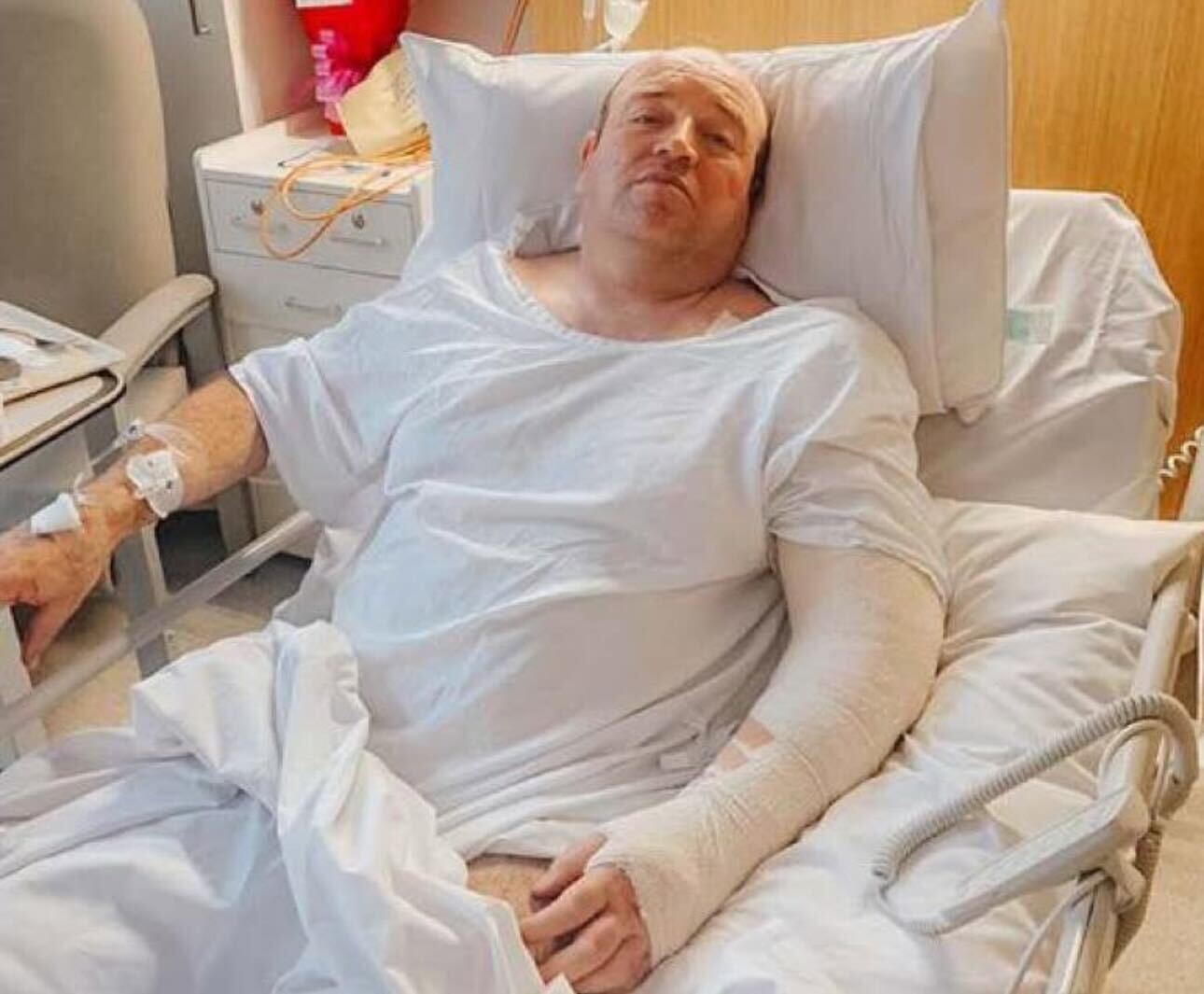
Ahmed al-Ahmed the hero from Bondi beach on a hospital recovering from his injuries and surgery

His act of heroism has rightly made headlines all over the world, gaining praise from world leaders, the media and the public alike.

An online fundraiser set up to recognise his bravery and support his recovery has now surpassed $2.5 million in donations, as at the time of writing. You can donate to the GoFundMe to support Ahmed al-Ahmed here.

Tens of thousands register to donate blood

In the aftermath of the shooting, the Australian Red Cross made an urgent call-out for blood donations, and the community rallied across the country.

Not even two days after the attack, nearly 50,000 people across the country made appointments to donate blood and plasma. With the holiday season approaching, Lifeblood continues to encourage donations. 

Most importantly, they are looking for universal O-type blood donations that can support all individuals in need. If you can, register today to donate blood with Lifeblood.

Inter-faith solidarity and embrace 

So many pictures of resilience were shared across social media and our television screens this week.

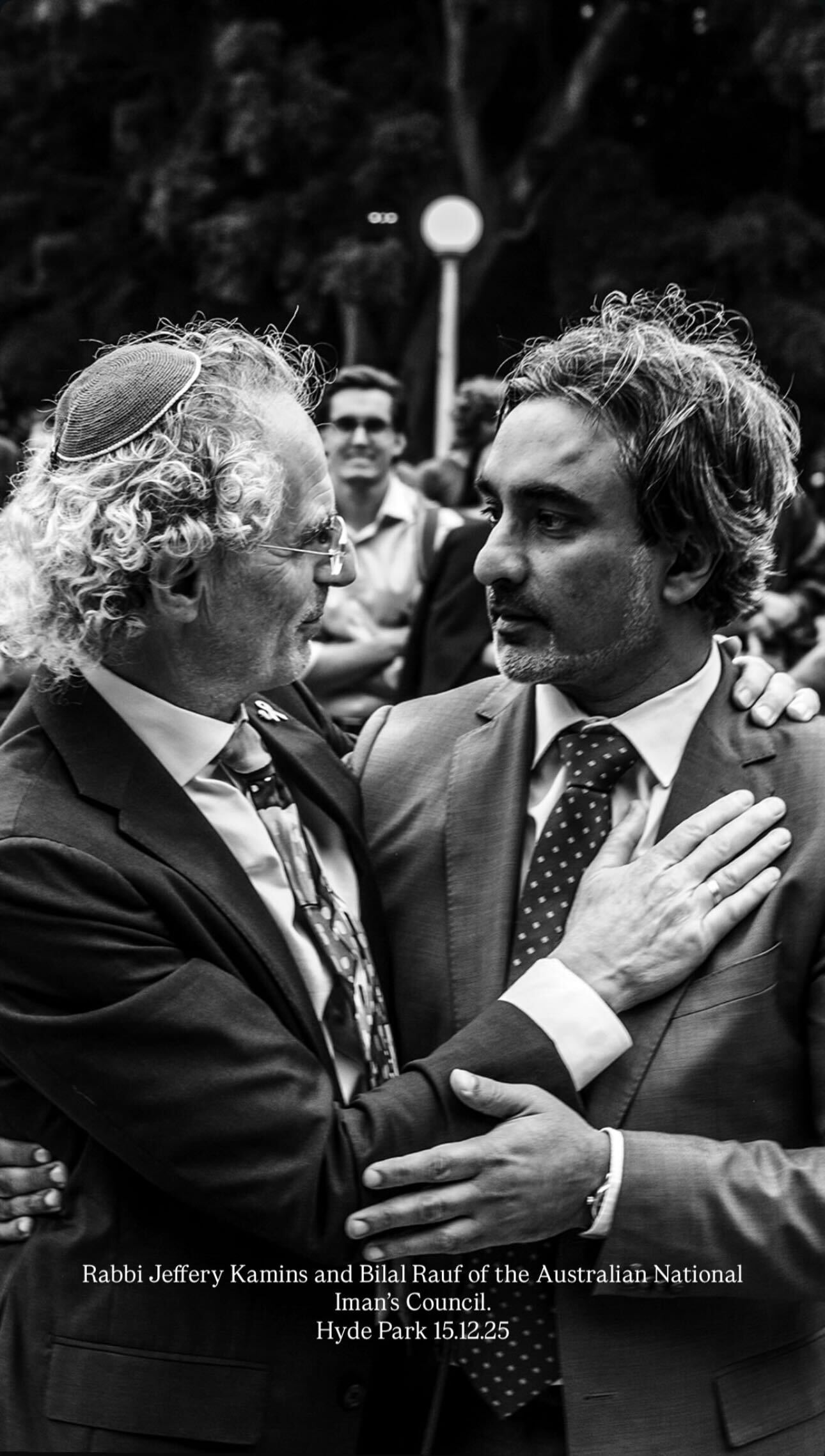
In particular, the heartwarming image of Rabbi Jeffrey Kamins of Emanuel Synagogue and Bilal Rauf of the Australian National Imams Council embracing has stayed with us following a community vigil in Hyde Park in Sydney on Monday night. 

We saw compassion, humanity and solidarity in communities coming together to share grief. This week showed us that, together, we are so much stronger and can combat any hate. 

Rabbi Jeffrey Kamins of Emanuel Synagogue and Bilal Rauf of the Australian National Imams Council embracing at Hyde Park on Monday
Credit: ceasefirenowphotography on Instagram

Strength and courage of community 

We have heard stories of strangers taking care of each other as they were alerted to the danger around them. 

Viral social media videos showed people opening their doors to those seeking shelter from the gunfire, strangers protecting pets like Matcha, who was separated from her owner in the stampede to flee the beach on Sunday, and images of lifeguards running towards the horrific scenes with life-saving medical supplies and supporting people in the immediate aftermath. 

The power of connection has also been on display in so many ways, including the crew from Disaster Recovery NSW sitting down to have conversations with people on Bondi Beach on Monday.

Community will counter hate 

There are people who want to pull our communities apart, but together, we can counter that hatred. In 2026, it is vital that we all keep actively showing up for one another.

The most effective antidote to hate is community. Building community can look like building relationships with your neighbours, reaching out to an acquaintance you don’t know so well, or sparking a conversation with your barista or someone at your gym.

By doing so, we learn that there is much more that we have in common as human beings than what divides us.

Greens call on Labor to secure 15% pay rise, ensure early childhood educators are paid their worth

The Greens are joining the United Workers Union (UWU) in calling on the Labor Government to take urgent action to guarantee fair pay for the nation’s early childhood educators and prevent a looming pay cliff.

The call follows recent Fair Work Commission (FWC) updates to the Children’s Services Award. With the FWC’s decision to stretch long-term pay increases across several years, a dangerous gap now exists between the scheduled end of current worker retention payments and the actual implementation of the new pay increases. Currently, the expiration of interim retention payments could leave thousands of educators in this majority-female workforce facing a real-terms pay reduction just before next Christmas.

The Greens are urging the Government to bridge the funding gap and permanently lock in the 15% pay increase to ensure stability for workers and the sector.

Greens Early Childhood Education and Care Spokesperson, Senator Steph Hodgins-May:

“After a gruelling year, it is cruel and indefensible to leave educators facing the anxiety of pay uncertainty before next Christmas.

“Staggering this award increase will hurt educators during a cost-of-living crisis and threatens to destabilise the entire workforce.

“The Albanese Government must fund the gap and lock in a permanent 15 per cent pay rise that workers and their unions have been calling for.

“Our kids deserve safe, high-quality care, but that’s only possible if the educators at the heart of the system have a fair wage and a secure future.

Appeal loss won’t stop fight to protect public housing as Labor still fails to justify mass privatisation and demolition

The Victorian Greens say today’s loss of an appeal by public housing residents does not give Jacinta Allan’s Labor Government a mandate to steamroll ahead with the mass demolition and displacement of public housing communities.

Residents have spent years fighting Labor’s decision to demolish their homes without consultation and without a transparent, evidence-based case for why refurbishment was ruled out.

The Greens said the court outcome does not change the underlying policy failure at the heart of the tower demolitions, and that today’s decision is not the final word on the future of Melbourne’s public housing towers.

A recent parliamentary inquiry into the redevelopment of Melbourne’s public housing towers heard evidence calling for demolitions to be halted after the government was unable to produce documents justifying its decision. 

The inquiry also recommended that Labor’s discretionary claims of cabinet confidentiality be independently assessed by a legal arbiter, as required under parliamentary rules – a process Labor has actively defied. 

Victorian Greens housing spokesperson Gabrielle de Vietri said the decision was devastating for residents and made clear the fight to protect public housing is not over.

Victorian Greens housing spokesperson, Gabrielle de Vietri: 

“Residents found out through the media that Labor planned to demolish their homes, and they’ve shown extraordinary courage fighting that cruel decision, and this isn’t the end of that fight.”

“Make no mistake – the community will fight this disastrous plan every step of the way, including standing in front of bulldozers if that’s what it takes.

“In a housing crisis, Labor is demolishing public housing and rolling out the red carpet for private developers, handing over prime public land to build expensive private apartments – a choice that’s going to make renting and buying a home in Melbourne even more unaffordable.

“This plan has been shrouded in secrecy from the start. If Labor’s case stacks up, they should release the documents and let them be independently assessed. People are seeing that Labor’s mass demolition and privatisation of public housing has no legs to stand on and it is only a matter of time until the wheels fall completely off.”

Greens welcome federal weapons buyback

The Australian Greens have welcomed the government’s announcement of a federal firearms buyback, with leader Senator Larissa Waters saying that the party would progress efforts to remove weapons from the streets.

Australian Greens Justice spokesperson Senator David Shoebridge urged the government to seize the opportunity for reform, saying the steps should also include transparency measures around weapon ownership, and banning recreational hunting as a valid cause for licensing.

The Greens’ TooManyGuns.org tool allows Australians to see how many weapons are in their local area, revealing the scale of gun ownership in our suburbs. Due to limited transparency nationally there is currently only data available for NSW. 

Despite its urban location, Bondi has 190 guns in the 2026 postcode, with one gun owner possessing a shocking 24 registered weapons. Matraville, also in Sydney’s east, has one firearm owner with a private arsenal of 295 firearms.

The Gun Safety Alliance recommends a limit of one firearm per licence holder, with extras permitted only if proven.

Leader of the Australian Greens, Senator Larissa Waters said:
“We welcome the announcement of a gun buy-back. There are now more guns in the community than before the Port Arthur massacre. It’s time we built on the last gun buy-back and strengthened our gun laws to keep communities safer – at the same time as tackling antisemitism, racism and radicalisation.

“The Greens will help to get guns off our streets, and so should every member of Parliament. It should be above politics to stop the hoarding of these weapons that killed so many innocent men, women and children.

“A gun buyback with practical arrangements for surrender, secure collection, destruction and fair compensation would be a step in the right direction.

“The Greens will work across parliaments to ensure communities are safe from gun violence with fewer dangerous weapons, a national firearms register and strict limits on gun numbers. 

“Bans on rapid action and high-powered weapons in our cities and time-limited licenses with ongoing character checks would also work toward greater community safety from firearms.

“We need to take action to stop antisemitism, racism, radicalisation and gun violence, to stamp out both the hateful ideologies and dangerous weapons used to commit this horrific attack. If we unify to get as many deadly weapons off our streets, we will all be safer.” 

Australian Greens Justice spokesperson, Senator David Shoebridge said:
“We welcome this move for a national gun buyback and it is important to tie it to structural changes in our gun laws that are grounded in community safety.

“No one in suburban Sydney, or anywhere in this country, should have a private arsenal of high powered weapons at their home.

“There must be a clear cap on gun numbers, with multiple weapons only permissible where police are satisfied that there is a distinct requirement based on strict criteria.

“Recreational hunting, which is the reason used to obtain some of the largest caches of deadly weapons, needs to be removed as a basis for obtaining a gun licence.

“Control of wild introduced animals is a credible reason for rural property owners and professional pest controllers to get a gun, it is not a valid reason to arm a suburban accountant or shopkeeper with a dozen hunting rifles.

“The Greens welcome this move to close loopholes and gaps in our gun laws that we, and important advocates like the Gun Safety Alliance, have been trying to close for decades.

“At this moment Australians are right to expect leadership on gun law reform and to reject the empty rhetoric seen in the US, and from some politicians here, thoughts and prayers and no action on gun safety.”

Sue Higginson NSW Greens MP and Spokesperson for Justice said:
“The Greens in the recalled NSW Parliament will work to ensure that the Minns Labor Government introduces the most effective gun laws to keep our communities safe.

“We saw the shocking danger of anyone owning more than one firearm at Bondi, which is why the Greens and advocates like the Gun Safety Alliance are calling for strict limits on gun numbers.

“We are all reeling from the devastation that can happen when the wrong people have guns, and too many guns. For many years now we have been calling out the holes in our gun laws that have led to too many guns in our communities. Now is the time to unite and fix this.”

NSW Government to introduce toughest gun law reforms in a generation

The NSW Government will introduce tough new laws into NSW Parliament to significantly tighten gun laws and reduce the risk of mass violence, following the devastating terrorist attack at Bondi Beach.

The reforms respond directly to lessons from the attack, where the offender brought multiple firearms into a public place, and are designed to limit access to high-risk weapons, strengthen oversight and put community safety first.

If passed these reforms will ensure that NSW has the toughest laws in the country when it comes to firearms.

The new laws will include:

Capping and restricting the number and types of firearms:

  • Imposing a cap of four firearms per individual, with strict exemptions for primary producers and sports shooters, who may hold a maximum of 10 firearms.
  • Reclassifying straight-pull/pump-action and button/lever release firearms into Category C, limiting their access primarily to primary producers.
  • Reducing magazine capacity for Category A and B firearms to a maximum of five to ten rounds, from a current unlimted capacity.
  • Introducing a complete ban on firearms that can use belt-fed magazines.

Strengthening firearms licence checks and accountability:

  • Removing the NSW Civil and Administrative Tribunal (NCAT) review pathway, ensuring we can use sensitive police intelligence without concern that a decision will be overturned by a tribunal, while retaining a rebust internal review process to ensure fairness and accountability.
  • Reducing standard firearms licence terms from five years to two years, increasing the frequency of safety and suitability checks.
  • Restricting firearms licences to Australian citizens only, with a carve out for New Zealand permanent residents engaged in roles such as primary production or security.
  • Replace a current exemption allowing unlicensed shooting at shooting ranges with a robust NSWPF permit system to suitably assess unlicensed individuals before they access firearms.

Strengthening oversight, storage and compliance:

  • Making gun club membership mandatory for all firearms licence holders, with the ability to exempt certain licence holders in the regulations.
  • Requiring all gun clubs to use the GunSafe online platform to improve record-keeping, compliance and traceability of club membership and activities.
  • Making safe storage inspections mandatory prior to the issue of a first permit to acquire a firearm, individuals will now need to meet the safe keeping requirements before obtaining a permit to aquire a firearm.
  • Prevent any permit or licence holder from acquiring a firearm unless the Commissioner is satisfied that they meet safe keeping requirements. Police may conduct an inspection for this purpose.
  • Tightening rules around deceased estates, requiring firearms licence holders to nominate alternative storage arrangements for safe keeping of their firearms in the event of their death when applying for, or renewing, their licence. Police will also be able to seize these firearms, if required.

In addition to new legislation, the Government will move quickly on a range of practical changes, including:

  • Expanding disqualifying offences in the regulations, including personal and domestic violence offences within the Crimes (Domestic and Personal Violence) Act 2007.
  • Increasing the use of criminal intelligence in firearms licensing decisions.
  • A comprehensive audit of existing firearms licences, prioritising higher-risk cases, noting that licence holders will now be subject to scruitinty on reapplication evey two years, instead of five years.

A comprehensive buyback scheme will accompany these changes:

  • These reforms will be paired with a buyback scheme, with further details to be announced before the changes are in force, in line the announcement by the Commonwealth Government.
  • The NSW buyback scheme will be operated and funded in partnership with the Federal Government and AFP, to encourage gun owners to hand back guns that will now no longer be legal, to be destroyed.
  • Existing unregistered firearms are already captured by the permanent national firearms amnesty and should be surrendered through that scheme.

The NSW Government will move to control access to all dangerous weapons – not just guns

  • Consultation will commence around whether further knives or bladed articles should be made prohibited weapons under the Weapons Prohibition Act 1998, as well as how knives are stored in retail settings.

NSW Premier Chris Minns said:

“Gun reform alone will not solve hatred or extremism, but we can’t fail to act on restricting access to weapons which could lead to further violence against our citizens.

“We cannot undo what happened in Bondi, but we can act decisively to reduce the risk of this ever happening again.

“These reforms are about one thing: protecting people.”

Minister for Police and Counter-terrorism Yasmin Catley said:

“These reforms are about putting the safety of the community above all else.

“Owning a firearm is a privilege, not a right and we are balancing that privilege with the overwhelming need for public safety.

“Our strong legislation reduces risk and increases oversight around firearms ownership with the aim of making this state safer for all.”