
Newcastle leads the way with progressive urban planning, design and development

City of Newcastle (CN) continues to raise the bar in urban planning and design, working with an independent panel of experts to evaluate and critique more than $1.5 billion in developments during the past year. 

CN’s Urban Design Review Panel (UDRP) convened for 13 meetings throughout 2023, offering guidance to CN staff and applicants on 48 development proposals as well as providing input on strategic projects including the Draft Newcastle Development Control Plan 2023. 
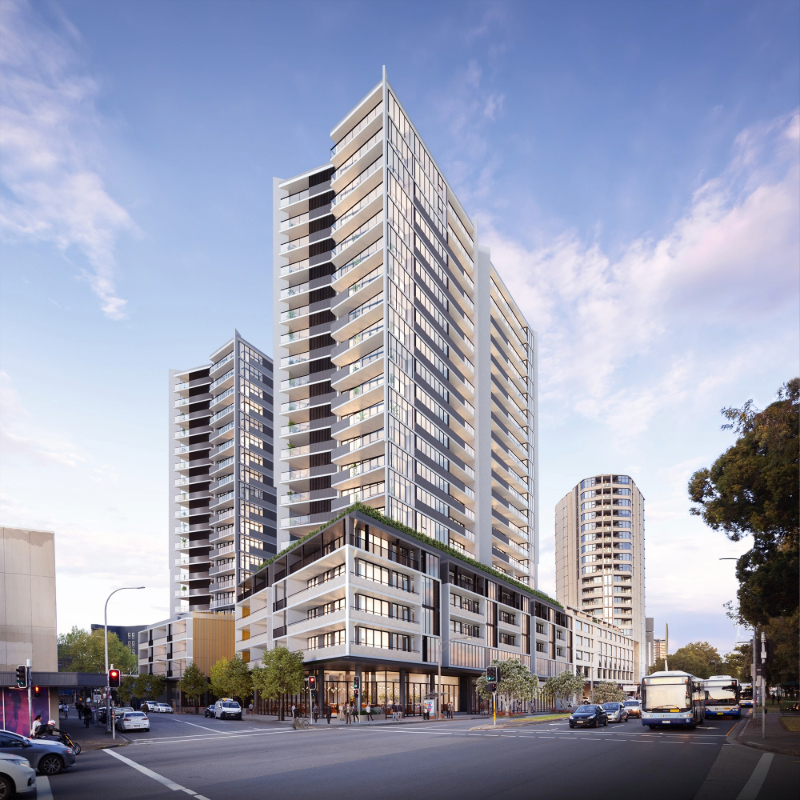
A render of One National Park Street, Newcaslte WestA render of One National Park Street, Newcastle West

The projects are included in UDRP’s 2023 Annual Report, released ahead of next week’s Council meeting, which highlights a range of major developments, development proposals and design competitions in Newcastle.

Significant development proposals considered by the URDP in 2023 include GWH’s $71 million twin-tower luxury apartment complex, ‘ONE’, on National Park Street in Newcastle West, and Altim Property’s $12 million customised commercial space, ‘Arbour’, also in Newcastle West. 

Newcastle Lord Mayor, Nuatali Nelmes said the URDP provides an invaluable contribution to planning and design in Newcastle.

“The Urban Design Review Panel generously share their extensive industry experience and expertise with applicants and design teams,” Cr Nelmes said.

“City of Newcastle’s design panel has origins back in the 1980s when it was initially formed as the Urban Design Consultative Group.  

“Since the panel’s inception, its members’ combined knowledge and guidance has continued to enhance our understanding of quality design; setting positive benchmarks for future development projects in and around the city.”

Panel Chair Dr Philip Pollard, who also acts as CN’s Jury Representative for planning and design competitions held throughout the year, said the UDRP continues to look for ways to take urban design excellence in Newcastle to the next level.

“While interest rates and a shortage of medium to large building contractors have applied pressure to developments, the City has continued to see a high level of interest from the industry, with the number of larger developments continuing to provide new residences, commercial spaces and other facilities. Design competitions have also produced some excellent proposals that set a high standard,” Dr Pollard said.

“In addition to the major developments we reviewed over the last 12 months, the UDRP has considered a range of smaller projects with relatively modest budgets. These developments contribute greatly to the character of the city and provide a variety of accommodation, from co-living to smaller medium density developments, to individual dwellings and an early learning centre.

“Good design benefits the whole community and need not be the most expensive option.”

The current panel was appointed in 2021 and comprises a specialist group of design professionals with extensive industry experience across a diverse range of fields including architecture, landscape architecture, urban design, sustainability, heritage, and safer by design.

CN is now seeking expressions of interest (EOI) for new members to join the UDRP on a three-year fixed contract. EOIs can be lodged via the Tenderlink portal until 30 April, with the new Panel’s term beginning on 1 July.

CN Executive Director Planning and Environment, Michelle Bisson, thanked the current members for their time and expertise.

“We extend our sincere gratitude to each member of the UDRP for their invaluable contributions throughout 2023. We appreciate the members for generously sharing their extensive industry experience and expertise with applicants and design teams,” Ms Bisson said.

“The UDRP continues to enhance the City’s understanding of good design, and this has set positive benchmarks for future development.

“I look forward to strengthening this expertise with a new panel of independent design experts, allowing us to continue to achieve excellence in urban design long into the future.”

Northern Rivers recovery and resilience program improving flood resilience through the delivery of 36 projects

Bridge expansions, upgraded pumps, enhanced evacuation routes and nature-based projects are just a few of the 36 projects being rolled out as part of the Northern Rivers Recovery and Resilience Program (NRRRP).

The Albanese Government has provided $150 million to the NSW Government to deliver 36 flood mitigation infrastructure and community resilience projects across all seven local government areas (LGAs) in the Northern Rivers impacted by the devastating 2022 floods.

A number of the 36 projects are now moving from design to delivery phase and aim to reduce the impact of future disasters to create a better position for communities to recover faster.

A key project of the NRRRP is the $40 million expansion of the two bridges which provide access to Ballina Island. To improve evacuation capabilities during flood events, the bridges at Fishery Creek and Tamarind Drive in Ballina, will be duplicated to create dual lane access.

This construction will significantly improve evacuation times, reducing the risk to lives in Ballina, and potentially curb infrastructure repair costs by minimising localised road flooding.

A further two bridges will be built in Tatham along the Woodburn to Coraki Road, improving evacuation routes, access for emergency services, and vital supply routes in the Richmond Valley. In total, the four new bridges represent $58 million of the $150 million funding for the NRRRP.

Another significant project being rolled out in Lismore CBD is the installation of an electric pump station at Lismore Rowing Club, which currently requires a tractor to be driven to the site to operate it manually during flood events.

The new pump is one of $31.5 million worth of projects that will come to life under the NRRRP in Lismore. This list includes the refurbishment of flood gates, drainage improvements, works on flood channels and the upgrade of several pumps.

Outside of Lismore, work is already underway on several of the NRRRP projects including $5.7 million to repair the structural integrity of the Woodburn to Coraki Road at Bungawalbin and Swan Bay in the Richmond Valley, one of the last sections of main road in the area to reopen following the floods.

The first NRRRP project has been completed, which was a small study to evaluate options for flood free access to Junction Hill via the Summerland Way in Grafton.

Further on-ground works and project management for NRRRP projects will be coordinated by the NSW Reconstruction Authority in accordance with the Emergency Response Fund Northern Rivers Recovery and Resilience Program 2022–23 – Federation Funding Agreement.

To ensure local businesses know about the NRRRP’s technical requirements and the pipeline of projects, the RA held industry briefings in Murwillumbah on April 3 and in Casino on April 4, with over 80 people in attendance at both.

More information about projects can be found on the Reconstruction Authority’s website here

Federal Special Envoy for Disaster Recovery, Senator Tony Sheldon said:

“It’s really exciting to see these mitigation and long-term resilience projects in the Northern Rivers underway, and we’re proud to support disaster prone communities prepare to withstand future weather events.

“While we are continuing to work with the NSW Government to deliver the right infrastructure to help protect and mitigate against future disasters, it’s really important that we recognise this significant milestone in the region’s recovery.”

Minister for Planning and Public Spaces Paul Scully said:

“These 36 projects help support the Northern Rivers Region to drive long-term resilience for the community.

“Each of these projects aim to mitigate the impact of future disasters and allow the community to recover more quickly.”

Parliamentary Secretary for Disaster Recovery Janelle Saffin said:

“Many of these projects have been suggested by community members or been on councils’ books for many years without the funds to implement them.

“It’s a vital first step towards mitigation, adaptation and building resilience and restoring community confidence before the next disaster strikes.”

Fresh focus for our regions

The NSW Government has today announced changes to the way the Government will serve regional communities, with an enhanced focus on protecting biosecurity, supporting agriculture, fisheries, forestry and mining as well as broader regional development.

From 1 July, 2024, the Department of Regional NSW will be re-named the NSW Department of Primary Industries and Regional Development. This reflects the twin objectives of growing our primary industries through greater focus on extension services, research and development and supporting regional economic development.

As part of the renewed focus there will also be a change in leadership of the new department.

Rebecca Fox will depart the role of Secretary after almost a decade serving the community in various senior roles in NSW Government. This included guiding the Department of Regional NSW through a period of consolidation and increased focus on delivery for regional communities and primary industries.

The incoming Secretary will be current Chief Executive Officer Local Land Services, Steve Orr, who has had a long and accomplished career serving the community in leadership roles in regional coordination and development, primary industries and local government.

These changes will create two new divisions within the Department, each with Deputy Secretaries reporting directly to the Secretary.

Agriculture and Biosecurity will be grouped to support the delivery of the Independent Commissioners for Agriculture and Biosecurity and reflects the interrelationship between the protection and productivity of our primary industries sector and the environment.

Fisheries and Forestry will also be combined to reflect the common natural resource management issues and the need for the long-term sustainable management and productivity of our state’s fisheries, marine estate and forests.

Regional economic development focused on regional industries and employment will remain firmly rooted in the new department, with broader Regional Coordination functions returning to the NSW Premier’s Department.

The return of Regional Coordination to the Premier’s Department emphasises the Premier and the Minister’s commitment to whole-of-government coordination for regional communities.

While Regional Coordination will sit centrally within government it will report jointly to the Premier and Minister for Regional NSW.

Regional Coordination teams will remain based in their current six regions ensuring the voices and needs of regional communities are at the centre of both government and the NSW public service.

These teams will continue to work with all government agencies, local councils, community and industry partners to coordinate and drive major projects and to address some of the longer-term, complex issues affecting regional communities.

NSW Premier Chris Minns said:

“These changes are an important reflection of the NSW Government’s commitment to supporting regional communities to thrive, and the addition of regional coordination roles to the Premier’s department will ensure a whole of government approach is taken.

“I know that New South Wales does not thrive if our agricultural industry and regional communities are not thriving. I am committed to continuing to invest in and work with our regions to make sure that happens.”

Minister for Agriculture and Regional NSW Tara Moriarty said:

“These changes will set a course for the future, firmly focused on using an evidence-based approach to ensure funding, programmes and economic support goes where it is needed and generates the most benefits.

“Under new leadership, the department will now focus on our key priorities of protecting, supporting, and developing regional NSW. The focus on biosecurity and agriculture will be boosted and the roll out of the new $350 million Regional Development Trust and the review of the Regional Development Act will be elevated.

“I am looking forward to working alongside Steve Orr in his new role as Secretary.

“Steve is highly respected across rural and regional communities throughout NSW and will bring his considerable experience and knowledge along with a new focus on the pressing needs of the regions.”

NSW Government zeroes in on road safety

The NSW Government is doubling roadside enforcement sites used for mobile speed cameras and unveiling more measures to counter the rising number of deaths on our roads, with actions at state and federal level.

There will be no increase in mobile speed camera enforcement hours, but cameras will be able to be deployed in 2,700 new sites across the state to reduce speeding more widely across the network.

The number of enforcement hours will remain at around 21,000 hours per month across NSW regardless of the new sites where cameras can operate.

The expansion is necessary in response to the increase in fatalities post-COVID. So far in 2024, 109 people have lost their lives on NSW roads – 13 higher than the same point in 2023.

New enforcement sites, which will be scoped over the next 12 months, are the latest road safety measure introduced by the NSW Labor Government, including:

  • Removing a loophole to force all motorists driving on a foreign licence to convert to a NSW licence within six months
  • The introduction of seatbelt enforcement by existing mobile phone detection cameras commencing on July 1
  • The demerit point trial that earlier this month saw 1.1 million drivers get a demerit point wiped from their licence for maintaining a spotless record over 12 months
  • Hosting the state’s first road safety forum, bringing together more than 150 local and international experts

The NSW Government today announces the actions that have been taken out of the February Road Safety Forum, with Transport for NSW to immediately begin work on:

  • Partnering with up to ten regional councils to fast-track the implementation of safer speed limits, particularly in areas of high pedestrian activity
  • A new look road safety communications strategy aimed at, and designed with, young people
  • Reviewing up to 35 school precincts across the state for improved safety on key routes to school
  • Supporting safer speeds through better lighting, placemaking and streetscape improvements for areas that have, or are introducing, permanent 40kmh and 30kmh speed zones

On Friday, NSW is joining other states at the Road Safety Ministers’ Meeting hosted by the Australian Government in Melbourne.

NSW has joined national and state road agencies in the signing of a formal data-sharing agreement which will help form a clearer picture of road safety across Australia, and inform strategies designed to increase safety.

Data around the causes of crashes, including speeding, fatigue and seatbelt-use, crash locations, speed limits and types of vehicles involved will all be shared to help design initiatives to lower road trauma nation-wide.

The National Road Safety Data Agreement will extend data sharing to state jurisdictions and non-government researchers, meaning the NSW Government will now be able to utilise information from across the country.

Highlighting the importance of using data to develop road safety strategies, Transport will today launch the Towards Zero Collaboration Hub, consolidating road safety information, data access and resources into a single, accessible platform.

The Hub will build road safety knowledge and empower local councils, community organisations and other road safety stakeholders to work together and share strategies to help prevent deaths and serious injuries on our roads.

Following the NSW Road Safety Forum, Transport will also explore ways with Corrective Services to enhance behaviour change programs for high-risk drink and drug driving offenders, and to implement stronger post-crash drug and alcohol testing after serious crashes.

Transport for NSW will also examine the benefits and challenges of using average speed cameras to enforce speeding for light vehicles.

The Towards Zero Collaboration Hub is now live at: collaborationhub.towardszero.nsw.gov.au

Read the outcome summary from the 2024 Road Safety Forum

Minister for Roads John Graham said:

“Reducing the predictability of where roadside cameras are set up was recommended by the NSW Auditor-General.”

“Like all other states around Australia, NSW has experienced an unwelcome rise in road fatalities since the COVID era, and we’re taking action to prevent these tragedies on the road.

“The Road Safety Forum was an extremely valuable opportunity to draw on the expertise and experience of over 150 international and Australian experts and the NSW Government is committed to building upon its recommendations.

“Finalising the National Road Safety Data Sharing Agreement will help form a clearer picture of vital information such as upgrades to roads and driver behaviour trends across Australia, as we work toward lowering road trauma nation-wide.”

Minister for Regional Transport and Roads Jenny Aitchison said:

“The rollout of 2,700 new mobile speed camera enforcement sites across NSW will predominantly occur in regional NSW where 1,650 new sites will be eligible once the scoping period is completed over the coming 12 months.

“This is entirely appropriate considering regional NSW represents a third of the NSW population but two-thirds of deaths on our roads.

“We want the public along for the ride on this and urge anyone with a suggested site in mind where safety would be enhanced by a roadside mobile camera to tell Transport for NSW.

“We can do more to help save lives on our roads in regional NSW – and I’m pleased to announce we are actioning initiatives from the Road Safety Forum immediately.

“We are partnering with up to ten regional councils over the next 18 months to accelerate safer speed reviews in towns, villages and on high-risk routes, which will make our towns and country roads safer.”

NSW Government package to support workers and shop owners at Westfield Bondi Junction

The NSW Government is providing a package of workplace resources for workers and businesses at Westfield Bondi Junction, as shops re-open today for the first time in nearly a week.

The NSW Government has been in constant contact with Westfield management as well as the Australian Retailers Association and the retail worker’s union (SDA) to help ensure support is responsive and coordinated.

To further ensure a comprehensive government response, the Minister for Work Health and Safety Sophie Cotsis will on Monday meet with the major insurers for a roundtable to ensure any compensation claims are dealt with promptly and empathetically.

Businesses may be able to access business interruption insurance, while workers may be entitled to make workers compensation claims.

Workers compensation insurance may cover lost income, along with medical and rehabilitation expenses, if an employee experiences a work-related injury, including psychological injuries.

The Minister has tasked SafeWork NSW with creating a package of psychological health and safety support for businesses with fewer than 200 employees including:

  • A free advice service for these employers which includes confidential one-on-one sessions with an expert on psychological health and safety.
  • Free mental health training to ensure workers in these businesses have the practical knowledge and skills to support their own mental health and look out for their colleagues.

That support is available by calling SafeWork NSW 13 10 50.

Additional tools that are available include:

  • The Traumatic Event Management Plan: a practical document intended to assist workplaces respond to and manage traumatic events.
  • code of practice which provides practical guidance on how to identify and manage risks to the psychological heath of workers. 

Customers returning to Bondi Westfield who would like support can call the New South Wales Mental Health line on 1800 011 511.

Mental health counsellors remain in-person at Bondi Junction, largely around Oxford Street Mall, and will continue as long as needed.

The state insurer, icare, has already begun processing claims and assisting those affected. icare covers the majority of employees in NSW. If you were at work and have been impacted by this incident and you need assistance with workers compensation, please call icare on 13 77 22.

If you are an employer and need assistance with your policy to support affected workers, please call 13 77 22. You can also find out more information and see FAQs.

icare is also providing additional psychological support services to assist employees and supplement the Employee Assistance Program (EAP) service provided by Westfield’s retail employers.

The NSW Government will continue to engage with all stakeholders to help ensure those impacted by the tragic incident on Saturday are provided with support.

Minister Sophie Cotsis

“Please be kind, gentle and sensitive to workers and shop owners today and in the days to come.

“Everyone reacts to these moments in different ways and some workers may find it difficult to return to work.

“The NSW Government is in for the long haul supporting all the workers and shop owners today and into the future.

“Many retail workers are under the age of 25 and it’s vital we listen to them and learn from them what more we can do to support them now and into the future.”

ANZAC Day – Our Most Important Commemoration

Anzac Day is our nation’s most important commemoration, when we remember and acknowledge the service and sacrifice of Australians who have fought in wars and conflicts since the Gallipoli campaign which began on 25 April 1915.

One Nation pays its deepest respects to our men and women in the Australian Defence Force, both past and present. For us Anzac Day always has been, and always should be, a day of profound national significance.

As this article is being written, the drums of war are sounding and the world is a much more dangerous place. The conflicts in Gaza and Ukraine threaten to expand and engulf more countries (Iran has become directly involved by attacking Israel), while communist China has grown much more belligerent about its claims on a free Taiwan.

On the eve of Anzac Day, Australia is once again at risk of being drawn into a war, and that prompts some important questions: what would be our role in a wider conflict involving our allies, what capabilities can we bring to the fight and – perhaps most importantly – exactly what are we defending and why should it be defended? For what reason should young Australians volunteer to serve and defend the nation and its interests?

If history is any guide, Australians will most likely be put in harm’s way on foreign shores thousands of miles away in support of our allies. As our Anzac tradition demonstrates, Australians have never been afraid to fight and sacrifice for a cause they believe is just.

It could be argued there is much for us to defend. Australia has substantial natural resources and agricultural output that many nations rightly envy, and potentially this makes us a target. Our relative distance and isolation from global flashpoints make us a very difficult target, but this is not just about defending territory. It’s also about defending sovereignty, principles and freedom, and supporting allies who would also defend us if the need arose. Armies and navies have always been required to defend the sovereignty that enables democracies like Australia. As Thomas Jefferson famously said, the tree of liberty needs to be watered from time to time with the blood of tyrants and patriots. The Second World War proved that beyond any doubt: perhaps 60 million people died, including almost 30,000 Australians, in the fight to defend freedom against tyranny.

It was almost 80 years ago when that terrible war ended. Today, the ADF’s needs are very different than those of the Second World War. Today it needs highly motivated, intelligent people capable of being trained in highly specialised technical, tactical and strategic disciplines of narrow scope. The question is: who among today’s generation of young Australians is capable? Pauline Hanson makes a point of consulting both the leadership and the ‘rank and file’ of the ADF, and they universally tell her they don’t favour conscripting unwilling personnel who wouldn’t be as committed as they are. They’re not keen on having young people with that tremendous and unrealistic sense of entitlement that seems so prevalent these days. Defending Australia is very hard work, even in peacetime, and requires discipline and commitment.

But something must be done, and soon. Our overall defence posture is in an appalling state. Our modern weapon stocks are low, our platforms (ships, tanks etc) are ageing and in need of replacement, and we are falling far short in personnel recruitment – we can’t even fully crew our current submarine fleet of only six vessels.

This prompts another question: with Labor and Green leaders routinely shaming and bagging our nation and the values which built and defended it, why would the young people believing these lies even be motivated to put on a uniform? For what values or cause would they fight, if not their own nation and its people? Conversely, why would any sensible young Australian fight for a country essentially remade in the perverse image envisioned by the extremist woke left, as Labor and the Greens are trying their hardest to do?

Anthony Albanese better think long and hard about what he is doing to our national ethos and the impression of our nation he is giving to young Australians, as this young generation is the group he will call to war for nice photo opportunities and to show he is the leader we all wished he was.  And as those drums of war beat, we have one thing and one thing alone to fear: Anthony Albanese’s ideology.

Once again, the service and sacrifice of the Anzacs offers the answer and the example he, and we, should follow. That’s why we hold Anzac Day in the highest regard. At the going down of the sun – and in the morning – we will remember them. Lest we forget.

World class scanner to diagnose and treat cancers earlier

Patients at the new Paula Fox Melanoma and Cancer Centre at Melbourne’s Alfred Hospital will have access to cutting-edge scanning technology that will be able to detect cancers earlier.

The Albanese Government is investing $12 million through the 2024–25 Budget, to purchase and install a Quadra Positron Emission Tomography/Computed Tomography (PET/CT) Molecular Imaging scanner. The Victorian Government and The Alfred Foundation will match this funding.

This scanner is better able to detect smaller lesions meaning cancers can be diagnosed sooner.

The funding was announced as the Prime Minister opened the Paula Fox Melanoma and Cancer Centre with Premier Jacinta Allan. The Commonwealth Government previously contributed $50 million to the construction of the centre.

It will also increase the safety of patients and staff, by performing faster scans with a lower dose of radiation.

The scanner will support an additional 2,600 scans annually, more than doubling current capacity to 5,000 scans.

Demand for PET/CT scanning services continues to grow, and this scanner will help to meet this demand.

In addition to being used to diagnose and treat cancers, the scanner will support critical medical research.

The scanner will increase Australia’s capacity to run clinical trials in ‘theranostics’ which is an emerging field in oncology that integrates molecular imaging and therapy to provide personalised cancer treatment.

It’s believed this will be the only scanner of its kind in Australia that is used for research, and cancer treatment and diagnosis.

It is expected to be operational by June 2025.

It is estimated around 165,000 cases of cancer are diagnosed each year in Australia and sadly more than 50,000 people will lose their lives to cancer.

Facilities such as these are essential to help save more of those lives.

The Commonwealth is investing more than $2.8 billion over the next four years to improve cancer outcomes, excluding the cost of Medicare services and pharmaceuticals.

Prime Minister Albanese

“We are pleased to partner with the Victorian Government to deliver better cancer care for Victorians.

“This scanner will mean Victorians have access to a cutting-edge scanner which will support cancer research, diagnosis and treatment.

“This scanner will reduce wait times for Victorians who need a PET/CT scan and double the number of scans performed in Australia each year.”

Minister Butler:

“This scanner is faster, safer and can detect cancers earlier meaning many Victorians will receive an earlier diagnosis, which is so important in cancer care.

“Researchers will have the opportunity to use this scanner for clinical trials which could lead to potentially ground breaking discoveries.

“This investment is part of the government’s commitment to ensure Australians have access to affordable, world-class healthcare when and where they need it.”

Commemorating Anzac Day on the Kokoda Track

Prime Minister Anthony Albanese will travel to Papua New Guinea from 22 – 25 April to meet with Prime Minister Marape, walk sections of the Kokoda Track and commemorate Anzac Day.
 
The Kokoda campaign lasted from July to November 1942, with about 56,000 Australians involved. Around 625 Australians were killed and over 1,600 were wounded along the track.
 
Each year many Australians take the challenge of walking the Kokoda Track, alongside Papua New Guineans, to not only test their limits, but to reflect on the events that took place.
 
The trek retraces the footsteps of Australian soldiers and those who walked alongside them during the Kokoda campaign.
 
The Prime Minister will spend two days walking the Kokoda Track before standing shoulder to shoulder with Australians and Papua New Guineans at the annual Anzac Day Dawn Service at the Isurava memorial site.
 
Prime Minister Anthony Albanese:
 
“The Kokoda campaign and the Kokoda Track form part of our national identity, a defining chapter in the story of those who risked and lost their lives in defence of Australia and in our shared history with Papua New Guinea.
 
“Kokoda is a name that lives in Australian legend. It captures the spirit of courage, endurance, mateship and sacrifice forged between Australia and Papua New Guinea during World War II.
 
“Participating in this walk is a solemn way to honour to reflect on the sacrifices made by those who walked this same ground, people from Papua New Guinea and Australia, serving and sacrificing together in defence of their home.”  
 

LABOR’S DEFENCE STRATEGY, MORE WORDS, MORE BILLIONS BUT NO CHANGE TO THE BROKEN FUNDAMENTALS

The Albanese Labor Government has launched another lengthy report concerning Australia’s military, which changes almost nothing but manages to hand billions more to a defence establishment that continually fails to deliver.

The Albanese Governemnt has announced a staggering $330 billion spend on Defence over the next decade, the vast majority going into the same white elephant projects such as nuclear submarines and (very) future frigates that have been burning through public funds for years.

Today’s announcement follows multiple other reviews from the Defence Strategic Review, The Enhanced Lethality Surface Combatant Review and the Defence Industry Development Strategy, now the Integrated Investment Program and the National Defence Strategy.

None of these has challenged a Defence leadership that has overseen failure after failure and each one has promised more public funds into a broken system.

Greens Defence Spokesperson Senator David Shoebridge said: “This latest review fails to deal with the giant AUKUS-sized-elephant in the room that has eaten up Defence’s budget and imposed the extra cost of less stability and the peace in the region.”

“With every major weapons platform retained regardless of their efficacy, if there is a tough decision here I cannot see it.

“No major procurement decision has been reversed here, no serious feathers have been ruffled in any of the services, which is clear evidence of weak political leadership.

“If more reports and meaningless catchphrases made us more secure then Minister Marles would get a gold star.

“Tiny initiatives on more defensive weapons are all that is possible when so much of the budget is soaked up on 20th-century platforms like nuclear submarines, frigates and attack helicopters.

“This is a major missed opportunity to refocus our defence spending to a much more affordable, less aggressive and more achievable direction that is aimed at defending Australia rather than threatening our neighbours,” Senator Shoebridge said.

Council Budget to deliver record infrastructure program as investment in community continues to grow

Almost $140 million will be invested into infrastructure projects across the city as part of a record Budget delivering essential services alongside a modest $4.1 million surplus.

The Council will place its draft 2024-25 Budget and Delivery Program on public exhibition for community feedback next week.  

More than $415 million will be invested across 60 services and more than 280 projects to be delivered across Newcastle during the next financial year.

Lord Mayor Nuatali Nelmes said the Budget will set a new benchmark for CN’s investment in the local community.

“During the past decade Council has worked incredibly hard to balance the needs and expectations of our growing community with our commitment to making sure we are financially sustainable,” Cr Nelmes said.

“In that time, we have more than doubled our annual infrastructure program as we continue to deliver essential projects and services for the benefit of all Novocastrians.

“In 2024/25 this will see a record $139.5 million earmarked for local facilities and infrastructure projects across Newcastle.

“This includes $14.6 million for roads and footpaths across the city, including $5 million for renewing roads in the western corridor and $7.7 million on stormwater projects and flood planning in areas such as Mayfield East and Darby Street.

“We’re also revitalising our coast, city, and urban centres with $9.9 million for projects such as the East End Public Domain Plan, Hunter Street Mall and local centre upgrades at Orchardtown Road, New Lambton, and Georgetown. 

“These projects are fundamental to building an inclusive, liveable, and sustainable city, and ensuring we continue to be an attractive destination for visitors and investment.”

Other Budget highlights include:

  • $21 million to complete the expanded Newcastle Art Gallery
  • $14.7 million in improvements to our waste management 
  • $11 million on recreation and sports improvements, including the Gregson Park playground at Hamilton
  • $6 million on new cycleways and transport projects
  • $5 million for Longworth Avenue and Minmi Road, Wallsend road renewal
  • $4.5 million on coastal management including Stockton coastline protection work
  • $4.1 million on the Memorial Drive Road embankment 
  • $2.8 million on improving bushland and watercourses
  • $2.4 million on resources and improvements for Libraries, Civic Theatre and City Hall
  • $1.3 million on renewable energy projects including climate action and EV charging. 

CEO Jeremy Bath said CN continues to earn respect as an innovative organisation with a strong focus on the future of Newcastle, its economy and environment, and its people. 

“We continue to follow the roadmap provided in our Community Strategic Plan, while delivering key initiatives and actions set out in our Community Engagement Strategy, Newcastle Environment Strategy, and Social Strategy. We are also developing new strategies that will help us manage our growing population, including the Broadmeadow Place Strategy,” Mr Bath said.

“Investing in our community delivers benefits now and into the future, with estimates that our proposed infrastructure program in 2024/25 will create 735 local jobs and increase total economic output in the LGA by up to $305 million.

“Delivering back-to-back-to-back balanced budgets following the pandemic is not an achievement that occurs by accident. Rather it is the result of the commitment and passion of our 1300 staff who have yet again shown that Newcastle is a city that can provide for its citizens without having to take on huge amounts of debt.”