Investigation to be launched into Liverpool City Council

The Minister for Local Government Ron Hoenig has requested the Office of Local Government to undertake an investigation into Liverpool City Council.

The Section 430 Investigation will look at whether there has been a breakdown in the council’s operations amid ongoing reports about dysfunction and staff matters within council.

Under Section 430, the Deputy Secretary Local Government has the power to carry out investigations into council operations either independently or at the request of the Minister for Local Government.

The Terms of Reference for the Inquiry will be finalised in the coming days and will be available on the Office of Local Government website.

A report into the investigation will be provided to the Minister for Local Government and Liverpool City Council.

Minister for Local Government Ron Hoenig said:

“I’ve been concerned about the operations of Liverpool Council for some time and it’s clear there’s a fractured relationship between councillors and staff.

“I’ve asked the Office of Local Government to undertake an investigation into the Council because the local community needs reassurance that their council is operating properly.

“Elected officials have a responsibility to their communities to operate effectively and efficiently, and I’m concerned about the level of dysfunction within Liverpool Council that is playing out publicly.

“A robust investigation undertaken by the OLG will shore up public confidence and ensure council is focused on delivering for its community.”

Eliminating malaria in our region

Australia is investing up to $30 million to support governments and communities across the Pacific and Southeast Asia deliver new tools and build critical skills to eliminate malaria.

Malaria remains a major challenge in our region with over 7 million reported cases in 2022, and rising infection rates in some countries. Malaria is a burden on families and health systems, slowing development and restricting growth.

New tools are urgently needed to address the emerging resistance to current treatments, and the impact of climate change, which threaten to roll back progress achieved against malaria.

Our new package, announced on World Malaria Day, provides comprehensive support ranging from preventing infections through strengthened mosquito control to developing better testing tools and improved treatments.

This includes $5 million to James Cook University to support Pacific countries to strengthen surveillance and control of mosquito-borne diseases like malaria, dengue and zika.

It also includes a new $8 million partnership with non-government health organisation PATH, in a consortium with Australia’s Burnet Institute and the Walter and Eliza Hall Institute of Medical Research, to develop new diagnostic tests targeted to our region.

Additionally, we are partnering with the Medicines for Malaria Venture, providing $17 million for the development of new malaria treatments including medicines suitable for use in pregnancy and for children.

This new package is part of the Partnerships for a Healthy Region initiative, which works with governments and civil society organisations in the Pacific and Southeast Asia to build resilient, equitable and inclusive health systems.

It adds to our existing support for malaria elimination, including through the Global Fund to Fight AIDS, Tuberculosis and Malaria, the Asia Pacific Leaders Malaria Alliance, and the Innovative Vector Control Consortium.

Minister for Foreign Affairs, Senator the Hon Penny Wong:

“Malaria is not only a threat to the health and wellbeing of communities in the Pacific and Southeast Asia, it also impacts education, tourism and economic growth.

“Investing in our partnerships with our region and its capacity to test and treat malaria is clearly in Australia’s interest.”

Minister for International Development and the Pacific, the Hon Pat Conroy MP:

“The Australian Government is supporting the development of new health tools and skills to fight malaria at every stage.

“We are investing to support our region with better surveillance, better control to prevent infections, better diagnostics to detect cases, and better medications so people with malaria receive the best possible care.”

WOMEN MUST FEEL SAFE IN ALL WORKPLACES

The Guardian reports today that the Australian Border Force’s marine unit is rife with “inappropriate workplace behaviours including sexual harassment and bullying”.

A secret AHRC report revealed that in the marine unit every woman who responded to a survey had witnessed sex discrimination, as well as sexual and/or sex-based harassment, and 78% had personally experienced the same behaviour.

Senator Larissa Waters, Greens Leader in the Senate and spokesperson on women

“The Respect at Work reforms were the centrepiece of the government’s response to workplace harassment, and no workplace, including the Australian Border Force can continue to operate without regard to the new legal framework. 

“The remoteness of the marine unit has allowed an unacceptable culture to develop. The ABF must act immediately to comply with its positive duty and ensure base stations are not hostile work environments.

“The sex discrimination commissioner, Anna Cody is correct, immediate intervention is required. Border force leadership must be held accountable for addressing incidents of inappropriate workplace behaviours.”

Research project aiming to prevent local extinction of threatened marsupial

City of Newcastle (CN), the University of Newcastle and FAUNA Research Alliance have joined forces to investigate ways to protect Squirrel Gliders in the Lower Hunter.

The marsupial is at risk of local extinction due to habitat loss, damage and fragmentation, while also contending with heat stress, vehicle collisions and predation by introduced species.

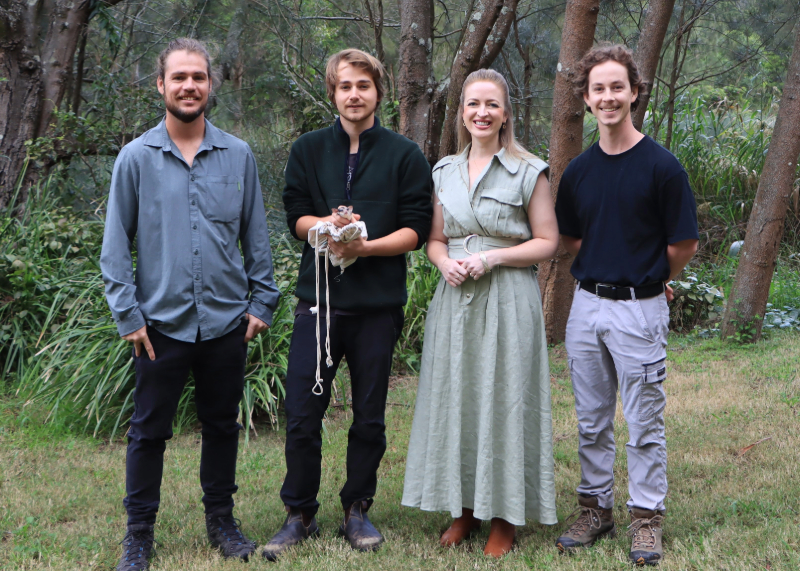
Cr Elizabeth Adamczyk joins the University of Newcastle's Dr Ryan Witt, Sam Hayley and Oliver Brynes at Richley Reserve as part of the Squirrel Glider research project.Cr Elizabeth Adamczyk joins the University of Newcastle’s Dr Ryan Witt, Sam Hayley and Oliver Brynes at Richley Reserve as part of the Squirrel Glider research project.Intensive monitoring by a University of Newcastle team has confirmed the presence of Squirrel Gliders in Blackbutt Reserve and Jesmond Bushland, with a thermal drone detecting body heat signatures of the animals hidden in the canopy.

Lord Mayor Nuatali Nelmes said the collaborative research project will evaluate the abundance, habitat use and genetics of the threatened species across the two bushland reserve systems.

“Research and monitoring can inform long-term conservation management to support viable Squirrel Glider populations and prevent local extinction,” Cr Nelmes said.

Councillor Elizabeth Adamczyk said our Newcastle Environment Strategy, which aims to protect and regenerate natural systems, will contribute to long term conservation outcomes for the Squirrel Glider.

“Squirrel Gliders keep our bushland healthy by feeding on plants and invertebrates. They help with pollination of our Eucalypt forests and regulate the number of insects such as caterpillars, cicadas and beetles,” Cr Adamczyk said.

“Newcastle’s bushland areas are simply an invaluable refuge for our fauna, including our threatened species, and are irreplaceable in light of the documented biodiversity emergency we are facing locally, nationally and internationally.”

Squirrel GliderSquirrel GliderWildlife conservation scientist Dr Ryan Witt from the University of Newcastle, who is leading the research effort, said Squirrel Gliders are one of the city’s last remaining threatened marsupials.

“Importantly, our research uses multiple monitoring methods, including nest box monitoring, pipe trapping, thermal drone surveys and genetic analysis to develop a baseline understanding of the status of the Squirrel Glider populations living in Blackbutt and Jesmond bushland,” Dr Witt said.

“Over time, it will be possible to evaluate the trajectory of the populations. Our team has already detected 19 males and 18 females living across the two reserves. 

“We have not observed Squirrel Gliders moving across major road structures, including between the east and west portions of Jesmond bushland, and between Blackbutt and Jesmond. 

“This highlights the importance of identifying points within the environment in which structures like rope bridges could be installed, which are likely to be required to maintain the populations genetic diversity and prevent local extinction.”

As part of the Natural Connection program the first of CN’s Squirrel Glider events will take place on Thursday 2 May when CN staff and University of Newcastle researchers hold an evening information session at Wallsend Library to share details of the Squirrel Glider research project.

Other ways residents can help include planting Squirrel Glider food trees and shrubs, keeping cats inside at night, leaving water out for local wildlife in hot weather and calling 13000 WIRES or Hunter Wildlife Rescue on 0418628483 if they find injured wildlife.

For more information about the information session visit whatson.newcastle.nsw.gov.au

NSW honours the service and sacrifice of veterans on Anzac Day

Today on Anzac Day, communities across NSW are coming together to honour the service and sacrifice of our veterans and current serving members of the Australian Defence Force.

The NSW Dawn Service at the Cenotaph in Martin Place commenced this morning at 4:30am, the approximate time it is believed the first Anzacs waded ashore at Gallipoli.

The Service was attended by representatives of the Commonwealth and NSW Government, Ex-Service Organisations, veterans’ groups and over 5000 spectators.

NSW Premier Chris Minns recited the poem Salute by Elliott Napier and laid a wreath to acknowledge the service of our veterans and servicemen and servicewomen from NSW.

Minister for Veterans David Harris participated in a special Anzac Day service atop the Sydney Harbour Bridge shortly after sunrise.

The service, organised by RSL Lifecare Veterans Services in partnership with BridgeClimb, was attended by a number of veterans and members of the community.

The Anzac Day March commences at 9am on Elizabeth Street with over 8000 current serving members and veterans expected to march past the Anzac Memorial in Hyde Park and concludes at Liverpool Street.

Marching in Sydney again this year are a number of veterans from the Second World War who will be honoured by thousands of spectators along Elizabeth Street. The March will culminate with the Commemoration Service at the Anzac Memorial commencing at 12:30pm.

Aboriginal and Torres Strait Islander service personnel will be recognised at the Coloured Digger March this afternoon in Redfern.

Now in its 18th year, the event will begin at 1pm at the Redfern Community Centre.

Official events in the Sydney CBD will come to a close with the solemn sunset service at the Cenotaph in Martin Place from 5pm.

With thousands of people expected to attend commemorations in the CBD, it is recommended to use public transport for all Anzac Day travel.

Additionally, there will be a highly visible police presence throughout the city and the community is asked to honour our veterans in a safe and respectful manner.

Free travel is available for current and former Australian Defence Force members and their families on Anzac Day, with additional early morning services running into the city.

The Community War Memorials Fund, managed by the NSW Office for Veterans Affairs, also opens today. Grants of up to $10,000 are available to help conserve, repair and protect war memorials across NSW.

For more information on how to apply please visit the Veterans Affairs website.

Minister for Veterans David Harris said:

“Anzac Day is a time to come together and pay tribute to the Anzacs who served in World War One, and all the brave servicemen and servicewomen who have since followed in their footsteps.

“Anzac Day gives the community an opportunity to pay their respects to those who have served our country.

“I attended an Anzac Day Service on the Harbour Bridge this morning for the first time and it was a special location to pause and remember all who have served our nation, allowing us the freedoms we afford today.

“If you cannot make it into the Sydney CBD, you can watch the march on ABC TV or attend one of the many local services and events in your community.

“I encourage all of NSW to attend a commemorative service, dawn service or march and to pause and pay respects to our veterans and current serving members, and their families.”

Regional towns made big sacrifice for Australia

The NSW Government acknowledges the sacrifice and bravery of all that have fought for our country. Soldiers have enlisted across the state and regional and rural NSW monuments can be found honouring the sacrifice made by residents, often from communities where the population was smaller than the average present day city neighbourhood.

In WW1 thousands of young men from regional communities, many who had never even been to Sydney let alone Europe, left their normal lives for war, a sacrifice that was echoed through WW2, Korea, Vietnam and even today in ongoing operations around the world.

NSW recorded the highest enlistment rate in the country during WW1 with 164,030 people (many from regional communities) signing on to join the war, with an estimated 21,000 never to return home, leaving bereft communities across the state.

When WW2 broke out the people of NSW once again answered the call, many the sons, brothers or relatives of those who served in WW1, 276,741 of them answered the call with the still fresh memory of the horrors of war.

Today the reminder of regional NSW’s sacrifice is seen through the war memorials that can be found in nearly every regional and rural town.

These monuments have a sombre history in country towns where they were often used as substitute graves that family and friends of those who died in battle overseas were able to visit to remember their loved ones.

Today these monuments act as a congregating place for the local community to come together and commemorate the bravery and sacrifice so little gave to so many, and the continuing service and sacrifice being made by those serving in our armed forces.

Minister for Regional NSW Tara Moriarty said:

“The role of regional NSW communities in contributing to the war effort in WW1, WW2, Korea, Vietnam and even in present day peace-keeping operations cannot be overstated.

“Families in these communities saw their sons, brothers, and fathers go off to war overseas and were left bereft when many never returned home, having made the ultimate sacrifice in service to their country.

“Today we honour the contribution of all service men and women throughout the country and throughout our history and I thank them for their service, contribution and sacrifice that they have and continue to make in order to keep our country safe.”

Minister for Veterans David Harris said:

“The Anzac Memorial in Sydney’s Hyde Park, the state’s principal war memorial, commemorates the service of our veterans from across NSW. There are 1,701 samples of soil displayed within the walls of the Hall of Service at the Memorial, this sacred soil representing the names of each of the towns, cities, suburbs and homesteads given as a home address by First World War enlistees.

“The Hall of Service demonstrates the geographical reach of the call to serve, and signals the willingness and enthusiasm of so many from diverse regions who answered the call to join the war. It contains the incalculable loss and grief of communities across the state whose men and women did not return.

“Today on Anzac Day, we come together as a community to remember our veterans and current serving members of our Defence Force, many of whom come from regional areas across our state. We pay tribute to their service, and we thank them for their efforts to allow us the freedoms we afford today.”

210,000 visitor milestone marks end of successful Penrith Beach season

Hundreds of thousands of Western Sydney families enjoyed the sandy shores of Penrith Beach this summer, taking full advantage of the first-ever beach season at Penrith.

The beach provided much-needed relief to the community as the temperature frequently soared towards 40 degrees. The overwhelming response from locals resulted in the extension of the season for an additional three weeks until ANZAC Day.

Penrith Beach has hosted more than 210,000 visits since the gates opened on 19 December 2023. Figures show residents from the Penrith and Blacktown LGAs were the most frequent visitors to the site now famously dubbed as ‘Pondi’.

This hasn’t just provided access to a great swimming spot in the heart of Western Sydney but has also acted as a cost free activity for so many families throughout summer.

The NSW Government is now considering future options for Penrith Beach following the conclusion of this trial period.

Deputy Premier and Minister for Western Sydney Prue Car said:

“This free swimming spot has been a huge success with families, and I’ve been so thrilled to see it embraced by the local community.

“Western Sydney families deserved this beach after years of waiting and I’m really proud we delivered it last summer.”

Minister for Planning and Public Spaces Paul Scully said:

“Western Sydney’s decades-long dream of having a local beach was achieved within just nine months of Labor coming into Government.

“The trial represents the importance of every community having access to safe and fun places to swim, and I’m keen to explore future options for Pondi’s potential return.”

Inner West Light Rail to roll into the night

Passengers using the L1 Dulwich Hill line will enjoy extended hours from Monday 29 April, with services now operating from 5am to 1am, 7 days a week.

These changes mean an extra 160 services will be added to the weekly timetable for Inner West light rail passengers, supporting early risers and late-night revellers to travel around the Inner West and CBD.

Services will run every 15 minutes from 5am to 6am every morning, with a service every 15 minutes from 11pm to 1am each night.

This is another way the NSW Government is supporting the revival of the night time economy while making it easier to travel around Sydney.

Newly extended hours also build on recent service uplifts, with a total of 450 additional services per week on the Inner West Light Rail (L1) since June 2023.

This permanent timetable change also brings the L1 operational hours in line with the L2 and L3, with all Sydney Light Rail services now operating from 5am to 1am daily. It also aligns with the wider public transport service in Sydney.

For more information or to plan your trip, visit transportnsw.info

Transport Minister Jo Haylen said:

“This permanent extension to the L1 operating hours is a big win for the inner west.

“Every time we’ve extended light rail operating hours for major events, people have flocked to the late-night services.

“But every night is a good night to be out and about in Sydney, so ensuring people have a way home is vital.

“With an earlier start time of 5am, Light Rail will also become a great option for early risers, heading to work in areas like Pyrmont, Ultimo and the CBD.

“We’ve been really focused on improving frequency along the line, as a result passengers are voting with their feet and L1 passenger numbers are quickly catching pre-COVID levels.”

Transport Coordinator General Howard Collins said:

“We’re bringing the L1 in line with the operating times of the L2 and L3 in our CBD and east.

“Not only will this guarantee a better service for passengers in the Inner West, but it’ll make our light rail network easier to navigate for visitors who will appreciate the consistency across all of our lines.

“Light rail is growing in popularity, and we’ll keep doing everything we can to meet demand.”

Duncan Edghill ALTRAC Light Rail said:

“These extra services will make the L1 Dulwich Hill line an even more attractive transport option. This is especially important for workers who need to get to their jobs early or late in the day, as well as students and socialisers travelling outside peak times.

“Light Rail is proving to be exceptionally popular with Sydneysiders. We’re delighted to have worked with TfNSW and our partners in delivering these additional services on the L1 Dulwich Hill line.”

Arsene Durand-Raucher Transdev Sydney said:

“Our goal is to serve the community and contribute to making Sydney a great place to live by operating and maintaining a safe and reliable light rail service on behalf of Transport for NSW, and our teams have worked diligently to ensure passengers have a seamless and safe experience with these additional services.”

More bus services for Sydney’s south

Transport for NSW and U-Go Mobility have ended the bus driver shortage in Region 10, thanks to dedicated bus driver recruitment campaigns and a focused driver training program.

The boost is in part due to U-Go Mobility’s flagship Women Behind the Wheel recruitment campaign, encouraging women to explore a career as a bus driver.

Through this campaign, U-Go – the area’s operator – has doubled the number of women drivers serving the communities of Sydney’s south and south-west. The program invests in women’s licensing and training to remove barriers and support access to the traditionally male-dominated industry.

These initiatives, along with the measures the NSW Government has put in place across the industry including slashing the cost to get a Bus Driver Authority, launching a bus driver recruitment campaign, and initiating the roll out of free opal cards to drivers, have helped half the amount of driver vacancies across the state since May 2023.

Bus passengers in Sydney’s south and south-west are now experiencing a full timetable after U-Go reinstated suspended services in February.

All trips that were suspended as part of the July 2023 timetable changes were added back into the timetable on 26 February.

This means bus passengers in the area now have 160 more bus trips to get them to where they need to go.

The 960 and 920 services will continue to operate in place of the previous M92.

Transport for NSW continues to work with U-Go Mobility and other bus operators to deliver a reliable and frequent bus service for passengers.

Transport Minister Jo Haylen said:

“It is great to see such success in getting more drivers back into buses in Sydney’s south and south-west.

“I know how important an integrated and reliable bus network is for these communities, and I want to thank locals for their patience as Transport worked with the operator to stabilise operations.

“It’s exciting to see the number of female drivers double over the past six months. A career in the bus industry has endless opportunities and we want to see more women getting involved.”

Member for Heathcote Maryanne Stuart said:

“Our community really bore the brunt of the bus driver shortage, but we’ve also been able to see first-hand how solutions to the bus driver shortage can be implemented and how they’re starting to pay off.

“It will take a while to encourage passengers back onto our buses, but now that we are seeing a more reliable and regular service, we’ll be able to rebuild trust and see more people tap back on.”

TfNSW Coordinator General Howard Collins said:

“The more we share stories about women within the bus industry, the more we will be able to boost our numbers.

“Inclusion of women on the frontline brings greater diversity of skills and experiences to the bus industry.

“It is great to see more female drivers have helped boost U-Go Mobility’s driver numbers and get them back to a full timetable, to deliver a better service for passengers.”

Way forward for Sydney Trains as final Rail Review released

The final Sydney Trains Review has been released, outlining key challenges and recommendations, including major system upgrades, fleet reliability and workforce gaps.

The findings provide a framework for reform that will shape the future of our railways in New South Wales.

The review found Sydney Trains is facing significant changes over the coming years, such as the new timetable allowing for integration of metro services, as well as critical network upgrades.

It recommends a ‘fleet support strategy’ be prepared to address performance issues, an action the government is currently exploring at pace.

Fleet performance is below target, caused by delays to train technology upgrades and the former government’s problem-plagued procurement and integration of the New Intercity and New Regional Rail fleets.

While the stalwart Tangaras are still within their life cycle, the ageing fleet was the highest contributor to maintenance issues. The government continues to explore options for the next generation of locally built Tangaras which will replace the current fleet in the coming years.

The review also highlights significant challenges in recruiting, training and retaining key skills in specialised positions, recommending a number of measures to address this shortfall.

Sydney Trains was found to have high vacancy rates in critical positions and an ageing workforce, particularly in the critical engineering and maintenance branch, in which around 20 per cent of staff are aged under 34 – and almost 30 per cent over 55.

Other recommendations from the review include:

  • Realign accountabilities to improve approaches to safety, asset management, freight and third-party access to the rail corridor;
  • Review how assets are owned, managed and assured within Transport​for NSW;
  • Explore options for continuous improvement of critical incident response;
  • Work collaboratively with freight to determine better ways of prioritising the movement of both people and goods across the state​;
  • Invest in critical asset needs and review ways of working to support enhanced maintenance practices.

Sydney Trains and Transport for NSW welcome the 69 findings from the review process and are working through them, with some more complex than others.

All 12 recommendations of the Interim Rail Review have either commenced or been finalised, including the government’s Rail Repair Plan, which exceeded expectations ahead of schedule.

The independent review was launched by the Transport Minister on 31 March 2023 and undertaken by an independent panel comprising Carolyn Walsh, Arthur Smith and Peter Medlock.

Read the full Sydney Trains Review Final Report

Transport Minister Jo Haylen said:

“The Rail Review process has brought to light some of the key factors that have led to delays and disruption for passengers.

“There will never be a quick or easy fix, and these changes won’t happen overnight – but this is a crucial evolution that will gradually modernise our network and ensure we’re a global leader in rail efficiency.

“This final report covers many recommendations which provide a pathway forward, and I look forward to working through them with Sydney Trains and Transport for NSW.

“I want to thank the panel, all stakeholders who provided input, and – most importantly – the thousands of Sydney Trains workers who are contributing to this important work to shape the future of rail in NSW.”

Sydney Trains CEO Matt Longland said:

“Sydney Trains is always looking for ways to improve. We welcome the opportunity to do so through the review process and thank National Transport Commission Chair Carolyn Walsh for her work.

“We constantly strive to provide the best possible service for our passengers and are able to do so thanks to the tireless efforts of our hardworking staff.

“The review process has seen positive collaboration and important recommendations. We’re proud to be delivering results, such as the Rail Repair Plan, and look forward to the next steps.

“Some of these recommendations require considerable investment over the next decade, and we look forward to developing detailed proposals for the government’s consideration.”