
$275 price promise dead in the water

The Australian Energy Regulator (AER) has confirmed Labor’s promise to reduce household electricity prices by $275 is officially broken with Australians paying among the most expensive power bills in the world.

In just two years, the Albanese Labor Government’s all-eggs-in-one-basket ‘renewables only’ approach has driven power prices up by $1,000 more than Labor promised for some Australian households.

The AER decision will set what’s known as the ‘reference price’ for electricity beginning on July 1 this year and has revealed increases of up to 38% over the past two years, sending bills soaring to just under $3,000 a year in some jurisdictions.

This is forcing many families to make tough decisions as energy bills take an increasing toll on household budgets.

Small businesses have also been hit hard by Labor’s spiralling energy crisis, with bills soaring by up to $2,000.

After just two years of ‘hard Labor’ there are now 43,210 new households on hardship payments with their energy provider, and nearly 24,000 households and business in energy debt.

It’s no wonder business energy bills are continually cited as the cost item that is causing them the most problems.

Energy prices have contributed to 16,000 businesses around the country going insolvent since 1 July 2022.

Shadow Minister for Climate Change and Energy, Ted O’Brien MP, said the announcement signalled the death knell of Labor’s fatal energy price promise.

“Despite promising a $275 reduction in household electricity bills, Australians are paying some of the most expensive power bills in the world and there is no reprieve in sight.”

“Labor’s energy crisis has pushed many Australians to the brink with 550 households plunging into hardship arrangement due to their energy bills every single week under the Albanese Government.”

“This is a direct consequence of Labor’s ideological, all-eggs-in-one-basket ‘renewables only’ approach which is ripping out 90% of Australia’s reliable 24/7 baseload energy over the next decade without a replacement.”

The Shadow Minister for Energy Affordability, Melissa McIntosh MP, said the biggest pressures people are facing right now are cost of living, and they are suffering most because of high energy costs.

“It is an incredible disappointment that Labor takes everyday Australians for fools and expects them to be grateful for $300 off a household electricity bill leading up to the election, when they are paying up to $1,000 more than they were promised by the Prime Minister,” said Mrs McIntosh.

“Small businesses are also doing it tough. A Penrith gym’s energy bills have increased from $13,000 to $27,500. An Emu Plains steel manufacturer is now paying 30 to 40 per cent more for their energy. These increases are extraordinary and are impacting many small businesses and manufacturers who are just trying to get by.

“In Western Sydney, high energy bills remain the number one reason that Labor’s cost of living crisis is hitting them so hard. We are seeing double income families lining up at food charities for the first time.

“We used to be the lucky country. The Albanese Labor Government is putting this at risk.”

News of crippling energy prices follows a dire warning from the Australian Energy Market Operator (AEMO) earlier this week which warned of blackouts as soon as this Summer due to energy shortfalls.

The energy market operator revealed reliability gaps have deteriorated in New South Wales and Victoria and South Australia. This has resulted in AEMO seeking out businesses willing to power down over Summer to help the government stave off blackouts.

The faltering cracks of Labor’s energy transition are turning into a vast chasm of consequences for Australia’s energy security and affordability, with the Albanese Labor Government failing to get new gas approvals put in place all while they race to the exit for baseload power stations.

Left with nowhere to hide, Prime Minister Anthony Albanese and Treasurer Jim Chalmers used the 2024-25 Budget to entice voters, handing out a $300 energy bill rebate to households in a cash-splash leading up to an election.
Albo’s half a billion-dollar Referendum folly

The Australian Electoral Commissioner, Tom Rogers, has revealed to Senate Estimates that the cost of Anthony Albanese’s failed Referendum is in the order of the $522 million spent on holding the 2022 Federal Election.

Commissioner Rogers specifically stated, “roughly it will be in the order of whatever the cost of the last election”.

AEC records show that the 2022 House of Representatives and half Senate elections cost $522,390,716.

Shadow Assistant Minister for Government Waste Reduction, James Stevens, said “despite the divisive nature of this public debate and the obvious indications that the referendum would fail, Anthony Albanese stubbornly refused to budge.

“The Prime Minister continued with the failed Referendum, dividing the nation, and torching more than $500 million dollars in the process.

“There are enormous challenges facing indigenous communities, and $500 million could have had a meaningful impact in areas like housing, health care and childhood development.”

During a cost-of-living crisis, the Labor Government chose to focus on the Prime Minister’s personal vanity project, instead of addressing the serious financial pressures facing families and businesses.

Australians deserve better than a federal government that is distracted from the real issues.

Despite people struggling with soaring mortgages, rents and power bills, Labor are wasting our money on the wrong priorities.

Albanese Government’s silence fuels further capitulation at University of Sydney

The Albanese government’s failure to oppose protest encampments and adopt a zero-tolerance of antisemitism at universities has fuelled further capitulation to protestors, this time at the University of Sydney.

In the wake of Education Minister Jason Clare’s silence over Melbourne University’s agreement with protestors, vice-chancellor Mark Scott has now set a very dangerous precedent.

The capitulation by the University of Sydney is a shocking decision and will only strengthen the resolve of the activists.

Not only has Mr Scott caved in to activists’ demands to review the university’s defence and security research work, he has agreed the university senate will discuss “divestment”, raising expectations it will cut all ties with Israel.

For weeks and months, Mr Scott has refused to take appropriate action against students and staff for antisemitic hate and vilification which has turned the University of Sydney into a cesspit of activism.

Rather than take disciplinary proceedings against those who established an unauthorised encampment, Mr Scott has rewarded the activists for effectively holding the university to ransom.

This agreement with protestors must not proceed. I call on the Albanese Government to intervene over this abrogation of responsibility by the university.

If Mr Scott can’t do his job and ensure the university is a safe place for everyone, he should resign.

A Coalition government will ensure that university codes of conduct are properly enforced so that every tertiary institution is a safe place to study and learn.

Australians suffering from Labor’s confused economic priorities

Today’s monthly Consumer Price Index (CPI) data shows Labor’s cost of living crisis is hurting hardworking Australians.

Core inflation – the RBA’s preferred measure – rose to 4.1%, well above the RBA’s target.

Concerningly just over the past year, domestic inflation has risen 5%, while imported inflation has risen by 1%.

Australians continue to face one of the highest and most persistent rates of inflation of any advanced economy because Labor has failed to tackle the source of the problem.

And with Labor’s big spending, big government third budget, Australian households and businesses face higher prices, higher interest rates and higher taxes for longer.

Under the nearly two years of Labor’s homegrown inflation, the price of everyday essentials have gone up by:

  • Food 11%
  • Housing 14%
  • Rents 13%
  • Electricity 20%
  • Gas 25%
  • Health 11%
  • Education 11%
  • Financial and insurance 15%

Consumer confidence and retail trade data all show that households are struggling to keep their heads above water.

Meanwhile, nearly 17,000 businesses have become insolvent since the Albanese government came to power.

Shadow Treasurer Angus Taylor said Australians deserve better than a weak Labor government that fails to provide economic leadership.

“This is the consequence of the Albanese Labor Government’s confused economic priorities.

“Under Labor, we’ve seen a collapse in Australians’ standard of living and productivity. Australian households are in a recession.

“But instead of reining in spending and getting government out of the way, the Albanese Labor Government has been doing the opposite.

“Our economy is suffering from a weak Prime Minister and weak Treasurer who have no vision for Australia’s future.

“Hardworking Australian families and businesses are sick of the government’s excuses. It’s time for Anthony Albanese and Jim Chalmers to take responsibility for their economic failures.

“This is Labor’s homegrown inflation.”

City of Newcastle backs zero emissions future with hydrogen truck trial

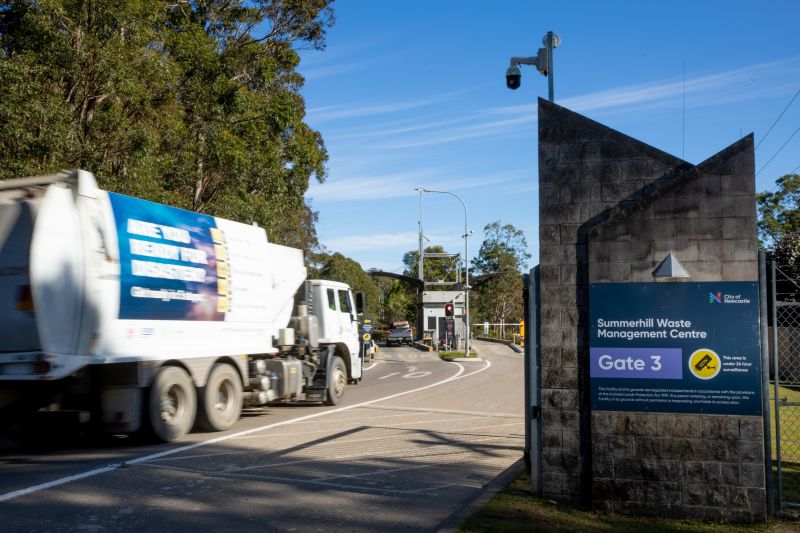
Bin morning will become quieter and cleaner for Newcastle residents after Councillors voted to add a hydrogen-powered truck to the City of Newcastle waste collection fleet.

City of Newcastle will undertake a 12-month trial of the rear-loading hydrogen fuel cell electric truck with Australian clean energy business Pure Hydrogen as part of its commitment to achieving net zero emissions from its vehicles and equipment.

Summerhill Waste Management CentreSummerhill Waste Management Centre

The lease will include the option for a four-year extension based on the outcome of the trial, with the zero-emissions waste collections truck expected to make its maiden round in Newcastle later this year.

Lord Mayor Nuatali Nelmes said the trial aligns with a key priority under City of Newcastle’s Environment Strategy.

“We’re seeing zero-emissions vehicles emerge as a marker of the best-run cities in the world and this trial is a step forward that Newcastle can and should be proud of,” Cr Nelmes said.

“This truck will help many of us get a better sleep on collection days. We can also rest easy knowing it’s helping make our city a cleaner, quieter, more sustainable place to live.

“We’re committed to delivering a 100% reduction in carbon emissions from City of Newcastle vehicles during the next decade and we’ll continue driving toward this goal by trialling new technologies that contribute to this transition.”

Deputy Lord Mayor Declan Clausen said the trial was consistent with Newcastle’s emerging future as a global hydrogen leader.

“Newcastle is the only hydrogen hub designated by both the NSW and Australian governments,” Cr Clausen said.

“I’m proud that Newcastle is taking real action with this hydrogen vehicle trial and I’m proud that our work is shaping the Hunter’s hydrogen transition road map.”

Unlike diesel trucks, hydrogen fuel cell electric vehicles emit no exhaust, minimal heat and a trickle of pure water. They are also significantly quieter. Newcastle joins cities such as Tokyo and Amsterdam in adding a hydrogen vehicle to its waste collection fleet.

The Newcastle truck will run on Green Hydrogen. While the hydrogen energy to run the truck will be produced by electrolysis using grid power, Green Power Purchase agreements will offset any carbon emissions.

The new hydrogen fuel cell electric vehicle aligns with the City’s net zero emissions and fleet transition plans under the Newcastle Environment Strategy, as well as liveability, sustainability and circular economy targets in the Newcastle 2040 Community Strategic Plan.

Business Hunter Chief Executive Officer Bob Hawes welcomed City of Newcastle’s support of green hydrogen technology.

“This isn’t just ticking a sustainability box, this is the way the smartest cities are heading and Newcastle and the Hunter needs leadership prepared to be early adopters for communities and industry to be competitive and relevant,” Mr Hawes said. 

“City of Newcastle is backing an Australian business and backing a crucial, zero-emissions technology pathway to net zero is going to be very challenging.

“Every initiative adopted in using new technology in the public and private sector is going to count.”

Data from the 12-month trial will help inform City of Newcastle’s future purchases of waste trucks. Over the coming four years City of Newcastle is expected to replace a significant number of its existing diesel powered green and red lid bin trucks as part of the routine renewal of the fleet.

Improvements on the way for Smith Park

Work will get underway at Smith Park next month as part of a multimillion-dollar upgrade of the popular Hamilton North sportsground.

Councillors unanimously voted this week to award the contract for construction, which includes new drainage and irrigation, the realignment of fields used for football, Oztag and cricket, as well as the repositioning of three synthetic cricket wickets.

The upgrade of the 56,000 sqm site is being delivered by City of Newcastle with support from a $2.5 million grant secured by the Newcastle Junior Cricket Association through the NSW Government’s Multi-Sport Community Facility Fund.

Lord Mayor Nuatali Nelmes said the project aligns with the Newcastle 2040 Community Strategic Plan.

“Newcastle 2040 calls for the community to be engaged in local planning to help create quality parkland and recreation facilities, promoting active and healthy communities, and ensuring people of all abilities can enjoy our public spaces,” Cr Nelmes said.

“City of Newcastle has received positive feedback following community consultation regarding the draft Smith Park Masterplan and the stage one works.

“We’ll continue to engage with the community throughout the development of the Masterplan to ensure the requirements of our residents are considered.”

NSW Minister for Sport Stephen Kamper said the upgrade of Smith Park will enable more Newcastle residents to play sport, be active and healthy. 

“Enabling more people to play sport, regardless of age, gender or ability through inclusive and accessible facilities is a key objective of the Multi-Sport Community Facility Fund,” Minister Kamper said.

“The approval of the construction contract by City of Newcastle is an important milestone in this vital community sporting project, which will create jobs and provide an economic boost to the region.”

Chair of City of Newcastle’s Sports Infrastructure Working Party, Councillor Peta Winney-Baartz said the stage one works are just the beginning for Smith Park.

“Stage two of the Masterplan forms part of our Strategic Sport Plan 2020 and is designed to address future demand and inform the ongoing improvements to our sporting infrastructure,” Cr Winney-Baartz said.

“Future works proposed for Smith Park include a community building, upgraded carparks and footpaths, new lighting, a multi-sports court and the upgrade of cricket practice nets.

“Time and time again the Strategic Sport Plan 2020 provides us with a platform to work with our local sporting organisations.

“It helps City of Newcastle align our priorities and facilitate successful grant applications, enhancing our already positive relationships with clubs and officials.”

Newcastle Junior Cricket President Andrew Cornwell said the association is delighted to partner with the NSW Government and City of Newcastle to deliver this much needed upgrade.

“This $2.5 million investment will provide top quality playing conditions for the next generation of Newcastle’s young cricketers,” Mr Cornwell said.

Overhauling surgeries to reduce overdue wait list

The NSW Government is revolutionising the way surgery is delivered to reduce the overdue wait list, by embracing short stay and same day surgeries.

The Same day and Short stay Joint Replacement Program allows patients to return home the day after their surgery when clinically appropriate.

This program provides an alternative care pathway for orthopaedic surgery patients.

It is based on research which shows that with the right pre and post-operative care, patients can be supported to recover at home, without the need for lengthy hospital stays.

All patients involved in the pilot receive comprehensive prehabilitation or ‘pre-hab’, which provides support prior to surgery, as well as post-operative in-home care.

Eligibility for this type of surgery is determined via a thorough screening process completed by a multidisciplinary team.        

It’s hoped the pilot will result in a better patient experience and faster recovery times, whilst also boosting capacity in our busy hospitals.

The pilot was one of the key programs overseen by the Surgical Care Taskforce established in the early days of the NSW Labor Government to take pressure off our hospitals.

Joan Reid underwent same day procedures for her knee surgeries.

She had her first surgery on 23rd August 2023 (Left Total Knee Replacement) and her second surgery on 20th February 2024 (Right Total Knee Replacement) at the Sutherland Hospital.

On both occasions Joan was able to return and recover from the comfort of her home that very same day.

She continued to receive support from clinicians and health workers as an outpatient, instead of spending weeks in the hospital.

While this joint surgery pilot program is promising, we are already starting to see promising increases in short stay surgeries for other procedures.

Between May and October last year, the proportion of sinus surgeries conducted as same day increased from 41% to 46%, to 363.

Meanwhile, same day septoplasties increased from 52% to 62%, to 669, and same day tonsillectomies increased from 23% to 36%, to 623.

This is just one of a range of measures the NSW Government has implemented to improve access to quality care and reduce wait times, including through:

  • boosting staff and infrastructure
  • creating more pathways to care outside our busy hospitals via HealthDirect and urgent care services
  • reducing overdue surgeries by safely increasing short stay surgeries
  • empowering pharmacies to prescribe low complex medications, relieving pressure on our GPs.

Minister for Health Ryan Park:

“People waiting for surgeries longer than clinically recommended are often waiting in pain and discomfort.

“We want to reduce overdue surgeries so that people can receive the lifechanging treatment they need and enjoy life.

“We want patients to be able to safely recover from the comfort of home, where it is appropriate and safe to do so.

“By doing this, we are boosting the capacity in our busy hospitals, improving patient flow and reducing wait times for others.”

Joan Reid:

“You know, when they first asked me about day surgery, obviously I went oh gee, I don’t know. How do you go with that? And it just turned out really well.          

“Being in my own home for recovery was great because I’ve got everything that’s familiar with me my own bed. I know the layout of everything here.

“Rather than sitting in a hospital bed and trying to get round a ward. It was more comfortable, I was more relaxed. Therefore I felt the recovery would be quicker. And it was and being in my own home just made it so much more easier and comfortable.

“My recovery was really well smooth and I had the support of the hospital staff and the doctors and of course the physiotherapy even though I did it as an outpatient.”

$201.9 million infrastructure boost to support 24,000 new regional homes

The NSW Government and councils will together invest a further $201.9 million to fast-track infrastructure in growing regional communities, supporting the delivery of tens of thousands of new homes from Tweed Heads to Wagga Wagga.

As regional NSW plans for and delivers more homes to its growing communities, the NSW Government and councils are supporting that growth by funding and upgrading critical local services and infrastructure.

The funds will accelerate 9 key projects, including wastewater and road upgrades to unlock development and bring more high-quality neighbourhoods to life faster.

Of the total investment made, $137.19 million has been allocated through the NSW Government’s Accelerated Infrastructure Fund, with co-contributions of $64.7 million from 5 regional councils.

Unless we support the delivery of more homes, we will continue to lock young people out of housing or lose them to other states.

Successful projects include new sports fields in the Tweed Shire and road upgrades for Port Macquarie-Hastings to support thousands of new residents.

Funding has been allocated to the following projects:

  • Bathurst – Laffing Waters critical development infrastructure, supporting 2270 new homes.
  • Port Macquarie-Hastings – Kew Sewerage Treatment Plant upgrade and Beechwood Road/ Yippin Creek bridge upgrade, supporting 1600 new homes.
  • Shoalhaven – Culburra wastewater treatment plant upgrades, supporting 1012 new homes.
  • Tweed Shire – Tweed Coast Road upgrade and Depot Road sports fields, supporting 5516 new homes.
  • Wagga Wagga – Northern Growth Area sewer upgrades and Plumpton Road North and South Road upgrades, supporting 14,500 new homes.

More information is available on the Accelerated Infrastructure Fund website.

Minister for Planning and Public Spaces Paul Scully said:

“These areas are growing fast and this funding will mean people will have functioning and well-serviced new homes to live in.

“A new home is no good if you cannot flush the toilet or drive down the road to the park.

“Accelerated delivery of infrastructure like sewage treatment plants and adequate roads will allow more new homes to be approved sooner in these growing regional areas.

“Housing affordability and availability is the biggest single pressure facing the people of NSW, and that’s why we are focusing investment in these key infrastructure projects to clear the way for new and thriving communities to take shape.”

NSW unveils plan to support wine exporters

The NSW Government has unveiled a plan to boost wine exports and create new jobs and opportunities for people in NSW.  

From July Investment NSW will kick off a targeted 12 month program of initiatives to bring international buyers to NSW and make it easier for local wine makers to take their products to markets around the world.

The program will be available to producers of NSW’s $420 million wine exports looking to re-enter the newly reopened Chinese market but will also support exporters in key emerging markets including India, Japan and Vietnam. 

The NSW Government is focusing its efforts on the markets with the highest value and highest potential for growth.

The 2024/25 export program includes:

  • A NSW Wine Promotional Roadshow in China reintroducing the NSW wine industry to importers and distributors across Shanghai and Shenzhen
  • Going Global Export Programs focused on beverages to China, UK, Korea, Japan and Vietnam
  • Export Capability Building workshops in the Central West, Hunter & New England and Riverina regions
  • Cellar Door to China in One Click – ‘How to‘ program
  • China and South East Asia Inbound Buyer Missions to NSW
  • Supporting export ready NSW wineries through trade missions that culminate in ProWine Mumbai 2024 and Expo 2025 Osaka
  • An e-commerce campaign to support existing distributors of NSW wine in the Japan market

The value of goods and services exported from NSW to the world topped $150 billion, contributing 19 per cent to NSW’s $777 billion Gross State Product last year.

With renewed focus and a better targeted trade program, NSW is on track to reach trade worth more than $200 billion by 2031.

To find out more about exporting from NSW and the support available, visit https://www.investment.nsw.gov.au/export/

Minister for Industry and Trade Anoulack Chanthivong said:

“Our state has the best products in the world, and global markets are willing to pay a premium that flows back to NSW in new and better jobs and higher incomes.

“We’re delivering smarter trade policy that focusses on key markets and sectors that can deliver for people in NSW.

“The state’s wine industry helps employ around 50,000 people and we believe they can do even more with help accessing expanding markets.

“I recently sat down with NSW Wine and wine makers in Orange to listen to their challenges and discuss how we can work together to grow exports.

“We know that visibility of export programs and initiatives over a longer term horizon is important for wineries to plan and target international markets.”

NSW Wine President Mark Bourne said:

“The NSW wine industry, particularly our exporters, have been facing significant challenges recently. The NSW Government and NSW Wine’s collaboration on a long-term export development support program will provide crucial assistance to the sector.

“The tailored approach of this program will allow wineries to select initiatives that address their specific business needs, optimising resources and maximising the potential for success in international markets.”

Batlow Fruit Company packhouse upgrade complete

Batlow Fruit Company – the largest grower and packer of apples in NSW – is now able to package more apples than ever at its Snowy Valleys location, thanks to the Australian and NSW Governments.

A project to modernise the company’s Batlow packhouse received more than $2.7 million in joint funding under the Bushfire Local Economic Recovery Fund, with an additional $274,000 from Batlow Fruit Company.

The upgrade was officially opened by the NSW Minister for Regional NSW, Tara Moriarty, while in Batlow today.

The grant is part of the Commonwealth and NSW government’s continuing commitment to focus of the economic and social development of regional and rural NSW.

The upgrades are now complete, with new grading and sizing technology bringing the facility in line with modern fruit processing standards and replacing technology which had been in place for over 40 years.

Batlow Fruit Company’s packing facility is one of the few in NSW able to meet the specifications of Australia’s major supermarkets.

Greater automation will ensure the packhouse can continue to process local apples and will provide Batlow Fruit Company with the flexibility needed to provide the highest quality product in response to changes in market demand.

On average Batlow Fruit Company distributes more than one million cartons of apples a year.       

Federal Minister for Emergency Management Murray Watt said:

“I spent time in Batlow after the Black Summer bushfires and spoke with growers who’d been impacted.

“Backing economic recovery after a disaster is critical, especially for regional communities like Batlow, which relies so much on the orchards that were extensively damaged and destroyed.

“It’s great to see that with support from the Australian and New South Wales Governments, the Batlow Fruit Company has modernised its operations to stay in business, supporting workers and the local community through the economic hardship off the back of the fires.”

Minister for Regional NSW Tara Moriarty said:

“Assisting companies like the Batlow Fruit Company is an important part of the Government’s support for regional and rural NSW

“By modernising its processing capabilities, the Batlow Fruit Company has ensured Batlow remains a financially competitive location for growers to get their apples packaged.

“This certainty will help it maintain its existing workforce and remain the largest employer for the Batlow region.

“Batlow Fruit Company has been growing and packaging apples out of Batlow for more than 100 years and these upgrades ensure they can continue to do so for many years to come.

Batlow Fruit Company Director Matt Palise said:

“The upgrade of the packing shed will improve our efficiency, reduce downtime and lower water and power usage.”

“The new equipment makes us a much more sustainable operation, ensuring we can continue to deliver high quality packaging services to Batlow growers.”

“The greater efficiency will help future proof our operations and make us better able to withstand disruptions to our supply chain caused by natural disasters. It will also provide better service for our growers, helping increase their returns.”

“I want to thank the Australian and New South Wales Governments for their support for this project.”

Federal Member for Eden-Monaro Kristy McBain said:

“The Dunns Road fire had a devastating impact on the Batlow community in 2020, with extensive damage to orchards and infrastructure taking a hit on our local fruit production.”

“That’s why it’s fantastic to see these upgraded and modern facilities at the Batlow Fruit Company in action – a real testament to the strong advocacy from the operators and Batlow community who made this happen.

“This new equipment will boost their operation, unlock new economic opportunities for Batlow, and secure the next 100 years of world-class produce from the Mighty Eden-Monaro.”

Dr Joe McGirr, State Member for Wagga Wagga said:

“This modernisation program comes at a time when Batlow is rebuilding from the disaster of the Black Summer fires and the success of the Batlow Fruit Company will be integral to driving that growth.

“The works will enhance the pipeline from Batlow’s orchards to consumers around the country and that’s great news, not only for the company and its employees but also growers and the wider community whose future depends on a strong and vibrant apple industry.

“I’d like to congratulate the company on driving this important project and thank the state and federal governments for their investment in the community’s future.”