Health claims take up to 400 per cent longer to process under Labor than under the Coalition

It now takes 400 per cent longer for Prescription Shopping claims to be processed by Services Australia under the Albanese Labor Government than it did under the Coalition – up from 9 days in 2021-22 to 45 days on the most recent figures.

For aged care claims the blow out is 345 per cent, while Medicare eligibility claims are taking 242 per cent longer; and PBS Patient Refunds are taking 215 per cent longer.

The Opposition obtained the data following responses to the February round of Senate Estimates.

Shadow Minister for Government Services Paul Fletcher said the figures are a further reminder that Services Australia is in disarray.

“These figures are shocking, especially following a global pandemic in which you would expect the government to prioritise health claims,” Mr Fletcher said.

“Government Services Minister Bill Shorten needs to lift his game and improve the customer service experience at Services Australia. Australians deserve better.

“I reiterate my calls for there to be a root and branch review of Services Australia’s operations, to improve the agency’s performance.”

Shadow Minister for Health and Aged Care, Senator Anne Ruston said that these figures come on top of Labor overseeing wait time and cost blow outs across the entire healthcare system.

“Right now, we know that it has never been harder or more expensive for patients to see a doctor and this is having serious consequences, with 1.2 million Australians avoiding seeing their GP last year due to cost concerns,” Senator Ruston said.

“The last thing our healthcare system needs is for Australians’ access to affordable healthcare to be further hindered with these serious wait time blow outs for health claims.”

The below table provides the average days to process a range of health work claims.

ClaimFY 2021-22FY 2022-231 January 2024 to 29 February 2024% deterioration
Aged Care112449345%
Prescription Shopping91845400%
PBS Pharmacy Claims121734183%
PBS Patient Refunds4043126215%
Medicare Eligibility192265242%
Medicare Entitlement Statement3815119213%
Adjustments116122309166%

No winners under Labor

Today’s National Accounts figures must be a wake up call for Anthony Albanese and Jim Chalmers.

It shows the slowest GDP growth since 1991, outside the pandemic. This is the fifth consecutive quarter of negative GDP per person growth.

Australia is in an entrenched household, consumer confidence, and productivity recession.

It did not have to be this way.

Labor’s $315 billion in extra spending, productivity killing workplace relations changes, and billions of off-budget funds are causing higher inflation, higher interest rates, and higher taxes.

This is a path to ruin, not recovery.

Had the Prime Minister and Treasurer taken inflation seriously from day one, Australia would not be in such a dire economic situation.

But Labor’s economic mismanagement and confused priorities have created this mess.

Under the Albanese Labor Government, there are no winners. Every single Australian is worse off:

  • Real disposable income per capita has fallen 7.8% since before the election.
  • Productivity has fallen 5.2% since Labor came to office.
  • Household savings remain 9.9 percentage points lower than before the election.
  • Personal income taxes are 20% higher since before the election.
  • Mortgage payments have almost tripled since the election.

Shadow Treasurer Angus Taylor said the blame falls solely at the feet of Anthony Albanese and Jim Chalmers.

“Today’s data confirms what Australians feel – they are poorer under Labor. This is a shocking data set and absolutely devastating for Australian households.

“On any measure, Labor isn’t delivering strong economic management. The only thing keeping Australians’ heads above water in this cost-of-living crisis are their jobs.

“The RBA Governor today has confirmed that inflation is home grown, government spending is up and real wages have fallen under Labor.

“This is the consequence of a weak Prime Minister and weak Treasurer with no economic vision for our country.

“Labor has delivered three failed budgets that have added to inflation, and left households and small businesses struggling to make ends meet.

“Labor’s only fiscal strategy is to let bracket creep run and steal $60 billion from household budgets to bolster its own.

“Over the past few weeks – we have heard endless stories out of Senate estimates of government waste, poor process, and anti-small business policies.

“Labor only has a plan to spin, not a plan for a strong economy.

“We need to get the economy back on track and back to basics and restore Australian’s standard of living.

“We have a lot to be optimistic about, but not if we continue down the path of Labor’s economic destruction.”

Beresfield students join generation restoration on World Environment Day

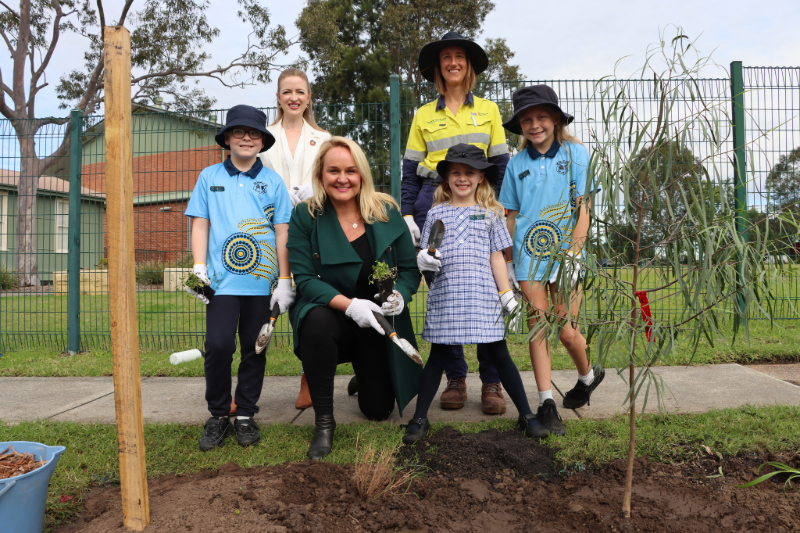
Beresfield Public School students have pulled on their gardening gloves for a hands-on lesson in urban biodiversity delivered by City of Newcastle to celebrate World Environment Day.

Twenty-five members of the Student Representative Committee helped plant 18 trees, including Smooth-Leaved Quandong and Black Gum, as well as 20sqm of small flowering plants along Boomerang Street, adjacent to their school.

The students learned how street trees can help reduce the impact of heat stress and climate change in urban environments and will continue to care for the plants with the help of their teachers.

Cr Elizabeth Adamczyk, Lord Mayor Nuatali Nelmes and City of Newcastle Environmental Education Officer Elise Budden help students from Beresfield Public School plant trees, grasses and small flowering plants.Cr Elizabeth Adamczyk, Lord Mayor Nuatali Nelmes and City of Newcastle Environmental Education Officer Elise Budden help students from Beresfield Public School plant trees, grasses and small flowering plants.Lord Mayor Nuatali Nelmes said it’s important to teach children about the value of our environment from an early age.
“The theme of this year’s World Environment Day is land restoration, desertification and drought resilience, with the slogan ‘Our land. Our future. We are generation restoration’,” Cr Nelmes said.

“Through events like this we aim to educate students on the importance of street trees and gardens and the biodiversity they support, as well as increasing Newcastle’s urban forest, mitigating urban heat impacts and encouraging community stewardship of public land.

“City of Newcastle has a proud track record when it comes to environmental initiatives and will continue to work with our community to create a legacy for future generations through the implementation of our 10-year Newcastle Environment Strategy.” 

The tree planting was delivered as part of City of Newcastle’s Living Streets and Street Garden programs, which aligns with a key priority of the Newcastle Environment Strategy by helping to increase our community’s connection with the urban forest.

“This month we’ve launched an awareness campaign to support the Strategy, which features residents, community groups and small-to-medium businesses and highlights how everyone in the community can help us reach our goals of net zero emissions, reducing, reusing and repurposing waste; and protecting our local environment,” Cr Nelmes said.

Beresfield students will join forces with other local primary schools to help City of Newcastle plant even more trees in nearby Tarro Reserve on Friday 26 July as part of Schools National Tree Day.

Native species will be planted at Tarro Reserve and students will learn about bush craft and study waterbugs, while also connecting to culture thanks to the visit of a National Parks and Wildlife Aboriginal Ranger.

This will be followed by a community event at the Reserve on Sunday 28 July to celebrate National Tree Day.

Working around the clock to future-proof landmark

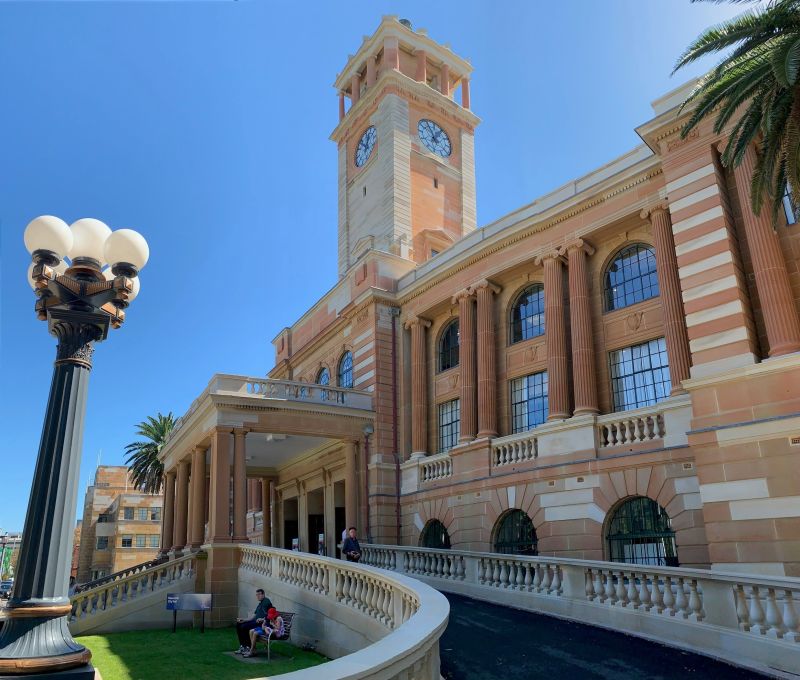
City of Newcastle is investing in the future of the historic City Hall clock, investigating an upgrade that will ensure it continues to keep time for generations of Novocastrians.

The Civic timepiece receives regular check-ups from City of Newcastle’s mechanical and electrical services teams, who have identified a range of technical issues currently affecting the operation of the clock and chimes.

City of Newcastle is investing in the future of the historic City Hall clock.City of Newcastle is investing in the future of the historic City Hall clock.

The age of the clock makes repair complex, with specialist advice indicating the mechanism will need to be upgraded to restore accurate timekeeping.

City Hall is listed on the NSW Heritage Register, and City of Newcastle has engaged heritage consultants to explore an upgrade that also preserves the clock’s rich heritage.

City of Newcastle Executive Director City Infrastructure Clint Thomson said the clock tower is an antique structure that needs to be handled with care.

“Newcastle City Hall’s iconic clock tower has been a well-loved landmark at the heart of the historic Civic precinct since the building, designed by acclaimed architect Henry White, opened in 1929,” Mr Thomson said.

“I think anyone who’s appreciated something of this age and importance will understand that sometimes repairs are complex and you can’t rush in and fix it overnight. 

“Given the State Heritage significance of City Hall and its associated clocks and chime, a heritage consultant will advise the most appropriate approach to repair, which will then need to receive approval from the relevant heritage authorities.”

The upgrade will be the latest investment into preserving the landmark building for future generations.

City of Newcastle invested $20 million into a large-scale conservation project on City Hall, which was delivered in stages and completed in 2021. 

The completion of the exterior restoration works was celebrated with a visit from His Excellency General the Honourable David Hurley AC DSC (RETD), Governor-General of the Commonwealth of Australia, and Her Excellency Mrs Linda Hurley. 

Conservation work was undertaken by Stone Mason and Artist Pty Ltd, who were responsible for the City Hall clock tower restoration.

City Hall will mark its 95th anniversary in December. The building is prized for its sandstone façade, three-metre clockfaces and Roman Doric and Ionic columns.

While the appropriate advice is obtained and subsequent permissions are sought from Heritage NSW, the clock will be set to midnight and the chimes turned off.

Building a stronger NSW Police Force

The Minns Labor Government will deliver police station upgrades and enhancements to investigative capabilities as part of a broader police package in the 2024-25 NSW State Budget.

These targeted investments will improve the capabilities of both general duties and specialist police, giving officers additional, modern resources to help keep communities safe.

$22.9 million will fund major upgrades to Waverley and Rose Bay Police Stations:

  • $18.2 million will modernise facilities in Waverley Police Station, expanding office space and upgrading essential areas like equipment rooms and custody facilities which haven’t been updated since the station was built more than 50 years ago.
  • $4.7 million will help to update Rose Bay Police Station, which is a heritage block dating back to 1850.  This funding will address significant issues including leaks and mould and ensure disability access. It will be the first significant upgrade since the 1980s.

$14.2 million over four years will go to the Forensic Evidence and Technical Services Command, specifically within its High-Tech Crime Branch.

Requests for assistance to the High-Tech Crime Branch have doubled over the past five years.  This funding enhancement will provide more opportunities to use modern, state-of-the-art technology to investigate crimes.  This includes:

  • Telecommunication interception
  • Digital forensics: assists in accessing data from devices for serious investigations such as domestic violence, child abuse, homicide, organised crime and terrorism.
  • Forensic Consumables: uses biological evidence (DNA) to identify offenders or link an offender to a crime. This is used across all types of crime but particularly in sexual assault investigations.
  • Forensic Investigate Genetic Genealogy: uses DNA to identify suspects and missing persons.

This investment represents the Government’s ongoing commitment to building a better NSW and backing our frontline services, including our dedicated, world-class police force.

Today’s announcement follows historic recruitment measures to further boost police recruitment and address the critical shortfall of police officers. These include:

  • Paid study: recruits are paid approximately $30,984 to study at the Goulburn Police Academy.
  • Experienced Officer Recruitment Scheme: The Professional Mobility program incentivises officers from other Australian and New Zealand jurisdictions to join the NSWPF while keeping their equivalent rank (up to senior constable level six). 
  • Regional Recruitment Scheme: The You Should Be a Cop in Your Hometown program that will ensure people from regional NSW serve in, or near their hometown after they graduate from the Goulburn Police Academy.

Since we announced paid study for recruits, the NSWPF has received 1424 applications to join, that’s more than a 40 percent increase compared to the same period last year.

The 2024-25 Budget takes the next steps to help address longstanding, time-critical issues that were neglected by the previous Liberal Government despite warnings of an imminent police shortage.

This is part of the Minns Labor Government’s long-term plan to build better, safer communities for NSW. A plan to build stronger essential services for everyone across the state.

A plan to build a better NSW.

Minister for Police and Counter-terrorism Yasmin Catley said:

“NSW Police officers go above and beyond, risking their lives to keep our community safe.

“The measures announced today will boost the capability of our police to investigate and solve crime.

“These investments show this Government is backing the NSW Police Force and the people of this state.

“Today’s announcement complements the significant recruitment initiatives we’ve already announced, including paid study. That’s already seen applications to join the NSW Police Force increase by more than 40 percent.

“We have more than 1,500 vacancies to fill and mark my words, I’ve made it my personal mission, alongside Commissioner Webb, to fill them.”

Funding puts wheels in motion for local train manufacturing

The iconic NSW made Tangara trains are set to receive critical upgrades as the Minns Labor Government forges ahead with a Future Fleet Program to return domestic manufacturing to NSW and build the next generation of Tangaras right here.

The NSW Government is committed to rebuilding the state’s domestic manufacturing capacity, but it will take time.

A local domestic manufacturing industry is essential both for the future of jobs in NSW and the state’s ability to deliver safe reliable public transport our state needs to grow.

The 2024-25 Budget will invest $447 million to extend the life of the current fleet, keeping them on the tracks for approximately 12 more years, ensuring passengers have safe and reliable services until the new fleet is constructed and running.

The state’s 55 Tangaras make up a quarter of the Sydney Trains fleet. As they age, they will continue to face major reliability issues, as they are the highest contributor to maintenance faults on the rail network.

Without life extension works, an estimated 5 Tangaras per year are at risk of breaking down and being pulled from service, greatly impacting commuters.

Work being undertaken will see technology upgrades, including of the Train Management System, safety and disability compliance, as well as modernising on-board information systems.

The project is set to begin early next year, and Sydney Trains will work to ensure there is minimal impact to passenger services.

Upgrading the Tangaras is critical to ensure the government has the time to rebuild this industry from scratch and create a long-term pipeline of manufacturing work.

We can’t rebuild an entire sector overnight – but we have to start somewhere. It’s taken Victoria 7 years, but they have now supported 40,000 local jobs since 2014 as a direct result of their local procurement policies.

The 2024–25 Budget also sets aside a further $17.5 million for Future Fleet Program, the first step to reviving the state’s domestic train manufacturing industry that will build the next generation of Tangaras right here in NSW.

The funding will help develop a Strategic Business Case to build the new Tangara fleet.

This is all part of the Minns Labor Government’s plan to build better communities for NSW. To ensure we’re creating and building on well-connected, well-serviced neighbourhoods.

NSW Premier Chris Minns said:

“NSW workers are great at building trains and under this government we will build trains here again. It’s going to take time, but we’re determined to do it.

“We’ve had a decade of missed opportunities and thousands of jobs offshored, while we purchased trains, trams and ferries filled with defects, faults and failures.

“This is a modest investment now that will eventually unlock a huge boost to NSW jobs and industry well into the future.”

NSW Treasurer Daniel Mookhey said:

“This Budget begins the work of putting NSW back in the business of building trains again.

“This is a must-have investment. A diverse economy makes for a stronger economy.”

Minister for Transport Jo Haylen said:

“Millions of people use the Sydney Trains network every day and they deserve safe, reliable and accessible services.

“Building a new train fleet here won’t happen overnight. This funding is the first phase of kickstarting our local supply chain, production capabilities and workforce.

“That’s why the Tangara life extension work is vital – so we have a healthy fleet until the new locally-built trains are ready.”

Minister for Domestic Manufacturing and Government Procurement Courtney Houssos said:

“The previous Liberal-National Government refused to build our major transport projects locally. They shipped the jobs overseas, with inferior products and massive cost blow outs to show for it.

“The NSW Labor Government is rebuilding our manufacturing sector and delivering more local jobs.

“Every job in manufacturing supports 3.5 in the supply chain – and we want more of those jobs right here in NSW.”

Next stage of repairs to start on Brown Mountain

The Albanese and Minns Labor governments continue to progress critical repair works on Brown Mountain, with an additional $1.9 million committed to kickstart the next stage of landslip repairs on the Snowy Mountains Highway.

Jointly funded through the Disaster Recovery Funding Arrangements, Transport for NSW is expected to commence work on the next of nine landslip sites on Monday June 17.

Set to improve safety and travel times when complete, the work will see a damaged section of road fully restored and built back to better withstand the threat of future disasters.

Once work is completed, motorists will be able to use both lanes in each direction as the single lane limit put in place in March 2022 will be removed at this location, which is located about 1.5 kilometres east of the Fred Piper Memorial Lookout.

The work will include:

  • installing almost 1100 linear metres of soil nails
  • applying 180 square metres of shotcrete
  • repairing damaged road surface and reinstating guardrail.

Since 2022, extensive repairs have been carried out at three of the landslip sites along the Snowy Mountains Highway.

Work currently being carried out at the largest of these sites is expected to be completed by mid-August, with a procurement process under way to book in repairs for three of the four remaining sites.

Work is also continuing on a design solution for the ninth landslip site which was damaged during a severe weather event in November last year.

The work will be carried out within the existing temporary barriers for the single lane operations with traffic lights operating 24-hours until work is completed. This means there will be no additional impact on traffic during the work.

This additional $1.9 million in joint funding builds on the $6 million being invested in the repairs to date.

Find out more about the Brown Mountain repairs  

Federal Member for Eden-Monaro, Kristy McBain said:

“As someone that drives the Brown Mountain every week, I know how frustrating the ongoing closures from landslips and rockfalls are – which is why we’re getting on with this critical repair work.

“An additional $1.9 million towards the next stage of repair works will help prevent further erosion, and improve the safety of this busy route.

“Having a reliable road network makes it easier for locals to get to work and for tourists to uplift Eden-Monaro businesses, which is why I’ll continue to advocate for a longer-term solution for the Brown Mountain section of the Snowy Mountains Highway.”

Member for Monaro Steve Whan said:

“News the next lot of repair work will soon get underway at Brown Mountain will be welcomed by the thousands of people who use the Snowy Mountains Highway every day.

“Together with my colleagues I will continue to advocate for a longer term strategy for the highway.”

NSW Minister for Regional Transport and Roads Jenny Aitchison said:

“Natural disasters have had a devastating impact on this section of the Snowy Mountains Highway at Brown Mountain and we understand the inconvenience this has caused motorists.

“The teams at Transport for NSW have been working tirelessly to progress repair plans and I’m pleased to see the next step being taken in restoring access to the road.

“Ministers McBain and Whan and Dr Holland have been tireless advocates for this project.”

NSW Member for Bega Dr Michael Holland said:

“It’s fantastic to announce that further work is happening on Brown Mountain.

“We thank the community for their patience while we plan, prepare and carry out this important repair work, that will help get the Snowy Mountains Highway back open to its full capacity.”

Honouring sacrifice and service on the 80th anniversary of the D–Day landings in Normandy

Today we honour the service and sacrifice of Australian veterans who took part in the D–Day landings in Normandy, as we mark the 80th anniversary of that event which took place on 6 June 1944.

A special ceremony and public talk will be held at the Anzac Memorial in Hyde Park Sydney today to commemorate the event.

D–Day and the battle of Normandy marked the first step in the liberation of France and western Europe during the Second World War and laid the foundations for the Allied victory on the Western Front.

Australian defence personnel played an important role in the large Allied forces that participated in D–Day. Approximately 3,200 Australians participated in the D–Day landings on 6 June with thousands more serving during the broader Normandy campaign.

Our nation’s main contribution came in the air, where approximately 1,000 Australians flew with Royal Australian Air Force squadrons, and a further 1,800 operated on attachment to the United Kingdom’s Royal Air Force. Additionally, over 500 members of the Royal Australian Navy also served on attachment with the Royal Navy and a small number of Australian soldiers also served on the ground with the British Army.

These efforts came at a cost, with 13 Australians killed on 6 June and hundreds more killed over the course of the campaign while flying in support of the ground forces in Normandy. In terms of total casualties, June 1944 was the worst month in the history of the Royal Australian Air Force.

Minister for Veterans, David Harris said:

“Today we acknowledge the 80th anniversary of the D-Day landings in Normandy. Our efforts helped the Allies secure victory in the campaign, and marked a turning point for the Second World War and a victory at the Western Front.

“It is important that we continue to commemorate this momentous event and I would like to thank the Air Force Association of NSW and Anzac Memorial for organising today’s events to honour the service of our veterans who participated in this campaign 80 years ago.”

New designs unveiled for Batemans Bay Community Health facility

The community is being invited to have their say on the latest designs for the new Batemans Bay Community Health facility.

Minister for Regional Health Ryan Park said the Government is investing $20 million to deliver the new community health service to support communities across the Batemans Bay area.

The new facility will be located on the existing Batemans Bay Hospital site next to the newly established Medicare Urgent Care Clinic.

Batemans Bay Community Health Service will provide improved access to a range of services, including:

  • allied health services
  • child, youth and family services
  • women’s health and sexual health services
  • community nursing, wound management and palliative care
  • Aboriginal health
  • community mental health and drug and alcohol services.

The facility’s design has been informed by extensive feedback and consultation with health professionals, staff, patients, Aboriginal community representatives and the wider Batemans Bay community.

The artist impressions provide a more detailed look at the new facility, which includes a new building housing a range of health services, as well as carpark, landscaping, pathways and external seating areas.

The community is invited to view the designs and find out more about Batemans Bay Community Health at drop-in sessions with the project team:

  • Monday, 17 June, 12pm to 2pm – Village Centre, Batemans Bay
  • Tuesday, 18 June, 12pm to 2pm – Corner of Beach Road and Edward Road, Batehaven

Construction for the new facility will start following planning approvals and the appointment of a building contractor.

The Batemans Bay Hospital will continue to provide health care services for the community while the Batemans Bay Community Health and the new Eurobodalla Regional Hospital are being built.

To find out more visit the Health Infrastructure website or contact the project team on 1300 391 949 or at HI-BatemansBayhealth@health.nsw.gov.au

Regional Health Minister Ryan Park said:

“The NSW Government is committed to investing in health infrastructure to support better health outcomes for communities across the south coast.

“Batemans Bay Community Health is being planned and designed to work together with the new $260 million Eurobodalla Regional Hospital, as part of the Eurobodalla Health Service, to provide the community with greater access to care, closer to home.

“The new Eurobodalla Regional Hospital will deliver an enhanced level of health services compared to the current services delivered at the Moruya and Batemans Bay hospitals. New services such as paediatrics, intensive care unit, and an MRI will be included, strengthening health care services for the community.”

Member for Bega Dr Michael Holland said:

“The new Eurobodalla Regional Hospital and the Batemans Bay Community Health Centre will be well equipped to support the health needs of the entire Eurobodalla Shire from south of Narooma to north of Batemans Bay, providing the community with access to a broader and higher level of specialist care.

“Feedback from the community has been valuable in shaping Batemans Bay Community Health Service including creating connections to surrounding nature and green spaces, incorporating design elements identified by local Aboriginal community members, and improving accessibility for families, elderly people and people with specialist needs and abilities.”

Changes to further support public sector capacity, reduce over-reliance on consultants, and bring costs under control

The NSW Government has today announced the introduction of structural changes to reduce over-reliance on consultants and bring costs under control.

A new unit to be set up within the Premier’s Department to help reduce the use of consultants by redirecting agencies to in-house specialist resources where they are available and building in-house capabilities for services with the highest demand.

A new group will be responsible for identifying skills shortages and workforce gaps and undertaking long-term planning to deliver essential services across the state. This will be an expansion of the Premier’s Department’s existing role in leading industrial relations policy for the public sector.

The Premier’s Department will also be responsible for collecting and reporting data on the public sector workforce, including the People Matters survey.

This function is being transferred from the Public Service Commission to ensure it is better integrated into whole-of-government policy making.

The government will this week introduce legislation to amend the Government Sector Employment Act 2013 to sharpen the focus of the Public Service Commissioner on ethics and integrity, while transferring workforce planning and data collection functions into the Premier’s Department.

The Public Service Commissioner will continue to fulfil her important independent statutory functions to safeguard integrity in public sector recruitment and employment matters.

The Premier’s Department, jointly with The Cabinet Office, will also be tasked with leading the development of a new Core NSW Public Service Work Policy to set clear expectations of the types of work that agencies must be able to perform in-house.

The changes will continue the NSW Government’s ongoing efforts to rebuild essential services and unwind an increasing reliance on external consultants including:

  • implementing tight controls and issued clear instructions to agencies around the use of external consultants
  • introducing additional probity measures
  • legislating ‘betrayal of trust’ fines for disclosing information gained during confidential tax discussions with the government
  • redirecting more than half-a-billion dollars by reducing consultants and labour hire.

The machinery-of-government changes will place a greater focus at the heart of government on ensuring the public sector has the necessary capability and expertise in-house to deliver against the government’s key priorities.

Premier Chris Minns said:

“Today we announce commonsense changes that will ensure the public sector is delivering for NSW.

“I want to thank Commissioner Kathrina Lo and everyone at the Public Service Commission for your work to date.

“This announcement is all about leveraging your expertise to better help us solve some of the most pressing challenges that we face as a state.

“We are focused on ensuring that we rebuild in-house capability and only use external consultants when it’s actually needed.

“This overreliance on consultants has directly contributed to the budget mess we inherited.

“We were elected with a clear mandate to rebuild our essential services and repair the budget.”

Special Minister of State John Graham said:

“The Liberals’ obsession with private consultants damaged our state’s capacity to deliver essential services.

“The Liberals engaged one consultant every hour – including when it could have been done in-house for half the price.

“We are changing this approach to bring costs under control and re-build capacity in the public sector.”

Minister for Domestic Manufacturing and Government Procurement Courtney Houssos said:

“The Liberals wasted taxpayers’ money, including engaging consultants more than 10,000 times.

“This waste and mismanagement characterised the Liberals’ and Nationals’ approach to finances.

“We have begun the important work of repairing the budget, including cleaning up the waste we inherited with extravagant spending on consultants.

“This will be a budget that continues to responsibly reduce the debt left to us by the former Liberal-National government, while continuing to rebuild our essential public services.”