
Nothing soft about Labor’s cost of living squeeze

The Treasurer’s five-point plan to avoid recession is just the latest piece of spin from a government with no solutions to Australia’s economic challenges.

Australia is already in a GDP per capita, productivity, and consumer confidence recession after two years of Labor’s failed economic management.

For struggling Australian families and small businesses, there is nothing ‘soft’ about the Treasurer’s ‘carefully calibrated’ plan to let interest rates and inflation run for longer.

In reality, Labor is presiding over a five-step plan to squeeze Australian households:

  1. Taking $60 billion from family budgets to bolster its own through deliberate bracket creep;
  2. Fuelling higher rates and higher inflation by adding $315 billion of spending;
  3. Making the structural deficit worse by increasing spending by $4 for every $1 raised in the latest budget;
  4. Losing control of migration and energy policy, making it harder to afford a house and harder to keep the lights on;
  5. Smashing small businesses with more red tape, more taxes, and bad workplace laws.

Because of the Albanese Labor Government’s bad policies, Australians are facing higher prices, higher taxes and higher mortgage repayments for longer.

Hardworking Australians are paying a very high price for a Labor government that can’t manage money.

Shadow Treasurer Angus Taylor said Australia is facing a deadly combination of high inflation and household recession.

“Nothing can hide the fact that Jim Chalmers and Anthony Albanese have smashed our economy.

“As I have said for a while, and as independent economist Steven Hamilton today writes, Jim Chalmers is a doctor of spin, not of economics.

“The Treasurer likes to create the illusion that he understands what the economy needs. But his actions prove otherwise.

“Economist after economist has been clear, more spending will lead to higher inflation.

“Labor has added $315 billion in spending since the last election – that’s more than $30,000 for every Australian household. Most Australian families don’t feel like they’re getting value for money on that extra spending.

“The RBA has its foot firmly on the brake, the Albanese Labor Government continues to slam the accelerator.

“Australian households are struggling under the weight of Labor’s economic mismanagement. Sadly, this government is completely out of touch with reality.”
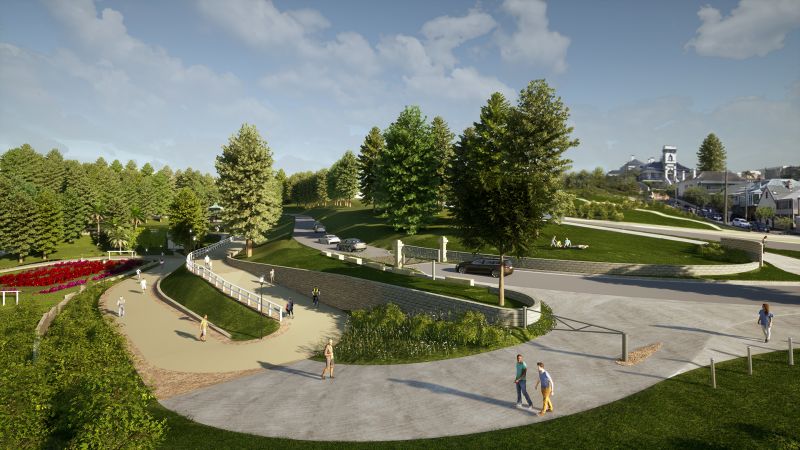
Lord Mayor unveils vision for key link in her Bathers Way project

Novocastrians are being given their first look at the concept designs for a key link in the city’s iconic coastal walkway. 

The vision reveals a hallmark wide shared pathway snaking its way through the heritage-listed King Edward Park, transforming a section of the Bathers Ways between the Terrace car park near Shepherd’s Hill Cottage and South Newcastle Beach. 

A render for the concept design on Bathers Way King Edward Park, which is now open for community consultation.A render for the concept design on Bathers Way King Edward Park, which is now open for community consultation.
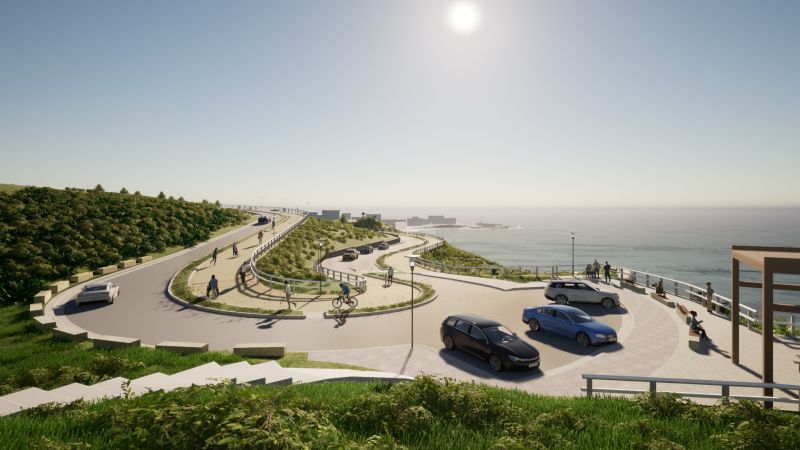
The project will create more accessible connections between King Edward Park’s key features and enhance opportunities to appreciate the city’s spectacular coastal scenery with more comfortable viewing areas. 

Lord Mayor Nuatali Nelmes said Bathers Way is a jewel among the city’s coastal assets. 

“I’m proud to have conceived and initiated the Bathers Way project many years ago as the flagship of our coastal revitalisation program,” Cr Nelmes said.

“Delivering an upgraded shared pathway that links our city’s spectacular beaches with some of Newcastle’s most popular coastal destinations has transformed the way we enjoy our iconic coastline.”

Deputy Lord Mayor Declan Clausen encouraged the community to have their say on this key project.

“King Edward Park holds enormous significance to Newcastle with its sweeping ocean views, open lawn area, peaceful gardens, and importance to Newcastle’s traditional custodians,” Cr Clausen said.

“Delivering a continuous, inclusive path that makes use of the amazing views and respects the site’s heritage is a priority for City of Newcastle. 

“Feedback from the community is an important aspect of this process and I encourage everyone to have their say during the public exhibition period to help inform the detailed design of one of the last remaining sections of Bathers Way.” 

A render for the concept design on Bathers Way King Edward Park, which is now open for community consultation.A render for the concept design on Bathers Way King Edward Park, which is now open for community consultation.

The project will include renewal of King Edward Park’s amenities and will seek to improve the connection between the lawn around the iconic Victorian rotunda, and the popular Garside Gardens, which are known for their colourful flower displays each Spring. 

More comfortable viewing areas with shade and seating will enhance the overall visitor experience, with lookout platforms offering sweeping views off the coast, while an upgraded entry will create a more fitting welcome to this significant site. 

The Bathers Way is a continuous path that links the city’s iconic beaches of Merewether, Dixon Park, Bar Beach, Newcastle and Nobbys and forms part of the larger Great North Walk, which stretches from Queens Wharf by Newcastle Harbour to Circular Quay in Sydney. 

The shared pathway is designed to accommodate all members of the community, with a width of between four and six metres depending on the location and no steps along its 6kilometre-long route. 

Community members can learn more about the Bathers Way King Edward Park concept plan and provide feedback online until 5 August 2024.  

In-person ‘We Love Our Coast’ information sessions will also be held throughout the consultation period, which will provide an opportunity for people to learn more about a range of coastal projects being delivered by City of Newcastle including the final stage of the Newcastle Ocean Baths upgrade.   

Visit City of Newcastle’s We Love Our Coast Have Your Say page for more details.

Work continues to protect Stockton’s coastline

City of Newcastle is continuing to shore up the much-loved Stockton coastline, building the infrastructure required to shield the area and reduce the risk of inundation during large swells.

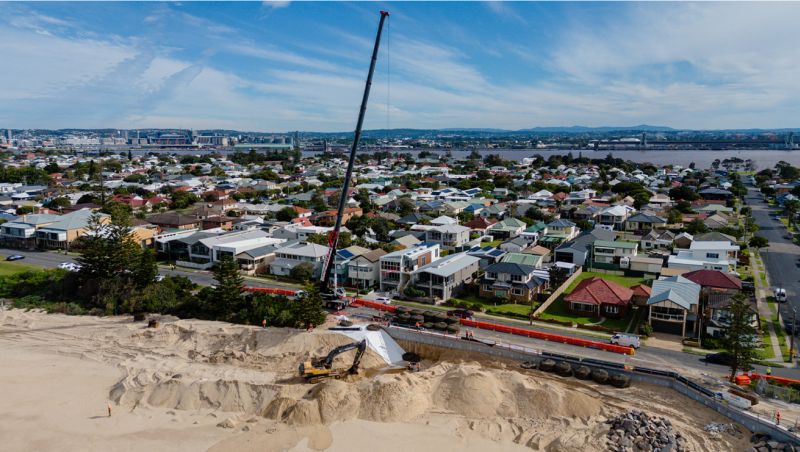
A new seawall at the southern end of the existing protection structure in Mitchell Street has recently been completed, with work progressing on the installation of an adjoining 50-metre-long rock bag structure.

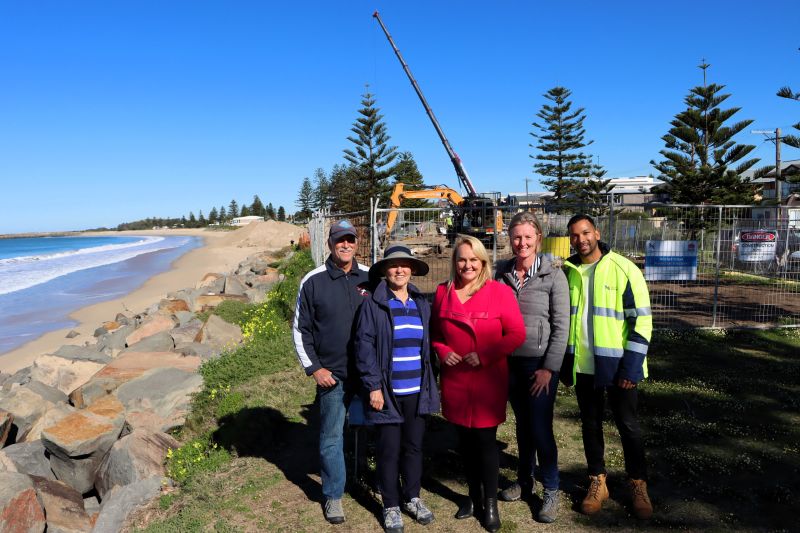
Stockton Community Liaison Group members, Lord Mayor Nuatali Nelmes and project staff at StocktonStockton Community Liaison Group representatives Ron Boyd and Barbara Whitcher, Lord Mayor Nuatali Nelmes and City of Newcastle staff Noor Timol and Philippa Hill outside the work site in Stockton.
Lord Mayor Nuatali Nelmes said the delivery of new protection structures is an important part of City of Newcastle’s program to reduce the risk of erosion.

“City of Newcastle has invested over $16.5 million dollars in the management, protection and remediation of the Stockton coastline since our Coastal Management Program (CMP) was certified by the NSW Government in August 2020,” Cr Nelmes said.

“Our work in Stockton is a crucial line of defence to significantly reduce the chance of further erosion and the loss of public and private land and assets.

“Our current work on these protection structures, and future work along the coastline, will complement our longer-term management strategy of mass sand nourishment.”

The seawall and rock bag structure have been co-funded by the NSW Government via a grant from the Coastal and Estuary Grants Program. 

The rock bags will be integrated into future works to reduce the risk of damage at The Pines, which is the area surrounding the war memorial on Mitchell Street, home to a stand of Norfolk pines. Design and assessment is now underway for works in this area.

An aerial view of the protection structure work at StocktonAn aerial view of the work to build the rock bag structure at Stockton.

City of Newcastle updated the Stockton Community Liaison Group (SCLG) on the latest progress with a tour on site today. 

SCLG Chair Barbara Whitcher said it was good to see work continuing to protect Stockton’s coastline.

“It’s especially pleasing to see how the regular sand scraping has made a difference to the protection of Stockton’s coastline, including during the recent serious weather events,” Ms Whitcher said.

Regular beach scraping activities are undertaken by City of Newcastle to increase dune resilience by accelerating the natural movement of sand, with the latest beach scraping campaign undertaken last month. 

City of Newcastle has continued regular liaison with the Worimi Registered Aboriginal Parties, to ensure current and future works respect the significance of the Stockton coastline to the Worimi people and protects cultural heritage.

In late 2023, the NSW Government, in collaboration with City of Newcastle, placed an initial 130,000 cubic metres of amenity sand to help renourish Stockton Beach. 

The delivery of sand nourishment and investigations into sourcing sand for mass nourishment, which are currently ongoing, have been funded through a $6.2 million grant through the Coastal and Estuarine Risk Mitigation Program, which includes $4.7 million from the Federal Government and $1.5 million from City of Newcastle.

In 2023, the NSW Government committed $21 million to repair Stockton Beach through mass nourishment, the community’s preferred coastal management strategy. 

The development of the Extended Stockton Coastal Management Program (CMP) is also continuing, ahead of public exhibition over summer. 

It outlines an expanded list of management actions that support the long-term strategy of mass sand nourishment included in the 2020 Stockton CMP, and broadens the geographical area covered to include the northern end of Stockton Beach from Meredith Street to the Port Stephens Local Government Area boundary.

Budget invests $10m to minimise gambling harm

The NSW Government has underlined its commitment to gambling harm minimisation measures with a $10 million boost for the Responsible Gambling Fund.

The 2024-25 NSW Budget investment ensures access to information, treatment and support services for anyone impacted by gambling – regardless of where they live in NSW.

It will fund the work of GambleAware providers across 10 regions of NSW, and key services including the GambleAware Helpline and Gambling Help Online, which in 2022-23 collectively supported more than 25,000 people.

Funding for these critical services means people across the state can receive free and confidential support services, whether that’s face-to-face through regional support, or by phone or online.

The Office of Responsible Gambling also facilitates world-leading research, education and awareness campaigns. That includes “The Number that Changed My Life”, which encourages people from diverse communities to seek support, and the “Reclaim the Game” initiative, which is now supported by 18 teams in six sporting codes to reduce the amount of sports betting advertising.

The bolstered commitment builds on the government’s work to reduce gambling harm, including:

  • slashing the cash input limit from $5000 to $500 for all new gaming machines
  • reducing the statewide cap on gaming machine entitlements by approximately 3000
  • banning political donations from clubs involved in gaming
  • establishing the Independent Panel on Gaming Reform to oversee the comprehensive trial of cashless gaming in NSW and provide a roadmap for further reform
  • banning external gaming-related signage from venues
  • mandating Responsible Gambling Officers in venues with more than 20 machines from 1 July 2024.

The 2024-25 Budget continues the drive to reduce gambling harm and to encourage people to seek support when they need it.

This is part of the Minns Labor Government’s plan to build better communities for NSW. To ensure communities are safer and stronger.

A plan to build a better NSW.

What gets measured, gets done: Getting the right data to build a better NSW

In the 2024 to 2025 NSW Budget, the NSW Government has released its new Performance and Wellbeing Framework for public consultation.

In the 2024 to 2025 NSW Budget, the NSW Government has released its new Performance and Wellbeing Framework for public consultation.

In recent years, the people of NSW have been hit with bushfires, floods, a global pandemic and rising interest rates – exacerbating a cost-of-living crisis.

We know families are facing uncertainty. The NSW Government is committed to rebuilding the essential services that have been neglected. We know that with the right priorities, we can build a better NSW.

This will take time. As the NSW Government works hard to build better services for the people of NSW, having access to the right data is important. It will ensure the government is properly equipped to address the big challenges the state is facing.

With the Performance and Wellbeing Framework, that process begins. It provides a clear set of measures to track the government’s progress on much-needed reforms including in housing, energy, education and healthcare.

The proposed NSW Performance and Wellbeing Framework comprises eight Wellbeing Themes and 28 Outcomes.

The themes are Healthy, Skilled, Prosperous, Housed, Secure, Community, Connected and Sustainable. Each theme is matched by NSW Outcomes, which cover key government activities and services. Over time, progress towards these Outcomes will support overall wellbeing for families, households and businesses in New South Wales.

Once implemented the framework will:

  • Articulate how government performance influences outcomes
  • Strengthen performance reporting to improve accountability and transparency
  • Improve the quality of data insights that inform government decision-making
  • Encourage cross-agency collaboration and strategic planning to deliver improved outcomes for NSW.

The Framework is based on the principle that what gets measured, gets done.

Governments have always relied on indicators of economic activity, such as production, employment, and income, to measure performance. These are important, but ultimately not sufficient.

The Framework will show indicators which reflect the government’s values and priorities. Matching expenditure with those indicators ensures the people of New South Wales have clarity on the performance of the essential public services they rely on.

The Commonwealth Government and the Organisation for Economic Co-operation and Development (OECD) have created similar frameworks to measure wellbeing. The NSW Government will collaborate with the Commonwealth on this Framework to advance our shared goals.

The NSW Government will use public feedback and findings from a Public Accounts Committee inquiry to refine the Framework.

The final Performance and Wellbeing Framework will be introduced in the 2025 to 2026 Budget.

This is part of the Minns Labor Government’s plan to build stronger, better communities.

A plan to build a better NSW.

Budget builds stronger councils for stronger communities

The Minns Labor Government is building a stronger local government sector by ensuring councils are better positioned to deliver on the key outcomes their communities need, including the delivery of new homes.

The Government recognises councils’ critical role in the housing crisis and has reserved $200 million in grants for councils to meet and beat their housing targets. 

This funding will help councils deliver infrastructure including roads, open spaces and community facilities.

The 2024-25 NSW Budget invests in further strengthening councils with an additional $37.4 million to bolster the capacity of the Office of Local Government which has been under-resourced for decades.

This funding will enable the Office of Local Government to enact better regulation and enhance its ability to intervene quickly when governance and financial issues are identified across the state’s 128 councils. 

It will also support reform delivery, namely, to the councillor code of conduct and to increase transparency and accountability across local government.

The Budget also assists NSW pensioners with cost-of-living pressures, providing $78.5 million in 2024-25 to continue funding council rate concessions. 

Councils are the closest level of government to the people of NSW, but more than a decade of neglect by the previous government has left serious challenges which impact councils’ ability to deliver the services NSW communities use every day. 

This funding is part of the Minns Labor Government’s plan to build better communities for NSW. 

A plan to build stronger councils to deliver the services people rely on today and into the 
future.

A plan to build a better NSW.

Belinda Rigg SC appointed to NSW Supreme Court

Belinda Rigg SC has today been appointed a judge of the Supreme Court of NSW.

Ms Rigg was appointed Senior Counsel in 2014 and for the past five years she has been the NSW Senior Public Defender.

She has appeared in and advised on hundreds of serious and high-profile criminal matters for people who have been granted legal aid, including appearing in the High Court of Australia in significant and complex matters.

Her case work has been a mix of first instance and appellate work, and for a considerable time mainly focussed on large, complex homicide matters.

Ms Rigg has appeared in many challenging murder trials, sentence matters and appeals, including high profile matters.

As Senior Public Defender, Ms Rigg led a team of 29 Public Defenders located around the state to ensure their work is best serving Legal Aid NSW and the Aboriginal Legal Service.

After being admitted as a lawyer in 1997, Ms Rigg became a barrister and joined Sir Owen Dixon Chambers. She practised there for six years before being appointed as a Public Defender in 2004. Belinda Rigg SC will be sworn in on 24 July 2024.

Attorney General Michael Daley said:

“I am delighted to announce the appointment of Belinda Rigg SC to the Supreme Court bench.

“Ms Rigg’s expertise will be invaluable to the Court and everyone who interacts with it.

“I congratulate her on this well-deserved achievement.”

NSW Government’s Biosecurity plan launched after Avian influenza detected

The NSW Government has enacted its emergency biosecurity incident plan to address the detection of Avian influenza in the Hawkesbury district on a poultry egg farm, that has been confirmed as the High Pathogenicity Avian Influenza (HPAI).

This analysis was confirmed by the CSIRO national testing labs, the Australian Centre for Disease Preparedness today.

The HPAI detected is the H7N8 type and is not the same strain as the current Victorian outbreak. It is understood at this point to be a separate spill-over event, potentially from wild birds.

High pathogenic diseases spread quickly and have a high mortality rate amongst poultry birds, which is why there has been an immediate lock down of the farm.

The detection has triggered the NSW Government’s Emergency Animal Disease response, including an individual biosecurity direction to the farm and business, closing it off.

Under the individual direction the affected egg farm has implemented quarantine to prevent the movement of equipment, and animals, to stop further spread.

A formal control order will be declared this afternoon that will extend biosecurity control to a radius of 1-2 kilometres around the farm site.

The legal instrument will guide the urgent actions of depopulating poultry and decontaminating the farm.

The government’s Biosecurity Incident Management team is now up and running and has been liaising with the Consultative Committee on Emergency Animal diseases to discuss immediate response plans and the National Emergency Animal Disease Management Group.

NSW consumers should not be concerned about eggs and poultry products from the supermarkets.

This detection does not pose a risk to consumer health and the products are safe to consume, if they are handled and cooked as per standard food handling practices​.

The government will work closely with industry to reduce the risk of spread and minimise any impact on egg supply.

As outlined in yesterday’s Budget, the NSW Government takes biosecurity threats seriously with $946 million invested for protecting our state and our primary industries.

Detections like this demonstrate our biosecurity system and plan is working to detect incursions when they occur, and then taking swift action to contain, manage, eradicate, and decontaminate.

Information on Avian influenza is available on the Department of Primary Industries website. This website will be updated as information comes to hand.

Judge Michael Allen named new Chief Magistrate of NSW Local Court

Judge Michael Allen has today been announced as the next Chief Magistrate of the Local Court of NSW.

He has worked in all areas of the law including family and domestic violence, serious crime, workers compensation and civil law.

Judge Allen is committed to the administration of justice with almost 40 years’ experience, including as Deputy Chief Magistrate and most recently as a District Court Judge.

He has worked in all areas of the law including family and domestic violence, serious crime, workers compensation and civil law.

Judge Allen is passionate about the Local Court and the role of magistrates as members of their local communities working with the police, health and justice agencies to ensure community safety.

For almost a decade, he was a Local Court magistrate before being appointed Deputy Chief Magistrate in 2018 and became an acting judge of the District Court in 2022. This work took him all over the state including many years based in Western Sydney and regional NSW.

Since early 2023, Judge Allen has been a District Court Judge at Penrith and from January this year has been the resident list judge there. His responsibilities include listing arrangements, short matters, sentences, appeals and both jury and judge alone trials.

Judge Allen started his career as a solicitor in private practice in 1986, before becoming a barrister in 2001 and practising across regional NSW for several years. He later worked with the Office of the Director of Public Prosecutions and Legal Aid NSW.

These roles helped him develop skills in defence and prosecution in a broad range of matters. Judge Michael Allen will be sworn in on 8 July 2024.

Attorney General Michael Daley said:

“I am delighted to announce the appointment of Michael Allen as Chief Magistrate of the NSW Local Court.

“Judge Allen is a highly experienced jurist.

“I would like to thank retiring Chief Magistrate Judge Peter Johnstone for his outstanding service over the past three years as Chief Magistrate and before that as the President of the Children’s Court.

“Judge Johnstone has dedicated his career to public service and will formally retire on 5 July 2024.”

Labor’s budget of blame lets NSW down

The NSW Opposition has slammed Labor’s Budget of blame for delivering more deficits, higher taxes and less investment while ignoring the cost of living crisis.  
 
Leader of the Opposition Mark Speakman said despite the Minns Labor Government’s taxes bringing in record revenues, NSW is facing more real cuts to overall health, education and infrastructure spending and a long line of deficits.
 
“Instead of helping struggling households and small businesses, Chris Minns is imposing more taxes and blaming everyone, from Canberra to Donald Trump, for his Government’s budget mismanagement instead of the real culprit – their unfunded deals with union bosses,” Mr Speakman said.
 
“Before the election, Labor promised that their union deals would cost the Budget nothing but they are costing at least $9 billion, and that’s without taking into account more than $6 billion in current union wage demands for which no money has been provided in this Budget.”
 
“This is a Government of excuses. Chris Minns’ broken promises mean less money for our schools and hospitals, less investment in our roads and key infrastructure and less cost of living support.”
 
Leader of the Nationals Dugald Saunders said this bleak Budget fails to consider the needs of NSW’s regional residents.
 
“There are concerning cuts to the money that will be rolled out by the Department of Regional NSW, including for natural disaster support, and hardly any new funding to combat biosecurity threats,” Mr Saunders said.
 
“Capital investment is also going backwards in the bush when it comes to schools and hospitals, so there’s no good news for our hard-working farmers and families.”
 
Shadow Treasurer Damien Tudehope said the Minns Labor Government was adding to the state’s debt burden, creating a line of deficits as far as the eye can see, while making farcical claims about the GST.
 
“Rather than blaming Canberra, Chris Minns and Daniel Mookhey need to look in the mirror for the reason behind their deficits,” said Mr Tudehope. “The Minns Labor Government have added more than $11.5 billion in deficits over the next four years, taking our net debt to $139 billion by June 2028 – more than doubling our interest payments to $8.6 billion a year.”
 
“Chris Minns and Daniel Mookhey attempts to blame Canberra for an alleged $11.9 billion GST rip-off is undone by their own Budget papers, which clearly say that ‘over the four years to 2027-28, GST revenue has been revised down by $6.2 billion’.”
 
“This Budget shows the cost of Labor’s union deals, with employee expenses set to blow out to at least 45.5% of Budget expenditure by 2026-27.”
 
Shadow Minister for Finance Eleni Petinos said the second Minns-Mookhey Budget delivers no relief for NSW households suffering from Labor’s cost of living crisis, instead increasing taxes.
 
“The Labor Government’s deficits now have NSW firmly on track to lose our AAA credit rating, while they’re hoping to get the people of this state to buy their spin.”
 
“This is a budget that sends NSW households and small businesses backwards, adding more than $6 billion extra tax in the next 3 years – it’s the same old Labor.”
 
Mr Speakman concluded by saying the Minns Labor Government’s Budget leaves families and households across NSW behind at a time when they should be supported by their Government.