New Lord Mayor of Newcastle confirmed

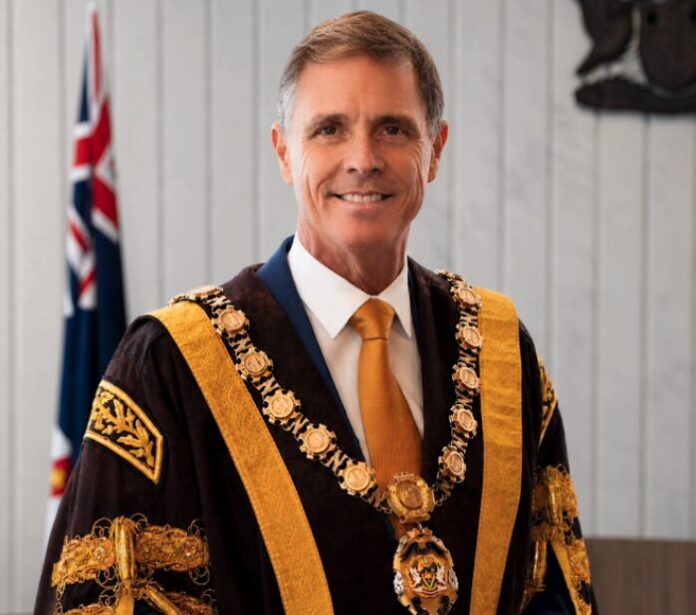
The NSW Electoral Commission has this afternoon declared the result of the local government by-election held on 18 April, with Gavin Morris elected Lord Mayor of Newcastle.
 
The by-election was triggered by the resignation of former Lord Mayor Ross Kerridge in February after 17 months in the role. 

Gavin Morris will take the affirmation of office on Tuesday 12 May in Council Chambers at the City Administration Centre.

Mr Morris will then chair the Development Application Committee Meeting, the first formal meeting of his term.

“This is an exciting time, and I look forward to leading this fabulous city, working with Councillors, staff, and the community,” Mr Morris said.

“I believe we can create an incredible future together.”

City of Newcastle CEO Jeremy Bath said the NSW Electoral Commission had to receive all postal votes before they could recognise the result today.

“Gavin Morris becomes Newcastle’s 16th Lord Mayor, following the Electoral Commission’s declaration of the results,” Mr Bath said.

“Staff have appreciated Gavin’s collaborative comments since winning the election and look forward to working with him as we continue to make Newcastle an even better city to live and work in. 

“With the by-election result being finalised, Charlotte McCabe has finished in the acting role, and we’ve greatly appreciated her leadership over the last six months and the positive impact her calm demeanour has had on staff and Councillors.”

Deputy Lord Mayor Charlotte McCabe reflected fondly on her time representing Newcastle during the period while the office of Lord Mayor was vacant. 

“I’m proud to have had the opportunity to take on the responsibilities of Lord Mayor over the last six months and help steer the elected Council through a period of uncertainty,” Cr McCabe said.

“The collaboration shown by those in the chamber meant we were able to continue operating effectively and without disruption to the community.

“I’m looking forward to continuing to represent Newcastle through my role as Deputy Lord Mayor, and Councillor for Ward One.”

The final cost of the by-election to City of Newcastle is $1,107,777. 

The by-election was not anticipated when the budget was adopted by Council in June 2025, which forecast a surplus of $258,000. 

Therefore, the cost will be added to the 2025/26 budget position when it is reviewed by Council in May. 

Minns Labor Government rejects Opposition bid to gut ‘good character’ reforms

The Minns Labor Government will not accept the Opposition’s attempts to water down nation-leading reforms to remove ‘good character’ as a mitigating factor at sentencing. 

The Opposition’s amendments lodged today would gut the bill and mean victim-survivors would still have to sit through the trauma of hearing their perpetrator described as a ‘good person’ in court.

The amendments would have the effect of removing good character for sexual offences. But they would otherwise retain ‘good character’ as a mitigating factor at sentencing and allow the court discretion as to whether they give this weight.

This means a court would still be able to find someone is of otherwise ‘good character’ despite them being convicted of offending that involves antisemitism like inciting racial hatred, domestic and family violence homicide or dangerous driving causing death.

Our nation-leading reforms announced earlier this year are designed to ensure offenders convicted of serious crimes cannot rely on character references to mitigate their sentence.

The legislation forms part of the Minns Labor Government’s broader agenda to strengthen protections for victim-survivors of domestic and family violence and improve the integrity and consistency of sentencing outcomes across NSW.

Advocates, including road trauma victims and domestic violence survivors, have been calling for these changes for years, arguing the current system allows offenders to benefit from personal testimonials that are often irrelevant to the harm caused.

This NSW Sentencing Council made its position clear about this approach. They said giving courts this discretion would still leave good character operating as a mitigating factor and would not address many of the concerns raised in this review.

Attorney General Michael Daley said:

“The Opposition’s attempt to gut the Minns Labor Government’s nation-leading reforms to ‘good character’ evidence at sentencing is disgraceful and insulting to victims.

“They want serious criminals involved in organised crime, domestic violence and murder to have their sentences mitigated because the Opposition says they are of ‘good character’.

“We will not be accepting the Opposition’s attempts to water down these vital reforms.

“The question for the Legislative Council is simple, whose side are they on? Are they on the side of victims, or are they on the side of perpetrators?”

Minister for Women and the Prevention of Domestic Violence and Sexual Assault Jodie Harrisonsaid:

“These reforms recognise the lived experience of victim-survivors and ensure the justice system does not compound their trauma.

“Good character references have too often been used to minimise or excuse serious violence, particularly in domestic and family violence cases.

“No victim should have to sit in a courtroom and hear the person who harmed them described as ‘a good person’ or ‘of strong character’.

“We will not support any changes that weaken these protections or take us backwards.

“This is about respect for victim-survivors and making sure the system reflects the seriousness of these crimes.”

Your Reference Ain’t Relevant Cofounder Harrison James said: 

“No survivor should have to sit in court and hear the person who harmed them praised for their so-called ‘good character’ after conviction. That should not be controversial.  

“To then see a watered-down version of this bill put forward as an alternative is deeply disappointing and genuinely disturbing.

“I have reached out to a number of members of the Coalition in good faith because I wanted to have a genuine discussion and offer the perspective of a victim-survivor who has fought for this reform for three and a half years. I have been met with silence.

“For victim-survivors like me, this feels like a slap in the face. We have carried this issue, spoken about our pain publicly, relived some of the worst moments of our lives, and pushed for change because we believed Parliament would listen.” 

NSW Government scientists take the lead against soil-borne diseases

Scientists from the NSW Government’s Department of Primary Industries and Regional Development (DPIRD) are taking the lead on multi-million-dollar research projects focussing on tackling soil-borne diseases that are costing Australian crop farmers more than a billion dollars a year.

The projects are part of the Grains Research and Development Corporation (GRDC) Soilborne Disease Initiative, a coordinated $34.6 million, five-year, Australia-wide research program. GRDC estimates soil-borne diseases cause $1.71 billion in lost grain production annually nationwide, including $1.23 billion in wheat alone.

The research projects are part of the Minns Labor Government’s record $1 billion biosecurity investment to protect and boost the economic growth of the state’s $25 billion primary industries sector.

The research, which is focused on fusarium crown rot in grains and cereals and Sclerotinia stem rot in broadleaf crops will provide growers with integrated disease management strategies to minimise yield loss and economic impacts.

Integrated disease management strategies could include a combination of crop rotation, stubble management, varietal disease tolerance, strategic fungicide use and novel strategies such as application of biological control agents.

  • Fusarium crown rot mainly affects winter cereal crops including wheat, barley, durum wheat and triticale and is a major issue in dryland farming systems across Australia, including NSW. It is estimated to cost growers in NSW and Queensland around $112 million annually.
  • Sclerotinia stem rot, often called “white mould”, is a major fungal disease that affects a range of broadleaf crops, particularly in higher rainfall or irrigated systems, including canola, chickpea, lupin, and faba bean. It is estimated to cost NSW southern region growers around $70 million annually.

The projects will also have a strong focus on skills transfer of research methodologies and capacity building to support the management of future soil-borne disease issues.

NSW DPIRD plant pathologist Dr Steven Simpfendorfer, a national expert on Fusarium crown rot, is leading the state’s contribution to that disease theme and DPIRD broadleaf crop pathologist Dr Kurt Lindbeck is leading the national theme on Sclerotinia stem rot.

The importance of managing soil-borne diseases has increased as growers adopt conservation cropping practices, in particular stubble retention, which has associated environmental benefits of reduced soil erosion, reduced air pollution and greenhouse gas emissions, increased water use efficiency, and improved drought resilience.

Soil-borne diseases also reduce nitrogen use efficiency, which not only increases the economic impact to farmers but also elevates greenhouse gas emissions through the need to apply more artificial fertiliser to compensate.

Recent crop vulnerability studies have highlighted that the impact of soil-borne diseases will increase further under future climate scenarios making this is a priority area for future sustainable land use and nature positive research.

Visit the GRDC website to learn more about the Soil-borne disease initiative.

Minister for Agriculture Tara Moriarty said:

“Cropping is worth $11.6 billion to the NSW economy, so this research partnership between the NSW Government and the Grains Research and Development Corporation is vital to provide growers with the knowledge and tools to tackle soil-borne diseases on their farms.

“This initiative will provide crop producers with the scientifically proven disease management strategies so they can remain productive as part of the state’s annual primary industries output worth $25.5 billion.

“These projects will bring wider benefits to the economic growth of NSW and maintain regional biosecurity expertise to respond to endemic and exotic crop disease issues.”

Department of Primary Industries and Regional Development Director Cropping Systems Guy McMullen said:

“NSW growers need regionally proven integrated disease management strategies so that soil-borne diseases do not become an economic barrier to continuing and further adoption of environmentally beneficial farming practices.

“Without such intervention, growers may have to resort to more aggressive stubble management practices such as burning and cultivation, which have associated negative impacts on the environment from soil erosion, air pollution through increased frequency of dust storms, and greenhouse gas emissions.

“The capacity building part of these projects is critical to ensuring the availability of expertise to respond to sporadic issues with endemic diseases and regional biosecurity capacity in the event of exotic incursions.”

Grains Research and Development Corporation Board Chair Sharon Starick said:

“Soil-borne diseases are responsible for more than half of total yield losses from disease in Australian grain crops.

“Through this initiative, GRDC will invest $20 million nationally, complemented by an additional $14 million from collaborating research partners.

“As part of the program, which builds on past research, we aim to equip Australian grain growers with practical, economic and innovative soil-borne disease management strategies that reduce the financial impact of these diseases on their farming businesses.”

Grains Research and Development Corporation Managing Director Nigel Hart said:

“We know this is a critical area for growers and advisers, which is why we have committed to bringing current and new research together in a highly effective multi-disciplinary way.

“By bringing together Australia’s leading researchers and communication and extension specialists, we’re ensuring growers and advisers have the information, support and confidence they need to adopt and implement new and improved disease management strategies.

“To help address the specific needs of the northern cropping regions, nodes will be developed in partnership with NSW DPIRD, University of Queensland, and the University of Southern Queensland.”

NSW mourns loss of Marine Rescue volunteers

It is with the heaviest of hearts that we mourn the loss of two brave Marine Rescue NSW crew members who have died in a tragic incident at Ballina.

Our emergency services are the first to rush to the rescue of people in danger and last night two of our courageous volunteers made the ultimate sacrifice.

Along with four of their crew mates, the volunteers were heading to the aid of a yacht in distress when their Marine Rescue NSW vessel capsized.

In difficult and dark conditions, additional emergency services then raced to their assistance.

Sadly, the mariner on board the yacht has also lost their life, and we offer our condolences to their family.

Four of the Marine Rescue crew are receiving medical treatment, and we give heartfelt thanks for their safety and their courage throughout these terrible events.

The loss of these members of our emergency services is a tragedy for their families and friends, as well as the communities they helped protect. It is a loss that is deeply felt across all our emergency services, especially throughout the Marine Rescue family.

My heart goes out to their loved ones and fellow crew members at the Marine Rescue Ballina unit. Our thoughts and thanks are also with the emergency service members who came together to assist them.

This is a very difficult and heart-breaking time for such a tight knit community.

Background:

Two Marine Rescue NSW volunteers from Ballina have lost their lives while coming to the aid of a stricken yacht on the State’s North Coast last night.

At approximately 6.15 pm on Monday evening, a Marine Rescue NSW crew from Ballina was responding to the distressed yacht off the South Ballina break wall when their boat capsized in heavy seas crossing the bar. The Marine Rescue NSW vessel had six crew members on board, four of whom made it to shore. Another person who was on board the yacht has also died.

Marine Rescue NSW is providing support to the volunteers’ families, unit members and rescue community through its wellbeing and chaplaincy services. Support for the community is also available through the 24/7 Mental Health Line on 1800 011 511. For crisis support, call 13YARN (139 276) or Lifeline 13 11 14.

NSW Police will investigate the circumstances surrounding the incident.

The Minister for Emergency Services will travel to Ballina this afternoon.

Celebrating generations of care on International Day of the Midwife

Scientists from the NSW Government’s Department of Primary Industries and Regional Development (DPIRD) are taking the lead on multi-million-dollar research projects focussing on tackling soil-borne diseases that are costing Australian crop farmers more than a billion dollars a year.

The projects are part of the Grains Research and Development Corporation (GRDC) Soilborne Disease Initiative, a coordinated $34.6 million, five-year, Australia-wide research program. GRDC estimates soil-borne diseases cause $1.71 billion in lost grain production annually nationwide, including $1.23 billion in wheat alone.

The research projects are part of the Minns Labor Government’s record $1 billion biosecurity investment to protect and boost the economic growth of the state’s $25 billion primary industries sector.

The research, which is focused on fusarium crown rot in grains and cereals and Sclerotinia stem rot in broadleaf crops will provide growers with integrated disease management strategies to minimise yield loss and economic impacts.

Integrated disease management strategies could include a combination of crop rotation, stubble management, varietal disease tolerance, strategic fungicide use and novel strategies such as application of biological control agents.

  • Fusarium crown rot mainly affects winter cereal crops including wheat, barley, durum wheat and triticale and is a major issue in dryland farming systems across Australia, including NSW. It is estimated to cost growers in NSW and Queensland around $112 million annually.
  • Sclerotinia stem rot, often called “white mould”, is a major fungal disease that affects a range of broadleaf crops, particularly in higher rainfall or irrigated systems, including canola, chickpea, lupin, and faba bean. It is estimated to cost NSW southern region growers around $70 million annually.

The projects will also have a strong focus on skills transfer of research methodologies and capacity building to support the management of future soil-borne disease issues.

NSW DPIRD plant pathologist Dr Steven Simpfendorfer, a national expert on Fusarium crown rot, is leading the state’s contribution to that disease theme and DPIRD broadleaf crop pathologist Dr Kurt Lindbeck is leading the national theme on Sclerotinia stem rot.

The importance of managing soil-borne diseases has increased as growers adopt conservation cropping practices, in particular stubble retention, which has associated environmental benefits of reduced soil erosion, reduced air pollution and greenhouse gas emissions, increased water use efficiency, and improved drought resilience.

Soil-borne diseases also reduce nitrogen use efficiency, which not only increases the economic impact to farmers but also elevates greenhouse gas emissions through the need to apply more artificial fertiliser to compensate.

Recent crop vulnerability studies have highlighted that the impact of soil-borne diseases will increase further under future climate scenarios making this is a priority area for future sustainable land use and nature positive research.

Visit the GRDC website to learn more about the Soil-borne disease initiative.

Minister for Agriculture Tara Moriarty said:

“Cropping is worth $11.6 billion to the NSW economy, so this research partnership between the NSW Government and the Grains Research and Development Corporation is vital to provide growers with the knowledge and tools to tackle soil-borne diseases on their farms.

“This initiative will provide crop producers with the scientifically proven disease management strategies so they can remain productive as part of the state’s annual primary industries output worth $25.5 billion.

“These projects will bring wider benefits to the economic growth of NSW and maintain regional biosecurity expertise to respond to endemic and exotic crop disease issues.”

Department of Primary Industries and Regional Development Director Cropping Systems Guy McMullen said:

“NSW growers need regionally proven integrated disease management strategies so that soil-borne diseases do not become an economic barrier to continuing and further adoption of environmentally beneficial farming practices.

“Without such intervention, growers may have to resort to more aggressive stubble management practices such as burning and cultivation, which have associated negative impacts on the environment from soil erosion, air pollution through increased frequency of dust storms, and greenhouse gas emissions.

“The capacity building part of these projects is critical to ensuring the availability of expertise to respond to sporadic issues with endemic diseases and regional biosecurity capacity in the event of exotic incursions.”

Grains Research and Development Corporation Board Chair Sharon Starick said:

“Soil-borne diseases are responsible for more than half of total yield losses from disease in Australian grain crops.

“Through this initiative, GRDC will invest $20 million nationally, complemented by an additional $14 million from collaborating research partners.

“As part of the program, which builds on past research, we aim to equip Australian grain growers with practical, economic and innovative soil-borne disease management strategies that reduce the financial impact of these diseases on their farming businesses.”

Grains Research and Development Corporation Managing Director Nigel Hart said:

“We know this is a critical area for growers and advisers, which is why we have committed to bringing current and new research together in a highly effective multi-disciplinary way.

“By bringing together Australia’s leading researchers and communication and extension specialists, we’re ensuring growers and advisers have the information, support and confidence they need to adopt and implement new and improved disease management strategies.

“To help address the specific needs of the northern cropping regions, nodes will be developed in partnership with NSW DPIRD, University of Queensland, and the University of Southern Queensland.”

Preventing antisemitic activities in Local Government facilities

The use of council-controlled facilities for activities deemed antisemitic will be prohibited under an amendment to the Local Government Act to be moved by the NSW Liberals and Nationals. 
 
The amendment to the Local Government Act 1993 would prohibit the use of council-controlled land or facilities by any person or organisation reasonably suspected of being likely to engage in antisemitic activities with consideration given to the use of the phrases “globalise the Intifada” and “from the river to the sea”. 
 
The amendments would draw on elements of the Prevention of Antisemitism Bill 2026 introduced by NSW Liberals and Nationals in February which adopts the International Holocaust Remembrance Alliance (IHRA) definition of antisemitism. 
 
Opposition Leader Kellie Sloane said social cohesion is at the core of the change.  
 
“This is not some harmless phrase; it is an incitement to hatred and violence against the Jewish community, and allowing its use in a council-controlled venue puts at risk everything we have done to promote social cohesion,” Ms Sloane said.  
 
“By prohibiting antisemitic events in council venues, the Liberals and Nationals are drawing a line unlike the Premier who can’t even pick up the phone to Clover Moore.” 
 
“This amendment will ensure local government has to take action against divisive events like Tuesday’s forum.” 
 
Shadow Attorney General Damien Tudehope said considering events such as tonight’s public forum hosted by Stop The War in Palestine, action cannot wait.  
 
“The amendment is directed at antisemitic activities because antisemitism is a real current threat to the wellbeing of the Jewish community in New South Wales,” Mr Tudehope said.  
 
“Antisemitism has no place in our community. No local government facility should be made available to those wishing to promote the destruction of the Jewish people.”  

NSW Liberals and Nationals to move on e-bike rat-bag laws

Under the NSW Liberals and Nationals Government rat-bags on e-bikes will be held accountable.
 
The Opposition will move to amend the Road Transport Amendment (Non-registrable Motor Vehicles) Bill 2026 to enable the NSW Police Force to seize any e-bike, regardless of its legality, from the community if the rider’s behaviour falls short of community standards.
 
Adults would have their bike seized for 14 days, while minors would be forced to have a parent or guardian collect the device.
 
The rat-bag laws follow the Opposition’s strong action on e-bikes including its policy to introduce a licence plate scheme for particular rider cohorts if elected.
 
Shadow Minister for Transport Natalie Ward said the Labor Government is all talk and no action on out-of-control e-bike behaviour, ignoring the lived experience of the community.
 
“People are sick of dodging rat-bags on e-bikes while the Government sits on its hands and tells them to cop it. This is about consequences,” Mrs Ward said.
 
“Chris Minns and John Graham want headlines about crushing bikes, but they still won’t give police the powers they need to stop rat-bag behaviour.”
 
“If you ride responsibly, you have nothing to worry about. But if you’re tearing through shopping centres, abusing police or treating suburban streets like a racetrack, your e-bike will be taken.”
 
The Opposition amendments would allow NSW Police to seize legal e-bikes based on an agreed level of behaviour between the transport minister and NSW Police Commissioner.
 
As the Opposition does not have access to the NSW Police Force, it proposes that the regulations establish the clear guidelines that will be the criteria for seizure, and expects it to include dangerous or anti-social behaviour, reckless riding, intimidating the public, abusing police, or riding through private property and shopping centres.
 
Shadow Minister for Police Anthony Roberts said the Government’s approach is weak, reactive and completely disconnected from what communities are demanding.
 
“The NSW Liberals and Nationals are on the side of families, local communities and police officers who are sick of seeing the rules ignored with no meaningful deterrent,” Mr Roberts said.
 
Mrs Ward said Labor now faced a clear choice.
 
“They can back common-sense powers for police, or they can keep protecting e-bike rat-bags while communities suffer.”

The System is Broken: ACT Greens Demand Real Cost-of-Living Relief in a Feul Crisis

The ACT Greens have written to the Chief Minister, advocating for urgent cost-of-living relief and long-term investment in the 2026–27 Budget.

This will be critical to shielding Canberrans from surging fuel and food costs, while preparing our city to withstand the crises ahead.

The key measures proposed:  

1. Targeted support for low-income households, including reinstating programs to help switch to electric appliances and vehicles.

2. Financial incentives for e-bikes and e-scooters to help people transition to cheaper, cleaner transport.

3. Free public transport for the duration of the crisis to ease cost-of-living pressures and reduce reliance on expensive fuel.

4. Stronger tax settings to encourage low and zero-emissions vehicles.

5. Faster investment in electric buses and light rail expansion, to help us grow a better and more frequent public transport network.

6. Accelerated transition to all-electric homes and a phase-out of the fossil fuel gas network

Andrew Braddock, ACT Greens spokesperson for Transport will be introducing a motion to the Assembly on Tuesday to help Canberrans make the switch to cheaper and greener transport options in a fuel crisis. 

Andrew Braddock, ACT Greens spokesperson for Transport:

“Canberrans are feeling the pressure, at the bowser, and in the supermarket and desperately looking for any way to reduce their household costs.

“Public transport, EVs and e-bikes offer a clear, cheaper alternative to fuel-hungry cars. This crisis is already pushing many people to make the switch, and motion aims to support those who need help to do so.

“The Government needs to step up and support people to make this transition to cleaner, greener and cheaper transport.

“People are crying out for affordable alternatives, but what we’re seeing instead is hesitation and timidness from Labor, both in delivering immediate relief and in committing to long-term solutions.

“Right now, the system is fundamentally broken. When people can’t afford the basics and aren’t given real alternatives, it’s everyday households who pay the price.

“But it doesn’t have to be this way. The Greens have practical, cost-effective solutions ready to deliver real relief to households across the ACT. Labor just needs to say yes.

“With the Budget coming up in June, there’s a real opportunity to deliver immediate relief while investing in long-term solutions that set Canberra up for the future, no matter what it holds.”

Jo Clay, Deputy Leader of the ACT Greens:

“The Budget should send a clear signal: the future is zero emissions, and our policies need to back that in.

“This crisis won’t be the last. The real question is whether we use this moment to make it easy for every household to phase out fossil fuels – in their homes and their transport – because that’s how we protect Canberrans from future shocks.

“Canberrans deserve better than short-term band-aids. They deserve a government willing to deliver lasting solutions that protect them from crisis after crisis.” 

Woden Light Rail Extension Comment: Andrew Braddock

Andrew Braddock MLA, ACT Greens spokesperson for Transport: 

“The Greens have backed light rail to Woden from day one, and an extension to Mawson since before the 2020 election. Delivering Stage 1 is a key part of Shane Rattenbury’s legacy, and we’re proud to making it happen.

“Our focus now is getting Stage 2 built – and built on time – so more Canberrans can access cleaner, greener, more reliable public transport.

“We welcome the Government’s announcement on the State Circle alignment. It’s a positive step forward, but it’s long overdue. This project needs to get moving.

“Securing Federal Government support is now critical. Andrew Braddock MLA is petitioning the House of Representatives to back light rail, and is calling on Canberrans to sign and share. You can add your support here: https://www.aph.gov.au/e-petitions/petition/EN9851

Greens: CIT Report Exposes Urgent Need For Systemic Higher Education Reform

The ACT Greens are extremely concerned about the findings of the ‘Inquiry into the CIT CEO recruitment process’ report tabled today which point to deep, systemic failures in higher education governance.

The report recommends that ‘take all steps possible to obtain and consider the findings of misconduct made against Dr McNeill by TAFE NSW with a view to considering whether Dr McNeill remains suitable to perform her role as CEO’.

The Committee further found that Dr McNeill ‘should have disclosed the information about the misconduct investigation or findings to the CIT Board in a timely manner and that she did not, and that she actively misled the CIT Board by denying that there was a finding of misconduct that had been made against her’.

“Given the seriousness of the Committee’s findings, it’s in the public interest for the CEO of CIT to resign,” said ACT Greens Deputy Leader Jo Clay.

“Findings and evidence in the report explain why.

“If she does not resign, the CIT Board should consider whether Dr McNeill remains a fit and proper person to be CEO for CIT and if so, the Board should be transparent with the Minister and community about how any decision is in the public interest.

“But this situation is not just about one person – it highlights structural problems in how our higher education institutions are governed. We need to fix the system that allowed this to occur in the first place.”

The Committee also found that governance arrangements of the CIT Board are not fit for purpose.

“Across the sector and Canberra, we have seen the boards and councils of higher education and training fail to demonstrate accountability and good outcomes to their students, staff, and the wider community. We need better systems that meet the needs and expectations of the people at the heart of our institutions.”

Today’s report follows the saga of the last CEO of CIT, Ms Leanne Cover, who resigned after findings of serious corrupt conduct by the Integrity Commission. Ms Cover resigned after receiving two years of paid leave. Her payouts and paid leave were in excess of $1 million.