The Australian Dream: Committee finds opportunities to improve housing affordability and supply 

The House of Representatives Standing Committee on Tax and Revenue has today released its report titled The Australian Dream: inquiry into housing affordability and supply in Australia.

The report follows a seven-month parliamentary inquiry in which the Committee heard from the Australian Federal Government, state and local governments, industry groups, peak bodies, think tanks, academics, economists, unions, and the general public. In its report, the Committee makes 16 recommendations to improve housing supply and affordability across the country.

Chair of the Committee, Mr Jason Falinski MP said, ‘It should not need to be stated, but home ownership matters. It matters for reasons as diverse as wealth equality, mental health, childhood outcomes and democratic stability. But at the end of our months-long investigation, it does need to be reasserted that our nation was founded to be a classless society in which everyone got a chance to own their own home.’

‘The primary driver of growing house prices is the lack of market response. We need to reform broken planning systems, fix inefficient regulation, and stop new home buyers unfairly bearing the brunt of taxes and charges that are designed to raise funds, not living standards. This report identifies opportunities for all levels of government to unlock more housing supply, create more affordable homes and increase home ownership,’ said Mr Falinski.

Many of these recommendations focus on increasing housing supply. By recommending the Australian Government implement policies which financially incentivise state and local governments to adopt better planning and property administration practices, upwards pressure on supply will be mitigated. Further, incentivising state and local governments to directly tie taxes and levies to actual and meaningful infrastructure improvements will also serve to mitigate this upward pressure.

The Committee is cognisant of the fact that a housing deposit is the largest barrier for first home buyers. Therefore, one of the key recommendations is that first home buyers be allowed to use their superannuation assets as security for a home loan. The report also makes recommendations regarding emerging housing models in Australia, including rent-to-own and build-to-rent housing.

It is evident that there are serious and large-scale issues in Australia’s housing market. In many parts of the country, an increasing number of Australians are struggling to buy a home, find an affordable rental property that meets their needs, and afford housing costs. Meanwhile, home ownership rates continue to fall. This situation has severe implications for us now and future generations.

The Committee hopes that this report will pave the way for effective government action and cooperation to address this critical issue, and thanks all of those who contributed to this inquiry.

A full copy of the Committee’s report can be found on the Inquiry’s website.

Coffee grounds and hydrogen from waste Green Steel breakthroughs 

The UNSW SMaRT Centre has had published three scientific papers that show that waste coffee grounds and hydrogen from other wastes can be used as part of its patented Green Steel technology.

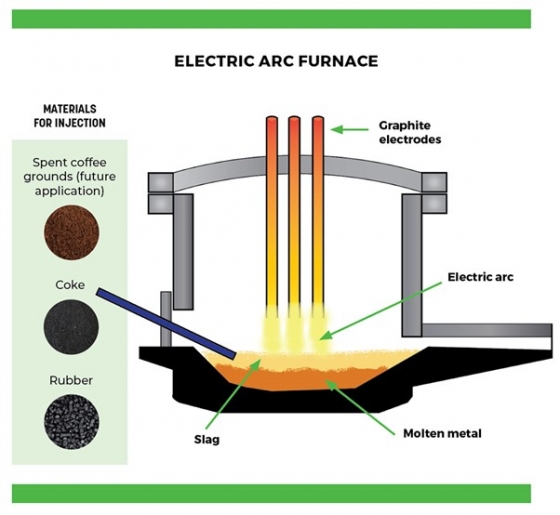
In the latest research breakthroughs on SMaRT@UNSW’s Green Steel Polymer Injection Technology (PIT), industrial trials with partner Molycop have shown various wastes can be used to more sustainably make steel in electric arc furnaces.

Wastes including plastic and coffee grounds now join waste rubber tyres as alternative sources of coke and coal as previously vital ingredients as carbon sources for steel making, and can provide the element hydrogen which vastly improves the efficiency and energy required for the manufacturing process.

UNSW SMaRT Centre Director, Professor Veena Sahajwalla said:  “Steelmakers have to meet the demands of quality requirements. The metal that gets produced doesn’t have any memory of whether the parent material that went in was coal or coffee.

“Steelmakers have to meet the demands of quality requirements,” lead researcher Veena Sahajwalla said. “The metal that gets produced doesn’t have any memory of whether the parent material that went in was coal or coffee.

Green Steel graphic

“It gives you the kind of productivity requirements that any commercial operator will want,” Ms Sahajwalla said. “We’ve proven that it does the job at a comparable level, so we’re going to be at least sitting at an equivalent performance. If I’m going to be so bold and brave, I’d love to show that it can do even better.

“We (Australian steelmakers) are leaders in the space globally,” Ms Sahajwalla said. “We’re the first to be able to take all of these technological advances and show that it can be done.

“The ideal would be if we completely eliminate the coke,” Veena said. “If you have a combination of materials, you get a better outcome because you’re able to finetune and customise green steel and take the kinds of materials that do the best job.”

“This is not a waste, it’s a really useful resource,” she said. “It’s going to be an interesting shift towards valuing our waste resources and thinking about those inno­vative supply chains where recycling and manufacturing can be coupled together.”

Morrison Government must stop protecting Russian Beetaloo Billionaire Oligarch

The Greens are calling on Scott Morrison to immediately add to the sanctions list a Russian billionaire oligarch conducting business in Australia on the Scott Morrison-backed Betaloo gas project. 

Australia has recently listed a whole range of Russian billionaire oligarchs who got filthy rich through Putin, but in a move that will surprise no one, the Morrison government is offering special protections for those oligarchs with connections to the coal and gas industry. 

Viktor Vekselberg is conspicuously not listed. The Kremlin-connected billionaire has been on the US sanctions list since 2018 and the UK listed him this week. He is the biggest owner of Falcon Energy, which is in a partnership with Origin Energy with massive exploration permits to frack the Beetaloo Basin. 

DFAT will appear before the Beetaloo inquiry (which the Greens initiated and chair) next Friday, 24th March to clarify who is pulling strings that appears to be letting Russian Oligarchs, when connected to fossil fuels, slip the net.

The Greens are also calling for a suspension of Falcon Energy’s joint exploration permit unless the government can demonstrate that financial benefits will not flow to one of Putin’s cabal. 

Greens Leader Adam Bandt MP said:

“While Scott Morrison has sanctioned a range of Russian billionaire oligarchs, he has left out those in the oil, coal and gas industry. 

“For Scott Morrison, it’s one rule for oil, coal and gas billionaires and another for everyone else, even on an issue as clear as sanctions on Russia. 

“The Greens have an inquiry into the Beetaloo gas mine proposal and we’re calling DFAT to appear to explain who in the government is running a protection racket for a Russian billionaire oligarch, bunkered in Switzerland, who stands to profit from this climate-wrecking publicly subsidised Beetaloo disaster.

“As well as imposing sanctions on this billionaire oligarch, the government should suspend Falcon’s massive exploration permit over traditional owner and pastoralist’s titles, both of whom are vehemently opposed to fracking their underground water.”
 

Joyce’s funding for Urannah Dam another National Party slush fund for the coal industry

The Government’s announcement of $483m to fund the Urannah Dam, in close proximity to numerous existing and planned mining projects, is an undisguised investment in the expansion of the coal industry. 

The dam, in Joyce’s own words, will provide water security for the nearby coal mining industry to grow into the future – even at a time when we need to urgently reduce emissions to avoid the impacts of climate change that parts of our country are currently experiencing. 

The Greens environment and water spokesperson Sarah Hanson-Young said:

“While towns in NSW are still cleaning up from the disastrous climate floods, Barnaby Joyce and Scott Morrison want to spend half a billion dollars to help build more coal mines and make climate change worse – this is unforgivable. 

“Barnaby’s big dam is all about helping expand the coal industry in the Bowen Basin – a project that has been dismissed by scientists, economists and the community. It’s makes a mockery of the Morrison Government’s net zero promise and their upcoming Federal Budget. 

“The climate has changed – it’s happening now. We’re seeing the crisis unfold before our eyes, with people’s homes lost, their livelihoods destroyed. Australians can’t afford new projects that ignore the impacts of climate change.

“Voters around the country will be angry that Barnaby Joyce gets to spend $500 million on a massive dam for his coal donors, while people who have lost their homes in the bushfires and now the floods still don’t have homes to live in. 

“This announcement has put a torpedo through the economic credibility of this Government. The feasibility studies into this project all show that this is nothing more than boondoggle – a waste of public money and a waste of time. When majority of voters support action on climate change, spending public money on making climate change worse is simply bad economic management.

“How on earth did this get the tick off from the Treasurer and the Finance Minister? Josh Frydenberg and Simon Birmingham should be embarrassed, Barnaby is already making a mockery of their Budget.” 

World’s first lung scanner to change millions of lives

Australians with lung conditions will be able to access the world’s first and only dedicated lung scanner, which was developed and built in Australia, at the Prince of Wales Hospital, Sydney.

Funded through the Morrison Government’s landmark Medical Research Future Fund (MRFF), the XV Scanner uses an automated scanning process to produce detailed lung function information in real time.

The XV Scanner will change lives, bringing new hope and help for people living with lung conditions such as chronic obstructive pulmonary disease, cystic fibrosis and asthma. It will detect disease earlier and more accurately monitor chronic respiratory conditions.

Minister for Health and Aged Care, Greg Hunt, said the Government has provided $28.9 million through the MRFF Frontier Health and Medical Research Initiative to develop and commercialise the scanner.

“Every Australian should be proud of this ground-breaking Australian-made medical technology platform,” Minister Hunt said.

“The development of the XV Scanner is a wonderful example of Australia again punching above its weight in the world of health and medical research.

“Our Government continues to provide unprecedented support to health and medical research, as we back our best and brightest researchers to transform today’s ideas into breakthrough treatments for the patients of tomorrow.”

The XV Scanner will be used by researchers and clinicians from the University of New South Wales (UNSW) and the Sydney Children’s Hospital, including eminent lung health expert Professor Adam Jaffe, who is currently the John Beveridge Professor of Paediatrics at UNSW.

Developed by global medical technology company 4DMedical, the XV Scanner was unveiled at the Prince of Wales Hospital today.

Chief Executive Officer of 4DMedical, Dr Andreas Fouras, described its development as a “transformative moment in lung health history”. He said the XV Scanner would not have been possible without the MRFF investment.

The $20 billion MRFF is a long-term, sustainable investment in Australian health and medical research, helping to improve lives, build the economy and contribute to the sustainability of the health system, which ensures a guaranteed funding stream to support Australia’s best and brightest health researchers.

Further information about the MRFF is available at www.health.gov.au/mrff.

$140 million to improve health services for indigenous communities

Today is National Close the Gap Day, a day to reflect on the gap in health and wellbeing outcomes between Aboriginal and Torres Strait Islander people and other Australians.

All of us can contribute to closing the gap by working together to recognise and address the factors behind the health gap.

The Morrison Government continues to take strong and effective action towards achieving parity in health outcomes. In the past year, we have announced new commitments totalling more than $1.1 billion for Aboriginal and Torres Strait Islander health, targeted to priority areas including birthweight, early childhood, aged care and mental health.

To continue to improve the health and wellbeing of Indigenous communities, the Morrison Government will on Friday open a $140 million major capital works program for Aboriginal Community Controlled Health Services (ACCHS) to build, buy or renovate health clinics and staff housing.

A key part of the Government’s $254 million Closing the Gap health infrastructure measure announced in August 2021, the funding will deliver up to 120 projects, including new health clinics, housing, and major refurbishments.

ACCHS are operated by and for Aboriginal and Torres Strait Islander communities, delivering comprehensive and culturally appropriate primary health care services.

Minister for Health, Greg Hunt, said the grants would address key areas of health infrastructure for the ACCHS sector.

“Across the country, ACCHS play a vital role in the health of their local communities,” Minister Hunt said.

“This was particularly evident throughout the COVID-19 pandemic and during the vaccination roll out.

“To continue to offer the highest quality care to their communities, ACCHS can now set their sights on the future by applying for funding to undertake capital works.”

The Major Capital Program grant opportunity complements the recent Service Maintenance Program grant opportunity which was for repairs, maintenance and minor upgrades.

Minister for Indigenous Australians, Ken Wyatt, this funding would continue the Morrison Government’s strong reforms to the indigenous health sector, creating real partnerships with the community.

“Just as important as the funding we are announcing today, we are changing the way we deliver health programs,” Minister Wyatt said.

“For the first time, Aboriginal and Torres Strait Islander organisations, communities and people will become genuine partners in efforts to support their mental and physical health.

“The National Agreement on Closing the Gap, reached in July 2020 between the Commonwealth, all state and territory governments, Aboriginal and Torres Strait Islander peak bodies, and the Australian Local Government Association, was an historic step forward.

“Through the agreement, in health and other areas of government service, we are working with indigenous experts to design and deliver policies and programs for indigenous people.

“We are also adopting more effective, better targeted approaches to other major health issues for Aboriginal and Torres Strait Islander people.”

Both grant programs were co-designed in partnership with the sector through the national peak body – the National Aboriginal Community Controlled Health Organisation (NACCHO).

Lead Convenor of the Coalition of Peaks and CEO of the National Aboriginal Community Controlled Health Organisation, Ms Pat Turner, said,

“NACCHO has advocated for a long time for increased funding for infrastructure for the health sector and this funding supports and recognises the critical role that ACCHS play in the Australian primary health care architecture”.

“I am pleased to see that this funding is being delivered in line with the Priority Reforms in the National Agreement, where programs and services are developed in partnership with our peoples and where funding is delivered through our community-controlled organisations”.

ACCHS grant opportunities are part of the Government’s first Closing the Gap Implementation Plan, backed by a commitment of more than $1 billion to help achieve Closing the Gap outcomes.

The plan sets a foundation for efforts in achieving the targets in the National Agreement on Closing the Gap over the next decade.

The investment is in addition to the Morrison Government’s ongoing commitment through the Indigenous Australians Health Program (IAHP) of more than $4 billion from 2021-22 to 2024-25 to deliver culturally appropriate initiatives to increase access to health care and improve the health of Aboriginal and Torres Strait Islander people.

Information about the Major Capital Program grant opportunity can be found here.

Reforms to deliver lower prices for medical devices and lower private health insurance premiums

The Morrison Government’s plan to make private health insurance simpler and more affordable for all Australians is continuing to move ahead through landmark reform of the Prostheses List.

The multi-year reforms are anticipated to deliver total savings of approximately $900 million for consumers and the private health insurance system through significant reductions in prices for medical devices.

This will be achieved by better aligning the prices of medical devices between private and public hospitals and delivering structural reforms that better focus the Prostheses List for the future on high-cost and innovative medical devices.

The List, established in 1985, sets the minimum price insurers must pay hospitals for a surgically implanted prosthesis received by a private patient in a privately insured episode of hospital treatment. Examples of prostheses are replacement hips and knees, cardiac implantable electronic devices, such as pacemakers, and human tissue.

Since 1985, the Protheses List has grown in both size and complexity, now including more than 11,600 items.

In 2019-20, more than 3.1 million prostheses on the list were supplied at a cost – to private health insurers – of approximately $2.1 billion.

The Government is reforming the list to better align prices in the private system with those paid in public hospitals, and comparable international markets. Prices for medical devices vary and recent analysis shows that they can be up to 145 per cent higher than the cost of the same items in the public health system.

These reforms will improve the affordability and value of private health insurance for Australians by keeping downward pressure on premiums, while still maintaining access to high quality medical devices.

These reforms will help to continue to deliver record lower premiums changes for consumers.

The Morrison Government’s ongoing reforms to private health insurance have contributed to the lowest annual average premium change for consumers since 2001, which will be 2.70 percent in 2022.

To support the implementation of the reforms, I have completed a Memorandum of Understanding with the Medical Technology Association of Australia (MTAA).

The Government recognises it is important to provide predictability for the medical technology industry and this MoU sets out a process to ensure a more seamless implementation of the reform arrangements and will ensure the commitment of the medical technology industry to the success of the reforms.

In particular, the MoU provides clarity to industry about how items on the List will be costed, setting in place a process to reduce the gap between the cost of medical devices in the public and private health sectors over three years.

The MoU also clarifies the process for the implementation of new funding arrangements for general use consumable items which will also delivers predictability for patients, hospitals and insurers. These items can be better funded through bundled funding arrangements which are being designed with the sector.

I thank all stakeholders – including consumers, private hospital networks, private health insurers, clinicians and the broader medical technology industry – for their continued commitment to these reforms and for engaging constructively with the Government for the benefit of Australians with private health insurance.

Further detail regarding the reforms is available at https://www.health.gov.au/health-topics/private-health-insurance/the-prostheses-list/prostheses-list-reforms-and-reviews

Telehealth hits 100 million services milestone

Almost two years since telehealth was introduced by the Morrison Government as a temporary initiative in response to the COVID-19 pandemic, 100 million services have now been delivered across the nation.

Between 13 March 2020 and 16 March 2022, over 100 million telehealth services were delivered to around 17 million Australians across the country. More than $5 billion in Medicare benefits has been paid, and more than 92,000 medical practitioners have now used telehealth services to support their patients.

Of these services, GPs have provided almost 83 million, specialists almost 11 million, and allied health professionals around 5 million services.

Minister for Health and Aged Care, Greg Hunt, said universal Telehealth for all Australians is the most significant reform to Medicare since it began, improving access and providing more choice to patients and their health professionals to support health care. 

“From the moment we introduced COVID-19 telehealth, patients and medical practitioners have enthusiastically taken it up. Telehealth services, delivered by GPs, specialists, nurses, midwives and allied health practitioners, have saved and protected lives during the pandemic,” Minister Hunt said.

“In response to rapid developments in the pandemic, our introduction of telehealth was achieved in record time. This was achieved through close and effective consultation with the sector, which has continued over the past two years as we further refined and improved telehealth and now made is an abiding legacy of covid.”

The Morrison Government continues to consolidate and build upon telehealth as part of strong record and longstanding commitment to strengthen Medicare. The best patient outcomes are achieved with continuity of care. The requirement for patients to have an existing clinical relationship for most GP telehealth services will continue, recognising patients’ preferred GP and practice, and encouraging patients who want to access telehealth to engage with a known provider.

Telehealth services provided by GPs will now also be included in calculating incentive payments to practices. This recognises that telehealth services are now an ongoing and permanent feature of quality primary health care.

Telehealth services continue to have a role in the Government’s responses to ongoing and emerging challenges of COVID-19 and natural disasters, such as the current floods. Patients living in flood-affected areas declared natural disaster areas by states and territories can access GP services by telehealth from any GP, if clinically appropriate.

Medicare funding has also increased from $19 billion when we came to Government and is growing to $33 billion per year over the budget cycle. This is an increase of $14 billion per annum under the Coalition.

Our Government continues to strengthen Medicare, including by making telehealth permanent, allowing easier access to your GP.

The Morrison Government continues to ensure that Australians can access the services, medicines and treatments they need, when and where they need them, no matter where they live.

SUPERCHARGING CRITICAL MINERALS MANUFACTURING

Australia’s critical minerals sector and the job-creating industries that rely on it are being supercharged under the Morrison Government’s $1.3 billion Modern Manufacturing Initiative.

The Government has today announced over $243 million in support for four projects under the Collaboration Stream of the Modern Manufacturing Initiative, which will create over 3,400 jobs over time and cement Australia’s place in the rapidly growing critical minerals, electric vehicle and battery markets.

This includes:

  • $119.6 million for Pure Battery Technologies’ $399 million Western Australian pCAM Hub, in partnership with Poseidon Nickel, will build an integrated nickel manganese cobalt battery material refinery hub in the Kalgoorlie region. The site will become home to a growing workforce with 380 construction jobs and 175 initial permanent jobs from 2023.
  • $49 million for a $367 million project led by Australian Vanadium, to process high-grade vanadium from its Meekatharra mine in WA and transported to its Tenindewa plant powered by clean hydrogen from partner ATCO Australia. This highly sought-after critical mineral will then be transformed into energy-storing batteries to fuel the growing domestic and overseas market, with more than 740 jobs to be supported.
  • $30 million for Arafura Resources’ flagship Nolans Project near Aileron, in Central Australia, the first of its kind rare earth separation plant in Australia and only the second outside China. The $90.8 million project, located in the Northern Territory, will leverage Australia’s mineral processing expertise to develop rare earth separation technology not currently available here now, creating 650 jobs at the peak of construction and new high-value export opportunities.  
  • $45 million for Alpha HPA’s $330 million project with Orica to construct a high purity alumina production facility near Gladstone that will help meet the rapidly expanding demand for lithium-ion batteries and LED lights, with more than 300 jobs to be created from this year.

Prime Minister Scott Morrison said the projects were key to securing manufacturing in Australia and the thousands of jobs that come with those industries.

“Projects like these make for a stronger economy and a stronger future for Australia,” the Prime Minister said.

“These projects are about manufacturing the products and materials Australians need and the world needs, by making them right here at home.

“We’re helping grow the local critical minerals processing and clean energy industries and locking in the future of those industries by backing manufacturing projects in Australia.

“The $1.3 billion Modern Manufacturing Initiative is a key part of my Government’s plan for a stronger economy and a stronger future for our country.”

Minister for Industry, Energy and Emissions Reduction Angus Taylor said these projects would help us capture even more parts of the global supply chain, while at the same time helping us power our lives here at home.

“The things we use every day like our smartphones, computers and rechargeable batteries need to be made with critical minerals. They are also needed to make solar panels, electric cars, defence technology and many other high-tech applications,” Minister Taylor said.

“Australia is lucky to have some of the largest reserves of the critical minerals and metals which drive the modern global economy. But China currently dominates around 70 to 80 per cent of global critical minerals production and continues to consolidate its hold over these supply chains. This initiative is designed to address that dominance.

“These projects are not only game-changers for the local region with the creation of new jobs, they will also open up incredible export opportunities.”

Australia is a global leader in resources technology and can build greater capacity in critical minerals processing by leveraging our vast natural resources, huge investments in R&D and proximity to the growing global market.

Under our Modern Manufacturing Strategy, Australia’s regional manufacturers are playing an important role in seizing this opportunity.

MAJOR BOOST FOR THE PERTH CITY DEAL

The multibillion dollar Perth City Deal is set for a major funding boost by the Morrison and McGowan governments to bring the centrepiece inner city campus of Edith Cowan University (ECU) to life, and to deliver the iconic new Swan River Bridge.

Both Governments have announced an additional $49 million for the ECU campus while ECU has also provided a $60 million boost, taking the value of the landmark project to $853 million – with the Australian Government investing a total of $294 million, the Western Australian Government $199 million, and ECU $360 million.

The major construction contract for the new ECU campus has also been awarded to Western Australian builders Multiplex; while a consortium made up of companies Civmec Construction and Engineering Pty Ltd, Seymour Whyte Constructions Pty Ltd and WSP Australia Pty Ltd, will construct the bridge.

The Swan River Bridge is being jointly funded by Morrison and McGowan governments on a 50:50 basis, with each providing an additional $25 million to the project, bringing the total $100 million.

Today’s funding announcements take the total value of the City Deal to $1.69 billion.

The additional City Deal funding is required to address the current challenging construction environment and labour market, allow design improvements, and enable more manufacturing work to be undertaken locally.

Prime Minister Scott Morrison said the Perth City Deal was already helping to transform the city.

“The Perth City Deal was a long term partnership between all three levels of governments and the private sector to bring more jobs, more investment to WA that will create a stronger economy and a stronger future for Perth,” the Prime Minister said.

“ECU project is a key to the Perth City Deal that would inject 7,500 construction jobs and 2,300 ongoing jobs into the city.

“The new ECU campus will not only reinvigorate Perth’s city centre, but it will redefine Western Australia’s higher education offering by bringing together more than 10,000 students plus staff generating tourism, filling up bars, restaurants and hotels and bringing more people to local shops and businesses.

“The new Swan River Bridge, which will be built and manufactured locally in Western Australia by Western Australian workers, will become an iconic part of the Perth skyline across the river, providing better transport connects to and from the CBD.

“This injection into the Perth City Deal means boots on the ground and tradies on site even sooner, with major works expected to start later this year.

“We’re bringing the jobs and opportunities from the Perth City Deal to life to deliver the stronger economy that secures a stronger future for WA.”

Western Australian Premier Mark McGowan said these job-creating projects were part of the extensive investment his government was making in infrastructure and transport for the future.

“This is a once-in-a-lifetime transformation of our city centre, attracting thousands of people into the heart of the city during the day and night, creating activity and vibrancy throughout our CBD,” Premier McGowan said.

“We believe ECU will attract investment in Perth, boost the visitor economy, provide benefits for CBD businesses and further cement Perth’s reputation as a great place to live, work and visit.

“The Swan River is an iconic part of Perth, and it’s only fitting that we deliver a bridge constructed locally by Western Australians.

“This project will create and support hundreds of local jobs, while providing a new walking and cycling opportunity for our local community.  

“This is a key part of the Perth City Deal that will see more than $1.6 billion invested in projects across our CBD, supporting local jobs, local businesses and encouraging people back into the City.”

As well as the new ECU campus and Swan River Bridge, the $1.69 billion Perth City Deal includes:

  • Investment in Curtin University’s Historical Heart Cluster, including the expansion of the Graduate School of Business and Law School and the creation of a healthcare and clinical training facility.
  • Investment in Perth’s cultural attractions, including the Perth Cultural Centre rejuvenation, the Perth Concert Hall Redevelopment and the WACA redevelopment and public swimming pool. These investments will create vibrant, safe and attractive offerings delivering improved liveability, cultural and tourism outcomes for the city.
  • Investment towards the celebration of Western Australia’s rich Aboriginal culture and history, including important community consultation and engagement, feasibility studies and preliminary design work for the Perth Aboriginal Cultural Centre.
  • The CBD Transport Plan, an investment to improve active and public transport accessibility and safety in the CBD, increasing the attractiveness and sustainability of the city for residents and visitors.

Federal Minister for Communications, Urban Infrastructure, Cities and the Arts Paul Fletcher said the additional funding and contract award for the ECU campus paves the way for construction to begin on the world-class creative industries, business and technology campus, with schematic designs now complete.

“The Morrison Government is providing significant support for the new ECU city campus, with $294 million now committed to make sure we can deliver the full project scope and meet forecast cost pressures in the construction market,” Minister Fletcher said.

“The economic impact of the development will also be significant, with the project estimated to provide a $1.5 billion boost to the WA economy over the next four years.

“This is yet another example of the Perth City Deal, now worth nearly $1.7 billion, delivering for Western Australians, creating jobs and economic stimulus while securing the long-term prosperity and liveability of Perth.”

Western Australian Minister for Transport and Planning Rita Saffioti said the new bridge would be six metres wide and significantly higher than the current Causeway Bridge, with dedicated pedestrian and cyclist lanes providing safer access for the more than 1,500 cyclists and 2,000 pedestrians who use the path on the existing Causeway Bridge daily.

“Civmec has delivered some of our iconic bridges, including the Matagarup Bridge and the Kids Bridge, next to the Perth Children’s Hospital,” Minister Saffioti said.

“Set to become another iconic structure, the new Swan River Bridge will be fabricated locally in Henderson.

“With an estimated 540,000 cycling trips undertaken on the current Causeway Bridge, the new structure will provide a safer, easier option for cyclists and pedestrians.

“As we have seen with the Matagarup Bridge, the new bridge will become a meeting point for cyclists, pedestrians and families, while also providing a new tourism experience.

“The design of the structural elements of the bridges derive inspiration from the stories of Fanny Balbuk and Yagan – two key figures associated with Heirisson Island.

“Development work and early engagement with key stakeholders including Aboriginal representatives, recreational and commercial river users, local businesses and key local government agencies is currently underway.”

ECU Vice-Chancellor Professor Steve Chapman said this was an exciting milestone for the ECU city campus – Multiplex’s extensive experience in large and complex construction projects both here and abroad will help us realise our ambitious vision of a landmark for Western Australia.

“The construction of ECU City will also offer rich and diverse opportunities for local subcontractors, as well as exciting student outcomes, including apprenticeships, work integrated learning and mentorship programs for our Aboriginal and Torres Strait Islander students,” Professor Chapman said.

“Our city university will definitively change the heart of Perth and be one of the most digitally-advanced campuses in the world.”