
Text alerts among new measures to help train commuters

The NSW Government is rolling out new initiatives and technology to help give passengers a more user-friendly experience at train stations across Greater Sydney.

Following the initial Rail Review in Maylaunch, Sydney Trains has accelerated a 5-point plan to ensure passengers have simple, real-time information to help them travel on the rail network.

The plan includes:

  • Launching Geotargeted Broadcast SMS alerts during significant network incidents, providing real-time updates via text messages to a large number of nearby people, similar to localised text messages used by NSW Police.
  • New smart screens at key locations to help passengers connect across all public transport services.
  • More customer experience team members deployed to help passengers when and where they need it most.
  • Better informed frontline staff by streamlining information from the Rail Operations Centre, ensuring station and train announcements are faster, more accurate and in real-time.
  • An awareness campaign to help passengers understand the lesser-known journey planning tools available to them on the Opal Travel App.

The Geotargeted Broadcast SMS platform will be used by Transport for NSW for the first time to send alerts about an incident or service disruption to hundreds of thousands of nearby passengers and others in the area.

More than 45 new smart screens are being rolled out at 21 busy transport hubs including Central, Circular Quay, Strathfield, Lidcombe and Blacktown thanks to an initial $5 million investment. The digital screens display live information for all modes of nearby transport, providing greater connectivity and alternative options.

In addition to improved technology, additional face-to-face support will be available when it’s needed most, with new Customer Experience Team Members recruited to assist during major events and disruption.

Transport Minister Jo Haylen said:

“We’re acting on another key recommendation from the initial Sydney Trains Review.

“By staying on top of the maintenance backlog, we’ll reduce the number of potential rail disruption on our network. But no matter how well maintained our railway is, disruptions will still occur from time to time, so we’re working hard to make life a bit easier for passengers when those issues arise.

“When there’s rail disruption, we know one of the most frustrating things for commuters is not having information on-hand to help them make decisions about the best alternative, or when services will be back up and running.

“For the first time ever in NSW, we’ll be able to text up to thousands of phones at once, providing instant access to vital information relating to transport network disruptions.

“Passengers deserve the best possible journeys, and improving the way we communicate with them is a big part of that. We want people to be able to get where they need to go in the most efficient and informed way.

“Not only are we embracing new technology including real-time data, we’re also bringing on more of our wonderful frontline staff to assist passengers during times of disruption.”

Sydney Trains Chief Executive Matt Longland said:

“Upgrading stations with modern technology such as multi-modal smart screens is an important step to help passengers feel more confident with their travel plans and connect with other modes of transport.

“Training frontline staff to provide accurate, real-time customer communications during times of disruption will support our passengers when they need it most.

“Our staff are the cornerstone of our rail network. By equipping them with the necessary tools, we can ensure passengers are kept informed and have a seamless travel experience.”
Congratulations to the 2024 NSW Australians of the Year

The 2024 Australians of the Year for NSW have been announced at a ceremony at Sydney’s Museum of Contemporary Art (MCA) last night, with the NSW Premier commending the recipients for extraordinary contributions to our state. 

Premier Chris Minns congratulated melanoma treatment pioneers, Professors Richard Scolyer AO and Georgina Long AO, the 2024 NSW Australians of the Year; and NSW’s 3 other inspirational recipients in the categories of NSW Senior Australian; Young Australian; and Local Hero. 
 
The NSW finalists represent the very best of our state – their efforts have saved lives, supported families and vulnerable groups, and contributed to providing medical research which has played an essential part in providing world-class healthcare to NSW residents. 
 
NSW Premier Chris Minns said:
 
“These finalists represent the very best of what it means to be Australian. They are inspiring individuals who are devoted to helping others. Their pursuit of excellence is helping to transform NSW for the better – leading to big changes in medicine, science and community wellbeing. 
 
“Behind every nomination is a legacy of service by one person, and an expression of gratitude by another. That so many people have taken the time to nominate their fellow citizens reflects the passion, civic spirit, and gratitude of the people of NSW.
 
“The Australian of the Year Awards isn’t only about recognition – winning an award opens a new and exciting chapter for our recipients.  
 
“Award recipients will receive a platform to lead some of our most important conversations facing our communities. As well as being a great honour, this is their chance to take their message to a wider audience. 
 
“On behalf of the people of NSW, I offer my sincerest congratulations to all the finalists and to the 4 category recipients. I applaud your efforts at making our state stronger, healthier and more inclusive.”
 
The 2024 NSW Australians of the Year
 
The NSW Australians of the Year are melanoma treatment pioneers, Professor Richard Scolyer AO and Professor Georgina Long AO. Less than a decade ago, advanced melanoma was fatal – but thanks to Richard and Georgina’s immunotherapy approach, which activates a patient’s own immune system, it has become a curable disease. The co-medical directors of Melanoma Institute Australia are sought-after media commentators and advocates for sun-safe behaviour and melanoma prevention. In June, when Richard, 56, was diagnosed with incurable grade-4 brain cancer, he and Georgina, 52, developed a series of world-first treatments based on their melanoma breakthroughs. Richard became the world’s first brain cancer patient to have pre-surgery combination immunotherapy. By undertaking an experimental treatment with risk of shortening his life, he has advanced the understanding of brain cancer and is benefiting future patients.
 
Aged 79, the NSW Senior Australian of the Year, John Ward, has devoted his life to providing outstanding medical care for disadvantaged people and ageing Australians – often at personal cost and with little recognition. As Director of the Prison Medical Service, he provided care to inmates – despite few resources – and advocated for prison reform to protect this vulnerable group. Focusing on geriatric medicine and aged care since the mid-1980s, he advocates for older Australians and the importance of social determinants of health such as social connection, exercise and accessible environments. His integrated, collaborative approach to dementia care for patients and their carers has made the NSW Hunter region a leader in this field. John also co-founded the Hunter Ageing Alliance, which calls for governments, businesses and organisations to better focus on older people’s needs. The organisation has 8 programs in planning or implementation stage to create age-friendly communities, tackle elder abuse and end social isolation of older people.
 
Researcher and founder of Bheem Health, Nikhil Autar is the NSW Young Australian of the Year. Diagnosed with leukaemia at 17, Nikhil has undergone chemotherapy, bone marrow transplants, open-heart surgery and survives a life-threatening chronic illness. As a cancer survivor who understands the importance of access for people with disability, Nikhil created Knia Maps – ‘Know In Advance Maps’ – which has plotted accessibility at major Sydney hospitals, universities, public venues and transport, plus hundreds of small businesses. Nikhil, now 30, also founded Bheem Health, a social enterprise that provides low-cost medical devices for sick and vulnerable people. His first device, BheemUP, allows any bed to convert into a hospital bed. He’s now developing BheemSense, the world’s first sensor mat that tracks sleep phases and helps minimise pressure sores. The medical student has raised almost $500,000 in grant funding and conducted cancer research. A blogger, disability advocate and motivational speaker, Nikhil’s diverse and inclusive hiring practices have given migrants, people with disabilities and student engineers their first jobs.
 
Angus Olsen, childhood cancer illustrator and author is the NSW Local Hero. Angus’s daughter, Jane, was 2 when she was diagnosed with an aggressive form of cancer. While he sat at Jane’s bedside during her weeks of chemotherapy and surgery, Angus began drawing about her procedures to make sense of it. The former Disney artist now creates artworks and books in simple language to help children better understand their cancer treatment. He’s produced more than 20 books, which have been translated into 24 languages. His books and artworks have been accessed by people in 102 countries. In 2020, Angus also made a series of comics that illustrated the similarities between lockdown and what children with cancer face all the time. Angus has teamed with several charities to create resources and raise funds for childhood cancer research. The 44-year-old makes no profit from his illustrations. Every one of his images can be accessed free from his website, I Draw Childhood Cancerlaunch, and social media pages.
 
NSW’s recipients will join those from other states and territories for the national awards ceremony in Canberra on Thursday, 25 January 2024. 
 
Get more information on the Australian of the Year Awardslaunch website.

New regional Aboriginal fishing businesses helping to Close the Gap

Three Aboriginal community-owned businesses have been selected to participate in the Aboriginal Fisheries Business Development Program, led by the NSW Government, which will support selected participants to build their new businesses in the commercial fisheries sector.

Selected participants and businesses include:

  • a commercial fishing enterprise to be developed with the Yaegl Traditional Owners Aboriginal Corporation on the North Coast
  • a Walbunja Aboriginal Fishing Cooperative to be developed with Joonga Land and Water Aboriginal Corporation on the South Coast
  • a recirculated aquaculture and aquaponics enterprise to be developed with the Wonnarua Nation Aboriginal Corporation in the Upper Hunter region.

A state-wide expression of interest process saw 16 Aboriginal-community owned fisheries business proposals from across NSW apply for participation in the Aboriginal Fisheries Business Development Program. 

The program is run by NSW Department of Primary Industries (DPI) and Department of Regional NSW, together with key program partners including the Aboriginal Fishing Advisory Council, NSW Aboriginal Land Council, the Department of Aboriginal Affairs, Fisheries Research and Development Corporation and Indigenous Land and Sea Corporation.

It aims to support the development of new, economically viable commercial fishing, aquaculture, seafood processing or tourism related businesses that are owned and managed by Aboriginal community organisations/entities or Aboriginal community owned and run businesses in NSW.

The 3 successful applicants will now join the program partners and be mentored and supported to progress through the program to build their feasibility assessments, business proposal and business case.

This collaborative program will also be used to develop case studies that could easily be replicated across the state and other jurisdictions to develop other successful Aboriginal community owned and operated fisheries businesses in other areas.

Get more information on the Aboriginal Fisheries Business Development Programlaunch.

Minister for Agriculture and Regional NSW, Tara Moriarty, said:

“Once the 3 business plans and business cases are developed, the program partners will work to leverage investment in the 3 new businesses across both the public and private sector.  

“The program is part of the NSW Government’s response to the Closing the Gap national targets, aiming to increase Aboriginal and Torres Strait Islander people’s legal rights or interests in the sea.

“Aboriginal communities maintain a distinctive cultural, spiritual, physical and economic relationship with their land and waters, and we continue to work towards increasing their participation in commercial fisheries businesses so that economic and social benefits flow back to their communities.

“Successful applicants needed to be an Aboriginal community-owned entity or business and were required to explain how the social and economic benefits of their proposed business would flow back to their communities.”

Minister for Aboriginal Affairs and Treaty David Harris said:

“Closing the Gap is a top priority for the NSW Government.

“We acknowledge that to close the gap, Aboriginal people must determine, drive, and own the desired outcomes, alongside government.

“More than ever, Aboriginal people are seeking to achieve economic independence through business creation.

“This great initiative will see a new wave of Aboriginal businesses springing up on our coastline.”

New religious vilification laws commence today

A new law that prohibits vilification on the grounds of religious belief, affiliation or activity comes into effect today.

The Anti-Discrimination Amendment (Religious Vilification) Act 2023 amends the Anti-Discrimination Act 1977 to make it unlawful to, by a public act, incite hatred towards, serious contempt for, or severe ridicule of, a person or group of persons, because of their religious belief, affiliation or activity.

A ‘public act’ includes any form of public communication or conduct, verbal and non-verbal.

The amendments in the Act are modelled on existing provisions that make vilification unlawful on the grounds of race, homosexuality, transgender status and HIV/AIDS status.

The new law will also protect people who do not hold a religious belief or affiliation, or who do not engage in religious activity.

A complaint of religious vilification may be made to Anti-Discrimination NSW, which will seek to resolve it by conciliation.

In certain circumstances, a complaint may also be referred to the NSW Civil and Administrative Tribunal (NCAT) for determination. This would allow the President of the Anti-Discrimination Board to accept, investigate and attempt to conciliate complaints, as well as refer the complaint to NCAT for determination. If a complaint is substantiated, NCAT may make a range of orders, including for an apology or for damages of up to $100,000.

The Government consulted closely on the proposed amendments with a broad range of stakeholder groups, including religious faith and religious advocacy organisations and community advocacy organisations, legal stakeholders and NSW Government agencies.

Premier of New South Wales Chris Minns said:

“The NSW Government supports a peaceful, multicultural society in NSW.

“There cannot be room for hatred which sows the seeds of mistrust and intolerance. We cannot tolerate religious vilification. This would threaten the thriving, tolerant, multi-religious and multi-ethnic heart of NSW.

“We must all champion community harmony and togetherness, and choose peace and solidarity over hatred and division.

“The commencement of these amendments to the Anti-Discrimination Act fulfils an important election promise.”

Attorney General Michael Daley said:

“No one, and no group of people, should have to encounter hatred, serious contempt or severe ridicule because of their religious belief, affiliation or activity.

“The make-up of our society has changed since the Anti-Discrimination Act 1977 became law and we have enacted legislation that reflects and protects our modern society.

“We welcome people to NSW from all over the world. The harmony we enjoy and for which we have worked so hard is worth protecting. These amendments support our deep commitment to a strong and cohesive NSW.”

Minister for Multiculturalism Steve Kamper said:

“The message is simple. Those who would vilify others because of their religion should know that it is unacceptable.

“This much-needed legislation will provide our faith communities with similar protections provided to members of diverse and multicultural communities.

“NSW is the most successful multicultural and multifaith state in the world. We are united by our respect for each other and our commitment to tolerance and understanding.”

Wild Dog Fence fast tracked

The NSW Government has expedited the delivery process for the NSW Border Wild Dog Fence, with ‘boots on the ground’ expected before the end of the year.

The project will provide a 32 kilometre extension to the NSW Border Wild Dog Fence, closing the existing gap with the South Australian dog fence.

Following announcement of this project in 2019, the former Coalition Government repeatedly failed to deliver this vital infrastructure.

The NSW Government has allocated budget for the delivery of this fence and with additional resources being made available to expedite the administrative process, ensuring that construction will commence this year.

The dog fence is an important tool in the fight against wild dogs, other pest animals and biosecurity threats facing producers and local communities in Western NSW.

This action is the latest in the NSW Government’s commitment to biosecurity, which has included the establishment of the state’s first Biosecurity Commissioner and $13 million in funding to combat feral pigs.

Minister for Agriculture, Minister for Regional NSW, Minister for Western NSW Tara Moriarty said:

“The NSW Government is committed to supporting our agricultural sector in Western NSW and championing biosecurity.

“We know the threat wild dogs pose to agricultural and native livestock, which is why we have taken urgent action to ensure this vital project is delivered.

“After four years of mismanagement by the Nationals and former Government, the Minns NSW Government is committed to getting this fence done.”

Communities and industry to have their say as NSW accelerates renewable energy transition

The NSW Government is getting the state’s energy transition back on track by releasing new draft guidelines to accelerate the planning approval and construction of wind, solar and transmission infrastructure.

Feedback is being sought on draft guidelineslaunch which are designed to promote faster decisions, provide certainty to investors and industry, and improve transparency for communities.

The draft guidelines provide clarity on how noise, visual and other community impacts should be evaluated and managed through the development assessment process.

They also propose new benefit-sharing arrangements through planning agreements with councils across NSW. Renewable energy projects are expected to deliver more than $400 million to support local government initiatives over the next 25 years.

This is in addition to the hundreds of millions of dollars available under the NSW Government’s Community and Employment Benefit Program in Renewable Energy Zones.

The draft guidelines are aligned with recommendations made by the Electricity Supply and Reliability Check Up and the NSW Agriculture Commissioner’s report on renewable energy generation and agriculture.

A range of draft tools to help landholders considering hosting renewable energy development are also on public exhibition.

Development of large-scale solar and wind energy projects are critical to delivering a secure and affordable supply of electricity and achieving NSW’s Net Zero targets.

All stakeholders including industry, councils and residents are encouraged to have their say on the draft guidelines before Friday, 15 December 2023.

The Department of Planning and Environment will review submissions and finalise the proposed guidelines in early 2024.

Have your say on the Energy policy frameworklaunch  

Minister for Energy Penny Sharpe said:

“We want communities and industry to provide feedback so we can crack-on with delivering the renewable energy NSW needs.

“The draft guidelines are critical to delivering renewable energy and reducing greenhouse gas emissions. 

“The guidelines also suggest how communities can benefit from the transition. Community feedback is essential and we look forward to it.”

Minister for Planning and Public Spaces Paul Scully said:

“It’s vital that the planning system adapts and evolves so we can deliver the energy generation and transmission infrastructure our state needs into the future.

“These proposed new guidelines will support faster decisions and clearer rules that will increase certainty for the industry and communities.”

Deepening crisis: Rental Affordability Index reveals rental calamity for people on low incomes in regional NSW 

The annual National Shelter-SGS Economics & Planning Rental Affordability Index reveals regional NSW housing is less affordable now than at any point in the last decade, challenging the perception that regional NSW is a safe haven for low- and middle-income households.

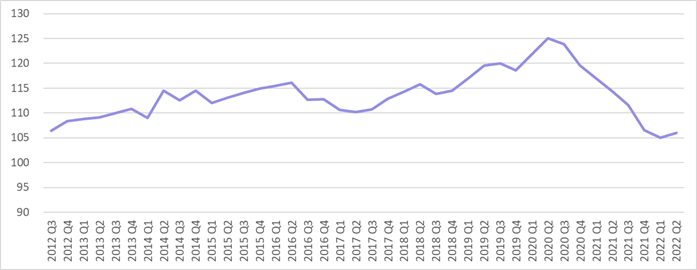
Rental Affordability Index, Regional NSW

John Engeler, CEO Shelter NSW, said: “For too long, the regions have been viewed with misty eyes as an affordable option for Sydneysiders to retreat to when rents got too high in the city. This is not the case, not for newcomers and certainly not for locals living on local industry wages. Since the pandemic, a growing proportion of renters are forced to dedicate more than 30% of their income to rent in the regions. This is not a sustainable situation, it’s a social emergency.”

Unaffordability is hurting the economy too. “Unaffordability has spread from employment centres. Households have to live further away from where the jobs are to access affordable rents, and businesses are struggling to find workers”, according to Ellen Witte, Principal at SGS Economics & Planning.

The Report notes that the average rental household in regional NSW has a gross annual income of $84,651 per annum. If renting at the median rate, that household faces paying 29 percent of its total income to rent. This means regional NSW has a Rental Affordability Index score of 102, putting it right on the verge of being deemed ‘unaffordable’. 

This represents a 7 percent decline in affordability in the past three years, disproportionately hurting those on the lowest incomes pushed into housing stress to afford a roof over their heads. For a single person relying on JobSeeker, the average regional NSW rental is now ‘extremely unaffordable’, comprising 71% of income. 

TRENDS – REGIONAL NSW (JUNE 2022)

2012201320142015201620172018201920202021
2022

2023
109 112 116 114 116 112 116 118 122 114 106 102

While parts of the State still offer acceptable to very affordable rents these areas tend to be far-flung, with limited access to services and relatively lower rental stock. Regional centres like Bathurst, Maitland, Wagga Wagga, and effectively the entire coastline including the entirety of Illawarra-Shoalhaven, all offer at best, moderately unaffordable rents at the median level. 

“This downward spiral has now reached the point where very few affordable long-term rentals are on offer.” according to Ellen Witte, Principal at SGS Economics & Planning. “We need to attack this problem from multiple angles. This means rapidly expanding social and affordable housing, rethinking how we use tax subsidies, and strengthening renters’ rights.”

Household typeIndicative gross annual incomeRAI scoreRent as a share of income Relative unaffordability category
Single person on Jobseeker$22,1004371%Extremely unaffordable 
Single part-time worker parent on benefits $44,8006249%Severely unaffordable 
Single pensioner$36,7007143%Severely unaffordable 
Pensioner couple$54,3008038%Severely unaffordable 
Student sharehouse$84,8009631%Unaffordable
Hospitality worker$62,80011825%Moderately unaffordable 
Single income couple with children$104,50012125%Acceptable 
Minimum wage couple$91,80012624%Acceptable 
Single full-time working parent$104,50014720%Acceptable 
Dual income couple with children$209,00024212%Very affordable 

EDITOR’S NOTE: The Rental Affordability Index scores areas based on median rental prices and average income of rental households within the capital city or rest of state area’. A score of 100 indicates households spend 30 percent of income on rent, the critical threshold level for housing stress. A lower score is worse. 

A score of 50 or less indicates extremely unaffordable rents, 51-80 indicates severely unaffordable rents, 81-100 indicates unaffordable rents, 101-120 indicates moderately unaffordable rents, 121-150 indicates acceptable rents, 150 or more indicates affordable rents.

$25 million in new fleet and equipment for flood emergencies

Delivery of almost 200 new vehicles and vessels for the NSW State Emergency Service (SES) has commenced as part of a $25 million upgrade to its flood rescue fleet.

The investment comes following record flooding last year, which impacted several communities across the state and resulted in more than 80,000 calls for help to the NSW SES.

More than $14.7 million will go towards 142 additional boats, rafts, trucks, cars, trailers in response to recommendations from the independent flood inquiry.

These new assets include 40 inflatable rescue vessels, 50 ark angel inflatable rescue rafts, 10 high clearance trucks that can drive through floodwaters, eight light flood rescue vehicles, 30 command vehicles, two heavy rescue vehicles and two car trailers.

All new vehicles are being equipped with ‘vehicle as a node’ technology, allowing crews to communicate using 4G and satellite networks while deployed, in addition to regular radio networks. This helps ensure crews can stay connected during emergencies and overcome any dangerous communications blackspots.

A further $10.9 million under the NSW Government’s Fleet Replacement Program will fund more than 50 new vessels, storm and rescue vehicles, command vehicles and trailers to replace existing assets for SES units across NSW.

Parts of the state most at risk of flooding are being prioritised during these rollouts, with delivery of the assets well underway and set to be completed by the end of this financial year.

SES units in the Northern Rivers, Central West and Hawkesbury-Nepean Valley have already received equipment, delivering on recommendations from the Independent Flood Inquiry to improve disaster response capabilities.

Work is underway at Britton Marine in Kurnell on the inflatable rescue boats and ark angel rafts, while other vessels are being built at Yamba Welding and Engineering.

Findings from the inquiry highlighted the need for SES volunteers to have upgraded equipment and resources to meet the growing challenges posed by extreme weather events.

In 2022, the NSW SES had its busiest year on record, with volunteers conducting more than 3,800 flood rescues, 30 vertical rescues, more than 67,000 animal rescues, 575 road crash rescues, 2,800 resupply missions and 628 medical resupply missions. Volunteers logged more than 1 million volunteer hours.

Nearly 3,000 volunteers joined over the past year, and the SES is encouraging more people to join their local unit to further strengthen the state’s defences to severe storms and floods.

Premier of New South Wales Chris Minns said:

“The SES plays a vital role in safeguarding our communities in times of crisis.

“This investment will further equip our volunteers to respond to flooding and other emergencies.

“These new boats and vehicles will help save lives and minimise the impact of disasters on communities.

“The bravery and selflessness of SES volunteers over recent years has been remarkable.

“The NSW Government is proud to be helping the SES to help people across our state.”

Minister for Emergency Services Jihad Dib said:

“This funding recognises the valuable contribution SES volunteers make to the state, particularly when they are on the frontline during floods and storms.

“These resources will enhance our response capabilities across the state and will particularly benefit flood-impacted communities in the Central West and the Northern Rivers.

“This investment also supports the boat building sector in our state, demonstrating the capability of local industry to deliver high quality vessels for emergency service use.”

NSW SES Commissioner Carlene York APM said:

“These new assets ensure we can provide swift and effective assistance to those who need it most during times of crisis.

“The additional vessels and equipment will help volunteers save lives and respond to floods as well as many other incidents such as road crashes and land rescues, searches and other emergencies.”

New religious vilification laws commence today

A new law that prohibits vilification on the grounds of religious belief, affiliation or activity comes into effect today.

The Anti-Discrimination Amendment (Religious Vilification) Act 2023 amends the Anti-Discrimination Act 1977 to make it unlawful to, by a public act, incite hatred towards, serious contempt for, or severe ridicule of, a person or group of persons, because of their religious belief, affiliation or activity.

A ‘public act’ includes any form of public communication or conduct, verbal and non-verbal.

The amendments in the Act are modelled on existing provisions that make vilification unlawful on the grounds of race, homosexuality, transgender status and HIV/AIDS status.

The new law will also protect people who do not hold a religious belief or affiliation, or who do not engage in religious activity.

A complaint of religious vilification may be made to Anti-Discrimination NSW, which will seek to resolve it by conciliation.

In certain circumstances, a complaint may also be referred to the NSW Civil and Administrative Tribunal (NCAT) for determination. This would allow the President of the Anti-Discrimination Board to accept, investigate and attempt to conciliate complaints, as well as refer the complaint to NCAT for determination. If a complaint is substantiated, NCAT may make a range of orders, including for an apology or for damages of up to $100,000.

The Government consulted closely on the proposed amendments with a broad range of stakeholder groups, including religious faith and religious advocacy organisations and community advocacy organisations, legal stakeholders and NSW Government agencies.

Premier of New South Wales Chris Minns said:

“The NSW Government supports a peaceful, multicultural society in NSW.

“There cannot be room for hatred which sows the seeds of mistrust and intolerance. We cannot tolerate religious vilification. This would threaten the thriving, tolerant, multi-religious and multi-ethnic heart of NSW.

“We must all champion community harmony and togetherness, and choose peace and solidarity over hatred and division.

“The commencement of these amendments to the Anti-Discrimination Act fulfils an important election promise.”

Attorney General Michael Daley said:

“No one, and no group of people, should have to encounter hatred, serious contempt or severe ridicule because of their religious belief, affiliation or activity.

“The make-up of our society has changed since the Anti-Discrimination Act 1977 became law and we have enacted legislation that reflects and protects our modern society.

“We welcome people to NSW from all over the world. The harmony we enjoy and for which we have worked so hard is worth protecting. These amendments support our deep commitment to a strong and cohesive NSW.”

Minister for Multiculturalism Steve Kamper said:

“The message is simple. Those who would vilify others because of their religion should know that it is unacceptable.

“This much-needed legislation will provide our faith communities with similar protections provided to members of diverse and multicultural communities.

“NSW is the most successful multicultural and multifaith state in the world. We are united by our respect for each other and our commitment to tolerance and understanding.”

Sydney’s combined toll bill is $120 billion-plus to 2060

Sydney motorists are on the hook to pay a minimum $123 billion in tolls by 2060, new modelling by NSW Treasury and Transport for NSW has established.

Sydney motorists are on the hook to pay a minimum $123 billion in tolls by 2060, new modelling by NSW Treasury and Transport for NSW has established.

Fulfilling a Labor election commitment, the Minns Labor Government is telling drivers for the first time what the total toll burden will be over the coming four decades before existing contracts expire.

The toll bill includes revenues to privatised toll road concessions, including the entire WestConnex system, NorthConnex, the Eastern Distributor, M2 and M7 but also the NSW Government-owned Sydney Harbour Bridge and Tunnel, as well as the future M6 Stage 1.

The toll bill from WestConnex alone, is $64 billion out to 2060.

The disclosure will inform the public conversation about the privatised Sydney toll road network and the long tail of costs to motorists structured to rise quarterly or annually.

The government has introduced a $60 weekly toll cap to begin on 1 January to ease the cost of living impacts of tolls on an estimated 720,000 drivers who pay the most.

The Allan Fels-led independent Tolling Review is also tasked with advising the NSW Government how to bring more equity to the system, particularly for people in Western Sydney who have fewer public transport options and cannot avoid higher weekly toll bills.

Treasury has used a most conservative set of assumptions, including a long-term inflation rate of 2.5% and projected population growth in NSW, to create the baseline minimum toll burden.

The figures are the total potential tolls paid by motorists and do not reflect the running costs, maintenance and financing charges borne by operators.

Minister for Roads John Graham said:

“I said before we came to government that toll costs should not be kept hidden. As of today, they are no longer a state secret.

“You can’t even get a mobile phone contract without being told the minimum payment and yet NSW motorists have been signed up to more than $100 billion in toll costs without any disclosure under the former coalition government.

“A 30-year-old driver today will reach retirement age before some existing toll contracts expire, which is why it is critical we let the light shine in here and debate the merits and the long-term costs of how our tolling system is structured.”

Treasurer Daniel Mookhey said:

“The people of NSW deserve to know what they have been signed up to under privatised contracts and especially so when we are talking about multi-decade bills for everyone who drives a vehicle in Sydney.

“By providing this Treasury toll modelling publicly we are making good on our transparency agenda just as we are seeking to let people know what is contained in privatised contracts over ports and electricity networks and generators.”