
Party Day brightens spirits for children in hospital

In the spirit of spreading holiday cheer, the annual Party Day celebration at The Children’s Hospital at Westmead (CHW) today delivered great delight to children, young people, and their families unable to leave hospital during the festive season.

From Pac-Man to LEGO®, this year’s theme of ‘Games’ saw wards, clinics, and departments transformed into a playground of imagination, as patients were transported from their hospital beds into gaming realms where reality and fantasy merged.

Healthcare workers moonlighted as their favourite gaming characters, with special visits from guests, including superheroes Batman and Spider-Man as well as Princess Anna from the big screen, along with local heroes from NSW Police and Fire and Rescue NSW adding to festivities.

Patients also received gift bags and enjoyed activities like balloon twisting and face painting.

Party Day is a heartwarming tradition celebrated across the Children’s Hospital at Westmead and Sydney Children’s Hospital, Randwick offering a much-needed escape from the challenges of being in hospital during the holiday season.

The event is also a celebration for the dedicated healthcare staff who work tirelessly year-round to ensure children and young people across NSW receive high-quality and family-centred care.

Quotes attributable to Premier of New South Wales Chris Minns:

“Party Day is an important day for paediatric patients and their families facing the challenges of hospitalisation during the holiday season.

“The annual event provides respite from medical routines, allowing children to enjoy a day of laughter, play, and festive spirit.”

Quotes attributable to Minister for Health Ryan Park:

“It’s heartwarming to witness the joy and excitement that Party Day brings to young patients, families and the dedicated staff at the hospital.

Quotes attributable to Member for Parramatta Donna Davis:

“Party Day is an opportunity to experience the magic of the holidays right here in the hospital and I’m proud to have been part of it.

“Seeing their faces light up with happiness is a priceless gift.”

Quotes attributable to Sydney Children’s Hospitals Network’s Chief Executive Cathryn Cox PSM:

“Our dedicated staff go above and beyond their normal duties to transform the hospital and make the experience as positive and festive as possible for our patients and their families.

“We extend our gratitude to our staff, the community, and our partners who prepare for months for Party Day to make this event truly magical.”

About Sydney Children’s Hospitals Network

Sydney Children’s Hospitals Network (SCHN) is the largest paediatric healthcare entity in Australia and cares for thousands of children each year both in hospital and in their homes — with one purpose in mind — to help children and young people live their healthiest lives. SCHN brings together the advanced facilities, expertise and services of The Children’s Hospital at Westmead, Sydney Children’s Hospital, Randwick, the Newborn and paediatric Emergency Transport Service (NETS), Bear Cottage and Kids Research to provide the very best care for sick children and their families. With more than 8,000 staff, the Network is committed to providing world-class paediatric health care, furthering ground-breaking research into the causes, treatments and cures of childhood illnesses and investing in education and training of the health workforce to advocate for a healthy future for children in NSW and beyond.
NSW Shared Equity housing initiative expands to support DV victim-survivors

The Minns Labor Government is today taking a meaningful step to better support victim-survivors of domestic and family violence, with the expansion of the Shared Equity Home Buyer Helper trial.

From 1 December, the eligibility criteria for the initiative will expand to include specific reference to domestic and family violence victim-survivors.

The expansion of the program means that domestic and family violence victim-survivors and other eligible applicants can now access the scheme.

The program delivers on the Minns Labor Government’s commitment to take meaningful action to combat domestic violence and support victim-survivors.

Domestic violence victim-survivors who participate in the Shared Equity program will see the NSW Government contribute up to 40% of the purchase price for a new home, or up to 30% for an existing home.

This will allow eligible applicants to secure a property with as little as a two% deposit.

Removing many of the barriers to home ownership, domestic and family violence victim-survivors who apply for the initiative will pay no interest on the government’s share of equity in the property they purchase. They will also not require lenders mortgage insurance.

Housing instability and homelessness are a major barrier for victim-survivors of domestic and family violence.

Women and children escaping domestic abuse account for 39% of specialist homelessness service users.

While domestic and family violence is the leading cause of homelessness for women, annually in Australia it is estimated that 7690 women a year return to perpetrators due to having nowhere affordable to live.

The NSW Government has expanded the Shared Equity program’s eligibility criteria after accepting the recommendations of the NSW Domestic and Family Violence Shared Equity Taskforce.

The taskforce was co-chaired by Minister for the Prevention of Domestic Violence and Sexual Assault Jodie Harrison and Chief Executive Officer of Domestic Violence NSW Delia Donovan.

Treasurer Daniel Mookhey was also a member of the taskforce.

Lower income single parents, single people aged 50 years or older and first home buyer key workers who are nurses, midwives, paramedics, teachers, early childhood educators or police officers are still eligible for the Shared Equity program.

Get more information about eligibility on Shared Equity Home Buyer Helper.

NSW Premier, Chris Minns said:

“This is a practical step the NSW Government is taking to better support victim-survivors of domestic violence.

“No one should face the choice of returning to an unsafe environment or being homeless.

“We will continue to take a whole of government approach to responding to the scourge of domestic and family violence in NSW.”  

Minister for Finance Courtney Houssos said:

“As a government we are committed to taking meaningful action to support victim-survivors of domestic violence.

“The expansion of the Shared Equity program will help reduce long term housing barriers for people experiencing family or domestic violence, by reducing the financial burden to buy a home.

“Revenue NSW and its lending partners are working to ensure the application process for domestic violence victim-survivors is sensitive and as seamless as possible.”

Minister for the Prevention of Domestic Violence and Sexual Assault Jodie Harrison said: 

“Temporary accommodation and refuges provide immediate housing support when a family escapes from violence but they are not a long-term solution. 

“Opening up the Shared Equity Home Buyer scheme to victim-survivors of domestic violence is another way the NSW Government is taking considered steps to address the impacts of domestic violence across NSW.

“I’m pleased to be making this announcement during the 16 Days of Activism against Gender-based Violence, to show the NSW Government’s strong commitment to helping women and children escaping domestic violence build a secure and safe future.”

CEO DVNSW Delia Donovan said:

“DVNSW supports efforts to create pathways to home ownership for victim-survivors of domestic and family violence.

“Expanding the Shared Equity program to victim-survivors who are in a position to pursue home ownership allows them to rebuild their lives knowing they have stable housing.

“This in turn contributes to building dignity, confidence and a sense of accomplishment, which are vital to recovery.

“An emphasis must also be placed on significantly increasing investment in social and affordable housing to create pathways out of abuse for all people experiencing violence.”

Coalition fixes Labor’s hate speech legislation

The NSW Parliament got behind the Coalition’s efforts to amend the Crimes Act in a way that allowed NSW Police to prosecute those publicly threatening or inciting violence but prevented this law from being weaponised by private citizens.
 
Opposition Leader Mark Speakman said the Government’s poor drafting could have had an adverse impact by allowing private prosecutions by people trying to shut down free speech rather than protecting people from threats and calls to violence.
 
“We supported legislation that would allow NSW Police, and not just the DPP, to prosecute public threats or inciting of violence on the grounds of race, religion, sexual orientation, gender identity or intersex or HIV/AIDS status,” Mr Speakman said.
 
“We had moved amendments that would allow Police to do so, while stopping private prosecutions, which the Minns Government voted down before being forced into accepting something similar by the Legislative Council.”
 
Shadow Attorney-General Alister Henskens said Minns Labor Government’s proposed legislation could have resulted in the opposite effect of what was intended and further inflamed tensions within the community.
 
“Our intention was always to support a law that would promote community harmony and ensure that people don’t feel fearful in their own community,” said Mr Henskens.
 
“However, without our amendments, people could have faced private criminal prosecutions from a person motivated to use the law to create disharmony in the community.”
 
“Thanks to our approach, it is easier for Police to use powers to bring a case while avoiding a situation where private individuals may have been targeted by others who might simply disagree with them.”
 
“The Parliament has also passed an amendment that will see a statutory review of these laws in two years, to ensure that they are working as intended.”

Labor’s Christmas gift for the Unions

The NSW Opposition has condemned the Minns Labor Government for rushing through major industrial relations reforms through Parliament without any consultation except with their union mates.
 
Shadow Treasurer and Industrial Relations Minister Damien Tudehope said that the Industrial Relations Amendment Bill is just a kickback to the Labor Party’s union mates.
 
“These changes are just the unions cashing the cheque for helping Labor get elected,” Mr Tudehope said.
 
“This is a regressive change that winds back the clock on reform by decades, at the behest of their union masters.”
                                      
Mr Tudehope also warned that these changes will do irreparable damage to the State’s budget.
 
“Labor is handing over control of half of the budget to the unions, who will blow any chances of returning to surplus.”
 
“This is the cost of doing business with the unions – and Labor will gladly pay with taxpayers’ money.”
 
The Government rejected an amendment that would have required wage rises be fully offset by productivity improvements to maintain budget neutrality as it promised before the election.
 
“It is now crystal clear that Labor’s election commitments were worthless and that the Minns Government does not keep its promises”, Mr Tudehope concluded.

Labor Government risking NSW health services

The Minns Labor Government is risking leaving the NSW Health system without more than 1500 paramedics – with 3 in 5 threatening to boycott their professional registration, leaving them as ambulance drivers.
 
Shadow Health Minister Matt Kean said Chris Minns and his Health Minister Ryan Park are putting patients across NSW in potential danger if they allow paramedics across the state to boycott their professional registration tomorrow.
 
“The Minns Labor Government will be giving people a very unhappy Christmas and New Year by leaving NSW badly short of paramedics able to handle patients,” said Mr Kean.
 
“This is the result of Chris Minns’ false election promises to give union bosses a pay rise without having to pay for it – while in his first Budget cutting NSW Health’s funding, leaving the community to pay for it either with higher costs or worse services.”
 
We are seeing all talk and no action from this Government. A Government that was voted in on the premise of delivering its promises. And a Government that has failed to do so.”
 
Shadow Minster for Regional Health Bronnie Taylor is calling on the Premier to stop the lies, saying paramedics are rightly angry.
 
“For months, the Premier has told the people of NSW that professional recognition for paramedics was the first step in Labor’s Health Plan,” Mrs Taylor said. “The cornerstone of Labor’s election campaign was the promise of a pay rise in line with inflation, but so far we have seen nothing and this level of deceit is utterly disgraceful.”
 
“The Government promised an additional 500 paramedics for regional NSW and now we are left asking if this will also be another broken promise.”

Iconic Lismore ice cream factory reopens

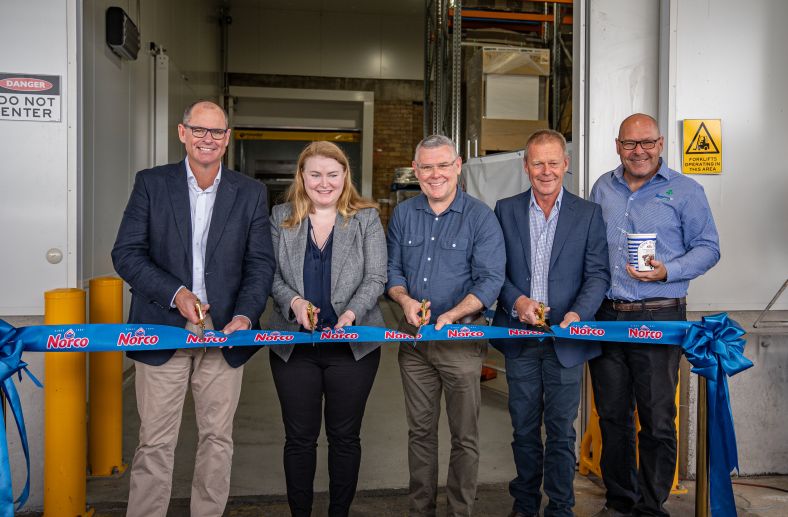
Northern Rivers flood recovery has hit a significant milestone today, with the reopening of the Norco ice cream factory in Lismore.Norco ice cream factory reopening

The factory, one of the biggest employers in the Northern Rivers, was forced to close after suffering major damage in the February-March 2022 floods.

Today it’s back in business, with 130 local employees now back at work, and more hires to be made over the coming months.

The Lismore factory produces approximately 42 million litres of ice cream per year.

The Albanese and NSW Governments collectively contributed nearly $55 million to the reopening efforts, to protect local jobs, boost resilience and re-establish factory operations.

This includes $34.7 million jointly funded through the Anchor Business Support Grant Program, which supported six key local businesses to retain staff and rebuild.

The funding has supported Norco to rebuild with a flood-proof design and technologies that have equipped the site to defend a 15.0M flood – higher than the 2022 levels:

  • Positioning expensive specialised equipment like switch boards 15 metres above ground.
  • Installing quick release capabilities to items such as pumps so they can be moved easily.
  • Installing two mezzanines to allow staff to lift pallets of equipment greater than 15 metres high.
  • Installing nib walls to protect equipment that cannot be moved.
  • Installing additional sumps and pumps within the flood barriers to deal with any water leaks.
  • Implementing a four-stage flood management plan that is reviewed and practised regularly to ensure best practice and safe evacuation procedures.
  • Installing infrastructure to detect unprecedented disaster events, such as fires.

These measures mean the factory will be able to open its doors within days or weeks rather than months or years following another flooding event.

Federal Minister for Emergency Management Murray Watt said:

“This is an exciting day – Norco is one of the region’s biggest employers, and seeing the doors reopen is a big boost for the community.

“The Albanese Government invested $20 million directly, and close to $35 million jointly with the NSW Government to help secure the future of Norco’s Northern Rivers operations, because of the important role it holds in the region.

“A major priority for the Albanese Government was to ensure that as much of the workforce as possible were retained, so it’s great to hear that 130 workers will be back today.

“Many have been working with the Lismore City Council and groups like Resilience Lismore to support local community recovery work while the factory was being rebuilt.

“Our Government was pleased to work with the NSW Government and all of the recipients of Anchor Business Support grants to help rebuild local facilities.

“The improvements will minimise the damage of future flooding and support those businesses to bounce back faster, providing more consistent employment for their workers.”

Minister for Regional NSW Tara Moriarty said:

“The reopening of Norco ice cream factory marks a huge milestone in the flood recovery efforts for the Northern Rivers.

“As one of the biggest employers in the region, we know how important it is to invest in projects that deliver resilient infrastructure so people can stay in jobs and the economy can thrive.

“Our shared goal with the 100 per cent Australian dairy farmer owned Norco, is that after any future flooding event this investment in the rebuilt Norco ice cream factory has ensured the business will be able to get back into action quicker.”

Assistant Minister Senator Jenny McAllister said:

“Today is an important milestone for the Northern Rivers.

“The Norco factory brings workers, farmers, businesses, and the community together, and the Albanese Government is committed to building back smarter and stronger.

“The factory has been fitted with flood mitigation measures like higher switch boards and quick release mechanisms to future proof the factory against floods higher than the 2022 level.”

NSW Parliamentary Secretary for Disaster Recovery Janelle Saffin said:

“The reopening of the Norco ice cream factory is a massive day for the people here in the Northern Rivers.

“Not only is it important for the employees to get back to work but it’s also crucial for local dairy farmers and small businesses who rely on the factory.

“The ice cream factory is one of the longest standing large businesses in the region, and with the new flood mitigations measures in place we want to ensure that it continues to stay that way.”

Norco Chief Executive Officer Michael Hampson said:

“We understand just how important the factory is to our workforce and the Lismore community and will remain future-focused on continuing to create opportunities for the region, maintaining a strong focus on innovation, jobs creation and investment in people, to create exciting career development pathways from right here in Lismore.

“I’d also like to express my sincere gratitude to both the Australian and NSW Governments who facilitated the Anchor Business Support Program, and delivered the funding which has enabled us to rebuild in a way that has modernised our operations and introduce product innovations and technology that will help cement the Northern Rivers of NSW and its thriving ‘food belt’ as a food innovation, centre of excellence.”

The Anchor Business Support Grant Program supported nearly 1400 local full-time jobs in the Northern Rivers, through six successful recipients:

  • Norco Co-operative Limited 
  • Manildra Harwood Sugars (Sunshine Sugar)
  • Social Futures,
  • McKinlay Enterprises (North Coast Petroleum)
  • Williams Group Australia
  • Multitask Human Resource Foundation.

The $59.3 million program was funded by a $44.3 million commitment from the Commonwealth Government, with $15 million co-funding from the NSW Government.

NSW leads the way in tackling digital skills shortage

The NSW Government is joining leaders across government, the digital industry, and education and training providers to address the projected shortage of 85,000 digital workers in NSW by 2030.

Today, the Minister for Skills, TAFE, and Tertiary Education, Steve Whan, officially launched the NSW Digital Skills and Workforce Compact at NSW Parliament House.

This collaborative effort involves the participation of 37 compact partners, spanning across the highest levels of industry. Combined, compact partners have a reach of 1.7 million students and represent over 340,000 digital workers in NSW.

The compact will promote digital careers across the state to students, parents, and advisors, advancing tech careers in traditionally underrepresented groups such as women, First Nations people, and those residing in regional and remote areas.

The partnership will support industry in developing and implementing new employment pathways, giving new workers on-the-job training experiences to start a long-term career in the digital industry. 

The digital compact aspires to achieve the following milestones:

  • Transform the perception of digital careers, enhancing diversity in the sector, fostering welcoming and productive workspaces.
  • Collaborate with industry partners to expand and enhance new pathway programs for tech roles, including traineeships and work experiences.
  • Extend the reach of mentoring and networking programs to engage a more diverse audience.
  • Provide increased opportunities for the people of NSW to reskill or upskill in tech-related roles.
  • Establish a collaborative platform with universities, TAFE, school curriculum providers, and industry experts to create a Digital Education Forum dedicated to enhancing tech education and industry partnerships.
  • This collaborative effort marks a significant step forward in addressing the digital skills gap in NSW, ensuring a robust and inclusive digital workforce for the future.

For more information visit the NSW Digital Skills and Workforce Compact.

Minister for Skills, TAFE and Tertiary Education, Steve Whan said:

“It’s terrific to sign this landmark agreement as the NSW Government unites with industry and education leaders to proactively tackle the looming digital skills shortage.

“This partnership is a testament to our commitment to shaping a digitally empowered future for NSW and together, we’re laying the foundation for a resilient and inclusive digital workforce for the future.

“The NSW Digital Compact represents a significant opportunity for government to work with industry to change people’s idea of ‘tech,’ expanding the inclusivity of the sector.

“We’re not just bridging the skills gap; we’re building pathways for thousands of students, parents, and advisors to explore and embrace tech careers.”

Chair of the NSW Skills Board and CEO of Microsoft ANZ, Steven Worrall, said:

“Research commissioned by the NSW Skills Board shows that NSW is projecting a shortfall of 85k digital workers by 2030.

“We need to increase opportunities for more people to come into these roles as existing pathways won’t meet this demand. The compact is crucial to meeting the 85,000 shortfall and ensuring we create a sector that reflects the diversity of NSW. Compact partners intend to achieve 20% of new hires coming from alternative pathways by 2030.

“We believe the compact will help to provide a pipeline of diverse talent to fill these high paying, secure jobs that are being created in NSW’s digital sector.”

The NSW Digital Compact Partners are: the NSW Government, Accenture, ACFIPS, ACS, AIIA, Akkodis, ANZ, AWS, Business NSW, Commonwealth Bank, Future Skills Organisation, the Institute of Applied Technology Digital, ITECA, Linkedin, Microsoft, NAB; Salesforce, Seek, TAFE NSW, Tech Council of Australia, Telstra, Westpac Group, Woolworths Group and all NSW/ACT universities.

Alarming rates of sunburn in children and young people

Parents and carers are being urged to protect their children from the sun, with an alarming number of children and young people being treated in emergency departments for sunburn.

Health Minister Ryan Park acknowledged more needs to be done to reduce the incidence of skin cancer joining NSW Chief Cancer Officer Professor Tracey O’Brien and Member for Coogee Dr Marjorie O’Neill to launch the NSW Skin Cancer Prevention Strategy 2023 to 2030 at the Prince of Wales Hospital.

“It is pretty shocking to hear more than 800 people presented last financial year to our state’s emergency departments with sunburn, with the majority children and young people,” Mr Park said.

“Melanoma is the deadliest form of skin cancer, and by the end of the year, we anticipate close to 6000 people in NSW will be diagnosed with this devastating cancer.

“Sun damage and skin cancers are highly preventable, and we’re encouraging the community to do really simple things like seeking shade when outdoors, wearing sunscreen, putting on a hat, sunglasses and protective clothing to safeguard themselves.

“Even mild exposure to the sun can lead to damage and I’m confident our latest Skin Cancer Prevention Strategy will help build on decades of skin cancer prevention work in NSW and save more lives.”

Two in 3 Australians will be treated for skin cancer during their lifetime, with 95% of melanoma and 99% of non-melanoma skin cancers caused by overexposure to UV radiation from the sun.

NSW Chief Cancer Officer and CEO of Cancer Institute NSW, Professor Tracey O’Brien, says high sun exposure in the first 10 years of life more than doubles a person’s risk of developing melanoma skin cancer.

“Australia has one of the highest skin cancer rates in the world and protecting our skin from the sun from a very young age, and into adulthood, is key to reducing our risk of skin cancer,” Prof. O’Brien said.

“When people think of skin cancer risk, they often think of a day at the beach, but in NSW, UV radiation levels are high 10 months of the year which is why its vital people protect their skin all year round, even on cool and cloudy days.

“This new strategy is about working across government and community to ensure people are empowered and supported to protect their skin when at school, work and enjoying the outdoors.” 

As a child who spent most of her time outdoors enjoying nippers and netball, Kate Thomas received a devastating melanoma skin cancer diagnosis at the age of 27.

“When I was told I had skin cancer, I couldn’t believe it and my mind automatically went to the worst possible scenario. It was incredibly frightening,” Ms Thomas said.

“I wish I could go back in time and tell my young self to do things differently, to listen to my mum when she kept reminding me to cover up. My diagnosis completely changed my outlook on sun safety and I hope to encourage young people to take skin cancer seriously, and not make the same mistakes I made.”

Member for Coogee Marjorie O’Neill said all UV exposure from the sun is causing damage to our skin and increasing our skin cancer risk.

“We’re fortunate to live in a sun-drenched country which is why remembering to use sun protection needs to be instinctive when we step outside, and not just when we’re at the beach,” Dr O’Neill said.

“Whenever we go for a walk, are at the park or are hanging the washing we need to protect our skin and teach our kids to the do the same.”

The NSW Skin Cancer Prevention Strategy 2023 to 2030 was developed by the Cancer Institute NSW in partnership with 20 organisations and experts across health, education, industry, sport and recreation, and 600 community members.

The strategy focuses on the importance of embedding skin cancer prevention strategies across the public, private and community sector; improving access to quality shade at work, school, play and public spaces; and increasing the adoption of sun protection behaviours.

Read the NSW Skin Cancer Strategy 2023 to 2030launch

Sunburn statistics:

  • In the last 10 years (July 2013 to June 2023), close to 5000 people have presented to an emergency department for treatment of sunburn with the highest rates seen in people aged 5 to 24 years.
  • In the 2022-2023 financial year, 818 people required care in an NSW emergency department for sunburn.
  • This is a 28% increase when compared to the previous financial year (640).
  • In the 2022-2023 financial year, the highest rates of sunburn related emergency department presentations were in Hunter New England (184), followed by South Western Sydney (105), Western NSW (91), Northern NSW (67) and Western Sydney (58).
  • Not all people with sunburn will present to an emergency department.
  • These statistics are just the tip of the iceberg.
  • The high rates in children and young people are concerning as high sun exposure in the first 10 years of life more than doubles their risk of developing melanoma skin cancer.

More than $46 million builds back more resilient Aboriginal-owned assets

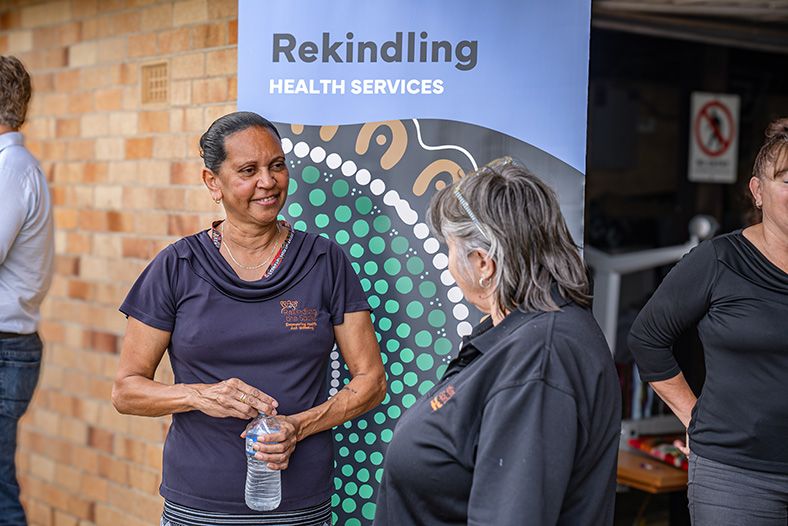
Nearly 30 programs will share in $46.3 million to repair, restore and improve First Nations-owned social and cultural assets, directly damaged by floods in flood-impacted regions across New South Wales, through funding from the Albanese and Minns Governments.Two women talking in front of a "Rekindling health services" banner, wearing "Rekindle the Spirit" t-shirts in Lismore at the announcement of funding through the Aboriginal-owned Assets Program.

The Aboriginal-owned Assets Program was open to 19 of the most flood-affected Local Government Areas, impacted in the February and June floods last year, through the Commonwealth-State Disaster Recovery Funding Arrangements (DRFA).

The program will enable Local Aboriginal Land Councils (LALCs), Aboriginal Corporations and Aboriginal and Torres Strait Islander community organisations to undertake repair, restoration and betterment of community infrastructure.

The 27 projects being funded include the restoration of Aboriginal-owned community centres and service buildings, playgrounds and recreation areas, and the rebuilding of access roads and walkways to areas of cultural significance directly damaged by floods, including:

  • More than $6.9 million will fund two Rekindling the Spirit projects in the Lismore Local Government Area (LGA). These projects will support the restoration of damaged facilities, which provide critical social support, health support and counselling services. These two projects will deliver new facilities at the existing Lismore site and repair and provide additional infrastructure to an existing facility which was destroyed in the floods, allowing services to return to full capacity.
  • More than $1.7 million to Tweed Byron LALC to restore the flood damaged “Walk on Water Track” in Tweed Shire LGA, providing access to cultural sites where schools and community groups often attend education activities.
  • Almost $1.3 million to Tricketts Arch Aboriginal Corporation will reinstate safe vehicle access to the significant cultural site, Tricketts Arch, in the Oberon LGA, which includes a riverbank area, camping sites, a yarning circle and activity areas. Tricketts are committed to protecting the biodiversity of the land as well as its cultural and geodiversity.

The full list of successful projects is available here: www.nsw.gov.au/aboriginalownedassetsprogramlaunch

Assets will be rebuilt to withstand future natural disasters, as well as improve accessibility and inclusion for community members.

The Albanese and Minns Governments are continuing to help the long-term recovery of disaster-impacted Aboriginal communities and assisting them towards greater flood resilience, while also delivering positive economic and social outcomes.

Federal Minister for Emergency Management Murray Watt said:

“By improving the resilience of these assets, we can reduce the hardship experienced by First Nations communities during and after a disaster event, as well as decrease the cost of recovery in the future.

“We know these facilities are real hubs for the community – they bring people together while fulfilling cultural obligations and supporting self-determination.”

Minister for Regional NSW Tara Moriarty said:

“The Aboriginal-owned Assets Program is unlike anything the NSW Government has delivered before, providing targeted disaster assistance directly to Aboriginal-led or managed organisations for community infrastructure repairs.

“Working directly in partnership with Aboriginal people to develop an assistance program that directly addresses the recovery priorities of those communities most impacted is our commitment.

“Recovery is a long process and support will continue to ensure that no one in is left behind, particularly our most vulnerable.”

Minister for Aboriginal Affairs and Treaty David Harris said:

“This funding will bring welcome relief to communities who have been impacted and traumatised by the unprecedented flood events.

“It is great to see both levels of government working together to change the way we deal with natural disasters across NSW by planning to be better prepared and less exposed for future events.

“This significant investment will provide funding for the repair, restoration and betterment of Aboriginal owned and managed assets which will bring people together to sustain culture, support self-determination, and improve social connectedness and healing.

“This will help to make real changes for the community where it’s most needed.”

Minister for Emergency Services Jihad Dib said:

“We’ve seen first-hand how flood recovery efforts are progressing and it’s critical that we continue to support communities who have borne the brunt of the 2022 floods.

“This investment in cultural, social and recreational infrastructure will help bring people together and create a sense of belonging, identity, and community, once the work is complete.”

NSW takes action: Labor’s Climate Change Bill passes parliament with broad support

The Minns Labor government’s landmark Climate Change (Net Zero Future) Bill has passed both houses of parliament with multi-party support, paving the way for serious action to secure a sustainable future for the people, economy and environment of NSW.

The Bill legislates ambitious emissions reduction targets and sets up a strong and independent Net Zero Commission to keep this government and future governments on track to Net Zero by 2050.

The effects of climate change are already apparent from the severity of extreme weather events which pose a risk to our health, environment and economy. This Bill is essential to NSW playing its part to minimise harm, while building resilience and maximising opportunities from new technologies and industries.

The Climate Change (Net Zero Future) Act will:

  • require NSW to reduce greenhouse gas emissions to 50% by 2030 compared to 2005 levels.
  • require NSW to reduce greenhouse gas emissions by 70% by 2035 compared to 2005 levels.
  • require NSW to achieve Net Zero emissions by 2050.
  • establish an independent Net Zero Commission to monitor, review, report on and advise on progress towards these targets.
  • establish guiding principles to address climate change.
  • commit to NSW becoming more resilient to climate change.

This legislation will act as the platform and driver for action across the whole of government. It builds on progress which has already seen NSW achieve an 18% reduction on 2005 levels of greenhouse gas emissions, by going beyond aspirational targets and enshrining them in law.

It provides for the targets to be ratcheted up over time, in line with community expectations. It commits the Premier and Minister for Climate Change to meeting the net zero target, demonstrating the government’s commitment to serious action on climate change.

It will also provide business and industry with energy and investment certainty, and create new jobs while bolstering Australian manufacturing in the energy sector.

After passing both houses of parliament, the Climate Change (Net Zero Future) Bill will soon be signed into law by the NSW Governor.

Minister for Climate Change, Energy and the Environment Penny Sharpe said:

“NSW Labor has followed through on its commitment to the people of NSW to take serious action on climate change and keep this government and future governments accountable for delivering on emissions reduction targets.

“This Bill provides the framework for NSW to embark on the essential journey to net zero emissions and better resilience to climate change.

“Climate change is an environmental challenge, but also poses an economic opportunity. This Bill provides certainty for industry, business, investors and all sectors of the NSW economy, and shows them they are not alone in responding to this challenge.

“I welcome the discussion and multi-party support that has led to the passage of this Bill and look forward to accelerating the transition to renewable energy that will deliver cleaner and more affordable energy to households and businesses.

“The passage of this Bill shows Labor can build consensus on what is right for NSW and deliver on its key election promises, despite holding minority government.”