
Speers Point bottleneck election commitment on its way

Consultation is about to commence on the New South Wales Labor government’s election commitment to deliver a congestion busting $11 million upgrade of the Speers Point roundabout and road network.

As part of the government’s plans to build better communities across the state, the proposed upgrade will cut travel times while improving safety and reducing congestion in north west Lake Macquarie.

With this area expected to be home to 12,000 more residents and 6000 more jobs over the next 20 years, the government’s plan for the Speers Point roundabout upgrade will help ensure the growing number of families in this region spend less time in traffic and more time doing what matters to them.

A key focus of the proposed upgrade project will be changing traffic movements on Five Islands Road, restricting movements into and out of Creek Reserve Road as well as providing a dedicated left turn lane on TC Frith Avenue.

The upgrade will also seek to improve walking and cycling connections as well as public transport facilities, to help support more sustainable modes of transport.

Transport for NSW is also considering several additional improvements, including the potential installation of traffic lights at the intersection of TC Frith Avenue and Seventh Street, which would also involve extending the two lanes in each direction on TC Frith Avenue from The Esplanade to north of Seventh Street.

As the upgrade project’s public feedback period kicks off, Transport staff and contractors will be on site over the coming weeks to undertake traffic data collection and identify utilities, geotechnical and environmental constraints, that will help shape design of the final upgrade.

Community members can provide feedback on the initial proposed upgrade options between 30 May and 23 June.

After the feedback period ends, a report responding to the community views will be published and further detailed upgrade design work will be carried out after taking into account community feedback.

Timing for construction is not yet confirmed and would be dependent on planning approvals.

Minister for Regional Transport and Roads Jenny Aitchison said:

“After 12 years of neglect in the Hunter, the New South Wales government is delivering for local communities including like Lake Macquarie with this much-needed upgrade at Speers Point.

“With $3.5 billion worth of infrastructure projects underway across the Hunter, our communities will benefit from more reliable travel times and safety improvements while also meeting the future needs of our Hunter communities.”

Member for Lake Macquarie Greg Piper said:

“Congestion around Speers Point roundabout has been a source of frustration for the Lake Macquarie community for many years. During peak periods traffic can often bank back for several kilometres along TC Frith Avenue and this is happening seven days of the week.

“Progress on this long-awaited project will be a welcome relief to residents who lose valuable hours travelling on these roads every day. I encourage all residents to take this opportunity to review Transport for NSW’s plans and to provide feedback into the design options proposed.”

Labor’s spokesperson for Lake Macquarie Emily Suvaal MLC said:

“Everyone locally knows the Speers Point roundabout at the intersection of Five Islands Road, TC Frith Avenue and The Esplanade is a local bottleneck and it’s great to see work progressing to deliver this much needed upgrade.

“We took a commitment to the election to boost funding for this infamous roundabout, and it is wonderful to see this work commencing.

“Across the state the NSW Labor Government is investing in projects like this to set communities up for the future by reducing congestion and improving safety on our roads.”
Labor’s targets show biggest growth coming to the West

Western Sydney will be required to face faster population growth than other parts of Sydney under the Minns Labor Government’s new housing targets, according to analysis undertaken by the NSW Opposition.
 
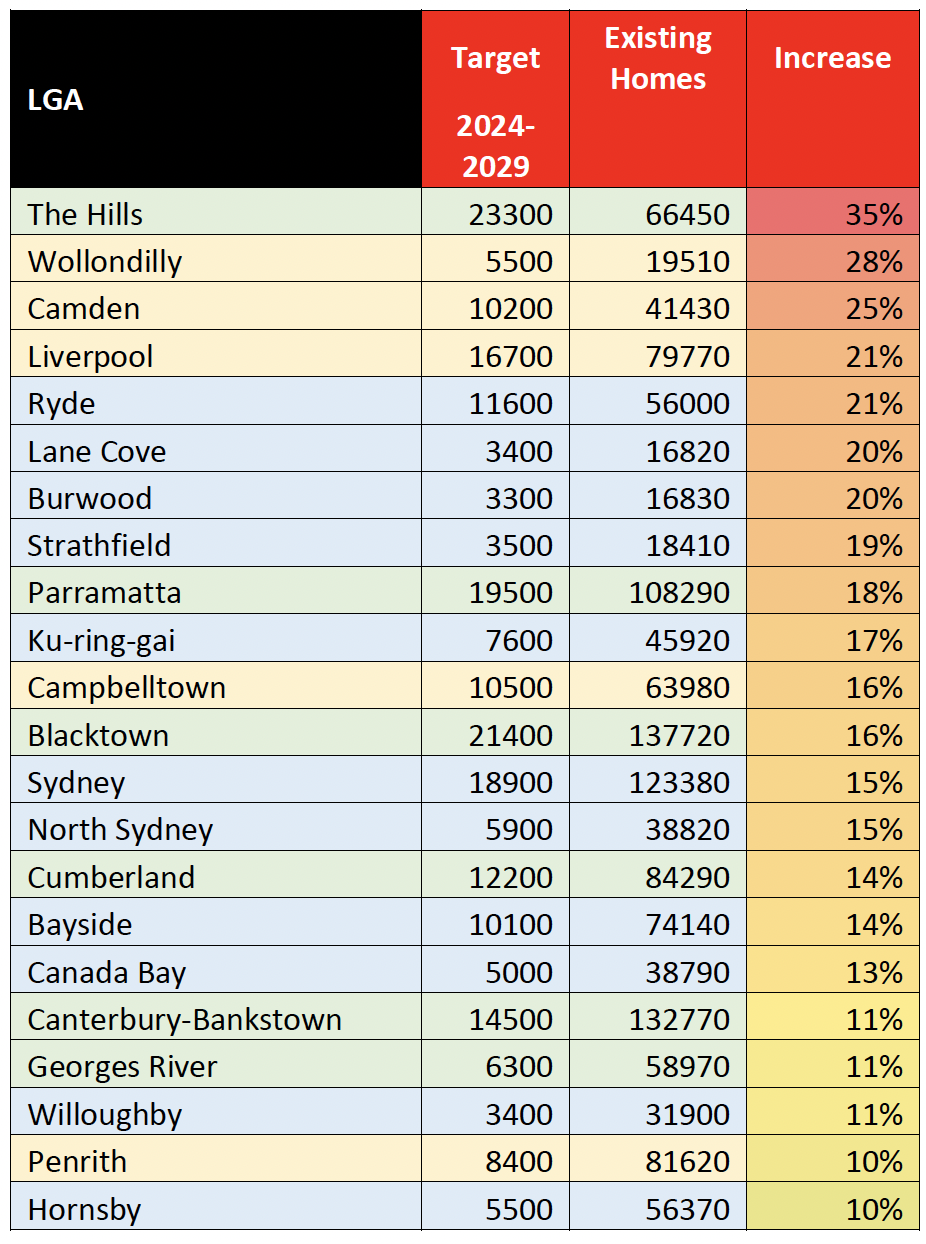
Visiting the Hills Shire, which will see a proposed 35% increase on existing dwellings in just five years, Leader of the Opposition Mark Speakman said that despite the Premier Chris Minns’ talk about re-balancing growth, the truth is that the Hills, Wollondilly, Camden, Liverpool and Ryde will be seeing the largest percentage increases in their populations under the Labor’s targets.
 
“Under the Labor Government’s housing targets, the Hills Shire is called upon to increase its number of dwellings by 35% from 66,450 to 89,750 dwellings in just five years,” Mr Speakman said.
 
“This is while the Hills has the most stretched schools in the State, with almost half over its cap by over 100 students each, including 11 primary schools and two high schools.”
 
Shadow Minister for Planning and Public Spaces Scott Farlow highlighted that the Hills Shire was not alone, with Wollondilly required to add 28% more homes in just five years, Camden 25% more homes, and Liverpool and Ryde 21% each.
 
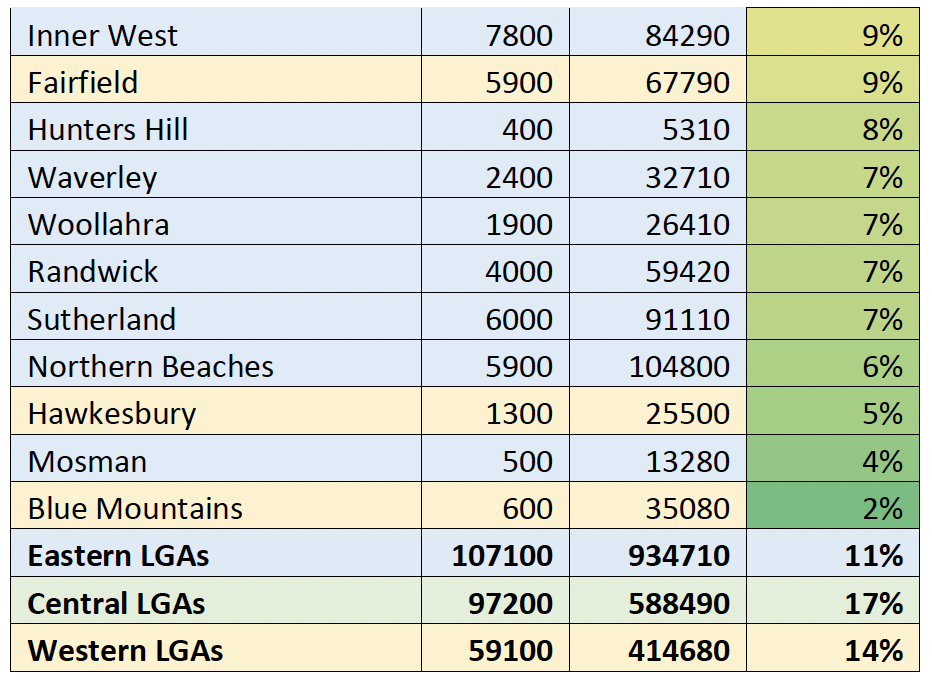
“This compares with a Sydney-wide average of 14% growth on existing dwellings. The growth is largest in the West with ‘Central’ council areas comprising Blacktown, Cumberland, Georges River, the Hills Shire, Parramatta and Liverpool collectively growing by 17%, while Sydney councils further west will grow collectively by 14% and eastern councils by 11%,” Mr Farlow said.
 
“It’s no wonder that the Inner West Labor Mayor embraced its target when they are only required to produce 9% growth in homes in their council area over the next five years.”
 
“Despite Chris Minns beating his chest about bringing housing closer to the CBD, the reality is that the communities which will see the biggest impact in growth are in Western Sydney.”
 
The Hills Shire Council Mayor Peter Gangemi said the Minns Labor Government had more than doubled the Hills’ housing completion target for the next five years. 
 
“We now have the highest housing targets in NSW; we could deliver more homes than any other council in NSW yet not receive a cent from the Minns Labor Government’s $200 million infrastructure fund,” Cr Gangemi said.
 
“We are a Council that is assisting greatly with the housing crisis and are not opposed to doing more. However, the target imposed on us is unachievable logistically and financially for the construction industry.”
 
Mr Speakman concluded, “we’re in this position because Chris Minns signed up Canberra’s housing targets that he could never meet, without any advice from his own Planning Department. All the while he’s still refused to call on Anthony Albanese to reduce immigration to ease the affordability and supply pressures on our housing market.”

Graphic 1
Graphic 2

Breeding technology breakthrough to revolutionise cropping

The NSW Government today announced new crop breeding technology, which promises to revolutionise crop protection and yield enhancements, has been developed by scientists from NSW Department of Primary Industries (DPI).

The innovative new approach enables scientists to pin-point plant defence mechanisms and select superior resistance combinations against pathogens.

This will result in the development of crop varieties that are resistance to fungal diseases and deliver higher yields.

Minister for Agriculture Tara Moriarty today visited DPI Wagga Wagga Agricultural Institute to see trials that have demonstrated the ability of the new breeding technology.

Breeding varieties with resistance has been estimated to contribute $2.6 billion per year in protection to Australian wheat crops alone.

This revolutionary technology will help protect those existing gains and accelerate the discovery of new resistances.

In a significant leap forward for plant pathology across Australia, the technology is in the final step of patenting in Australia, with DPI scientists now calling for expressions of interest to commercialise and conduct further research.

Minister for Agriculture Tara Moriarty said:

“This exciting breakthrough in plant breeding technology highlights the NSW Government’s commitment to undertake research and development that maximises outcomes for NSW agriculture.

“The new technology will enable industry to adopt disease-resistant crop varieties faster and easier, resulting in increased profitability and productivity for our growers.”

Fairer housing targets announced with incentives to councils to build better communities for NSW

New housing targets that rebalance housing across Greater Sydney, the Illawarra, the Hunter and Central Coast and regional NSW have been released today as the Minns Government announces an incentive scheme to encourage councils to meet these new targets.

This builds on the significant steps that the government has already taken to tackle the housing crisis NSW is facing.

Housing Crisis

Housing is the biggest single cost of living pressure people are dealing with right now, with mortgage payments or rent the largest expense for most households.

Without action now, we are at risk of being a city with no young people.

A recent Productivity Commission report found between 2016 and 2021, Sydney lost twice as many people aged 30 to 40 as it gained. These are the people who open businesses, have families, build our communities and contribute to the local economy.

The NSW Government is absolutely committed to confronting the housing crisis head on – and that means building more well-located homes; close to infrastructure and transport links; next to amenities and work opportunities.

Faster Assessments Council Incentives and Grants program

To support this the NSW Government is today announcing the first stage of an incentive program for local governments which meet and beat their housing targets.

The NSW Government’s program will reserve $200 million in grants for councils to fund more green space such as parks, sporting facilities and smaller pocket parks, plus maintenance of local streets and footpaths which Councils maintain.

The infrastructure that builds better communities for NSW.

This is in addition to support already announced including through reforms to developer contributions of $1 billion over the forward estimates, and up to $700 million per year beyond that.

This funding is reserved by the NSW Government to help fund schools, hospitals and roads to support the population growth that comes with new housing.

An additional $1 billion raised through this contribution will also be directed to local councils over 10 years for housing enabling infrastructure.

Fairer Housing Targets

The Minns Labor Government is delivering on its commitment to address the housing crisis by rebalancing housing growth across the state with a focus on well-located homes close to transport, jobs and existing infrastructure.

For a long time, Western Sydney has accepted the overwhelming burden of new housing in our city without proper infrastructure to cope with the increase in population.

This plan ensures we are now building more housing around established infrastructure; in places that are connected to work and transport; in communities that already have schools and hospitals.

These five-year targets ensure that while all areas would see an increase in homes being built to help address the housing crisis, new housing will be more fairly rebalanced from the West of Sydney towards the East and North of Sydney.

These targets do not mean additional housing over and above recently announced planning reforms – instead they will provide guideposts for local governments as well as access to financial support for future housing.

This rebalancing has been developed with consideration of:

  • Homes already in the pipeline
  • The additional homes to be delivered from new planning reforms including Transport Orientated Developments and low and mid rise reforms.
  • Constraints due to environmental risks like floods or bushfires

Over the next five years 82 per cent of the housing targets come from infill areas with 18 per cent to come from greenfield locations.

These targets will be ambitious. Last year NSW delivered 48,393 homes, and the previous record number was 74,683 in 2018/19 but we can’t sit back and do nothing.

This is part of the NSW Government’s plan to build better homes, and better communities for the state. To build a better NSW.

For more information on the housing targets, visit Housing targets.

Premier of NSW Chris Minns said:

“We’re losing too many young people, people who make the city vibrant, essential workers and young families because they can’t afford a place to live in NSW. This has to change.

“I’ve talked a long time about the need to ensure we have a fairer balance of housing across the state – so housing is built close to already established transport links, schools and hospitals.

“While these targets are required to be released, the government has already acknowledged that they will be difficult to meet.

“That’s why this government is pulling all levers required to reforming planning and setting targets for housing growth, while providing the infrastructure needed to build better communities.”

Minister for Planning and Public Space Paul Scully said:

“These targets are ambitious but realistic, because they’re based on evidence.

“We all need to be accountable. For too long, housing has been delivered without a plan.

“The new targets make for a fairer distribution across Sydney and NSW, with growth in areas where jobs and transport exist or are planned for.

“The good news is that nearly two thirds of homes are either planned, under assessment or under construction.

“The State has already reformed the planning laws to improve efficiency and speed approvals.  We’re also investing $200 million to support councils with the infrastructure that builds better communities.”

A chart showing distribution of new homes in eastern LGA's

Wagga Wagga precinct paving the way for business expansion across Wagga Wagga and the Riverina

The NSW Government is investing in regional development including the $212 million Wagga Wagga Special Activation Precinct as part of a long-term vision to create sustainable employment opportunities for generations to come.

The Wagga Wagga precinct is supporting businesses and investors through master planning, enabling infrastructure, accelerated planning pathways and business concierge.

These unique offerings are driving down costs for private sector development and transforming the region into a hub of high value agriculture, manufacturing, freight and logistics, renewable energy and recycling industries.

Businesses that set up in the Wagga Wagga Special Activation Precinct have access to new industrial roads, freight rail links, digital connectivity, a streamlined planning process and the certainty of being located in a government precinct.

The private sector has already leveraged the NSW Government’s investment in the Wagga Wagga precinct, with more than $50 million in new investments committed since its inception in 2019.

Fulton Hogan, one of Australia’s leading infrastructure services, construction, roadworks and aggregate supplier company, is capitalising on the unique offerings of the Wagga Wagga precinct through an expansion to its facility.

The expansion will include the creation of a new resource recovery facility specialising in recycling and processing of Reclaimed Asphalt Pavement (RAP) materials.

The expansion will:

  • divert up to 12,000 tonnes of asphalt material from landfill annually
  • help decrease Fulton Hogan’s carbon footprint by up to 163 tonnes CO2 annually
  • create on site storage for 2500 tonnes of RAP materials
  • provide asphalt with recycled content for government road projects
  • reduce demand for raw construction materials due to reuse and recycling.

Fulton Hogan worked with the Wagga Wagga precinct’s business concierge service to secure their Activation Precinct Certificate earlier this year and utilised the streamlined planning pathway.

The expansion of Fulton Hogan and other high valued investors within the Wagga Wagga precinct is testament to the government’s commitment to job creation, regional prosperity and growth, with substantial investment and strategic planning being dedicated to its realisation.

Special Activation Precincts in Moree, Parkes, Wagga Wagga and the Snowy Mountains are part of the NSW Government’s regional development and major infrastructure program. Get more information.

Minister for Agriculture, Regional NSW and Western NSW Tara Moriarty said:

“Creating jobs and driving investment in regional NSW is a major priority of the NSW Government and the Special Activation Precincts are an important part of our plans.

We want to create sustainable jobs and foster generational change that will benefit the Wagga Wagga community, and the broader region, for years to come.

“Businesses and investors who choose to set up or expand in our Special Activation Precincts will benefit from development-ready infrastructure, technical studies and streamlined planning.

“By removing regulatory barriers for investors, we’re helping them to save time and money, and our concierge service supports them through the entire planning process.

“We’re giving businesses and investors confidence to invest in regional NSW, and I’m pleased to see Fulton Hogan taking advantage of these unique offerings.

“I commend Fulton Hogan on their investment to build a resource recovery facility, and I look forward to seeing the Wagga Wagga precinct continue to grow.”

Independent member for Wagga Wagga, Dr Joe McGirr said:

“Government support and private investment are driving an exciting future for Wagga Wagga’s industrial base at the Special Activation Precinct.

“The Fulton Hogan expansion is one very welcome example of how Wagga can lead the way in developing the unlimited circular economy while government support of the SAP continues to underwrite confidence in the precinct, encouraging further growth towards a target of 6000 new jobs across a range of industries.

“The challenge now will be to continue to develop the transport services and housing options that industry and workers will need to realise the SAP’s full potential and I look forward to working with the government to achieve those aims.”

Fulton Hogan Infrastructure Services CEO Peter Curl said:

“Fulton Hogan are investing further in our facility located in the Wagga Wagga Special Activation Precinct to improve sustainability outcomes for the community.”

“We thank the Minister for Agriculture, Regional NSW and Western NSW for providing this innovative approval process, through streamlined planning pathways.

“Fulton Hogan believes the NSW Government’s Wagga Wagga Special Activation Precinct will support accelerated investment for manufacturing, agribusiness, freight and logistics companies.”

Households warned against smoke alarm complacency this winter

Firefighters, NRL stars and other top athletes are urging households across the state to make sure they have working smoke alarms fitted in their homes, as Fire and Rescue NSW (FRNSW) launches its annual Winter Fire Safety Campaign. 

New figures reveal that last winter, nearly half (49%) of the 1080 homes that were impacted by fire did not have a working smoke alarm, or any alarm, in place.

The most residential fires last winter occurred in Canterbury-Bankstown (243), closely followed by the inner city (Sydney – 241), the Central Coast (235) and Blacktown (228), with kitchen fires the most common.

Winter in 2022 was particularly deadly for house fires, with a record 17 deaths – more than 4 times the total of the previous winter – and 87 people injured.

During that season, exactly half of the 959 houses that caught alight did not have a working smoke alarm.

FRNSW is amping up its efforts to warn people about the dangers of smoke alarm complacency, enlisting the help of sports stars in a social media campaign to better connect with communities and establishing its own awareness day, Smoke Alarm Action Day.

Sports stars including netball star Maddy Turner (NSW Swifts/Australian Diamonds) and a range of NRL players including Tom Burgess (South Sydney Rabbitohs), Jaydn Su’A (St George Illawarra Dragons), Stephen Crichton and Georgia Ravics (Canterbury-Bankstown Bulldogs), and Suia Wong and Keeley Davis (Sydney Roosters), will feature in social media video messages encouraging households to fit a smoke alarm in their home or have their existing alarm checked.

FRNSW will hold its inaugural Smoke Alarm Action Day on 1 June to kick off the agency’s Winter Fire Safety Campaign and mark the commencement of a dangerous period for house fires.

FRNSW also conducts community outreach programs to engage culturally and linguistically diverse communities in smoke alarm and fire safety messaging.

Residents can book a home fire safety visit when firefighters can install smoke alarms free of charge and find further advice on the FRNSW website.

Minister for Emergency Services Jihad Dib said:
“Having at least 1 working smoke alarm installed in your home will help safeguard your loved ones and provide peace of mind.

“But the alarms must be in working order to be effective, and we are finding this isn’t the case a lot of the time. In their home safety visits, firefighters have been finding outdated and broken smoke alarms, with some even hanging from ceilings by wires.

“I encourage residents to book a fire safety visit from a firefighter, who can install an alarm for free or make sure your alarm is functioning properly.”

FRNSW Commissioner Jeremy Fewtrell said: 
“We understand that people are busy these days but making sure you have a functioning smoke alarm in your home should be a priority, especially as we enter winter.

“We’re particularly concerned about the number of fires occurring in the kitchen, which was 44% of cases last winter.

“You’ve got to keep looking while you’re cooking – don’t get distracted and if a fire breaks out, whatever you do, don’t throw water onto it, the flames will flare up dramatically.

“Keep a fire blanket near the kitchen to smother flames if they occur.”

NSW Rural Fire Service Assistant Commissioner Stuart Midgley said: 
“It is important that people in rural and regional areas have a working smoke alarm and know what to do if there is a fire in their home.

“In rural areas, emergency services often have to travel considerable distances to respond to house fires.

“Smoke alarms and a home escape plan can give you valuable seconds to make it out alive.

Alleviating record pressure on our hospitals

The latest Bureau of Health Information (BHI) quarterly results show NSW hospitals are under unprecedented pressure.

The BHI report reveals 810,201 emergency department presentations in the January to March quarter – up 5.2% from the same quarter last year – the highest on record.

There were 6,677 triage 1 (resuscitation), 123,935 triage 2 (emergency) and 297,456 triage 3 (urgent) presentations to NSW EDs – all the highest on record.

Ambulance activity was also the highest of any quarter since BHI began reporting in 2010, with 383,341 responses. Of these, more than 17,000 were priority 1A or life-threatening cases, another record level of activity.

Despite the record demand for ambulance services, the median response time for life-threatening cases in NSW was 8 minutes, which is within the 10-minute benchmark and a testament to the professionalism of our hard-working paramedics.

Just days after being sworn in, Health Minister Ryan Park established the NSW Surgical Care Taskforce dedicated to improving the delivery of surgical services and reducing the state’s planned surgery wait list.

Throughout the first quarter of 2024, more than 51,000 planned surgeries were performed, with 86.2% of all planned surgeries performed on time – an improvement of 11.2 percentage points when compared with the same quarter in 2023 (75%).

Of these surgeries, almost all urgent planned surgeries (98.7%) were performed on time.

Additionally, the NSW Government has delivered 16 Urgent Care Services since July 2023 to ensure that patients have fast access to the urgent care they need without having to turn to a busy emergency department.

The NSW Government remains committed to alleviating pressure on the state’s busy hospitals through:

  • Boosting staff and treatment spaces;
  • Creating more pathways to care outside our busy hospitals via HealthDirect and urgent care services;
  • Reducing overdue surgeries by safely increasing short stay procedures;
  • Empowering pharmacies to prescribe low complex medications, relieving pressure on our GPs; the Emergency Department and Surgical Care taskforces.

Minister for Health Ryan Park said:

“Our hospitals are confronted with unprecedented pressure.

“And everyone knows that it is becoming more difficult to access a GP.

“But we are undertaking the structural reforms to our health system to ensure our community receives the care they need and deserve – by delivering the single largest boost to our workforce in the history of our health system, and creating more pathways to treatment and care outside the hospital.

“I want to extend my sincere gratitude to our dedicated frontline staff who continued to perform exceptionally well throughout this extremely busy period.”

Impact of Labor’s health cuts revealed

The NSW Opposition has slammed the Minns Labor Government’s cuts to health funding for putting major pressure on the state’s hospital system and creating an emergency department crisis.
 
Shadow Minister for Health Matt Kean said that the health system is falling apart because of Labor’s cruel cuts. 
 
“Data released by the Bureau of Health Information (BHI) today show a hospital system under immense strain. People are waiting longer to be seen and their health is at risk,” Mr Kean said.
 
“The number of people treated at emergency departments within four hours is in freefall, with the January to March quarter producing a record low.”
 
“This is a consequence of Labor’s budget mismanagement. They have lost control of the Budget and as a result have embarked on a rampage of health cuts hitting palliative care, frontline services and emergency departments.”
 
Shadow Minister for Regional Health Bronnie Taylor said the latest BHI data shows waiting times are up and the elective surgeries backlog is growing.
“While the Government are focused on cutting ribbons on health facilities that were delivered and funded by the former Liberal and Nationals Government, patients are left waiting in emergency departments around the state,” Mrs Taylor said.
“Across our regions our dedicated frontline workers are holding together a healthcare system in rapid decline under the Minns Labor Government.
“AMA (NSW) President Dr Kathryn Austin described this as a catastrophe waiting to happen. I urge Chris Minns to immediately reinstate critical health funding and stop putting politics and photo opportunities before the health of our state.”
 
The Opposition has also criticised Ryan Park for failing to acknowledge the impact of Labor’s cuts including:
 

  • An increase in the number of people leaving emergency departments without treatment
  • Record high emergency department overcrowding numbers
  • An increase in the average length of stay in hospitals
  • An increase in mental health admissions
  • An increase to the backlog of elective surgery and
  • Stagnant ambulance response times

 
“The Minns Labor Government has no plan to address this health crisis, which is of their own making. Shamefully the Minister failed to even acknowledge the emergency department crisis today in a pathetic attempt to sweep it under the rug,” Mr Kean said.
 
“Chris Minns and Ryan Park must reverse these cuts and restore hospital funding in next month’s Budget otherwise this crisis will only deepen.”

EV investment charges up city-wide net zero vision

City of Newcastle is investing almost $450,000 to triple the number of public electric vehicle (EV) charger ports across the city. 

Thirty-two ports across 11 new locations will be installed to cater for the growing number of EV owners who live in or visit Newcastle.

The roll-out has been supported through a $270,000 grant from the NSW Government as part of its Electric Vehicle Strategy.

Lord Mayor Nuatali Nelmes said a city-wide transition to net zero emissions was a key priority for City of Newcastle under its Newcastle Environment Strategy.

“City of Newcastle has a well earnt reputation when it comes to protecting our precious natural environment, while also investing in progressive actions to ensure our city is more sustainable,” Cr Nelmes said.

“Delivering the public infrastructure necessary to support our community’s uptake of electric vehicles is an essential step in our vision for a city-wide net zero transition.

“We applaud the NSW Government’s commitment to making NSW the easiest and most affordable place to buy and use an EV in Australia and thank them for their support in driving our sustainability initiatives forward in Newcastle.”

NSW Minister for the Environment Penny Sharpe said the NSW Government is delivering on its election commitment to increase the take up of EVs by investing $4.1 million to install 671 EV charging ports at 391 sites across the state.

“This investment will significantly increase the availability of public charging options and give people confidence their next vehicle purchase can be an EV,” Minister Sharpe said. 

“Almost 30 per cent of NSW drivers do not have access to private, off-street parking to charge an EV. 

“We will continue to roll out EV charging grants to further support the NSW goal of being the easiest place in Australia to own and drive an electric vehicle.”

City of Newcastle will install new chargers in Beresfield, Georgetown, Stockton, Adamstown, Mayfield, Hamilton, New Lambton, Newcastle, Newcastle East, Wallsend and Wickham, including to complement its popular Local Centres upgrade program. 

They will join City of Newcastle’s existing public EV charging network at Wharf Road, No. 2 Sportsground, Laman Street and Perkins Street in the Newcastle CBD. The chargers will be powered by 100 per cent renewable energy from City of Newcastle’s Summerhill Solar Farm and existing power purchase agreement.

Deputy Lord Mayor Declan Clausen said Novocastrians are known for embracing sustainability.

“As part of our Newcastle Environment Strategy we are supporting the uptake and availability of electric and low emissions vehicles,” Cr Clausen said. 

“Increasing the number of EV public chargers across the city is an important step towards achieving this goal. 

“Since 2019, we have provided enough renewable electricity through our existing EV chargers to allow drivers to travel a total of 2.66 million kilometres, which is enough to circle the globe 66 times.

“With three times the number of places to charge, we will make it even easier for locals to make the switch to electric vehicles.

“The roll-out will also make Newcastle more attractive for the growing number of tourists looking for electric vehicle-friendly destinations.”

The $270,000 funding was secured through the NSW Department of Climate Change, Energy, the Environment and Water under its electric vehicle kerbside charging grant program. 

The EV chargers will begin rolling out in coming months, with the project expected to be completed by February next year.

Upgrade plans in progress for Central Coast Highway and Tumbi Road intersection

Motorists will benefit from safer and smoother journeys along the Central Coast Highway, with plans progressing well to upgrade the intersection at Tumbi Road.

The Australian and NSW governments are investing $65.5 million to upgrade the notorious bottleneck as part of plans to improve traffic flow and safety on the Central Coast Highway between Wamberal and Bateau Bay.

The Australian Government has committed $52.4 million towards the project. This includes an additional $1.2 million committed in the 2024-25 Budget to ensure the project is fully funded.

Key features of the upgrade include replacement of the existing intersection roundabout with traffic lights and widening the highway north of the intersection to 2 lanes in each direction to the project boundary near Forresters Beach Garden Centre.

For the next stage of the project, Transport for NSW is inviting Expressions of Interests (EOI) from pre-qualified contractors to build the upgrade of the Highway with Tumbi Road.

Transport for NSW has carried out extensive community consultation, with the Review of Environmental Factors on display for feedback in October 2021 and the subsequent submissions report addressing matters raised by the community, published online in June 2022.

Last year, Transport carried out early works to prepare for the intersection upgrade including vegetation clearing, surveying, minor earthworks, geotechnical testing, demolition of Transport-owned property, and installation of utilities pits, conduits and cables.

Timing on the next stage of construction is yet to be confirmed but is expected in early 2025. The project will take about 2 years to complete, weather permitting.

Federal Minister for Infrastructure, Transport, Regional Development and Local Government Catherine King said:

“The Australian and NSW governments are committed to upgrading one of the most congested intersections on the Central Coast Highway and ensure the best possible outcome for motorists travelling to, from and around the region.

“This upgrade will reduce delays, queuing and improve traffic flow at the intersection as well as increased safety and reliability for all road users.

“Once completed, this project will make a real-life difference to the 26,000 motorists, including 1000 heavy vehicles, that use this section of road each day.”

Federal Member for Dobell Emma McBride said:

“The Central Coast is a busy and growing region, and locals deserve a strong road network that they can rely on.

“Once completed, this upgrade will improve safety and ease congestion for locals and visitors.”

NSW Minister for the Central Coast David Harris said:

“We know the intersection between the Central Coast Highway and Tumbi Road is a notorious bottleneck. The Albanese and Minns Labor Governments are moving forward with our blueprint to fix it.

“Once the upgrade is delivered the existing roundabout will be replaced with traffic lights and the highway north of the intersection will be widened to 2 lanes in each direction.

“This upgrade will cut congestion, improve road safety and make travelling around the Central Coast much easier for all motorists.”

NSW Regional Roads and Transport Minister Jenny Aitchison said:

“Central Coast road users have been calling for this upgrade for a long time and together the Albanese and Minns Labor governments will deliver it.

“The EOI process is an important step forward and will help Transport for NSW identify a short list of applicants who will be invited to put in a tender for the critical construction component of this project.

“In a boost for the local economy, we expect that when construction work ramps up around 125 jobs will be supported.”

State Member for The Entrance David Mehan said:

“The Central Coast Highway provides an important connection between the M1 Pacific Motorway at Kariong and the Pacific Highway at Doyalson through Gosford, Erina and The Entrance.

“This is a great step forward in progressing the Tumbi Road intersection upgrade which will help ensure local communities enjoy improved reliability and connectivity on this important route.”