Albanese government’s new attack on small business

The Albanese Government risks burdening Australian small businesses with more complexity and costs in their response to a review of the Privacy Act.

Shadow Attorney-General Senator the Hon Michaelia Cash said: “It would be appalling but not surprising if Labor’s new privacy regime targets small businesses by imposing more complexity and costs at a time when they are already struggling.”

“The Government’s own paper acknowledges that privacy laws “disproportionately and unreasonably” burden small businesses – but it has decided to impose those burdens anyway,’’ Senator Cash said.

“We all want better protection for our information, but we’re talking about imposing a complex and difficult regulatory regime on hairdressers, nail salons and mechanics, and potentially making them pay civil penalties if they make a mistake,’’ Senator Cash said.

“The Government has agreed-in-principle that organisations must appoint a senior employee to be responsible for privacy within the entity. How is that going to work for a small business, like a nail salon or a mechanic?” she said.

“We are talking about changing the rules for how we deal with personal information. If we don’t get it right there are potential far-reaching consequences for businesses and families across the country,’’ Senator Cash said.

“We want to know the Government’s proposals will adequately protect Australians’ personal information without creating additional red tape for people who are just trying to get ahead,’’ Senator Cash said.

“This Government has an ambivalent, bordering on hostile attitude to small businesses. They keep hitting small business with complexity, confusion and costs on multiple fronts – just look at the proposed industrial relations laws” she said.

Statement on Army restructure

The Australian Defence Force (ADF) must be ready to defend Australia. They are the ones who are trained to fight and win our wars. The ADF has a vital mission, and failure is not an option.


To prevail in a crisis, the ADF need our support—from the Government, from the Parliament and from the Australian people. The ADF must have clarity from its elected leaders.

Clarity about the threats we face. Clarity about the national strategy. Clarity about the mission. Clarity about capabilities. Clarity about funding. Clarity about resolve. Yet, so far, we’ve seen little clarity from the Albanese government. Instead, we’ve seen dithering and indecision.

The Defence Strategic Review (DSR) painted a deteriorating strategic environment for Australia, yet the Albanese government response was underwhelming. There was no new money. Instead, there was cost-shifting. There was cannibalisation of capability. There were yet more reviews. The DSR hinted at a smaller, shrunken Australian army under Labor.

Today’s announcement about the relocation of Army units to Darwin, Townsville and Adelaide confirms that Labor intend to shrink and disperse the Australian Army. This will make us weaker.

We need to be investing in Army, our people, and combat power. Instead we are shrinking our land forces to one armoured brigade. That means we only have one hand to play in a high intensity conflict.

This decision disintegrates the Adelaide based 9th Brigade, through the redeployment of the 7th Battalion, Royal Australian Regiment (7RAR) to Darwin and the removal and consolidation of personnel and armoured equipment to Townsville.

The shrinking of armour is a consequence of the cuts imposed by the Albanese Government to the Infantry Fighting Vehicle (IFV) program from 450 to 129. These cuts to Australian armour degrade our land power and weaken our ability to win the close fight. Only fools would rule out the use of armour in future ground wars, especially in the Indo-Pacific region. We ignore military history at our peril.

The Opposition recognises the strategic importance of Northern Australia. We acknowledge our deteriorating strategic circumstances—as we did in the former Coalition government—through the Defence Strategic Update and Force Structure Plan of 2020. Which is why we disagree with this weak approach by Labor.

The Australian Army will be impacted by this decision. Our soldiers and their families will face serious disruptions to family life, schooling, local connections, networks and spousal employment. This will damage morale.

The ADF is struggling to recruit and retain people. It is clear that Labor has no plan for our personnel and their families. We have no details on how the move will be supported by additional housing and infrastructure, and the impact on the communities affected.

Questions that need to be answered include:

  • How will the Labor government recruit and retain people for Northern Australia?
  • What incentives will be offered for service in the north?
  • What is the plan to address the chronic housing shortage?
  • What additional funding will be needed for base upgrades?
  • What will the innovation and experimentation unit do?
  • How will we retain our armoured warfare expertise without tanks?

Without clear answers to these questions, we can expect to see higher separation rates from the ADF. In 2022, ADF numerical strength was 2.7% below guidance. In 2023, that shortfall is expected to double to 5.6% below guidance. We are meant to see the force grow to 62,000 people but under the Albanese Government real numbers will be 3,500 short.

Our people must come first. They are our greatest asset in national defence. Investing in Army, retaining and bolstering presence in our capital cities, and giving certainty to our serving families should be Labor’s focus.

Australia’s first Renewable Energy Zone reaches milestone

The Central West Orana Renewable Energy Zone (REZ) has reached a major milestone with the lodgement of an Environmental Impact Statement for a transmission project which will connect the REZ to the electricity grid. It is the first REZ to reach this stage of development.

Once complete, the Central West Orana REZ will deliver at least 3 gigawatts (GW) of transmitted electricity, which is enough to power 1.4 million homes. It will take NSW closer to the target of replacing 12 GW of renewable energy generation, and 2GW of long-duration storage by 2030. The transmission and generation projects in the Central West Orana REZ will deliver up to $10 billion in private investment to the region and around 5000 jobs at the peak of construction.

The Central West Orana REZ is approximately 20,000km2, and takes in cities and towns including Dubbo, Dunedoo and Mudgee.

The Environmental Impact Statement is the result of more than 2 years of technical studies and community consultation. This includes detailed assessment of potential impacts on visual amenity, agriculture, roads, noise, biodiversity, water resources and cumulative impacts on community infrastructure and services such as housing supply and health services in the region.

The Department of Planning and Environment will publicly exhibit the Environmental Impact Statement between Thursday 28 September 2023 and Thursday 26 October 2023. EnergyCo will also be hosting information sessions to help the community learn more about the Environmental Impact Statement.

All stakeholders are encouraged to provide feedback via the NSW Planning Portallaunch before the Department of Planning and Environment makes a determination.

Minister for Energy Penny Sharpe said:

“The lodgement of the Environmental Impact Statement demonstrates our commitment to ensuring NSW households, businesses and industry can access clean, affordable and reliable energy as coal-fired power stations retire.

“It shows the NSW Government is getting the roadmap to renewables back on track, so we can ensure there is enough renewable energy to replace aging coal-fired power stations.

“The Central-West Orana transmission project will be capable of connecting at least 3GW of renewable energy generated by wind and solar projects, which is enough to power a quarter of the state’s energy demand, as well as another 2GW of firming storage.

“We will be working closely with communities through the Environmental Impact Statement process.”

CLIMATE TRIGGER NEEDED AMID CLIMATE COUNCIL REPORT & NEW COAL PROJECT APPROVAL

The Greens have today backed an expert report from the Climate Council calling for climate change to be a key objective in new environment laws, as Labor signs off approval for the new South Wambo coal project in NSW. The Greens have slammed the Government for approving more fossil fuel projects as we head into a hot dry summer.

Senator Sarah Hanson-Young is Greens Spokesperson for the Environment:

“Another day, another new coal project approved by the Environment Minister Tanya Plibersek.

“The Greens welcome the Climate Council’s expert report today calling for climate change to be a key objective within our environment laws. That’s why we are calling on the Government to work with us on our Climate Trigger Bill currently before the parliament.

“Every time the Minister approves a new coal or gas project it makes the climate crisis worse. That means more frequent and extreme bushfires and extreme weather events.

“Coal and gas approvals wreck our River Murray and our Great Barrier Reef

“Australia’s environment laws are broken. We need laws that stop pollution from new coal and gas projects. The Labor government should work with the Greens to fix them with a Climate Trigger that would new stop coal and gas in its tracks.

“Minister Plibersek has one job as the Environment Minister, but rather than protecting the environment, she keeps giving green light to big coal and gas mines and making pollution worse.”

Nothing technical about inflation pain

Today’s monthly Consumer Price Index (CPI) data has shown the impact of inflation on everyday Australians is real and it is acute.

The headline inflation rate of 5.2% remains well above the Reserve Bank of Australia’s target band of 2-3%. Soaring prices of electricity, gas, insurance, rent and automotive fuel mean what Australians are feeling is far worse than the headline figure suggests.

Excluding volatile items, CPI also remains well above the headline rate at 5.5% with annual trimmed mean inflation at 5.6%.

Shadow Treasurer Angus Taylor said household budgets are being squeezed at every possible angle under Labor.

“Soaring energy bills, rising grocery prices, sky high mortgages and rents and now escalating fuel prices. How much more can Australians cop?” Mr Taylor said.

“Despite promising day after day to bring the cost of living down before the election, Labor has made a bad situation worse.

“The Coalition has been calling on the government for over a year to rein in its spending to take pressure off prices but Deutsche Bank analysis this week has shown Labor governments around the country increasing spending by 2% of GDP.

“Families are paying a hefty price for Labor’s failure to take inflation seriously.

“Energy companies told the Cost of Living Committee there’s been a dramatic increase in the number of Australians struggling to pay their energy bills with more people now accessing hardship programs than during the COVID pandemic.

“Despite the real pain families are feeling, the Treasurer started the week claiming balancing growth with keeping inflation low was a ‘narrow’ and ‘technical’ objective.

“This is a government missing in action on the fight against inflation and is distracted by its Canberra Voice and repaying favours to its biggest donors – the unions.

“Labor must treat inflation as priority one, two and three. Unfortunately that’s not what we’re seeing and it’s hardworking Australians paying the price.”

Unprecedented number of Aussies in hardship due to Labor’s cost of living crisis

The number of Australians on energy bill hardship programs is now higher than the peak of the Covid-19 pandemic, with the greatest concern for customers being the risk of another interest rate rise.

Representatives from EnergyAustralia, AGL Energy and Origin Energy told the Cost of Living Committee at its hearing in Perth that there has been a “significant increase” in the number of customers on hardship plans.

One energy retailer reported that the number of customers on hardship plans had almost doubled from the peak of the pandemic, and they expected the number to increase into the future.

The Committee heard that “more supply is critical” to reducing energy prices, but that the Albanese Government’s interventions in the gas market “tend to discourage supply”.

An “unprecedented demand” in the number of Australians seeking charitable assistance is also being reported across various organisations in the West Australian charity sector.

Foodbank WA said they were now providing food assistance to dual income households, a demographic they said they “never expected to support”, with the number of eligible Foodbank cardholders recently skyrocketing from 5,000 to 14,000 due to the cost of living crisis.

The Salvation Army said it had seen a 60% increase in wage earners seeking assistance, while the Anglicare WA said employed people coming to it for assistance had tripled in the last three months.

Exasperating the challenges charities are facing is the fact that the sector is not seeing donations increase at the same rate as requests for assistance, and it is harder to find volunteers.

Chair of the Committee Senator Jane Hume said that the increase in the number of Australians accessing hardship programs and charities, shows the very real impact the cost of living crisis is having on families.

“Labor went to the election promising a plan to lower the cost of living and reduce energy bills by $275, but the evidence we heard today is that energy bills are going up, and Australians are struggling to cope.

“The fact that there are now more Australians on hardship programs than during the peak of the pandemic and the fact that charities are now servicing dual income households, show that Australians are not better off under Labor.”

Shadow Assistant Minister for Competition, Charities and Treasury Dean Smith said the charities and non-profits sector is operating in a perfect storm of record demand and rising overheads.

“Charities are working in overdrive, but their own costs are up – one told us today they’ve spiked 66% – while both donations and the supply of volunteers are generally down,” Senator Smith said.

“And a light is now being shone on ‘hidden’ hardship, households with two working parents, not eligible for Government financial and housing support, but living in cars with their kids and relying on food support.”

“These are the very human faces of the Albanese Government’s cost of living crisis.”

Government finally moves on Russia, Belarus sanctions

Shadow Minister for Trade and Tourism, the Hon Kevin Hogan MP said the Albanese Government should have moved earlier on extending the 35% customs tariff on Russia and Belarus.

“I called on the Government to do this more than a month ago, saying on August 3 that with no end in sight to Russia’s illegal invasion of Ukraine with Belarussian support, they had no choice but to extend Australia’s trade sanctions against these regimes beyond this month’s end date,” Mr Hogan said.

“Australia must continue to take whatever measures we can to denounce Russia and Belarus for their illegal aggression. This removal of most favoured nation status and the imposition of this customs duty is such a measure.

“Many Australians are becoming increasingly concerned that the Albanese Government is pulling back on Australia’s commitment to support Ukrainian sovereignty and territorial integrity, as well as put in place measures that will support a future rebuild effort.”

Shadow Minister for Foreign Affairs, Senator the Hon Simon Birmingham stated all efforts should be made by the Albanese Government to utilise the mechanisms at its disposal to support Ukraine and extending these sanctions was the obvious course of action.

“While prolonging these sanctions was the only course of action this Government could have taken their delays in implementing a double tax agreement with Ukraine have been more than disappointing,” Senator Birmingham said.

“This is a government which seems incapable of being proactive on these sorts of issues and instead has to be dragged to the table with reactionary solutions that risk coming too late.”

“Australia must continue to send clear and strong messages of condemnation for Russia’s illegal invasion and abhorrent actions against Ukraine.”

The Coalition introduced the 35% customs duty on goods that are the produce or manufacture of Russia and Belarus from 25 April, 2022.

South Australia sold a lie on urgent care clinics

The 5 Urgent Care Clinics promised to be established in South Australia by 1 July this year remain undelivered, as Prime Minister Anthony Albanese finally confirmed their locations today.

On top of this broken delivery timeframe, today’s announcement is a shameful hollow promise.

At least four of the five SA clinics appear to be merely a rebadging of existing clinics, with the promised ‘extended hours’ already confirmed by the Department of Health to be a blatant lie.

Labor promised that every Urgent Care Clinic would be open during the extended times of 8am-10pm as a key part of their operation, but it was revealed in Budget Estimates that this will not be possible.

This is far from providing the promised improved access to critical healthcare and reduced pressure on hospital emergency departments.

Shadow Minister for Health and Aged Care Anne Ruston said that Labor’s Urgent Care Clinics are a smokescreen that are not addressing the serious pressure on hospital systems across the country.

‘Ramping is at record highs in South Australia, and yet the only action we are seeing from either the State or Federal Labor Government is a handful of re-badged health clinics that are still months away,’ Senator Ruston said.

‘These clinics have not been delivered on time, they are unlikely to be open for the promised extended hours, and health experts have raised concern that they will not take significant pressure off emergency departments.’

‘Labor is misleading South Australians at a time when they need genuine and urgent support with accessing critical healthcare when they need it.’

This failed mismanagement of Labor’s headline health promise also comes at a time when bulk billing rates have fallen every single month under the Albanese Labor Government.

The latest data showing a total Medicare bulkbilling rate of 77%, and 80.2% for non-referred GP appointments, in the 12 months to June this year.

It is becoming more and more evident that Labor has sold the public a lie.

Under the Albanese Labor Government, less than half of their promised Urgent Care Clinics are operational, bulk billing rates are at the lowest levels since 2013, and it is harder and more expensive to see a doctor.

PROVIDERS SELECTED FOR SOUTH AUSTRALIAN MEDICARE URGENT CARE CLINICS

The Albanese Government is partnering with the Malinauskas Government to deliver for South Australians, today announcing the providers for four Medicare Urgent Care Clinics (Medicare UCCs).

Following an Expression of Interest process the four clinics will be:

  • Marion Domain Medical and Dental Centre will be established as the Marion Medicare UCC
  • Old Port Road Medical and Dental Centre will be established as the Western Medicare UCC
  • Elizabeth Medical and Dental Centre will be established as the Elizabeth Medicare UCC
  • Mount Gambier Family Health will be established as the Mount Gambier Medicare UCC.

A fifth Medicare UCC, that will be established in the outer southern suburbs, is in final contract negotiations with an announcement to be made soon.

The South Australian Medicare UCCs will deliver on the Albanese Government’s commitment to make it easier for people in South Australia to get the urgent treatment they need – from highly qualified doctors and nurses – while taking pressure off the local hospitals.

The Medicare UCCs will be open extended hours, seven days a week and offer walk-in care that is fully bulk‑billed.

Over 40 per cent of presentations to South Australian hospitals are for non‑urgent or semi-urgent care.

The South Australian Medicare UCCs are expected to begin opening from October 2023, with all to be open by the end of the year.

The Albanese Government will continue to work closely with Adelaide Primary Health Network, the Country South Australia Primary Health Network and the South Australian Government to support the establishment of these Medicare UCCs.

Prime Minister Anthony Albanese said:

“We’re delivering 58 Medicare Urgent Care Clinics across Australia – just like we promised at the election.

“These clinics mean South Australians who need urgent but not acute care, can get it quickly even if it’s outside standard hours – and all they’ll need is their Medicare card.

“We’re committed to strengthening Medicare and making it easier and cheaper to get quality healthcare, by tripling the bulk billing incentive and making medicines cheaper.”

Premier of South Australia, Peter Malinauskas said:

“We know South Australian hospitals, like those across the country, are under significant pressure, and the struggle to get access to GPs is playing a huge part in that.

“The South Australia Medicare UCCs will help take that pressure off, by providing a service that bridges the gap between the day-to-day health care of general practice and acute care of hospitals.

“With this partnership between the Australian and South Australian governments, we are ensuring South Australians have better access to affordable urgent care when they need it.”

Minister for Health and Aged Care, Mark Butler said:

“We went to the election promising urgent care clinics for South Australia and we are now delivering them.

“The five South Australian Medicare UCCs will make a big difference to patients who will be able to walk in seven days a week and get free urgent care from a nurse or a doctor.

“The clinics will ease pressure on South Australian Hospitals, so that our hard-working doctors and nurses can focus on higher priority emergencies.”

South Australian Minister for Health and Wellbeing, Chris Picton said:

“Being able to get free care at a UCC for urgent, but not life-threatening concerns, will be welcomed by many families and help to reduce pressure on emergency departments.

“Importantly, centres operating extended hours will be very convenient for families and helpful for the health system more broadly.

“I thank the Albanese Government for its investments in these centres, as well as its upcoming increase in bulk billing incentives for targeted groups.

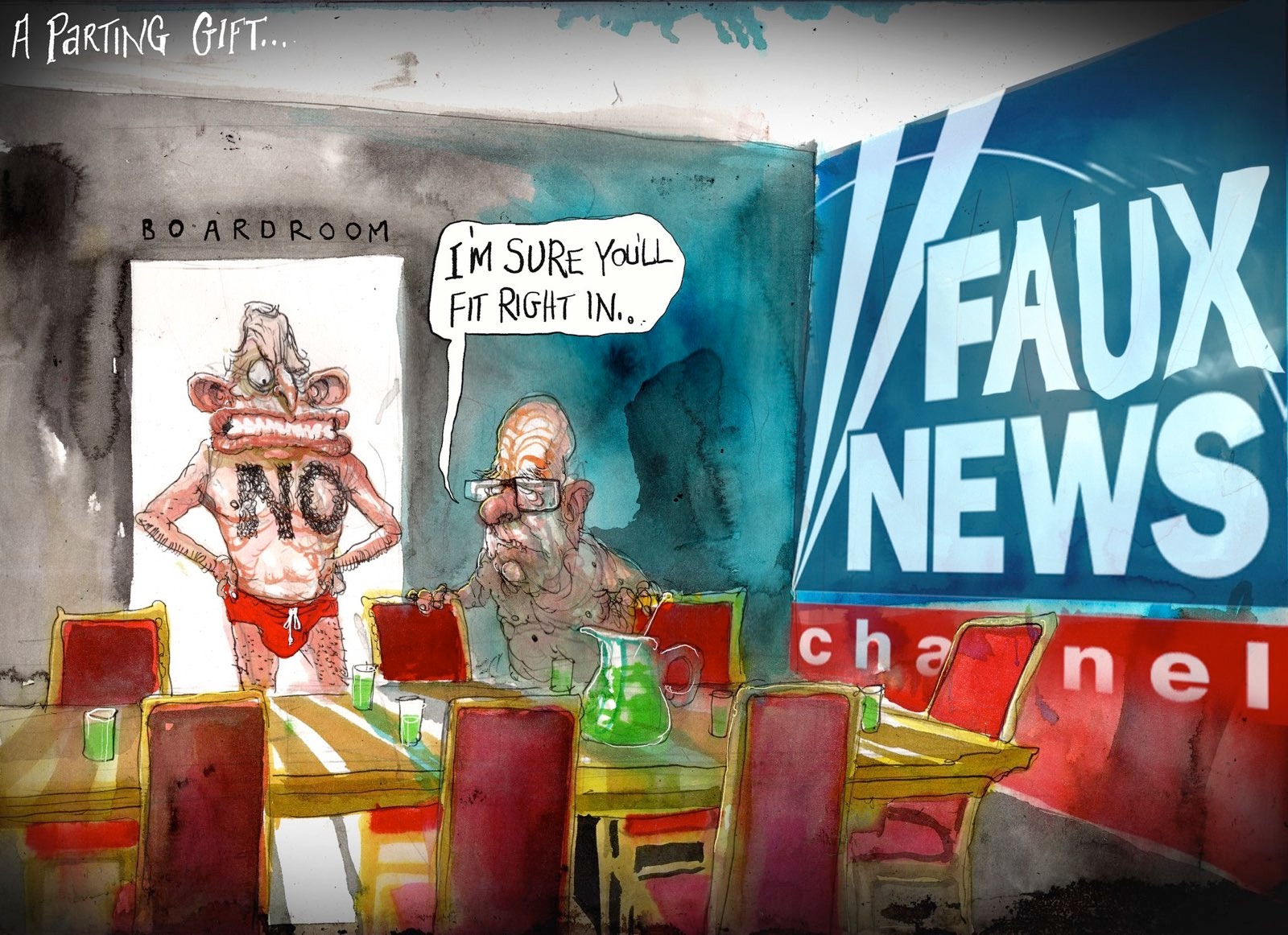
TONY ABBOTT’S FOX APPOINTMENT SHOWS MURDOCH MEDIA INTENT

Senator Sarah Hanson-Young is the Greens spokesperson for communications & media:

“It is a shockingly bad decision and an indictment on Murdoch. It is a terrifying insight into Lachlan’s plans to entrench his Fox-style news agenda in Australia.

“Putting Tony Abbott on the Fox board is a brazen attack on global efforts to tackle climate change.

“This proves what we all know about the Murdoch’s, they are right wing, climate wreckers. It is no wonder Tony Abbot has been welcomed into the family business.

“We need a Murdoch Royal Commission more than ever.”

Murdoch Appoints Tony Abbott