
NSW Innovation Blueprint to drive the state’s growth and economic prosperity

The NSW Government has today released the NSW Innovation Blueprint 2035 – a landmark strategy to cement NSW’s position as the innovation powerhouse of Australia and a leader in high-value industries.

With NSW accounting for 65 per cent of the nation’s venture capital investment in 2024, and home to five out of eight Australian unicorn companies (valued over $1 billion), the state is already a recognised leader in driving economic growth through innovation.

However, this is a position that cannot be taken for granted.

There is a global contest for talent and investment and the Government will not repeat the decade of Liberal-National delay.

The NSW Innovation Blueprint 2035 sets clearly defined goals and priority action areas that will guide how the NSW Government designs programs, allocates funding, and works with innovation stakeholders.

This will help NSW grow more unicorns like Afterpay, Atlassian, Canva and Safety Culture in the years ahead.

The NSW Innovation Blueprint 2035 complements the NSW Industry Policy released earlier this month, which sets out the Government’s long-term vision and plans for the economic future of NSW.  

Key actions from the NSW Innovation Blueprint 2035 include:

  • A strategic approach to funding: Ensure existing and future programs are easy to navigate, more equitable, and support key industries identified in the Industry Policy.
  • World class places: Enhance access and use of NSW’s world-class facilities and continue to develop Tech Central as a flagship innovation district.
  • Talent development: Support people in the ecosystem through increasing collaboration and enhancing innovation hubs, including supporting founders from diverse backgrounds, Western Sydney, and rural and regional areas.
  • Global attraction: Explore launching an annual Tech Week and engage with global and local investors to bolster international venture capital investment into NSW.

The NSW Innovation Blueprint 2035 also sets a target of $27 billion in additional investment for the NSW economy over the next 10 years from innovation-intensive firms, and nearly 100,000 additional jobs.

The development of the NSW Innovation Blueprint 2035 has been informed by extensive consultation with innovation stakeholders, including a summit at NSW Parliament House, and a series of roundtables with industry bodies, startups, scaleups and venture capital investors.

Former Tech Council of Australia CEO Kate Pounder also carried out a comprehensive assessment of the NSW innovation ecosystem to identify current challenges and opportunities.

Ms Pounder’s report, also released today, found that while NSW benefits immensely from its current advantages in innovation, it is facing fierce competition domestically and internationally for its key industries and jobs.

Ms Pounder also found that existing supports in NSW are not always targeted at the most pressing needs or gaps in the innovation ecosystem, which the NSW Innovation Blueprint 2035 seeks to address.

The Government’s vision is clear – we want NSW to be the best place to innovate, so that innovative businesses can create more economic and social opportunities for the people of NSW, and to help tackle the state’s most important challenges.

Read the NSW Innovation Blueprint 2035Pounder Review, and the ‘What We Heard’ Report, a qualitative summary of ecosystem stakeholder feedback collected during consultation on the NSW Innovation Blueprint 2035 on the Investment NSW website.

Minister for Innovation, Science and Technology Anoulack Chanthivong:

“Today the Minns Labor Government is releasing our NSW Innovation Blueprint 2035, which provides a clear strategic policy direction for fostering growth and prosperity in the state’s innovation ecosystem and tech sector.

“NSW has a proud track record of innovation, but we cannot rest on our laurels. Together with the recent release of the NSW Industry Policy, the NSW Innovation Blueprint 2035 will ensure we stay ahead of the curve, create quality jobs and drive economic growth. This can’t be achieved without focusing on our state’s most important resource – its people.

“By addressing inequities and fostering inclusivity, we’re ensuring every talented entrepreneur and innovator in NSW has the chance to thrive.

“But this is about more than just tech – we are supporting innovation across all industries, to make a more productive economy and help build a better NSW.

“I want to thank Kate Pounder for her insights, and the feedback from hundreds of individuals, businesses and institutions that have helped inform the NSW Innovation Blueprint 2035.

“The work done to produce the final Blueprint been a significant collaborative effort and one that ensures NSW continues its trajectory as an innovation powerhouse.”

Pounder Review Author and Former CEO of the Tech Council of Australia Kate Pounder:

“Committing to a strategic vision for the innovation ecosystem through the NSW Innovation Blueprint 2035 is huge step forward to ensuring NSW maintains its position as a world leader in the tech sector.”

Tech Council of Australia CEO Damian Kassabgi:

“NSW is the largest contributor to Australia’s innovation economy, and a clear path forward for the tech sector’s growth is long awaited and welcome.

“The Tech Council of Australia thanks Minister Chanthivong for taking this important first step with the NSW Innovation Blueprint 2035, and we look forward to seeing practical outcomes from this plan to give NSW tech companies the support they need.”

Country Manager for Afterpay Australia, on behalf of Block Inc. Katrina Konstas:

“Block Inc is proud to be a resident of Sydney’s Tech Central precinct, a recent move solidifying our local commitment.

“The NSW Innovation Blueprint 2035 sets an ambitious and focused course for the continued growth of NSW’s innovation ecosystem.

“We look forward to continuing to build an environment that attracts the next wave of innovators, entrepreneurs, technologists and scientists.

“Setting targets of $27 billion of additional investment demonstrates the leadership and support that tech startups need to grow their businesses and to ensure lasting success.”

Business NSW CEO Daniel Hunter:

“Innovation and tech entrepreneurs are all across NSW and Business NSW fully supports any efforts to magnify their efforts.

“The NSW Innovation Blueprint 2035 focus on female founders and diverse backgrounds across the state is welcome as everyone deserves support on their entrepreneurial journey.”

Head of Policy at the Committee for Sydney and Chair of the Innovation District Alliance Jeremy Gill:

“This is a clear signal to industry that innovation is core to the NSW Government’s economic agenda, and it is determined to unlock the state’s significant potential for job creation and investment attraction.

“Sydney is an innovation city, and so the Innovation Blueprint’s recognition of the need for a place-based focus to nurture NSW’s innovation ecosystem and the importance of a whole-of-government approach is strongly welcomed.”

Launch of in-house expert network continues NSW Government’s efforts to rein in consultant costs

The Minns Labor Government has launched the Expert Advisory Network (EAN), a new initiative to better utilise in-house expertise across the public sector and reduce its reliance on external consultants. 

Established in the Premier’s Department, the network has created an initial list of 30 existing teams across the public service. They will be able to provide projects across government with specialist advice and project support, including on policy and strategy, stakeholder engagement, financial and commercial services, actuarial services, infrastructure, technology, and environmental services.

Teams already on the list include Investment NSW’s economic and analytics capabilities team and Multicultural NSW’s interpretation and translation services.

Support from the Expert Advisory Network will take different forms depending on the nature of the project, including one-off advice, ongoing project coaching, direct project delivery, peer review, and financial and commercial advisory services. 

This will enable EAN teams working on short-term projects to share their knowledge and allow agencies to build their own institutional capacity.

As more specialist teams join the network, it will allow the government to deliver more projects internally with fewer external resources.

Under the previous Liberal-National Government, the Auditor-General identified that more than $1 billion was spent on external consultants without adequate procurement and management policies in place. Further analysis found that more than 15% of contracts were for ‘generalist work’ on policy design, program evaluation and report writing.

In 2023-24, the Minns Labor Government delivered $450 million in savings on consultant and contingent labour spend.

The Expert Advisory Network will continue that work by allowing agencies to identify existing expertise inside government rather than sending taxpayer funds to external consultants.

A 2024 report undertaken by The Cabinet Office found that utilising existing expertise within the public service could save as much as 52% on each contract.

The Minns Labor Government has implemented strict controls on consultant and external labour spend and issued clear instructions to agencies around the use of consultants. 

These measures deliver on Labor’s plans to reduce spend on consultants, bolster the public service and improve essential services for families and households across NSW.

For more information on the Expert Advisory Network, visit nsw.gov.au/expert-advisory-network.

Minister for Domestic Manufacturing and Government Procurement Courtney Houssos: 

“Establishing this network is a step forward as we undertake reforms on how the government spends money on goods and services. This is a common-sense reform and makes sure we work smarter within the public service and ensure taxpayer dollars are spent wisely. 

“We need to deliver value-for-money for taxpayers by spending more money on essential services and less money on unnecessary consultants.

“Consultants should be offering specific, expert advice to government, not replicating work that can be done with existing resources inside government agencies.

“With the Expert Advisory Network, we will save the public money and boost capacity in the public service, allowing us to deliver on the essential services that families and households rely on.”

Increased support for women with severe menopause symptoms in the Nepean Blue Mountains

Women experiencing severe or complex menopause symptoms now have improved access to additional support following the establishment of Nepean Blue Mountains Local Health District’s (NBMLHD) new menopause referral service.

NBMLHD’s new Specialised Menopause Referral Service aims to provide assistance and support for women whose symptoms have not responded to previous treatments, or those women who face additional complications from other medical conditions.

The new service has been established as part of NSW Health’s menopause network, which has four hubs and multiple referral sites across the state and is networked with the South-Western Sydney LHD hub.

Care Coordinators will assist with triage and navigate care locally, supporting the medically-led, multi-disciplinary hub team of nursing and allied health professionals to provide holistic support.

The NBMLHD Specialised Menopause Referral Service will deliver care using a hybrid approach, with a largely virtual service coupled with face-to-face consultations when they are required.

General practitioners, specialists, and nurse practitioners can refer eligible women for advanced care, and are welcome to contact the service directly by emailing nbmlhd-menopause@health.nsw.gov.au.

Minister for Health, Ryan Park:

“This Specialised Menopause Referral Service will promote flexibility and choice in the way women in the Nepean Blue Mountains region access support to manage severe menopause symptoms.

“By continuing to break down barriers like geographic isolation through effective use of virtual care technology, this service will help us continue to improve health outcomes in the Nepean Blue Mountains Local Health District.”

Minister for Women, Jodie Harrison:

“Women’s health and wellbeing is a key priority for the NSW Government.

“Menopause management can be complex. The opening of this new menopause referral service, as part of a wider network that includes four Menopause Hubs, ensures support is available for women experiencing severe menopause symptoms.

“It is one way the NSW Government is making sure women get the important holistic healthcare they need.”

Member for Blue Mountains, Trish Doyle:

“Every woman’s experience of menopause is different, and this service will ensure women get the help they need to manage severe or complex symptoms.

“Up to one in four women endure severe and debilitating menopause symptoms, which is why services like this one are so important.”

Member for Penrith, Karen McKeown:

“Severe menopause symptoms don’t discriminate and we’re pleased women in the Nepean Blue Mountains region will have access to potentially life changing care.

“The service is a significant step forward in ensuring women with complex needs receive the specialised care they deserve.”

NBMLHD Menopause Service Coordinator Holly Miller:

“Our ability to escalate to multidisciplinary virtual care through the networked Specialist Menopause Service ensures access to a wider range of specialists.

“Through the service, we’re building a supportive community where women feel comfortable discussing their experiences and accessing the care they need.”

Body worn camera trial underway at Liverpool and Bankstown-Lidcombe Hospitals

The NSW Government’s 12-month trial of body worn cameras continues to be rolled out in selected hospitals in NSW.

Liverpool and Bankstown-Lidcombe hospitals have now joined the trial, with the aim of improving safety for staff, patients and visitors.

Minister for Health Ryan Park said a total of five hospitals across northern Sydney, south western Sydney and the Illawarra are now participating in the trial, which commenced at Royal North Shore Hospital in December 2024.

Security staff in participating hospitals are equipped with body worn cameras and can activate these cameras in response to incidents involving aggression and violence in the hospital, where there is risk of harm to staff, patients or others.

The trial will determine how effective the presence of the cameras are at deterring and de-escalating violent incidents and will be independently evaluated once completed.

Body worn cameras are one strategy intended to keep everyone safe in NSW public hospitals. NSW Health facilities also have a number of other key strategies in place to ensure the safest possible environment for staff, patients and visitors. These include:

  • Ongoing risk assessments to identify and manage emerging security risks.
  • Safety huddles to share information on patient related safety risk with incoming workers.
  • Patient management plans that set out specific arrangements to keep both the patient and healthcare workers safe when providing care.
  • Multi-disciplinary Code Black (duress) response teams. This includes the use of NSW Health security staff/Health and Security Assistants to assist clinical staff with the management of incidents.
  • Workplaces designed to enhance line of sight for staff and reduce entrapment, including dual egress at staff stations and in treatments rooms.
  • Lockdown arrangements including secure entry points between public and clinical areas and secure perimeters for facilities, particularly after hours.
  • Personal mobile and fixed duress alarms for staff to ensure they can summon assistance when necessary.
  • Closed circuit television (CCTV) and effective lighting to ensure visibility.
  • Procedures to enhance car park security, including regular security patrols.

This trial is part of the ongoing implementation of recommendations from the Anderson Review of Hospital Security and follows implementation of other recommendations by the NSW Government to improve hospital security.

These include the establishment of the Safety and Security Improvement Unit within the Ministry of Health, the standardising of code black procedures, and enhanced support for patient experience officers.

Minister for Health Ryan Park:

“The safety of our staff and patients is my top priority as the Minister for Health.

“Any instances of aggression towards staff will not be tolerated, and appropriate action will always be taken against individuals who behave in such a manner.

“I look forward to the results of this trial which will provide insight into how we can reduce instances of violence and aggression in our public hospitals.”

Member for Liverpool Charishma Kaliyanda:

“The trialling of body-worn cameras is a key step in our goal to give staff, patients, and visitors every assurance that they are safe and secure at our hospitals.

“Liverpool is one of the largest hospitals in our state. I am very pleased that it is one of the first to implement this key safety measure.

“The Government has been clear: aggression toward healthcare staff cannot be tolerated. I look forward to the results of this trial, which will inform how we can reduce violent incidents in our public hospitals.”

Member for East Hills Kylie Wilkinson:

“The NSW Government’s body-worn camera trial at Bankstown-Lidcombe Hospital and Liverpool Hospital is a crucial step in ensuring our hospitals are safe places for all.

“We are committed to protecting our nurses, doctors, healthcare workers and patients, and this technology offers a vital layer of security.

“By rigorously evaluating this trial, we’re taking action to build a safer hospital environment for everyone.”

Member for Auburn Lynda Voltz:

“The body-worn cameras trial at Bankstown-Lidcombe Hospital is an important step in safeguarding both our healthcare workers and patients.

“This initiative will help create a safer environment as well as support the hard-working staff who are committed to providing care in challenging circumstances.”

Labor’s price gouging plans must include big fines

Any moves on price gouging by Labor must include serious penalties and enforcement powers if it’s going to make any difference to people’s grocery bills, the Greens say.

“Our policy would hit Coles and Woolies with $50 million fines if they’re caught price gouging, and Labor should commit to this at the very least,” said Greens Economic Justice Spokesperson Senator Nick McKim.

“And we’d give courts the power to force the big supermarkets to actually lower their prices.”

“Without serious penalties and strong enforcement powers, the supermarket duopoly will continue to act with impunity.”

“If the fines are not large enough the supermarket corporations will simply absorb them into their massive profits and continue to price gouge their shoppers.”

“That’s why the Greens will put steel in Labor’s spine in a minority government.”

Key parts of the Greens’ plan to end supermarket price gouging include:

  • Fines of $50 million or more for corporations caught price gouging
  • A Prices Commission to monitor price setting across the economy, staffed at Productivity Commission levels
  • New price gouging laws and court-enforceable divestiture powers, enforced by the ACCC
  • 20 new full-time staff at the ACCC to investigate gouging and act on referrals from the Prices Commission

“Big supermarkets have been price gouging for too long and it needs to end,” McKim said.

“The Greens will use the next Parliament to act faster and with real bite to tackle price gouging.”

Greens say renters and people in mortgage stress will be in the driver’s seat this election

Greens Leader Adam Bandt today said renters and people in housing stress are a powerful voting bloc who will determine who wins the competitive seat of Wills. 

The Greens are targeting Wills in Melbourne’s inner north this election and Mr Bandt will be campaigning there today with the party’s star candidate Samantha Ratnam, Victorian Greens Senator Steph Hodgins-May and Macnamara candidate Sonya Semmens.

The recent federal AEC redistribution in Victoria approximately halved the margin in Wills, with Poll Bludger estimating the new margin to be 4.2 per cent between the Greens and Labor and ABC’s Antony Green estimating 4.6 per cent. Previous successful Greens campaigns in Melbourne in 2010 and Griffith in 2022 overcame a margin of over 10% to turn the seats Green.

Greens candidate Samantha Ratnam first contested the seat in 2016, securing a 10.32 percent swing to the Greens, before entering the Victorian Parliament and serving as Victorian Greens Leader. Ms Ratnam resigned from that role last year to stand for Wills this election.

Data compiled for ABC’s Four Corners earlier this year showed 78.5 per cent of renters in Wills are experiencing rental stress. 38 per cent of people in Wills are renters and over 9,000 households are experiencing housing stress, according to the 2021 Census. The total number of people currently in housing stress is expected to be higher following years of high rent increases and interest rates. 

The Greens are running one of their biggest Victorian campaigns ever in Wills this election, with volunteers having knocked on over 50,000 doors before the election was even called. 

In addition to Wills, the Greens are targeting Macnamara (VIC), Richmond (NSW), Sturt (SA) and Perth (WA). The party is also seeking to return its four Lower House MPs and all its Senators who are up for re-election. 

“In a wealthy country like ours, everyone should be able to afford a roof over their head, but in 2025 people are still being smashed by sky high rents and mortgages.

“Nothing changes if nothing changes – we can’t keep voting for the same old two parties and expecting a different result.

“A vote for the Greens is a vote to make big corporations pay to fund the things we all need, like capping rent increases and lower mortgages, putting dental into Medicare and making sure you can see the GP for free. 

“We’ll act on climate by stopping new coal and gas and ramping up renewables and battery storage.

“With a minority Parliament expected, this election the people of Wills can send Samantha Ratnam to be a strong and independent representative for them in Canberra who will keep Dutton out and get Labor to act.” 

Greens candidate for Wills, Samantha Ratnam:

“Voters in Wills are some of the most powerful in the country. They know the Greens will stop Dutton forming government and will get Labor to act on what matters: housing, cost of living and climate.

“Over the past year, we’ve knocked on over 50,000 doors and had thousands and thousands of conversations in Wills. Our community understands that if we want change, we have to vote for it, and more people here than ever before are planning to vote Green this election.” 

Greens slam Dutton’s Trump-style program of curriculum interference and education cuts

The Greens have slammed Peter Dutton’s plan to withhold public school funding and cut ‘thousands’ of jobs in the Commonwealth Department of Education. The Greens say a Dutton Government would result in cuts to public schools, a wound back Department of Education, and a Minister fixated on moulding the curriculum after her own image rather than supporting disadvantaged kids.Comments attributable to Greens spokesperson on Primary and Secondary Education, Senator Penny Allman-Payne:“Peter Dutton has said he will hold public school kids to ransom, withholding funds unless he gets to decide the curriculum. “He can’t help himself – cutting public school funding is in his DNA. “Kids in Australia deserve a world class, free public education, not threats and bluster from a wannabe Trump. “He’s seen what Trump is doing to public education in America and would love nothing more than to import that ideology into Australia. This is seriously dangerous and weird stuff. “The Liberals are fundamentally opposed to public schools – they’d prefer all schools to be fee-charging private schools. They don’t get that education is a right.“The last thing you want to see is Peter Dutton standing at the whiteboard telling your kid what they can and can’t learn.“Dutton and Sarah Henderson need to be up front here: are they talking about banning science or First Nations history as a condition of funding? Or forbidding queer teachers from discussing their lives?“In seats like Brisbane and Ryan, the only thing standing in the way of a Dutton majority are local Greens MPs. This election, a vote for the Greens is a vote to keep Dutton out and make Labor act.”

Labor will ban supermarket price gouging in another move on cost of living

A re-elected Albanese Labor Government will crack down on price gouging by supermarkets because Australian families deserve fair prices for their groceries.

Australians shouldn’t be treated like mugs at the checkout – that’s why Labor will make supermarket price gouging illegal.

This is another cost-of-living relief measure the Albanese Government is taking – along with tax cuts for every tax payer, energy bill relief and cheaper medicines. 

It is unfair and un-Australian for supermarkets to exploit consumers by inflating prices and profits when they do not face enough competition. 

A re-elected Labor Government will confront price gouging to fix a key gap in Australia’s competition and consumer protection framework.

Laws to protect consumers from companies abusing their market power through excessive pricing are in place in the European Union, United Kingdom and over 30 states in the US in particular circumstances.  

We want Australians to have these protections.

As a first step, Labor will implement the Australian Competition and Consumer Commission’s (ACCC) supermarket inquiry report recommendations that will improve transparency about prices, price trends and promotions, and loyalty programs. 

This includes mandatory and harmonised minimum information and notification requirements about prices and changes in product sizes for both consumers and fresh produce providers. 

We will establish a taskforce to provide advice on introducing an excessive pricing regime for supermarkets that would be policed by the ACCC.

This advice will consider other countries’ laws and options suitable for Australia.

The taskforce will include Treasury, the ACCC and other market and regulatory experts. It will consult on the approach and report to the Government within six months with a way forward on this regime.

While Australia does have protections that prevent companies abusing their market power, unlike other countries these laws do not prohibit excessive pricing. Our reforms will ensure the ACCC can investigate a broader range of concerning pricing practices by supermarkets with market power.

This is about holding big business to account, not the staff working behind the checkout.

Those workers are facing the same pressures as every Australian, are just doing their jobs, and deserve safety and respect.

Labor is determined for Australians to get a better deal at the checkout.

That’s why we:

  • Have made the Food and Grocery Code mandatory from 1 April 2025
  • Are tackling shrinkflation by strengthening the Unit Pricing Code and introducing penalties for breaches
  • Have increased resourcing for the ACCC to undertake enforcement and increased penalties for anti-competitive conduct. 

While Labor is laser focused on helping families manage cost of living pressures caused by the world-wide inflation surge, the Coalition has opposed every cost-of-living measure the Government has proposed. 

Last year, they voted against fairness for families and farmers and wouldn’t back Labor’s bill that warned supermarkets we were serious about cracking down on dodgy behaviour.

And they will introduce laws to make every taxpayer pay more income tax, hurting Australians’ hip pockets even more.

Peter Dutton’s $350 billion in cuts will hit regulators, like the ACCC, making it easier for conduct that hurts Australians to go unchecked.

Prime Minister, Anthony Albanese:

“Labor will make price gouging by supermarkets illegal.

“Because Australian families deserve a fair price at the checkout and Australian farmers deserve a fair price for their goods.”

Treasurer Jim Chalmers:

“Labor is making sure Australians aren’t being treated like mugs.
 
“We’re delivering a better deal for families at the checkout and a better deal for farmers at the farm gate. 
 
“Our plan helps deliver more competition, fairer prices and better deals for Australians.
 
“The biggest threat to household budgets is Peter Dutton. He will jack up taxes and cut essential services and make Australians worse off.”

Assistant Minister for Competition, Charities and Treasury Andrew Leigh:
 
“A fair market needs fair rules. When competition is weak, prices go up and families pay the cost. 

“It’s time Australians had the same protections from excessive pricing as consumers overseas.”

Raising flags and awareness on Transgender Day of Visibility

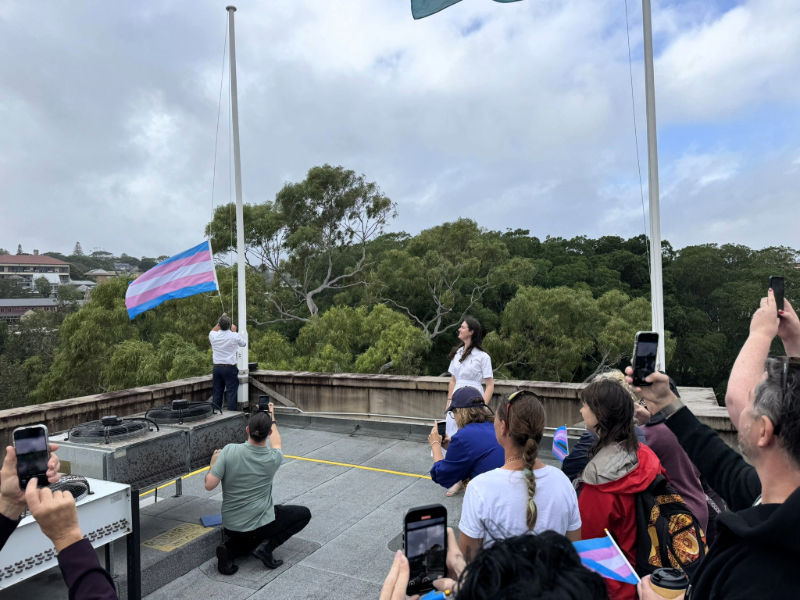
City of Newcastle has raised the Transgender Pride flag at City Hall and its City Administration Centre today to demonstrate support and acceptance of the trans and gender diverse community.

International Transgender Day of Visibility is celebrated annually on 31 March to highlight the achievements and resilience of transgender and gender diverse people, while also raising awareness of the discrimination and barriers trans people continue to face.

Cr Paige Johnson holds the Transgender Pride flag on the steps of City Hall, joined by Federal Member for Newcastle Sharon Claydon, Cr Charlotte McCabe, Cr Mark Brooker, City of Newcastle staff and a range of friends and supporters.Cr Paige Johnson holds the Transgender Pride flag on the steps of City Hall, joined by Federal Member for Newcastle Sharon Claydon, Cr Charlotte McCabe, Cr Mark Brooker, City of Newcastle staff and a range of friends and supporters.Councillor Paige Johnson, the first openly trans woman to be elected to public office in NSW, said visibility is a key theme of today’s celebration.
“Newcastle is a progressive, welcoming and inclusive city and recognising this day is part of our commitment to proudly standing united in support of inclusivity and acceptance of our trans and gender diverse community,” Cr Johnson said.

“This step today is so important because visibility is so important. Visibility is about hope and hope wins.

“The reason I choose to be visible is because seeing other people being visible has helped me so much. Seeing what other women like me in other states and other countries have done meant I could see a future for myself as myself. 

Cr Johnson noted recent poling released by Equality Australia that showed more than 91% of Australians agree trans people should have the freedom and choice to live their lives in the way that makes them happy.

“The Australian public has our back and I say to our trans and gender diverse Novocastrians and people right across the Hunter: this city has your back.”

Councillors unanimously supported a notice of motion at last week’s Council meeting to officially recognise and acknowledge Transgender Day of Visibility each year as an important event in Newcastle’s calendar.

Lord Mayor Ross Kerridge said this symbolises our commitment to be a community where all are valued.

“Raising the Transgender Pride flag on City Hall and other Civic buildings reinforces that Newcastle is a safe and welcoming city for all,” Cr Kerridge said.

“City of Newcastle is committed to supporting community education, cultural events, and discussions that raise awareness and promote inclusion.”

City of Newcastle has a proud history of championing LGBTQIA+ rights including supporting occasions such as International Day Against Homophobia, Biphobia, Interphobia and Transphobia, Pride Month and Wear it Purple Day, the establishment of a rainbow walk in Islington, sponsorship of Newcastle Pride Festival and flying the Rainbow and Progress Pride flags at City Hall.

Newcastle was also the city with the highest ‘Yes’ vote in regional Australia in support of marriage equality.

Work underway on critical western corridor road upgrades

Construction has kicked off in Wallsend as City of Newcastle moves forward with dual lane upgrades to improve traffic flow along notorious bottlenecks on Minmi Road and Longworth Avenue.

The road widening project will enhance the journey for tens of thousands of residents, workers and school children travelling to and from the surrounding suburbs each day.

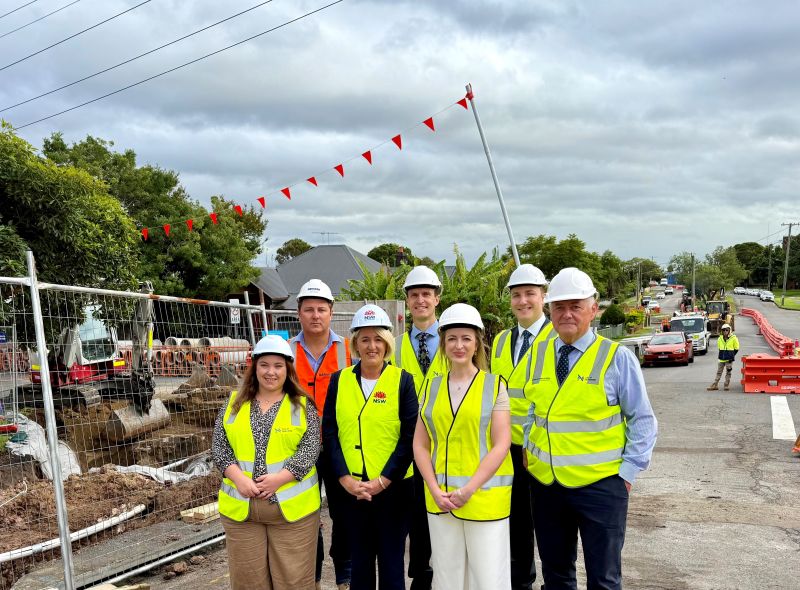
Western corridor road upgrade project Longworth AvenueCr Deahnna Richardson, Minister for the Hunter Yasmin Catley, Cr Elizabeth Adamczyk and Lord Mayor Ross Kerridge, with (rear) Daracon Project Manager Matthew Jensen, City of Newcastle Executive Manager Project Management Office Robert Dudgeon and Deputy Lord Mayor Callum Pull, visited Longworth Avenue, Wallsend today

Daracon has begun the in-ground works that will lay the foundation for the lane duplications, with the overall project expected to be completed by mid-next year.

Lord Mayor Ross Kerridge welcomed the significant milestone and thanked the NSW Government for its support of the critical upgrade, which received $7.61 million under the Accelerated Infrastructure Fund towards the $40 million project 

“This project is unanimously supported by the elected Council and highly anticipated by the local community, who will benefit from reduced congestion, increased safety and more consistent travel times along this key route,” Cr Kerridge said.

Minister for Planning and Public Spaces Paul Scully said the multimillion-dollar upgrade in Newcastle’s western growth corridor will provide critical road infrastructure and accelerate housing delivery in the Newcastle region.

“Expanding local road capacity is crucial to support over 3000 local homes in the surrounding area and another example of the Minns Government building better communities,” Mr Scully said.

“Residents can look forward to reduced congestion and fewer bottlenecks as we build more homes and improve local neighbourhoods.”

Minister for the Hunter Yasmin Catley said this was an important project for current and future generations.

“We’re putting $7.61 million into this project through the Accelerated Infrastructure Fund because getting shovels in the ground sooner means better roads, faster,” Minister Catley said.

“The Hunter is booming and we’re making sure the infrastructure keeps up. Dual lanes mean less congestion, safer travel and a region that’s future ready.

“It’s all about getting people from A to B quickly and safely – not just today but for generations to come. That’s why we’re making these upgrades happen now.”

Executive Director of City Infrastructure Clint Thomson said City of Newcastle was investing in a comprehensive, multi-year program of works to upgrade transport and related infrastructure in Wallsend. 

“This is a significant road building project in a busy urban area, and a lot of work has to be completed underground before the community will see the new road emerging,” Mr Thomson said.

“The foundational works of the project deliver additional benefits to the community including new and upgraded stormwater infrastructure, and renewal of several important water mains, which will improve water security for the western suburbs. We will continue to work closely with our utility partners including Hunter Water to minimise potential impacts.

“The collaboration between City of Newcastle and Daracon leverages local expertise and resources to understand and address the needs and concerns of our community.

“As our delivery partner, Daracon will continue to engage with the community to keep them abreast of the work, and we look forward to seeing this critical project take shape over the coming months.”

Ward Four Councillors Elizabeth Adamczyk, Deahnna Richardson and Deputy Lord Mayor Callum Pull welcomed the progress.

“These upgrades are the largest roadworks project ever delivered by City of Newcastle and are the result of years of work from dedicated City of Newcastle staff and advocacy from councillors, who have listened and responded to the feedback from the community,” Cr Adamczyk said.

“We’ve committed to this project twice already in this term as one of our key priorities as we deliver a solution to the tens of thousands of people who travel through this area to home, work and school every day,” Cr Richardson said.

“Over the past six months, Council has implemented several upgrades at surrounding intersections to improve traffic flow in the area where major construction will take place. The project will deliver integrated transport options by providing pedestrian, cyclist and public transport infrastructure as well as critical road widening,” Cr Pull said.

To keep up-to-date with the latest information visit the project page on City of Newcastle’s website.