
The Morrison Government will tackle the impact of increasing population in congested cities and back smaller cities and regions looking for greater growth to secure their economic future and the key public services they rely on.
We will reduce the cap on our migration program, build the infrastructure and deliver the services Australians need, and plan for a more evenly distributed population growth. These changes are about easing population pressures in our biggest cities, while ensuring regional communities are given a much needed boost.
Australia has thrived from a steady population growth and is the most successful immigration nation in the world and our plan will ensure our country continues to lead the way. But over the last two decades, the infrastructure and services have not kept pace, causing congestion on our roads and public transport particularly in Melbourne, Sydney and South East Queensland.
At the same time, many of our smaller cities and regional areas are crying out for more people. Some regional areas simply cannot fill the jobs available. There are an estimated 47,000 job vacancies in regional Australia today.
The Morrison Government’s plan for Australia’s future population will ease the pressure on the big capitals while supporting the growth of those smaller cities and regions that want more people.
Last year, we brought the permanent migration rate down to its lowest level in a decade by focusing on the integrity of the visa system and prioritising Australians for Australian jobs. Part of our population policy will include stronger incentives for new people to our country to settle outside the big capitals in areas that will welcome their skills and expertise.
New measures will be introduced that will better match migration to regional needs, ease the pressure on big cities and ensure Australia remains an attractive destination to live and work for highly skilled and talented people from around the globe.
We will continue to deliver a record $75 billion investment in infrastructure, underway right now across the country.
The Government’s population policy includes:
1. Reducing the migration cap by 15% and incentivising more new migrants to settle outside the big cities where there are jobs and services;
Reducing the migration ceiling from 190,000 to 160,000 places.
Introducing two new regional visas for skilled workers requiring them to live and work in regional Australia for three years before being able to access permanent residence. 23,000 places will be set aside for these regional visas.
Introducing new tertiary scholarships to attract Australian and international students to study in regional Australia ($15,000 scholarships will be available to more than 1000 domestic and international students each year).
Giving international students studying at regional universities access to an additional year in Australia on a post-study work visa.
2. Busting congestion on our roads and trains.
Plan to better connect regional centres with fast rail.
Investing $75 billion in road, rail and air infrastructure across the country.
Investing more in congestion-busting infrastructure through the $1 billion Urban Congestion Fund.
3. Planning for the future by working more closely with state and territory governments to match infrastructure with local population need
Population management as a fixture of future COAG discussions with the adoption of a bottom-up approach
Continuing to deliver new City Deals and Regional Deals to ensure three levels of government working together
Establishing a Centre for Population, ensuring there is a central, consistent and expert perspective on population growth. The Centre will pursue opportunities to improve data and research on population and facilitate collaboration on population planning across Commonwealth, State, Territory and Local governments.
We will also build on the work our government is doing to support grassroots initiatives that foster belonging and break down barriers to social and economic participation.
These changes also enhance the Government’s focus on skilled migration, with the number of Employer Sponsored skilled visa places increasing from 35,528 in 2017-18 to 39,000 places in 2019-20. There is no change to the Family stream of the program, with 47,732 places available in 2019-20.
Under the two new regional visa categories, skilled migrants will be priority processed and will have access to a larger pool of jobs on the eligible occupation lists compared to those who live in our major cities. Migrants on these visas must demonstrate they have lived and worked in regional Australia for three years before being becoming eligible to apply for permanent residence.
The changes will mean migrants will stay in regional Australia longer-term, as they will build ties to a particular location through workforce participation and community involvement, easing the pressure off our congested cities.
Labor’s failure to plan for the impact of record migration on our cities and infrastructure has meant we have been forced to play catch-up.
Full details of the Morrison Government’s plan for Australia’s future population – download here.
A SHORTEN LABOR GOVERNMENT WILL INVEST IN A NEW HOME FOR SURFING WA
A Shorten Labor Government will invest $4 million to build a new home for Surfing WA at Trigg Beach, supporting the more than 170,000 West Australians who regularly enjoy surfing.
No matter if it’s the river, pool or beach, enjoying water is part of Australian life and Western Australians have embraced surfing.
Each year Surfing WA provides 250,000 hours of surf education, training around 65,000 kids, beginners and elite surfers with surfing and water safety skills.
The new headquarters will feature more space for surfing lessons, water safety programs, training of judges and officials, increased storage and more workspace for staff.
This will help Surfing WA continue to support 31 surf clubs along the WA coast and the 70 primary and high schools who benefitted from their education programs in 2018.
Nationally, Surfing WA is the number one state for delivering the grassroots SurfGroms program which teaches 5-12 years old the fundamentals of surfing.
Labor’s investment will also help Surfing WA continue to run four international surfing events, including the annual world tour Margaret River Pro, and local and regional contests throughout WA most weekends.
In 2018 Surfing WA expanded their regional footprint with more than 65% of organised surfing in the state now held in regional WA.
Labor’s investment will also support Surfing WA to identify, train and nurture the next generation of Australian surfing heroes like Western Australia’s own Taj Burrow, current women’s world champion Stephanie Gilmore, fellow seven-time world champion Layne Beachley and three-time men’s world champion Mick Fanning.
Greens Senator Receives 1.3 million Change.org petition Against Senator Fraser Anning
Australian Greens Senator for NSW and Australia’s first Muslim woman Senator, Dr Mehreen Faruqi, has received more than 1.3 million signatures from a change.org petition calling for Fraser Anning to be removed from Parliament following his disgraceful comments about the Christchurch terrorist attack. The petition is by far the largest in Australian online petition history. Senator Faruqi will present it to the Senate when Parliament resumes in a few weeks.
Senator Faruqi was joined by Sally Rugg, Executive Director of Change.org as well as Dr Kate Ahmad and Harris Sultan, who started the petition as well as other supporters. The petition is available here: https://www.change.org/
Senator Faruqi said:
“Today is the International Day for the Elimination of Racial Discrimination. A fitting day to receive a petition which loudly and clearly says we will not tolerate bigotry and racism.
“On behalf of the 1.3 million people and counting who have signed the petition, I will be tabling it in the senate as soon as parliament resumes in April.
“There is a reason why this petition is the biggest online petition in Australia. People are angry and frustrated that our political system has allowed a politician to spread such division and hate.
“Senator Anning has well and truly crossed the line. He does not deserve to be in parliament. The Greens are exploring every option to suspend him from Parliament. I have no doubt the community will make sure he is not re-elected in May” she concluded.
Senate inquiry recommendations demonstrate Labor and Coalition working for mining corporations, not Australians, say the Australian Greens
The report of the Senate inquiry into mine rehabilitation was unable to come to majority recommendations, with the major parties clearly working in the interests of mining companies over the Australian people, say the Australian Greens.
The Committee worked for two years on the inquiry and visited communities impacted by mining across the country. It heard from community members, state and territory governments, independent experts, and the mining industry, and developed a very clear body of evidence showed the huge problems Australia faces cleaning up and rehabilitating closed mines.
“We expected the Coalition Senators’ position to be weak, but to have a response comprising only one recommendation from Labor is appalling,” said Senator Janet Rice, Australian Greens Senator and Chair of the Senate Environment and Communications References Committee.
“The idea that we should kick this into another review after two years of thorough work by the Committee is staggering and must cast suspicion over an incoming Labor Government’s environmental reform agenda.”
“It’s outrageous that the Labor and Coalition senators decided not to support any of the Greens recommendations, particularly those requiring strong national standards to ensure that mines are properly closed, rehabilitated and paid for by mine operators, not Australian taxpayers.”
“It’s clear the Labor party doesn’t want to anger their corporate donors in the mining industry so close to an election.”
“It’s a business as usual approach that will see more communities suffer the environmental and social consequences of closed mines that aren’t properly rehabilitated, like the traditional owners of the former uranium mine site in Rum Jungle in the Northern Territory.”
“Why should Australian taxpayers foot the bill to restore mine areas when big mining companies make massive profits off the back of resources the Australian people own?”
“The reason Labor and the Coalition don’t want to sign up to the Greens very sensible recommendations is because they work for corporations, not Australians. Labor and the Coalition have taken millions in donations from the mining industry in return for favourable policy decisions.”
—
The Greens recommendations include:
-
the federal government funding a complete national inventory of current and abandoned mine sites, and creating national standards that mining companies must adhere to.
-
Requiring mining companies to provide upfront funding to pay for the cost of rehabilitation once a mine closes. This is to be based on evidence, full cost of site rehabilitation and verified by open and transparent means, including independent audit.
-
Enforceable national progressive rehabilitation targets for mining operations, aimed at maximising the area of rehabilitation during a mine’s operational life.
-
Amending the Corporations Act and Australian Accounting Standards to ensure mining companies account for and report on financial liabilities for mine closure on a site-by-site basis.
-
Amending current environmental law to ensure that mines have the lowest impact on matters of national environmental significance, including the submission of a full life of mine and closure plan at the approvals stage before a project can go ahead.
FREE DENTAL CHECKS FOR PRIMARY SCHOOL KIDS
Primary school children in Western Sydney, the Mid North Coast and the Central Coast will be among the first to benefit from free mobile dental checks and basic dental care, under a NSW Liberals & Nationals Government.
Premier Gladys Berejiklian, Treasurer Dominic Perrottet and Health Minister Brad Hazzard announced the NSW Government will invest $70 million over the next four years to provide 35 new mobile dental clinics for the service – which will allow checking of up to 136,000 primary school children each year.
“Dental health is so important to give kids a great start in life, and we want to make it easier for families to get access to vital dental services,” Ms Berejiklian said.
“The NSW Liberals & Nationals have worked together to deliver a strong budget, which means we can do even more to improve our world-class health system.”
Mr Hazzard said the mobile dental checks would roll out from 1 July 2019.
“When it comes to getting it done, NSW leads the way in free dental care for our children,” Mr Hazzard said.
“These mobile dental clinics will make access easier and parents can have the peace of mind that their children are getting timely preventative dental checks.
“This great initiative will ensure children in areas where there is a high demand for public dental care don’t miss out at a critical time in their lives.
“These mobile dental clinics will also raise awareness among students and families about the importance of developing lifelong good dental health habits,” Mr Hazzard said.
Currently NSW public dental services provide care to children at fixed clinics at hospitals or in the community.
Oral health assessments are performed as part of all child health checks at regular intervals from the age of six months until a child turns four.
Mr Perrottet said strong financial management meant the NSW Liberals & Nationals could invest in improving dental health for children.
“As a parent of five children I know it’s a challenge getting your kids to look after their teeth,” Mr Perrottet said.
“This program will improve dental hygiene, identify problems early and help correct them. It will help put a brighter smile on the faces of parents and their kids.”
ENERGY SWITCH WILL HELP SLASH GAS BILLS
More than 1.3 million households using gas could save hundreds of dollars off their energy bills with the NSW Government expanding its popular Energy Switch service.
Premier Gladys Berejiklian and Treasurer Dominic Perrottet today announced the Energy Switch program will be expanded to include household gas from May – just in time to slash winter energy bills.
“This is an opportunity for more than a million households across NSW to see if there is a better deal to be found on their gas bill and help ease the cost of living,” Ms Berejiklian said.
“Energy Switch is already saving NSW households hundreds of dollars on their electricity bills and today’s announcement will help people save even more by finding the best deal for gas.”
The Australian Competition and Consumer Commission’s (ACCC) inquiry into Retail Electricity Pricing found NSW has the lowest residential electricity charges of any mainland state, and Ms Berejiklian said driving energy prices lower still was a priority.
“The NSW Liberals and Nationals are committed to reducing the cost of living and delivering lower gas and power prices,” Ms Berejiklian said.
“This will help create competition and I encourage people to make use of the Energy Switch program to get the best deal for their electricity and gas.”
Energy Switch is a free service launched in November 2018 which allows households to switch electricity providers in minutes online, via phone or in-person at Service NSW centres.
The program works by using a customer’s latest energy e-bill to scan every retailer in NSW and gives customers the cheapest three energy plans available. If a switch is requested, Service NSW will inform the energy provider.
“It’s a fast and easy process and Service NSW will do the heavy lifting for the customer by checking their gas usage, searching the market for available plans and if savings can be found, then we will make the switch for them,” Mr Perrottet said.
“The average Energy Switch saving so far has been more than $400 on annual electricity bills. I encourage people to see what they can save off their bills.
“While we are helping people cut the cost of living, Labor has promised more than $1 billion worth of new taxes and charges which will hit the hip pockets of people right across NSW.”
The expanded service for gas will be rolled out from May 2019 in all Service NSW centres and online through https://energyswitch.service.nsw.gov.au.
This new initiative, along with the NSW Liberals & Nationals’ plan to install solar energy and battery storage for 300,000 homes and provide a new $200 energy rebate for self-funded retirees, will help to further reduce the cost of living.
The NSW Liberals & Nationals Government has saved households more than $200 million over the last year through a raft of cost of living measures, including cheaper Green Slips, $100 Active Kids and Creative Kids vouchers, Free Rego and the FuelCheck app.
The top 10 suburbs where the most electricity switches have been made through Service NSW’s free Energy Switch service are:
| Suburb | Average Saving per household |
| Dubbo | $540 |
| Kellyville | $491 |
| Liverpool | $486 |
| Gosford | $484 |
| Westmead | $448 |
| Baulkham Hills | $441 |
| Naremburn | $351 |
| Port Macquarie | $325 |
| Lane Cove | $323 |
| Hornsby | $279 |
FIRST TEST RIDE ON THE ON TIME AND UNDER BUDGET NORTHWEST METRO
For the first time, passengers have boarded Australia’s first turn-up-and-go train service, which is due to officially open in May more than $1 billion under budget.
Premier Gladys Berejiklian and Minister for Transport and Infrastructure Andrew Constance today experienced a test trip on the world-class driverless train which will run services every four minutes.
“It will be an historic day in Australia when the first full passenger service of the Sydney Metro departs from Tallawong station in Rouse Hill,” Ms Berejiklian said.
“We are thrilled this $8.3 billion project will be finished on time and $1 billion dollars under budget.
“The Northwest Metro rail line shows that when the NSW Liberals & Nationals make a promise, we deliver on it.”
Mr Constance said Sydney Metro’s launch will deliver a better experience for train customers.
“Customers between Rouse Hill and Chatswood will quickly fall in love with Sydney Metro and it is not hard to see why,” Mr Constance said.
“We delivered this service for the people of Sydney’s Northwest, but we are not done, with the Metro currently being extended from Chatswood, under the Harbour and onto Bankstown.
“You can trust the NSW Liberals & Nationals to deliver for the people of NSW, but you can’t trust Labor.
“When they were last in office Labor promised 12 rail lines and didn’t deliver a single one and now they want to cancel the Sydenham to Bankstown Metro upgrade, depriving Sydney’s South West of world class Metro services.”
The entire 22 train fleet has been delivered and more than 35,000km of train testing has taken place on the Metro system through all 13 stations along the railway.
Stage 2 of Sydney Metro, the City and Southwest line from Chatswood to Bankstown, is on track to have services running in 2024.
Labor to provide $1.8 million boost in support for volunteer wildlife carers
A Daley Labor Government will significantly increase government support for passionate volunteer wildlife carers who care for thousands of sick, injured or orphaned native animals every year.
Deputy Labor Leader and Shadow Environment Minister, Penny Sharpe, announced that Labor will provide dedicated annual funding to wildlife carers, replacing an ad-hoc and uncertain system that provides little assistance for the important work carried out by wildlife carers every day.
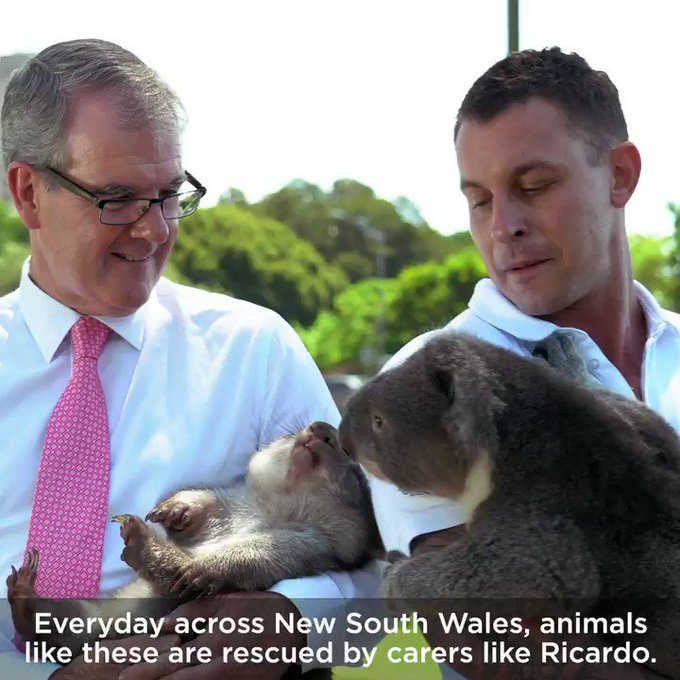
Labor will provide $10,000 to each licensed organisation, including each branch of WIRES, and $1,000 to each individual currently directly licensed to rehabilitate native animals (not registered with an organisation). This will boost annual government contributions from $32,500 to $600,000.
“Volunteer wildlife carers are truly unsung, selfless heroes in communities all around the state, who do the challenging and sometimes heartbreaking work of caring for sick or injured native animals, often in very difficult circumstances,” Ms Sharpe said.
“This crucial funding will assist organisations and volunteers who care for sick, injured or orphaned native animals to pay for critical items needed in the care of these animals, such as food, medication and treatment, transport costs, enclosures and bedding, rescue and safety equipment, and clothing.”

A recent government survey found that wildlife carers provide around $27 million in value of volunteer contributions each year (based on 17 per cent of the sector). The full value is likely to be well over $100 million.
More than one million native animals have been rescued by volunteers since the year 2000, with around 104,000 animals rescued each year over the last four years, across 800 species. Overall, the sector receives about 180,000 calls a year, with most providers offering a 24-hour, seven days a week service.
The survey found that wildlife carer volunteers gave an average of nearly seven times as much time in volunteering as an average volunteer in Australia, while personal expenditure by surveyed volunteers averaged at $3,123 per person with a median of $500 each year.
However, wildlife care organisations and licensed individuals currently have no guaranteed funding from the NSW Government, and in 2017-18 there were just 13 ad-hoc grants handed out for a total of $32,500. Providers rely almost entirely on donations and the goodwill of volunteer wildlife carers.
“I think most people would be shocked that wildlife carers receive almost no support from government when we rely so heavily on being able to reach out to their services 24 hours a day, 7 days a week.
“Labor is deeply committed to the care and protection of native species in NSW, and our wildlife carers deserve our support. The next time you meet a volunteer wildlife carer, please give them your thanks.”
While the Government recently produced a vague draft strategy for the sector using already-announced funding from the NSW Koala Strategy and funding for the Foundation for National Parks and Wildlife – no additional funds were provided directly to the work of wildlife carers on the ground.
GREENS ANNOUNCE ENERGY SAVINGS PLAN FOR SMALL BUSINESSES
Greens climate change and energy spokesperson Adam Bandt MP today launched the Greens’ six point plan to help small businesses reduce power bills, improve their energy efficiency and switch over to clean energy. Mr Bandt delivered a presentation announcing the policies at a Council of Small Business Organisations Australia roundtable in Melbourne.
In addition to offering financial assistance to small business, The Greens plan includes re-regulating electricity prices and establishing a new public retailer – Power Australia – which will sell cheap electricity to small business and drive down retail prices.
The Greens also recognise that the high cost of gas is a huge challenge facing small business. This is a consequence of the Rudd Labor government’s decision to open up two new giant LNG export terminals in Queensland, which are depleting domestic supplies and pegging gas to the export price.
Gas has been touted as an essential part of the energy mix moving forward, but gas is not a transition fuel, it’s a fossil fuel. With cheap, clean electricity there would be no need for households and most businesses to use gas for cooking or heating.
A report by Climate Works into Gas-Electricity Substitution Projections to 2050 identified upfront capital costs and concern about short term cash flows as barriers for businesses switching over. Additionally, every time a business purchases a new gas appliance, the lifespan for that appliance could be 10 years, or more. Providing the upfront economic incentive to switch will be required to overcome this barrier.
The Greens’ range of measures are not only designed to help businesses save energy but also to electrify, switching away from expensive dirty gas towards renewable energy, as well as encouraging investment and research into replacing gas with alternatives.
The Greens’ plan has been fully costed by the Parliamentary Budget Office.
Small Business Energy Plan:
1. The Greens will establish a public owned not-for-profit energy retailer – Power Australia -that will purchase cheap renewable energy and offer low-cost electricity plans to small businesses as well as re-regulating electricity prices.
2. The Greens will establish a ‘Small Business Clean Energy Fund’ with an initial funding injection of $200 million over the next 4 years. SMEs will be eligible to apply for grants of up to $10,000 to cover the cost of investment in assets or capital works that will reduce fossil fuel use, improve energy efficiency or switch from gas to clean energy. This fund will operate in conjunction with the instant asset tax write off, as businesses who receive the instant asset write off for assets will also be able to receive money from the Clean Energy Small Business Fund.
3. Re-establish the Clean Technology Program, scrapped by Tony Abbott, with a $200 million investment to support the innovation of products, processes and services by business and industry. The fund had distributed around $50 million before it was scrapped by the government.
4. The Greens will invest $100 million from ARENA to support specific research, development and commercialisation into industrial substitution and electrification programs in the chemical and other manufacturing and fabrication industries.
5. Small businesses will also have access to loans of up to $15,000 to assist with the installation of battery storage. These loans will be repayable over a 10 year period supported by the Clean Energy Finance Corporation.
6. To complement the above initiatives, the Greens will also establish Clean Energy Solution Centres to support business to implement audits and develop energy efficiency plans.
Quotes attributable to Adam Bandt MP, Greens climate change and energy spokesperson:
“Small business is bearing the brunt of the old parties’ addiction to gas and coal.
“The government loves to talk up its small business credentials, but businesses are talking about closing because Angus Taylor doesn’t have the guts to get energy prices under control.
“The Greens will stand up to the big power corporations on behalf of small business.”
“In addition to offering cheap, clean electricity packages to small business, our package will help businesses fuel switch from gas to electricity in the short term, while boosting research and development so we can transition away from gas entirely.
“After we boot out the conservatives we’ll need some new energy laws, but the Greens will also re-establish programs that were working well before Tony Abbott tore them down, like the Clean Technology Innovation Program.
“The key to helping small businesses isn’t to abandon them with a small government, neoliberal approach, but for government and industry to work cooperatively to help small businesses embrace the clean energy transition.
“Our plan will help small businesses reduce power bills and reduce pollution.
“Instead of making themselves a small target for small business, Labor should commit to adopting our package in the next Parliament.”
Cyclist dies after being hit by truck – Newcastle
A cyclist has died after being hit by a truck at Newcastle this morning.
Just before 9.30am (Wednesday 20 March 2019), emergency services were called to the intersection of King and Perkins streets, Newcastle East, after a cyclist and a truck collided.
The cyclist, a woman, was treated by NSW Ambulance paramedics; however, she died at the scene.
She has not been formally identified.
The truck driver was uninjured and taken to the Mater Hospital for mandatory testing.
Officers from Newcastle City Police District attended and will investigate the circumstances surrounding the crash.
A report will be prepared for the Coroner.