
Young people in Northam and surrounding communities will now have greater access to mental health support, with the opening of a new headspace satellite service this week.
The Government committed to establish a new headspace service in Northam in the electorate of Pearce, as part of a $111.3 million plan to establish 30 new headspace services announced in the 2019-20 Budget.
The opening of the new site delivers on that commitment and will provide vital mental health support to young people in the region.
Minister for Health, Greg Hunt, said the new centre will provide a significant increase in support for young people living in the local area.
“There are more pressures on young people today than ever before and the establishment of this headspace is so important in providing needed services in Pearce,” Minister Hunt said.
“I am committed to ensuring young Australians can get information, advice, counselling or treatment, when and where they need it.”
Member for Pearce, Christian Porter, welcomed the announcement by Greg Hunt.
“I want our young people in Pearce to know they are not alone on their journey,” Mr Porter said.
“headspace is here to deliver quality frontline support and ensure the best possible care for people who are at risk.
“We know intervention at the earliest possible stage is important to reduce the duration and impact of mental illness, so I encourage young people in our community to reach out for the help they need.”
The headspace program aims to improve access for young people aged 12 to 25 years who have, or are at risk of, mental illness.
One in four people aged 16 to 24 experiences some form of mental illness every year, and three-quarters of all mental illness manifests in people under the age of 25.
headspace offers early intervention services across four key areas – mental health, related physical health, social and vocational support, and alcohol and other drug use. The services are co-designed with young people to ensure they are relevant, accessible and highly effective.
headspace works closely with young people at a crucial time in their lives to help get them back on track, and strengthen their ability to manage their mental health in the future.
The new headspace, located at 98 Fitzgerald St E, Northam, has been commissioned by the Country Western Australia Primary Health Network to meet the needs of young people in the Pearce electorate.
This service will ensure young Australians can get information, advice, counselling and treatment, when and where they need it.
The Morrison Government continues to demonstrate its firm commitment to the mental health and wellbeing of all Australians, providing a record investment in mental health services and support of an estimated $5.2 billion this year alone.
Recognising the unprecedented challenge posed by the Coronavirus (COVID-19) pandemic, the Government has provided $8 billion for the COVID-19 National Health Plan, including an additional $500 million for preventative mental health services, suicide prevention and mental health care via telehealth.
HOMELESSNESS WEEK 2020
This week is Homelessness Week in Australia.
It is an important reminder that more Australians are homeless than ever before and this economic crisis could make even more Australians homeless.
According to the last Census, more than 116,000 people are estimated to be homeless in Australia. This includes people sleeping rough, couch surfing, living in a car or other vehicle, or in a single dwelling of extreme overcrowding.
The coronavirus pandemic has made it clear just how important safe and affordable housing is.We have all been told to stay home to keep safe. You can’t stay home though, if you don’t have one.
Over the last few months more than 7,000 people who sleep rough in our streets and parks with temporary accommodation in empty hotel and motel rooms.
State governments have done some important work here, but we also need national leadership.
The National Cabinet needs to make sure that the homeless Australians we have helped during this pandemic are not thrown back on the street in the next few months.
Labor has also been calling on the Morrison Government for months to fund the construction of more social housing.
This would be a win-win. It would provide work for thousands of tradies and put a roof over the head of Australians who desperately need it.
In times of economic crisis, housing construction has often played a key role in economic recovery.
During the GFC the former Labor Governmentinvested $5.6 billion in the construction of nearly 20,000 new social housing dwellings and the renovation of a further 80,000 existing properties.
Labor is not the only one calling on the Morrison Government to fund the construction of more social housing to protect jobs and provide homes for Australians who desperately need it. Others include:
Wallsend Library closes as a precaution
Strictly as a precaution, Wallsend Library is temporarily closed following a public health alert from NSW Health.
If you were at Hotel Jesmond 29 July, between the hours of 7pm to 9pm, Wallsend Diggers 29 and 30 July between the hours of 9pm to 11pm or Lambton Park Hotel 30 July between the hours of 8pm to 9pm, you must strictly isolate at home for 14 days from the dates and be tested for COVID-19
City invests in playground renewal as families find fun closer to home
City of Newcastle will spend $8.2 million in parks, playgrounds and sporting fields this year as COVID-19 forces families to increasingly look to their own neighbourhoods for places to exercise or play with the kids.
Today marks the start of Local Government Week (3-9 August), with this year’s theme, ‘Councils Do’, reflecting the broad range of activities councils undertake to support their local communities and proactively respond to the challenges they face.
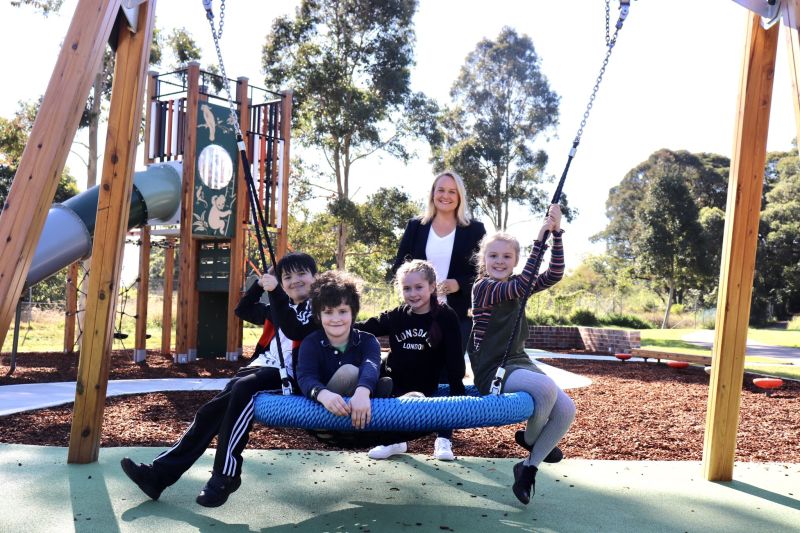
Newcastle Lord Mayor Nuatali Nelmes said the City is prioritising building new infrastructure as part of its response to the devastating impact of COVID-19, with a record $116 million capital works program.
“Councils are the hub of their communities, responsible for everything from libraries, galleries, museums and community events, to childcare centres, development assessments, environmental maintenance and even cemeteries,” the Lord Mayor said.
“Our neighbourhood parks and open spaces are vital city infrastructure, and during the past five years we have delivered approximately $6.5 million in new and upgraded playgrounds across our city and suburbs, including the new Brickworks Park and Carrington Street Reserve playgrounds in Wallsend.
“In 2020/21 we will continue this investment in locations such as Novocastrian Park in New Lambton, Gross Street Reserve at Tighes Hill, King Edward Park in Cooks Hill and Dangar Park in Mayfield.
“We’re also planning a new active hub in Wallsend, while also completing the significant upgrade to Stevenson Park in Mayfield West.”
Up to four of Newcastle’s 117 playgrounds are replaced each year as part of the City’s asset renewal works program.
Work on the just completed playground at Brickworks Park in Wallsend included a new all-abilities carousel, boulder climb, nest swing, rope ladder, slide and more, while the Carrington Street Reserve playground has been upgraded to include a new plank walk, suspension bridge, double slide, tube net and other activities.
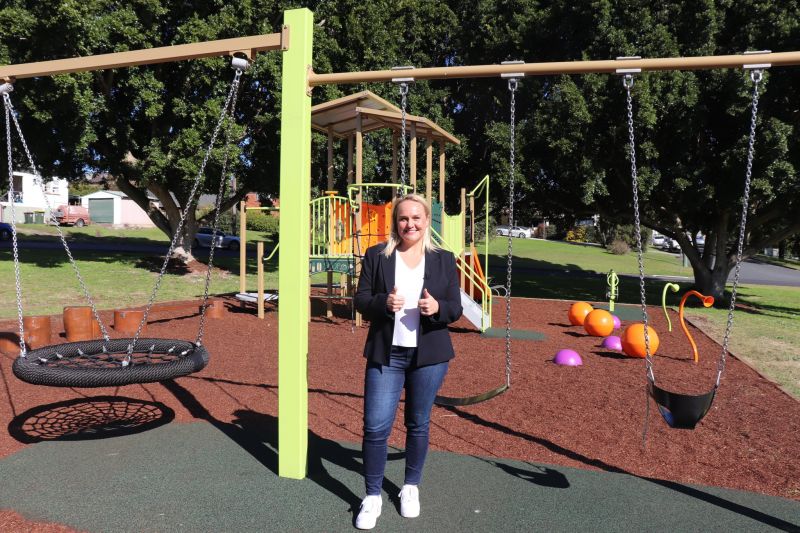
“Local communities love their local playgrounds, and they’re often a neighbourhood hub for residents to meet and come together,” the Lord Mayor said.
“This was especially noticeable under the COVID-19 restrictions, which challenged us as a community to look closer to home for exercise and recreation.
“Our playground renewal program is a great example of how City of Newcastle goes far beyond the traditional services of ‘roads, rates and rubbish’ to create a fantastic place to live, promote a healthy economy and build our community.”
EDUCATION WEEK 2020: A TIME TO CELEBRATE LEARNING TOGETHER
Education Week 2020 begins today, celebrating the many achievements of our public schools and the critical role they play in equipping our students for the future.
Minister for Education and Early Childhood Learning Sarah Mitchell said ‘Learning together’ is a fitting theme given the extraordinary challenges this year has presented.
“In the face of drought, bushfires and the COVID-19 pandemic, our school communities have proven just how strong and adaptable they are,” Ms Mitchell said.
“Teachers and support staff moved quickly to online lessons; parents and carers took on additional responsibilities at home and students adjusted to a new way of learning.”
Ms Mitchell said many exciting opportunities lie ahead to build on the strengths of the public education system.
“Already 42 new and upgraded schools have been built in 2020 as part of the NSW Government’s $6.7 billion school infrastructure program, with more to come,” she said.
“We are also rebuilding the NSW curriculum to cut unnecessary content, focus on literacy and numeracy and modernise vocational education and training.”
Ms Mitchell said Education Week has been a highlight of the NSW public education calendar for more than 60 years, and this year provides an opportunity to reflect on achievements over the past year.
“This is particularly relevant for the past year, as our education system has triumphed amidst difficult circumstances,” Ms Mitchell said.
“I cannot overstate the appreciation I have for the incredible way everyone has responded to the challenges of this year. Right across the state, students and families have received incredible support from their schools and teachers, and stronger relationships have grown between schools and their communities.
“If 2020 has taught us anything, it is that schools are the cornerstone of our communities in NSW and together we can achieve great things.”
Department of Education Secretary Mark Scott said this year’s Education Week will look a little different with many schools opting for virtual celebrations in place of the usual open classrooms and school assemblies.
“We are using technology to encourage schools to run virtual celebrations and the department has put together a series of events for the whole week,” Mr Scott said.
Education Week starts with a launch live stream on Monday, 3 August, featuring students and staff from more than 50 public schools across NSW. Other events include a celebration of National Aboriginal and Torres Strait Islander Children’s Day with the NSW Aboriginal Education Consultative Group and their language app; a student film festival introduced by actor Bryan Brown; a technology webinar for parents for the NSW Federation of Parents and Citizens Associations; and the Secretary, Mark Scott, in conversation with secondary students.
“Learning together is our theme for Education Week 2020 and it couldn’t be a more apt way to celebrate NSW public school communities in this remarkable year,” Mr Scott said.
“The resilience, endurance and creativity of people in Education is just incredible.”
Visit the Education Week website for full details of the virtual celebrations: education.nsw.gov.au/edweek20
#EdWeek20
NEW VOCATIONAL FACILITIES AT SEVEN HILLS HIGH SCHOOL
Seven Hills High School has been selected to introduce specialist vocational education facilities as part of the NSW Government’s $34 million election commitment.
Within three years, purpose built facilities and classes will allow students to pursue careers in Community and Health Services, Construction (Electrotechnology and Plumbing), and Transport and Logistics.
Premier Gladys Berejiklian said equipping students to fill the jobs of the future is an important part of the NSW Government’s COVID-19 recovery plan.
“Specialised training facilities are critical to ensuring NSW students can receive world-class skills training and be provided the skills of the future,” Ms Berejiklian said.
“COVID-19 has presented unprecedented challenges for our state. It’s crucial we look to reskill, retrain and support school leavers to access opportunities in industries where there are skills shortages and emerging employment opportunities.
“Seven Hills High School will now be well placed to take advantage of major projects in Western Sydney, including the construction of the Aerotropolis, which will require a steady pipeline of skilled tradies for decades to come.”
Minister for Skills and Tertiary Education Geoff Lee said the high school will operate with a renewed focus on Vocational Education and Training (VET) from 2023.
“We have to inspire all students to consider VET as an alternative career pathway, including about 50 per cent of high school graduates who do not pursue a university pathway,” Mr Lee said.
“Skills training is vital to propelling our State forward, particularly following the economic impacts of the COVID-19 pandemic.”
Minister for Education and Early Childhood Sarah Mitchell said this investment would put young people wanting to pursue a career in vocational education in the best position to develop their learning.
“This development supports young people to engage in learning that builds skills and supports access to apprenticeships and traineeships. The school will continue to offer the full range of study options, VET courses will be additional options,” Ms Mitchell said.
The selection of Seven Hills High School (Years 7 to 10) follows a comprehensive analysis of all potential secondary schools in the state – up to 45 per cent of students at nearby Wyndham College undertake at least one VET course as part of their HSC. More than 91 per cent of students transition from Seven Hills to Wyndham for Year 11 and 12.
This initiative will benefit from work already underway by the NSW Government to address the barriers student’s face when choosing a VET pathway.
ROAD SAFETY GRANTS A CHANCE TO SAVE LIVES
Local groups are being encouraged to put forward their ideas for programs designed to improve road safety in their own community with Round Six of the NSW Government’s Community Road Safety Grants program open today.
Minister for Roads and Transport Andrew Constance said the aim of the Community Road Safety Grants program is to bring people with a passion and commitment for road safety together and support their ideas to lower the NSW road toll.
“We all have a part to play in helping to bring down the road toll and community groups are in a great position to connect with local people about local road safety issues,” Mr Constance said.
“Some brilliant initiatives have already been born out of this program, including a state-wide initiative to discourage young surfers from texting and driving led by Surfing NSW.
“The Clontarf Foundation runs a program to help teenage Aboriginal men in NSW grow into safe and confident drivers, while Jubilee Community Services in Mortdale ran workshops on pedestrian and driver safety, and basic first aid.”
Minister for Regional Roads and Transport Paul Toole said two categories of grants are available: one for smaller projects with up to $5,000 available for each idea and another for more substantial projects, worth up to $30,000.
“This is about delivering programs that save lives. Preliminary figures from 2019 show that 352 people lost their lives on our roads and more than 10,000 people were seriously injured,” Mr Toole said.
“These are not just numbers. They are members of a community – mums, dads, sisters, brothers, friends, someone’s loved one. We want to do all we possibly can to lower the road toll around the state so that no one has to go through the pain of losing someone they love.
“Almost 170 projects have been delivered across the state thanks to the Community Road Safety Grants Program, including 30 projects in the last financial year.”
Applications for round six are now open with community groups invited to submit ideas for local road safety projects by August 31st.
More information about the program and how to submit an application can be found at: http://roadsafety.transport.nsw.gov.au/aboutthecentre/communitygrants/
COUNCILS RECOGNISED DURING LOCAL GOVERNMENT WEEK FOR STEPPING UP TO THE CHALLENGE
Local Government Week is a time to acknowledge the significant role councils are playing to support communities across the State to recover from the drought, bushfires and COVID-19, Minister for Local Government Shelley Hancock said today.
“Our communities are facing some of the most difficult times in the modern era and our local councils have once again stepped up to the challenge,” Mrs Hancock said.
“During the bushfire crisis, local councils operated evacuation centres, co-ordinated the distribution of donated goods and services, carried out emergency bushfire response works, and repaired and rebuilt community infrastructure.
“Councils have also been vital in responding to COVID-19, retraining and redeploying staff to minimise job losses and maintaining essential community facilities and services in the face of significant restrictions and financial distress.
“They have also provided financial relief for residents and businesses by deferring rates, providing rate rebates, waiving fees and interest, reducing rents, offering grants and making donations.
“I urge everybody to take a moment during Local Government Week to recognise the critical role your local council is playing to support your community during these trying times.”
The theme of Local Government Week this year is Councils Do, highlighting the significant work councils do in their communities and the wide variety of services they provide including libraries, roads, waste collection, footpaths, parks, pools and animal shelters.
Local Government Week 2020 runs from August 3-9. The highlight of celebrations is the presentation of the Local Government Week Awards on August 6 to recognise the best and brightest in NSW councils.
The Office of Local Government has published council success stories on its website to recognise the efforts of the local government sector during the pandemic.
NEW TECHNOLOGY DIPLOMA TO TEACH ‘INDUSTRY 4.0’ IN NSW
A new Diploma of Applied Technologies launched today will help train the skilled workers NSW needs to continue building its advanced manufacturing economy.
Minister for Jobs, Investment, Tourism and Western Sydney Stuart Ayres said advanced manufacturing was a central component of the NSW Government’s COVID-19 Recovery Plan.
“NSW boasts world-leading advanced manufacturing capacity across a range of sectors and the Government is supporting this from our industry precincts such as the Western Sydney Aerotropolis through to training initiatives such as this diploma.”
“Our manufacturing industry in NSW is undergoing a transformation known as the fourth industrial revolution, or Industry 4.0 and this course qualifies graduates in necessary disciplines like networking, big data, cloud computing and digital control systems,” Mr Ayres said.
“Embracing advanced technologies will be vital to ongoing profitability and competitive advantage but companies need a comprehensive strategy to manage equipment, processes, supply chain, sales and – most importantly – their workforce.”
Minister for Skills and Tertiary Education Geoff Lee said the training will be gold standard.
“New qualifications like this Diploma of Applied Technologies will be a crucial part of ensuring NSW has the right skills mix to become one of the world’s leading digital economies,” Mr Lee said.
The qualification is being rolled out by the NSW Government in collaboration with Ai Group and Manufacturing Skills Australia. It is suitable for new or existing employees, with assessment conducted via work-based projects.
Head of Ai Group in NSW Mark Goodsell said it was designed to address skill gaps created by the big changes shaking up global manufacturing.
“Industry needs people with practical skills who understand emerging technologies,” Mr Goodsell said.
“These are people who can physically connect machines and equipment to each other via the cloud and devise meaningful ways to capture and use the ensuing data streams – key drivers of productivity and innovation across the economy.
“The Diploma is targeted at the para-professional and technician level, creating new pathways into professional qualifications. It can also be delivered in conjunction with an apprenticeship, providing both practical and high-level skills and breathing new life into the apprenticeship model.”
Two pilot courses conducted by SkillsLab have commenced in the Hunter Region and Western Sydney, with a second intake scheduled to begin in September.
More information is available here: https://www.aigroup.com.au/policy-and-research/businesspolicy/industry-transformation/higher-apprenticeships-national-march-2020/
HEALTH ADVICE UPDATE ON MASKS
The NSW Government is strongly encouraging greater use of masks in high-risk public settings to help prevent the spread of COVID-19.
The advice from the NSW Chief Health Officer Dr Kerry Chant specifically recommends:
- The use of face masks in indoor settings where physical distancing is hard to maintain, such as on public transport or in supermarkets;
- The use of face masks (where practical) in indoor settings with a higher risk of transmission, such as for the staff of hospitality and customer-facing venues i.e. cafes, restaurants, pubs and clubs; and
- During attendance at places of worship.
Wearing a mask in any of these settings is not mandatory but is highly recommended, especially in areas where there has been community transmission.
Premier Gladys Berejiklian said a mask is not a substitute for physical distancing.
“People should continue to maintain their physical distance – it is our most effective weapon. However, if you find yourself in a situation where you can’t maintain your physical distance you should wear a mask,” Ms Berejiklian said.
“It is critical the community understands masks should be used in conjunction with other measures, and not as a standalone measure.”
Masks should be considered a “fourth line of defence” after staying home if unwell and getting tested, maintaining 1.5-metre social distancing and good hand hygiene.
It is imperative the community understands if they have symptoms they should immediately be tested and self-isolate.
The use of properly constructed cloth masks is acceptable. However, it’s important they are:
- Ideally made from three layers of breathable fabric to ensure adequate protection; and
- Washed after each use or at least daily.
Chief Health Officer Dr Kerry Chant said masks are not suitable for everyone such as young children.
“Currently in NSW, the rate of community transmission does not call for mandatory mask use in the general population,” Dr Chant said.
“However, along with practising good hand-hygiene, people are encouraged to wear face masks particularly in indoor settings where physical distancing is hard to maintain, such as on public transport. Most of all, stay home if you are unwell.
“NSW Health is continuing to monitor the situation and provide timely advice to the Government on the best defence against this once-in-a-100-year pandemic.”
For more information please go to nsw.gov.au/covid-19/face-masks