
Australian Greens Disability spokesperson Senator Jordon Steele-John said today it was unacceptable that the Attorney General would not introduce privacy protections to the Disability Royal Commission, garuanteeing witnesses confidentiality beyond the life of the Commission, until mid-next year.
“This is a simple legislative fix that would be universally supported by the Australian Parliament, and the Attorney General has had at least 8 months to get it done! There is simply no excuse for forcing disabled people to wait any longer to feel safe to tell their stories,” Steele-John said.
“I have a bill before the Senate right now which could be passed in the upcoming November sitting.
“The Attorney General knows full well that his failure to act urgently is an impediment to the Royal Commission; the deliberate and ongoing delay amounts to a moral obstruction of justice.
“To be able to properly investigate violence, abuse, exploitation and neglect the Royal Commission must be able to protect witnesses including, and especially, disabled people and other individuals who want to blow the whistle on institutions, service providers and government agencies.
“Disability Royal Commission Chair Ronald Sackville AO QC wrote to the Attorney General in February formally asking him to change the law, and in the Royal Commission’s second progress report, released earlier this month, the Chair dedicated an entire section (page 37) to the limitations this issue was placing on the scope of the Royal Commission.
“So many people in our community have lost all faith in the system because of the violence, abuse, exploitation or neglect they, or their family, have suffered; they want to know that it is safe to tell their stories.
“By delaying these important privacy protections until mid-2021 the Attorney General is impeding the ability of the Royal Commission to do its job and he is failing disabled people.”
LABOR: TIME TO GET RAIL ON TRAINS
Australia is about to undergo a public transport revolution.
Over the next two decades, our governments will invest billions of dollars in ne public transport dollars in new public transport projects.
There’s the Western Sydney Rail, the Melbourne Metro, Brisbane’s Cross River Rail, the Perth Metronet, the Melbourne Airport Rail and Canberra’s Light Rail.
Then there is the Inland Rail freight link from Brisbane to Melbourne.
It is anticipated that at least 11,000 new rail cars will be required in the three decades leading up to 2053.
This presents a real challenge.
But it is also an opportunity.
We should build the new trains here in Australia, creating jobs for Australians and developing our heavy manufacturing expertise.
I was shocked to hear recently NSW Premier Gladys Berejiklian say were can’t build trains in Australia.
We are no good at it, the Premier said.
This is nonsense.
Australians can build trains.
Downer EDI has been building them at its factory in Maryborough, Queensland, since the 19th century.
Queensland Premier Annastacia Palaszczuk has just announced they will be building trains for the Queensland rail network, providing jobs into the future.
We can also build trains in Newcastle, Dandenong, Ballarat, Bendigo and Perth.
Yet, like Premier Berejiklian, too many Coalition state governments so lack ambition for local manufacturing that they buy rolling stock overseas.
We have seen several cases where overseas products have arrived unfit for purpose.
We’ve seen that with trains built overseas 20cm too wide for the Blue Mountains line in NSW.
Last week I visited Varley Group in the Hunter Valley.
There, workers are fixing rail wagons built in China that need structural modification before they can be used here.
If we had just built them here, none of this would have been required, saving costs, creating jobs and building our skills base.
It’s a no-brainer.
That’s a why a Labor government will create a National Rail Manufacturing Plan to ensure that, wherever possible, we build the trains we need here, rather than offshore.
This plan will be a blueprint for co-operation between governments, businesses and unions in the national interest when it comes to buying trains.
It would ensure that more trains are built in Australia by local manufacturing workers and that every dollar of federal funding spent on rail projects goes towards creating local jobs and protecting our rail industry.
It would also ensure that Australian products, like steel, were used in the production.
Our plan will focus on investment in research and development, so that as we build trains here, we are developing our capacity to reduce costs and improve quality.
We would also ensure that while building the trains, we train apprentices so they have skills to take the heavy manufacturing sector forward into the future.
Key features of Labor’s plan include:
- Establishing the Office of National Industry Co-ordination to audit the adequacy, capacity and condition of passenger trains nationally;
- Reinstating the Rail Supplier Advocate — abolished by the Coalition in 2013 — to help small and medium-sized enterprises identify export opportunities and link with government buyers;
- Establishing a Rail Industry Council to prevent the loss of more jobs and address the need for more local research and development.
If we get it right, we can also create certainty for manufacturers by ironing out the peaks and troughs in market demand through better co-ordination between state governments.
If every state government orders a new fleet of trains at the same time, local industry cannot deliver.
Better co-ordination of tenders would allow for a steady stream of work that could sustain and indeed grow the local industry.
Our National Rail Industry Plan has potential to help revive Australian manufacturing.
According to the most-recent census, between 2011 and 2016, the number of jobs in Australian manufacturing fell by 24 per cent to about 680,000.
The expansion of rail provides a chance to reverse this trend and create thousands of new, well-paid jobs, including apprenticeships for young people.
And if we can focus on existing rail manufacturing hubs, many of these jobs will be in regional Australia.
In the 21st century, there are two sure-fire ways to generate economic growth — investing in infrastructure to lift capacity and boost productivity, and investing in people through education and training.
A National Rail Manufacturing Plan can address both.
AAA Rating Reaffirmed By S&P
Following Standard & Poor’s (S&P) reaffirming its AAA credit rating today, Australia remains one of only nine countries around the world to hold a AAA credit rating from all three major credit rating agencies.
Despite a once in a century pandemic, which “wreaked havoc on the global economy and government balance sheets around the world”, S&P has reaffirmed Australia’s AAA credit rating following the release of the Morrison Government’s Economic Recovery Plan to create jobs and secure Australia’s future.
In its report, S&P notes that the Morrison Government’s “balance sheet was strong before the pandemic” and that “Australia’s budget improved in recent years on the back of tight fiscal discipline, strong labour market conditions, and high commodity prices.”
S&P further states that “Australia’s typically strong fiscal performance remains a credit strength for the rating” and that “Australia’s economy is beginning to recover from its first recession in almost 30 years” and will “rebound strongly once borders open”.
Today’s decision by S&P is a further vote of confidence in the Morrison Government’s response to the health and economic crisis caused by COVID-19. The record levels of economic support we have provided has helped save 700,000 jobs.
The Government has been able to do this because we entered this crisis from a position of economic strength and had brought the Budget back to balance for the first time in 11 years. This gave us the fiscal firepower when we needed it most.
Our economic support has been provided in a temporary, targeted and proportionate manner. By doing so we have protected the structural integrity of the Budget, with over 90 per cent of the spending committed in response to the crisis occurring over the next two years.
There is still a long way to go in recovering from this health and economic crisis but the Australian economy is fighting back with around 60 per cent of the 1.3 million people who lost their job or were stood down on zero hours in April now back at work.
Next calendar year, the economy is forecast to grow by 4.25 per cent, and unemployment to fall to 6.5 per cent by the June Quarter 2022. Our economic and fiscal strategy sets out the path to grow the economy, stabilise debt, and then reduce it over time.
Consumer confidence increased 11.9 per cent in October, the largest increase in a Budget month on record since the series began in 1974 with Westpac Chief Economist, Bill Evans, commenting that it was “an extraordinary result” and that “such a development must be attributable to the response to the October Federal Budget.”
The Morrison Government’s Economic Recovery Plan is focused on job creation, rebuilding our economy and securing Australia’s future.
City’s Special Business Rate Forum Facilitates Collaboration and Creativity
Local business embraced the benefits of new connections and sharing ideas at City of Newcastle’s Special Business Rate (SBR) Collaboration Forum.
City of Newcastle brought together the recipients of its latest $935,000 round of SBR funding for the City Centre Darby Street precincts on Thursday at the event, designed to foster business-to-business collaboration and the opportunity to partner and strengthen project concepts.
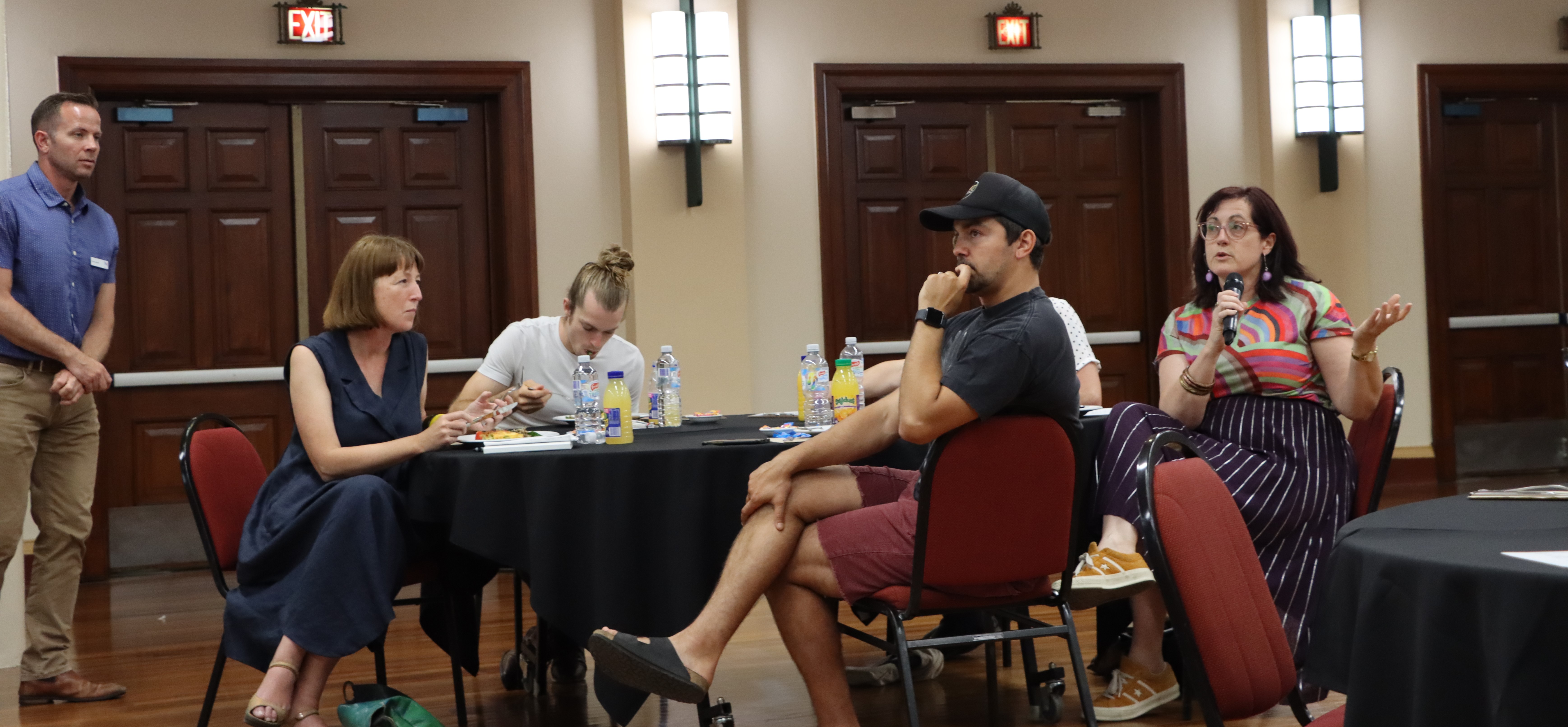
Special Business Rates are collected by City of Newcastle for the promotion, beautification and development of Newcastle’s business precincts.
The SBR program provides funding for unique and engaging events, activities and creative projects that breathe life into the city centre and encourage people to spend locally.
The forum encouraged cooperation and provided Newcastle’s small business community the opportunity to network and make connections with City of Newcastle staff.
SBR funding recipients shared their project concepts designed to activate public spaces and strengthen the city’s reputation as a destination for tourism, business and events.
Despite the challenges presented by COVID-19, Newcastle’s business and creative community adapted and is developing resilience building solutions to ensure the local economy thrives.
Normal operating hours resume at Fort Scratchley
Fort Scratchley will reopen to the public six days a week, between 10am and 4pm, from Sunday 1 November.
The community can enjoy a COVIDSafe historical experience with tunnel and gun emplacement tours, daily gun firings at 1pm, and access to external grounds, galleries and static exhibitions each day except Tuesday.
Bookings are not required for free general admission; however, visitors will need to scan a QR code on entry for contact tracing purposes.
Prepaid bookings can be made online for tunnel tours with a maximum of six people per group.
Visit the Fort Scratchley or City of Newcastle websites to learn more about how we are keeping you safe while welcoming you back to the Fort.
Gender lens on Budget shows up government
The Greens condemn the Morrison Government for failing to include a gender lens in the Budget, instead leaving it to a non-profit women’s organisation to do their homework for them.
“Women are once again mopping up after the Morrison Government by applying a gender lens to the Budget, something which should have been done by government itself,” said Greens Leader in the Senate and spokesperson on Women, Senator Larissa Waters.
“The National Foundation of Australian Women’s analysis released today unsurprisingly finds that when you don’t apply a gender lens to budgeting, women miss out.
“NFAW found that by investing in the care economy – increasing employment and wages in the childcare, aged care and disability sector – GDP would increase by 1.64% by 2030 and women’s workforce participation would be turbo-charged.
“This follows earlier analysis by the Australia Institute showing that more jobs would be created for both men and women if the government invested in health and education rather than championing male-dominated fields with the blokey recovery we have seen proposed to date.
“The 2020 Budget is bad for women. It has no new money for childcare, housing or frontline domestic violence services, the tax cuts are worth twice as much for men as women, and the women’s economic security statement is a mere 0.04% of the Budget.
“The embarrassing government talking points trying to claim roads as a win for women is reminiscent of Tony Abbott citing his top achievement as Minister for Women being repealing the carbon price so women would pay less when ironing.
“The Budget disproportionately helps men in a year that has disproportionately disadvantaged women, perhaps because only one woman sits on the Expenditure Review Committee.
“There has been no Women’s Budget Impact Statement since Abbott axed it in 2014, and this year a hastily patched-together Women’s Economic Security statement was released three hours after the Budget. Women are an afterthought to this government and it shows,” concluded Senator Waters.
Greens say Government have wilfully ignored opportunity to reform punitive and racist Community Development Program with its reintroduction next week
The Greens have condemned the Government’s reintroduction of the discriminatory remote work-for-the-dole scheme Community Development Program (CDP) that disproportionately impacts First Nations peoples.
“It’s very disturbing to hear anecdotal claims from employment providers saying that the increase to income support is leading to more drinking and anti-social behaviours”, Greens spokesperson on Family and Community Services Senator Rachel Siewert said.
The increase in income support has lead to people being able to feed their families, buy essential items and pay bills.
Government should be investing in addressing the barriers people face to employment such as poverty, housing and ill health, particularly for young people who have a higher probability of being penalised.
There clearly need to be more in jobs creation in remote communities, particularly in the care economy.
The CDP program is a top down punitive approach that is not even close to being in line with closing the gap objectives of self-determination and community control.
CDP cannot continue to keep running as it was before its suspension as part of the response to COVID19.
It is a punitive and discriminatory program that sees work-for-the-dole participants, who are largely First Nations peoples having to do work hours and have participation requirements that are far higher than those in the Jobactive program.
Why should people in remote regions, the vast majority of whom are First Nations peoples have to be subjected to a work-for-the-dole scheme that is far harsher and more punitive than their city counterparts.
We need employment and support programs designed and led by First Nations peoples and they have to be funded for the long term. CDEP should never have been dropped in the first place.
APONT has put forward an employment model that has been ignored by the Government.
The Government’s own 2019 evaluation of the program articulates what is well known, that First Nations peoples are more likely to be penalised and are penalised more often than their city counterparts.
CDP has to go.
Community invited to envision libraries of the future
Community members are being encouraged to share their visions of how Newcastle Libraries’ spaces and services might be made even better in the future.
City of Newcastle is conducting early engagement to inform the development of a Contemporary Libraries Infrastructure Plan (CLIP) to meet the community’s evolving needs and expectations for libraries for the future.
The Library Satisfaction and Infrastructure Survey opened today and aims to measure current satisfaction levels with the Libraries’ online and branch services, understand expectations around access to help and expert advice, as well as how the community accesses library services both now and into the future, including ideas for co-location and pop-up venues across the city.
Lord Mayor Nuatali Nelmes said libraries were no longer a place to simply borrow items, but a place to gather and exchange ideas and information, foster lifelong learning and preserve information and culture for future generations.
“Our Libraries are multi-functional community spaces where you can research a history project, borrow the latest books and DVDs on-the-go, and access cutting-edge technology like the 3D printer and digital story wall available at the City’s newest Digital Library at the City Administration Centre,” Cr Nelmes said.
“In addition, the City’s expansive e-Library collection and large range of information and learning databases complement the Newcastle Libraries App and Home Library Service, which means your library is available 24/7 – anytime, anywhere.
“Feedback from this survey will help guide future projects and initiatives in line with Newcastle Libraries’ adopted 10-year strategic plan to 2029, which identifies the need for new and refreshed infrastructure to support the Libraries’ evolution.”
Manager Libraries and Learning, Suzie Gately, said the survey would also identify factors that would encourage people to use library services more often.
“Our aim is to better understand the needs, experiences and behaviours of those who currently use our libraries, as well as those who currently do not but who might in the future,” Ms Gately said.
“This aligns with our strategic plan to create vibrant, safe and active public places for all. So, tell us, what does your library of the future look like?”
The Library Satisfaction and Infrastructure Survey is open until Tuesday 3 November. Visit the website to have your say.
COVID-19 RESTRICTIONS EASED
Gatherings in outdoor public spaces and group bookings at restaurants will be increased to 30 people under a relaxation of COVID-19 rules.
From this Friday, 23 October:
- 30 people can gather outdoors in public spaces (previously this was 20);
- 30 customers per booking, and 30 customers per table at hospitality venues (previously the rule was a maximum of 10);
- In addition, as of last Friday 16 October, corporate functions of up to 300 people can now be held at any appropriate premises, including at restaurants, subject to a COVID-Safe plan (previously just function centres).
Additionally, from 1 December, the number of people who can attend weddings will be lifted to 300 people subject to the four square metre rule indoors and two square metre rule outdoors.
This will allow people to make plans and book venues knowing the capacity ahead of time.
Premier Gladys Berejiklian said the NSW Government remains focused on managing COVID-19 and opening up the economy in a COVID-Safe way.
“These changes will provide a big boost to our hospitality venues,” Ms Berejiklian said.
“As we ease restrictions and find new ways to get businesses moving it is vital that customers and venues continue to be COVID-Safe.”
Treasurer Dominic Perrottet said this was another important step in driving our economic recovery while returning to life in a COVID-Safe way.
“We continue to remain focused on stimulating the economy, keeping businesses in business and people in jobs,” Mr Perrottet said.
“The easing of restrictions and safely increasing capacities will lead directly to more jobs and more opportunities for businesses across NSW, which is integral for the State’s recovery.”
Minister for Health Brad Hazzard said lower case numbers are a good sign but we are by no means out of the woods.
“It is vital as we ease restrictions people continue to do the right thing, stay home if unwell and get tested, even with the most minimal of symptoms,” Mr Hazzard said.
Minister for Jobs, Investment and Tourism Stuart Ayres said the NSW Government remains focused on creating jobs and stimulating the economy, key goals of the NSW Government’s COVID-19 Recovery Plan.
“We want to see NSW get back on track in a COVID-safe way and this is another important step,” Mr Ayres said.
NSW Health Chief Health Officer Dr Kerry Chant said people still need to continue to follow the personal hygiene recommendations, maintain physical distancing and wear masks in indoor settings where you cannot physically distance.
“As we ease restrictions, we all need to maintain COVID-safe behaviours and practices,” Dr Chant said.
Businesses wishing to take advantage of the relaxed restrictions must use electronic methods, like QR codes, to record and keep contact details.
SCHOLARSHIPS TO SUPPORT STUDENT STUDIES
Young people in out-of-home care or living in social housing can now apply for a $1,000 scholarship to help cover their educational and training costs in their final years of high school.
Minister for Families, Communities and Disability Services Gareth Ward said the Department of Communities and Justice Scholarships program aims to improve educational outcomes for some of the state’s most disadvantaged students.
“We want to give young people every opportunity to achieve their education goals so that they can break the cycle of disadvantage,” Mr Ward said.
“Students can use the funds for educational expenses such as text books, laptops, tutoring and course costs, to help ease the financial burden.
“The scholarships help remove some of the barriers vulnerable students may face, so they can focus their attention on the classroom instead.”
Scholarships are available to students in Year 10, 11 and 12 at a NSW high school or TAFE equivalent. They are open to young people completing a school-based apprenticeship or traineeship, or studying a VET subject at school in 2021.
To be eligible students must either be a social housing tenant, a social housing applicant, be living in crisis accommodation, or be living in out-of-home care.
Minister for Education and Early Childhood Learning Sarah Mitchell said the scholarships would support vulnerable students through the COVID-19 pandemic.
“Many families are feeling financial pressure right now and it is important that our most vulnerable students remain connected to education and are given the best possible chance to succeed,” Ms Mitchell said.
“We need to support young people nearing the end of high school to develop work readiness and these scholarships will provide a hand up for vulnerable young people during this incredibly challenging time.”
Applications close of 19 February 2021, with successful students to be announced in Term 2. For more information, visit https://www.facs.nsw.gov.au/families/support-programs/all-families/dcj-scholarships.