
Investment In New Energy Technologies

The Morrison Government is investing in new and emerging technologies that will support jobs, strengthen our economy and reduce emissions.
Prime Minister Scott Morrison said the $1.9 billion investment package in future technologies to lower emissions would back jobs now and into the future, cut costs for households and improve the reliability of our energy supply.
The Prime Minister said the Government is supporting the next generation of energy technologies with an extra $1.62 billion for the Australian Renewable Energy Agency (ARENA) to invest, as well as expanding the focus of ARENA and the Clean Energy Finance Corporation (CEFC) to back new technologies that will cut emissions in agriculture, manufacturing, industry and transport.
“Our JobMaker plan is about protecting and creating the jobs of today and positioning Australia for the jobs of the future, which is why our investment in new technologies is so crucial,” the Prime Minister said.
“Australia is in the midst of a world-leading boom in renewable energy with over $30 billion invested since 2017. Solar panels and wind farms are now clearly commercially viable and have graduated from the need for government subsidies and the market has stepped up to invest.
“The Government will now focus its efforts on the next challenge: unlocking new technologies across the economy to help drive down costs, create jobs, improve reliability and reduce emissions. This will support our traditional industries – manufacturing, agriculture, transport – while positioning our economy for the future.
“These investments create jobs and they bring new technologies into play. This will not only cut emissions, but deliver the reliable energy Australia needs while driving down prices for homes and businesses.”
The new package also invests in a range of promising low-emissions, reliable new technology advancements including:

  • Supporting businesses in the agriculture, manufacturing, industrial and transport sectors to adopt technologies that increase productivity and reduce emissions through a new $95.4 million Technology Co-Investment Fund that was recommended by the King Review
  • Piloting carbon capture projects that will dramatically help cut emissions with a $50 million investment in the Carbon Capture Use and Storage Development Fund
  • Helping businesses and regional communities take advantage of opportunities offered by hydrogen, electric, and bio-fuelled vehicles with a new $74.5 million Future Fuels Fund
  • Setting up a hydrogen export hub worth $70.2 million to scale-up demand and take advantage of the advancements in this low emissions, high powered source of energy
  • Backing new microgrids in regional and remote communities to deliver affordable, reliable power with $67 million
  • Contributing $52.2 million to increase the energy productivity of homes and businesses, including a sector specific grant program for hotels supporting equipment and facilities upgrades
  • Slashing the time taken to develop new Emissions Reduction Fund (ERF) methods from 24 months or more to less than 12 months, involving industry in a co-design process and implementing other recommendations from the King Review into the ERF, worth $24.6 million
  • Boosting energy and emissions data and cyber-security reporting and supporting the delivery of future Low Emissions Technology Statements under the Technology Investment Roadmap process, as well as developing an offshore clean energy project development framework, together worth $40.2 million

Minister for Energy and Emissions Reduction Angus Taylor said getting the next generation of energy technologies right would not only help to keep prices low and the lights on, but would importantly grow jobs, strengthen the economy and reduce emissions.
“We will reduce the cost of new and emerging technologies, not raise the cost of existing technologies or layer in new costs to consumers and businesses through mandated targets or subsidies,” Minister Taylor said.
“The Government recognises the strong growth in emerging energy technologies that will play a role in Australia’s energy mix into the future. We need to get the balance right and our investment to re-energise ARENA will deliver that.
“ARENA has played an important role in this growth, and as the cost of renewable technologies has fallen dramatically, the Government is investing in the future of ARENA to support the next generation of energy technologies.”
The Government’s emissions reduction strategy is focussed on technology not taxes. An approach that doesn’t compromise energy affordability or reliability will be more important than ever as we recover from the COVID-19 pandemic.
The Government will provide ARENA with guaranteed baseline funding of $1.43 billion over 10 years. ARENA’s baseline funding will be supplemented in two ways:

  • Together with the Clean Energy Regulator, ARENA will be approved to deploy a portion of the $2 billion Climate Solutions Fund; and
  • ARENA will also become a clean technology grants hub for future initiatives, with a new $193.4 million provided to deploy targeted programs.

The Boards of ARENA and CEFC will continue to be accountable for individual investment decisions. The Government will introduce new legislation so both agencies can support new and emerging low emissions technologies (including zero and negative emissions technologies). That ensures they will be able to support critical technologies such as soil‑carbon sequestration, carbon capture and storage, production of green-steel, and industrial processes to reduce energy consumption.
This package will contribute to Australia’s continued success in meeting and beating our emissions reduction targets. Australia beat its Kyoto-era targets by up to 430 million tonnes and the Government is on track to meet and beat our 2030 Paris target.
As a nation, Australia has done far better than similar export-oriented countries with emissions now 14.3 per cent below 2005 levels. This is an achievement all Australians can be proud of.
Early-stage investment is a proven method to accelerate the development of new and emerging technologies. The Technology Investment Roadmap will provide a strategic framework to prioritise the Government’s investments.
OECD Upgrades Australia’s Economic Growth Outlook

The OECD has upgraded Australia’s economic growth outlook for 2020 in its latest Interim Economic Outlook Report despite the global economy being hit by “an unprecedented sudden shock in modern times” as a result of the coronavirus crisis.
According to the OECD, global GDP will contract by 4½ per cent in 2020 before picking up by 5 per cent in 2021, as the world deals with the economic fallout from the coronavirus. To put this in context, global growth fell just 0.1 per cent in 2009 during the Global Financial Crisis.
Economic growth in Australia is projected by the OECD to fall by 4.1 per cent in 2020, representing an improvement of 0.9 percentage points compared to the OECD Economic Outlook from June.
Australia’s economic outlook compares remarkably well to other nations with the United Kingdom forecast to contract 10.1 per cent, Italy 10.5 per cent, France 9.5 per cent, Canada 5.8 per cent and Germany 5.4 per cent.
The OECD also sends a warning that “localised lockdowns, border closures and new restrictions being imposed in some countries to tackle renewed virus outbreaks are likely to have contributed to the recent moderation of the recovery in some countries, such as Australia.”
Put simply closed borders cost jobs and put the economy in a weaker position to recover.
Only by working together will we beat this virus and ensure that our economy comes out stronger on the other side with the OECD calling on “enhanced global co-operation to maintain open borders and the free flow of trade, investment and medical equipment which is essential to mitigate and suppress the virus in all parts of the world and speed up the economic recovery.”
Australia approached this crisis from a position of economic strength. The Federal Budget returned to balance for the first time in 11 years which underpinned our capacity to respond to this unprecedented shock with more than $300 billion in economic support.
State Governments will also play an important role in the recovery with the RBA Governor proposing to National Cabinet that States Governments commit a further $40 billion in areas such as infrastructure over the next two years.
The Morrison Government will continue to do what is necessary to cushion the blow and help all Australians get to the other side of the crisis.

New Emergency Operations Centre opened ahead of bushfire season

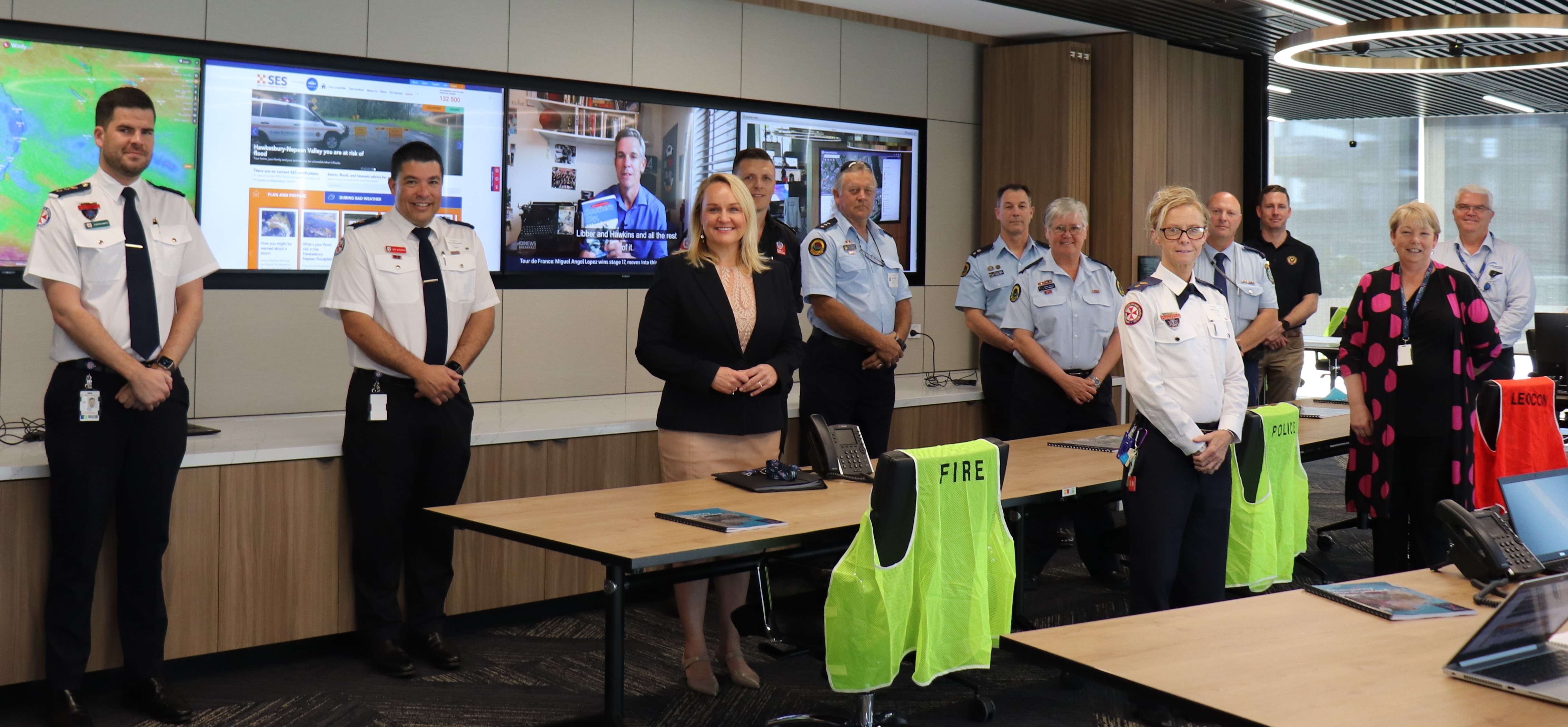
City of Newcastle has unveiled its new local emergency operations centre (LEOC) to representatives from Police, State Emergency Services and Fire and Rescue ahead of the official start of bushfire season on 1 October.
The new LEOC at the City Administration Centre, 12 Stewart Avenue, replaces the 30-year-old facility at Tighes Hill, which no longer complies with modern standards, nor is it compatible with partnering emergency services’ technologies. This meant a temporary response centre had to be established at Newcastle Library during the 2019 catastrophic bush fire event.
The LEOC’s technology and flexible design allow emergency services, including Fire and Rescue NSW, NSW Rural Fire Service, NSW Police, Ambulance NSW and the NSW SES, to join with City of Newcastle and other agencies to coordinate responses to a range of incidents and natural disasters.
LEOC-1.jpgLord Mayor Nuatali Nelmes (centre) and Emergency Management Coordinator Leanne Bell (right) with emergency services personnel in the new Local Emergency Operations Centre.
Features include multiple 85 and 65-inch screens with live-stream capabilities; a 16-seat conferencing facility with wireless presentation and TV connectivity for news coverage, weather and traffic updates; 32-seat room and the ability to create breakaway spaces; as well as a commercial kitchen capable of providing meals in the event of a city-wide blackout.
The co-location of the LEOC on the sixth floor of the City Administration Centre ensures this comprehensive range of amenities and support facilities are readily available in a central location with access to backup power on site via two diesel-powered generators.
Newcastle Lord Mayor Nuatali Nelmes said the new LEOC would allow emergency services improved connectivity, efficiency and personal comfort, which could prove crucial in a major incident.
“The way in which we respond to emergencies has significantly evolved with advancements in technology,” the Lord Mayor said.
“This new state-of-the-art facility launches our emergency response operations into the 21st Century, providing the best possible facilities and resources to support our emergency agencies on the ground assisting the community in times of disaster when they are counting on us to respond swiftly and efficiently.”
City of Newcastle is required to provide a Local Emergency Operations Control facility under the State Emergency and Rescue Management Act 1989.

NSW OUTDOOR DINING SCENE SET FOR SUMMER

A new taskforce is bringing NSW government agencies together to activate the State’s outdoor hospitality spaces, making approvals for alfresco dining and drinking easier and faster to get.
Minister for Customer Service Victor Dominello said the NSW Government is keen to work with venues to better use open spaces to help generate business and create jobs.
“The pandemic has made indoor spaces less amenable to socialising so it’s time we reduce barriers to spending more social time outside,” Mr Dominello said.
“We’re at a point where we need a cultural transformation to breathe life back into hospitality businesses and it makes sense to take advantage of NSW’s great climate and superb hospitality offerings, while adapting to a world where COVID transmission remains a risk.”
The taskforce will include representatives from:
•         NSW Health
•         Liquor & Gaming NSW
•         The Office of Local Government
•         The Office of the Small Business Commissioner
•         NSW Police
•         Department of Planning, Industry and Environment
•         Transport for NSW
•         NSW Food Authority
“This group of alfresco architects will look into streamlining existing legislation, so we have a pilot in place before summer, as well as long-term solutions where it makes sense to standardise the outdoor drinking and dining scene. A default safe alfresco culture should be the norm,” Mr Dominello said.
Representatives on the taskforce will work closely with local government, who have the lead role in identifying the right spaces and considering their use within frameworks for public safety and amenity.
Minister for Planning and Public Spaces Rob Stokes said the taskforce will work out how to streamline applications for venues to use their outdoor spaces in time for summer.
“Public spaces have become more important than ever before. As we head into the warmer months, we need to find ways to keep our vital hospitality sector buoyant, while also keeping people safe,” Mr Stokes said.
“Our climate is perfect for alfresco dining, which brings life and vibrancy to our streets and public squares and gives people a reason to visit city centres.”

More than 250 cannabis plants seized; man charged – Singleton

A man has been charged after more than 250 cannabis plants were seized from a home at Singleton.
In recent months, officers from Hunter Valley Police District have been investigating the alleged cultivation of cannabis in the region.
Following inquiries, just before 5.30pm yesterday (Wednesday 16 September 2020), police executed a search warrant at a home on Dimmock Street at Hunterview.
During the search police located an alleged sophisticated hydroponic cannabis set-up, consisting of 258 cannabis plants.
Police remain at the property today (Thursday 17 September 2020) where they are processing and dismantling the set-up.
A 28-year-old man was arrested at the home and taken to Singleton Police Station where he was charged with:
– Knowingly take part- cultivate (large commercial quantity cannabis);
– Cultivate prohibited plant;
– Alter or add to electricity installation for metering; and
– Enhanced indoor cultivation plant for commercial purpose.
The Vietnamese National was bail refused to appear at Singleton Local Court today (Thursday 17 September 2020).

One man charged and four issued $1000 PINs in three separate COVID-19 breaches

A man who was issued a Penalty Infringement Notice (PIN) at the weekend for entering into NSW from Victoria without a permit has now been charged, after allegedly trying to cross the border again in the back of a taxi.
Just before 10pm last night (Tuesday 15 September 2020), police at a border checkpoint on the Hume Highway, South Albury, stopped a taxi attempting to enter NSW and spoke with the driver and passenger.
Checks revealed the passenger – a 26-year-old man – did not have a valid permit to be entering NSW and had attempted to cross the border several times previously. Additionally, the man had been given a PIN at Central Railway Station on Saturday (12 September 2020) and instructed to return to Victoria, when he was unable to produce a permit.
He was arrested and taken to Albury Police Station, where he was charged with not complying with a noticed direction. The man was granted strict conditional bail, to appear before Albury Local Court on Monday 12 October 2020.
Additionally, four PINs have been issued since the past update:

  • About 7am on Monday (14 September 2020), police were assisting NSW Health who were screening passengers arriving in Sydney from Albury at Central Railway Station, when they spoke to a 33-year-old man who could not provide a valid permit. Checks revealed the man attempted to enter NSW using a Railway Bridge at Albury last Friday (11 September 2020). After being advised he could return to Victoria or undergo quarantine, the man chose to quarantine, and was taken to a hotel on Thomas Street, Haymarket. During quarantine, he allegedly exited his room on numerous occasions on Monday (14 September 2020) and yesterday (Tuesday 15 September 2020) and was subsequently issued a $1000 PIN for fail to comply with noticed direction in relation to section 7/8/9 – COVID-19.
  • Three tradesmen attempted to enter NSW at the Moama checkpoint about 9.40am yesterday (Tuesday 15 September 2020), however, they were unable to produce a valid permit and directed to return to Victoria. A short time later, the men returned to the checkpoint and produced a permit, which only allowed entry via air travel. About 1pm the same day, the men attempted to enter at the Hume Highway checkpoint. The driver, a 30-year-old man, told police they crossed into Victoria in error and attempted to re-enter. Checks revealed they entered Victoria at 6am and the driver was issued an infringement notice for fail to provide/give false information on request. The passengers – aged 26 and 28 – were also issued $1000 PINs for fail to comply with noticed direction in relation to section 7/8/9 – COVID-19.

Police continue to appeal to the community to report suspected breaches of any ministerial direction or behaviour which may impact on the health and safety of the community.
Anyone who has information regarding individuals or businesses in contravention of a COVID-19-related ministerial direction is urged to contact Crime Stoppers: https://nsw.crimestoppers.com.au Information is treated in strict confidence. The public is reminded not to report crime via NSW Police social media pages.

Man charged with COVID-19 breach following unauthorised protest – Camperdown

A man has been charged with breaching a COVID-19 Public Health Order following an unauthorised protest at a university at Camperdown today.
Midday (Wednesday 16 September 2020), officers attached to Inner West Police Area Command attended the grounds of a Sydney university following information of an unauthorised protest and in breach of the NSW Public Health Order of mass gatherings.
Police will allege in court that a 34-year-old man was given several warnings and directions to leave the area; however, he repeatedly refused to comply.
He was subsequently arrested and taken to Newtown Police Station, where he was charged with not comply with noticed direction re s 7/8/9 – COVID-19.
He was granted conditional bail; however refused to acknowledge the conditions, as such he has been refused bail to appear in Newtown Local Court tomorrow (Thursday 17 September 2020).
Further, nine people were issued $1000 Penalty Infringement Notices (PINs) in relation to breaches of Public Health Orders.

Labor's NSW Made plan to boost rural and regional jobs and kick-start economy

NSW Labor will bring a Bill to Parliament to overhaul the State’s purchasing and procurement powers to support NSW jobs, industry and supply chains, help workers develop skills and grow the NSW economy out of the COVID-19 recession.
The Labor Leader Jodi McKay said: “I grew up in a rural community and had to leave to get a job. 30 years later that’s still happening. The Government must intervene, because only when rural and regional NSW is strong can the entire state thrive.”
As part of Labor’s NSW Made campaign, The NSW Jobs First Bill will bring NSW in line with other states, including Victoria and South Australia and provide a much-needed boost to economies across regional NSW.
Ms McKay said: “Government money should be spent in NSW to help kick-start the economy. This plan will bolster employment and support NSW businesses during the biggest economic downturn since the Great Depression.”
“The Premier talks about economic recovery, but she doesn’t have a plan to create jobs. The NSW Government spends more than $30 billion on goods and services each year.  Every single cent of that should be helping create jobs in NSW. Every single cent should create and support industry across NSW – especially in regional NSW.”
Part of NSW Labor’s Bill is the establishment of a NSW Jobs First Advocate to advocate for businesses and industry in Government purchasing decisions, and hold suppliers to account for the NSW jobs and supply chain commitments they make.
“Just this week we discovered Indonesian-made ferries destined for Sydney Harbour are riddled with asbestos and are too tall to fit under bridges. The Government should be building these ferries in NSW.  Local manufacturing supports local jobs, which is critical to the recovery of our state. If the Premier is serious about economic recovery she will support this Bill.”
As part of this Bill, suppliers looking to win government contracts would have to submit an Industry Development Plan to outline how they’ll support NSW jobs and industries.
A proportion of jobs on major State Government projects would also go to apprentices and trainees, Indigenous Australians, disadvantaged and vulnerable groups and the long-term unemployed.
“If you spend taxpayer money responsibly, you can create jobs across the State. You can support businesses. And you can make sure there are opportunities for everyone in the workforce.”
While at Cooma where the historic Snowy 2.0 will be built, Ms McKay said the NSW Premier should be using her position at National Cabinet to make sure NSW steel and NSW jobs are at the centre of this nation-building project.
“It makes sense to buy a NSW-made product instead of using foreign steel, particularly during a recession. Every local steel industry worker employed supports another six workers in related industries.”
Since 2011, successive NSW Liberal governments have sent local jobs offshore, awarding contracts worth billions of dollars to overseas manufacturers.
These include:

  • Imported steel for the International Convention Centre and Sydney Metro
  • Ferries from Indonesia and China
  • Buses from Germany and Malaysia
  • Trains from South Korea and China
  • Metros from India
  • Light rail vehicles from France and Spain

“People would be shocked to know major NSW Government projects, along with most of the wind turbines and solar panels that generate energy here are mostly made from imported steel.”
“Buying local supports jobs and supports industry in NSW,” Ms McKay said. “Nowhere is this more important than across regional NSW. Labor’s plan will back NSW businesses, overhaul procurement practices, boost manufacturing capacity and strengthen the economy.
“The money Government spends is your taxpayer money. It should be spent to create jobs in NSW, not overseas.

Movies on the big screen set to return to Newcastle CBD following closure of Tower Cinemas

The magic of cinema is set to return to the city centre with the Civic Theatre installing a 7.5-metre-wide movie screen in the iconic main auditorium.
Under two years since the closure of the Tower Cinemas on King Street, the return of films will re-activate the CBD, which has experienced major disruption due to COVID-19.
CivicCinema1-Crop-1.jpg
The new 7.5 metre x 4.4 metre screen combined with the Civic Theatre’s state of the art sound system and individually air-conditioned seats, will provide a cinematic experience like no other in the region.
Lord Mayor Nuatali Nelmes said cinema and theatre have a long history in Newcastle’s CBD and City of Newcastle is pleased to offer both live performance and recent release cinema for the enjoyment of the community.
“After a period where COVID-19 has had such a devastating impact, it’s wonderful that through adding regular film screenings to our Civic Theatre program, we can take this positive step in our city’s journey towards recovery, and provide a boost to surrounding local businesses by attracting more people into the Civic precinct.”
The Civic Theatre opened in 1929, and although designed as a live theatre, it was leased as a cinema for the next 45 years.
Civic Theatre Manager Leonie Wallace said locals are thrilled to experience something contemporary but screened in a venue with such historical links.
“We trialled bringing film back to the Civic Theatre in January with a season screening of a selection of the most acclaimed productions from London’s National Theatre at the Civic Playhouse. It was so popular that film screenings in the Civic Theatre was the next obvious step,” Ms Wallace said.
“Our new program features a variety of films that appeal to people of all ages and tastes, such as recent release features, documentaries, theatre productions and children’s films during the school holidays.
“We’re also working on securing shows to return to the Civic Theatre stage with the venue’s audience capacity lifted to 500 people from next month, the maximum number allowed under the current Public Health Order.
“We have made changes to how the Civic Theatre operates to enable people to experience cinema and live performance safely with physical distancing requirements and hygiene measures met under our COVID Safe plan.”
The Civic Cinema initiative is part of the Civic’s Beyond the Stage program of cultural offerings outside of the traditional uses of the Civic Theatre and City Hall. So far, this has included the Civic Bar Beats – Friday evenings of live local music in our Theatre Bar, and lunchtime concerts at City Hall.
Tickets for Civic Cinema are now on sale through the Civic Theatre website.

MORE THAN 100,000 PEOPLE TO BE PROVIDED TRAINING FOR JOBS OF THE FUTURE

More than 100,000 people across NSW will have the opportunity to reskill for the jobs of the future thanks to the NSW Government’s Skilling for Recovery initiative.
Premier Gladys Berejiklian said the NSW Government had committed almost $160 million to match the Federal Government’s JobTrainer funding, which would  be a key component to the State’s COVID-19 Recovery Plan.
“COVID-19 has presented an unprecedented challenge to our State, and Skilling for Recovery complements our current skills and training strategy,” Ms Berejiklian said.
“It’s crucial we look to reskill, retrain and redeploy the workforce to industries where there are skills shortages and emerging employment opportunities. We are committed to ensuring the NSW workforce is the most highly skilled in the country.”
Treasurer Dominic Perrottet said getting people back to work was pivotal to the state’s economic recovery.
“Hundreds of thousands of jobs have been lost in this pandemic and we need to get people off the Centrelink queues as quickly as possible,” Mr Perrottet said.
“The innovative thinking we’ve seen during lock-down will help drive our economy back to prosperity, supported by almost $16 billion in economic and health measures which focus on getting people into jobs and keeping businesses in business.”
Minister for Skills and Tertiary Education Geoff Lee said this investment would help job seekers retrain or up-skill to enhance their credentials and support school leavers to enter the workforce for the first time.
“We have to skill the workforce to take advantage of future job opportunities which may be very different to jobs in the pre-COVID economy,” Mr Lee said.
“Education and skills are key pillars to the NSW Government’s COVID-19 Recovery Plan, so it is a critical step to commit to these additional training places. I expect industries such as health,  manufacturing and construction to be key training areas.”
Skilling for Recovery includes:

  • Infrastructure-specific training to support the record spending on projects such as the Aerotropolis, hospital redevelopments and regional road upgrades
  • Full-qualifications to retrain and become qualified
  • Short course micro-credentials to upskill
  • Support for apprentices and trainees
  • A new online Skills and Employment Hub
  • Regional employment brokers to connect industry and trainers with job seekers;
  • Tailored support to re-engage young people in regional areas back into school, training or employment.

Training is expected to commence in the coming months.