
A fresh approach to unleash Newcastle’s tourism potential will be unveiled by City of Newcastle to attract a wider visitor audience and boost local economic COVID-recovery efforts.
Newcastle’s thriving tourism industry, prior to COVID-19, contributed $1 billion to the local economy each year, with more than 5.1 million international and domestic travellers visiting in 2019.
The City’s draft 2021-2025 Destination Management Plan was created with stakeholders from across the industry, and sets out a raft of initiatives and projects set to stimulate the local tourism economy and increase visitor spend.
Lord Mayor Nuatali Nelmes said work done now to position Newcastle as a premier tourism destination will play a vital role in the city’s future economic recovery, once travel restrictions ease further.
“The City has taken the lead to spearhead a collaborative and consolidated approach toward shaping Newcastle’s future as a destination for visitors and tourists,” said Cr Nelmes.
“With a pipeline of new-build hotel investment, including the five-star Kingsley part of the Crystalbrook Collection in the former City Administration Centre and plans underway to develop the historic Newcastle Post Office into a hotel, and Iris Capital’s QT Hotel, Newcastle is well positioned to attract a new wave of domestic and international visitors, once travel restrictions ease further.
“The City is committed to driving the growth and sustainability of the visitor economy with a new tourism plan designed as a visionary tool, instrumental to driving Newcastle’s social and economic recovery.
“The Destination Management Plan provides our City with a blueprint to work together across government and industry to create meaningful partnerships in order to achieve a shared vision for Newcastle as a premier visitor destination, showcasing the City’s rich art, cultural and culinary scene, a vibrant night-time economy and experiences that celebrate our natural environment and creative community.
“The Plan highlights the significant opportunity for a tourism-led economic recovery from signature attractions, while developing tourism products and experiences, particularly across places like Blackbutt Reserve, the Bathers Way, Newcastle Art Gallery, and Fort Scratchley.
“We aim to build a thriving visitor economy in Newcastle that will lead to population, economic and jobs growth, and our City’s success will be one shared by the greater Hunter Region, NSW and Australia.
“To succeed as a sector, industry, government and operators need to collaborate and find ways to work together, by positioning Newcastle as the destination of choice in order to attract the tourist dollar, in an increasingly competitive market.”
Councillors will vote at tonight’s Ordinary Council Meeting to place the draft Destination Management Plan on public exhibition from 25 November 2020 until 6 January 2021.
Man presents to hospital with gunshot wounds – Hunter Valley
Police are investigating after a man presented to a Hunter hospital with gunshot wounds early this morning.
Just after 4am (Tuesday 24 November 2020), a 43-year-old man presented to Scone Hospital with gunshot wounds to his leg and ankle – he is currently being transported to John Hunter Hospital in a stable condition with non-life threatening injuries.
Police have been told the injured man was driving north on the New England Highway, near Wingen, about midnight, when he pulled over after a white sedan approached from behind.
The injured man was involved in an altercation with two men from the white sedan, before a number of shots were fired and the pair fled. He reportedly drove to friend’s home in Blandford before being taken to Scone Hospital.
Officers from the Hunter Valley Police District have commenced an investigation into the circumstances surrounding how the man sustained his injuries.
As police continue their inquiries, they are urging anyone who may have information to contact Scone Police or Crime Stoppers on 1800 333 000.
Byron Bay restaurant fined $5,000 for breaching COVID Public Health Orders
A Byron Bay restaurant has been issued with a $5,000 fine for an alleged breach of Ministerial Directions under the Public Health Act at the weekend.
As a part of ‘Operation Summer Safe 2020’ and ‘Operation Schoolies 2020’, licensing police from Northern Region conducted a deployment to Byron Bay between Saturday 21 and Monday 23 November, assessing venue compliance with regards to the Public Health Orders.
As a result of inquiries, police attended a restaurant on Jonson Street, where they observed more than the designated one person per four square metres inside the venue, over a two-day period.
Following further inquiries, police contacted the business owner yesterday (Monday 23 November 2020) and issued a $5,000 Penalty Infringement Notice for “Fail to comply with noticed direction in relation to Section 7/8/9 – COVID-19 – Corporation”.
Tweed/Byron Police District Commander, Superintendent Dave Roptell said as thousands of school leavers arrive in Byron this week, venues need to be aware of their responsibilities in maintaining a COVID-Safe environment.
“There are Year 12 students coming to Byron Bay from all across Australia, including Victoria, Queensland and Greater Sydney.
“Our specialised licensing police will continue to conduct business inspections and compliance checks throughout the entire ‘Schoolies’ and ‘Summer Safe’ operations, to ensure venues have their COVID-Safety plans up-to-date and are doing their bit to protect the Northern NSW community,” Supt Roptell said.
Police continue to appeal to the community to report suspected breaches of any ministerial direction or behaviour which may impact on the health and safety of the community.
Anyone who has information regarding individuals or businesses in contravention of a COVID-19-related ministerial direction is urged to contact Crime Stoppers: https://nsw.crimestoppers.com.au. Information is treated in strict confidence. The public is reminded not to report information via NSW Police social media pages.
Counting koalas won’t save national treasure
A koala census won’t save our national treasure and a moratorium on the clearing of critical habitat is still urgently needed, the Greens say.
Responding to the Environment Minister’s announcement today of a koala census to identify key habitat, Greens Environment Spokesperson Senator Sarah Hanson-Young said:
“A koala census won’t save our national treasure from the Morrison Government.
“Koalas have been counted in critical habitat areas only for the Government to ignore that data and approve mining and development projects that imperil the koalas calling that land home.
“Just last month, the Environment Minister approved a quarry at Pt Stephens which will destroy 52ha of critical habitat for the endangered species.
“Unless habitat clearing is stopped, koalas will soon be extinct.
“The Greens will move in the Parliament for a moratorium on habitat clearing to save the koala from extinction.
“Off the back of the worst bushfires in history which killed a third of NSW’s koala population and destroyed millions of hectares of habitat across the country, no approvals for developments on koala land should be given.
“The Morrison Government has had seven years to develop a recovery plan for the koala, a census isn’t enough, the species needs real protection under our national environment laws.
“It’s clear the government isn’t serious about saving the koala and cannot be trusted to protect it with or without a census.”
$41.7 million boost to commercialise lifesaving medical discoveries
An innovative nasal treatment to fight COVID-19, common colds and flu is being taken to the next stage of testing, thanks to the Morrison Government’s $500 million Biomedical Translation Fund.
Developed by Australian biotech company Ena Respiratory, INNA-051 works by stimulating the innate immune system, the first line of defence against the invasion of pathogens into the body.
The Government, alongside Brandon Capital Partners has committed $11.7 million to test the nasal spray treatment that targets the primary site of most respiratory virus infections, including SARS-CoV-2, the strain of coronavirus that causes COVID-19, and influenza.
The program has been designed so that if successful, INNA-051 will be manufactured and formulated in Australia, creating manufacturing jobs into the future.
In addition, four further projects will also share in almost $30 million dollars to commercialise their ideas. Each of these projects provide the potential to greatly improve the treatment for issues such as respiratory diseases, chronic pain and autoimmune diseases.
Minister for Health Greg Hunt said successful outcomes of the projects will improve the lives of Australians and potentially millions of people around the world.
“Australia’s health and medical researchers are world class and this investment will continue the proud Australian tradition of discovery and translation that saves lives and improves lives,” Minister Hunt said.
“The Morrison Government is backing Australia’s next generation of medical advances and this investment means these businesses have the potential to take their technology to the next level.”
Minister for Industry, Science and Technology Karen Andrews said this funding underpins the Morrison Government’s determination to deliver better health outcomes, while also encouraging economic growth and creating jobs.
“The Biomedical Translation Fund fosters potential breakthroughs that will not only improve people’s lives, but also help Australian companies create more jobs and grow into new markets,” Minister Andrews said.
“The Morrison Government is looking to develop our manufacturing capacity in medical products and this fund is yet another way we can help commercialise great Australian ideas right here at home.”
Funding consists of equal parts Commonwealth and private sector funding and is operated by three private sector fund managers: Brandon Capital Partners, OneVentures Healthcare Fund and BioScience Managers.
The other four investments made through the Fund are:
- OneVentures Healthcare Fund has committed $9.5 million to Kira Biotech. Kira Biotech is researching treatments for autoimmune disease, a condition where the immune system attacks healthy cells or the body’s organs. Kira Biotech’s research directs components of the body’s normal immune response to the impaired cells of a person suffering from an autoimmune disease, allowing the immune system to work properly.
- BioScience Managers has committed $10 million to medical device company Closed Loop Medical. Closed Loop Medical’s technology aims to improve treatments for conditions of the body’s nervous system. The technology being developed will record and measure a person’s unique response to stimulation and provide a tailored outcome for the patient. The technology has the potential to be applied to disorders including Parkinson’s disease, epilepsy and bladder dysfunction.
- BioScience Managers has also committed $5 million to Adherium. Adherium is developing a digital medication monitoring system for people with respiratory diseases. The monitoring system will initially help people with conditions like asthma, by tracking their drug usage and issuing reminders to ensure they take their medication.
- Brandon Capital Partners’ MRCF BTF Fund has invested more than $5 million in Polyactiva. Polyactiva’s novel polymer technology delivers medication to the eyes. Its lead product will be used for treating glaucoma, the leading cause of blindness affecting 70 million people globally. Polyactiva’s novel delivery technology will provide six months of therapy from a single treatment, overcoming many of the challenges of delivering medication with eye drops.
The Morrison Government continues to invest in the cutting-edge medical technologies and treatments that will save lives, while growing a sector that can create jobs for Australians now and into the future.
A moment to reflect and say thanks to organ and tissue donors and their families
Today is DonateLife Thank You Day – an annual day where we pause, reflect, and thank donors and their families for generously giving the gift of life.
Federal Minister responsible for organ and tissue donation, Mark Coulton, said the gift of organ and tissue donation is a generous act that is life-changing for another person.
“On DonateLife Thank You Day we stop and give thanks to those who have given someone hope and an opportunity to continue life,” Minister Coulton said.
In 2019, 1,683 lives were transformed by the generosity of 548 deceased and 239 living organ donors and their families that said ‘yes’ to organ donation. A further 12,000 Australians benefited from eye and tissue donation.
“Australia has a world class transplant clinical system but ultimately the gift of a transplant is not possible without donors and their families,” Minister Coulton said.
“Because over 4,500 donors and their families said ‘yes’ to organ and tissue donation since the national program began in 2009, more than 13,000 transplant recipients and their families say thank you.”
“For those waiting for a transplant, organ and tissue donation can mean the difference between life and death, being healthy and sick, between seeing and being blind, or between being active and never walking again. It means that people can resume an active life with their family, in their workplace, their school and their community.
“Australians of all ages, faiths and cultural backgrounds might one day be in need of an organ or tissue transplant.
“I encourage all Australians to reflect on the life-changing benefits of organ and tissue donation and to show your support by joining the Australian Organ Donor Register at donatelife.gov.au – it’s easy and takes less than a minute – and have the all-important conversation with your family, so they know your intentions.”
Melbourne Airport Rail to create jobs for years to come
The Melbourne Airport Rail Link route will take travellers into the heart of the CBD in less than 30 minutes following an historic agreement announced today between the Australian and Victorian governments
Prime Minister Scott Morrison joined Premier Daniel Andrews to announce the route for the project, which will connect Victoria’s regional and metropolitan rail networks to the airport for the first time.
From 2029, Victorians will be able to catch a train directly from the CBD to the airport.
“The airport link is a nationally significant project and Victorians have been waiting a long time for it to become a reality. With construction to start in 2022, the agreement will support up to 8,000 jobs during construction,” the Prime Minister said.
“When complete, the link will slash travel times, bust congestion and be a major boost to the economy.”
Airport trains will run through the Metro Tunnel, meaning families in the booming south-eastern suburbs can get to the airport without changing trains, and the majority of Victorians can get to the airport with just one interchange from their closest station.
It also means that tourists visiting Victoria will be able to get from the airport to regional Victoria in a hassle-free way – meaning more visitors and jobs for our regions.
Melbourne Airport Rail will see 10-minute turn-up-and-go services running from Melbourne Airport through the heart of the city, providing direct connections to key sites including Melbourne University, the Parkville medical precinct, Melbourne Central and Flinders Street stations and the St Kilda Road business precinct.
Premier Daniel Andrews said today’s announcement was a historic day for all of Victoria.
“This project has been talked about for a long time, its key to our recovery and this design means it will benefit all Victorians,” Mr Andrews said.
“As we continue our recovery, we need a long-term plan. We need a pipeline of jobs for Victorians looking for work now, and for those who will need jobs in the future. We said we’d deliver this project, and we’re keeping our promise.”
Deputy Prime Minister and Minister for Infrastructure, Transport and Regional Development Michael McCormack said this vital piece of infrastructure would transform travel to and from Melbourne Airport.
“The aviation industry is so important to Australia’s economy and by investing in this rail link, we’re making it even easier for Victorians to travel to and from Melbourne Airport,” the Deputy Prime Minister said.
“This investment is an important part of the economic road back – it will be a job-creator for Victorians and a huge boost to so many local businesses across the construction industry.”
Federal Minister for Population, Cities and Urban Infrastructure Alan Tudge said a rail line to the airport was long overdue for Melbourne.
“Our objective has always been to deliver a rail connection that is fast, affordable and built as quickly as possible,” Mr Tudge said.
“For those in the south east it will mean a trip to the airport without changing trains, and for others just one change.”
Minister for Transport Infrastructure Jacinta Allan said that Airport Rail via Sunshine means that the majority of Victorians can access the airport by rail, as quickly as possible.
“This will give Victorians the fastest, most direct trip to the airport through the Metro Tunnel which will deliver more trains, more often.”
Melbourne’s west will also have direct airport access via a single interchange at Sunshine Station, or Footscray Station for Werribee and Williamstown line passengers.
Passengers on all city loop trains will be able to connect to airport trains at Flinders Street and Melbourne Central.
Passengers from the regional centres of Geelong, Ballarat and Bendigo will travel to the airport via a single interchange at Sunshine, while passengers from Gippsland will be connected via a single interchange at a choice of locations along the Cranbourne and Pakenham lines.
It delivers the best possible integration with the existing network and paves the way for future improvements to regional and western metropolitan lines.
Melbourne Airport Rail will use the new fleet of High Capacity Metro Trains – the biggest and most passenger-friendly trains on Victoria’s train network.
The Victorian and Australian governments have committed $5 billion each in funding. Detailed planning and development work is currently underway, which will inform more detailed cost estimates.
Construction will begin in 2022, with a target completion date for Melbourne Airport Rail of 2029 – subject to the business case and relevant Victorian and Federal planning, environmental and other government approvals.
City of Newcastle sets its five-year climate plan
City of Newcastle intends to transition to a fleet of electric vehicles, build operational resilience through additional renewables and battery storage, and switch all city lighting to LED over the next five years under a new Climate Action Plan.
The Plan covers both City of Newcastle operations and Newcastle as a whole to accelerate emission reduction across the City through a suite of sensible and prudent action and initiatives. Working collaboratively with other progressive organisations, the Plan takes advantage of the economic opportunities that arise from a clean energy and low-emissions industry landscape.
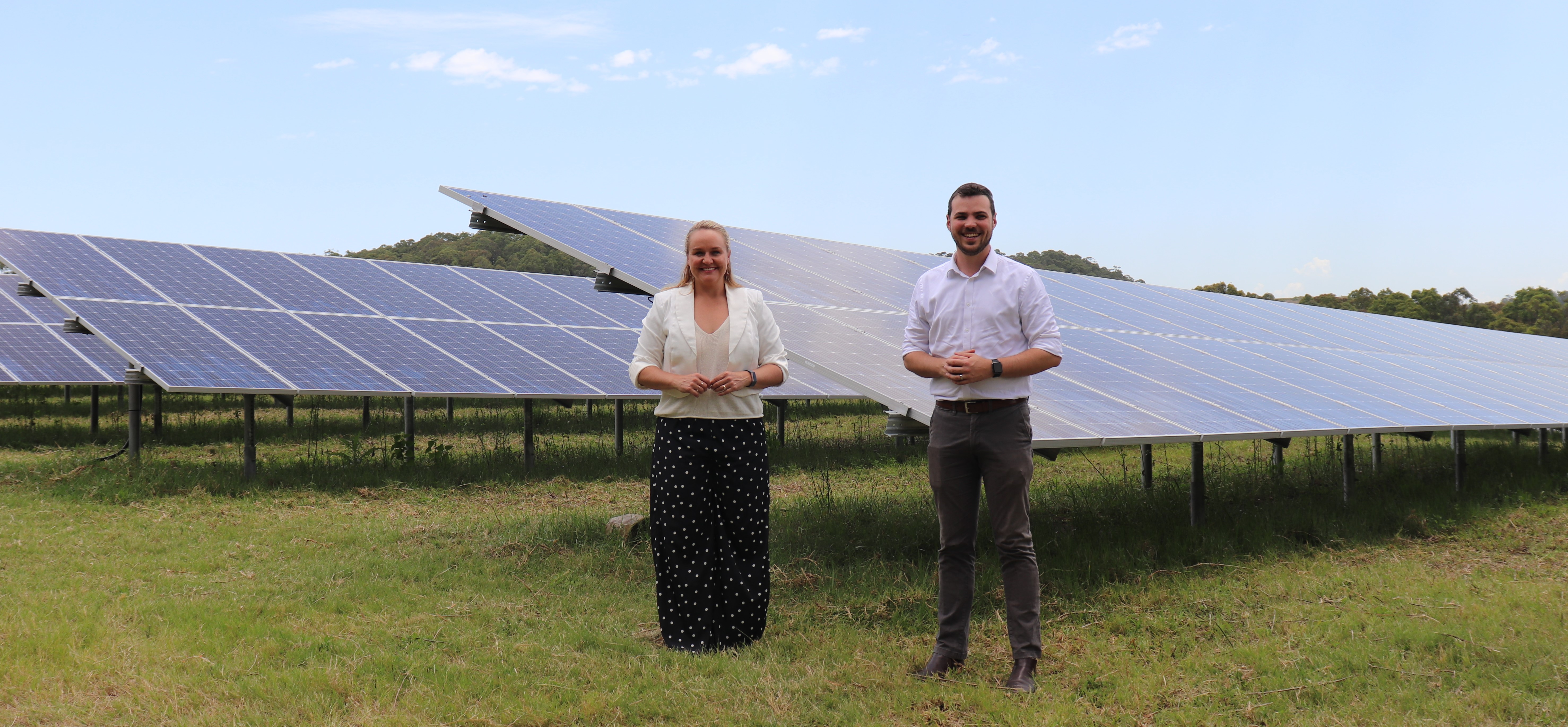 The Climate Action Plan is listed for consideration at Tuesday’s Ordinary Council Meeting and replaces the 2020 Carbon and Water Management Action Plan (CWMAP). The Plan sets new targets and outlines innovative and sustainable programs to achieve net zero emissions by 2030.
Lord Mayor Nuatali Nelmes said the Climate Action Plan would build upon the achievements of recent years that has led to Newcastle being recognised as one of Australia’s leading Cities in sustainability.
“City of Newcastle has formally committed to the Paris Climate Agreement and we accept there is a global climate emergency. We owe it to our children to prioritise concrete action on climate change.
As Novocastrians, we have seen firsthand the impacts of climate change, be it the erosion of Stockton Beach or increasingly severe storms that beached the Pasha Bulka,” Cr Nelmes said.
“The Climate Action Plan sets ambitious goals and priorities for the next five years and follows the successful delivery of our previous Plan which included the transition to 100 percent renewable electricity.
“The City, in developing this Plan, has worked closely with the community, business and industry, while assessing global best practice and applying it in a local context.
“Over the next five years we’ll take advantage of emerging technology and utilise more recycled and low-emissions materials in our operations.
“We’ll also look to our large fleet of vehicles and will work on a transition to electric vehicles as they become more prevalent, diverse and economically competitive. City of Newcastle, in collaboration with other city partner organisations, has been slowly investing in the rollout of vehicle charging infrastructure to support the international shift to electric vehicles.”
“We’re proud to be one of the most progressive cities in the country when it comes to tackling climate change and are confident this new Plan will keep us moving down this path of sustainability. It’s important that as a city leader we respond to the increasing calls from our community to tackle what is this generations most important challenges.”
In the next five years under the Climate Action Plan, City of Newcastle will:
· Reduce fuel use by 50% through transitioning CN’s fleet to electric options
· Reduce electricity use by 30% by switching all lighting to LEDs (or equivalent)
· Increase renewable energy and battery storage
· Support development of sustainable infrastructure
· Encourage new community renewable energy projects
Under the previous climate plan, City of Newcastle has:
· Reduced electricity usage by 21 per cent
· Upgraded 31 per cent of streetlights to LEDs
· Secured 100 per cent of electricity from renewable sources
· Reduced potable water usage by more than 14 per cent
· Slashed the City’s carbon footprint by 77 per cent for all operations other than waste
· Reduced liquid fuel use by 7 per cent
City of Newcastle is a founding member of Local Governments for Sustainability (ICLEI), a founding member of the Business Renewables Centre, a member of the Cities Power Partnership, a member of the Global Covenant of Mayors for Climate and Energy, and recently became a Pioneer City for ICLEI’s CitiesWithNature program.
Third person charged over suspicious death of New Zealand firefighter Ian Pullen
A third person has been charged in relation to the suspicious death of a New Zealand man in the Hunter region two years ago.
Just after 5.30am on Saturday 29 September 2018, emergency services were called to Carrington Street, Glenridding, after a man’s body was located on the side of the road.
The man was later identified as 43-year-old New Zealand firefighter, Ian Pullen, who had arrived in the Hunter region to assist local volunteers fighting bushfires.
Detectives from Hunter Valley Police District established Strike Force Awabakil to investigate the circumstances surrounding Mr Pullen’s death.
A man and a woman have since been charged over the death; they remain before the courts.
Following further inquiries, about 9.10am today (Monday 23 November 2020), detectives attended a Whittingham home and arrested a 21-year-old woman.
She was taken to Singleton Police Station and charged with accessory after the fact to murder.
She was refused bail to appear at Muswellbrook Local Court later today (Monday 23 November 2020).
Disqualified driver charged after allegedly travelling more than 50km/h over the speed limit – Hunter
A disqualified driver will face Court after she was allegedly detected travelling nearly twice the speed limit in the Hunter Region.
About 11.30am this morning (Sunday 22 November 2020), officers from Traffic and Highway Patrol Command were conducing speed enforcement duties on John Renshaw Drive at Black Hill, when they detected a Hyundai Elantra sedan allegedly travelling at 116km/h in a 60km/h road work zone.
A short time later, police stopped the driver, a 29-year-old woman. Checks conducted by police showed she was a disqualified driver.
It will be alleged in Court the road surface where the offence took place was loosely laid newly paved surface with no lane markings and was driving with a two-year-old child secured in the back seat.
The woman was arrested and taken to Maitland Police Station where she was charged with driving at a speed dangerous, exceed speed by more than 45km/h and drive whilst disqualified – 2nd offence.
The woman from Dungog was refused bail and is due to appear before Maitland Local Court on Monday 23 November 2020.