
A defence and aerospace technology park that will create up to 4,300 jobs and service and maintain Australian fighter jets is one step closer to reality.
Stage one of the Astra Aerolab precinct is now complete thanks to $11.7 million from the NSW Government’s Growing Local Economies fund.
Deputy Premier John Barilaro was joined by Newcastle Airport CEO Dr Peter Cock to announce construction of vital infrastructure is now complete, including an access road, power, water, gas, sewer and data connections.
Mr Barilaro said the essential infrastructure will kick-start the site’s development, driving innovation and collaboration in the Hunter and benefitting the local community through the creation of thousands of jobs.
“I turned the first sod on this project 18 months ago, and this site has already been transformed to pave the way for a world-leading defence and aerospace technology park,” Mr Barilaro said.
“This will allow aviation companies to establish themselves at this new location, as well as create jobs for aerospace engineers, aviation, IT and avionics specialists and attract workers to the Hunter.
“I want to thank Newcastle Airport, the City of Newcastle and Port Stephens Council for their hard work and commitment to making this project a reality.
Dr Cock thanked the NSW Government for its $11.7 million investment, noting stage one unlocks four initial development sites totaling 7.4 hectares including an airside development site and allows for the expansion of the existing BAE Systems site.
“Astra Aerolab is a place where world leading defence, research, aerospace and industry partners will converge to push boundaries, embrace new technologies and develop the jobs for the future,” Dr Cock said.
“It will be a truly inspiring environment for both businesses and their employees; we are determined it will become a place that connects a global workforce with the RAAF Base Williamtown and Newcastle Airport, and a place where people will want to work.
“Today is certainly a very proud moment for Newcastle Airport and more broadly for our region. We have taken a great idea and were supported by a forward-looking government committed to developing regional NSW.
“I thank the NSW Government for partnering with us to jointly fund the first stage of the development and now doubling down on that investment by declaring this area as a Special Activation Precinct, with Astra at its heart.”
Managing Director of BAE Systems Australia Andrew Gresham said the company would directly employ around 400 highly skilled people to support the Joint Strike Fighter fleet during the 30 plus years of the aircrafts’ service life.
The Astra Aerolab will form part of the NSW Government’s larger Williamtown Special Activation Precinct, that will grow a national and international defence and aerospace hub to turbocharge the region’s economy, drive investment and create jobs.
60,000 MURRAY COD RELEASED BACK INTO THE DARLING RIVER
A bold rescue-and-return mission by the NSW Government has successfully seen more than 60,000 Murray Cod released back into the Darling River near Menindee today, two years after severe drought triggered fish deaths.
Premier Gladys Berejiklian joined Minister for Agriculture and Minister for Western NSW Adam Marshall at Menindee to oversee the restocking of the Darling River.
Ms Berejiklian said the return of the Murray Cod to the waterway was part of the NSW Government’s ambitious plan to help restock the Darling River.
“This is a historic day for the Menindee community and the Barkindji people in particular,” Ms Berejiklian said.
“Two years ago widespread fish deaths were caused by high temperatures and record low rainfall so it gives me great joy to see these Murray Cod returned home and swimming through our healthy waterways.”
Mr Marshall said the fish were offspring of 70 Murray Cod rescued after the NSW Government last year took unprecedented action to launch the State’s largest-ever breeding program.
“Fast-forward to today and our virtual ‘Noah’s Ark’ has docked home, returning a massive 60,000 Murray Cod to their native river, a major milestone in the NSW Government’s $10 million Fish Rescue Strategy,” Mr Marshall said.
“The iconic Murray Cod is particularly special to both the Menindee region and local indigenous communities, so to stand here today with key community members and First Nations representatives as these fish are returned to country is very moving.
“This is just the start of something special. These 60,000 Murray Cod are only the first of more than 400,000 fish to be stocked across the State this month alone, and we will continue breeding 2.5 million native fish species each year to keep our rivers stocked.”
Mr Marshall said the Murray Cod restocked today were the offspring of fish rescued by NSW Department of Primary Industries (DPI) Fisheries from Menindee in the sweltering summer of 2019, and more saved the following summer.
“The rescued Murray Cod were taken to the NSW Government’s flagship fish hatchery at Narrandera, where they stayed until conditions improved,” Mr Marshall said.
“DPI has done a phenomenal job in breeding these offspring. This program ensures the survival of our fish species, no matter how severe future summers might be.”
INNOVATION REVOLUTION SET FOR WESTERN SYDNEY
Entrepreneurs and innovators will have more opportunities to bring ideas to life with Western Sydney to become home to the State’s second Startup Hub.
Minister for Jobs, Investment, Tourism and Western Sydney Stuart Ayres said the Western Sydney Startup Hub project would cement investment, technology and innovation as the centrepiece of the Government’s COVID-19 Recovery strategy.
“This new Startup Hub will be an exciting step in activating the historic Parramatta North Heritage Core and is set to provide 1,500 square metres of affordable co-working space and programs to support Western Sydney startups, scaleups and businesses,” Mr Ayres said.
“It will form part of the revitalised Parramatta North Heritage Core and will honour our past while preparing us for the future, by providing the space to create the jobs of tomorrow.
“It will draw on the successes of the Sydney Startup Hub in the Sydney CBD, which has already housed almost 500 companies, generated more than $280 million in investment and created more than 1,000 jobs.
“This project will bring the innovation revolution to the heart of Western Sydney, complementing the growth of the broader Westmead Health and Innovation District, including the recently announced Innovation Quarter development, which will deliver over 1,000 jobs and 28,000 square metres of health, research, education and commercial space.”
The Western Sydney Startup Hub is expected to open in late 2021 following a sensitive restoration of the circa 1876 Hospital Spinal Range Building and circa 1892 Kitchen Block.
Expressions of interest to operate and manage the Western Sydney Startup Hub will be open to respondents until 18 December 2020. More information can be found here
Missing man – Lake Macquarie
Police are appealing for public assistance to locate a man missing from Lake Macquarie.
Patrick Thaidy, aged 60, was last seen at his home on Delasala Drive in Macquarie Hills about 12am on Sunday (6 December 2020).
Family members reported him missing to police later that day and officers from Lake Macquarie Police District commenced inquiries into his whereabouts.
Police and family members hold grave concerns for his welfare due to medical conditions.
He is described as being of Aboriginal/Torres Strait Islander appearance, about 175cm tall, with a medium build, short black hair, scruffy facial hair and brown eyes. He is not currently wearing his dentures.
He was last seen wearing grey ‘Everlast’ track pants, a blue ‘Everlast’ long sleeve shirt and black shoes.
He is known to frequent areas in Lake Macquarie, Newcastle, Sydney and Wollongong.
Anyone who may have seen Patrick or who may know of his whereabouts is urged to contact police or Crime Stoppers on 1800 333 000.
Anyone with information about Patrick’s whereabouts is urged to contact Crime Stoppers: 1800 333 000 or https://nsw.crimestoppers.com.au. Information is treated in strict confidence. The public is reminded not to report information via NSW Police social media pages.
Woman charged over alleged armed robbery – Kotara
A woman will face court today charged over an alleged armed robbery in Newcastle overnight.
About 6.15pm (Monday 7 December 2020), a 39-year-old female attendant was working at a service station on Park Avenue, Kotara, when a 37-year-old woman entered the store and approached the counter.
Police will allege in court the woman then threatened the employee with a knife and demanded cigarettes.
The employee refused and the woman left the store.
Officers from Newcastle City Police District attended a short time later and arrested the woman.
She was taken to Newcastle Police Station and charged with robbery armed with an offensive weapon.
She was refused bail to appear at Newcastle Local Court today (Tuesday 8 December 2020)
GREENS TO AMEND IR BILL TO OUTLAW INSECURE WORK
Greens Leader, Adam Bandt, said the Greens will move a series of amendments to the government’s industrial relations reforms to outlaw insecure work, by introducing a legal presumption that all employment is permanent and ongoing unless there are compelling, exceptional business reasons to the contrary.
The amendments will also give effect to the Greens’ Fair Work Amendment (Making Australia More Equal) Bill 2018, which extends to gig economy workers the protections available to employees. Given Labor has also recently adopted a similar policy stance, the Greens’ amendments have a good chance of succeeding in the Senate.
“The Greens will move to outlaw insecure work,” Bandt said.
“Insecure work in Australia has got out of control.
“Casual, contract and gig economy workers are all getting a raw deal.
“The Greens will move to change the government’s bill so that every job is permanent and ongoing unless there are exceptional business reasons to the contrary.
“If our amendments pass, then insecure work will become a thing of the past, and casual, contract and gig economy workers could go to the Fair Work Commission to get their jobs converted to ongoing employment.”
“The government’s IR reforms will entrench the insecure work crisis, rather than address it, so the Greens will bring on amendments to ensure that every worker gets the rights they deserve.
“The recent deaths of five delivery riders has highlighted the lack of protections and entitlements for gig economy workers. The Greens’ will move amendments that will also give the Fair Work Commission the power to extend minimum wages, terms and conditions from the Fair Work Act 2009, modern awards or enterprise agreements to gig economy workers.”
“We’re also deeply concerned that the Attorney General, the highest law officer in the country, is undermining the Federal Court’s decision on casual workers and is working with big business to not only reverse the hard-fought win for casual workers rights, but is introducing legislation to prevent any future court ruling from providing full compensation to casual workers,” Bandt said.
KOALAS AND FRASER ISLAND BURNED – CLIMATE WILL TAKE AUSTRALIA’S TREASURES
The Australian Greens have warned that the government’s climate inaction is pouring fuel on fires incinerating our country’s iconic animals, landscapes, and flora, amid news that tens of thousands of koalas died during last season’s bushfires, and as an uncontrolled bushfire tears through an untouched world heritage rainforest.
Greens Environment spokesperson Senator Sarah Hanson-Young will this week move a ‘Save the Koala Bill’ to protect the habitat of Australia’s most iconic tree-hugger, in a bid to stave off extinction.
“Today Australia is watching one of our national treasures burn. The Fraser Island fire comes on the back of record-breaking temperatures and is a further harbinger of the climate emergency that we face,” Greens Leader, Adam Bandt said.
“Scott Morrison should be ashamed of the coal-fuelled destruction being wreaked on his watch. While the nation was burning last year he left for Hawaii, and now that it’s happening again, the best he can do is vow not to cheat on his climate commitments.
“In just five days Australia will have to front up to a UN hosted climate summit demanding greater ambition to reduce emissions. While other nations are doubling and tripling their ambition, all Scott Morrison is vowing is not to cook the books, and our nation’s precious wildlife is paying the price for his inaction.
“This constant cycle of destruction will become the norm unless Scott Morrison stops dragging his feet on climate action. If we don’t want to have billions of our animals burnt every summer, we need to rapidly transition off coal, oil and gas,” Bandt said.
Greens Environment Spokesperson Senator Sarah Hanson-Young said:
“The Greens will this week move to introduce a Save the Koala Bill to prevent further decimation of precious habitat and to help ensure our wildlife have a place to call home.
“The Bill will legislate a moratorium on clearing of critical koala habitat which is absolutely vital to saving the species.
“After the devastation of the 2019-20 climate fires which burnt through 12 million hectares of primarily forest and woodland, the Morrison Government should not be approving any further land clearing.
“The WWF report released today confirms our worst fears about the incomprehensible number of wildlife killed in the 2019-20 climate fires.
“Included in the three billion native species impacted by the fires is more than 60,000 koalas, with some of the worst losses on Kangaroo Island in South Australia.
“In NSW where koalas will be extinct by 2050 without urgent action to save them, 8,000 of our iconic species were killed or injured.
“Fires are now already burning across the country, including on Fraser Island a World Heritage Site.
“We are facing another devastating summer for our environment and wildlife, yet the Environment Minister is nowhere to be seen.
“The Minister is missing in action. Where is she? What is the plan for protecting our wildlife this summer?”
LABOR LAUNCHES CHILD CARE CALCULATOR
Today Labor has launched the Child Care Calculator so Australian families can find out how much cheaper child care will be under an Albanese Labor Government.
This new website is a useful tool for the over one million families that will be better off under Labor’s Cheaper Child Care for Working Families plan.
Under this plan, Labor will:
- Scrap the $10,560 child care subsidy cap which often sees women losing money from an extra day’s work;
- Lift the maximum child care subsidy rate to 90 per cent; and
- Increase child care subsidy rates and taper them for every family earning less than $530,000.
Labor’s plan will make child care more affordable for 97 per cent of families in the system, and remove financial barriers that disincentivise second income earners, predominantly women, to work full-time.
Importantly, Labor will keep working to fix Australia’s broken child care system, which currently locks out more than 100,000 families because they just can’t afford it.
The Productivity Commission will conduct a comprehensive review of the sector with the aim of implementing a universal 90 per cent subsidy for all families.
The ACCC will design a price regulation mechanism to shed light on costs and fees and drive them down for good. The ACCC will examine the relationship between funding, fees, profits and educators’ salaries.
The Coalition’s child care system has failed parents – particularly women. It has created a financial disincentive for many second wage earners to work full time, or even increase their hours.
On top of that, since this Government was elected in 2013, child care fees have skyrocketed by 35.9 per cent.
Labor has put forward a plan for cheaper child care that is win, win, win – it is good for parents, good for children, and good for the economy.
Boost to nursing greatly strengthens our response to pandemic
The Australian Government’s early action to rapidly increase the number of Registered Nurses (RN) who have the necessary skills to treat people infected with COVID-19, has significantly strengthened our ability to respond to the pandemic.
The Government provided $6.6 million for the delivery of two nurse training programs in response to COVID-19 – one to refresh clinical skills, and the other to provide training in critical and high dependency care in response to the pandemic.
Minister for Health Greg Hunt said more than 2,700 RNs completed the refresher training, and almost 16,500 completed critical care and/or high dependency care training to upskill to meet the forecasted need during the pandemic.
“The training programs – separately developed and delivered by the Australian College of Nursing (ACN) and Medcast – significantly built up the skills and knowledge of Australian nurses and gave them greater confidence to redeploy to roles in response to COVID-19,” Minister Hunt said.
“Training outcomes showed the online delivery mechanisms used were cost efficient, supported rapid access, and provided consistent education across multiple health networks and hospitals nationwide.
“As Australia and the world continue to navigate the COVID-19 health emergency, nurses remain at the forefront of our health care.
“I would like to thank every nurse who stepped up during this challenging time, working hard to aid the recovery of Australians sick with COVID-19. They have saved lives and protected lives.”
Minister for Regional Health Mark Coulton said nurses continued to play an essential role in stopping the spread of COVID-19 in regional, rural and remote communities.
“Our highly skilled nurses, along with our doctors and allied health workers, have been the true heroes of the pandemic,” Minister Coulton said.
“This Nurse Practitioner Week, I thank every nurse across Australia, and pass on my gratitude to those who completed their refresher training or upskilled in order to support the nation through such challenging times.
“Nurses are the lifeblood of rural communities, responding to complex health needs away from major hospitals, and this year has exemplified the vital and necessary role they play.”
The Ministers said it was fitting nurses received special recognition in 2020, the World Health Organisation’s International Year of the Nurse and the Midwife, given their immense contribution.
The Australian Government has committed more than $16 billion to the emergency health response to the pandemic.
The ACN and Medcast evaluation reports on the outcomes of the COVID-19 nurse training are available from the Department of Health website at health.gov.au/resources/publications.
Hit reset with community-focused New Year’s events
Novocastrians will be able to ring in the New Year at a series of localised events designed to safely bring the community together to celebrate the end of 2020.
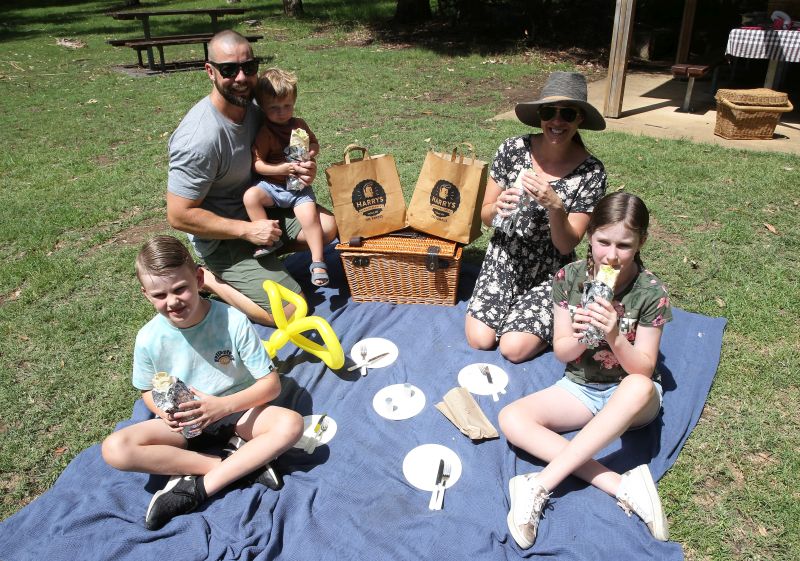
Family-friendly picnics in the park, pool parties, food trucks and food-focused market stalls will be on offer around the city on 31 December and 1 January.
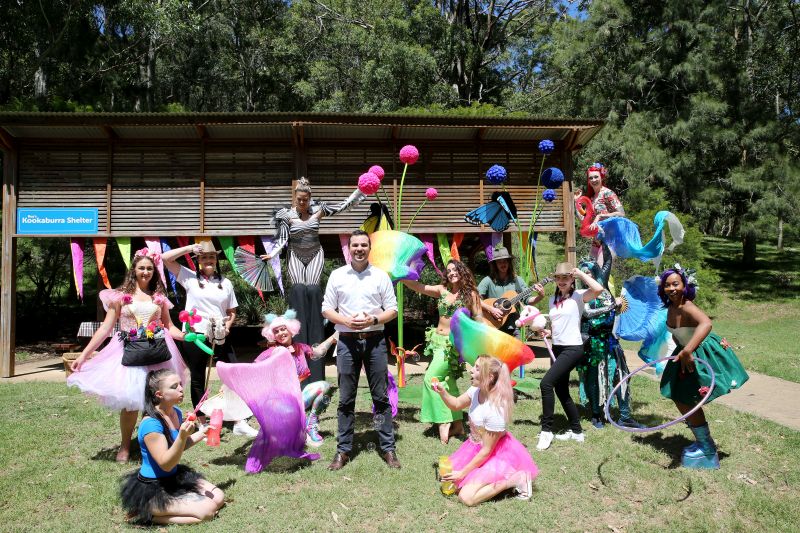
Newcastle Deputy Lord Mayor Declan Clausen said the community events would provide a vibrant alternative to the usual Foreshore fireworks display and concert, which was put on hold this year due to COVID-19.
“In a year that’s been very different from what anyone would have expected, we’ve decided to do things a little differently when it comes to our New Year’s celebrations,” Cr Clausen said.
“After making the difficult decision to cancel our traditional fireworks event this year, we’ve been working on ways to bring the party to the people and allow Novocastrians to celebrate closer to home.
“To that end, we’re putting on seven localised events on both New Year’s Eve and New Year’s Day that will provide festive opportunities for our community to reconnect, reflect, and refresh heading into 2021.
“You can pack a picnic blanket, bring a basket and stock up on your favourite goodies from local food providers before settling back with family and friends to enjoy a picnic in the park.
“Our swimming centres will also allow you to splash into 2021 at festive pool parties where you can make a day of it with water-based inflatables, roving entertainment and a selection of food trucks.”
Newcastle Lord Mayor Nuatali Nelmes Nelmes said the fireworks display planned for 2020 would be deferred until 2021 when festivities would return to the Newcastle Foreshore, subject to any public health orders in place at that time.
“2020 has been a year like no other, but what it has shown above all is our community’s ability to work together for the benefit of all,” Cr Nelmes said.
“The city deserves the chance to celebrate what we have achieved together this year and everything we’re looking forward to in 2021.
“I encourage Novocastrians to enjoy the New Year’s period in a COVID Safe way, whether they attend one of our events, support our local restaurants and bars, or gather with friends and family at home.”

The New Year’s program will include:
- Food Markets at Lambton Park and Dixon Park on New Year’s Eve (3pm to 8pm), including roving entertainment and children’s activities.
- Activations at Beresfield, Mayfield, Stockton and Wallsend pools on New Year’s Day (10am to 4pm), including inflatables, food trucks and roving entertainment.
- Food Markets at Richley Reserve on New Year’s Day (10am to 4pm), including roving entertainment, children’s activities and a ‘sensory zone’ for people with disabilities and their families.
Visit newcastle.nsw.gov.au/NYE for more information.