
Since the last review period, police have charged two people and issued 19 Penalty Infringement Notices (PINs) for breaches of the Public Health Act.
About 7am on Friday (8 January 2021), officers attached to North/Central Police Transport Command were patrolling Central Railway Station when they stopped and spoke to a 55-year-old man who was not wearing a mask. The man told officers he believed COVID-19 was a hoax and refused to put on a mask or leave the location.
He was arrested and taken to Sydney City Police Station where he was charged with not wear fitted face covering public transport waiting area. The man was granted conditional bail to appear at Downing Centre Local Court on Wednesday 3 February 2021.
About 5.30pm yesterday (Sunday 10 January 2021, officers from Campbelltown Police Transport Command PTC were patrolling Campbelltown Railway Station about spoke to the same man, aged 55, who was not wearing a mask, again claiming COVID-19 was a hoax.
He was arrested and charged with not wear fitted face covering in public transport/taxi and breach of bail. He was bail refused to appear at Campbelltown Local Court today (Monday 11 January 2020).
Further, details of the PINS issued include:
– About 1:45pm on Friday (8 January 2021), officers from the Police Transport Command were patrolling Campbelltown Railway Station when they saw two men, aged 28 and 65 not wearing masks. When officers requested the younger man put on a mask, he became argumentative and claimed the public health order was a human rights violation. When police directed the older man to wear a mask, the man became aggressive towards the officers and refused to comply. Both were issued a $200 PIN.
– About 7:15pm on Friday, officers from Fairfield City Police Area Command arrested a 16-year-old boy over an alleged assault at a Wetherill Park shopping centre on Tuesday (5 January 2021). Inquiries revealed, the teen was not wearing a mask at the time of the alleged offence and he was charged with affray and assault offences, as well as not comply with noticed direction re s7/8/9 – COVID-19
– About 8:50pm on Friday, officers from Police Transport Command observed a 63-year-old woman not wearing a mask at Epping Railway Station. When questioned, the woman became argumentative with police and refused to identify herself. The woman was arrested for the purposes of identification and was found to have had prior warnings for not wearing a mask. She was issued a $200 PIN.
– About 11am on Saturday (9 January 2020), officers from Northern Beaches Police Area Command were patrolling a shopping centre at Dee Why, when they were alerted that a man was not wearing a mask. Police spoke to the man about his obligation to wear a mask, but he refused. The 30-year-old man was issued a $200 PIN.
– About 3.30pm on Saturday, officers from Police Transport Command were patrolling Town Hall Railway Station when they stopped a 51-year-old man not wearing a mask. Police spoke to the man who refused to comply with the direction, he was issued a $200 PIN.
– About 9.15pm on Saturday, officers from Police Transport Command were patrolling Gosford Railway Station when they stopped and spoke to a 48-year-old man not wearing a mask. The man refused to put on a mask and attempted to run from police. He was stopped a short time later and issued a move on direction and a $200 PIN.
– About 2.45am yesterday (Sunday 10 January 2021), officers attached to Eastern Suburbs Police Area Command attended the rear of a property on Bondi Road at Bondi, and observed approximately 20 people on a balcony, with approximately 10 more inside. When they saw police, several attendees jumped over a fence and fled before their details could be obtained. Eleven were intercepted at the front door by officers and given $1000 PINs.
– About 4.30pm yesterday, officers from Police Transport Command were patrolling Parramatta Railway Station and saw a 46-year-old man who was not wearing a mask. When questioned, the man said he wasn’t going to wear a mask as it wouldn’t affect anyone. Further inquiries revealed he had been issued four prior warnings for not wearing a fitted face covering. He was issued a $200 PIN.
– Just before 5pm yesterday, officers from Central Police Transport Command were patrolling Kings Cross Railway Station when they spoke to a 38-year-old man, not wearing a mask. He was issued a warning before leaving and returning shortly after, wearing a mask. The man was seen on the platform not wearing the mask correctly fitted and was issued a $200 PIN.
– About 5.30pm yesterday, officers from Campbelltown Police Transport Command PTC were patrolling Campbelltown Railway Station and spoke to a teenager who was not wearing masks. The teen was issued a $200 PIN and an infringement for fare evasion.
– About 11pm yesterday, PTC officers were conducting patrols at Parramatta Railway Station when they approached an 18-year-old man, who was not wearing a mask. He refused to comply with police direction to obtain and wear a face covering in accordance with the legislation and was issued a $200 PIN.
Police continue to appeal to the community to report suspected breaches of any ministerial direction or behaviour which may impact on the health and safety of the community
Man charged over alleged damaged property, Public Health Order breach – Kellyville Ridge
A man has been charged after allegedly damaging property and refusing to comply with a Public Health Order at a fast-food outlet in Sydney’s north-west at the weekend.
About 8pm on Saturday (9 January 2021), Officers from Quakers Hill Police Area Command were called to a restaurant on Windsor Road, Kellyville Ridge, following reports a customer had become aggressive towards staff.
Police will allege in court that a man began to make an order at the counter when he was asked by staff to complete a COVID-safe check-in, in line with the current Public Health Orders.
The man refused and allegedly became aggressive and verbally abused staff, before he pushed a cash register and printer off the counter and left the restaurant. No injuries were reported.
An investigation into the circumstances surrounding the incident commenced and following inquiries, a 25-year-old man was arrested at Riverstone Police station about 4.15pm today (Monday 11 January 2021).
The St Marys man was charged with destroy or damage property, use offensive language in/near public place and not comply with noticed direction re s7/8/9 – COVID19.
He was granted conditional bail to appear before Blacktown Local Court on Monday 1 February 2021.
Appeal to find missing man – Lake Macquarie
Police are appealing for public information to find a man missing from the Lake Macquarie region.
Brett Constable, aged 47, from Orange, was last seen at a home on Oakland Street, Glendale, about 1am on Tuesday (5 January 2021).
Officers from Lake Macquarie Police District were notified of his disappearance later that morning and commenced inquiries into his whereabouts.
Police and family have concerns for Brett’s welfare.
He is described as being of Caucasian appearance, about 186cm tall, of solid build, with short brown, curly hair, and a grey beard. He has a skull and rose tattoo on his left chest.
Police are urging anyone with information about Brett’s whereabouts to call Lake Macquarie Police District or Crime Stoppers.
Anyone with information about this incident is urged to contact Crime Stoppers: 1800 333 000 or https://nsw.crimestoppers.com.au. Information is treated in strict confidence. The public is reminded not to report information via NSW Police social media pages.
SCOTT MORRISON ADDS BILLION DOLLAR ADVERTISING BILL TO TRILLION DOLLAR DEBT
Scott Morrison is about to become the billion-dollar man when it comes to wasting public money on taxpayer funded advertising.
Taxpayers have spent $913 million on advertising since the year the Government took office and at the current rate Scott Morrison will crack the $1 billion mark this year.
Scott Morrison’s gift to Australia is a trillion-dollar debt and a billion-dollar bill for self-promotion.
His obsession is marketing, photo-ops and favours for Liberal mates, rather than delivering for Australians.
For example, in 18 months Mr Morrison has failed to invest a cent from his $4 billion fund for bushfire relief and natural disaster mitigation. But as communities affected by last year’s bushfires continue to struggle, he has given a former Coalition staffer $190,000 to produce video material for his bushfire response marketing.
He has splashed $15 million on the “Our Comeback” economic campaign this financial year, based on $1 million worth of research by a Liberal mate.
In another indication of his warped priorities, Mr Morrison recently announced plans for a $24 million Coronavirus vaccine marketing campaign before he had even finalised plans for the actual roll-out of the vaccine.
Then there was the $140 million pre-election advertising blitz in 2018-19, which included $15.9 million towards the dud “Powering Forward” campaign later criticised by the Australian National Audit Office.
Mr Morrison’s professional background is marketing. First as Treasurer, and now as Prime Minister, he has made an artform of using public money on self-promotion.
He treats taxpayers’ money as though it is the Liberal Party’s money.
Mr Morrison’s obsession with advertising is matched only by his propensity to make grand announcements but fail to deliver.
Scott Morrison is always there for the photo-op but never there for the follow up.
TABLE: GOVERNMENT FIGURES ON ADVERTISING
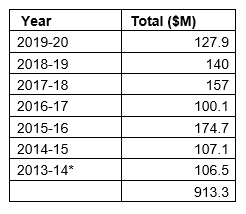
Sources:
Department of Finance campaign advertising report 2019-20
Department of Finance campaign advertising report 2018-19
Department of Finance campaign advertising report 2017-18
Department of Finance campaign advertising report 2016-17
Department of Finance campaign advertising report 2015-16
Department of Finance campaign advertising report 2014-15
Department of Finance campaign advertising report 2013-14
Latest breaches of Public Health Orders
Since the last review period, police have taken legal action against 16 people, including the director of a Pyrmont function venue, for breaches of the Public Health Act.
The charges include:
– About 1am yesterday (Thursday 7 January 2021), officers attached to Police Transport Command (PTC) approached a 47-year-old man allegedly performing a sexual act on a train near Parramatta Railway Station. As police went to arrest the man, one officer was bitten on the arm. Police managed to restrain the man and he was taken to Westmead hospital for assessment. Following his release from hospital, the man was taken to Parramatta Police Station, where he was charged with carry out sexual act with another without consent, assault police in execution of duty causing actual bodily harm, resist police and not wear fitted face covering in public transport. The man was refused bail and will appear at Parramatta Local Court today (Friday 8 January 2021).
– Officers from South Coast Police District were contacted after a man allegedly assaulted and spat on a security guard at a shopping centre at Nowra about 11am. Police were told the man threatened the guard and told him he had COVID before he was escorted from the centre. The man was arrested about 2.45pm and charged with common assault and not comply noticed direction re spitting/coughing – COVID-19. He was refused bail to appear at Wollongong Local Court today.
– Officers from The Hills Police Area Command were patrolling a shopping centre at Castle Hill about 12.30pm, when they approached a man, who was not wearing a mask as he wandered around the food court. The 39-year-old man refused to speak with police and allegedly pushed past the officers before a struggle ensued. He was subsequently arrested and charged with not wear fitted face covering in retail/business and resist officer in the execution of duty. He was granted conditional bail to appear at Parramatta Local Court on Wednesday 27 January 2021.
– About 2.30pm, officers from Blacktown Police Area Command were called to a shopping centre at Blacktown, following reports a man and a woman had been detained by security for shoplifting. The man allegedly fled prior to police arriving. Police attended and were told the man had fled before arresting the woman, who was in possession of clothing alleged to have been stolen from a store. The man was arrested a short time later at a nearby bus terminal. The 26-year-old man and 26-year-old woman were both charged with goods in custody, stealing, breach of bail and not wear fitted face mask. They were refused bail to appear at Parramatta Local Court today.
– Just after 9.20pm, officers from Mt Druitt responded to reports of a stealing from a store at a Mt Druitt shopping centre. After being given information by security, police approached a man, who was not wearing a face mask, and attempted to speak with him. The man allegedly removed a number of items from his jacket, dumping them on the ground and fled on foot with a bicycle. Officers ran after the man, catching up with him a short time later, and a struggle ensued. It’s alleged the man kicked and punched the officers and when a security guard came to assist, the man allegedly slapped him a number of times. The 48-year-old man was subdued and arrested, before being charged with assault officer in execution of duty, resist officer in execution of duty, larceny, resist person aiding officer, common assault and not wear fitted face covering in retail/business premises. He has been refused bail to appear at Parramatta Local Court today.
Police issued Penalty Infringement Notices (PINs) to nine people and one organisation. Details of the PINS issued include:
– Following an investigation by Sydney City Police regarding alleged breaches of the Public Health (COVID-19 Northern Beaches) Order 2020 at a wedding reception held at a licensed venue on Jones Bay Wharf on Sunday 27 December 2020, officers yesterday (Thursday 7 January 2021) issued a 28-year-old woman, who is a director of the venue, a $5000 PIN for not comply with noticed direction Section 7/8/9 of the Public Health Act. It brings the total number of infringements issued over the event to 22.
– About 11am, officers from Eastern Beaches Police Area Command were patrolling a shopping centre at Maroubra, when they were alerted that a man and a woman were not wearing masks, contrary to Public Health Order. Police spoke with the pair and reminded them of their obligations, however, they refused to comply with directions. They were each issued $200 PINs.
– About 2.10pm, officers from Nepean Police Area Command were patrolling St Marys Railway Station when they stopped a 52-year-old man not wearing a mask. Police spoke to the man and he was issued a $200 PIN.
– Officers attached to Fairfield City Police Area Command stopped and spoke to a 32-year-old man for not wearing a mask at Cabramatta Railway Station, about 1.50pm. The man refused to comply with directions and was issued a $200 PIN.
– As part of proactive patrols, officers from Eastern Suburbs Police Area Command stopped and spoke to a 39-year-old man, who was not wearing a correctly fitted mask at Bondi Junction Rail Interchange, about 3.30pm. The man refused to comply with orders to fit the mask across his mouth and was subsequently issued a $200 PIN.
– Just before 8.30am, officers from Police Transport Command (PTC) spoke to a 35-year-old man, who was not wearing a face mask and did not have a valid ticket. Checks revealed the man had been warned the day before about not wearing a mask. He was issued a $200 PIN and an infringement for fare evasion.
– About 4.10pm, officers from Inner West Police Area Command stopped and spoke to a 22-year-old Maroubra man who was not wearing a face mask at Newtown Railway Station. He was advised of his requirement under the Public Health Order and given a warning. Shortly after, the man made his way to the platform without a face mask. He was approached by police again and issued a $200 PIN.
– Officers from PTC were patrolling Campbelltown Railway Station about 3.20pm, when they spoke with a 41-year-old man, who was not wearing a mask. The man told police he didn’t own one and won’t wear one because it’s a joke. He was issued a $200 PIN and moved-on from the area.
– As part of proactive patrols of Katoomba, officers from Blue Mountains Police Area Command stopped and spoke to a 42-year-old man outside a home on Whinmoor Street. Checks revealed the man was from Newport – in the north-end of the Northern Beaches and had bail conditions not to be in Katoomba. He was subsequently charged with a breach of bail and will appear at Penrith Local Court today. He was also issued a $1000 PIN.
Police also issued more than 35 warnings across Greater Sydney to people not wearing masks yesterday.
Further, police were on hand at the Sydney Cricket Ground yesterday to monitor the behaviour of 8692 spectators on the opening day of the third Test between Australia and India. Venue staff and police were required to remind spectators of their obligations in relation to wearing a face mask, however, no infringements for COVID breaches were issued.
There were 11 people ejected by police; four young persons for bringing alcohol into the ground, one issued a criminal infringement notice for offensive language and bring alcohol into the ground; another man was fined for bringing alcohol into the ground, four intoxicated people were given banning orders for 12 months, and one man issued an infringement for failing to quit and re-enter licensed premises.
Police continue to appeal to the community to report suspected breaches of any ministerial direction or behaviour which may impact on the health and safety of the community.
ASSANGE MUST BE GIVEN SAFE PASSAGE HOME
Greens Leader, Adam Bandt, says there is no excuse for the Morrison government to do anything other than provide an Australian citizen safe passage home, with assurances that he can live and work here freely.
“It’s time for Scott Morrison to fight for an Australian citizen whose work exposing war crimes has subjected him to an extraordinary campaign of persecution from the United States,” Bandt said.
“Australia’s meek pandering to the Pentagon on the rights of one of our citizens reflects poorly on our sovereignty and diplomatic independence.
“The charges the US has laid are anathema to a free press and free society and Australia should give Assange safe passage home and rule out extraditing him to become a political prisoner.
“All Australians should know that when foreign governments act against their liberty for political reasons, their homeland will have their back. It’s time Morrison showed the gumption to say no,” Bandt said.
GRAVE FEARS FOR JULIAN ASSANGE’S WELLBEING. MORRISON MUST ACT: GREENS
With the news overnight that Julian Assange has been denied bail, Greens Foreign Affairs spokesperson Senator Janet Rice has called on Prime Minister Morrison to act to ensure his wellbeing, and signalled that she will seek to involve the Australian Senate to act on his behalf.
Senator Rice said:
“I call on Mr Morrison to show some courage and pick up the phone to speak directly to both UK Prime Minister Boris Johnston to ensure Mr Assange’s wellbeing; and to US President-elect Joe Biden to drop the charges against him.
“It is a massive and tragic irony that the judgement has been made to not extradite Mr Assange because of risk of suicide, yet he is still being subject to onoging indefinite detention in the brutal conditions of Belmarsh prison.
“I urge Mr Morrison to heed the calls from Amnesty International who have said the decision to deny Julian Assange’s request for bail has rendered his continued detention ‘arbitrary’.
“If Mr. Assange is still being detained when Parliament resumes next month, I will request that the Joint Standing Committee for Foreign Affairs, Defence and Trade (JSCFADT) seek an urgent meeting with the incoming US Ambassador to Australia as soon as they arrive on our shores to discuss this case further.
“The US charges against Julian Assange must also be seen in the light of the chaos and insurrection in Washington overnight. It is the same President Trump who has incited his followers with baseless claims of conspiracy and fraud who is going after Assange, a whistleblower who exposed corruption and war crimes.
“Australia needs to speak out against the madness and attacks on democracy that have been the hallmarks of the Trump presidency, and that should include speaking up for the rights of an Australian citizen who should be being treated as a hero not a criminal.
“Julian Assange is an Australian citizen and therefore the responsibility of our government. He has suffered enough. The Australian Government must say ‘enough is enough’ and intervene to ensure his safety,” Senator Rice said.
Sport Integrity Australia Advisory Council
The oversight and guidance for sport integrity matters in Australia has been further strengthened with the appointment of a highly experienced nine-member Sport Integrity Australia Advisory Council.
The Advisory Council includes leaders from a wide cross section of sport, governance, government administration, law enforcement and child protection.
Minister for Sport, Richard Colbeck, said each member of the council brought with them a breadth of experience that would reinforce the work of Sport Integrity Australia in strengthening the framework of sport across Australia.
“I am pleased to announce the nine member advisory council,” Minister Colbeck said. “Each member brings skills and knowledge to provide advice on all areas of sports integrity.
“It follows the Australian Government’s recent investment of $10.1 million to introduce an independent complaints handling process within Sport Integrity Australia.”
Appointed members include World Sailing Vice President Sarah Kenny (Chair), Paralympics Australia CEO Lynne Anderson, Golf Australia CEO James Sutherland, former elite athlete and governance expert Margot Foster, former NSW Police Commissioner Ken Moroney, former senior public servant Peter Conran, sports consultant and former elite athlete Scott Draper, former National Children’s Commissioner Megan Mitchell and policy adviser Jason Marocchi.
Sport Integrity Australia commenced operations on 1 July 2020, and is the cornerstone of the Government’s sport integrity strategy.
The newly appointed Advisory Council will provide Strategic advice to both the CEO of Sport Integrity Australia as well as to the Minister for Sport.
“I am particularly pleased to announce Ms Sarah Kenny as Chair of the Advisory Council,” Minister Colbeck said. “Highly regarded for her national and international experience within the administration of Olympic sailing, Ms Kenny is a vice president of World Sailing, and represented Australia at the 1984 Los Angeles Olympic Games in windsurfing.”
He said Ms Kenny also boasts an extensive legal career combining corporate law with a sports related practice including integrity matters.
“Experienced in the complex wagering regulatory regime in Australia, anti-money laundering, and complex integrity issues, her leadership will be invaluable to the success of the Advisory Council,” Minister Colbeck said.
Ms Kenny said it was an honour to be appointed.
“I am looking forward to working with the other highly respected Advisory Council members to bring together our combined experience and knowledge to advise on all aspects of sport integrity and to assist in safeguarding the integrity of Australian sport,” she said.
Minister Colbeck said the highly qualified council members will bring enormous value to the consideration of sport integrity issues and the way they are addressed.
“The Government has invested heavily in protecting the integrity of Australian sport.
“By establishing Sport Integrity Australia and the National Sports Tribunal, increasing investment into independent compliant handling and forming the Sport Integrity Australia Advisory Council, Australians can be confident everything possible is being done to keep the sport they love clean, safe and fair.”
The inaugural Sport Integrity Australia Advisory Council will consist of the following members:
- Ms Sarah Kenny (Chair)
- Ms Lynne Anderson (Member)
- Mr Peter Conran AM (Member)
- Ms Margot Foster AM (Member)
- Mr James Sutherland (Member)
- Mr Scott Draper (Member)
- Mr Ken Maroney AO APM (Member)
- Ms Megan Mitchell (Member)
- Mr Jason Marocchi (Member)
DUD NBN IS HOLDING AUSTRALIA BACK
Scott Morrison’s copper-based National Broadband Network is acting as a hand brake on national productivity and making it more difficult for Australians to work from home during the coronavirus pandemic.
The latest figures from the Speedtest Global Index show Australia’s broadband internet speeds now rank 60th in the world behind Moldova, Bulgaria, Belarus and New Zealand.
The Index listed Australia’s average broadband speed as 60.54 megabits per second in November, similar to speeds in Ukraine and Vietnam. The global leader was Singapore, with 241 megabits per second – four times faster than Australia.
Labor Leader Anthony Albanese said Scott Morrison should be ashamed of these figures.
“Today I will visit the electorate of Macquarie with local MP Susan Templeman, where hundreds of residents’ NBN connector boxes have failed in recent storms,’’ Mr Albanese said.
“Poor mobile phone coverage in the Blue Mountains and the Hawkesbury means some residents have been left without phone or internet for days or even weeks.
“Some people have lost up to six boxes in a row. They’ve started asking for a spare.’’
Ms Templeman said: “This makes it pretty much impossible for people to work from home or run a small business.
“It’s also dangerous during the bushfire season.’’
When the Government came to office, it replaced the former Labor Government’s plan for an NBN delivering fibre to the premises with a second-rate copper wire-based system that was out of date before it was even constructed.
In September, the Government finally admitted its error and committed $6 billion to bring the NBN into the 21st century, reverting to Labor’s initial plan.
This brings the cost of the NBN to $57 billion – nearly $30 billion more than what the Coalition promised their second-rate NBN would cost in 2013.
It has also been reported up to 238,000 NBN connections are still incapable delivering basic 25 megabit per second speeds, despite the Liberals promising everyone would have these minimum NBN speeds by 2016, and these speeds also being a requirement of Australian law.
Scott Morrison’s incompetence and mismanagement on communications is holding back business growth, particularly in regional Australia.
Man charged after 1kg of cocaine located – Heatherbrae
A man will appear in court today charged over the alleged commercial supply of prohibited drugs near Newcastle.
In October 2020, Strike Force Megig was established by the Hunter Regional Enforcement Squad (RES) to investigate the supply of illicit drugs in the Newcastle and Hunter regions.
Following inquiries, Hunter RES – assisted by Northern Operational Support Group officers (Operation Utah) and officers attached to Port Stephens-Hunter Police District – arrested a 29-year-old man at a caravan park on the Pacific Highway, Heatherbrae, about 7.30pm yesterday (Tuesday 5 January 2021).
Officers executed a search warrant at a cabin in the park, where they allegedly located more than 1kg of cocaine, drug paraphernalia and mobile phones.
The estimated potential street value of the cocaine is $450,000.
The man, from Palmview in Queensland, was taken to Raymond Terrace Police Station where he was charged with supply large commercial quantity prohibited drug and possess prohibited drug.
He was refused bail to appear at Newcastle Local Court today (Wednesday 6 January 2021).