
Labour Force Figures for October

Labour force figures released today by the ABS show that labour market conditions in Australia continued to recover in October, with employment increasing by 178,800 over the month, exceeding all market expectations.
Full-time employment increased by 97,000 (or 1.1 per cent), the largest monthly increase on record, while part-time employment rose by 81,800 (or 2.0 per cent).
All states and territories recorded an increase in employment in October, with the exception of Tasmania, where employment remained steady. Employment in Victoria rose by 81,600 over the month, the largest monthly increase on record, as restrictions in the state began to ease.
Hours worked also increased in October, by 20.6 million hours (or 1.2 per cent).
The unemployment rate increased slightly in October, by 0.1 percentage points, to 7.0 per cent.
The rise in the unemployment rate, however, occurred in conjunction with a significant increase in the participation rate, which rose by 0.9 percentage points, to 65.8 per cent in October 2020.
Minister for Employment, Skills, Small and Family Business, Senator the Hon Michaelia Cash, said the Government remains acutely aware that the economic and labour market fallout from COVID-19 will continue for some time to come.
“That is why the Morrison Government has committed an unprecedented $507 billion in economic support, to help rebuild the economy and put Australia back on the road to recovery,” Minister Cash said.
“This includes $257 billion in direct economic support including more than $101 billion in JobKeeper payments to help cushion the impact of COVID-19 which has led to the most severe global economic crisis since the Great Depression.
“This is the single largest economic support measure that any Australian Government has introduced, which will help mitigate the difficulties that businesses and employees are encountering as a result of COVID-19.”

Update on NDIS Coronavirus supports in South Australia

Minister for the National Disability Insurance Scheme, Stuart Robert, has confirmed NDIS participants in South Australia have access to a range of temporary measures to ensure they can receive their disability-related supports, in line with public health advice.
In addition, with a focus on the safety of NDIS participants during the COVID-19 restrictions period in South Australia, the NDIA is reaching out to connect and check-in with vulnerable participants, to ensure they continue to have supports in place and offering phone or online planning meetings during lockdown.
Minister Robert said the government recognises that the immediate restrictions are difficult for NDIS participants and it is our priority to ensure they receive the essential supports they require.
To assist with continuation of essential supports in a COVIDSafe manner, NDIS participants and providers in South Australia will temporarily be able to directly claim the costs of Personal Protective Equipment (PPE), including face masks.
Temporary measures in place to assist participants in South Australia, in light of the changing circumstances, include:

  • eligible NDIS participants able to use plan funding to purchase low-cost Assistive Technology, including smart devices (up to $1500);
  • greater plan flexibility to ensure access to supports;
  • deep cleaning of residences in the event a support worker returns a positive COVID-19 test;
  • additional support, including a deep cleaning service, for participants who test positive for COVID-19 or who are required to isolate who live in a Supported Independent Living (SIL) setting;
  • NDIS participants in South Australia who rely on face-to-face supports and assistance with their daily living will be able to use an existing support item (Low Cost Disability-Related Health Consumables) to claim on the cost of PPE for their own use at times their worker is with them; and
  • Providers in South Australia able to claim an allowance of $1.70 per hour of support delivered in the Activities of Daily Life Support Category, to cover the cost of PPE for workers, directly from the NDIA, ensuring participant plan funds are not impacted by the use of PPE by their providers and workers.

Minister Robert said as the pandemic evolves, the NDIA and the Government will continue to review the temporary measures to ensure the health and wellbeing of participants.
‘The Commonwealth has a clear plan and will continue to respond to changing circumstances across the entire country to ensure all NDIS participants are supported and are safe during the pandemic,’ Mr Robert said.
‘In March, as the threat of COVID-19 emerged, the Morrison Government outlined a number of temporary measures to ensure every NDIS participant could continue to receive the everyday supports and services they need.
‘These temporary measures have proven effective and reflect our need to live our lives in a COVIDSafe society, knowing additional measures can be easily accessed if an infection, or outbreak occurs, without delay.’
The NDIS Call Centre has a dedicated referral line for COVID related queries. NDIS participants who have questions or whose circumstances may have changed are encouraged to contact the NDIA on 1800 800 110 to discuss their needs or to seek further information.
NDIS providers who have questions about delivering quality and safe supports and services to NDIS participants during the coronavirus pandemic should contact the NDIS Quality and Safeguards Commission on 1800 035 544.
Temporary measures, with the exception of direct claim of PPE, were announced earlier this year and are in place nationally until February 2021.
Further information on NDIS coronavirus support can be found at www.ndis.gov.au.

City of Newcastle celebrates 40th Sister City anniversary with Ube, Japan

City of Newcastle honoured a relationship steeped in history and culture on Thursday ahead of the 40th anniversary of the Sister City declaration between Newcastle and Ube, Japan.
On 21 November 1980, the City’s first female Lord Mayor, the late Joy Cummings, turned a new page in history as she joined the Mayor of Ube, the late Mr Hideo Futatsugi, to sign the Sister City agreement.
Built upon the burgeoning port harbour cities’ shared industrial backgrounds in coal exports and steel manufacturing, the declaration was and remains today a sign of goodwill, mutual understanding and friendship.
Mayor-of-Ube-City-Mr-Hideo-Futatsugi-and-Newcastle-Lord-Mayor-Joy-Cummings-sign-the-Sister-City-agreement-21-November-1980.jpgMayor of Ube, Mr Hideo Futatsugi, and Newcastle Lord Mayor Joy Cummings sign the declaration while Town Clerk Barrie Lewis looks on. Image courtesy Newcastle Libraries Local History Collections.
Over the decades, Newcastle and Ube have developed strong connections in education, youth exchange, economics, sport and art, which were celebrated when the City hosted Consul-General Mr Kiya Masahiko and Consul in Charge of General Affairs and Information and Culture, Mr Shinichi Murata on a diplomatic visit to Newcastle.
Mr Masahiko and Mr Murata were presented with a commemorative book, titled Sister Cities Newcastle and Ube: celebrating 40 years, produced by the City to mark the auspicious occasion.
The Consuls also received a demonstration of a curated, interactive digital story-wall exhibition showcasing the Sister City history at the City Administration Centre’s Digital Library.
32457Shootlorimer-COPY-Large-web-1.jpgLord Mayor Nuatali Nelmes presents the commemorative book to the Consul-General of Japan in Sydney, Mr Kiya Masahiko, in front of the digital story-wall exhibition at the City’s Digital Library.
Lord Mayor Nuatali Nelmes recognised the ongoing significance of this mutually beneficial relationship as both Newcastle and Ube continue to undergo growth and transformation.
“It was Lord Mayor Joy Cummings’ vision, when the declaration was signed, for our two great cities to enjoy lasting friendship, good health and prosperity, and I am proud to say our Sister City ties remain as strong as ever,” Cr Nelmes said.
“While we are living through an unprecedented time due to the many challenges posed by the COVID-19 global pandemic, it is but another chapter in the history book of our Sister City relationship, as we rise together to overcome adversity as we have done in the past.
“City of Newcastle congratulates Ube City on achieving this joint milestone and looks forward to the continuation of our cities’ relationship over the years to come.”
Sister Cities Newcastle and Ube: celebrating 40 years is available for loan from Newcastle Libraries. A digital version is accessible via the website.

Government has been offered a clear way forward on mental health and they need to act

The Greens have welcomed the Productivity Commission report into Mental Health and say that it has provided a clear way forward for the Government in reforming Australia’s mental health system.
“It is a great shame that this report has not been released earlier and that the Government didn’t take the opportunity in the recent budget to start the process of reform that is so urgently needed.
As Australians we pride ourselves on having an accessible health care and Medicare system, but at the moment people who need treatment for their mental health are not getting the access or the standard of care they need.
We currently have a fragmented system and thousands of Australians are falling through the cracks.
The ad-hoc approaches need to stop.
Three quarters of mental health issues begin before the age of 25, it is critical that we support the mental health of children and young people.
This report makes a clear case for addressing the social determinants of health which is so often ignored by this Government.
A housing first approach is essential for treating mental health.
Living in poverty is a clear contributor to poor mental health and anxiety.
The Productivity Commission has made some recommendations on the income support system and the mutual obligations system and their negative impacts.
Not only does living in poverty make access to treatments difficult the system itself exacerbates mental health conditions and creates stress and anxiety.
This is a long-term roadmap for reform and the Government needs to start now.
Our health system will not be truly universal until people can get access to a mental health treatment in exactly the same way they would for a broken leg.

Commonwealth must take the lead in South Australia to prevent another COVID outbreak in aged care facilities

The Greens say that it is imperative that the Commonwealth learn the hard lesson from the Victorian aged care COVID outbreak and take leadership before it is too late.
“All providers must be focused on preventing the entry and spread of Covid-19 in aged care facilities”, Greens spokesperson on Ageing Senator Rachel Siewert said.
What we learnt from the Victorian experience is that aged care providers cannot wait to act once an outbreak occurs.
Prevention is key to stopping older Australians from experiencing another disastrous outbreak of Covid-19.
The Commonwealth must support the South Australian agencies to:

  • Support all aged care workers to transition to working at a single site to reduce infections between facilities
  • Ensure all aged care providers have at least one trained infection control officer working at each facility effective immediately
  • Ensure infection prevention and control experts are deployed to aged care facilities to ensure staff training in infection prevention is up to date and best practice effective immediately
  • Ensure all staff are wearing PPE
  • Ensure adequate PPE is provided to facilities as soon as they need it
  • Have a clear guide in place for visitors to residential aged care facilities

The Aged Care Quality and Safety Commission must start re-assessing South Australian aged care facilities for their readiness for Covid-19 outbreaks and continue with unannounced visits.
The Government has no excuse not to urgently act on the recommendations of the Aged care and COVID-19: a special report. 
Given that the Royal Commissioners have made the unusual step of releasing a special report so close to when the final report is due indicates how serious the failures of the system to deal with Covid-19 are.
These failures cannot be repeated in South Australia.

Evidence continues to stack up against Cashless Debit Card

The Greens have tabled a dissenting report to the inquiry into the Government’s Social Security (Administration) Amendment (Continuation of Cashless Welfare) Bill 2020 saying that there isn’t evidence to justify the use of the card, that in fact the process adversely impacts people and should be abandoned.
“Through this inquiry process and over many years, the Government and supporters of this card have failed to provide any quantitative evidence that the card has met any of its objectives”, Greens Spokesperson on Family and Community Services Senator Rachel Siewert said.
The Government has also failed to commit to releasing the next evaluation before the legislation is voted on and the Committee has not had access during its determination. Just today a University of South Australia researcher said she was surprised by how little evidence there is to support the introduction of a Cashless Debit Card.
In the final sitting weeks of 2020, the Senate will again be forced to vote on a complex and divisive piece of legislation in a short time-frame while many questions remain unanswered.
One such question is whether the Government will choose to place new income support recipients in the four trial sites onto the Cashless Debit Card.
The Minister paused new entrants being placed on the Cashless Debit Card in March, it is unclear whether this pause will remain in place once the card becomes permanent. People have a right to know whether they will be placed onto the Cashless Debit Card before the scheme becomes permanent.
The Greens reject any proposition that genuine, two-way consultation has occurred with First Nations communities or anyone currently on the Cashless Debit Card about the proposal to make the scheme permanent.
Many submitters highlighted that the absence of any real consultation with First Nations communities goes against the new National Agreement on Closing the Gap which has been founded on the principles of shared decision-making and self-determination.
There has been little to no transparency around the cost of implementing and rolling out the Cashless Debit Card. The future outputs for the scheme are shrouded in secrecy and ‘commercial in confidence’ agreements with the cardholder, Indue. The community only ever discovers the cost of the scheme after the fact.
This Bill is no different. We have no understanding of how much it will cost to permanently entrench the Cashless Debit Card, lift the cap on the number of participants who enter the scheme, and roll it out to the Northern Territory.
This scheme goes to the broader question of a private company, in this case Indue, profiting from our social security system.
There is no evidence to support the entrenchment of this punitive scheme and the Senate crossbench must reject it.
In the middle of a global pandemic and Australia’s first recession in 30 years, the Government has chosen this moment as the right time to make the Cashless Debit Card permanent.
It is astounding that the Government refuses to make any decisions about the base rate of the Jobseeker payment due to the changing economic conditions but is happy to try and entrench compulsory income management.
The Greens dissenting report can be found here.

Australia hosts global summit on healthcare innovation

Australia will share its successful approach to the COVID-19 pandemic and the pathway ahead as the host of the virtual Global Innovation Summit 2020.
Held over the next two days, the theme of this year’s summit – Crossing the chasm: Health, Innovation and the Future Economy. Participants will explore the impact of COVID-19 from a health, social and economic perspective, and the pivotal role innovation will have as we recover.
Minister for Health, Greg Hunt, said the global sharing of ideas, successes, challenges and plans was more important than ever as the world responds to the pandemic.
“Globally, Australia is in an enviable position – both financially and in our health response to COVID-19,” Minister Hunt said.
“Throughout the COVID-19 pandemic, we have seen monumental change to the way Australians can take care of their health. This includes the introduction of telehealth, which has revolutionised the way Australian patients can receive care.”
“This summit gives us the opportunity to outline how we have approached the most challenging of times, and allows us to work with other global leaders to develop the innovative health solutions we need in the months and years ahead.”
The summit will provide an opportunity to showcase Australia’s innovation breakthroughs and technology to leaders across the health, science, industry, investment and technology sectors.
Minister for Industry, Science and Technology, Karen Andrews, said the virtual conference will bring together some of the brightest minds from around the world to discuss how economies can emerge from COVID-19 pandemic with increased resilience and competitiveness.
“Manufacturing will be critical to our nation’s economic future, and the Morrison Government is strategically investing in areas of manufacturing where we know we have an edge, so that Australian manufacturers can scale up and create new jobs,” Minister Andrews said.
“Through the Modern Manufacturing Strategy, we are boosting the role of science and technology in industry, which will allow us to open up new markets and take more Australian products to the world.
“To prepare for the post-COVID economy, we are also investing in additional support for Australian businesses to use digital tools to enhance their processes, as part of our goal to become a leading digital economy by 2030.”
The Global Innovation Summit is co-hosted by the Global Federation of Competitiveness Councils – a network of organisations and 35 countries with shared principles, to enhance regional, national and global prosperity.
The two-day event will include international leaders’ perspectives, interactive panel discussions and presentations highlighting key innovation breakthroughs assisting the response to the COVID-19 pandemic.
The virtual event is free and you can register online.

New health care model improves access for patients in Snowy Valleys

The communities of Tumut Tumbarumba, Batlow and Adelong will benefit from a new primary health care model to improve access to local health care and provide better continuity of care for rural patients.
Regional Health Minister, Mark Coulton said the Coalition Government is investing in first-of-a-kind primary care models as part of a broader effort to improve health outcomes for rural Australians.
The 2020-21 Budget invests $3.3 million in new models of primary care to help pioneer local solutions to team based care and provide better healthcare services across sub-regions in western and southern NSW.
“The challenge of delivering health services in small communities is well known, and it is clear the existing one-size-fits-all approach isn’t working for every rural community,” Minister Coulton said.
“The trial of a new collaborative model of health care in these four communities aims to create more efficient and co-ordinated networks of GPs, nurses, and allied health professionals to deliver local services.
“We know that rural, regional and remote Australians can face difficulty accessing health care. Creating more flexible settings as part of this approach is an important step in creating a rural health workforce to service the needs of the region.”
The new Snowy Valleys model will investigate if viable practices may be better sustained by having a team of GPs, nurses and allied health professionals deliver integrated health services to a number of smaller, connected communities.
Senator for New South Wales, Perin Davey said The Nationals in Government want people living in these communities to benefit from continued access to essential health services as well as reduce the time it takes to travel for primary care.
“Community is at the core of this approach and we want local communities maximise their local health services and co-design solutions that are tailored to meet the needs of their communities,” Senator Davey said.
“In addition, we want more health professionals to choose a career in the bush. The rollout of the new model is a good example of how we can improve the scope of practice for doctors and health professionals and provide rewarding lifestyle and career opportunities.
Minister Coulton said this new model provided a further incentive for young doctors to come to the region and built on the recent Murrumbidgee Model for Rural Generalist GPs that was providing a training pipeline and improved support for young trainee GPs.
Director Service Delivery at NSW Rural Doctors Network (RDN), Mike Edwards, said Tumut was an ideal location to trial innovative approaches to health workforce solutions.
“A key enabler of success for this trial will be aligning community and health sector expectations and goals,” Mr Edwards said.
“Through consultation with community-based working groups already in place in Tumut, we can agree on approaches that may work best for the trial.
“NSW Rural Doctors Network sees this Collaborative Care project as the start of a model that could hopefully be scaled-up to support similar sub-regional approaches in remote and rural areas across Australia. We look forward to starting work early in the new year.”
The models are part of the Coalition Government’s broader primary care reforms including a 10-year plan to support patient centred care and equitable access to the best available primary health care services. Minister Coulton said rural and remote primary care is a key focus of the reforms.
“If we want to make an impact to tackle health access issues in our communities, we need to understand the local needs and look at more flexible and practical solutions to delivering healthcare in the bush,” Minister Coulton said.
The trial will last 18 months and is a practical solution developed with extensive community consultation and support.

Supporting South Australians through COVID-19

The Australian Government will lift mutual obligation requirements for job seekers in South Australia from today 18 November 2020 until Sunday 29 November 2020.
This follows an announcement by the South Australian Government that the state will undertake a six-day shutdown to curb a COVID-19 outbreak in the state.
No South Australian job seeker will face payment suspension or financial penalties for failing to meet their mutual obligation requirements – such as not being able to attend appointments or activities.
Job seekers are still being encouraged to remain connected to employment services to ensure they are supported to access the full range of assistance including mental health services, if required.
This will apply to job seekers in jobactive, Online Employment Services and Disability Employment Services and participants in ParentsNext,
The Australian Government will continue to closely monitor the situation in South Australia.
More information is available at https://www.dese.gov.au/covid-19/job-seekers

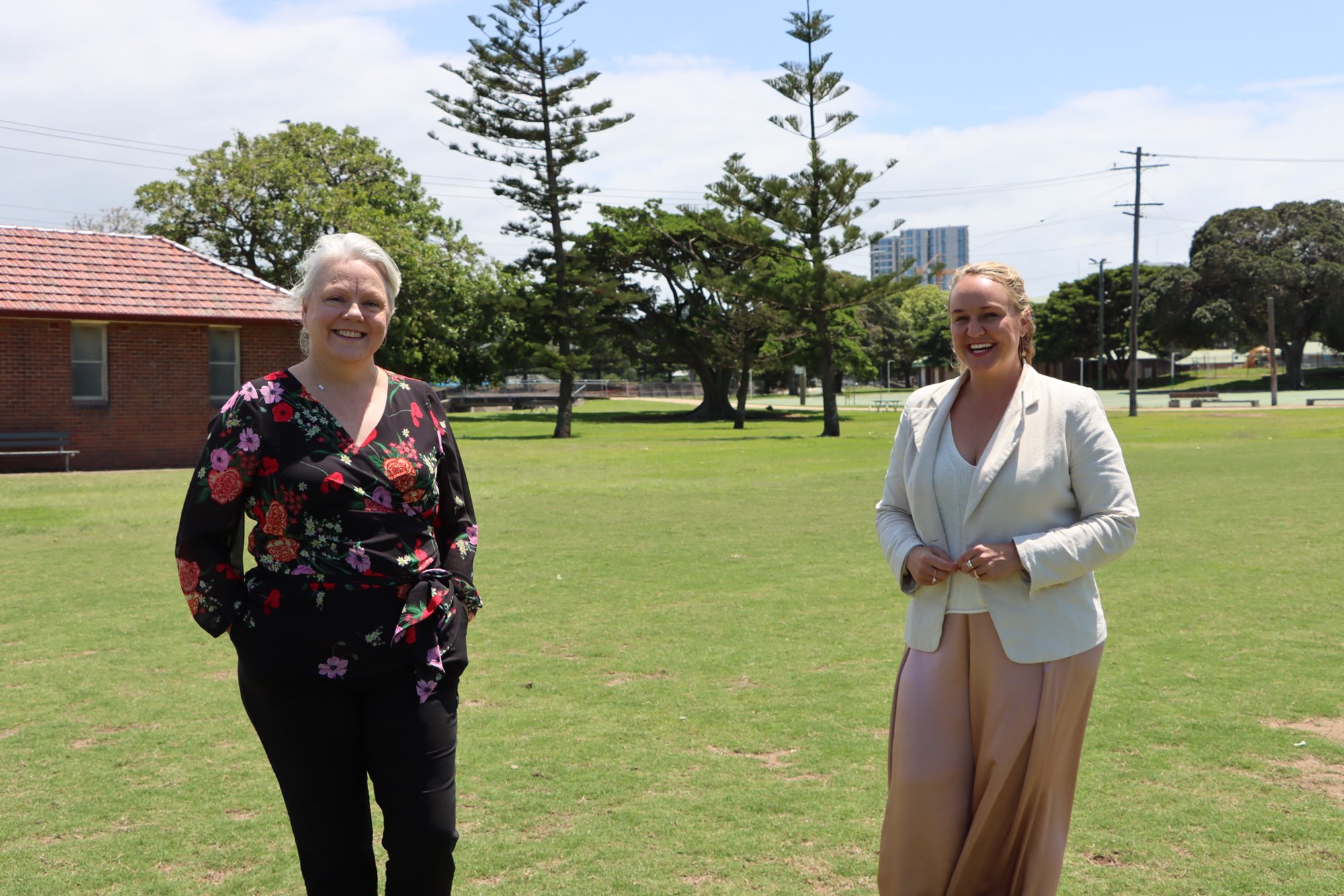
Help shape the future of Newcastle’s National Park

With an extra 4,000 homes expected in Newcastle City Centre by 2036, City of Newcastle is calling on feedback to shape how the city’s largest community open space can be improved.
National Park is a 20 hectare multi-purpose reserve stretching between Union and Parry Streets in Newcastle West and includes Newcastle’s largest and oldest sportsground No. 1 Sportsground.
Lord Mayor Nuatali Nelmes said community input is important to make National Park a space that locals and visitors continue to enjoy into the future.
“The long-term future of the area will be shaped through community consultation on the review of National Park’s Plan of Management and will also take into consideration recommendations made from the Strategic Sports Plan which is nearing finalisation.
“The Office of Sport has also identified strategies to establish No. 1 Sportsground as a Regionally Significant Sports Facility within the Draft Hunter Sport and Active Recreation Plan (2018-2023).
“National Park is a unique site in Newcastle and will play an important part in the liveability of our city centre as the population grows and the CBD moves westward.
“We’re looking forward to working with the community on the future of National Park, with people given the opportunity to have their say in person at stakeholder workshops, a community drop-in session and via an interactive online map and survey.
“National Park is an essential greenspace in the heart of the city for passive reaction and also caters for a variety of sporting codes including netball, football, cricket, rugby league, rugby union, AFL, athletics and croquet.
“It is also a popular venue for school sports and a hub where recreational activities such as walking and casual play or games take place.
“The City manages and maintains a diverse network of community and Crown land, such as bushland, parks and sporting fields, for the benefit of our residents and visitors.”
The northwest corner of National Park was formerly home to tennis courts and a bowling club, which was later occupied by charity Life Without Barriers until 2017.
In 2019 City of Newcastle commenced a process to provide safe public access to the northwest corner of the park, including demolishing the Life Without Barriers building and turfing the area for passive recreation.
In September City of Newcastle opened new basketball courts near the corner of National Park and Parry Streets to activate the formerly unused corner of National Park.
Community engagement is open until 7 December with the National Park Plan of Management draft plan to be publicly exhibited in early 2021.