A new national strategy to prevent child sexual abuse

The Commonwealth Government will provide $146 million over four years for the first phase of a new National Strategy to Prevent Child Sexual Abuse.
The Strategy will be a 10 year, whole-of-nation framework to establish a coordinated and consistent approach to prevent and better respond to child sexual abuse in Australia.
“Every child deserves safety and protection and today’s new measures will prevent, detect and respond to child sexual abuse committed within Australia, online, and by Australians overseas,” the Prime Minister said.
Assistant Minister to the Prime Minister and Cabinet, Ben Morton, said measures being announced today will lay the foundation for the landmark new National Strategy, which will be released in full in September 2021.
“The Commonwealth has a leadership and coordination role in tackling child sexual abuse, and many of these measures address our responsibilities under the Commonwealth Criminal Code,” Assistant Minister Morton said.
“These measures will deliver on commitments made in response to the Royal Commission into Institutional Responses to Child Sexual Abuse.
“Any sexual crime against a child is one too many, and this National Strategy aims to deliver ambitious and world-leading measures to prevent all forms of child sexual abuse.”
The National Strategy will complement and align with other national policy frameworks, such as the current and future National Plans to Reduce Violence against Women and their Children, and Closing the Gap.
Key initiatives include:

  • $59.9. million worth of initiatives to be delivered by the Australian Federal Police to combat child sexual abuse, including an additional $35.4 million for new frontline operational activities to keep our children safe.
  • $13.9 million to bolster the capabilities of AUSTRAC, the Australian Institute of Criminology, the Australian Border Force, the Australian Criminal Intelligence Commission, and the Department of Home Affairs to equip intelligence, research and border protection agencies to disrupt the cash flow behind child sexual abuse, prevent and disrupt livestreamed child sexual abuse, intercept material and offenders at the border, and enhance our ability to identify offenders within the community.
  • $4.1 million for the Department of Home Affairs to work with Indo-Pacific partners on regional policy and legislative responses to child sexual abuse.
  • $2.95 million to help the Department of Home Affairs build relationships with the digital industry to drive a coordinated and collaborative charge against offenders’ exploitation of online platforms to commit child sexual abuse related crimes.
  • $24.1 million to strengthen Commonwealth capacity to prosecute perpetrators of child sexual abuse.
  • $16.8 million for the Attorney-General’s Department to enhance and expand legal assistance concerning child sexual abuse.
  • $10.9 million for the National Indigenous Australians Agency to co-design place-based Aboriginal and Torres Strait Islander healing approaches to support survivors of child sexual abuse.
  • $4.7 million for Sport Integrity Australia to enhance child safeguarding in sport.
  • $3.0 million to the eSafety Commissioner to deliver targeted online education programs to support parents and families to prevent online harms to children.
  • $5 million to expand the National Office for Child Safety’s national leadership role to deliver the National Strategy to Prevent Child Sexual Abuse.

Further announcements will be made with the full National Strategy, including additional measures to be jointly delivered by the Commonwealth and its state and territory partners.
The Australian Government is working with states and territories as well as non-government stakeholders to finalise the National Strategy for release in September 2021. For more information, visit: https://childsafety.pmc.gov.au/.

Australia’s communications, media and arts sectors helping secure our recovery

The Morrison-McCormack Government is securing Australia’s recovery through significant commitments to strengthen our communications, media and creative arts sectors, helping to rebuild our economy, secure jobs and support communities as we continue our resurgence from the COVID-19 pandemic.
Digital service delivery has become more important than ever, with many sectors rapidly digitising over the past year to meet the demands of home-based work. This is why the Government’s Digital Economy Strategy plays a central role in the 2021-22 Budget, as we establish an enduring program to connect Australians and keep them safe online.
This Budget also recognises the challenges the pandemic has created for our arts sector, with significant support being delivered to help Australia’s national cultural institutions and the broader arts sector position for stronger roles in a post-COVID world.
The Government’s investments as part of its plan to secure Australia’s recovery include:

  • $5.2 million for an awareness campaign to better support victims of online abuse and harm;
  • $84.8 million for improved connectivity in the regions through the Regional Connectivity Program;
  • $68.5 million for a dedicated stream of funding for Northern Australia under the Regional Connectivity Program and Mobile Black Spot Program;
  • $16.4 million for better mobile connectivity in bushfire-prone areas on the fringe of our cities;
  • $18.8 million over four years from 2021 22 for a Digital Games Tax Offset
  • $8 million for community broadcasting;
  • $15 million to the AAP Newswire in support of public interest journalism in regional Australia;
  • $7.7 million to help consumers select reliable, high speed broadband services that meet their needs;
  • $4.2 million to implement the News Media and Digital Platforms Mandatory Bargaining Code;
  • $85.4 million for eight national collecting institutions; and
  • $11.9 million over four years to boost quality children’s television content.

Communications and the Digital Economy
Improving Online Safety
Under the Morrison Government’s new Online Safety Act, there will be new and strengthened schemes to help Australians stay safe online. This includes a new adult cyber abuse scheme for Australian adults; an expanded cyberbullying scheme for Australian children and an enhanced image-based abuse scheme which addresses the non-consensual sharing of intimate images.
The Government will invest an additional $5.2 million to alert Australians to the help available to them by informing the community of the new and strengthened schemes to keep them safe online.
Australia is at the forefront of online safety policy and regulation. The Online Safety Act will bolster Australia’s world-leading online safety framework by creating new and strengthened schemes to keep Australians safe when things go wrong online.
Improving Regional Connectivity
The Government will build on the success of the Regional Connectivity Program by committing a further $84.8 million to the Program, opening up new opportunities for regional businesses, communities and regional services such as health and education.
The Program complements the NBN and the Government’s highly successful Mobile Black Spot Program by targeting the delivery of new and improved access to broadband and mobile connectivity in areas of high economic and social value outside of the NBN fixed-line footprint.
The first round of the program is providing $90.3 million (GST inc) in funding towards 81 telecommunications infrastructure projects. Successful applicants included local councils, major telecommunications companies, regional businesses, community groups, educational facilities and fixed wireless providers.
Projects funded under the program will provide communities in regional Australia with access to improved broadband services and data, delivering fast, affordable and reliable connectivity.
The Government will also enhance digital connectivity in Northern Australia by providing $68.5 million of dedicated funding for digital technology solutions in Northern Australia through the Regional Connectivity Program and Mobile Black Spot Program.
Connecting and protecting communities on the urban fringe
The Government will invest $16.4 million to establish the Peri-Urban Mobile Program to improve mobile connectivity in bushfire prone areas on the peri-urban fringe of our major cities.
The peri-urban fringe is where the bush meets the suburbs, presenting a major bushfire risk to those who live and work in those areas.
By improving mobile coverage in these areas, communities will be able to receive vital information during emergencies, seek help if needed and stay in touch with loved ones.
On a day-to-day basis, the program will improve connectivity for these communities, contributing to the local economy through lifting productivity, capability and investment.
The Peri-Urban Mobile Program will provide grant funding to Mobile Network Operators and infrastructure providers to deploy new mobile phone infrastructure to upgrade mobile reception and coverage issues in these areas.
Digital Games Tax Offset
As part of the Digital Economy Strategy, the Government is providing $18.8 million over four years from 2021 22 for a new Digital Games Tax Offset. This will provide a 30 per cent refundable tax offset for qualifying Australian digital games expenditure ongoing from 1 July 2022, with the criteria and definition of qualifying expenditure to be determined through industry consultation.
This measure will drive investment and growth in the sector, as well as help attract and build the creative digital skills needed in the economy, helping Australia to take a greater share of the approximately $250 billion global video games development market.
Community Broadcasting
The Government will provide an additional $8 million over two years to the Community Broadcasting Foundation as part of the Community Broadcasting Program
The community radio sector has made a valuable contribution to Australians throughout the 2019-20 Black Summer bushfires and COVID-19 pandemic. This additional support will help to boost development and operational funding, support sustainability and capability for the sector, and allow it to manage the ongoing economic impacts of the COVID-19 pandemic.
Australia’s 450 community radio broadcasters will benefit from this measure.
Continued support for public interest journalism in regional Australia
The Government will provide additional funding of $15 million over two years to the Australian Associated Press Newswire (AAP), starting in the 2020-21 financial year. The funding will support AAP’s continued provision of newswire services, consisting of regional, national and international news, to regional media outlets across Australia. This allows regional media businesses to concentrate on covering local news stories that are important to their communities.
The funding is consistent with the objectives of the Public Interest News Gathering (PING) Program to support regional journalism and builds on the Government’s existing support to the newswire service. The measure will bring the total support to AAP to $20 million. AAP’s existing PING agreement will be updated to reflect the increase in funding and new grant activities. The first payment of $7.5 million will be paid before 30 June 2021.
Helping Australians access the right broadband services
The Government will support the continued delivery of the Measuring Broadband Australia (MBA) program by the Australian Competition and Consumer Commission (ACCC) for an additional four years at a cost of $7.7 million that will be recovered in full via the Annual Carrier Licence Charge.
The program will continue to help consumers select reliable, high speed fixed-line broadband services that meet their needs, and will extend these benefits to additional regional and emerging market segments by including fixed wireless broadband services.
The importance of the program’s renewal is accentuated by the launch of new higher speed NBN products and increased reliance on broadband due to COVID-19.
News Media Bargaining Code
The Australian Government has introduced the world-leading News Media and Digital Platforms Mandatory Bargaining Code to address the bargaining power imbalance between Australian news media businesses and digital platforms, and to support a diverse and sustainable news media sector in Australia.
The Australian Communications and Media Authority (ACMA) has several important functions under the Code, including registering news businesses, and maintaining a register of arbitrators.
Additional funding of $4.2 million over three years from 2020-21will be provided to ACMA in this Budget to enable the regulator to discharge its responsibilities.
Creative and Cultural Sector
As part of our plan to secure Australia’s recovery, the Government has invested almost $300 million to support the successful reopening of Australia’s creative and cultural sector. These measures include:
$125.6 million for further Restart Investment and Sustain Expand (RISE) grants will provide competitive seed funding for new productions, festivals and events to support the successful re-opening of Australia’s creative and cultural sector.
$50.8 million to extend the Temporary Interruption Fund used by the screen industry until 31 December 2021. The fund is helping to support local film and television producers secure finance and start filming again.
$20 million in grants providing support to our independent cinemas through the Supporting Cinemas’ Retention Endurance and Enhancement initiative (SCREEN)
$75 million to reinstate the Producer Offset Rate for film set to 40 per cent as an ongoing measure for Australian film of creative and cultural significance.
$20 million to various arts organisations including $10 million for the music charity Support Act, and $5 million to support national performing arts touring.
$11.4 million to support the recovery of regional arts events in 2021-22.
More support for our National Cultural Institutions
The Government will provide additional funding of $85.4 million to our National Collecting Institutions to improve their financial sustainability and enable them to undertake a variety of capital works so that we can continue to preserve and enjoy Australia’s cultural heritage.
Additional funding of $32.4 million over two years will be provided to eight National Collecting Institutions to improve their financial sustainability and enable them to deliver public services and programs. The Australian National Maritime Museum, Bundanon Trust, Museum of Australian Democracy, National Film and Sound Archive, National Gallery of Australia, National Library of Australia, National Museum of Australia and National Portrait Gallery of Australia will be the beneficiaries of this funding.
The Government will also provide additional funding of $47.5 million to our national cultural institutions for a variety of capital works so that we can continue to preserve and enjoy Australia’s cultural heritage.
This includes funding of $28.6 million to the National Gallery of Australia to replace end-of-life capital assets to improve the safety of staff and visitors and support the ongoing care of the Gallery’s collection valued at $6.2 billion.
Funding of $9 million over two years will also be provided to the Australian National Maritime Museum, Bundanon Trust and the National Library of Australia to deliver safety related capital works. This will include safety improvements to public thoroughfares and replacement of fire safety systems at the Australian National Maritime Museum, restoration of the Bundanon Homestead, maintenance of the Boyd Education Centre, and support for the replacement of the Heating Ventilation and Air Conditioning system at the National Library of Australia.
Funding of $5.5 million over four years will also be provided to establish and sustain an additional exhibition in the Museum of Australian Democracy.
Children’s Television
Further funding of $11.9 million over four years from 2021-22 and $3.0 million ongoing, will be provided to the Australian Children’s Television Foundation (ACTF) to support the development and distribution of quality Australian children’s content. This is in addition to the funding of $20.2 million over two years provided in the 2020-21 Budget.
ACTF has played a pivotal role in the success of iconic Australian programs, such as Round the Twist and Dance Academy, and more recent productions including Bluey, Hardball and Little J and Big Cuz.
This funding will enable ACTF to support producers of children’s content to transition as the Government modernises the regulatory and funding framework that underpins Australian content. It will also assist ACTF to continue their role in helping producers capitalise on interest from streaming services to commission and acquire quality Australian children’s content.
Through these significant investments in the 2021-22 Budget, the Government is securing Australia’s recovery by supporting job creation and an economic revival across sectors hit hard by the pandemic.

Budget 21021: 2021 Securing Australia’s Recovery

Our plan to secure Australia’s recovery will create more jobs, rebuild our economy and set the country up for the future.
Since the onset of the COVID-19 pandemic, the Morrison Government has provided $291 billion in direct economic support to keep businesses in business and Australians in jobs.
Our economic recovery has beaten even the most optimistic of our expectations with more people in work than ever before. JobKeeper has done its job.
Under our plan, the unemployment rate is forecast to fall below 5 per cent by late 2022 while the economy is forecast to grow by 5¼ per cent in 2021 and 2¾ per cent in 2022 having outperformed every major advanced economy in 2020.
As part of the 2021-22 Budget the Government is:

  • Providing tax relief for more than 10 million hard-working Australians, to put more money in their pockets to spend in small businesses across the country helping to create jobs
  • Incentivising business to invest, creating more economic activity and more jobs
  • Investing in skills and training to fill skills shortages and to provide Australians with the skills they need to get a job
  • Investing in more infrastructure to boost the nation’s productivity and to create more jobs
  • Backing our manufacturing sector to diversify our economy and to create more jobs
  • Boosting workforce participation by making child care more affordable
  • $2.6 billion for the North-South Corridor in South Australia
  • $2 billion for the Great Western Highway in New South Wales
  • $2 billion initial investment for a new Melbourne Intermodal Terminal in Victoria
  • $400 million for Bruce Highway Additional Funding in Queensland
  • $379 million for METRONET in Western Australia
  • $150 million for highway upgrades in the Northern Territory
  • $132.5 million for Canberra Light Rail – Stage 2A in the Australian Capital Territory and
  • $113.4 million for the Midland Highway Upgrades in Tasmania.
  • Increase the child care subsidies available to families with more than one child aged five and under in child care, benefitting around 250,000 families
  • Remove the $10,560 cap on the Child Care Subsidy, benefitting around 18,000 families

Tax relief
To secure Australia’s recovery the budget provides an additional tax cut to more than 10 million low and middle income earners.
It will see low and middle income earners benefit by up to $1,080 for individuals or $2,160 for couples.
This is more money to spend in local businesses, giving them the confidence to take on an extra worker, offer an extra shift or buy a new piece of equipment.
To support further job creation the Government will extend temporary full expensing and the loss carry back measure announced in last year’s budget for another year.
This will allow more than 99 per cent of businesses employing 11.5 million Australians to deduct the full cost of eligible depreciable assets of any value in the year they are installed until 30 June 2023.
It will also allow companies with turnover up to $5 billion to offset losses for the 2019-20, 2020-21, 2021-22 and now 2022-23 income years against previously taxed profits from 2018-19 or subsequent years to generate a refund.
Skills and training
The Government is doubling its commitment to the JobTrainer Fund to support a further 163,000 new training places to upskill job seekers and meet skills shortages.
The Budget also funds more than 170,000 new apprenticeships and traineeships, 5,000 higher education short courses and 2,700 places in indigenous girls academies to help them finish school and get a job.
We will also accelerate digitals skills training for job seekers with low levels of reading, writing, maths and computer skills.
Women will also benefit from STEM scholarships and programs to help them to break into non‑traditional trades.
Infrastructure
The Government is building the infrastructure our economy needs for the future, with a record 10-year $110 billion infrastructure pipeline, which is already supporting 100,000 jobs across the country.
The 2021-22 Budget goes further with $15.2 billion in additional infrastructure commitments, which will support a further 30,000 jobs across the lives of those projects, including:
These commitments also include $1 billion for road safety upgrades and a further $1 billion for community infrastructure.
Building our capability
In last year’s Budget the Government invested $1.5 billion in a Modern Manufacturing Strategy to ensure our international competitiveness and to create more jobs.
We also backed in our manufacturing plan with an additional $2 billion in R&D tax incentives.
The 2021-22 Budget goes further with a new ‘patent box’ starting on 1 July 2022.
Under the patent box, income earned from new patents that have been developed in Australia will be taxed at a concessional rate of 17 per cent.
The patent box will apply to the medical and biotech sectors and we will consult on expanding it to the clean energy sector.
The comprehensive manufacturing plan will help Australian businesses to develop the next bionic ear or cervical cancer vaccine.
The 2021-22 Budget also invests in measures to help small businesses and farmers expand and diversify their export markets with an additional $87.7 million in funding for the Agri-Business Expansion Initiative.
To ensure our industries remain competitive, the 2021-22 Budget also makes critical investments to deliver more affordable and reliable energy.
This includes helping unlock Australia’s vast gas reserves in the North Bowen and Galilee Basins, and investing in hydrogen-ready gas plants.
To further shore up our fuel security the Budget helps local refineries to keep operating in Australia.
Child care
To cut the cost of living for around a quarter of a million families and to help boost workforce participation, the Government is making an additional $1.7 billion investment in child care.
The investment will add up to 300,000 hours of work per week which would allow the equivalent of around 40,000 individuals to work an extra day per week and boost the level of GDP by up to $1.5 billion per year.
The changes target low and middle income earners with around half the families set to benefit having a household income under $130,000.
Importantly it lowers the disincentive to take on an additional day or two of work for many families.
The Government will:
For those families with more than one child aged five and under in child care, the level of subsidy received will increase by 30 percentage points to a maximum subsidy of 95 per cent for their second and subsequent children.
This comprehensive economic plan creates jobs and secures Australia’s recovery.

New exhibition gives unique perspective on city landmarks

A new exhibition highlighting the beauty of everyday objects will also provide a snapshot in time of Newcastle’s ever-evolving history.
RACHEL MILNE: Nest is the first major solo exhibition at Newcastle Art Gallery by local artist Rachel Milne.

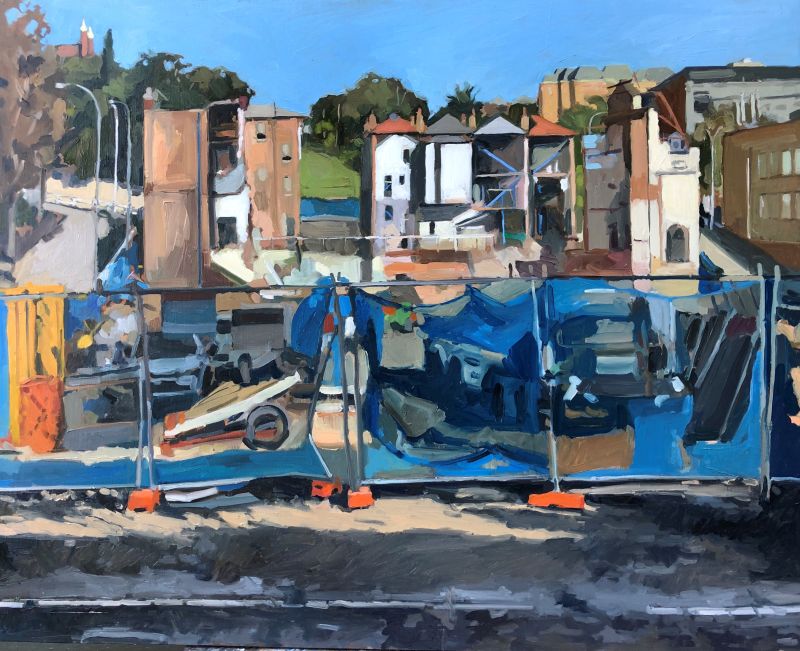
Featuring intimate paintings and portraits set in her home and studio, as well as plein air landscapes of iconic places in Newcastle, the exhibition also includes a series of paintings completed while Rachel was the artist in residence at the former David Jones building.
Abandoned at the time, Milne’s artworks capture a unique moment in the history of the iconic former department store, which is now on the verge of permanent change as part of Iris Capital’s East End development.
Newcastle Lord Mayor Nuatali Nelmes said the exhibition gives the community an opportunity to experience Newcastle landmarks and everyday objects from someone else’s point of view.
“It is wonderful to see Newcastle Art Gallery showcasing the work of a highly regarded local artist, whose paintings beautifully capture so many different perspectives that will be familiar to Newcastle audiences,” Cr Nelmes said.
“Whether it’s the view from the stage of the Victoria Theatre to the interior of the old David Jones building, which at one time was the heart of retail activity in Newcastle and is in the process of being reinvented by Iris Capital for future generations of residents and visitors to enjoy, Rachel’s work provides a fascinating snapshot in time as our city continues to grow and evolve.”
Rachel MILNE Construction 2020 oil on board 80.0 x 100.0cm Les Renfrew Bequest 2020 Newcastle Art Gallery collection, courtesy the artist
The English-born artist moved to Newcastle in 2013 and quickly made her mark on the local art scene as the winner of the Singleton Portraiture Prize that year. A three-time finalist in the Kilgour Prize at Newcastle Art Gallery, Milne also made the shortlist twice in the prestigious Wynne Prize at the Art Gallery of NSW and has work in the collections of Bathurst and Maitland Regional Art Galleries as well as Newcastle.
Newcastle Art Gallery Director Lauretta Morton said Milne’s richly layered observational works were a wonderful example of the artistic genre of Intimisim, which captures the beauty of everyday objects and scenes.
“Milne’s observational paintings depict ordinary objects like a child’s pram, a chair from her studio or food she has prepared. Paintings of local public swimming pools depict nostalgic scenes that have remained unchanged for years,” Ms Morton said.
“The exhibition also includes recently created works of art by Milne on display for the first time. A series of paintings set in Newcastle artists’ cooperative, Creator Incubator, provide insight into a vibrant creative arts community set in a large industrial space, now re-purposed and part of Newcastle’s ever-evolving history.”
RACHEL MILNE: Nest will be on display at Newcastle Art Gallery from 15 May – 1 August, 2021. As part of the opening weekend, Rachel will take part in a talk with writer Laura Jackel from 2pm on 15 May that will explore Newcastle’s ever-evolving urban landscape and the enduring reference to beauty in the everyday in Milne’s work.

NSW STATEMENT ON THE 2021-22 FEDERAL BUDGET

NSW Treasurer Dominic Perrottet tonight welcomed the Commonwealth Government’s 2021-22 Budget, which delivers more than $3 billion in funding for road infrastructure projects in NSW, alongside tax relief and training initiatives designed to boost the economy and help drive unemployment below pre-pandemic levels.
Mr Perrottet said the Commonwealth’s strong focus on supporting working families and creating jobs was teamed with a strong focus on helping the vulnerable and those in need.
“Josh Frydenberg has delivered a Budget which is the envy of many countries around the world, it’s clear Australia is leading the pack on the way back,” Mr Perrottet said.
“This is a Budget which places people at its very heart, ranging from more childcare assistance, help for the aged care sector, medical support in the regions, $2.3 billion for mental health and suicide prevention as well as a billion dollar boost for women’s safety.”
Among funding for NSW in tonight’s Budget:

  • $3.3 billion for priority road projects including $2 billion for the Great Western Highway from Katoomba to Lithgow, $500 million for the Princes Highway, including the Jervis Bay Road Intersection and Jervis Bay to Sussex Inlet Stage 1, $240 million for the Mount Ousley Interchange and $229.4 million for the M12 Motorway.
  • $162.8 million over three years from 2021-22 to support clean-up of damage caused by the February and March 2021 floods.
  • $51.2 million for Eurobodalla Southern Storage.
  • $4.5 million in 2021-22 for a Bushfire Community Recovery and Resilience Fund to support those affected by the 2019-20 bushfires.

Mr Perrottet said the NSW Government was currently working on its own 2021-22 State Budget, which will be delivered in June.
“It is vital the Commonwealth and NSW continue to work together. We have been handed the biggest challenge in a generation, but also the opportunity of our generation,” Mr Perrottet.

Man presents to hospital with stab wounds – Edgeworth

A man is in a stable condition after presenting to hospital with several stab wounds overnight.
About 12.10am (Wednesday 12 May 2021), emergency services were called to a home on Renfrew Crescent, Edgeworth, after reports a man had been injured in an altercation.
Upon arrival, officers attached to Lake Macquarie Police District established a crime scene and were notified that a 30-year-old man had presented at John Hunter Hospital suffering stab wounds to his arms and buttocks; his injuries are not considered life-threatening.
Police have been told the man was confronted by three people at the home before he was assaulted and stabbed.
Detectives have commenced an investigation into the circumstances surrounding the incident and how the man came to be injured.
Anyone who may have seen or heard anything in the nearby area between 11.30pm yesterday (Tuesday 11 May 2021) and 12.30am today, or who may have CCTV or dashcam footage is urged to contact Belmont Police or Crime Stoppers on 1800 333 000.

Man issued infringement for offensive conduct – Newcastle

A man has been issued an infringement notice following an investigation into an alleged spitting incident at Newcastle last week.
A man is alleged to have spat on the footpath outside a courthouse on Hunter Street, Newcastle, on Friday 7 May 2021.
Officers attached to Newcastle City Police District, assisted by Mt Druitt Police Area Command, commenced an investigation.
Following inquiries, a 38-year-old man attended Waratah Police Station today (Tuesday 11 May 2021), where he was issued with a criminal infringement notice for offensive conduct.

Greens: Evidence-based respectful relationships education works

The Australian Greens have welcomed today’s release of the positive evaluation of Our Watch’s primary school education program, Respectful Relationships Education to Prevent Gender-Based Violence, and called on the government to fund a national roll out.
Greens Deputy Leader and spokesperson for women, Senator Larissa Waters said: 
“Spoiler alert, evidence-based respectful relationships education works – not milkshake metaphors.
“Our Watch’s pilot programs in Queensland and Victoria, delivering age appropriate, whole-of-school and evidence-based respectful relationships, have been evaluated as successful.
“To address the crisis of violence against women and girls, the federal government should fund a national rollout of Our Watch’s program. All students, no matter which school they attend should get the benefit of learning about respect, gender equality and not letting their career aspirations be limited by their gender.
“Wasting millions of public dollars on an ineffective and confusing milkshake video was shameful, when that money should be spent on programs with proven outcomes.
“The Respect@Work report recommendations, accepted by this government, called for investment in expert-designed, whole-of-school respectful relationships programs to help end the cycle of violence by addressing what lies behind it – gender stereotypes and gender inequality.
“The PM now needs follow through in next week’s budget and include $190 million to support a national roll out of Our Watch’s effective respectful relationships training program.”
Greens spokesperson for Education, Senator Mehreen Faruqi, said:
“The government has a bad track record on respectful relationships education, but funding a national rollout of Our Watch’s program would be a big step in the right direction.
“Urgent investment is required in whole-of-school programs that tackle the issues clearly and are known to work.
“School education is as much about ensuring young people become respectful members of the community as it is about learning the ‘hard’ skills and knowledge required for the modern world.”

Film series uncovers stories of Newcastle

Newcastle’s role in a 19th century art revolution that preserved important Aboriginal cultural knowledge has been highlighted in a new film.
Lycett and Wallis: Unlikely Preservers of Aboriginal Knowledge tells the story of English-born convict Joseph Lycett, who was transported to Australia for forgery in 1815 and was later commissioned by Captain James Wallis, Commandant of Newcastle, to document the landscape and burgeoning township of Coal River/Mulubinba (Newcastle).
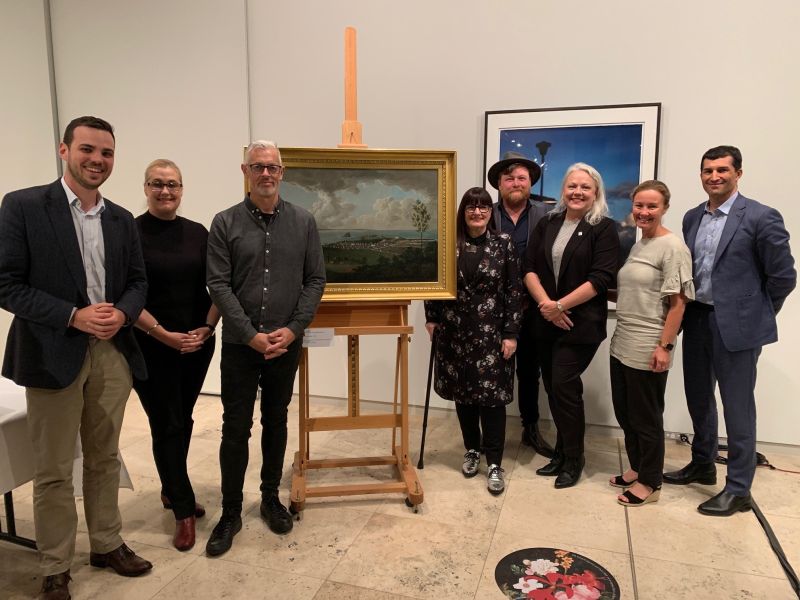
Deputy Lord Mayor Declan Clausen, City of Newcastle Director of City Wide Services Alissa Jones, filmmaker Tony Whittaker, Newcastle Art Gallery Director Lauretta Morton, filmmaker Chit Chat von Loopin Stab, Councillor Carol Duncan, Councillor Peta Winney-Baartz and City of Newcastle CEO Jeremy Bath.
Created in a time before cameras existed, Lycett’s paintings have become an invaluable record of traditional Aboriginal life in Newcastle as it had existed for thousands of years, depicting the rich culture and lifestyle of Australia’s first peoples with images of corroborees, hunting techniques, fishing, funerals and visions of laws being enacted.
The film examines the significance of Lycett’s work and its importance to Aboriginal people today, as well as the role Wallis played in the development of Newcastle and Lycett’s work.
It was created by Newcastle songwriter, producer and musician Chit Chat von Loopin Stab (aka Glenn Dormand) and fellow filmmaker Tony Whittaker as part of their Stories of Our Town series, which also includes films on the Star Hotel riot, BHP and the Scott Sisters.
With grants from City of Newcastle, the Newcastle Port Community Contribution Fund and private sources, the filmmakers are hoping to make at least 12 documentaries as part of the series.
Lycett and Wallis: Unlikely Preservers of Aboriginal Knowledge features interviews with a range of subjects including Newcastle Art Gallery Director Lauretta Morton and Gallery Curator Sarah Johnson, Newcastle Museum Director Julie Baird and Councillor Carol Duncan, whose personal Facebook group Lost Newcastle provided the initial inspiration for the Stories of our Town series.
Three of Lycett’s paintings examined in the film form part of the Newcastle Art Gallery collection – ‘Inner View of Newcastle’ c1818, ‘Newcastle NSW looking towards Prospect Hill’ c1818 and ‘View with cattle in foreground, Hunter River’ c1818.
The film was officially launched with a special screening at Newcastle Art Gallery and is now available to view via the Stories of Our Town website.
The filmmakers also recently released a short film, The Islanders: Chats with Vera Deacon, which was created in collaboration with Newcastle Libraries and University of Newcastle Library and is a collection of stories from Vera’s early life on the islands of the Hunter River.
The writer, philanthropist and passionate historian was named a Freeman of the City in 2019 in recognition of her contribution to Newcastle’s heritage, conservation and local history.
The film was commissioned by Newcastle Libraries as a contemporary twist to traditional oral history projects and makes the most of the capabilities of the new Digital Library Storywall, where it will be available to view by the community.

MASS VACCINATION CENTRE OPENS

The mass vaccination centre at Sydney Olympic Park has opened today with thousands of people booked in to receive the COVID-19 vaccine this week.
During its first weeks of operation, the Centre will focus on delivering Pfizer vaccinations to priority groups including healthcare workers, emergency services workers as well as quarantine and border workers and their households.
Bookings are required.
Members of the general public aged 40-49 are invited to register their interest in receiving the Pfizer vaccine through NSW Health. They will be contacted when a booking is available. People aged 40-49 can register here from 5pm today: nsw.gov.au/
From Wednesday 12 May, people aged 50 and over can book their AstraZeneca jab at the mass vaccination centre at Sydney Olympic Park, if they are unable to obtain the vaccination from their GP. These bookings will be available here; covid-vaccine.healthdirect.gov.au/eligibility
Premier Gladys Berejiklian said the centre at Sydney Olympic Park would operate six days per week from 8am to 8pm.
“The mass vaccination centre will be able to administer up to 30,000 vaccines per week once it is up and running, that means around 5,000 vaccinations per day,” Ms Berejiklian said.
“The Centre, combined with the more than 100 NSW Health run clinics and hubs, means NSW Health can administer around 60,000 vaccines each week across the State.”
Health Minister Brad Hazzard said about 200 registered nurses and midwives will work at the Centre forming about two-thirds of its 300-strong workforce.
“Opening a vaccination centre of this scale at Sydney Olympic Park is a massive and unprecedented undertaking, and one I’m very proud of as Health Minister,” Mr Hazzard said.
NSW Chief Health Officer Dr Kerry Chant urged everyone in NSW who can be vaccinated to do so.
“Vaccination is very effective at reducing your risk of serious illness and death from COVID-19 and will also reduce the chance you will pass on the infection to your loved ones,” Dr Chant said.