
Minister for Women Bronnie Taylor congratulates the 2021 Australian of the Year recipients, acknowledging their inspiring achievements and contribution to society.
For only the second time in the history of the awards, women have won all four Australian of the Year categories.
“These women have shown remarkable bravery in breaking down barriers to drive positive change and it’s fantastic that their achievements have now been recognized nationally.” Mrs Taylor said.
“These awards shine a light on the enormous efforts of women to make our communities a better place, whether it be in the city, regional or rural areas.”
Local Hero Rosemary Kariuki, of Oran Park in Sydney’s southwest, has worked tirelessly to help migrants fleeing domestic violence as well as helping migrant women to make social connections in their new home.
Australian of the Year Grace Tame, of Tasmania, is a sexual abuse survivor who has advocated for legal reform and raised public awareness about the impact of violence against women and girls.
Senior Australian of the Year Dr Miriam-Rose Ungunmerr Baumann AM, of the Northern Territory, is an artist, activist, writer and public speaker who has devoted her energy to bridging the gap between Aboriginal and non-Aboriginal culture.
Young Australian of the Year Isobel Marshall, of South Australia, has used her business skills for social change by improving access to female hygiene products and improving education for women and girls in Sierra Leone and Uganda.
“Women are often quiet achievers, giving so much of themselves and asking for so little in return so it is wonderful to see these four women recognised for their significant contribution,” Mrs Taylor added.
“I congratulate the winners, finalists and nominees in the Australian of the Year Awards and thank them for their dedication to improving society and changing lives.”
Author: admin
Woman charged with domestic violence, assaulting officers – Bradbury
A woman has been charged with domestic violence and assaulting police officers, following an incident in Sydney’s south-west yesterday.
About 5pm (Monday 25 January 2021), a woman allegedly drove her vehicle into another car at a shopping centre in Bradbury, causing extensive damage.
The woman then left her vehicle and removed the windscreen wipers from the other car, allegedly using them to assault the other driver, a woman who is known to her.
The woman then assaulted a man, also known to her, who was a passenger in the other car.
Responding to calls, officers attached to Campbelltown City Police Area Command attended the scene a short time later. The woman allegedly struck out at the officers, who eventually apprehended her.
The 49-year-old woman was arrested and taken to Campbelltown Police Station, where she was charged with predatory driving, common assault (DV), armed with intent commit indictable offence, and assault police officer in execution of duty whilst occasioning actual bodily harm.
The Rosemeadow woman was refused bail and will appear at Parramatta Local Court today (Tuesday 26 January 2021).
No police officers were injured.
Australia continues to set record vaccination rates
Australian families have clearly demonstrated that we are a vaccination nation, with childhood immunisation rates reaching record levels in December 2020.
Amid the COVID-19 pandemic, parents followed expert health advice and continued to take their children to receive their shots, pushing five-year old vaccination rates beyond the aspirational target of 95 per cent coverage.
Australia’s immunisation rates are world leading. In fact the December Quarter of 2020 took Australia’s coverage rate for five year old children to 95.09 per cent which exceeds the estimated World Health Organisation international average immunisation coverage rate of 86 per cent.
Reaching our target of 95% supports herd immunity to stop the spread of vaccine-preventable diseases.
These figures show Australians have both the capacity and the will to lead the world in taking up COVID-19 vaccines, as they recognise how important vaccination is, and how it protects and saves lives.
It also shows the faith that Australians have in our independent medical regulator, the Therapeutic Goods Administration, to provide expert advice and ensure the safety and efficacy of all vaccines provided to the community.
Aboriginal and Torres Strait Islander children at five-years old have the highest rates of immunisation in the country at 97.25 per cent. This is an incredible result and shows that Aboriginal and Torres Strait Islander families are taking their children to have their shots on time and keeping up to date with the recommended vaccination schedule.
The Australian Government invests more than $400 million each year in the National Immunisation Program.
The national immunisation coverage rate for all one-year olds has grown to 94.85 per cent and among two-year olds is 92.55 per cent.
While not as high as the five-year old rate, the results for Aboriginal and Torres Strait Islander two-year olds and one-year olds continue to climb, reaching 91.43 per cent and 93.79 per cent respectively.
The importance of vaccination is not lost on Australians, the vast majority of families ensure their children are fully immunised against a range of dangerous, but preventable diseases.
Immunisation providers have maintained their routine immunisation services throughout the pandemic and are ensuring on-time vaccination according to the recommended schedules.
Australia’s seasonal influenza vaccination program continues to provide increasing numbers of vaccines to Australians of all ages, in 2020 the Therapeutic Goods Administration released more than 17.6 million doses of seasonal influenza vaccines for the Australian market – this includes those for the National Immunisation Program and the private market.
| September 2020 | December 2020 | |
| General one-year-old | 94.72 | 94.85 |
| General two-year-old | 92.36 | 92.55 |
| General five-year-old | 94.90 | 95.09 |
| Indigenous one-year-old | 93.46 | 93.79 |
| Indigenous two-year-old | 91.16 | 91.43 |
| Indigenous five-year-old | 97.03 | 97.25 |
GPs’ key role in COVID-19 vaccination rollout
General practices will play a key role in the Australian Government’s rollout of COVID-19 vaccines, in what will be one of the greatest logistical exercises, public health or otherwise, in Australian history.
Providing access to safe and effective COVID-19 vaccines for everyone in Australia is a key priority for our Government.
General practices will help deliver the vaccine initially to priority groups, starting with people over 70, adults with underlying medical conditions and Aboriginal and Torres Strait Islander people in phase 1b. Three more phases will follow until the whole country has been offered the vaccine.
The Government will also work closely with Primary Health Networks to determine general practice distribution points for the vaccine. Over time, there will be more than 1,000 distribution points across Australia.
Applications open 9am tomorrow, at www.health.gov.au.
Australian GPs have considerable experience administering vaccines, with the Australian Government’s highly successful childhood immunisation program and the influenza vaccines both exceeding expectations with record engagement. General practices are key players in Australia having one of the highest vaccination rates in the world.
General practices are the core of our health system and those involved in supporting the vaccine rollout will include GPs and primary health care nurses, as well as their support staff, including practice managers, receptionists, cleaners, and IT support.
The vaccine rollout in Commonwealth-funded GP-led Respiratory Clinics and Aboriginal and Community Controlled Health Services will be administered through separate processes. They are not required to complete an expression of interest to take part in the rollout.
The COVID-19 vaccine rollout is a new frontier. It will bring new challenges, and I am very confident that our health care workforce is well placed for this immense task.
An expression of interest for pharmacies will be released next week.
Iconic AIS celebrates 40 years progressing sport
The Australian Institute of Sport (AIS) has marked a key milestone, celebrating its 40th anniversary this week.
Minister for Sport, Richard Colbeck said the AIS remains a lynchpin in Australia’s sporting success and its enhanced focus on athlete wellbeing, athlete pathways, coach development, innovation and collaboration all remain legacies of the AIS today.
“The AIS revolutionised Australian sport 40 years ago and today it remains an important and iconic symbol of Australia’s commitment to sport and the power of sport to inspire and unite our communities,” Minister Colbeck said.
“We celebrate this milestone with the AIS and pay tribute to those who have positively contributed to building Australian sport capability over many years.”
Some of the biggest names in Australian sport are among the 8,858 athletes who have been AIS scholarship holders over its successful history.
“In an Olympic and Paralympic year, we also acknowledge the integral role the AIS is playing to support our athletes in their preparation for the Tokyo Olympics,” Minister Colbeck said.
The AIS was launched by Prime Minister Malcolm Fraser in Canberra on 26 January 1981, comprising approximately 150 scholarship athletes across eight different sports to become Australia’s first and only official sporting institute.
AIS CEO Peter Conde said it has evolved to help lead the National Institute Network to positively influence more Australian athletes than ever before.
“As we should expect, the AIS does things differently now. Races aren’t won by standing still. But the intent of the AIS remains the same – to help Australian athletes realise their full potential in both sport and life.
“The AIS directly invests more than $145 million a year into 38 high performance sporting organisations and their athletes, including $14 million a year in athlete grants across Olympic, Paralympic and Commonwealth Games sports.
We have progressed the support for Paralympics athletes, with funding up 40 per cent in the past eight years,” he said.
“We are partnering with sports to develop emerging athletes and coaching pathways. We are at the forefront of innovation, including research into athlete health and performance. We are exploring new frontiers like artificial intelligence and data analysis.
“We naturally strive to win and we care about athletes. Our approach to athlete mental health, wellbeing and community engagement has been crucial, especially in terms of supporting athletes through the COVID-19 pandemic.”
Minister Colbeck said the next decade is exciting for Australian sport.
“There is a lot to look forward to. Australia will host the women’s world cup of basketball and football, we’ve invested in a bid for the 2027 Rugby World Cup and, in the next two years, we are considering a bid for the 2032 Olympic and Paralympic Games.
The leadership of the AIS will continue to be pivotal.”
New Zealand Travel Arrangements
On 24 January 2021, the New Zealand Government announced a case of COVID-19 detected in the community. This morning, New Zealand authorities advised that the case detected is a variant of concern. The case and subsequent exposure to the community are still under investigation.
As a result, the Australian Government, based on advice from the Australian Health Protection Principal Committee (AHPPC), has suspended green zone travel arrangements with New Zealand for a minimum of 72 hours whilst more is learnt about the transmission. This change comes into effect immediately (as of 1400 AEDT, 25 January 2021).
The decision has been taken out of an abundance of caution to reduce the risk of this variant, which has been shown to spread more readily between individuals, entering the Australian community.
All green safe travel zone passengers from New Zealand currently en route to Australia, or with planned travel to Australia in the next 72 hours will be required to enter mandatory hotel quarantine for up to 14 days on arrival or take other action based on the requirements of the relevant State and Territory Governments.
It is recommended all passengers from New Zealand with a green safe travel zone flight scheduled in the next 72 hours, reconsider their need to travel.
The Federal Government has advised all State and Territory governments and the New Zealand Government of these changes.
Anyone who has arrived into Australia on a flight from New Zealand on or since January 14 is asked to isolate and arrange to get tested, and to remain in isolation until you have received a negative test.
Pfizer Vaccine Approved
The Therapeutic Goods Administration (TGA) has today provisionally approved the Pfizer/BioNTech COVID-19 vaccine for use in Australia.
The Pfizer vaccine has met strict standards for safety, quality and efficacy.
The TGA provisional approval is for individuals 16 years of age and older. Two doses will be required – at least 21 days apart.
A priority group of Australians are expected to now receive their first dose of the vaccine as soon as it can be received from Pfizer and the necessary checks are undertaken by the TGA, prior to its distribution.
The latest advice given to the Government from Pfizer is that shipping and the first vaccinations are expected to be in late February.
If there are delays in shipping or production, the possibility remains that commencement could be in early March, however guidance remains for late February.
Prime Minister Scott Morrison said the TGA approval was an important step in the fight against COVID-19.
“I welcome the TGA’s approval of the Pfizer vaccine, with our own Australian experts finding it is safe, effective and of a high standard,” the Prime Minister said.
“Australians should take confidence in the thorough and careful approach taken by our world-class safety regulator.
“Our priority has always been to keep Australians safe and protect lives and livelihoods. Today’s approval is another big step forward for our community, particularly in the protection of our most vulnerable people.”
Minister for Health Greg Hunt said the-world class regulators at the TGA have been working tirelessly to introduce a safe and effective COVID-19 vaccine in Australia.
“The TGA’s processes are I believe the best in the world and we have ensured that they are thorough.” Minister Hunt said.
“The TGA has placed safety above all else.”
“Australia’s high bar has been met; the vaccine has been approved as effective in stopping severe disease. I thank all those involved in the development and assessment of this COVID-19 vaccine, including the researchers, Pfizer, BioNTech and the medical experts at the TGA who have worked around the clock and over Christmas.”
“This approval and the upcoming roll out of the vaccine will play an important part in our ability to manage the pandemic in 2021.”
“Australia’s vaccination program has been based on the medical advice from the medical expert panel led by Professor Brendan Murphy. As a result we are in the fortunate position of having secured 140 million doses of vaccine, one of the highest per capita rates in the world. We will continue to review the medical advice and monitor and adapt to developments around the world,” Minister Hunt said.
The Government continues to work with Pfizer on the final date of delivery of vaccines, noting that Pfizer has experienced some temporary production delays from its European manufacturing plant as it ramps up production to meet extraordinary global demand.
The Government’s latest advice remains that the first doses of Pfizer are expected to arrive and be rolled out in late February. Final dates will be confirmed by Pfizer shortly and are subject to shipping and distribution.
In Australia the vaccine will be rolled out in five phases over the coming months and, over time, will involve more than 1,000 vaccination administration sites.
Head of the TGA, Adjunct Professor John Skerritt said the TGA has been working non-stop to get the Pfizer vaccine assessed, while maintaining the most rigorous standards of safety, quality and efficacy.
“I would like to thank our clinical and medical officers, scientists, pharmacists and experts in statistics, laboratory analysis and manufacturing assessment who have worked tirelessly on assessing this vaccine,” Adjunct Professor Skerritt said.
“We’re thrilled to have this product pass the rigorous regulatory process and receive provisional approval.”
“Our job is by no means done. In fact the monitoring of vaccine safety post-approval is an important part of the regulatory review of vaccines.
“We now check the individual batches of vaccines that are destined for Australians while closely monitoring the safety and efficacy of the vaccine as it is rolled out.
“We will also continue our work on the regulatory review for potential approval of other vaccines, notably the AstraZeneca and Novavax vaccines, as well as vaccines delivered through the COVAX facility.”
As the rollout begins across 30 – 50 hospital sites, people who need protection the most will get the vaccine first. This includes aged care and disability care residents and workers, frontline health care workers, and quarantine and border workers.
The priority groups have been determined based on the advice of the Australian Technical Advisory Group on Immunisation (ATAGI) which oversees Australia’s highly successful immunisation program.
“There is intense ongoing work which will continue over the coming month, including batch testing of newly arrived doses, establishing cold storage facilities for the vaccine, training health providers to administer it, finalising distribution sites with states and territories, checking sites and protective equipment for safety, and scaling up systems for ongoing safety monitoring,” Minister Hunt said.
The Australia Government, states and territories, regulators and the health and medical sectors are working together to finalise arrangements under the Australian Vaccination Strategy and detailed roll out plans. Further information about the Australian Government’s COVID-19 Vaccine National Roll-out Strategy can be found here.
Star Jets player among Newcastle's newest citizens-to-be
Newcastle Jets forward Roy O’Donovan has found a permanent home in the region, with the Irish import and his young family set to become Australian citizens at one of City of Newcastle’s online citizenship ceremonies on Tuesday.
O’Donovan and his wife Ellen relocated to Australia in 2015, initially for a change of scenery, but when their son Alfie was born less than 12 months later, the O’Donovans soon fell in love with Newcastle and the unparalleled lifestyle it had to offer.
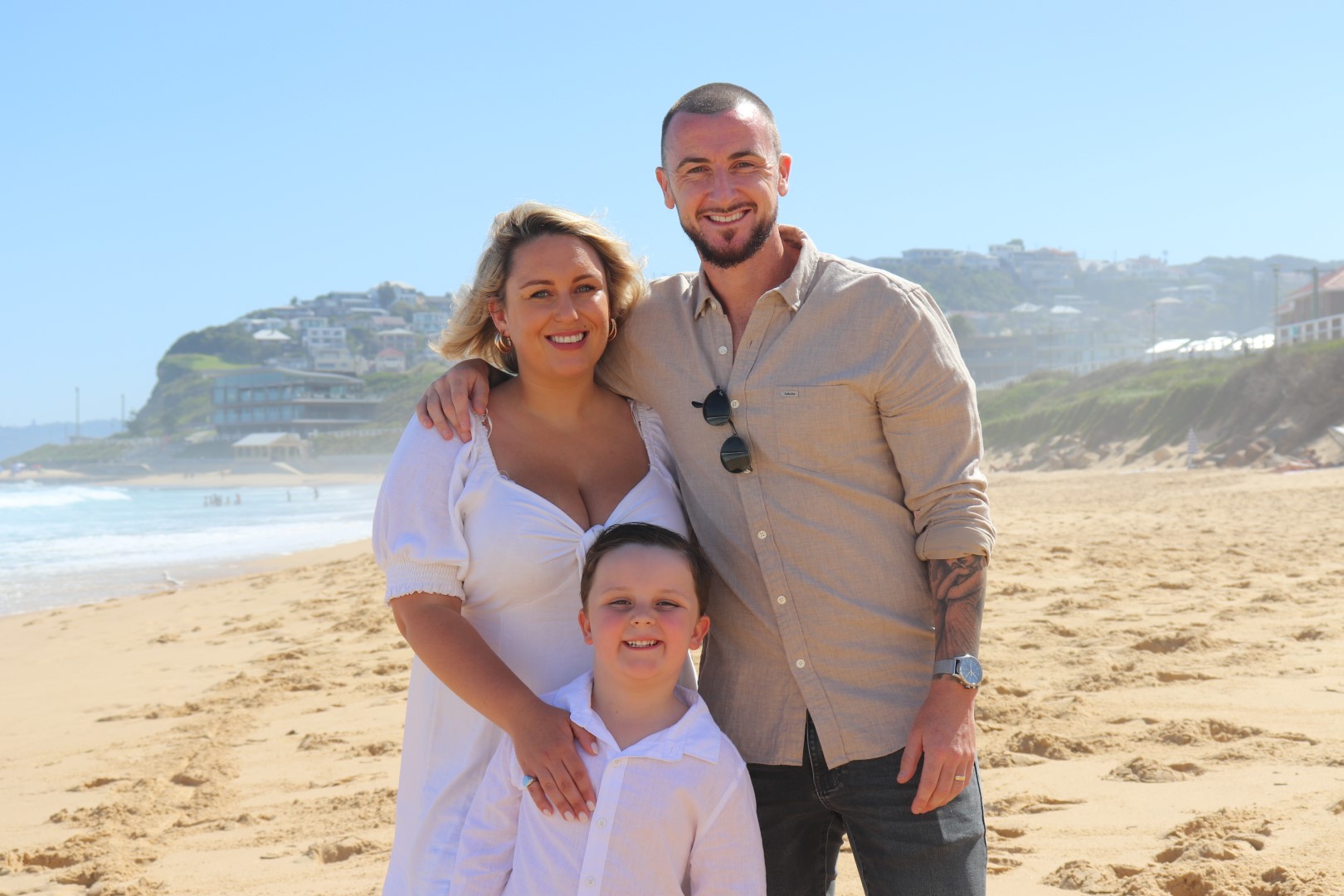 Roy O’Donovan with his wife Ellen and son Alfie at Dixon Park Beach.
“I always had it in the back of my mind that I wanted to play in Australia or America because I fancied the change from living in England,” O’Donovan said.
“We came to Newcastle and really felt like we had found a home here. I’d travelled elsewhere for football but never for more than two or three years at a time. You can’t beat the lifestyle here, especially for raising a family, with so many beautiful parks and beaches at your doorstep.
“We’re extremely honoured and proud to become Australian citizens and be part of Newcastle’s future.”
As for Alfie’s favourite thing about Newcastle? “I love swimming at the beaches and also seeing all the dogs walking around,” he said.
The O’Donovans will share their special day with Lord Mayor Nuatali Nelmes, who is presiding over their citizenship ceremony via Zoom, before tucking into a backyard barbecue, sending their love to family and friends in hard lockdown in Ireland and enjoying some family time before Alfie starts kindergarten later this week.
Cr Nelmes said City of Newcastle had adapted its traditional Australia Day Citizenship Ceremony, which in the past has been one of the largest in the state, to allow our newest citizens to take the pledge in a COVID safe environment.
“While the COVID-19 pandemic has meant we have had to do things a little differently to keep the community safe, it’s an historic moment as Lord Mayor to welcome City of Newcastle’s newest citizens in a more intimate, one-on-one setting, joining them virtually in their lounge rooms and kitchens.”
The Lord Mayor and Deputy Lord Mayor Councillor Declan Clausen will preside over simultaneous ceremonies, accompanied by the Federal Member for Newcastle, Sharon Claydon, who will read the Minister’s Message.
NSW ACTION PLAN TO TURN IDEAS INTO JOBS
Research and development will become a key jobs creator in NSW as the Government launches a bold new plan to make the State an R&D world leader.
Premier Gladys Berejiklian today launched the Turning Ideas into Jobs – Accelerating Research & Development in NSW Action Plan.
The report, which was delivered to the Premier by her Parliamentary Secretary Gabrielle Upton, is the NSW Government’s first significant step towards reforming the R&D sector.
“The pandemic has reinforced to us the power of collaboration,” Ms Berejiklian said.
“The private sector, academia and the NSW Government collaborated to unlock crucial supplies and to solve difficult problems on behalf of the people of NSW.
“We are now bottling that spirit of collaboration and applying it to how we support R&D across the State. This is only the start of the commitments we will be making to R&D.
“R&D will be a powerful jobs creator during our economic recovery. For every dollar invested in R&D there can be an economic benefit of 14 dollars in return.”
Ms Upton worked with an Advisory Council of eminent leaders chaired by David Gonski AC and undertook broad public consultation to finalise five priority actions.
The NSW Government has already committed $26 million from the NSW 2020/21 Budget to fund two of the priority actions in the report including launching a Small Business Innovation Research program and establishing an R&D matchmaking platform.
Ms Upton said the Advisory Council conducted extensive consultations with leaders in large, SME and start-up businesses, investors, educators, researchers and innovators across all sectors.
“Their message to our Government was the increasing need to be proactive in supporting and attracting new businesses, especially in future industries that will sustain economic growth, productivity and employment,” Ms Upton said.
“In a post–COVID-19 world, this means that the NSW Government’s record investments in ‘hard’ infrastructure such as roads and public transport needs to be complemented by strategic investment in ‘soft’ infrastructure – R&D, research translation and infrastructure – which drives these growing and emerging industries.”
Mr Gonski welcomed the report and thanked the wide range of people and organisations who contributed to it.
“This report comes at a critical time. The devastating impact of COVID-19 on investment in R&D and the downstream impacts on economic growth and job creation makes this task an urgent one,” Mr Gonski said.
“Decisive government action to attract and leverage investment, improve cross-sector collaboration and rapidly translate ideas into new products and services will be integral to our recovery from this crisis.”
NSW Chief Scientist & Engineer, Professor Hugh Durrant-Whyte said the Action Plan’s focus is on implementing its five Priority Actions in a coherent, integrated and sustainable way to accelerate the translation and commercialisation of research in NSW.
“Another crucial aspect is the recommendation of the launch of a program of NSW R&D Missions aimed at solving the state’s long-term strategic challenges in areas including bushfire response, drought resilience, health and the transition to renewable energy.”
The NSW push to turn ideas into jobs is already underway, with the homegrown AgTech pioneer, Agerris, developing robotic and AI technologies to increase on-farm operational productivity.
Agerris technology was partially supported by a $1.3m grant from the NSW Office of the Chief Scientist and Engineer to develop and deploy an Agricultural Robotics STEM program.
Agerris can trace it origins to the world-class Australian Centre for Field Robotics based in Sydney and recently raised $6.5 million in new funding to commercialise its research. Agerris currently has 13 employees and is using these funds to build and scale their innovative robots here in NSW, providing high quality jobs.
Given the size of Australia’s agricultural sector, the opportunities for applying cutting edge technologies to increase productivity are huge.
To read more on the report and the five-point Action Plan, click here:https://www.dpc.nsw.gov.au/accelerating-r&d
SCHOLARSHIPS HELP OUR YOUNGEST LEARNERS PUT THEIR BEST FOOT FORWARD
The youngest learners in NSW will benefit from additional educators, thanks to 40 scholarships awarded today to early childhood educators.
The 40 scholarships are worth up to $20,000 each, awarded under the 2020-21 Early Childhood Education Scholarships Program, making it easier for more people to commence or upgrade their qualifications to a bachelor degree in early childhood teaching.
Minister for Education and Early Childhood Learning Sarah Mitchell said the scholarships would help promising preschool and early childhood employees deepen their knowledge of early education.
“Education in the first years of a child’s life are some of the most important. They develop skills crucial to success in school and later life,” Ms Mitchell said.
“It also is an important time for the child’s health, educators and parents can pick up early signs of various conditions early.
“Our early childhood educators are key to this and these scholarships will help some of our best become even better.
“We recognise that these scholarship recipients will deepen their understanding of early childhood environments, and gain additional skills and capabilities which will be passed on to the children they teach.
“Congratulations to the scholars on their commitment to education, and I wish them every success in their studies and future careers as qualified early childhood teachers.”
Further details about the scholarships are available on the department’s website https://education.nsw.gov.au/early-childhood-education/working-in-early-childhood-education/professional-development-and-scholarships