
The Community Affairs Legislation Committee has tabled its report into the Government’s pitiful Bill to increase the JobSeeker payment by $3.57 a day. The Greens have tabled a dissenting report.
The Australian Greens are deeply disappointed in the lack of time provided to consider and scrutinise this change to Australia’s social security system.
“The Government had months to consider an increase and prepare this legislation with the knowledge that the reduced Coronavirus Supplement was coming to an end on 31 March 2021, but they chose to introduce this Bill as late as possible in an attempt to suppress debate and dissent”, Senator Rachel Siewert said.
“While the Government tries to stifle scrutiny and debate on their callous decision to condemn millions to poverty, the community is watching and they do not accept this cruelty.
“Everyone in our community deserves to live a life free of poverty and to ensure that they can care for their wellbeing and that of their family.
“There were hundreds of submissions to this inquiry. You only have to read a handful to understand the significant pain, anxiety and poverty taking JobSeeker back to $44 a day is going to cause.
“This is not a decision based on evidence but on an ideological obsession with punishing people on income support.
“It’s shameful the way this Government attacks people on income support, calling them job snobs, essentially implying they are undeserving of support.
“At a time when the Government should be focusing on economic recovery, they are making choices that will slow down our recovery from the recession.
“The poverty rate for households whose main source of income is allowances dropped to 26% following the introduction of the $550 a fortnight Coronavirus Supplement. Researchers estimate the poverty rate for these households will skyrocket back up to 85% after this Bill is introduced.
“Researchers at the Grattan Institute estimate that the Government’s plans to cut the rate of Jobseeker Payment by $50 a week will remove $5 billion from the economy over the next year and result in up to 40,000 fewer jobs . Millions will be ripped from the retail sector as people on income support payments spend an estimated 58% of their payments on retail goods or services.
Next week the Greens will seek the support of the senate to:
1. Amend the bill to increase all income support payments to $1115 a fortnight which is in line with the Henderson Poverty Line.
2. Retain the current income free threshold of $300 a fortnight.
3. Abolish compulsory income management.
4. Abolish Mutual Obligations.
The report can be found here.
Author: admin
Aged care respite services bolstered for culturally diverse groups
Older Australians from culturally and linguistically diverse communities across the country are set to access more tailored respite care.
The Morrison Government will fund an additional $9.67 million per year over two years through the Commonwealth Home Support Program (CHSP).
Minister for Senior Australians and Aged Care Services, Richard Colbeck, said the funding would support culturally and linguistically diverse senior Australians to live independently and safely in their own homes and local communities and provide respite for carers.
“Forty aged and disability care providers will deliver the additional centre‑based respite services to older Australians from multicultural communities, including those from Chinese, Italian, Greek, Polish, Russian and Indian backgrounds, to name a few,” Minister Colbeck said.
“Importantly, the Government is directing the extra funding to those areas in most need across the country – where there are service gaps and the highest level of demand.”
Centre‑based respite services can include group activities to help ease isolation and encourage social interaction, group excursions, and meals. Carers and family members can take part in the activities or leave the older person in the care of the provider.
“Social isolation was – and is – a very real problem for older Australians during the pandemic,” Minister Colbeck said.
“Language barriers and cultural differences have made it even harder for people from diverse backgrounds.
“It’s important the additional services on offer focus on tailored support and programs that are suited to the needs of these seniors, and the needs of their communities.”
To access services, older Australians will need to contact My Aged Care on 1800 200 422 and arrange for a formal assessment of their care needs.
Service providers are required to be as responsive as possible to requests from older Australians and their carers for short-term or non-ongoing respite.
$10 million for National Mental Health Research Centre
A national network of leading mental health researchers will work with more than 2000 people living with mental illness to deliver better models of mental health care across Australia, thanks to the Morrison Government.
Funded by $10 million from the National Health and Medical Research Council’s Special Initiative in Mental Health, the new national centre, called ALIVE, will help to lead a generational shift in mental health care research.
Operating from research hub, to be based at the University of Melbourne, ALIVE will establish an Academy of Lived Experience and Co-Design Living Labs at 14 universities across all states and territories.
Minister for Health, Greg Hunt, said the centre will use research to rethink models of mental health care and the way they are delivered, to find a national solution to a national problem.
“The Australian Government’s investment in mental health services and suicide prevention in 2020-21 is at a record high of $5.9 billion,” Minister Hunt said. “This not only delivers better treatment of mental health conditions, but provides Australian researchers the tools to improve treatment.”
“ALIVE will drive a national research agenda to deliver innovative, evidence-based mental health care. The centre complements the National Mental Health Commission’s reform program so that all people in Australia can lead fulfilling lives, participating socially and economically in thriving communities.”
“This national network will grow and develop the next generation of mental health researchers in Australia.”
Assistant Minister to the Prime Minister for Mental Health and Suicide Prevention, David Coleman, said the centre would be guided by lived experience.
“The knowledge and experience of more than 2000 Australians living with mental illness will help shape the research, and will be critical in designing a more effective, coordinated and compassionate system,” Assistant Minister Coleman said.
“Through this approach we are putting the needs of people at the centre of the design and delivery of mental health services in Australia.”
ALIVE’s evidence-based model will emphasise early identification and prevention over crisis support, and take a holistic approach, addressing physical as well as mental health.
Priority populations include Aboriginal and Torres Strait Islander communities and people who are living with severe and complex mental illness.
The centre will be led by Associate Professor Victoria Palmer who leads the University of Melbourne’s Integrated Mental Health Research Program and is internationally recognised for her expertise in primary care mental health research.
“Our approach begins with the lived experience of people with mental health conditions as central to the co-design of the transformation that is required across the health care system,” Associate Professor Victoria Palmer said.
“By working hand-in-hand with those living with mental illness and carers we aim to develop a better system of care which saves lives and improves outcomes.”
NHMRC CEO Professor Anne Kelso AO said the new national centre was the result of a considered assessment of existing mental health research and would complement other Australian Government initiatives.
“This centre is a strategic investment in national collaboration to develop long-term partnerships between research, health care and service delivery. It is designed to find approaches to prevention and treatment that can address the issue at a national scale,” Professor Kelso said.
The centre will report to an independent governance committee, chaired by Professor Allan Fels AO, former chair of the Australian Competition and Consumer Commission (ACCC) and the National Mental Health Commission.
Over $1.1 billion to extend Australia’s COVID-19 health response
The Government will invest more than $1.1 billion to extend our successful national COVID-19 health response and suppression strategy until 31 December 2021.
Australia is leading the world out of the global COVID-19 pandemic and recession. As COVID-19 vaccines roll out across the nation, protecting Australians from the ongoing threats of the pandemic remains a priority.
This $1.1 billion is in addition to more than $22 billion spent in these areas to date, including more than $6 billion to support the COVID-19 vaccine roll out.
Australia’s suppression strategy has been extremely successful to date, particularly when compared with the devastation caused by the virus in many places overseas. Australia’s remarkable performance in saving lives is evident – we have the second lowest case rate and third lowest mortality rate amongst countries in the OECD.
The Government’s focus on containing the virus through testing, tracing and border and travel measures, building and investing in the capacity of our health system, and collaborating with states and territories, the health sector and others, has helped stop the spread of COVID-19.
We thank the community for their ongoing adherence to physical distancing and hygiene advice.
This new commitment will ensure that key measures remain in place throughout 2021 to protect the community while vaccinations roll out over the coming months.
This investment will extend:
- Our partnership with the states and territories to manage COVID-19, by sharing 50 per cent of the cost of testing and treating people with COVID-19 through our public hospitals, and of public health measures to prevent the spread. To date the Commonwealth has provided an additional $5 billion to support the states and territories, including $1 billion in additional public hospital funding
- Continue telehealth services and care until 30 June 2021. So far more than 51 million telehealth services have been delivered to 13 million patients and almost $2.6 billion in benefits paid. More than 82,000 providers have used telehealth services nationwide. The Government will continue to review the ongoing role of COVID telehealth to support the pandemic in the short term, while we plan the permanent post-pandemic telehealth arrangements with peak doctor groups.
- Support for rapid pathology testing and tracing building on the more than 14.5 million COVID-19 tests conducted to date
- GP-led Respiratory Clinics, which have delivered more than 1 million consultations and 934,600 COVID-19 tests
- Culturally safe testing, treatment and evacuation preparedness in the most remote and isolated parts of the country which has so far provided more than 15,500 point of care tests
- Electronic prescription services with 3.8 million electronic prescriptions and repeats to patients issued and almost 1.7 million dispensed to date
- Delivery of Home Medicine Services across the country with more than 2.1 million services delivered already
- The Continued Dispensing Emergency Measure where around 289,000 people have had at least one supply of medicine so far
- The Beyond Blue Coronavirus Mental Wellbeing Support Service to meet ongoing demand for services as a result of the ongoing COVID-19 pandemic and provide continued support while COVID-19 restrictions remain and the COVID-19 vaccine program is implemented
- Aged care workforce surge support capability and financial support for aged care facilities affected by a COVID-19 outbreak to ensure the ongoing safety of senior Australians.
These measures have supported our response to COVID-19 outbreaks when they occurred. Extending them will ensure Australians remain COVID safe.
Our Government will continue to monitor the pandemic and the progress of our vaccination program so we can take the swift action needed to ensure we keep Australians safe and the economy on the road to recovery.
Countering the misinformation on COVID-19 vaccines
The Australian Government is ramping up its campaign against misinformation on the COVID-19 vaccines, as the vaccination program ramps up moving into Phase 1B.
Australians can get all their questions answer on the health website to find out what they want – and need – to know about the COVID-19 vaccines.
The new material on the website, called Is it true? – www.health.gov.au/covid19-vaccines – will help answer questions people may have about the vaccine, and respond to vaccine misinformation they may have heard.
This new function will provide trusted, credible information on COVID-19 vaccines for everyone in Australia. It will sort the fact from the fiction.
The information on the website will be clear, accurate and timely. This will help reassure Australians about the safety and effectiveness of the vaccine and answer commonly asked questions and misinformation relating to the COVID-19 Vaccination program.
The vaccines are the next, crucial step on the road out of this pandemic – and it’s the one step that we can all take to protect ourselves, our families, our communities from severe illness.
It’s essential that people get their information on the vaccines from credible sources – and that should be on official government websites.
With new vaccine developments every day, it’s very normal for people to have questions and possibly feel hesitant about getting the vaccine. That doesn’t make them anti-vaccination.
The new section on the website will address the most common questions being asked by people and will be updated regularly.
The Government is running an extensive $31 million education campaign through the rollout, providing people with information about the approval process for the vaccines, details on what phases the rollout is at and who is now eligible to be vaccinated.
As the vaccination program starts to move into Phase 1b , which covers more than six million people, it’s essential people understand the facts about the vaccines as they make their appointments to get vaccinated.
The more people vaccinated, the more people protected from severe illness and death, keeping themselves and the broader community safe.
Early literacy program facilitates connections with culture
Storytime sessions at Newcastle Libraries are helping to introduce Newcastle families to Indigenous perspectives on early learning.
Newcastle Libraries collaborated with Rainbow Crow Cultural Collective on an innovative program that transforms its popular Storytime and Babytime sessions into an Aboriginal-led early literacy program.
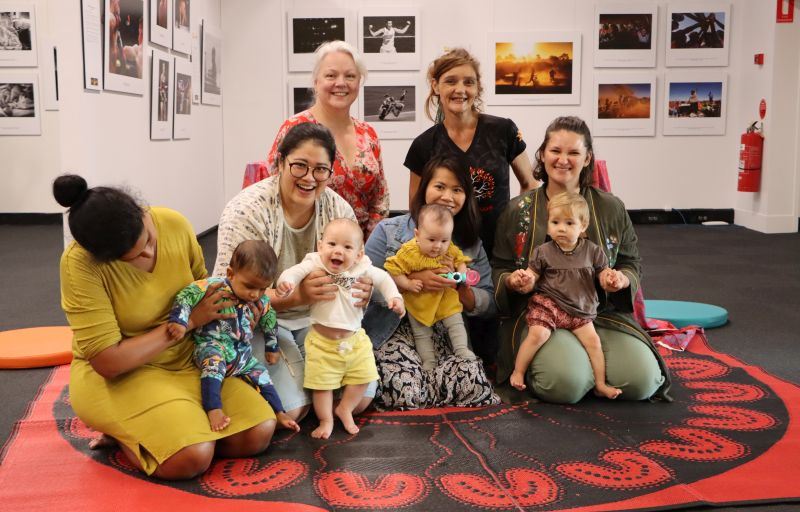
The free Wayapa Babytime and Storytime programs are being delivered by qualified Aboriginal Health Practitioner and Cultural Consultant Sarah Corrigan, with around 20 families taking part in the booked-out trial running at the City Library during March. A four-week term will begin at Wallsend Library from 4 May, with bookings opening in early April.
Newcastle Lord Mayor Nuatali Nelmes welcomed the new addition to the Libraries’ stimulating suite of Early Literacy programs
“City of Newcastle is committed to supporting initiatives that encourage social inclusion and community connections,” she said.
“The Wayapa programs are open to all families, fostering knowledge sharing and community building.”
Councillor Carol Duncan said the program was an important addition to the Libraries’ programming.
“This program will help embed Aboriginal perspectives into our early literacy programs, providing an opportunity for Indigenous and non-Indigenous families to experience cultural connections and early learning experiences in a welcoming and inclusive space,” Cr Duncan said.
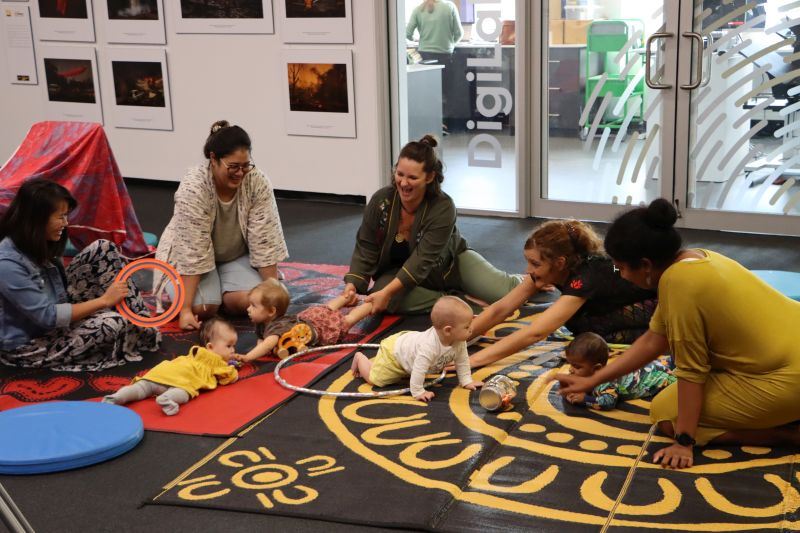
Wayapa is an earth, mind, body, spirit practice that promotes wellbeing. It is based on ancient Indigenous knowledge about living in harmony with the environment and connection with the world’s oldest living continual culture.
Wayapa Babytime provides an opportunity for carers to slow down and connect inwards with themselves, their baby and the environment, while Wayapa Storytime uses storytelling, movement and nature-based craft to introduce children to Aboriginal-based earth mindfulness, promoting sustainability, connection and community.
Ms Corrigan said the program introduced parents to Aboriginal ways of learning, showing them how they can use easily accessible household and natural resources to stimulate their child’s development.
“Wayapa connects everyone, regardless of background or age, to Indigenous Australians’ deep, spiritual connection to Country,” she said.
“For children the natural environment is the best playground and for parents it’s the cheapest. Wayapa offers a way for parents, aunts, uncles, siblings, grandies and carers to use the natural environment as a starting point for sensory play.
“The collaboration with Newcastle Libraries has been a wonderful opportunity share and show the strength and value of Aboriginal culture with everyone.
“It makes me happy that the families who come along are growing up bubs and little ones who will have a greater respect and understanding of First Nation Australians’ beliefs and culture. The future generations will hopefully be able to walk together to care for Country in partnership.”
$7 MILLON FUNDING TO ENSURE EVERYONE CAN PLAY
Councils across NSW will share $7 million in NSW Government funding to construct and upgrade play spaces that ensure inclusivity, with half the money being awarded to regional projects.
Minister for Planning and Public Spaces Rob Stokes said regional NSW councils will benefit from over $3.65 million in funding for 15 new projects and six upgraded play spaces in round three of the Everyone Can Play grants program.
“This is a wonderful program and in this round we focused on communities affected by the recent devastating bushfires and drought,” Mr Stokes said.
“As a result, more than 60 per cent of successful applicants are from regional NSW. “Great public spaces are essential infrastructure for any city or town, particularly in communities that have experienced recent hardship and heartache.
“These inclusive play spaces will be focal points for rebuilding these communities as well as public spaces where people of all ages and ability can come and play.”
A summary of this round of grants for new play spaces includes:
· Walgett and Eurobodalla shire councils each receiving $511,000 for demonstration projects as their communities were impacted significantly by drought or bushfire;
· Bayside Council receiving $500,000 for renewed and expanded play spaces at Depena Reserve and Todd Reserve;
· Bega Council receiving $300,000 for a new Eden Play and Skate Precinct;
· City of Newcastle council receiving $300,000 for a new inclusive play space on the foreshore;
· Lake Macquarie City Council receiving $290,000 for a sensory and inclusive play space at Rathmines Park;
· Cumberland City Council receiving $300,000 for a multi-generational play space at Civic park; and
· The Hills Shire Council receiving more than $276,631 for a new accessible play space at Equinox Drive Reserve.
The 37 successful projects in the third round follows 71 play space projects already funded with $8 million worth of grants. The Everyone Can Play program was established in 2018 as part of the $290 million Open Spaces and Greener Sydney package. The NSW Government has committed $20 million over five years to creating inclusive play spaces.
A full list of recipients is available at: www.planning.nsw.gov.au/EveryoneCanPlay. For more information, go to www.everyonecanplay.nsw.gov.au
Newcastle local live music scene to benefit from City’s bumper April events calendar
City of Newcastle is continuing its support for the live music industry with a further $20,000 injection to encourage gigs during the upcoming bumper event month of April.
The second instalment of Live Music Grants follows the success of earlier this year, where incentives of up to $500 per event were provided to venues for hosting live acts during the New Annual festival.

City of Newcastle Lord Mayor Nuatali Nelmes said after a successful initial program, the convergence of multiple events in April was the perfect time to bring live music back to the city.
“City of Newcastle is committed to a creating a vibrant city and supporting our cultural sector, and we know live music is key to achieving these goals,” the Lord Mayor said.
“During the New Annual festival, there were over 40 live music events at 16 venues across Newcastle because of our Live Music Grants, giving a much-needed boost to our home-grown talent and the local hospitality ecosystem needed to nurture the future Trophy Eyes, Muzzy Pep, Silverchair, Screaming Jets, Amy Vee, Raave Tapes, and Gooch Palms.
“Live Music Grants is one of the many City of Newcastle initiatives providing support and promotion of the city’s unique creative scene as part of our commitment to delivering the Live Music Strategy.
“Live music events funded by the second-round of the program will take place between 6 and 20 April to coincide with other significant events across the city, including the Rip Curl Newcastle Cup World Tour surfing, Sailfest Regatta, Women’s Rugby 7s, New Run and Newcastle Food Month.”
Newcastle Councillor Carol Duncan said April is shaping up to be an exciting month.
“With an influx of visitors set to flock to Newcastle over April, we’re activating the city by helping local venues to host a wide range of live music,” Cr Duncan said.
“A vibrant live music scene is vital to ensuring Newcastle continues to develop its bustling arts and culture scene, and provide a lively, diverse and safe night-time economy to benefit the entire community.
“April is going to be an exciting month for the city and we look forward to welcoming new and returning visitors to experience the Newcastle difference.”
Live Music Grants applications are now open and close on 22 March 2021.
Visit City of Newcastle’s Grants and Sponsorship’s webpage for more information.
Hotel Quarantine Guard tests Positive
NSW Police has been advised that a security guard attached to the quarantine operation has tested positive for COVID-19.
We are working with NSW Health to ensure all close contacts are tested for COVID-19, monitored, and remain in isolation.
Since the quarantine operation commenced on Sunday 29 March 2020, more than 136,000 people have completed the mandatory 14-day quarantine period in Sydney hotels.
To date, more than 255,000 police and security shifts have been worked in the quarantine operation.
The quarantine program is a complex, coordinated and integrated program that aims to minimise the risk of introduction of COVID-19 from people arriving in NSW from overseas.
NSW Police continue to review and monitor processes in quarantine and provides extensive support to ensure all infection control is in place and adhered to.
Investigations are underway by NSW Health to determine the source of this infection. As part of these inquiries, NSW Police will assist Health investigators by reviewing CCTV, conducting interviews and analysing rosters.
We remain committed to working hard to use every mechanism possible to protect the community and ensure their ongoing safety from COVID-19.
Child approach – Scone
Police are appealing for public assistance following a reported child approach at Scone.
About 1.45pm yesterday (Friday 12 March 2021), a 14-year-old girl was walking along Susan Street when an SUV stopped near her.
The driver called out to the girl and asked if she would like a lift; however, she declined, and the man continued driving.
The girl went to a nearby home and alerted family members, who then contacted police.
Officers from Hunter Valley Police District attended and commenced inquiries.
An investigation into the incident is underway and police are appealing for assistance to identify the man and clarify the circumstances surrounding the incident.
He’s described as being of African appearance, about in his 40s or 50s, with a medium build and wearing a dark green shirt.
The vehicle is described as being a grey or silver SUV with Queensland registration plates.