
NSW is getting back to work with more than 14,500 people gaining full-time or part-time jobs last month, with figures released today showing the state’s unemployment rate dropping to 5.4 per cent.
Treasurer Dominic Perrottet said the NSW unemployment rate is 0.3 percentage points lower than last month and is the second lowest among the states after Western Australia.
“NSW is the engine room of Australia and we’re powering ahead with economic recovery,” Mr Perrottet said.
“Our state’s handling of COVID-19 clusters continues to be effective in balancing health and economic risks, and there’s no doubt we’re really seeing this pay off as more people re-enter the workforce.
“Challenges still lie ahead and we must remain focused, particularly as post JobKeeper numbers come through towards the middle of the year, but today’s numbers for March are a strong indication we have cause to be optimistic.”
Minister for Jobs Stuart Ayres said almost all jobs lost during the peak of the pandemic had now returned in NSW.
“In March we saw 7,226 people gain full-time employment and 7,421 people gain part-time employment, while just 1,435 fewer people are now employed in NSW, compared to pre-COVID,” Mr Ayres said.
“The state’s participation rate has risen above its pre-COVID levels, with a 0.1 percentage point increase this month to 65.7 per cent. We’ve also seen the female participation rate rise 0.5 percentage points to 61.3 per cent, a new record high.
“We remain cautiously optimistic of this improvement; however, we acknowledge with the ending of JobKeeper there may be some adjustment in job figures in the months ahead.”
“The NSW Government will continue to provide targeted support where possible, which includes our recent announcement of a $50 million tourism and arts package, designed to support the industries likely to be impacted the most by the end of JobKeeper.”
FUNDING FOR DISABILITY EMPLOYMENT AND PARTICIPATION PROGRAMS
More than 45 NSW-based organisations will receive a share in $10 million to boost job opportunities and social and community participation for people with disability.
Minister for Families, Communities and Disability Services Gareth Ward said the National Disability Insurance Scheme (NDIS) Information, Linkages and Capacity Building (ILC) grants are about creating a more inclusive and accessible community.
“We want to empower people with disability to live happy and healthy lives where they can exercise choice and control over the supports they receive,” Mr Ward said.
“These grants enable organisations to deliver life-changing initiatives that benefit people with disability, their families and carers.
“This program is about creating connections between people with disability and the communities they live in, so that they can thrive and reach their goals.”
The grants include support for programs focusing on creating job opportunities for young people leaving school, accessible arts initiatives and tailored support for people with disability from culturally and linguistically diverse communities.
Multiple national organisations have also received funding to roll out programs that will benefit NSW residents.
ILC grants support both NDIS participants and people with disability who are not eligible for the Scheme.
People with disabilities in NSW have benefitted from more than $135 million in ILC funding since the introduction of the NDIS in 2015.
This financial year NSW will contribute almost $3.5 billion towards the NDIS.
The list of successful applicants is available online.
FLAGSHIP STRATEGY TO SUPPORT NSW VETERANS
The service and sacrifices of veterans and their transition from military to civilian life are in focus with the NSW Government launching the State’s first whole-of-government strategy, developed using insights and expertise from ex-serving personnel and their families.
Minister for Veterans Geoff Lee said the NSW Government Veterans Strategy aims to improve existing support services and identify new initiatives.
“We worked with the veteran community to develop programs that reflect their interests, eliminate barriers and support a fulfilling life post-service,” Mr Lee said.
“NSW is home to more than 200,000 former Australian Defence Force personnel; a diverse group of men and women who served our country.
“Their experiences are at the core of this flagship strategy, thanks to the valuable input provided by the veteran community and their families.”
In addition to focus groups, more than 2,000 individual veterans, reservists, family members and supporters gave their input via an online survey.
By harnessing a whole-of-government approach, four key areas were identified to help achieve veteran wellbeing: recognition and commemoration, education and employment, community and volunteering, and support.
Parliamentary Secretary for Veterans James Griffin said the Strategy will help veterans to continue developing their skills and participate fully in society.
“The Strategy will guide education and employment outcomes, create social connections, and target services in health, wellbeing and housing,” Mr Griffin said.
The landmark strategy – endorsed by RSL NSW, Legacy NSW and the Australian War Widows NSW – includes initiatives such as the Premier’s Anzac Memorial Scholarship, the National Centre for Veterans’ Healthcare and funding for Veteran Sports Australia.
Read the NSW Government Veterans Strategy here.
Read the NSW Veterans Action Plan here.
Science on climate end-game puts Liberals and Labor targets to shame
The release of a new report shows only the Greens have a climate policy in line with the science.
The Climate Council report, Aim High, Go Fast, which drew from new data from the Intergovernmental Panel on Climate Change identifies the need for 75% emissions reduction from Australia by 2030 – in line with the Greens policy but 3 times the Coalition’s current target (26-28%). Meanwhile the Labor party has no articulated 2030 target at all.
The Greens announced updated targets in June 2020 which match the ambition outlined in the new report.
Today the Greens Leader, Adam Bandt, called on the government and opposition to accept science-based targets of 75% by 2030 and net zero by 2035 ahead of the Climate Summit hosted by US President Joe Biden.
“The reality is stark and should be a call to drastic action for anyone who acknowledges the science,” Greens Leader Adam Bandt said.
“A tripling of our target is the only way to have any chance of keeping within our carbon budget.
“There is nowhere for the Liberals and Labor to hide. To have any credibility on climate they need to adopt these targets and rapidly transition out of gas and coal.
“For politicians that want to be honest with coal communities and the Australian public at large, this report reiterates what that honesty looks like. If you don’t have a plan to get out of gas and coal, your climate plan is a sham.
“The repeal of the successful Greens-Labor price on carbon has proven to be an act of economic and environmental sabotage. If we had continued on that trajectory we would be marching into these global summits as players in the new green economy, but instead we’re a target of ridicule and potential sanctions.
“The good news is that the rest of the world are lifting their ambition, but that makes the Australian government’s position a diplomatic as well as a climate risk,” Bandt said.
Close to 500 NSW facilities delivering COVID-19 vaccine rollout
The Australian Government is getting on with the job of rolling out COVID-19 vaccines to regional, remote and rural Australia, with almost 500 facilities in New South Wales signed up to administer the vaccine.
Federal Regional Health Minister and Member for Parkes, Mark Coulton today visited a clinic in Gunnedah, NSW where the rollout is underway.
“I’m pleased to be at Barber Street Practice in Gunnedah to visit one of the many GP clinics across rural Australia which has signed up to deliver COVID-19 vaccinations,” Minister Coulton said.
“Everyone, no matter where they live in Australia, will be offered a safe and effective COVID-19 vaccine. The vaccine is free and the consult appointment for patients to receive their vaccinations is also free.”
The Government has established almost 1,500 primary care vaccination sites in rural Australia to administer vaccines under phase 1b to support Australians living in rural, regional and remote communities.
“Although cases of the virus have remained low in rural Australia, the Government’s targeted COVID-19 vaccine program will keep communities, like Gunnedah, safe,” Minister Coulton said.
“GP clinics, like this, provide a great service to their local community, as do all doctors, pharmacists, nurses and other health professionals living and working in country Australia.
“I’m pleased to see so many people in rural, regional and remote Australia continue to be eager to get the jab when it’s their turn.”
The COVID-19 vaccination program is one of the largest logistical exercises in Australia’s history – protecting the lives of millions of people across the country.
The Government is working closely with Aboriginal and Torres Strait Islander Community Controlled Health Services, general practices, state and territory governments, Primary Health Networks, General Practitioner-led Respiratory Clinics and community pharmacies, to ensure that everyone living outside our major cities has access to COVID-19 vaccinations if they choose to.
Recent updated advice from the vaccine expert taskforce, the Australian Technical Advisory Group on Immunisation to the Government is that the risk of a very specific blood clotting side effect from the AstraZeneca vaccine is four to six in one million people.
This is a rare, but serious side effect of this particular vaccine so on that basis the recommendation is that it is preferred that the Pfizer vaccine be provided to adults under the age of 50.
The Government is working through this implication with the states and territories as an urgent priority.
Minister Coulton said it was important to note the AstraZeneca COVID-19 vaccine remains highly effective at preventing death and severe illness among people who have contracted COVID-19—and the incidence of this blood-clotting syndrome is very rare.
For more information about the Australian Government’s COVID-19 vaccine strategy, visit health.gov.au.
ABS Labour Force figures for March 2021
Labour force figures released today by the ABS show that the Australian labour market continued to recover strongly in March 2021, with employment increasing by a robust 70,700 over the month, exceeding all market expectations.
There are now a record 13,077,600 Australians in work, with the level of employment now 74,300 (or 0.6 per cent) above its pre-COVID level in March 2020 and 947,100 (or 7.8 per cent) higher than the trough in the labour market recorded in May 2020.
The increase in employment over the month was due, entirely, to a rise in part-time jobs, which increased by 91,500 (or 2.2 per cent) in March, to a record high of 4,203,400. Part-time employment is now 76,800 (or 1.9 per cent) above the level recorded in March 2020.
While full-time employment fell by 20,800 (or 0.2 per cent) over the month, to 8,874,200 in March 2021, the decline this month was not surprising, given the five consecutive monthly increases totalling 359,600 recorded between October 2020 and February 2021.
Women accounted for the vast majority of the rise in employment in March, up by 55,400 (or 0.9 per cent), to a record high of 6,229,600 in March 2021, while male employment also rose, by 15,300 (or 0.2 per cent).
Aggregate hours worked continued to increase in March, up by 38.3 million hours (or 2.2 per cent), and are now 21.8 million hours (or 1.2 per cent) above the level recorded in March 2020.
The level of unemployment in Australia fell by 27,100 (or 3.4 per cent) over the month, to 778,100 in March 2021, but remains 62,100 (or 8.7 per cent) higher than it was a year ago.
The unemployment rate also decreased over the month, by 0.2 percentage points, to 5.6 per cent, but is still above the 5.2 per cent recorded in March 2020.
The stronger labour market conditions that continued into March also encouraged more people to enter the labour market, with the participation rate increasing by 0.2 percentage points over the month, to an historic high of 66.3 per cent in March 2021, above the 65.9 per cent recorded a year ago.
The rise in overall participation was driven, entirely, by women, with the female participation rate increasing by 0.4 percentage points over the month, to a record high of 61.8 per cent in March 2021.
The Government welcomes today’s positive labour force results, but acknowledges the economic and labour market fallout from COVID-19 will continue for some time to come. The Government has provided unprecedented direct economic support to help rebuild the economy and put Australia back on the road to recovery.
This includes record levels of investment in skills and training, new infrastructure projects, tax cuts, unprecedented business investment incentives and new targeted support, such as the $1.2 billion aviation and tourism package.
The Government’s Economic Recovery Plan, described as ‘key’ to saving jobs by the OECD, will continue to create employment opportunities in Australia and will help to secure this country’s economic and labour market future.
New online directory makes it easier to find the right local community service
City of Newcastle has launched a new one-stop-shop for local community services, making it easier for residents to find the right service and access the latest information.
The digital channel, My Community Directory, features important up-to-date information on community organisations that provide services in the Newcastle local government area, and can be searched by location, services category or keyword.
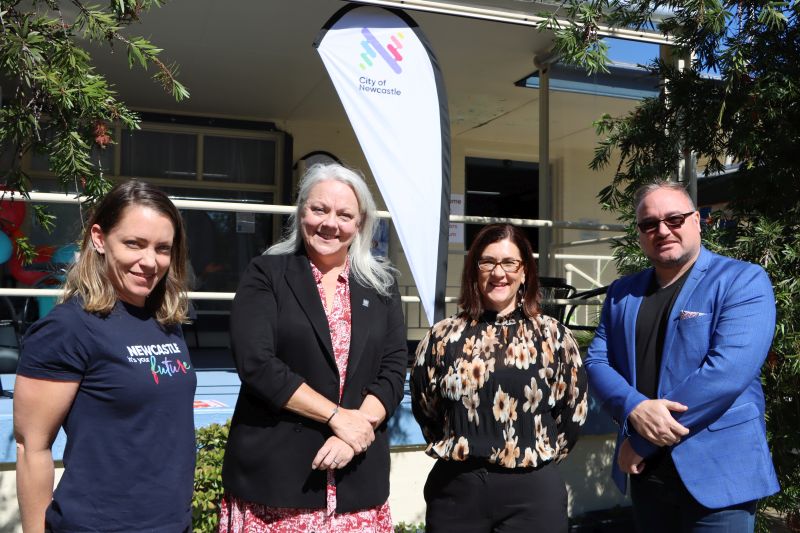
Refreshed daily, the directory makes it easier for residents to carry out the previously complex and time-consuming task of finding the most appropriate service.
City of Newcastle has been working with local community services to list important service information, as well as any events or volunteering opportunities.
The directory includes 28 services categories including Crisis and Emergency Services to Community Clubs and Interest Groups, Ageing Services, Disability Services, Self Help and Education.
Another feature is a downloadable Newcastle Homelessness Directory, created by Hunter Homeless Connect with $10,000 support from City of Newcastle’s Boost Our City grant as part of its COVID-19 response package.
City of Newcastle officially launched My Community Directory today as part of the NSW Seniors Festival event hosted by Hunter Multicultural Communities.
PAUSE TO NDIS CHANGES MUST BE PERMANENT
Australian Greens Disability spokesperson Senator Jordon Steele-John said today the Government’s plans to stall the introduction of compulsory independent assessments was an acknowledgement of the broad opposition to the controversial changes from disabled people and peak advocacy organisations.
“It’s pretty clear that the new NDIS Minister has seen the writing on the wall about compulsory independent assessments,” Steele-John said, “Which is a direct result of pressure from our community, who have been campaigning against them from the very beginning!”
“But, the Liberals have a track record of introducing dodgy legislation, pushing it back due to community pressure only to re-introduce it later on when everyone’s guard is down.
“This is exactly the same tactics this government used to ram the racist cashless debit card legislation through the Senate in the final hours before we parted for Christmas break at the end of last year, and it is exactly what I anticipate they will do with these changes to our NDIS.
“We must not back down now. Earlier this week we saw proof – in the form of a leaked internal document – that Scott Morrison and the Liberals are trying to kick disabled people off the NDIS and cut money out of our plans because they think that disabled people are a financial burden.
“When the plan to introduce compulsory independent assessments was announced, our community said very clearly that this proposal was just a smokescreen for blocking access and cutting support.
“Scott Morrison, the Liberals and their mates in the agency told us we were being ridiculous; they told us these changes were about “consistency” and “fairness”. We knew they were lying and now we have proof.
“Let’s be clear – the Morrison government has been gaslighting disabled people for years about their plans for the NDIS. Why would we trust them now when they say they will consider the evidence and feedback from the second Independent Assessment trial before making a decision about the future of these changes?
“As disabled people our concerns, conclusions and instincts are so often dismissed. Today’s announcement is a reminder that our collective bullshit detector is more than a match for this trash-fire government!”
Officer seriously injured when hit by trail bike – Maitland
A police officer has been injured when he was struck by a trail bike during a pursuit in the Hunter this evening.
Officers from Port Stephens-Hunter Police District had initiated a pursuit of the trail bike rider shortly before 7pm (Wednesday 14 April 2021), on the New England Highway at Maitland.
The officer was on foot when he was struck by the trail bike and has suffered serious leg fractures, as well as suspected arm, head, pelvic and spinal injuries.
The male constable has been airlifted to John Hunter Hospital where his condition is reported to be serious but stable.
The trail bike rider – a man believed to be aged in his 20s – has been arrested and taken to John Hunter Hospital with non-life threatening injuries. He remains there under police guard.
Officers attached to the Crash Investigation Unit (CIU) are now inquiring into circumstances surrounding this incident.
Anyone with information about this incident is urged to contact Crime Stoppers: 1800 333 000 or https://nsw.crimestoppers.com.au. Information is treated in strict confidence. The public is reminded not to report crime via NSW Police social media pages.
SMALL BUSINESS REBATE SCHEME KICKS OFF
Small businesses are encouraged to sign up for a new $1500 rebate scheme to help cover the cost of NSW and local government fees and charges.
Treasurer Dominic Perrottet said the Small Business Fees and Charges Rebate was designed to benefit tens of thousands of small businesses across the state as NSW continues its post-pandemic recovery.
“Our November Budget committed nearly $500 million to this rebate, which will leave more money in the pockets of eligible small businesses, sole traders and non-profit organisations,” Mr Perrottet said.
“Small businesses are the lifeblood of our economy and supporting them equals supporting jobs. I encourage all eligible operators to register for the $1500 credit with Service NSW.”
Minister for Digital and Minister for Customer Service Victor Dominello said claiming the rebate would be simple and could be done online.
“Liquor licences, food authority licences, council rates and outdoor seating fees are just a few examples of the fees and charges that can be claimed back through this rebate scheme,” Mr Dominello said.
“Small businesses who have total wages below the new 2020-21 $1.2 million payroll tax threshold, and have a turnover of at least $75,000 per year, will be able to register through their MyServiceNSW account and claim back eligible state and local government fees and changes.”
Minister for Finance and Small Business Damien Tudehope said the launch of the rebate scheme coincided with a number of licence waivers coming to an end.
“It’s so important that we continue to support the small businesses of NSW,” Mr Tudehope said.
“Small businesses are the backbone of their communities and we want to make it easier for them to run a business and get ahead.”
The rebate will be available until 30 June 2022. To apply and for more information, including the program guidelines, visit www.service.nsw.gov.au/small-business-fees-and-charges-rebate