
National Cabinet met today to discuss a range of significant national issues, including our response to COVID-19, the vaccine rollout and booster programme and the Omicron strain.
Since the beginning of the pandemic there have been 264,909 confirmed cases in Australia and, sadly, 2,162 people have died. More than 52.5 million tests have been undertaken. Testing has increased nationally over recent days with 1,910,354 million tests reported in the past 7 days.
Globally there have been over 276.1 million cases and sadly over 5.3 million deaths, with 762,213 new cases and 7,797 deaths reported in the last 24 hours. The COVID-19 pandemic continues to surge in many countries around the world.
Australia’s COVID-19 vaccine roll out continues to expand. To date 41.7 million doses of COVID-19 vaccines have been administered in Australia, including 207,329 in the previous 24 hours.
In the previous 7 days, more than 1.16 million vaccines have been administered in Australia. More than 94 per cent of the Australian population aged 16 years and over have now had a first dose of a COVID-19 vaccine, including over 98 per cent of over 50 year olds and more than 99 per cent of over 70 year olds.
More than 90.7 per cent of Australians aged 16 years and over are now fully vaccinated including more than 96.2 per cent of over 50 year olds and more than 99 per cent of Australians over 70 years of age.
Over 1.6 million booster doses have been administered. Australia has sufficient supplies of boosters, with over 20 million mRNA vaccines in stock in Australia. Yesterday over 156,000 boosters were administered across Australia. Over 50 per cent of those eligible for boosters have had a booster and almost 20 per cent of Australians aged 70 years of age and over have had a booster in the last 6 weeks since the booster program commenced.
National Cabinet noted that 5-11 year old vaccinations are on track to commence on 10 January 2021.
National Cabinet will meet again on 7 January 2022.
Omicron
National Cabinet received a detailed briefing from the Chief Medical Officer (CMO) Professor Paul Kelly on the Omicron strain which was first detected in Australia less than four weeks ago.
Australia has faced many challenges during the COVID-19 pandemic and Australians have always been up to the challenge. The Omicron strain is the next challenge facing Australia.
Living with COVID-19 means living with COVID- variants. Evidence about the characteristics of Omicron is still emerging, but early trends seen both internationally and within Australia suggest Omicron has a current estimated doubling time of 2-3 days and case numbers are expected to increase significantly within a short time period.
While Omicron shows an extremely rapid growth rate, it is uncertain if this is due to inherently higher transmissibility than the Delta variant, or if this is primarily driven by immune escape.
However, early indications around hospitalisation, ICU admission and death show that Omicron could be far less severe than Delta and other variants. Importantly, after almost four weeks of Omicron in Australia, there has been only one confirmed Omicron case in ICU and no deaths. States and territories have confirmed that hospitals and health systems remain in a strong position despite rising cases – with all states and territory health systems working within capacity.
National Cabinet agreed that no jurisdiction wants to return to lockdowns.
Omicron – public health social measures responses
Public Health and Social Measures have continued to help moderate the pace COVID-19 spread throughout the pandemic, and will continue to do so with Omicron.
In response to the Omicron variant, National Cabinet has noted new AHPPC advice on public health response options and that individual jurisdictions would be making responses as appropriate.
There is a strong recommendation for indoor mask wearing. While states and territories make decisions on requirements for mask use, all Australians are encouraged to take personal responsibility for wearing a mask.
Mask wearing in indoor areas will be in addition to existing measures including strong personal hygiene and social distancing.
Boosters
National Cabinet received a detailed update on the Australia’s COVID-19 vaccination program from Lieutenant General John Frewen, Coordinator General of Operation COVID Shield
Australians are stepping forward to get booster shots in record numbers.
National Cabinet noted that the Australian Technical Advisory Group on Immunisation (ATAGI) recommended that booster vaccines be administered to all people 18 years and over five-months after the completion of a primary vaccine course. Booster vaccines are a key pillar in our response to COVID-19 and play a central role in curtailing the developing Omicron outbreak.
National Cabinet agreed that decisions on changing booster intervals is a decision for ATAGI. National Cabinet has sought further advice from ATAGI on which groups should be prioritised for booster shots as this will be important to reducing Omicron transmission in the community.
To fast track boosters, National Cabinet agreed to significantly increase distribution capacity, with the aim of reaching Australia’s previous high daily vaccination levels.
States and territories committed to increasing capacity at state clinics to previous peak levels during the vaccination program.
The Commonwealth outlined that it will introduce a time limited booster incentive payment of $10 for Primary Care providers, including General Practices, Aboriginal Community Controlled Health Services, community pharmacies and Commonwealth Vaccination Clinics, for administration of COVID-19 booster vaccines delivered under the Commonwealth Vaccination Program. The booster incentive payment will be effective from 23 December 2021, and cease on 30 June 2022. The additional payment will support flexibility for primary care providers to run additional clinics and to engage more staff. The payment will be made to primary care providers through existing payment mechanisms.
Test, Trace, Isolate and Quarantine (TTIQ)
National Cabinet agreed there is a need for consistent definitions for close and casual contacts across Australia. Given increasing Omicron case numbers, current definitions and arrangements are becoming less useful for implementing effective TTIQ, may deter people from checking in and require too much of the workforce to be in isolation.
National Cabinet agreed that the Chief Medical Officer, consulting with AHPPC, will bring forward a consistent definition of close and casual contacts to the next meeting of National Cabinet including whether only limited close contacts are required to take PCR testing and home isolation. This will include specific advice on close contacts in health and aged care settings noting the impact on the workforce from furloughing a fully vaccinated staff; and advice on close contacts on domestic airlines, with home isolation of crews and passengers impacting operation and confidence in domestic travel.
National Cabinet noted that the role of QR systems would change in the context of high caseloads, with a greater focus on the use of QR systems to provide information to people of the COVID situation in places they have been.
National Cabinet further noted the significant impacts on TTIQ systems from testing for travel. Between one in four PCR tests in Victoria and one in five in New South Wales are tests for travel under state public health orders for travel to Queensland, South Australia, Tasmania and Western Australia.
National Cabinet agreed that the Chief Medical Officer, consulting with AHPPC will be tasked with providing consistent advice on testing priorities, including considering removing requirements for test for travel and use of RAT for travel.
National Cabinet further noted that the Commonwealth Government will extend COVID-19 rapid antigen testing (RAT) kits to Residential Aged Care Facilities and short term restorative care (aged care services) in areas of high prevalence of COVID-19, as defined by the Communicable Disease Network of Australia (CDNA). RATs will be provided for screening of workers and to anyone who needs to enter a service including family members, when there is an outbreak to protect this vulnerable population.
Olympic and Paralympic boost for Paris 2024
The Morrison Government continues to back Australian high-performance sport with a $257.5 million investment for National Sporting Organisations (NSOs) to take them through to the Paris 2024 Olympic and Paralympic Games and beyond.
Minister for Sport Richard Colbeck said funding allocations to NSOs provides certainty to athletes as they prepare for Paris 2024.
“Our athletes inspired Australians everywhere with their efforts at the delayed Tokyo Olympic and Paralympic Games, and through the Australian Institute of Sport (AIS) this funding provides the perfect platform to perform in Paris,” Minister Colbeck said.
“Through this commitment by the Federal Government and via a collaborative process with the AIS, sports are enabled to build their plans in advance for a full summer Games cycle, with funding right through until the end of 2024.”
“This will be the first time that sports have received funding certainty so far out from an Olympic and Paralympic Games, and we’re proud to have made that commitment to building sustainable success for our high performance athletes and their support teams.”
Sports will receive grants for the period 1 July 2022 through until December 2024, with Australia’s Matildas benefiting from $1.9 million dedicated specifically to Paris 2024, and a further $8.83m over two years to support to Matildas 2023 World Cup campaign and broader Matildas programs.
Increased commitments have also been made to a number of other sports, including Women’s Rugby 7s, Canoe (Para and Able), Rowing (Para and Able) Surfing, Skate, Combat, Equestrian and Para Table Tennis
Through an $82.2 million package dedicated to athletes of the future and athlete wellbeing, the Federal Government is also strongly committed to success at Brisbane 2032.
As a result of these most recent investment decisions, Performance Pathways funding has increased to sports that include softball, baseball, gymnastics, women’s hockey, men’s football and rugby 7s.
Wishes of First Nations people essential on Voice to Parliament legislation
After two years of consultation with First Nations leaders, the federal Government has released the Final Report on a proposal for an Indigenous Voice to parliament.
Yamatji-Noongar Senator for WA, Dorinda Cox, acting Greens spokesperson for First Nations said:
“The Greens will closely scrutinise all legislation that the Government puts to the Parliament regarding a Voice. Like always we will work with grassroots First Nations people to make sure all proposals align with the wishes of First Nations people and their communities,” she said.
“Any proposal must uphold the principles outlined in the United Nations Declaration on the Rights of Indigenous Peoples.
“It’s unclear, at this stage, how creating the Voice to Parliament first will affect the process of national truth-telling and healing as we move our country towards a Treaty or Treaties with First Nations people. We haven’t seen the model they’re settling on, so we will be following this closely.
“We are concerned at the timing of this announcement, as it comes very late in the Morrison Governments’ term. There will be an election by May 2022, with a limited number of sitting days before this. It’s unclear how the election will affect this work.
“We would like to thank and congratulate the Voice senior advisory group for their work, particularly Professors Tom Calma and Marcia Langton.
“We look forward to working with the Parliament on this next year.”
UK-AUS Free Trade agreement must advance human rights
The Greens today are calling on the Government to ensure the UK-Australia free trade agreement upholds environmental standards, labour rights, human rights and includes a First Nations trade chapter.
Yamatji-Noongar woman and Greens spokesperson for Trade, Dorinda Cox said advancing human rights, protecting workers and our environment should be at the heart of how Australia engages in free trade agreements.
“For too long, we have witnessed dodgy trade deals that undermine workers rights and trash our planet. This must stop. It is essential that the UK-Australia free trade agreement includes measures that address the climate crisis,” she said.
“Securing a First Nations trade chapter as part of this agreement would be a game changer for First Nations businesses across the country. It has the potential to unlock significant capital, create jobs and offer careers on Country.
“Our New Zealand brothers and sisters recently signed a UK-NZ free trade agreement that included an Indigenous trade chapter. I hope that Australia can follow this path.
“The Greens are disappointed that the text of the agreement was not released to the community before it was finalised. It is clear we need a more transparent and democratic process for negotiating treaties that enables community engagement going forwards.”
Protecting remote communities in the Northern Territory from COVID-19
The Australian Government has implemented further measures to protect remote communities during the current COVID-19 outbreak in the Northern Territory.
As Minister for Health and Aged Care, I have made a determination under section 477 of the Commonwealth Biosecurity Act 2015 to prevent a person from entering or exiting Ali Curung and surrounding homelands, which is aimed at stopping any further spread of COVID-19 in the region.
These measures are based on the medical advice from the Chief Medical Officer, Professor Paul Kelly and will help to contain the current outbreak by restricting entry into and exit from these communities. This will assist in preventing the spread of the disease, including to neighbouring remote communities in the Northern Territory.
The Determination was requested by the Northern Territory Government to supplement restrictions they have implemented and is supported by the Central Land Council and the Aboriginal Medical Services Alliance of the Northern Territory (AMSANT).
The approach is consistent with extensive planning undertaken by the Australian Government in partnership with the Northern Territory Government, the Aboriginal and Torres Strait Islander Advisory Group on COVID-19, the National Aboriginal Community Controlled Health Organisation (NACCHO), Northern Territory Land Councils, and the National Indigenous Australians’ Agency (NIAA). This response was also:
- informed by the predictive modelling on an outbreak in a remote community by the Kirby Institute and University of Melbourne and modelling looking at an outbreak in a remote community in the context of vaccination by the Doherty Institute
- recognised in the Management Plan for Aboriginal and Torres Strait Islander Populations; and
- outlined in the Communicable Disease Network Australia’s National Guidance for Remote Aboriginal and Torres Strait Islander Communities for COVID-19.
All residents of Ali Curung and surrounding homelands are encouraged to continue to follow their local NT Health Department directions, to get tested and to book their vaccinations.
The measures are being implemented based on the best public health advice and will be in place only as long as necessary to keep the community safe.
Australian childhood vaccination remains at record levels
Australia’s global reputation as an immunisation nation has continued, as parents protect their children from disease at record rates.
Australians have embraced vaccination against COVID-19, it has helped to save lives and protect lives.
In addition, the nation has continued our excellent record of vaccination against other serious diseases, to protect ourselves and especially our children.
Data from the year to September 2021 shows Australia has remained above our target of 95% vaccination of five year old children.
With 95.12% of all five year olds fully vaccinated, we have achieved a level of herd immunity which can stop vaccine-preventable diseases spreading in the community.
Importantly, this is the fourth quarter in which the rolling one-year average has remained above 95%—a fantastic achievement when compared to the rate of 74.4% in 2005 when immunisation rates for five year olds were first recorded.
The vaccination rate for five year old Aboriginal and Torres Strait Islander children continues to be above the national average, at 97.02 per cent.
It is also well above the estimated World Health Organization international average immunisation coverage rate of 86 per cent for five year olds, making Australia a world leading vaccination nation.
Among two year olds, the rates of full vaccination continue to be strong at 92.56 per cent in the 12 months to September 2021. We continue to strive and work with parents and practitioners to drive this number towards 95%.
Coverage for one year old children was 94.76%. Coverage for one year old Aboriginal and Torres Strait Islander children was 92.90%.
The past two years may have caused issues for some families, leading to delays in following the vaccination schedule for themselves or their children. Now is the time to consult with your medical professional and get back on track.
The National Immunisation Program provides free, proven vaccines against serious diseases including hepatitis B, whooping cough, measles and polio.
Anyone who has questions about the vaccination schedule for themselves or their children should talk to their GP and organise a catch up schedule if needed.
The Australian Government strongly supports immunisation and invests more than $400 million a year in the National Immunisation Program, delivering safe, effective vaccines for all Australians.
Parents of Aboriginal and Torres Strait Islander children aged five years and younger were specifically targeted by a recent government education campaign on childhood immunisation.
Our world leading childhood vaccination rates of over 95% for other medical conditions gives us great confidence that families will embrace COVID-19 vaccination for children when they become available in the coming weeks.
Global search for Brisbane 2032 Organising Committee members
The global search has started for five leaders who will help shape the Brisbane 2032 Olympic and Paralympic Games.
The Australian and Queensland Governments have jointly commissioned global executive search firm Odgers Berndtson to identify five independent directors, including the President, to the Board of the Brisbane Organising Committee for the 2032 Olympic and Paralympic Games (OCOG).
Premier Annastacia Palaszczuk said the appointment of Odgers Berndtson as the executive search partner would help attract people with world-class skills and experience.
“I’m delighted that the Australian and Queensland Governments will work with Odgers Berndtson to identify, attract and secure the best talent for these important positions,” the Premier said.
“The OCOG will be responsible for driving Brisbane 2032 forward and delivering a great Olympic and Paralympic Games. To do this we need to recruit the best people in the world.”
The Queensland Government passed its legislation to establish the OCOG as an independent statutory body in the final Parliament sitting week of the year.
Federal Minister for Sport Richard Colbeck said the OCOG appointments will continue the partnership between the Australian and the Queensland governments.
“The five independent directors, including the President of OCOG, will be jointly determined by the Premier and the Prime Minister, emphasising the collaborative working relationship between the two governments” Minister Colbeck said.
“The rigorous recruitment process will ensure an unparalleled line-up of Board directors working in the best interests of Queenslanders and all Australians.”
AOC Chief Executive Officer Matt Carroll says the five roles are vital in delivering the Games and the legacies.
“These independent positions are important. From the AOC perspective, there’s such a great opportunity to supercharge sport in Queensland and Australia more broadly. The right people will help us achieve that goal.
The independent directors will complement the OCOG Board’s diverse range of skills and experience.
Premier Palaszczuk said the OCOG Board Directors need to reflect the diversity of communities in Queensland and across Australia.
“At least one of the independent directors will be an Aboriginal or Torres Strait Islander person, and there will be balanced representation of men and women, so that local, national, and international partners create a lasting legacy for Queensland and the nation,” she said.
Suitable applicants should email Odgers Berndtson via BrisbaneOCOG@odgersberndtson.com to receive further information.
Background:
The Organising Committee for the Olympic Games (OCOG) Board will be made up of the following:
- Five independent directors jointly agreed by the Premier and Prime Minister (with one being the President and at least one being Aboriginal or Torres Strait Islander)
- Four persons nominated by the Prime Minister
- Four persons nominated by the Premier
- The Lord Mayor of Brisbane
- One person nominated by the Lord Mayor
- The President or Honorary Life President of the Australian Olympic Committee (AOC)
- The President of Paralympics Australia (PA)
- Any member of the International Olympic Committee (IOC) residing in Australia
- Any member of the International Paralympic Committee (IPC) Governing Board residing in Australia
- The Chief Executive Officer of the AOC
- A recent Olympic athlete as confirmed by the AOC Athletes’ Commission
- A recent Paralympic Athlete as confirmed by the PA Athletes’ Commission.
$19.5 million boost for Australia’s creative sector to RISE
As Australia’s arts and entertainment sector continues to recover from COVID-19, 63 organisations are set to share in more than $19.5 million under the sixth batch of grants from the $200 million Restart Investment to Sustain and Expand (RISE) Fund — with a strong focus on supporting regional and remote communities.
Minister for Communications, Urban Infrastructure, Cities and the Arts, the Hon Paul Fletcher MP, said the $19.5 million that will flow to the latest recipients of the RISE Fund is supporting nearly 21,000 jobs in more than 600 locations, more than half of which are located in regional and remote Australia.
“The Morrison Government’s objective, in providing this record level of funding for arts and entertainment, is that as the vaccine rollout continues at a strong pace and states and territories open up, arts companies, promoters and festivals are ready to go,” Minister Fletcher said.
“This is an important stage in the resurgence of Australia’s arts and entertainment sector, with this targeted RISE funding providing an opportunity for venues to reopen to audiences; curtains to rise; and performers to come back on stage to a welcoming roar of applause.”
Amongst the 63 projects being funded, some highlights include:
- $390,000 for Melbourne Chamber Orchestra to deliver a program of events in regional, outer-urban and metropolitan Victoria with online streaming: including orchestral concerts, chamber music performances and performances for children.
- $400,000 for Brisbane Powerhouse to deliver Hap Wah Night Market, with high quality handmade objects by Queensland designers and artists, high-impact art and performance, and local produce.
- $1,000,000 for Gympie Muster to deliver the Gympie Music Muster Revival, showcasing Australian artists at one of the country’s favourite outdoor music and camping festivals.
Member of the Creative Economy Taskforce and Artistic Director of Queensland Ballet, Li Cunxin AO, said the funding is being well-distributed across Australia and there is strong diversity of art forms and support for small to medium organisations.
“RISE continues to be an important mechanism for supporting the recovery of the arts and entertainment sector and thousands of jobs, particularly in regional and remote locations. The funding will assist with mobilising tourism and other industries in regional areas which benefit from events and activities, and which have been significantly affected by COVID-19 impacts,” Mr Cunxin said.
The Morrison Government has now allocated more than $179 million of the $200 million RISE Fund, creating 190,000+ job opportunities and expanding cultural and creative experiences for audiences across Australia.
Landmark Newcastle Art Gallery exhibition receives national recognition
A Newcastle Art Gallery exhibition that showcased works of art never before seen outside of the Torres Strait has this week been announced as the winner of the Promoting Indigenous Recognition Award at the National Local Government Awards.
Newcastle Art Gallery’s WARWAR: The Art of Torres Strait, exhibition on display from May until August, focused on the Torres Strait Islander (TSI) culture and its launch coincided with the raising of the TSI flag at City Hall for the first time in the building’s 92-year history.
Newcastle Lord Mayor Nuatali Nelmes said the national recognition of the landmark exhibition acknowledges the importance of connecting with local communities and raising cultural awareness through art.
“WARWAR: The Art of Torres Strait was four years in the making and we are thrilled that the most significant First Nations exhibition project in Newcastle Art Gallery’s 64-year history has received this national accolade,” Cr Nelmes said.
“To further strengthen our city’s ties to the local TSI community, we raised the TSI flag at City Hall for the first time in a special ceremony the week before the exhibition opened, and it now remains there permanently.”
“Visitors from across Australia came to Newcastle specially to see this important exhibition for our city.”
Newcastle Art Gallery Director Lauretta Morton was thrilled the popular exhibition had received a national accolade.
“Having recently won the Museums and Galleries NSW IMAGINE Award judged by industry peers, we are beyond thrilled and so grateful to have now been recognised nationally for this incredible exhibition project.
“With over 130 works of art, many from major Australian institutions and the Torres Strait Islands that have never been publicly displayed before, the exhibition provided an incredible opportunity for our local TSI community and visitors to experience and gain a new appreciation and understanding of TSI culture here in Newcastle.”
The award-winning WARWAR: The Art of Torres Strait was developed in collaboration with highly awarded Torres Strait Islander artist and curator Brian Robinson, local artist and traditional performer Toby Cedar and timed to coincide with significant dates such as Mabo Day, Reconciliation Day, Coming of the Light and NAIDOC Week.
The exhibition, which was presented in in English, Kala Lagaw Ya (Western TSI), and Meriam Mir (Eastern TSI) languages, showcased the evolution and strength of Torres Strait Islander tradition and society through arts practitioners from the 19th century and the emergence of the contemporary art traditions of today, and explored issues of cultural maintenance, Christianity, language and the impact of globalisation on the physical environment of the Torres Strait Islands.
A partnership with the local TSI community and the University of Newcastle gave visitors the chance to immerse themselves in an innovative Augmented Reality experience and education space design that shared important cultural traditions such as language and Torres Strait Island connection to land, sea and sky. The exhibition title, WARWAR, is a traditional Eastern Island word in the Meriam Mer language, which translates into English as ‘marked with a pattern’.
The National Local Government Awards recognise the best Australian local government achievements and highlight innovative and resourceful solutions implemented by local governments, which make a difference to their local communities. A full list of 2021 award winners is available online at www.infrastructure.gov.au
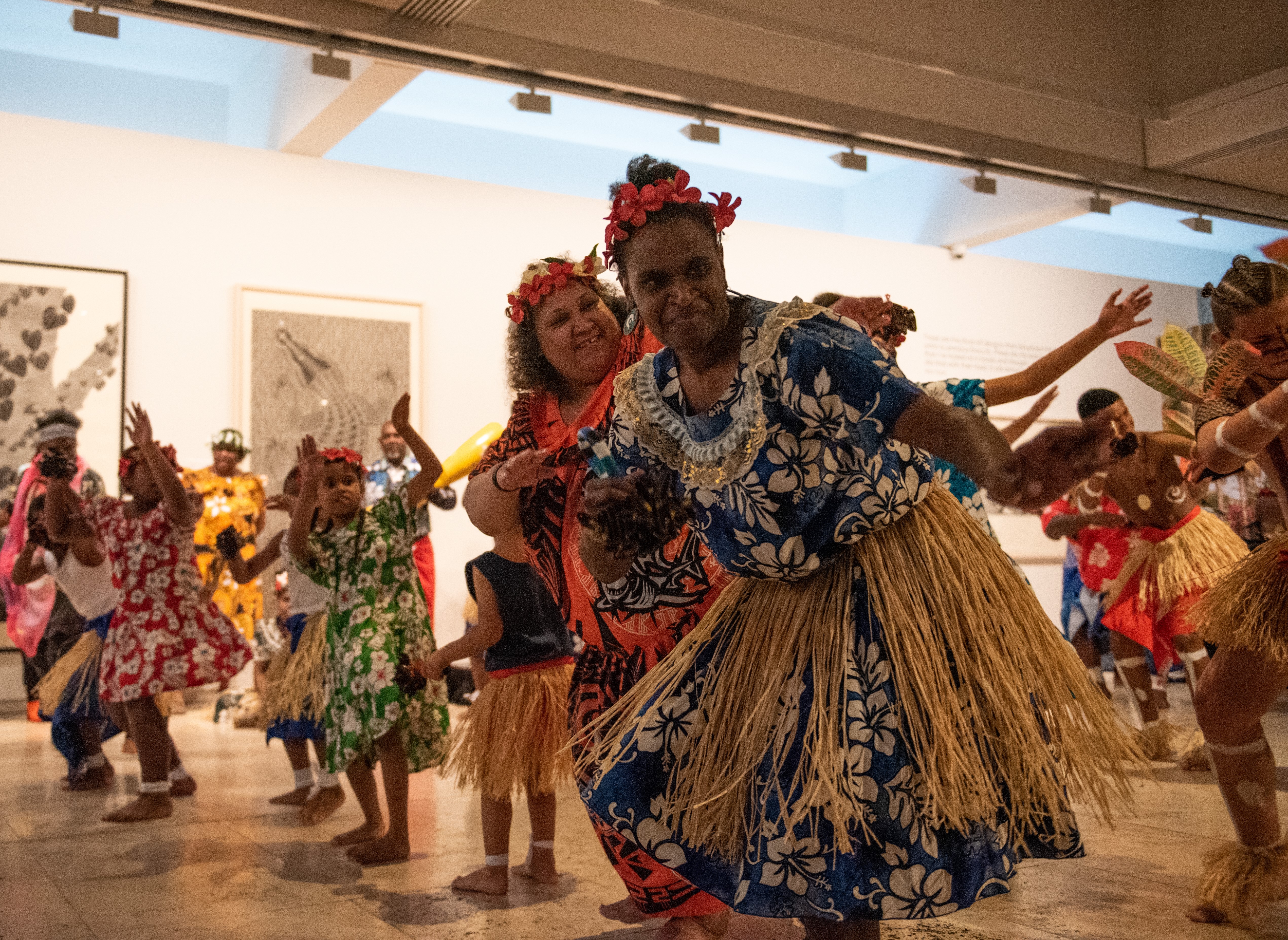 Image: Opening event WARWAR: The Art of Torres Strait Newcastle Art Gallery 29 May 2021
Wanted man arrested at Cessnock
Police have arrested and charged a wanted man after he was located in the Hunter region yesterday.
On Wednesday 8 December 2021, officers attached to the Northern Region Domestic Violence High Risk Offender Team and the State Crime Command’s Extended Supervision Order Investigation Team, commenced an investigation into the whereabouts of a 29-year-old Tenambit man who was wanted for a breach of a bail.
Following extensive inquiries, police attended a unit on Dixon Street, Cessnock, about 2.30pm yesterday (Monday 20 December 2021), where they located the man inside a cupboard in a bedroom.
He was arrested and taken to Cessnock Police Station where he was charged with fail to comply with extended/interim supervision order (four counts), destroy or damage property less than $2,000, contravene apprehended domestic violence order, and breach of bail.
The man was refused bail to appear at Cessnock Local Court today (Tuesday 21 December 2021).