
The Morrison Government is investing $98 million in a series of innovative new programs to prevent vulnerable Aboriginal and Torres Strait Islander families falling through the cracks as part of the first Closing the Gap Implementation Plan.
Minister for Families and Social Services Anne Ruston said the new Social Services programs would help address disproportionately high rates or family and domestic violence, and the over-representation of Aboriginal and Torres Strait Islander children in out of home care.
Minister for Indigenous Australians Ken Wyatt said the programs would embed cultural competency and trauma responsiveness by ensuring Aboriginal Community Controlled Organisations play a central role in service provision.
Department of Social Services measures address the Closing the Gap Targets on out-of-home care (12) and family violence (13) and include:
Strengthening service models
$49 million will be provided over five years to support states and territories to review and redesign frontline service models including family violence, mental and physical health, substance abuse and disability. The purpose is to improve how practitioners work together to plan support for families at risk of interaction with child protection authorities and focus on early intervention.
Redesigned service models are anticipated to bring together a range of professionals such as social workers, mental health and medical professionals, drug and alcohol specialists, domestic violence support, legal services, financial counsellors, child protection workers, disability support providers, teachers and child-care providers and police to support families in an integrated way.
Outcomes and Evidence Fund
$38.6 million over three years will be provided to support proposals identified by Aboriginal Community Controlled Organisations that address targets 12 and 13. Through a co-design process with the Government, tangible service delivery and outcome targets will be agreed and payments made on the basis of demonstrated achievement against the targets.
Based on social impact investing funding models, the Fund will ensure accountability to the ultimate goal of changing the lives of the most vulnerable in our community in a real way. In order to achieve this and support a shift towards more outcomes focused funding, this investment includes resourcing for capacity building in Aboriginal Community Controlled Organisations and expert support.
Improve and develop Cultural Competency
$7.7 million over three years to develop the cultural competency and trauma responsiveness of the Indigenous and non-Indigenous child and family sector workforce through Department of Social Services grant funding in prevention and early intervention services in the child and family support sector.
Assess barriers identified by ACCOs
$3.2 million over two years to assess the needs, and increase the involvement of, Aboriginal Community Controlled Organisations in the child and family sector.
“The rates of family and domestic violence, and children in out of home care among Aboriginal and Torres Strait Islander communities are absolutely heartbreaking,” Minister Ruston said.
“We must make sure we are prioritising investments so that we are all responding to the evidence and doing the things that will make the most difference.
“These new Social Services measures demonstrate our commitment to shared decision-making in the design, implementation and monitoring of policies and programs because we know when we walk side by side we can and will improve outcomes for all Indigenous Australians.”
Minister Wyatt said the Implementation Plan builds on this year’s Budget announcements and recognises that improving the lives of Aboriginal and Torres Strait Islander people could only be done by working together.
“For the first time, all governments and the Aboriginal and Torres Strait Islander community-controlled sector share responsibility for achieving outcomes, embedding priority reforms and reporting their progress,” Minister Wyatt said.
“Sharing accountability acknowledges that all parties have a role to play in improving outcomes for Aboriginal and Torres Strait Islander people.”
For more information read the Commonwealth Closing the Gap Implementation Plan.
Author: admin
Additional COVID-19 treatment for Australia
Australians are set to have access to a new treatment for COVID-19, in addition to the continuously expanding vaccine rollout.
The Australian Government has secured an initial shipment of over 7,700 doses of the novel monoclonal antibody treatment sotrovimab. This treatment has been shown to dramatically reduce hospitalisation and risk of death in adults with mild to moderate COVID-19, who are at risk of developing severe COVID-19.
Sotrovimab will provide another tool in the ongoing challenge against COVID-19. It will provide an important new way to treat the disease and manage outbreaks across Australia.
Sotrovimab is currently being assessed by the Therapeutic Goods Administration (TGA) and will be available for use in Australia this year once the TGA evaluations are complete. As with all medicines, TGA approval is necessary for supply in Australia and once approved, doctors will be able to provide it to patients with COVID-19 who meet the terms of use recommended by the TGA.
The advanced purchase of sotrovimab has been supported by the Science and Industry Technical Advisory Group (SITAG), which is the Australian Government’s expert group advising on COVID-19 vaccine and treatment purchases.
Antibodies are proteins produced by our own body’s immune system and are one of the main ways the body defends itself against diseases. Antibodies work by binding to a specific target – for example, a virus or a bacteria – and making them harmless. They block or slow down the action of the virus or bacteria, or they flag it as ‘foreign’ so that other parts of our immune system can clear the ‘invaders’ away.
Monoclonal antibodies work in the same way. They are laboratory-made proteins that mimic our body’s immune system to help fight off harmful pathogens and can be used to help to treat people who already have COVID-19.
Monoclonal antibodies have been safely and effectively used to treat a growing number of diseases, some of which were difficult to treat in the past.
Manufactured by GSK, sotrovimab will be the first COVID-19 monoclonal antibody treatment available for use in this country, with the complete treatment requiring just one dose administered via IV infusion in a healthcare facility.
To date, the sotrovimab treatment has been shown to reduce hospitalisation or death by 79 per cent in adults with mild to moderate COVID-19 who are at high risk of progression to severe disease.
The Australian Government’s agreement with sotrovimab’s supplier GSK includes delivery of more than 7,700 doses for the National Medical Stockpile, with an initial delivery this year upon TGA approval.
As with all products procured for the National Medical Stockpile, this treatment will be provided to states and territories as needed, to be administered to eligible patients in a healthcare facility.
Not all people with COVID-19 will require access to this treatment. Where a doctor prescribes this treatment for their patients with mild to moderate COVID-19, who are at risk of developing severe COVID-19, it will be made available free of charge through the public health system.
Physician estimates of the Australian patient treatment population range from eight to fifteen per cent of patients who are SARS-CoV2 positive that would be considered at high risk of disease progression and would be recommended for treatment with sotrovimab, based on past and current experience of managing COVID-19 patients.
The Australian Government is committed to providing all Australians with access to safe and effective COVID-19 treatments as soon as available. As Australia looks to managing existing outbreaks in 2021 and beyond, the sotrovimab treatment will provide further options to protect vulnerable Australians at risk of developing severe COVID-19. It will add flexibility, provide early access, and broaden coverage.
The Australia Government continues to engage proactively with developers of other promising treatments for COVID-19.
All COVID-19 medicine applications are being treated with the greatest priority as part of the Government’s response to the pandemic.
Police urge community compliance with Public Health Orders to reduce spread of COVID-19
Police are calling for compliance with the Public Health Orders to reduce the risk of the spread of COVID-19 after issuing more than 450 Penalty Infringement Notices (PINs) for breaches in the past 24 hours.
High-visibility operations are continuing across NSW to target compliance with restrictions under the Public Health Act, including stay-at-home and self-isolation orders, wearing of face masks, and use of QR codes, as well as conducting proactive patrols and responding to reports to Crime Stoppers.
Police attended 1888 COVID-related jobs yesterday (Saturday 7 August 2021), with about 1100 of those being reports to Crime Stoppers.
In total, 454 PINs were issued yesterday, with 115 of those $500 infringements for failing to wear a fitted face covering.
Officers from Central Metropolitan Region issued 183 PINs, while officers in the South West and North West Metropolitan Regions issued 97 and 74 respectively.
Of note, the highest number of PINs were issued in Eastern Beaches Police Area Command, where 61 PINs were issued, including ten which were issued to attendees and residents at a party at Randwick.
Across Regional NSW, Northern Region officers issued 67 PINs, Southern Region officers issued 27, and Western Region issued six.
A further 33 people were charged with failing to comply with Public Health Orders. All of those charges were associated with other criminal offences.
Officers across NSW will continue to conduct high-visibility operations to support the community in ensuring compliance with the Public Health Orders.
Anyone who has information regarding individuals or businesses in contravention of a COVID-19-related ministerial direction is urged to contact Crime Stoppers: https://nsw.crimestoppers.com.au. Information is treated in strict confidence. The public is reminded not to report crime via NSW Police social media pages.
Appeal after spitting incident at COVID-19 testing clinic – Hunter
Police are appealing for information after a COVID-19 testing clinic employee was spat at in the state’s Hunter at the weekend.
About 3pm Saturday (7 August 2021), an unknown man was waiting for a coronavirus test at a drive through clinic on Blomfield Street, Maitland, and became abusive after he was told the clinic was closing.
It’s alleged he then spat at the employee, narrowly missing him, before fleeing in a white coloured vehicle towards Wallace Street.
As inquiries continue, police believe a man described as being of Caucasian appearance and without his two front teeth may be of assistance to them.
Officers from Port Stephens-Hunter Police District are appealing for anyone who witnessed the incident, or has information or dashcam vision that could assist police, to contact Maitland Police Station on (02) 4934 0200.
Anyone with information about this incident is urged to contact Crime Stoppers: 1800 333 000 or https://nsw.crimestoppers.com.au. Information is treated in strict confidence. The public is reminded not to report information via NSW Police social media pages.
Police urge vigilance to prevent the spread of COVID-19 in Regional NSW
The NSW Police Force is urging everyone in Regional NSW to maintain vigilance and compliance with Public Health Orders to prevent COVID-19 from spreading into their communities.
Officers from Police Districts across NSW are conducting high-visibility operations to support the community in ensuring compliance with the Public Health Orders and responding to reports of breaches.
Deputy Commissioner Mick Willing, Regional NSW Field Operations, said policing operations will be bolstered as required to protect regional and remote communities.
“The communities of Regional NSW have been doing a great job to keep the virus out of their areas, and we need to keep up that good work; now is not the time for complacency,” Deputy Commissioner Willing said.
“It’s more important than ever that we fully comply with the Public Health Orders – and report breaches, especially relating to visitors from any of the areas subject to stay-at-home orders.
“In recent days, NSW Health identified high levels of virus fragments were detected in sewerage in a number of major regional centres, including Armidale, Coffs Harbour, Dubbo, and Mudgee.
“These alerts are of concern, as we know in Armidale, positive cases have since been confirmed.”
With stay-at-home orders currently in place for the Hunter Region and Armidale and Guyra areas, Deputy Commissioner Willing urged those communities to do their bit through compliance.
“The Public Health Orders have been introduced for the health and safety of everyone, and while there is a significant police presence, our officers would prefer to not issue fines,” Deputy Commissioner Willing said.
“The message is pretty simple: if you don’t need to leave the house, stay home!
“If you’re heading out for an essential reason, please remember to put on a mask, maintain physical distance and check-in to all retail and business premises you visit.
“Regional communities are renowned for rolling their sleeves up and getting a job done, and just as they did in the Central West, I have no doubt the Hunter and Armidale communities will do what they have to do to eliminate COVID-19 from their areas.”
Various restrictions remain in also place for across NSW, which are critical for preventing the spread of COVID-19.
“Regional NSW is the lifeblood of the state, and we all just need to keep doing the right thing so we can keep everything moving,” Deputy Commissioner Willing said.
“Further, the Delta variant poses a significant risk to our most vulnerable communities, and we cannot allow it to spread any further into the regions or our remote areas.
“It only takes one person doing the wrong thing to spread the virus – and it’s encouraging for police to continue to have the community’s support through the reporting of this type of selfish behaviour.
“I implore all regional communities to do what they do best in difficult circumstances – band together and support each other.
“The key to stopping the spread of the virus and saving lives is working together.”
Minister for Police and Emergency Services David Elliott praised the vigilance and efforts of our communities in Regional NSW.
“I thank our communities in Regional NSW for their cooperation during this time, and they should know that the police are working around the clock to support them and their loved ones”
“I urge everyone in Regional NSW to work with our police, in complying with the orders and to ensure we stop the spread of this virus in our regions.” Mr Elliott said.
For more information about COVID-19 rules and restrictions, visit https://www.nsw.gov.au
Follow your local Police District on Facebook for regular updates on policing operations and crime prevention information relevant to your community.
On-site vaccinations for aged care and disability workers
The Australian Government is supporting primary care COVID-19 vaccination providers to offer vaccinations to residential aged care and disability support workers through dedicated workplace-based clinics.
As part of ensuring residential aged care workers can access a COVID-19 vaccine ahead of
17 September 2021 – when COVID-19 vaccination becomes mandatory for these workers – the Government is offering additional vaccination payments to primary care vaccination providers who set up clinics at the relevant facilities.
Until 31 October 2021, the general practices, Aboriginal Community Controlled Health Services (ACCHS) and Commonwealth Vaccination Clinics (CVCs) which prioritise workplace vaccinations for aged care and disability support workers will be able to access additional payments for every dose administered.
The additional incentives are offered in recognition of the importance of vaccinating workers against COVID-19 to support the wellbeing of the vulnerable people they care for.
The incentive payment will be made available to general practices, ACCHS and CVCs where a minimum of 50 cumulative COVID-19 vaccination doses are provided to aged care and disability support workers across facilities as part of on-site vaccination clinics.
To ensure a coordinated approach, 31 Primary Health Networks (PHNs) across Australia will play a key role in supporting primary care providers conducting vaccination clinics for residential aged care workers. Disability support workplace clinics may be coordinated directly between disability support providers and primary care providers.
Only practices participating in the Practice Incentives Program (PIP) or which operate as a CVC are eligible to participate.
The Australian Health Protection Principal Committee (AHPPC) has recommended the mandatory vaccination of workers in residential aged care and this has been endorsed by National Cabinet.
AHPPC has now approved the framework for which workers the mandate applies to, enabling states and territories to progress with the development of the public health orders.
COVID-19 vaccination will be mandatory for full time, part-time and casual residential aged care workers, volunteers engaged by the facility, and students on placement. This includes anyone employed or engaged by a residential aged care facility who works on-site in a facility. Medical practitioners, such as general practitioners and consulting specialists, are also covered by this scope. All other workers who provide in-reach services or who attend on a visiting basis are strongly encouraged to get a COVID-19 vaccination.
A limited range of exemptions will also be available, including for pregnancy or a medical exemption, as well as a temporary exemption where access to a vaccine has not been available prior to the 17 September deadline.
A further exemption may apply where compliance with the mandatory vaccination requirement will undermine the quality of care available to residents – for example, high rates of community transmission has exposed multiple RACFs with high numbers of staff furloughed requiring immediate deployments of workforce to provide care.
More mental health support for rural and remote communities
The Morrison Government is investing $14.3 million to provide additional mental health support for Australians living in rural and remote communities in Western NSW and the Northern Territory.
Australians living in rural and remote areas deserve the same access to mental health services as those living in our major cities. We know that remoteness and loneliness are contributing to suicide amongst our young people, and Aboriginal and Torres Strait Islander young people are particularly vulnerable.
Announced as part of the 2021-22 Budget, the $14.3 million will be used to engage more mental health workers and create locally tailored and culturally safe services for young people aged 12-25 years living in rural and remote areas.
Minister for Health and Aged Care, Greg Hunt MP, said the Government is profoundly committed to safeguarding the mental health and wellbeing of young people across Australia, including those in rural and remote communities.
“We want to ensure that our young Australians, especially in rural and remote communities know that they are not alone, which is why we’re putting more health professionals on the ground and providing more support,” Minister Hunt said.
The Western NSW Primary Health Network (PHN) will receive $8.7 million to recruit, train, and support Aboriginal Wellbeing Workers to deliver culturally safe mental health outreach services to young people across 10 rural and remote communities with populations of less than 5,000.
The Northern Territory PHN will receive $5.6 million to establish a new headspace satellite service in Palmerston; provide co-designed outreach support services to the Yulara and Mutitjulu communities from the existing headspace Alice Springs service; and engage Arrernte Angankere (traditional healers) to improve equity of access for Aboriginal and Torres Strait Islander young people in the region.
The PHNs will work with local communities and key stakeholders to co-design the services to ensure they meet the needs of young people.
Minister for Indigenous Australians, Ken Wyatt AM MP, said Aboriginal and Torres Strait Islander people are nearly twice as likely to die by suicide and Indigenous Australians are nearly three times more likely to be psychologically distressed than non-Indigenous Australians.
“These new services, including a new headspace satellite service in Palmerston will ensure that young Indigenous Australians living in rural and remote communities can access culturally tailored mental health support when they need it,” Minister Wyatt said.
Assistant Minister to the Prime Minister for Mental Health and Suicide Prevention,
David Coleman MP, said the Morrison Government continues to make mental health and suicide prevention a national priority.
“This investment is part of our record $2.3 billion investment for the National Mental Health and Suicide Prevention Plan to lead landmark reform of the mental health system, which includes $6.5 billion in mental health and suicide prevention services and supports in 2021-22, doubling since 2012-13,” Assistant Minister Coleman said.
As part of the 2021-22 Budget, the Morrison Government has invested $278 million to strengthen, enhance and expand the national headspace network.
Australians looking for support throughout the COVID-19 pandemic can access the Beyond Blue Coronavirus Wellbeing Support Service anytime via telephone at 1800 512 348 or online at coronavirus.beyondblue.org.au.
Anyone experiencing distress can seek immediate advice and support through Lifeline (13 11 14), Kids Helpline (1800 55 1800), or the Government’s digital mental health gateway, Head to Health.
If you are concerned about suicide, living with someone who is considering suicide, or bereaved by suicide, the Suicide Call Back Service is available at 1300 659 467 or www.suicidecallbackservice.org.au.
Hiroshima Day flag-raising reaffirms City’s commitment to Nuclear Free Zone
City of Newcastle reaffirmed its long-held commitment to declaring the city a Nuclear Free Zone, raising the Hunter Peace Group and International Campaign to Abolish Nuclear Weapons (ICAN) flags in Civic Park in recognition of Hiroshima Day.
Observed each year on 6 August, 2021 marks the 76th anniversary of the devastating bombing of Hiroshima and Nagasaki by US forces.
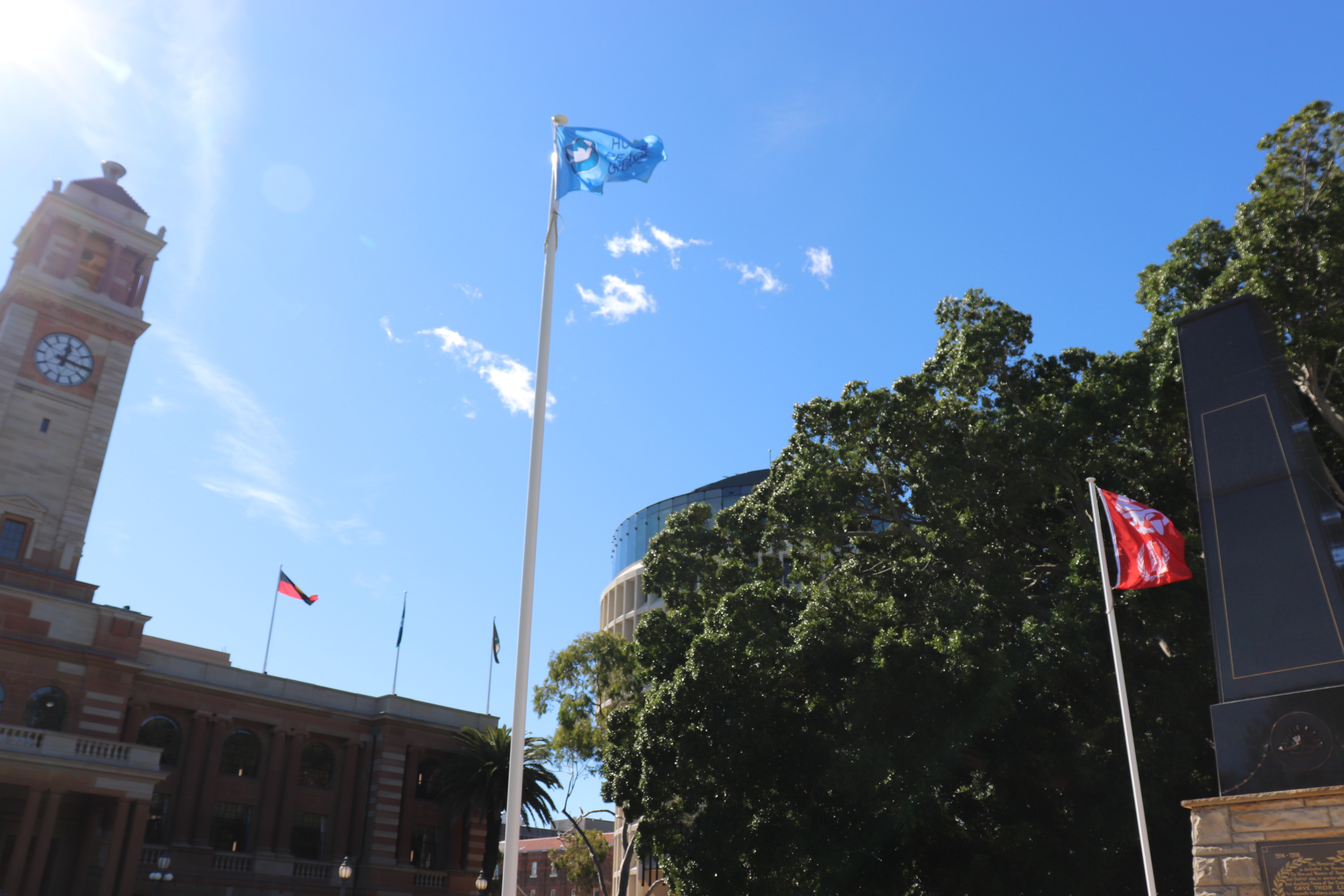
In support of ongoing efforts to raise awareness about the campaign to abolish nuclear weapons, the flags were flown alongside the Australian and Aboriginal flags to mark the historic anniversary.
It followed a Lord Mayoral Minute supported by City of Newcastle councillors in June, acknowledging the City’s long-standing history with local, national and international peace movements, dating back to 29 June 1982 when the City first declared Newcastle a Nuclear Free Zone under Lord Mayor Joy Cummings AM, and resolving to establish with Hunter Peace Group a dedicated Newcastle Peace Park at Tighes Hill Reserve, adjacent to Islington Park.
Peace parks exist in many cities across the country, including Adelaide, Hobart and Canberra, and more locally at Cessnock and Tanilba Bay.
Lord Mayor Nuatali Nelmes said the City of Newcastle was proud to support these efforts as a progressive city.
“The City of Newcastle has a long and proud history of activism against nuclear weapons, particularly as a city with a large working port,” Cr Nelmes said.
“Former Newcastle Lord Mayor Joy Cummings was a passionate advocate for the peace movement, inspiring strong community support and joining with Hunter Peace Group, trade unionists and activists to hold demonstrations on the importance of nuclear disarmament and protecting Newcastle as a Nuclear Free City and port.
“I am honoured to uphold that mission today on behalf of the City, in which there is no place for nuclear weapons in modern society.”
Hunter Peace Group Secretary Lynda Forbes said the group was pleased to continue this important work with the City of Newcastle.
“While ever there is nuclear testing being conducted across the globe, Hunter Peace Group believes it is important to continue to commemorate the anniversaries of the bombing of Hiroshima and Nagasaki, to draw public attention to the threat that nuclear weapons pose to communities throughout the world,” Ms Forbes said.
“Despite City of Newcastle supporting the United Nations’ Treaty on the Prohibition of Nuclear Weapons in 2019, and advocating to the Federal Government in 2020, Australia is yet to sign and ratify the treaty, which came into force in January this year.
“I’d like to thank Lord Mayor Nuatali Nelmes, the City of Newcastle and the broader community for their continued advocacy and support for Hunter Peace Group and ICAN.”
Sydney’s first freight COVID testing site to open
A dedicated freight-friendly COVID-19 testing site is opening in Wetherill Park tomorrow, making it easier for heavy vehicle drivers to get tested in the Greater Sydney area.
Minister for Regional Transport and Roads Paul Toole said the Sydney pop-up site was in addition to the five sites already open along key freight routes across the state to keep freight moving and freight workers COVIDSafe.
“The NSW Government has been working closely with the freight industry, which is doing a phenomenal job to keep essential goods moving into our communities through this pandemic,” Mr Toole said.
“We know that heavy vehicles are not able to easily access the large majority of the current community testing locations, and these pop-up sites make it easier for our truckies to get tested and get back on the road.
“With increased mandatory testing requirements in place for freight workers across multiple jurisdictions, we have seen unprecedented demand on our freight testing sites, so opening Sydney’s first site tomorrow will be very welcome news.”
Minister for Transport and Roads Andrew Constance said the Sydney-based site will provide operators with more choice as they carry out their essential work.
“The new Wetherill Park site will allow truck drivers safe and efficient access to COVID-19 tests which will help them remain safe as they move across the state,” Mr Constance said.
“This facility is a welcome addition to our already existing freight COVID-19 testing sites at key transport routes, as it will help support the freight industry comply with testing requirements.”
The site at 250 Victoria Street is open from 7am Saturday, 7 August and will be supported by pathology staff 24 hours a day, seven days a week.
To find out more, visit:
https://www.transport.nsw.gov.au/operations/freight-hub/transport-for-nsw-response-to-covid-19-for-freight-industry
Man charged with fraud over alleged fake COVID result – Wollongong
An Illawarra man has been charged with fraud after allegedly claiming he had COVID-19 to avoid going to work.
About 4.15am on Monday (2 August 2021), the 23-year-old allegedly sent a text message to his employer, stating he had contracted COVID-19 and was unable to go to work in Newcastle.
His co-workers were stood down and self-isolated while awaiting their test results, and several locations near his place of employment required deep cleaning.
Later that day, the man allegedly sent another text to his employer advising his second test returned a negative result.
Subsequent inquiries confirmed the man never received a positive test result.
The matter was referred to the NSW Police Force, with officers attached to Wollongong Police District commencing an investigation.
About 1pm yesterday (Thursday 5 August 2021), the man attended Wollongong Police Station, where he was arrested and charged with conveying false information that a person or property is in danger.
The West Wollongong man was granted bail to appear at Wollongong Local Court on Tuesday 14 September 2021.