
The Labor and Liberal parties have voted to pass the Surveillance Legislation Amendment (Identify and Disrupt) Bill 2020 which makes three new warrants available to the Australian Federal Police (AFP) and Australian Criminal Intelligence Commission (ACIC).
Network activity warrants allow the AFP or ACIC to monitor online activity, without investigating or accusing a person of a crime. Account takeover warrants enable police to take over an account and change their data, which could then be used as evidence in a criminal proceeding.
Data disruption warrants grant law enforcement data disruption powers to stop the suspected commission of an offence using a computer. If a person with relevant knowledge does not comply with a data disruption warrant, it could result in a 10 year jail term.
“The Richardson review concluded that this bill enables the AFP and ACIC to be ‘judge, jury and executioner.’ That’s not how we deliver justice in this country.” said Senator Lidia Thorpe, the Greens spokesperson for Justice.
“The bill does not identify or explain why these powers are necessary and our allies in the United States, the United Kingdom, Canada and New Zealand do not grant law enforcement these rights.
“The Greens put forward amendments to balance these powers with a robust human rights framework that would protect innocent people from the abuse of powers contained in this bill, but we were outvoted by the major parties.
“As our laws evolve to combat cyber-enabled crime, our human rights need to evolve as well to protect us from cyber-enabled abuses of power.”
Author: admin
National Cabinet Statement
The National Cabinet met today for the 53rd time to discuss Australia’s COVID-19 response, recent outbreaks of COVID-19 and the Australian COVID-19 Vaccine Strategy.
National Cabinet continues to work together to address issues and find solutions for the health and economic consequences of COVID-19.
Since the beginning of the pandemic there have been 48,815 confirmed cases in Australia and, sadly, 991 people have died. More than 30.7 million tests have been undertaken. Testing has increased nationally over recent days with 1,742,613 tests reported in the past 7 days.
Globally there have been over 214.5 million cases and sadly over 4.4 million deaths, with 711,553 new cases and 11,051 deaths reported in the last 24 hours. The COVID-19 pandemic continues to surge in many countries around the world.
Australia’s COVID-19 vaccine roll out continues to expand. To date over 18.3 million doses of COVID-19 vaccines have been administered in Australia, including 307,090 in the previous 24 hours.
In the previous 7 days, more than 1.8 million vaccines have been administered in Australia. More than 55 per cent of the Australian population aged 16 years and over have now had a first dose of a COVID-19 vaccine, including over 75 per cent of over 50 year olds and more than 85 per cent of over 70 year olds.
More than 33 per cent of Australians aged 16 years and over are now fully vaccinated including more than 48.7 per cent of over 50 year olds and more than 60.8 per cent of Australians over 70 years of age.
Today, Chief Medical Officer Professor Paul Kelly provided an update on current outbreaks of COVID-19. The Chief Medical Officer has announced a number of hotspots across Australia in NSW, Victoria and the Australian Capital Territory.
Leaders noted the health system capacity in place is across to support the current outbreaks.
National Cabinet agreed to establish a cross jurisdictional working group led by the Commonwealth Secretary of Health, with the heads of all state and territory Health Departments to report back to National Cabinet by 3 September 2021, on the health and hospital system capacity and workforce needs to address expected demands under the National Plan, taking into account the Doherty Institute modelling reports to National Cabinet.
Lieutenant General John Frewen, Coordinator-General of Operation COVID Shield, provided an update on the vaccine roll out and the planned roll out to children aged 12-15 years of age, based on recommendations of ATAGI. The rollout to 12-15 year olds will commence from 13 September 2021.
All leaders reiterated the importance of Australians, especially those in vulnerable groups, to get a COVID-19 vaccination. Both the AstraZeneca and Pfizer COVID-19 vaccines are registered for use in Australia and are proven to be effective in preventing serious illness and death, as well as limiting transmission.
National Cabinet noted the work underway through the COVID-19 Risk Analysis and Response Taskforce report and the Doherty modelling for the National Plan to transition Australia’s National COVID Response. Professor Jodie McVernon from the Doherty Institute updated National Cabinet on draft modelling scenarios and sensitivity analysis, confirming the recommendation of the 70% and 80% thresholds from the Doherty Institute’s earlier report that formed the basis of the National Plan.
Further work is underway on the scenarios as well as modelling of optimisation of the public health measures and managing outbreak responses and scenarios to support vulnerable cohorts and areas with low vaccination uptake. These will be presented by the Doherty Institute at future meetings once finalised.
National Cabinet noted the significantly expanded scale of the evacuation from Afghanistan in a dangerous and deteriorating situation.
The Prime Minister thanked state and territory leaders for the substantial increase in quarantine places made available to accommodate the approximately 4,100 evacuees who would be welcomed to Australia over the coming days and weeks.
National Cabinet agreed to meet next on Friday, 3 September 2021.
Supporting more small and medium sized businesses to access funding
The Morrison Government is providing additional support to small and medium sized businesses (SMEs) who continue to deal with the economic impacts of the COVID-19 crisis by expanding eligibility for the SME Recovery Loan Scheme.
In recognition of the continued economic impacts of COVID-19, the Government will remove requirements for SMEs to have received JobKeeper during the March quarter of 2021 or to have been a flood affected business in order to be eligible under the SME Recovery Loan Scheme.
As with the existing scheme, SMEs who are dealing with the economic impacts of the coronavirus with a turnover of less than $250 million will be able to access loans of up to $5 million over a term of up to 10 years. Other key features of the SME Recovery Loan Scheme include:
- The Government guarantee will be 80 per cent of the loan amount.
- Lenders are allowed to offer borrowers a repayment holiday of up to 24 months.
- Loans can be used for a broad range of business purposes, including to support investment.
- Loans may be used to refinance any pre-existing debt of an eligible borrower, including those from the SME Guarantee Scheme.
- Loans can be either unsecured or secured (excluding residential property).
The expanded Scheme will enable lenders to continue supporting Australian small businesses when they need it most.
The SME Recovery Loan Scheme builds on earlier loan schemes introduced during COVID-19, under which around 74,000 loans totalling around $6.2 billion were written.
The loans will be available through participating lenders until 31 December 2021. The expansion complements other financial support the Commonwealth is offering to businesses impacted by the current COVID-19 health restrictions.
The Morrison Government will continue to support small businesses as they seek to rebuild, adapt and create jobs on the other side of this crisis.
Further information can be found on the Treasury website.
Children aged 12 to 15 years now eligible for COVID-19 vaccine
Children aged between 12 and 15 years will be able to book a COVID-19 Pfizer vaccine from September 13 following the Morrison Government’s decision to implement expert medical advice.
Bookings will be available through GPs, Commonwealth Vaccination Clinics and Aboriginal Community Controlled Health Organisations. Each state and territory will advise when their state vaccination clinics will open to this group.
The Australian Technical Advisory Group on Immunisation (ATAGI) reviewed detailed medical evidence and recommended Pfizer’s COVID-19 vaccination in all children and adolescents 12 years of age and above.
Prime Minister Scott Morrison said the Moderna vaccine would also be made available subject to approvals from the Therapeutic Goods Administration (TGA) and ATAGI recommendations for 12-18 year olds.
“Vaccinating young people will protect them and provide peace of mind to their family,” the Prime Minster said.
“Importantly, this decision provides the opportunity for families to come together to visit their GP and get vaccinated.”
Coordinator General of Operation COVID Shield Lieutenant General John Frewen has been working with the Commonwealth and states and territories on coordinating an approach for this age group while supporting those jurisdictions wishing to undertake a school based vaccination later in the year. This detail will be outlined by each state and territory.
It is expected that all children 12-18 years of age will have access to a vaccine during the course of 2021. The age group between 12 and 15 comprises of approximately 1.2 million children.
Minister for Health and Aged Care Greg Hunt said the decision was based on the final advice of ATAGI and approval by the TGA. In their advice to Government, ATAGI concludes that the severity of COVID-19 is less in adolescents compared with adults.
“To date, we’ve administered almost 18.4 million COVID-19 vaccines around Australia. I want to thank everyone who has come forward so far to receive their first and second doses, you’re doing an incredible job,” Minister Hunt said.
“I would encourage all parents from September 13 to visit the eligibility checker and book your child in for their vaccination, so we can ensure all Australians are protected from COVID-19.”
Minister for Education and Youth Alan Tudge said the rollout of the vaccines to younger Australians should give more confidence to jurisdictions to keep schools open and community activity alive.
“Some students have missed more than half a year of face-to-face learning, and it is critically important that we get all students back in classrooms as soon as possible,” Minister Tudge said.
“Keeping kids in schools is so important, not just for their education, but for their mental health, physical development and to have those critical interactions with their peers and teachers.”
Parents should check the COVID-19 eligibility checker from 13 September to book in their child’s vaccination.
The Therapeutic Goods Administration is also currently considering the use of the Moderna vaccine in 12-17 years of age as a priority, with a decision expected soon.
Pharmacies will come on board to administer Moderna subject to approval by the TGA and ATAGI.
The Commonwealth Government has secured more than 280 million COVID-19 vaccines, including 125 million Pfizer-BioNTech vaccines and 25 million Moderna vaccines.
Lori Pensini wins Kilgour Prize 2021
West Australian artist and perennial Kilgour Prize finalist Lori Pensini has celebrated a breakthrough win in the prestigious $50,000 art prize with an intimate reflection on inter-racial relationships and her own family lineage.
The winner was announced tonight via an online call between Newcastle Lord Mayor Nuatali Nelmes, Newcastle Art Gallery Director Lauretta Morton and the artist.
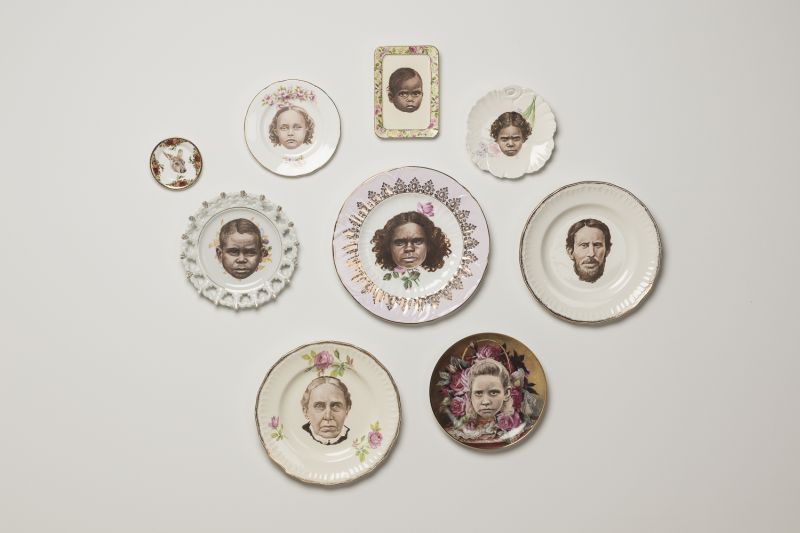
The Kilgour Prize exhibition was originally meant to open on 13 August, however Newcastle Art Gallery is currently closed in line with COVID-19 restrictions.
“While we are disappointed not to be able to share this news with Lori in person, we felt it was more important to pass on our congratulations without any further delay,” Cr Nelmes said.
“The arts community has been hit hard by the effects of COVID-19, making this award and its $50,000 prize even more valuable at this time.
“The Kilgour Prize is highly regarded within the Australian arts community and attracted a record number of entries this year. I congratulate Lori on the quality of her work, Family 2021, which has seen her triumph over a tough field to join the prestigious list of accomplished artists who have taken out the Kilgour Prize.”
Family 2021 depicts family portraits painted on heirloom fine bone china plates, which Lori said were a “tribute to the inter-racial relationships of my colonial fore-bearers and the First Peoples of the southwest of Western Australia”.
“These portraits are a continuum for myself and my art practice exploring the Indigenous lineage to my ancestry,” she said.
“Each plate is unique to itself, honouring individual endeavours and fortitude. Collectively they embody the sense of ‘family’, of intimate bonds forged and the endurance of fervent relationships that defied racial vilification of the times.”
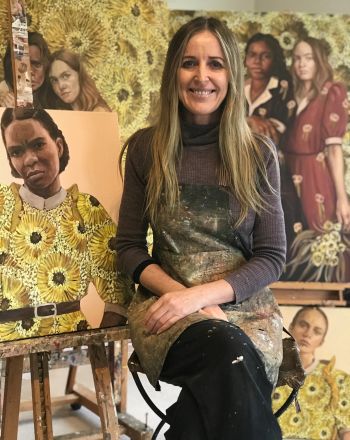 Lori has been a Kilgour Prize finalist for five consecutive years, (2017-2021) and was the People’s Choice winner in 2018 with another powerful portrait examining her Aboriginal ancestry.
The Kilgour Prize 2021 was judged by Newcastle Art Gallery Director Lauretta Morton, Campbelltown Arts Centre Head of Curatorial Adam Porter and the Head Teacher of Fine Art at Newcastle Art School, David Trout.
Ms Morton said the judges were impressed by the weight and substance of Lori’s technically strong and innovative work, which explores the Australian identity to make a strong point in a beautiful and subdued way.
“There is a tension presented through this work – the portraits are haunting, but also mesmerising,” Ms Morton said.
“It is not a divisive narrative, but one that embraces the individual stories behind this family portrait.”
The Kilgour Prize is administered by Newcastle Art Gallery and funded by a bequest from artist Jack Noel Kilgour.
Newcastle Art Gallery received a record 476 works from artists across every state and territory in Australia for this year’s Kilgour Prize, which presents some of the best examples of contemporary Australian portrait and figurative painting. Almost 2900 works have been entered into the Kilgour Prize since it was established in 2006.
While Newcastle Art Gallery remains closed during lockdown the Kilgour Prize 2021 exhibition showcasing the 30 finalists can be viewed at www.nag.org.au/exhibitions/current/kilgour-prize-2021. Votes for the People’s Choice Award can be cast online until 5pm on 6 October 2021. The winner will be announced on 11 October 2021 and awarded $5,000.
2021 FINALISTS:
Lisa Adams, Gillian Adamson, Matteo Bernasconi, Jackson Booth, Catherine Boreham, Julie-Ann Brown, Simon Brown, Daniel Butterworth, Emily Jayne Carroll, John Dahlsen, Archer Davies, Rachelle Dusting, John Earle, David Fairbairn, Nick Fintan, Christine Fontana, Miriam Fraser, Michael Lindeman, Nunzio Miano, Robert O’Connor, Nathan Paddison, Lori Pensini, Alice Pulvers, James R Randall, Zeljka Reljan-Music, Grace Kemarre Robinya, Paul Ryan, Jason Tolmie, Mick Turner and Mark Tweedie.
ABOUT THE KILGOUR PRIZE
Jack Noel Kilgour (1900–1987) was an Australian artist well-known for his academic approach to landscape and portrait painting. In 1987 Kilgour bequeathed funds for the creation of a major figurative and portrait art competition to be run in perpetuity. As one of Australia’s major art prizes, Newcastle Art Gallery is proud to be the home of the KILGOUR PRIZE.
More information: https://www.nag.org.au/Kilgour-Prize
NSW Government Weekly Update – 27 August 2021
For the latest COVID-19 advice & information please visit www.nsw.gov.au/covid-19
NEW FREEDOMS FOR VACCINATED FIRST STEP ON STATE ROADMAP OUT OF COVID
- People across NSW who have received both doses of a COVID-19 vaccine will be allowed more freedoms next month after NSW hit the target of six million jabs.
- This is the first step in the roadmap and further freedoms will follow for those who have had the jab when the state hits new vaccination targets of 70 and 80 per cent.
- From 12.01am, Monday, 13 September:
- For those who live outside the LGAs of concern, outdoor gatherings of up to five people (including children, all adults must be vaccinated) will be allowed in a person’s LGA or within 5km of home.
- For those who live in the LGAs of concern, households with all adults vaccinated will be able to gather outdoors for recreation (including picnics) within the existing rules (for one hour only, outside curfew hours and within 5km of home). This is in addition to the one hour allowed for exercise.
- As part of the roadmap when the following targets are hit, freedoms will be as follows:
- 70 per cent full vaccination: a range of family, industry, community and economic restrictions to be lifted for those who are vaccinated.
- 80 per cent full vaccination: further easing of restrictions on industry, community and the economy.
- The government is also investigating trials of certain industries in coming months, as a proof-of-concept measure to prepare the businesses to open up and operate in a COVID-safe way.
NSW FIRST TO MANDATE COVID JABS FOR ALL HEALTH STAFF
- Healthcare workers in NSW will be required to be vaccinated against COVID-19 to help ensure the safety of colleagues and patients in all public and private hospitals.
- Under the Public Health Order, health staff must have a first dose of vaccine by 30 September 2021 and be fully vaccinated by 30 November 2021, or at least have their second appointment booked to continue working.
- Frontline health staff and their families have had priority access to COVID-19 vaccines since the commencement of the Federal Government’s vaccination rollout in February.
- Already in NSW, mandatory vaccinations for frontline health staff are required for contagious diseases including influenza, chicken pox, measles and whooping cough.
- Those who have a medical contraindication will be exempt if a medical practitioner confirms the medical contraindication.
HSC IN NOVEMBER AND ALL STUDENTS TO RETURN TO SCHOOL IN TERM 4
- There will be a staggered return to face-to-face learning from October, HSC exams will be delayed until November and vaccinations for school staff will be mandatory based on the return to school plan released by the NSW Government.
- Students will return to face-to-face learning with NSW Health approved COVID safe settings on school sites in the following order:
- From 25 October – Kindergarten and Year 1
- From 1 November – Year 2, 6 and 11
- From 8 November – Year 3, 4, 5, 7, 8, 9 and 10
- HSC exams will be delayed until 9 November with a revised timetable and guidelines for a COVID-safe HSC to be released by NESA in early September. Importantly, the delay of the HSC exams will not disadvantage NSW students when applying to university.
- Vaccinations for all school staff across all sectors will be mandatory from 8 November. NSW Health will be providing priority vaccinations at Qudos Bank Arena for school staff the week beginning 6 September.
- Early childcare staff will also be able to participate in the priority vaccinations from 6 September. All school and early childcare staff are also encouraged to make use of the GP network to be vaccinated with whatever vaccine is available as soon as possible.
MORE FREE TRAINING OPTIONS DURING LOCKDOWN
- The NSW Government has announced an additional 3000 training places for people across NSW to skill up at home during lockdown.
- An extra 60 short courses are now on offer to study for free including business skills, mental health, marketing, finance and IT skillsets.
- The courses are an expansion of the 10 free skillsets recently announced by TAFE NSW and are targeted at LGAs and suburbs in lockdown.
- Training will be funded through the JobTrainer program, which has already seen more than 120,000 people in NSW skill up since it was announced in October 2020.
- For more information and to see full eligibility, please visit: https://bit.ly/37DYSvq.
$200 MILLION SUPPORT PACKAGE FOR NOT-FOR-PROFITS
- The NSW Government has announced a $200 million support package for the Not-for-Profit (NFP) sector to help organisations faced with the financial impacts of the current restrictions.
- The funding initiative comes on top of the more than $5.1 billion, including $1 billion in Commonwealth support, announced by the Government since the end of June.
- The support package targets those NFPs providing social support and animal welfare with Service NSW and the Department of Communities and Justice to process applications from next month.
- The Social Sector Support Fund will provide grants and direct payments to eligible NFPs and provide a Workforce Surge Payment to support social sector organisations to respond to COVID-19 outbreaks where staff have been furloughed.
- Further details will become available in the coming weeks.
RECORD SUPPORT PACKAGE FOR VULNERABLE COMMUNITIES
- A record emergency relief package of $18.8 million will be delivered by the NSW Government in the latest boost to support vulnerable members of our community during the latest COVID outbreak.
- The package will focus on the 12 Local Government Areas (LGAs) of concern to give urgent help to those experiencing hardship.
- The $18.8 million package will help grassroots organisations deliver emergency food relief, promote vaccination and testing services, and provide culturally appropriate support and care to diverse communities.
- The package includes a $13 million grants program delivering emergency relief through not-for-profit and multicultural community organisations, as well as local councils. It also includes $4 million for ongoing multicultural communications, including interpreting and translation services, to deliver critical health messages.
- Grants of up to $30,000 for local organisations are now open. Other grant streams as part of the $13 million package will open soon. For more information, see https://multicultural.nsw.gov.au/.
SCORE FOR YOUR COMMUNITY THIS SUPER SUNDAY
- Sport Super Sunday is being held at vaccination centres for the twelve LGAs of concern this weekend to help Team NSW beat COVID-19.
- Plenty of appointments are available at Qudos Bank Arena and the NSW Health Vaccination Centre at Sydney Olympic Park and the Vaccination Centre at Macquarie Fields this Sunday, August 29, for all sports lovers.
- Those aged 16 to 39 who live in Bayside, Blacktown, Burwood, Campbelltown, Canterbury-Bankstown, Cumberland, Fairfield, Georges River, Liverpool, Parramatta, Strathfield or Penrith, should make a booking via https://www.nsw.gov.au/covid-19/health-and-wellbeing/covid-19-vaccination-nsw/get-your-covid-19-vaccination-nsw.
- Wear team uniforms, colours, or gear and take a selfie to post on your local club sites with the hash tag #vaccinationchampion.
- If you can’t make it this Sunday, we have other vaccination appointments at our centres over the next two weeks.
NSW PUTS FOOT ON THE GREEN GAS WITH HYDROGEN PLATFORM
- The rollout of the State’s hydrogen hubs is set to be accelerated, with the establishment of a collaboration platform to bring together potential hydrogen producers and users.
- The platform is about connecting sophisticated market players with new and emerging hydrogen users to fuel the development of hydrogen hubs in NSW.
- As part of the Net Zero Industry and Innovation Program, the NSW Government has committed a minimum of $70 million to develop hydrogen hubs in the Hunter and Illawarra regions.
- Stakeholders that submitted a hydrogen-related registration of interest to the Net Zero Industry and Innovation Program will automatically receive an invitation to participate. Other organisations can get involved by contacting the Department of Planning, Industry and Environment’s, Hydrogen and Clean Energy team at hydrogen@planning.nsw.gov.au.
$10 million upgrade for Penrith's Tench Reserve
New pathways, riverside seating and an amphitheatre for concerts and festivals are part of a $10 million upgrade to a waterfront reserve in Penrith.
Minister for Planning and Public Spaces Rob Stokes said the work in Tench Reserve, located on the Nepean River, could now begin as the final concept design had been released.
“One of my goals as Minister for Public Spaces is to create a city within a park, and this means we need a Green – and Blue – Grid to link our parks together,” Mr Stokes said
“The upgrade to Tench Reserve is the type of project needed to realise this goal. As part of the wonderful Parks for People program, it’s a park for people, by people.”
Member for Penrith and Minister for Western Sydney Stuart Ayres said Tench Reserve was already well-loved by locals but the $10 million enhancements would attract visitors from all over Sydney.
“The upgrade to this 14 hectare park will connect the Nepean River to Nepean Parklands with new pathways, seating, an improved wharf and an amphitheatre to support major events such as the annual Real Festival,” Mr Ayres said.
“Other features of the upgrade include an expansion of the play space for children of all ages and abilities, improved access to the water, more landscaping, and 80 new trees.
“Construction is expected to start later this year and be completed at the end of 2022.”
Tench Reserve is one of eight open spaces – Glenfield, Carrawood, Belrose, Frenchs Forest, Leppington and George Kendall (Parramatta) – to be created or upgraded as part of the NSW Government’s $50 million Parks for People program.
$790 Million Liverpool Hospital Gets Underway
One of the state’s largest hospital projects will begin within weeks, with the main works contractor appointed for the $790 million Liverpool Health and Academic Precinct.
Health Minister Brad Hazzard announced the awarding of the principal contract to Lendlease, following a competitive tender process.
“The Liverpool Health and Academic Precinct will deliver a world-class medical, research and education hub in the rapidly growing south-western Sydney region,” Mr Hazzard said.
“The redevelopment will be a real boost for communities throughout the region, bringing greatly enhanced healthcare services closer to home.”
The redeveloped hospital will provide a total of 900 beds, an expanded emergency department, new maternity and paediatric inpatient beds and double the capacity within the Neonatal Intensive Care Unit.
Another key feature will be a new, expanded Integrated Cancer Centre which will almost double the chemotherapy treatment spaces.
Member for Holsworthy Melanie Gibbons said the redevelopment would boost the local economy and meet the south-western Sydney’s community’s growing healthcare needs now and into the future.
“The start of major works at this new world-class precinct will support thousands of jobs during the construction phases and beyond, which will be greatly welcomed as we recover from the impacts of the COVID-19 pandemic,” Ms Gibbons said.
Construction of a $50 million multi-storey car park for the Liverpool Hospital is already underway, with work being carried out by ADCO Constructions.
The precinct is part of the NSW Government’s record $10.8 billion investment in health infrastructure over four years to 2024-2025.
Over $5.5 billion in health capital works are underway in Western and South Western Sydney including:
- $790 million for the Liverpool Health and Academic Precinct
- $1.3 billion for a new Bankstown-Lidcombe Hospital
- $832 million Westmead Hospital redevelopment
- $65 million Commonwealth Government funded adult Cystic Fibrosis Specialist Services Unit at Westmead.
- $619 million Children’s Hospital at Westmead Stage 2
- $632 million Campbelltown Hospital redevelopment Stage 2
- $1 billion Nepean Hospital redevelopment
- $300 million for a Rouse Hill Hospital.
Work on Liverpool Hospital is expected to start in the coming weeks, to be completed by 2026.
Labor agrees to spend $50 million destroying Traditional Owners home
“Traditional Owners of the Gundanji and Garawa nation do not consent to fracking in the Beetaloo basin, but the government has put $50 million towards doing it anyway,” said DjabWurrung, Gunnai and Gunditjmara woman Lidia Thorpe, the Greens Senator for Victoria.
“These are communities that don’t even have access to proper health and housing infrastructure. As a government, it’s our job to provide this and instead of doing that we’re paying private companies to poison their waters and destroy their lands.
“This violates the United Nations Declaration on the Rights of Indigenous Peoples, which the Australian government has signed up to. This Declaration guarantees First Nations people the right to approve or deny projects happening on their country before the project begins.
“We need First Nations justice to achieve climate justice. I’m disappointed in Labor’s support to disrespect the wishes of all those Traditional Owners they say they support. Shame.”
The Greens spokesperson for Mining & Resources, Senator Larissa Waters said, “The Greens-initiated Senate inquiry into the $50 million fracking slush fund heard from Traditional Owners across the Northern Territory, deeply concerned about gas extraction in the Beetaloo Basin.
“They told us that they had not been consulted in any meaningful way by this government, or by the companies so eager to pillage Country. They told us they were worried for their water, for their kids and for their access to cultural practices. But their valid concerns were ignored when both big parties voted to support public money going to new fossil fuels in a climate crisis, without First Nations consent.
“The Greens have had a bill since 2012 to ban fracking and to give First Nations, farmers and other landholders the right to say no to gas fracking.
“Yesterday, Labor had the opportunity to be on the right side of history and vote with the Greens against this dodgy program. But they sadly sided with the Liberals.
“We’ll give Labor one more opportunity to do the right thing by First Nations people, water and the climate when we bring a second and final disallowance motion to a vote in the Senate in October.”
Balancing physical and mental health – all a part of Being Equally Well
The Morrison Government has welcomed the release of the National Policy Roadmap to Being Equally Well, which aims to improve the physical health care provided to Australians living with serious mental illness.
The Being Equally Well Roadmap is aimed at reducing the life expectancy gap for people living with a mental illness, and shows that physical health and wellbeing must be a priority for health care providers when working with a person living with a mental illness.
People with a serious mental illness are more likely to die between 14–23 years earlier than the average and their deaths make up around one third of all avoidable deaths in Australia.
They are six times more likely to die of cardiovascular disease and four times more likely to die of respiratory disease. We need to ensure that these rates are turned around.
Minister for Health and Aged Care, Greg Hunt, said the current COVID-19 pandemic was taking a toll on the mental health and wellbeing of Australians, especially those living with a mental illness.
“Our Government is committed to addressing the critical issue of mental health and suicide prevention, and in 2021–22 an estimated $6.5 billion will be spent on mental health in Australia, including Medicare rebates for mental health care,” Minister Hunt said.
“Through our historic $2.3 billion National Mental Health and Suicide Prevention Plan we have also committed to providing additional funding for the Equally Well Program to support improvements to the physical health of those living with a mental illness.
The Being Equally Well Roadmap is the work of the Australian Health Policy Collaboration (AHPC), Equally Well Australia, health professionals and multi-disciplinary academic experts.
Professor of Health Policy and Director of the Australian Health Policy Collaboration, Professor Rosemary Calder AM, said better physical health and longer lives for people living with mental illness needs the combined skills and expertise of both mental health and primary health services.
“Both mental and physical health care need to be connected and to have capacity to support the complex needs of individuals over their lifetimes. Primary health care is central to better physical health care and this report shows how the role of primary care can be strengthened and supported,” Professor Calder said.
“This report is the result of the collaboration of chronic disease and population health practitioners, mental health practitioners and consumers and carers who have worked together to identify how best to do so.”
The AHPC is led by the Mitchell Institute at Victoria University, linking leading health organisations and chronic disease experts to inform better policy through the findings of rigorous health research.
Vice-Chancellor of Victoria University, Adam Shoemaker, said equity of access to opportunity lies at the heart of what drives Victoria University and it was that commitment which led to the establishment of the Mitchell Institute.
“This project represents those deep aspirations. We are confident that it will assist with providing greater access towards equity of health and health outcomes for people living with mental illness. For that reason we are particularly grateful for the support of the Department of Health,” Mr Shoemaker said.
The Morrison Government has provided $600,000 over three years to the AHPC, and from 2021–22 will contribute a further $600,000 over the coming three years to 2023–24.
The Being Equally Well Roadmap will encourage clinicians and policy-makers to give a greater focus to physical health in the treatment of mental ill health, and help to close the life expectancy gap for people with mental illness.