
It’s often said that the future is what you make of it.
That is especially true when it comes to Australia’s economic future.
Our nation is blessed by the privilege of proximity. We sit in the region experiencing the fastest economic growth in human history.
We have an opportunity to lock ourselves into this strong economic growth, much of which will be driven by the global shift to renewable energy.
But to seize this opportunity, we need a government with a plan.
Federal Labor’s plan for government is to use Australia’s comparative strengths as a foundation for our next great wave of economic prosperity.
First, we must utilise our abundant reserves of solar and wind energy to provide the cheap power needed to revitalise our traditional and emerging industries.
Cheap energy will be critical to the development of new renewable industries, using our resources like lithium and copper and iron ore, the key materials used to make batteries, wind turbines, electric vehicles and other low-emission products.
Australia can become a renewable energy superpower for the world. We can establish lucrative new sources of export income and create hundreds of thousands of new jobs.
But achieving this aim requires government action.
A Labor government will create the National Reconstruction Fund to provide loans, loan guarantees and other assistance to support the expansion of Australian industry.
The fund will support the expansion of existing sectors such as manufacturing of military hardware, vaccines and medicines, agricultural produce as well as transportation vehicles and equipment.
It will also support emerging industries in manufacturing that add value to our existing resources exports.
It makes no sense to ship bulk resources overseas for others to process and then buy them back at a higher cost. We should add value here, creating new jobs, particularly in regional Australia.
But on its own, supporting business investment will not be enough.
We must also invest in the skills of our greatest asset – our people.
It is unacceptable that there are 85,000 fewer Australians engaged in apprenticeships or traineeships today than on the day the Coalition government took office.
For Australia to prosper in the 21st century, our training system must produce the skills demanded by employers.
Otherwise, skill shortages will continue to act as a handbrake on economic growth.
Labor will create 465,000 free TAFE places and up to 20,000 new university places in areas of skills shortage.
Our Made in Australia Skills Plan will skill up a new generation of mechanics, construction workers and engineers.
It will also train people in resources, digital and cyber security and advanced manufacturing.
And, critically, we will train a new wave of early childhood educators, registered nurses, teachers and aged care and disability care professionals.
The work of care is often done by women, operating in full sight but without due recognition. We should be treating care workers as the national assets they are and investing in their education and Training.
Labor’s new TAFE and university places will provide new opportunities to hundreds of thousands of young people about to embark on their adult careers.
But they will also be available to older Australians who need to retrain because their jobs have been eliminated by mechanisation or other changes, as well as unpaid carers – predominantly women – who want to re-enter the workforce.
A Labor government will further support Australian industry and jobs with the power of purchasing. We’ll develop industry plans in defence and rail manufacturing to boost the capacity of local businesses to supply our nation’s needs.
Too many state governments have bought trains, trams and ferries from overseas suppliers, only to find them unfit for purpose when they are delivered.
Then we get Australian workers to fix them. It doesn’t make sense. We should build ferries, trains, trams and buses here.
Skills and industry will build a stronger future. One of the biggest lessons from the Covid pandemic has been that our nation has lost some important industries that are critical in times of trouble.
Our inability to make mRNA vaccines, for example, left us badly exposed when the Morrison-Joyce government failed to secure enough vaccines from overseas to meet our national needs.
We should make our own medical supplies and news that mRNA vaccines will be made in Melbourne from 2024 is welcome, but late. We can’t allow ourselves to be hostage to unpredictable global supply chains that collapse in a crisis.
Labor will make Australia more resilient by supporting critical industries. In addition, our 10-point Buy Australia Plan will ensure every government department prioritises buying from local industries wherever possible, rather from overseas.
Increasing our resilience and expanding Australia’s export footprint will be challenging, but also provide opportunities.
Labor has the plan to turn these opportunities into jobs.
New era of free trade with the UK
Australia today signed a landmark free trade agreement with the United Kingdom that will make Australian exports to the UK cheaper, create new opportunities for workers, young people and businesses and further strengthen the special relationship between our two countries.
This is the most comprehensive and ambitious free trade agreement that Australia has concluded, other than with New Zealand. It demonstrates our countries’ commitment to free trade as a driver of economic growth and stronger bilateral relationships.
The Australia-UK FTA delivers benefits for Australians across the board:
- Exporters will benefit from immediate elimination of tariffs on over 99 per cent of Australian goods exports to the UK, valued at around $9.2 billion, when the agreement enters into force.
- Farmers will have improved access to more than 65 million UK consumers who value safe, sustainably produced foods and beverages with the strong provenance Australia offers.
- Around $43 million in annual customs duties will be removed from Australian wine when the agreement enters into force.
- For beef, a tariff-free quota of 35,000 tonnes at entry into force will expand to 110,000 tonnes in year 10. Tariffs on beef will be eliminated after ten years.
- For sheep meat, a tariff-free quota of 25,000 tonnes at entry into force will expand to 75,000 in year 10. Tariffs on sheep meat will be eliminated after ten years.
- For sugar, a tariff-free quota of 80,000 tonnes at entry into force will expand to 220,000 tonnes in year 8. Sugar tariffs will be eliminated after eight years.
- Professionals will have the same access to the UK’s lucrative jobs market as their European competitors, except from the Republic of Ireland. This means Australian job seekers can compete on an equal footing with EU nationals in the UK for the first time in more than 40 years.
- Australian households and businesses will save around $200 million a year as tariffs on British imports into Australia, such as cars, whisky, confectionery, biscuits and cosmetics, are phased out within five years, with tariffs on almost all UK goods being eliminated on entry into force.
- Young people will have more time to travel to the UK for a working holiday and will be able to stay longer, with eligibility to participate in working holiday opportunities raised from 30 to 35 years of age, and stays allowed for up to three years in each country.
- Australian businesses will have the guaranteed right to bid for a greater variety of UK government contracts in a procurement market worth an estimated half-a-trillion dollars annually.
- UK businesses will be encouraged to invest in Australia thanks to best practice investment rules, including to set up regional headquarters in Australia to leverage our network of free trade agreements.
Minister for Trade, Tourism and Investment Dan Tehan signed the agreement on behalf of Australia during a virtual ceremony with the UK Secretary of State for International Trade Anne-Marie Trevelyan in Adelaide today.
The Morrison Government will now work to bring the agreement into force in 2022, so Australian exporters, farmers, workers, businesses and consumers can access the benefits of this gold standard agreement as soon as possible.
When the Australia-UK FTA enters into force, around 75 per cent of Australia’s two-way trade will be covered by free trade agreements, representing preferential access to 2.9 billion customers, up from 27 per cent when the Morrison Government came to office.
Employment hits record high as lockdowns end, Morrison Government building the workforce of the future
Labour force figures released today by the ABS show that seasonally adjusted employment surged in November, by an unprecedented 366,100 (or 2.9 per cent) to stand at a record high of 13,177,300, exceeding market expectations. Employment is now 181,800 (or 1.4 per cent) above the level recorded in March 2020 (when Australia recorded its 100th case of COVID-19).
- Employment for women rose by a robust 215,200 (or 3.6 per cent) in November, accounting for nearly 59 per cent of total jobs growth over the month.
- Full-time employment increased by 128,300 (or 1.4 per cent) over the month, while part-time employment rose by 237,800 (or 6.1 per cent).
- The rise in employment at the national level was primarily driven by strong increases in New South Wales (up by 179,800 or 4.6 per cent) and Victoria (up by 141,000 or 4.3 per cent), reflecting the easing of restrictions in both states. Importantly, employment rose in all states and the ACT.
Against this backdrop, the level of unemployment fell by 69,400 (or 9.8 per cent) over the month, to 636,700 in November. The unemployment rate fell by 0.6 percentage points over the month, to 4.6 per cent in November, well below the 5.3 per cent recorded in March 2020.
The easing of restrictions and strong labour market conditions encouraged 296,800 people to enter the labour market in November, pushing the participation rate up by 1.4 percentage points, to 66.1 per cent in November, above the 65.9 per cent recorded in March 2020.
Encouragingly, employment for youth increased by 122,900 (or 6.9 per cent) over the month, accounting for around one-third of the rise in overall employment in November. The youth participation rate also rose considerably over the month, up by 3.7 percentage points, to 70.1 per cent in November 2021, the highest rate recorded since March 2009.
The ABS has noted that most people remained attached to their job during the Delta lockdowns, and to a greater extent than was the case earlier in the pandemic, which meant that as restrictions were eased many people were able to return quickly to work. This resulted in a rapid recovery in employment and participation between October and November.
Minister for Employment, Workforce, Skills, Small and Family Business, Stuart Robert, said today’s figures reflect the large rebound in labour market activity, as businesses have been able to reopen under the National Plan, particularly in the most populous states of New South Wales and Victoria.
‘Today’s figures demonstrate the National Plan is working—Australians are getting on with their lives safely, but there is more to be done,’ Minister Robert said.
‘We remain cognisant of the Omicron variant, but it is pleasing to note that online job advertisements are at a 13-year high, while the NSC’s latest Recruitment Experience and Outlook Survey results show employer expectations around increasing staff numbers have hit a new peak.
‘This shows Australia’s continued prosperity is depended on ensuring we continue to stick with the National Plan.’
In addition, the Morrison Government is building the workforce of the future with the right skills to meet the demands of the economy and community, as well as the agility to rise to the opportunities presented by emerging industries.
‘As part of MYEFO, the Morrison Government has announced a range of measures designed to help Australians connect to meaningful employment and inform and empower industry to play the important role of attracting and retaining employees,’ Minister Robert said.
‘We will spend $8 million to increase the number of Job Fairs in regional and metropolitan areas and connect more Australians with local jobs. We will expand the successful Launch into Work program to $74.7 million worth of projects to be funded each year to prepare job seekers for vacancies through work experience, training, and mentoring. We will also expand the 1800 CAREER service to Australians aged 25 and older who are self-managing their search for work using the Government’s online employment services.
‘We will work to fast-track entry into the workforce through the apprenticeship and traineeship sector by investing $10.5 million over the next three years to work intensively with the New South Wales and South Australian governments to pilot novel approaches to accelerate qualification completion time.’
‘We will also look to those who have migrated to Australia, and how we can support them to take up work in areas of demand which our domestic workforce is unable to fill. We will spend nearly $20 million through to 2023-24 to deliver faster, cheaper skills assessments which will acknowledge the valuable skills migrants have brought with them and their ability to contribute to the Australian workforce. Our targeted migration settings will continue to be considered holistically, informed by Australia’s broader domestic workforce objectives to ensure they complement each other.’
Minister Robert said the new measures announced as part of MYEFO would complement the Government’s existing programs, with all job seekers and those looking to reskill and upskill benefitting.
‘Our vision for skills reform and a funding model that provides national consistency for students, underpinned by improvements to the collection, timeliness and transparency of data across the Vocational Education Training (VET) system, will ensure we’re training Australians with the right skills to get the jobs in demand,’ Minister Robert said.
‘We will also ensure jobactive providers take a stronger, more proactive brokerage role in identifying local employment opportunities and referring job seekers to suitable work. Both job seekers and jobactive providers must be outcome-focused, with providers working closely with their region’s Employment Facilitator to develop strategies that better connect job seekers with local business needs, and support job seekers to upskill so they are ready to take up work when opportunities arise.
‘From 1 January 2022 through to June 2024, we will provide over $49 million to double the number of places in The Skills Checkpoint for Older Workers Program and increase the number of Skills and Training Incentives available, to assist older Australians to adopt a lifelong approach to learning, upskilling and reskilling, all while reducing their reliance on income support.
Minister Robert said the Morrison Government is committed to providing strong incentives and support for older job seekers to remain engaged in the labour market.
‘Aged pensioners who choose to re-enter the workforce or increase their work hours will benefit from an easier return to the Age Pension if they exceed the income limit due to their employment and will be able to keep their Pensioner Concession Card for two years,’ Minister Robert said.
The Morrison Government would also invest $10 million to develop an integrated data tool which would deliver a comprehensive, near real-time, regional view of Australia’s workforce, skill, and labour market.
Moreover, the Government is continuing to back Australia’s small business-led recovery from the COVID-19 pandemic by extending the SME Recover Loan Scheme by a further six months to 30 June 2022. To date, around 80,000 loans worth approximately $7.3 billion have been provided to businesses since the scheme commenced in March 2020. The extension of the scheme will continue to provide unprecedented support for SMEs and help even more businesses get access to the funding they need to adapt, innovate and bounce back from the impacts of the pandemic.
2021-22 Mid-Year Economic and Fiscal Outlook
The 2021-22 Mid-Year Economic and Fiscal Outlook (MYEFO) underscores the importance of sticking to the plan to secure Australia’s strong recovery from the greatest economic shock since the Great Depression.
Having performed more strongly than any major advanced economy throughout the pandemic, the Australian economy is poised for strong growth underpinned by Australia’s high vaccination rate and unprecedented economic support to households and small businesses.
Real GDP is expected to grow by 4½ per cent in 2021, and by 4¼ per cent in 2022 reflecting strong and broad-based momentum in the economy and demonstrating our economic plan is working.
Income tax cuts and a strong recovery in the labour market is seeing household consumption increase at its fastest pace in more than two decades.
Temporary tax incentives will drive the strongest increase in business investment since the mining boom with non-mining investment expected to reach record levels.
Consistent with the strong economic recovery the unemployment rate is forecast to reach 4¼ per cent in the June quarter of 2023.
This would represent the first time since before the Global Financial Crisis that Australia has sustained an unemployment rate of below 5 per cent and only the second time since the early 1970s.
The rapid recovery from the Delta imposed lockdowns is expected to see the addition of around 1 million jobs between October 2021 and the end of the forecast period, which is around 150,000 more jobs than forecast in the 2021-22 Budget.
As a result, the MYEFO shows an improvement in the fiscal outlook since the 2021-22 Budget, even after accounting for the impacts of the Delta imposed lockdowns.
The underlying cash balance in 2021-22 is expected to be a deficit of $99.2 billion (4.5 per cent of GDP), a $7.4 billion improvement since the 2021-22 Budget. And $2.3 billion stronger across the forwards.
This significant improvement in the underlying cash balance occurs at the same time that tax receipts as a share of GDP are forecast to fall from 22.9 per cent in 2020-21 to 22.1 per cent in 2024-25 due, in part, to the Government’s tax reform measures that continue to grow the economy and deliver a stronger budget.
The improvement in the forecast budget balance in 2021-22, together with the much stronger fiscal outcome in 2020-21, flows through to an improved outlook for debt.
Gross debt is projected to be lower in every year of the forward estimates and medium term than at the 2021-22 Budget.
Gross debt is now expected to be 41.8 per cent of GDP at 30 June 2022 and is projected to stabilise at around 50 per cent of GDP in the medium term.
Australia’s gross debt as a share of GDP is less than half the average across G20 advanced countries today, with Australia only one of nine countries in the world to have a AAA credit rating from the three leading rating agencies.
There is also a material improvement in the net debt position which now peaks at 37.4 per cent of GDP as opposed to 40.9 per cent in 2024-25, $65.7 billion lower than what was expected in May.
Australia’s world leading economic and health outcomes have been supported by a further $25 billion in direct economic and health support committed during the Delta outbreak, bringing our total pandemic support to $337 billion or 16.3 per cent of GDP.
This included more than $7.3 billion in business support payments, $12.6 billion in payments to individuals through the COVID-19 Disaster Payment and further investments in our vaccine rollout and hospitals.
The Government has also provided additional funding to sustain capacity in sectors significantly disrupted by COVID-19 such as aviation, tourism, early childhood education and care, and the arts.
Building on our COVID-19 response, funding in today’s MYEFO includes:
- $2.3 billion in funding commitments for new and existing infrastructure projects and more than $500 million to support rural and regional Australia.
- $896.0 million to support a strong labour market recovery, address workforce shortages and build workforce capability, equipping Australia’s workforce with the skills needed now and into the future.
- $2.7 billion in 2021-22 and $26.4 billion over the four years to 2024-25 to support the National Disability Insurance Scheme.
- $1.1 billion to support Aboriginal and Torres Strait Islander people in areas such as health, education, early childhood, justice, languages and assisting families.
- $1.1 billion over 10 years to support reliable energy supply and a technology-driven approach to emissions reduction as part of our roadmap to net zero by 2050.
The global pandemic will continue to pose headwinds for domestic and global recovery for some time to come.
However, Australia’s high vaccination rate and increased investment in health system capacity will assist in mitigating the challenges presented by the ongoing global pandemic, including managing new variants.
Australia has a proven record of dealing with COVID-19 and the Government remains focused on securing the recovery, guaranteeing our essential services and setting Australia up for the future.
The 2021-22 MYEFO is available on the Budget website www.budget.gov.au
Work begins on upgrade to National Park Netball Courts
The revitalisation of National Park’s popular sporting precincts is set to continue with a $627,000 overhaul of Newcastle’s premier netball facility.
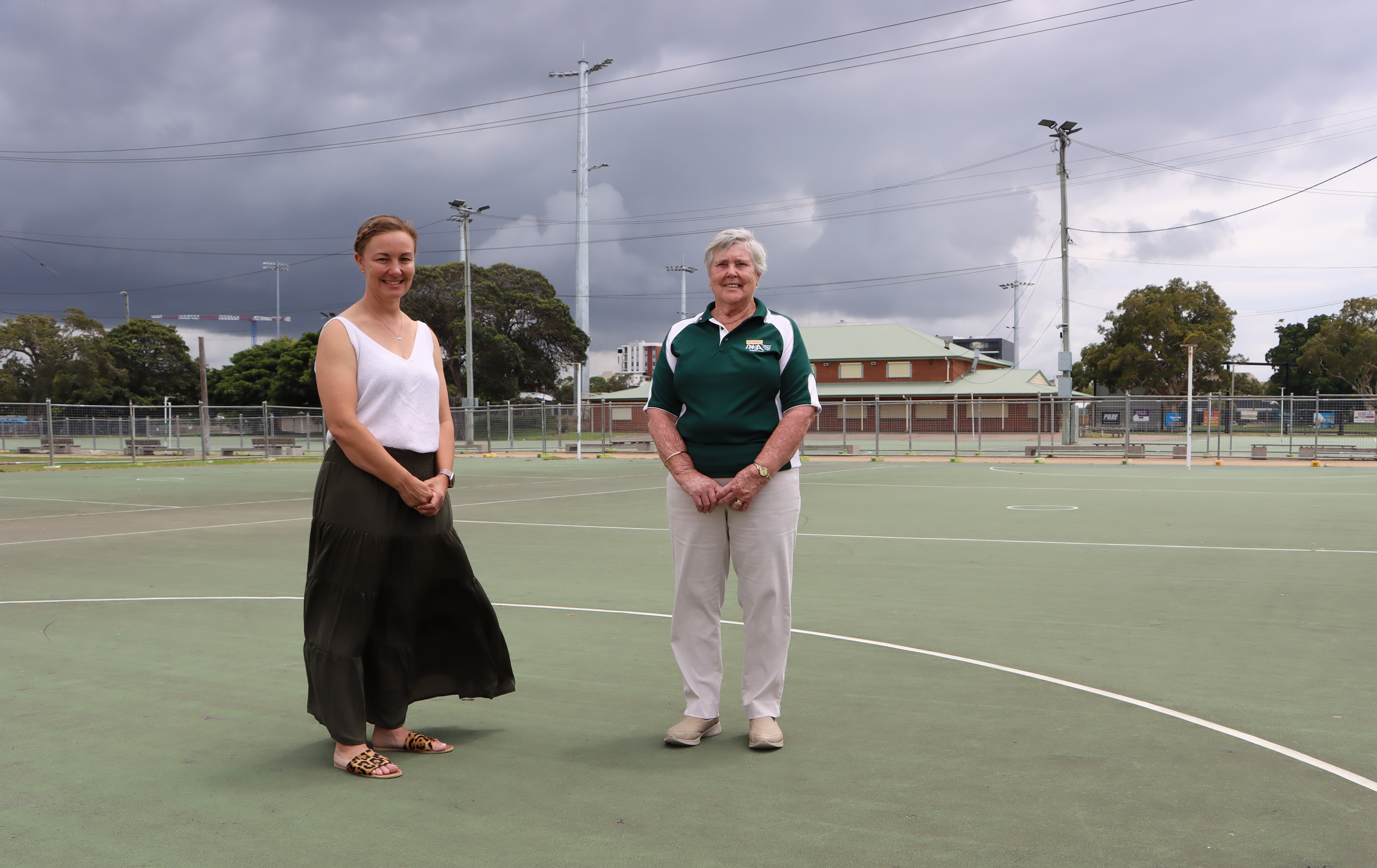
Work began this week to upgrade the 30 competition netball courts at National Park as part of a project being funded by Newcastle Netball Association and delivered with support from City of Newcastle.
Designed to provide safer, high performance court surfaces for thousands of local players ahead of the new season, the project will include court surface grinding, crack repairs, asphalt works, and installation of the heavy-duty Netball NSW endorsed Plexipave surface followed by new line marking and court numbering.
Lord Mayor Nuatali Nelmes said the netball courts are an important part of the National Park sporting precinct, offering recreational opportunities for competition and social netballers and for community members.
“As one of our largest and oldest sportsgrounds and open space reserves, National Park plays an important role in the livability of our city,” Cr Nelmes said.
Councillor Peta Winney-Baartz said that City of Newcastle is committed to protecting and enhancing the vital greenspace and active recreation areas, investing millions of dollars into a range of projects currently underway while also planning for its future through the development of the National Park Plan of Management.
“Projects such as the upgrade of the netball courts by Newcastle Netball Association demonstrate the passion and commitment local sporting groups and community members also feel for National Park,” Cr Winney-Baartz said.
“I commend them for moving ahead with this important upgrade, which will provide safe, activated and enhanced recreation spaces for the community, including thousands of registered netball players who take part in Saturday morning, twilight and representative competitions each year.”
Due to the complexity of the project, the netball court precinct will be closed during the construction period, which is expected to be finished, weather depending, by March 2022 ahead of the netball season.
Newcastle Netball Association President Cheryl Hernando said the upgrade would provide players with important safety improvements and a better competition surface.
“Over 4,000 players utilise these courts throughout the year and the enhanced safety measures this revitalisation provides will be gladly welcomed,” she said.
“The new acrylic court surface will deliver a range of benefits for players including better traction underfoot further cementing National Park as the premier netball facility in Newcastle.”
National Park covers more than 20 hectares and is home to a range of community facilities including sportsgrounds, netball and basketball courts, a croquet club and an athletics track.
Third man charged with murder following Stockton shooting
Strike Force Backhouse detectives have charged a third man following investigations into the fatal shooting of a woman in Stockton earlier this year.
Just after 8pm on Wednesday 9 June 2021, emergency services were called to a home on Queen Street, Stockton, following reports of a shooting.
A 61-year-old woman answered her front door before being shot. She died at the scene and was later identified as Stacey Klimovitch.
Officers from Newcastle City Police District established Strike Force Backhouse to investigate the circumstances surrounding Stacey’s murder.
So far during the investigation, two men – aged 29 and 46 – have been charged over their alleged involvement in the shooting murder and remain before the courts.
Following further inquiries, investigators attended a correctional facility in Silverwater yesterday (Wednesday 15 December 2021), and spoke with a 64-year-old inmate.
He was subsequently charged with murder and accessory after the fact to murder.
The man is due to appear before Newcastle Local Court on Monday (20 December 2021).
Investigations remain ongoing.
Second man fined for allegedly breaching self-isolation direction – Hunter region
A second man has been fined over an alleged self-isolation direction breach in the state’s Hunter region.
On Tuesday (14 December 2021), officers from Port Stephens-Hunter Police District received information from NSW Health in relation to a 20-year-old man who had been directed to self-isolate at a Rutherford property from Wednesday 8 December 2021, as he was a close contact of a positive COVID-19 case.
It’s understood the man subsequently attended a licensed premises on Wharf Road later that evening.
He has since returned a positive test to COVID-19 and is currently self-isolating.
Police spoke with the man today (Thursday 16 December 2021), before he was issued a Penalty Infringement Notice (PIN) for $5000 for the offence of Fail to Comply with Notice Direction s 7/8/9 – COVID-19.
Man fined $10,000 for breaching self-isolation direction in Newcastle
A man has been fined $10,000 after allegedly breaching a self-isolation direction in the Newcastle area.
On Monday (14 December 2021), officers from Newcastle City Police District received information from NSW Health in relation to a 20-year-old man who had been directed to self-isolate at a Newcastle property from Wednesday 8 December 2021, as he was a close contact of a positive COVID-19 case.
It’s understood the man subsequently attended a licensed premises on Wharf Road later that evening, and also attended a private residence in Adamstown on Saturday (11 December 2021). He has since returned a positive test to COVID-19 and is currently self-isolating.
Following inquiries, the man was issued with two Penalty Infringement Notices (PINs) totalling $10,000 for the offence of Fail to Comply with Notice Direction s 7/8/9 – COVID-19.
Inquiries are continuing.
Student doctors, nurses and midwives training in Orange
Close to 500 health students each year are undertaking placements and their university degrees in Orange, providing a boost to health care in the region and equipping the next generation of students with the right skills and confidence to work regionally.
Federal Member for Calare, Andrew Gee said today during a visit to Charles Sturt University, that the university had in 2020 facilitated around 470 nursing, midwifery and allied health placements in Orange, equating to more than 1,835 weeks of rural training.
Mr Gee and Federal Regional Health Minister, Dr David Gillespie visited the local campus, which is enabling students to obtain clinical experience in public and private health services.
“Having student doctors and other health professionals undertaking training in Orange has created jobs and given local patients increased access to health care,” Mr Gee said.
Mr Gee said the Australian Government funds the Orange training facilities through its Rural Health Multidisciplinary Training (RHMT) program. The program aims to improve the recruitment and retention of doctors and health professionals in rural and remote Australia.
“Charles Sturt University has received almost $13.5 million from the Federal Government for its RHMT activities over the past three years,” Mr Gee said.
“Additionally, this year a partnership between CSU and Western Sydney University has enabled a Joint Program in Medicine with 37 places for medical students to get underway here in Orange.
“This program is supported by our Government; we provided capital works funding of $22 million from 2019 to 2022 to establish the initiative.
“Our region fought for years to get this medical school established against entrenched opposition. We can all take pride in the fact that it will be training doctors in the bush for practice in the bush for generations to come.
“Country people deserve the same access to medical services as people in the cities, and the CSU Medical School will play a key role in making sure we have this equality for our country communities,” said Mr Gee.
Minister Gillespie, a former regional doctor, said The Nationals understand that when students undertake training in a regional or rural area, like Orange, it means they are more likely to choose to live and work outside the major cities, once they are fully qualified.
“That’s why expanding rural training is a key part of the Government’s comprehensive strategy to increase the number of doctors, nurses, dentists and other health professionals serving our rural people,” Dr Gillespie said.
Mr Gee and Dr Gillespie visited Charles Sturt’s School of Rural Medicine based at the campus in Orange, one of the University’s five major sites. The University’s Rural Medical School and Three Rivers Department of Rural Health supports nursing, midwifery, dentistry and allied health students to study and undertake placements within the region.
The University’s Rural Medical School is part of the Murray-Darling Medical Schools Network which the Government is developing to build on rural undergraduate training through the RHMT program, to support a continuum for doctors to learn, train and work in the regions through five rurally based medical school programs.
Charles Sturt Vice-Chancellor Professor Renée Leon said the University has long been one of regional Australia’s most reliable and comprehensive pipelines of highly skilled, ready-to-work healthcare graduates.
“The Joint Program in Medicine is unique in Australia in that all clinical and classroom training takes place in regional settings, she said.
“The Program has been designed to help address the persistent health workforce gaps in rural, regional and remote communities.”
“Our medicine students study alongside our offerings in nursing and allied health, who are also critical to the health outcomes of regional Australians,” she said.
10-year plan to improve Aboriginal and Torres Strait Islander health
In partnership with state and territory governments and Aboriginal and Torres Strait Islander health leaders, the Morrison Government has released a national policy framework to improve health and wellbeing outcomes for Aboriginal and Torres Strait Islander people over the next 10 years.
Minister for Health and Aged Care, Greg Hunt and Minister for Indigenous Australians, Ken Wyatt, said the National Aboriginal and Torres Strait Islander Health Plan 2021–2031 would make a significant contribution.
“The Health Plan is the first national health document to address and embed the health targets and Priority Reforms of the National Agreement on Closing the Gap,” Minister Hunt said.
“In particular, the Health Plan prioritises the Aboriginal and Torres Strait Islander community-controlled health sector and the imperative for mainstream health services to provide culturally safe and responsive care.
“The Health Plan represents a fundamental shift in the way governments work with Aboriginal and Torres Strait Islander people, communities and organisations.”
The Health Plan recognises that historic and systemic factors have resulted in Aboriginal and Torres Strait Islander people having a burden of disease 2.3 times that of non-Indigenous Australians.
Minister Wyatt said the Health Plan will guide existing and future investment.
“This year we have already announced $254 million to improve infrastructure in community controlled health services, $45 million to improve healthy birthweight under the National Agreement on Closing the Gap, and a further $781 million, predominantly for aged care and mental health – measures all strongly aligned with the priorities in the Health Plan,” Minister Wyatt said.
“Further opportunities, including through funding reprioritisation, will be identified as we begin the important task of implementing the Health Plan.”
CEO of Indigenous Allied Health Australia and Chair of the Health Plan Working Group, Donna Murray, said for sustainable change the leadership of Aboriginal and Torres Strait Islander people and their voices was essential.
“It is important that we have worked in true partnership with government to develop this Health Plan, as Aboriginal and Torres Strait Islander people know what is best for our own health and wellbeing – which we provided in My Life, My Lead consultation processes,” Ms Murray said.
“We have ensured that the Health Plan reinforces the importance of strengths-based and rights-based approaches that embed the cultural and social determinants of health in determining our own priorities and solutions.
“I welcome, too, that the Health Plan is informed by the fundamental role that connection to Country, family, kinship and community play in our health and wellbeing.”
The Health Plan will hold governments and the mainstream health system accountable for progress against its objectives, through an accountability framework and independent
mid-cycle and end-of-cycle progress reviews.
The Health Plan complements the National Preventive Health Strategy, launched this week, with significant focus on preventive health for Aboriginal and Torres Strait Islander people.