
Two extraordinary NSW candidates have taken out top honours in the Australian of The Year Awards, with Dr Daniel Nour, founder of Street Side Medics named the 2022 Young Australian of the Year and Shanna Whan, founder of Sober in the Country named 2022 Australia’s Local Hero at a ceremony in Canberra.
NSW Premier Dominic Perrottet congratulated both NSW candidates, saying they had made the State of NSW immensely proud.
“These two remarkable NSW citizens have won the Awards due to their positive impact on society and making tangible differences to people’s lives, often tackling difficult issues to help others in need,” Mr Perrottet said.
“At the age of 26, Dr Nour’s mobile healthcare service has helped hundreds of vulnerable people, while Shanna has single-handedly created a life-changing campaign for rural Australia. They have demonstrated an outstanding spirit of service to our nation.
“The Australian of the Year Awards allow us to recognise and celebrate the achievements of remarkable Australians – making immense contributions to our society.
“I can’t think of better people to be bestowed the honour of Young Australian of the Year and Australian Local Hero. They embody the Australian spirit and despite life’s challenges, have led the way in founding these life-saving initiatives and improving the lives of others.”
Dr Nour identified a gap in healthcare for vulnerable people in NSW and as a result of his leadership, this not-for-profit GP-led mobile medical service for people experiencing homelessness has changed the lives of more than 300 patients. Its clinics treat many communicable and non-communicable illnesses and detect conditions that would otherwise go unnoticed.
Ms Whan, founder and CEO of Sober in the Country, is the Australian Local Hero. After almost losing her own life to alcohol addiction, Shanna established a one-woman grassroots campaign creating radical social impact and change around how people discuss and use alcohol in rural Australia. Shanna has dedicated her life since 2015 to saving lives, first as a volunteer to help others locally, and now as the founder of the national charity Sober in the Country.
“The resilience and determination of both Daniel and Shanna inspires us all and I wish them both all the best in the year ahead. I also extend my congratulations to all NSW finalists in this year’s awards for their efforts and contributions to making Australia a better place. Each of them has done our State proud,” Mr Perrottet said.
Multi-million dollar investment in emergency management centres
An additional $31 million is being invested by the NSW Government for the construction of three new co-located Emergency Operations Centre (EOC) and Fire Control Centres (FCC) at Moruya, Tumut and Hawkesbury.
Minister for Emergency Services and Resilience Steph Cooke said the RFS identified a number of existing FCCs as sub-standard and in need of an urgent upgrade, following recommendations in the NSW Bushfire Inquiry.
“The NSW Government is committed to ensuring our emergency services and local communities have the infrastructure and resources needed for future emergencies right across our State,” Ms Cooke said.
“We’re investing $15 million in a new hub at Moruya, and $8 million each in facilities at Tumut and Hawkesbury to ensure our emergency services have purpose-built infrastructure in place to respond to future major emergencies.
“As we have seen throughout the horrific 2019-20 bush fire season, recent floods and the COVID-19 pandemic, our emergency services personnel do a remarkable job responding to threats to the community’s safety and wellbeing.”
Moruya, Tumut and Hawkesbury were identified as the next priority projects by the RFS, after construction began on previously funded facilities at Armidale and Mudgee.
RFS Commissioner Rob Rogers welcomed the development of the three new facilities at Moruya, Tumut and Hawkesbury, which will drive efficiencies in the response to future emergencies.
“When a major disaster strikes, it is critical that all the relevant agencies can come together to coordinate their activities to protect and assist the community,” he said.
“Our existing Fire Control Centres at Moruya, Tumut and Hawkesbury are long past their use-by dates. The development of a new centre answers one of the vital priorities identified in the NSW Bushfire Inquiry.”
The NSW Government and RFS are in the process of finalising suitable locations for the Moruya and Hawkesbury facilities, and will update the community shortly. A location for the Tumut facility was announced in December 2021.
COVID-19 settings remain in place to maintain community safety
The NSW Government will extend current restrictions for another month as the State continues to take a measured response to managing COVID-19 with a focus on a safe return to school and restarting non-urgent elective surgery as soon as possible.
Current settings will continue from Thursday, 27 January 2022 until Sunday, 28 February 2022, including:
- Hospitality venues, including pubs, clubs, restaurants and cafes, and nightclubs must follow the one person per two square metre rule indoors;
- Masks are required in all indoor settings (except residences). Masks are strongly encouraged where you cannot maintain a safe distance from others;
- QR code check-ins are compulsory at certain premises, including hospitality venues and retail shops;
- Singing and dancing is not permitted in hospitality venues, entertainment facilities, nightclubs, indoor music festivals and indoor major recreation facilities (except for weddings, performers, instructors and students).
Premier Dominic Perrottet said rolling over these measures would continue to protect the community and our health system.
“We have always said we will respond to what is in front of us and tailor our approach as required and that is exactly what we are doing,” Mr Perrottet said.
“We are transitioning to living with COVID and we will need to continually update our approach to ensure we are keeping people safe and protecting our health system.
“It is vital people continue to come forward and get their booster shots to help keep themselves, their family and the community safe.”
As additional measures, people are encouraged to continue to work from home where possible and to reduce mingling when eating and drinking.
Minister for Health Brad Hazzard said there is plenty of availability and supply of boosters in the NSW Health vaccination clinics so those eligible for their booster shot should book as soon as possible.
“The gap between your second jab and your booster is now just three months, so don’t waste time – the sooner we all get our boosters the sooner we will overcome this Omicron wave,” Mr Hazzard said.
“The NSW community has put in an extraordinary effort to get the first two doses of the COVID vaccine, making us one of the most vaccinated populations worldwide. It’s now extremely important to back it in with your booster to lift your protection against the highly transmissible Omicron strain.”
People aged 18 years and older can receive their booster dose at three months after receiving their second dose of any of the COVID-19 vaccines. You can book your COVID-19 vaccine or your booster shot, via www.nsw.gov.au/covid-19/vaccination/get-vaccinated.
More information is available at nsw.gov.au.
COLES UPDATES VACCINE POLICY TO HELP ALL TEAM MEMBERS STAY SAFE
Coles has updated its policy on COVID vaccination to help keep team members and customers safe, as positive case numbers remain high across Australia.
Coles has worked with team members nationally to help them access vaccination as soon as they became eligible, and takeup of vaccination has been highest in states where it has already been made a requirement of work.
With the vast majority of Coles team members now vaccinated against COVID, over coming months Coles will require that any team members who are yet to receive the vaccine do so as a condition of working at any of our stores, distribution centres and other sites nationally, unless they have a valid exemption.
This updated policy brings our teams in Queensland, South Australia and Tasmania, as well as our liquor stores in Western Australia, in line with our teams in the rest of Australia where vaccination is already required.
Coles Group Chief Legal and Safety Officer David Brewster said the new measure would help Coles to protect the health of its 120,000-plus team members, including those who are unable to be vaccinated for medical reasons, as well as vulnerable family members such as elderly relatives and children who are not eligible for vaccination.
“Keeping our team and the community safe has been our top priority since the pandemic began, and throughout 2021 we encouraged and supported our team members to access vaccinations to reduce the risk of infection for themselves, their colleagues and their families,” he said.
“In states where government health orders or our own policy already requires vaccination as a condition of work, we’ve seen very strong uptake of the vaccine by our team members. Extending this requirement to the remaining states will help us ensure that as many people as possible get the jab so we can all be safer.”
As part of the updated policy, Coles team members in Queensland, South Australia and Tasmania must have received at least one vaccination by 25 February and have received a second dose by 31 March.
In Western Australia, public health orders already require supermarket and distribution centre workers to have received two doses of vaccine by 31 January. Coles Liquor team members in WA will now be required to have received at least one vaccination by 25 February and have received a second dose by 31 March as a condition of employment.
As we have in other states where vaccination is already required as a condition of work, Coles will work with team members to help them understand the updated policy and to access vaccination services.
Coles also strongly recommends that vaccinated team members in all states receive booster shots as soon as they are eligible to maintain their protection against serious illness.
In states where booster shots are required under government health orders, Coles will work with team members to help them access vaccination services in time to comply with the orders.
As a designated essential service, Coles will continue to serve all customers regardless of their vaccination status, in line with government requirements.
Netball wins big double at 2021 NSW Sports Awards
There was a double success for Netball NSW at the 2021 NSW Sports Awards last night with the organisation taking home two major awards from CommBank Stadium in Parramatta.
Nominated in five categories, Netball NSW took out the Event of the Year Award for the organisation’s celebration of Reconciliation Week, while the NSW Swifts were named the state’s Sports Team of the Year for 2021, the second time in three years they have won the honour.
Netball NSW was also nominated for Organisation of the Year, while Swifts coach Briony Akle was nominated for Coach of the Year with former EGM of Community & Pathways Darren Simpson up for Administrator of the Year.
Sport NSW has hosted the prestigious NSW Sports Awards program since its inception in 1994. The Sports Awards serve to celebrate outstanding achievements and excellence in NSW sport across various categories, including athletes, teams, coaches, officials, administrators, events and organisations on an annual basis.
Tokyo Olympic Games golden girls Jessica Fox and Cate Campbell were crowned joint 2021 Athletes of the Year winners and Tokyo Paralympic Games swimming gold medallist Matthew Levy was named 2021 Athlete of the Year with a Disability.
There was further success for swimming with Timothy Hodge named Young Athlete of the Year with a Disability while Tokyo Olympic diver Sam Fricker was announced Young Athlete of the Year and Rugby Union referee Amy Perrett was voted as Official of the Year.
Archer Elizabeth Hole was acknowledged as Masters Athlete of the Year for a second time, Wheelchair Sports CEO Mick Garnett was named Administrator of the Year, Basketball NSW was awarded Organisation of the Year and the NSW Gladiators Wheelchair Rugby team claimed the Team of the Year with a Disability title.
Netball NSW would like to extend special congratulations to the NSW Community Team who delivered a fantastic celebration of Reconciliation Week, alongside the NSW Swifts and GIANTS Netball, and recognise the Swifts for another proud State honour.
Greens POLICY LAUNCH: Supporting women-led businesses
The Greens have announced a policy to support women-led businesses, generating more employment opportunities for women and boosting economic growth.
Businesses with female founders and executive leadership employ, on average, six times as many women as other businesses, and typically have strong parental leave and flexible working arrangements. But women-led businesses, particularly in regional areas, often find it difficult to secure finance, despite the calibre of staff or the quality of their product or service.
The Greens will help these businesses to grow and provide employment opportunities for more women by:
Establishing a micro-financing facility
The Greens will establish a $10 million micro-financing facility to provide low-and no-interest loans up to $10,000 to women-led businesses in regional areas who struggle to access traditional finance.
The micro-financing scheme would also offer financial training to borrowers, and refer businesses to the Boosting Female Founders Initiative program for mentoring and support.
Legislating procurement policies
The Greens will legislate to require government agencies to spend a minimum of 3% of their annual procurement budget with women-led businesses.
Setting minimum procurement targets for women-led businesses benefits everyone in the supply chain and helps women-led businesses to grow.
Greens deputy leader and spokesperson on women Senator Larissa Waters said:
“Women deserve support to harness their creative and innovative potential, and microfinance loans fit the bill.
“Supporting women-led businesses to get off the ground will generate more employment opportunities for Australian women and boost the economy. It will also start to reduce the structural inequities that have hindered women’s economic independence for generations.
“Research tells us that businesses owned and operated by women employ up to six times as many women as other businesses and typically have better parental leave and more flexible working arrangements.
“For many women, starting their own business is often the only means they have of generating their own income, with prohibitive childcare costs and most employers still not offering sufficiently flexible work arrangements.
“Running a small business can be hard for anyone, but women-led businesses can find it particularly tough given they typically have less access to capital and often face discriminatory attitudes from lenders.
“It’s been a grim eight years for women under this 1950s government, compounded further by the pandemic which women bore the brunt of. Policies like this can really help.”
Alanna Bastin-Byrne, Director of Femeconomy said:
“This is not a zero sum game – when more women work, economies grow.
“Australia has a lot of catching up to do in closing the gender pay gap. It is wonderful the Greens recognise that women owned businesses have a role to play in increasing women’s economic security and workforce participation.
“Women-owned businesses represent women from all walks of life, allowing women to use their education, skills and training, and develop flexible working models around caring responsibilities. Practical policies that support these businesses are vital to closing the gender pay gap.
“Women owned businesses make up 34.8% of Australian businesses, but access less than 1 per cent of the global procurement market. This gap presents an opportunity to create a social and economic impact.
“We’ve seen the success of gender equality procurement policies in the US, and the Indigenous Procurement Policy in Australia. These policies will work to grow Australia’s economy and advance equality.”
Rebel Black, CEO of The Rural Woman said:
“Rural women-led enterprises face additional challenges of geographical isolation, a lack of access to support services and networks, and structural roadblocks when trying to access finance.
“In some remote communities there are often no banks at all, and the ones that do exist often have extremely conservative lending policies.
“Our research has identified that for women-led businesses in rural areas a loan of $10,000 or less would help them make significant progress, either to start a business or to scale up – whether that’s being able to employ an extra person, buy additional stock or run marketing campaigns.”
Two years on, the COVID fight continues
Two years ago COVID arrived in Australia. In that time it has changed the world but it hasn’t changed the fundamentals of Australia. In a world with over 5.5 million lives lost officially and more likely closer to 15 million, Australia has witnessed hardship and tragedy but we have emerged with one of the lowest rates of loss of life, highest rates of vaccination and strongest economic recoveries in the world. Above all else we remain an essentially optimistic nation and people.
Australia acted quickly. The Government called the pandemic two weeks before the World Health Organization did. Border measures were put in place, ‘human coronavirus with pandemic potential’ had been listed under the Biosecurity Act 2015, the Department of Health provided advice to doctors and Emergency Departments across the country, and then Chief Medical Officer Brendan Murphy convened the Australian Health Protection Principal Committee (AHPPC).
The National Incident Centre at the Department of Health, which had been dealing with bushfires, re-focused and became the epicentre of a national approach to this new threat. It has been in operation for every day of the past two years. They have been guided by trusted medical professionals who have since become well known on our TV screens, offering calm, consistent and considered advice. To Brendan Murphy and the now Chief Medical Officer, Professor Paul Kelly, the country owes them so much for the steady hand they have provided and the guidance that has kept Australians largely safe when other countries have been – and continue to – lose thousands – if not hundreds of thousands of lives.
But as they also warned, a pandemic doesn’t just go away. It will continue to change and we must respond as needed, learning the lessons of the past two years. As we move through another challenging time with the Omicron variant, it’s important to reflect on how far we have come and how well Australia as a community have navigated the pandemic.
As case numbers rapidly grew around the world in 2020, efforts were directed towards keeping community transmission low to give us time to ready the health system – especially Intensive Care Units – for an influx of patients requiring ventilation.
Closing the border, lockdowns, telehealth, bolstering medical supplies, developing testing regimes and communicating with the public all played a part. The strategy was remarkably successful – a key factor being the engagement of the Australian people in embracing a raft of unprecedented protections. Throughout 2020, Australia’s COVID-19 statistics were among the world’s best and fatalities were one of the lowest in the world, as they have remained.
At that time, a vaccine was a hope, rather than a certainty. Treatments were yet to be tested.
2021 brought more sustained community transmission but now we had more tools to combat the onslaught.
Vaccines were developed in record time by the world’s best researchers and regulators around the world – including Australia’s Therapeutic Goods Administration (TGA) – who worked tirelessly to assess their safety, quality and efficacy.
Australia’s vaccine rollout began in earnest – focusing first on our most vulnerable citizens including in aged care, where COVID has had the greatest impact here and around the world. There remains a direct correlation between hospitalisation and death from COVID-19 and age. Plus this group largely have underlying health conditions or are in palliative care.
Treatments became available and the Commonwealth worked with states and territories and the private hospitals to bolster health system capacity. This demonstrated the unique advantage of our health system that when needed, it could come together to meet the health needs of the Australian population – and continues to do so.
The Delta variant, and now Omicron, have demanded renewed efforts and investments.
The National Medical Stockpile (NMS) has been a vital supply lifeline for states and territories, aged care facilities, primary health, pharmacies and the disability sector. As of 21 January 2022, the Government has supplied 53.6 million N95 masks, 74.6 million surgical masks, 19.4 million pairs of gloves, 15.8 million isolation gowns and 10.7 million face shields.
The commitment to use PCR testing as advised consistently by the medical experts, enabled Australia to track the virus and limit its spread. That decision saved thousands of lives. We could flatten the curve, minimise the spread and undertake contact tracing, which other countries didn’t have the ability to do, which sadly led to mass hospitalisations and death.
Even so, we continued to adopt the latest technology and approve such tests to use as a screening method, knowing we would need a range of tools. The first of the rapid antigen tests were used in aged care in August last year. Omicron and its higher transmissibility has now changed the landscape coupled with a highly vaccinated population. Our approach and the advice of the medical experts has now changed. One of the key lessons in the past two years, is when circumstances change with the pandemic, our response must also change.
The NMS has provided over seven million rapid antigen tests to aged care since August 2021 and tens of millions of more tests are arriving in Australia over the coming weeks.
The TGA has provisionally approved five vaccines, seven treatments, and approved 66 rapid antigen tests.
Telehealth – now an enduring legacy – has been embraced by doctors and patients alike and been used for over 90 million consultations, providing ease of access to health services when it’s been needed, minimised the potential risk of face to face contact and taken some off the strain off the health services.
To date, the Australian Government has spent over $37.4 billion on the health response to COVID-19. We’ve administered over 48 million COVID-19 vaccines, with over 95% of the 16+ population having had at least one dose.
We have one of the highest vaccination rates in the world and have been of the first countries to commence a booster and kids 5-11 vaccination rollout.
While these are important achievements, never do I forget the people we have lost, those who were very sick, the Australians in hospitals around the country, and those struggling every day with the debilitating symptoms of long-COVID.
And nor do I forget the tremendous, sustained and professional efforts of the health workforce – the frontline that every Australian relies on in such times of crisis.
Above all else, the test of our collective national achievement is that through all of the hardship we have saved over 30,000 lives compared with the OECD and over 45,000 compared with the US and UK.
There has been one constant throughout the pandemic – the goodwill and the good sense of the Australian people. Their contribution has been extraordinary. As a consequence, we have one of the highest vaccination rates in the world. Thousands are lining up for boosters every week and kids are rolling up their sleeves. In the past week, the vaccination rate has seen the highest single day since the vaccination program began.
These last two years have been hard and challenging, and there is more to be done, but the essential Australian spirit remains unbowed and optimistic. In so many ways, while we don’t like to brag as a nation, we are perhaps better and stronger than we ever realised.
Protecting remote communities in the Northern Territory from COVID-19
The Australian Government is extending measures in place to protect remote communities during the current COVID-19 outbreak in the Northern Territory, in line with the local requirements announced by the Northern Territory Government.
As Minister for Health and Aged Care, I have made a Determination under section 477 of the Commonwealth Biosecurity Act 2015 to prevent a person from entering or exiting:
- Utopia Homelands, Gunyangara and Wurrumiyanga until 2pm ACST, 29 January 2022
- Amoonguna until 2pm ACST, 30 January 2022
- Yuelamu and Yuendumu until 3pm ACST, 30 January 2022 and
- Elcho Island, including Galiwinku and Wessel Islands including Martjanba in the NT until 2pm ACST, 31 January 2022.
Restricting the movement of people in and out of these communities for only essential reasons for a period of time will help prevent further spread and allow time for testing.
The Australian Government continues to receive advice from the Chief Medical Officer, Professor Paul Kelly, informed by the experience of health care workers on the ground, representatives of the communities, and Northern Territory authorities.
I have taken this decision at the request of the Northern Territory Government and with the support of the critical stakeholders, including the Central Land Council, Northern Land Council, the Aboriginal Medical Services Alliance of the Northern Territory (AMSANT) and the National Aboriginal Community Controlled Health Organisation (NACCHO).
All residents of Utopia Homelands, Gunyangara, Wurrumiyanga, Yuendumu, Yuelamu, Amoonguna, Elcho Island, including Galiwin’ku and Wessel Islands including Martjanba are encouraged to continue to follow their local Health Department directions, to be tested in the coming days and to get vaccinated if not already.
The measures will be in place only as long as necessary to keep the community safe.
Paralympian Lauren Parker takes out top gong in Newcastle’s Citizen of the Year Awards
An all-female line-up has taken out City of Newcastle’s 2022 Citizen of the Year Awards, with a Paralympian, a law undergraduate and a passionate community advocate among this year’s recipients.
Announced at an intimate award ceremony at the City Administration Centre on Monday, the awards formally recognised the outstanding contributions of extraordinary Novocastrians over the past year.
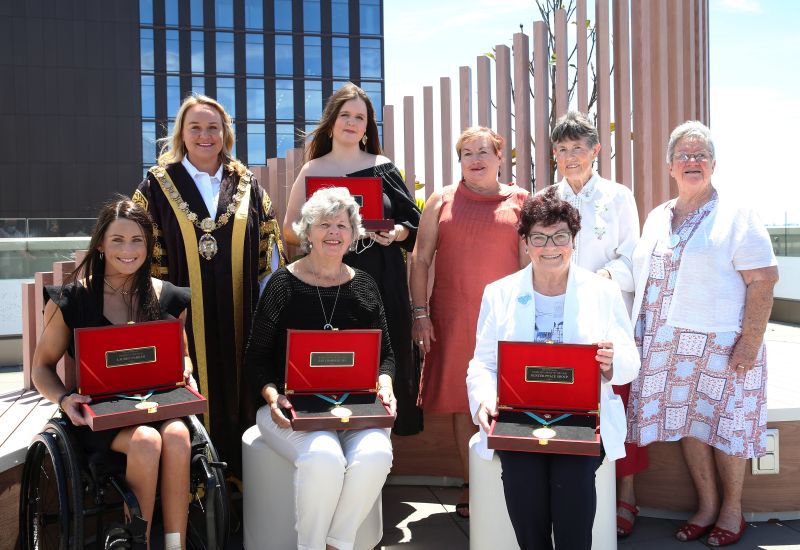
Silver Paralympic medallist and three-time world paratriathlon champion Lauren Parker was crowned Citizen of the Year following remarkable results in Tokyo and on the world series circuit in Abu Dhabi. It came less than five years after Lauren was told she would never walk again after a horrific cycling accident whilst training for an Ironman event left her paralysed from the waist down.
Lord Mayor Nuatali Nelmes said Lauren had proudly represented the green and gold and her hometown on the world stage, overcoming many challenges and obstacles along the way.
“Lauren epitomises the Citizen of the Year title; her never-give-up attitude inspiring countless Novocastrians as she achieves anything she sets her mind to,” Cr Nelmes said.
“Her strength and resilience is admirable, always giving 110 per cent despite the daily battles we don’t see, managing ongoing pain from her injuries.”
Newcastle’s youngest Citizen of the Year in recent history, Lauren said she was honoured to receive the award.
“Every day since the accident has been a physical and mental battle but training and representing Newcastle helps me channel the pain into a positive outlet and show others that they too can achieve their dreams no matter what life throws at them,” Lauren said.
“I’d like to thank everyone who has supported me throughout my journey, including and especially my friend Brad Fernley who has been by my side every step of the way before and after my accident. Thank you.”
University of Newcastle law and business student Ashley Harrison was named Young Citizen of the Year 2022 in recognition of her advocacy for victims of revenge porn, phishing, and impersonation, helping young women avoid exploitation through her start-up social enterprise, Verified Associates.
Jan Chamberlain is Newcastle’s Senior Citizen of the Year 2022, leading Hamilton South Community Solutions, a dedicated group that works to improve the amenity of the area and reduce the stigma surrounding social housing in addition to supporting residents through information, activities and workshops.
Taking out the Community Group of the Year award was Hunter Peace Group, recognised for its advocacy in re-affirming the City of Newcastle as a Nuclear Free Zone, a declaration first made by the late Lord Mayor Joy Cummings AM on 29 June 1982.
Represented by Secretary Lynda Forbes, Hunter Peace Group is working with City of Newcastle to establish a dedicated Hunter Peace Park in Tighes Hill opposite the TAFE Campus, cementing the city’s long and proud history of peace activism.
City of Newcastle drives towards electric future
City of Newcastle’s transition to a zero emissions fleet is powering forward with the unveiling of its first electric truck.
The medium rigid Hino truck is the only one of its kind in Newcastle and will replace a diesel vehicle currently being used by City of Newcastle’s (CN) Parks and Recreation team, reducing CN’s carbon emissions by more than 20 tonnes each year.
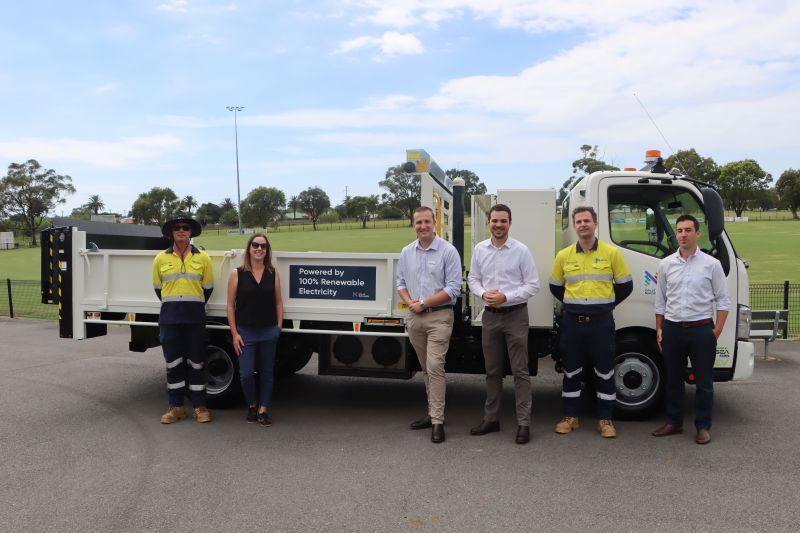
Deputy Lord Mayor Declan Clausen said the launch of the electric truck was part of a broader sustainability strategy that will deliver a 100% reduction in carbon emissions from CN vehicles during the next decade.
“City of Newcastle was the first council in NSW to shift to 100% renewable energy in our operations, with our own solar farm at Summerhill and a power purchase agreement with the Sapphire Wind Farm,” Cr Clausen said.
“Fossil-based liquid fuels such as diesel and unleaded petrol in CN cars, trucks, waste fleet, plant and equipment account for more than 90% of our remaining operational carbon emissions.
“This is produced from more than 1.6 million litres of fuel used annually across CN’s operations.
“City of Newcastle is working to deliver the adopted Climate Action Plan 2021-2025, which sets out a roadmap for achieving emission reduction within CN operations. This includes the development of a Fleet Transition Plan to target zero emissions from vehicles for 100% of the fleet by 2030.
The launch of the electric truck follows previous trials of electric vehicles within CN’s fleet, including the replacement of four pool cars with equivalent full electric passenger vehicles.
City of Newcastle will be participating in the NSW Government’s recently announced Drive Electric NSW EV fleets incentive, which will help support the transition of its passenger fleet.
City of Newcastle is helping to support the community’s transition to electric vehicles as well with the development of a council-owned public electric vehicle charging network. This currently includes seven chargers installed across four sites, which provide 11 charging bays, with additional sites planned to be built this year.